
Disc herniation and recurrent sciatica
26/10/2026
IN BRIEF
| Sciatica is pain that radiates from the lower back or buttock down the leg. Aggressive stretching does not necessarily relieve the nerve and can intensify the pain, especially if it moves further down to the foot or is accompanied by tingling or weakness. Favor gentle movements, without forcing, and stop exercising if it worsens the symptoms. Consult a professional if the pain persists, intensifies, or leads to a loss of strength. |
Aggressive stretching can further irritate a sensitive nerve and intensify sciatica pain, sometimes causing it to move further down the leg. Favor gentle movements and stop those that worsen the irradiation, cause numbness, or increase weakness. If these symptoms persist or intensify, seek medical advice.
An intense stretch can increase the pain of sciatica, especially if it triggers stronger irradiation, tingling, or numbness in the leg. This reaction can signal that the movement irritates a sensitive area further, but it does not allow assessing the seriousness of the problem on its own. Stop the movement that worsens the symptoms and monitor their evolution. Sciatica corresponds to pain related to the irritation of a nerve root in the lower back. It can radiate down into the buttock and leg, sometimes all the way to the foot. An aggressive stretch can pull on the tissues around an already irritable nerve, making this pain sharper or more widespread. A pain that increases during a stretch does not prove that a nerve is damaged. However, pain that radiates further down the leg, or that is accompanied by new neurological signs, warrants special attention. To better recognize the movements that may irritate the symptoms, consult this guide on movements to avoid in case of sciatica. A stretch may be too intense if it causes electrical pain, significant burning, or a sensation that spreads further down the leg. Pain that persists after the movement, or that increases over the hours, is also a signal not to repeat this action without appropriate advice. General advice on gentle stretching and signs that require help can help understand possible reactions. However, when a stretch triggers or amplifies nerve pain, do not try to force it to “unlock” the leg. Muscle tension is often localized and resembles stiffness or discomfort in the back or buttock. Sciatic pain more often follows a path down the leg. It may be accompanied by tingling, a less sensitive area, or weakness. The pain may also be felt more in the leg than in the back. This pattern does not automatically mean that the situation is worsening but may correspond to nerve irritation. This article explains why sciatica pain may be stronger in the leg. Stress and lack of sleep can also increase sensitivity to pain and promote muscle tension. However, they do not fully explain all symptoms. To understand this link, you can read this information on sciatica and stress and pain amplified by stress. Stop the stretch that increases pain. Avoid repeating the same movement to see if the pain will eventually go away. Instead, note what happened: the movement performed, the area affected, the duration of symptoms, and any presence of tingling or weakness. Do not try to compensate with another intense stretch or an improvised manipulation. Movements that seem to provide relief at the moment can sometimes further irritate symptoms. For general guidelines, consult the complete guide on sciatica. If the pain persists, returns frequently, or limits your activities, seek the opinion of a healthcare professional. An assessment can clarify the pain’s path and check strength, sensitivity, and reflexes. The TAGMED clinic also provides guidelines on signs of worsening sciatica. A pain that gradually becomes more manageable and interferes less with activities may accompany improvement. Conversely, pain that extends further down the leg, increasing numbness, or loss of strength warrants evaluation. These guidelines do not substitute for a clinical examination. Also, consult this information on possible signs of improvement in sciatica. Consult quickly if you notice significant or new weakness in the leg or foot, loss of sensation in the perineum, or difficulties controlling the bladder or intestines. Severe pain that does not subside, fever, or pain after trauma also require prompt medical advice. Sciatica alone does not determine the cause of the pain. A herniated disc, stenosis, or another lumbar condition may require specific evaluation. The information on options mentioned for spinal stenosis and neurovertebral decompression manipulations do not replace this evaluation. Do not start any maneuver or treatment without advice suited to your situation.When a stretch becomes too intense
Muscle pain or nerve irritation: spotting the difference
What to do if a stretch worsens sciatica?
What the evolution of symptoms may indicate
When to seek medical help quickly

Aggressive stretching is not a suitable solution for all sciatica cases: pulling hard on a painful leg can increase irritation and cause pain to radiate further down. If a movement aggravates the symptoms, reduce the intensity and prioritize a gradual return, without trying to force the nerve.
Why intense stretching can worsen sciatica
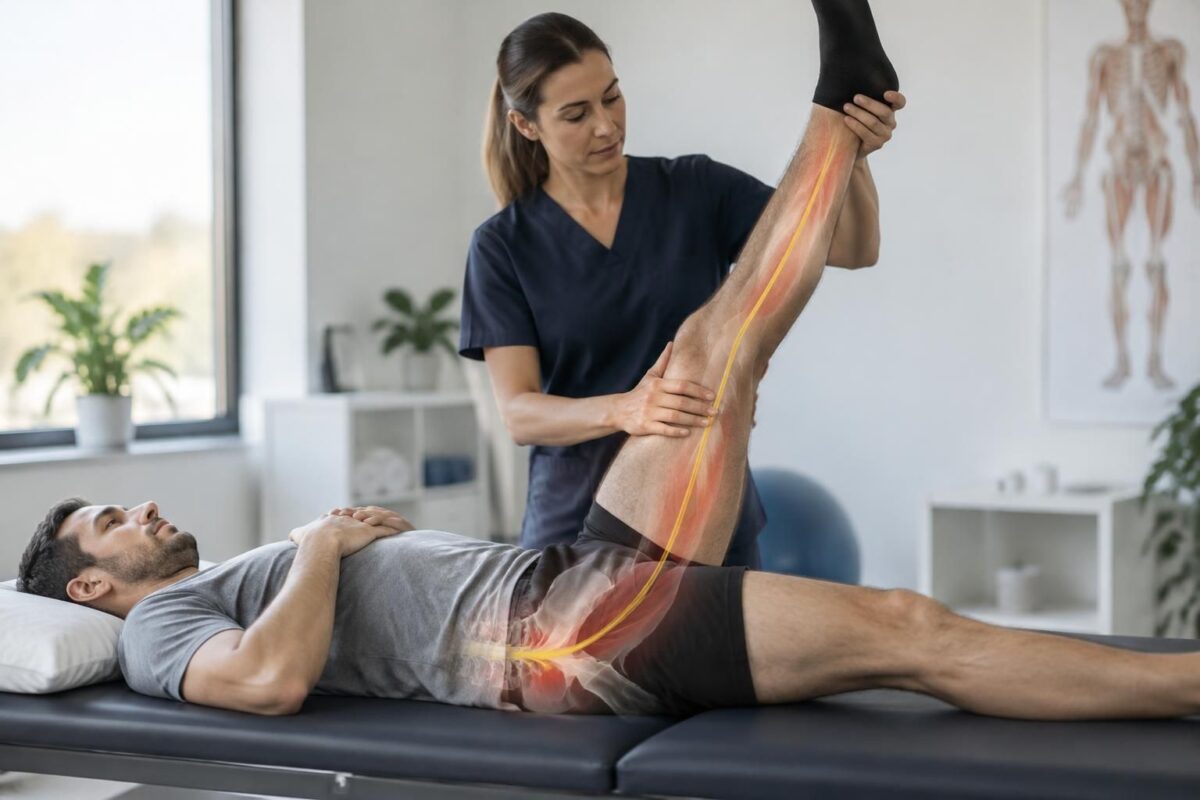
Sciatica generally corresponds to irritation of a nerve root in the lower back. It can cause pain that starts from the buttock and radiates down the back of the thigh, sometimes to the calf or foot. A strong stretch of the leg can increase tension in sensitive tissues and temporarily amplify pain, burning sensations, or tingling.
A slight discomfort related to movement does not necessarily indicate a worsening condition. However, stop the movement if the pain becomes sharp, electric, radiates lower in the leg, or persists longer after exercise. A repeated worsening is a useful signal: your body is telling you that the intensity or type of movement is not suitable for you at the moment.

Sciatica and calf stretching: when the pain increases
IN SHORT A calf stretch can exacerbate sciatica if it further irritates the nerve. It should not cause pain that increases or radiates down the leg: stop the movement and do not push through. Stretches may help with some tensions,…
How to adjust your movements
Avoid straining the painful leg
Do not aim for maximum range and do not maintain a painful stretch in the hope of “unpinching” the nerve. Avoid sudden jerks, abrupt movements, and positions that clearly reproduce the radiation. A moderate feeling of tension may be acceptable, but it should not turn into increasing pain, numbness, or weakness.
Instead, start with gentle and comfortable movements of short duration. Depending on your tolerance, you can walk for a few minutes, change positions regularly, or perform gentle hip movements. The right dosage is one that does not cause a lasting worsening of symptoms. If the pain radiates further down towards the foot during or after activity, stop the exercise and seek advice from a professional.
Gradually resume rather than remain still
Prolonged complete rest can maintain stiffness and make resuming more difficult. Without warning signs, try to maintain suitable daily activity: alternate sitting, standing, and moving periods, and break physical tasks into smaller chunks. Gradually increase the duration or intensity, without immediately resuming heavy loads or deep stretches.
Sciatica and hamstring stretching: possible nerve tension
IN BRIEF Sciatica can make stretching the hamstrings uncomfortable, as the tension felt may come from the nerve rather than the muscle. A gentle stretch, with a straight back and without seeking maximum range, can help loosen the back of…
Get support if symptoms persist
A physiotherapist or doctor can assess the pain trajectory, sensitivity, and muscle strength, then propose appropriate exercises. This assessment is particularly useful if you are unsure which movements to avoid, if pain recurs, or if stretching seems to systematically worsen your condition. Exercises should be chosen based on your symptoms and not copied from a generic routine.
Also consult if the pain continues to intensify, increasingly limits walking, or severely disrupts sleep. If symptoms do not improve after several weeks despite suitable activity, medical advice will help clarify the cause and appropriate care.

Sciatica and piriformis stretching: useful or worsening depending on the case
IN BRIEF Piriformis-related sciatica can cause deep pain in the buttock, sometimes radiating down the back of the thigh. A gentle stretch can loosen the hip and relieve discomfort if the muscle is involved, but it can worsen symptoms if…
Identify signs that require prompt consultation
A significant or new weakness in the leg or foot, loss of sensation in the perineum, difficulties urinating or controlling bowel movements require urgent medical evaluation. Also consult quickly in case of fever, recent trauma, or unusual pain affecting both legs. Do not attempt to treat these signs by intensifying your stretches.
| After aggressive stretching | Watch for |
|---|---|
| Pain that radiates lower in the leg | Radiation towards the calf or foot |
| More intense or persistent pain | Worsening that lasts after exercise |
| New tingling or numbness | Possible increased nerve irritation |
| Weakness in the leg or foot | Stop stretching and seek medical advice |
| Less intense symptoms after gentle movement | Resume gradually, without forcing |

Sciatica and popular stretches: why to stay cautious
IN BRIEF Sciatica causes pain that radiates from the lower back down the leg. Popular stretches, such as the pigeon pose or hamstring stretches, are not always suitable: pulling on an irritated nerve can worsen the symptoms. Favor gentle movements,…
Testimonials on sciatica and aggressive stretching
“I wanted to stretch my leg to the max” — Nadia, 42 years
When my pain started to radiate from my buttock to my calf, I thought I needed to pull hard on the back of my leg. After several intense stretches, the jabs became sharper and radiated down to my foot. I stopped forcing and made an appointment with a healthcare professional. He advised me to prioritize gentle movements suitable for my symptoms.
“The pain radiated further after the exercises” — Marc, 51 years
I was stretching while trying to maintain the position despite the pain. Instead of calming down, it radiated more intensely in my leg, and the tingling was more pronounced. I realized that intensity was not a good indicator: I stopped the movements that increased the radiation and sought advice from my physiotherapist.
“I confused stretching with recovery” — Élodie, 36 years
I thought a pulling sensation meant the exercise was effective. But some stretches triggered an electric pain all the way to my calf. My doctor explained that in the case of sciatica, it is better to avoid forcing a position that reproduces or increases symptoms. I gradually resumed with more tolerable movements.
“I preferred to adapt rather than push through at any cost” — Karim, 47 years
After a strong stretch, my leg pain became more intense, and I felt unusual discomfort while walking. I stopped the exercise and consulted to reassess. Since then, I mainly monitor the evolution of the pain during and after movement, rather than trying to stretch further.
These testimonials are illustrative and do not replace medical advice. Stretching that significantly increases radiating pain, tingling, or numbness should be stopped. In case of significant weakness, loss of sensation in the perineum, or urinary or bowel issues, seek medical help without delay.

Sciatica and Pilates: movements to adapt
IN SHORT Sciatica causes pain that can radiate from the lower back down to the leg. The Pilates Reformer can promote a gradual return to movement and strengthen core control, provided that the movements, range, and resistance are adapted. Favor…
Sciatica and aggressive stretching: a sign of possible worsening
When sciatic pain appears, the urge to pull hard on the leg or stretch the lower back may seem natural. However, a strong stretch that increases pain is not always beneficial. If the pain radiates further down the buttock, thigh, or calf, or if it becomes sharper after exercise, this may indicate that the movement is further irritating an already sensitive area. This alone is not evidence of a serious injury, but it is a signal to reduce intensity and reassess the approach.
Sciatica generally corresponds to irritation of a nerve root in the lower back. It can cause pain radiating down one leg, burning sensations or electric shocks, as well as tingling or numbness. Some people experience little low back pain but significant discomfort in the buttock or leg. A stretch that forces the nerve or strongly reproduces these symptoms therefore deserves particular attention.
Aggressive stretches can especially involve holding a painful posture for a long time, pulling the leg until feeling significant tension, or repeating a movement despite increasing radiation. The nerve does not need to be “warmed up” by forcing it. When symptoms increase during exercise, persist afterwards, or radiate to the foot, it is better to stop this movement. Mild muscle tension may be acceptable, but electric pain, increased numbness, or loss of strength should not be sought.
Conversely, complete immobility is generally not desirable. In the absence of warning signs, gentle and well-tolerated movements, such as short walks or regular changes of position, can help maintain mobility. The goal is to stay active without triggering or intensifying radiation. Observe the reaction during activity and in the following hours: if symptoms ease or remain stable, the dosage is probably better suited than that of a forced stretch.
Stress, fatigue, and lack of sleep can also amplify the perception of pain and contribute to tightness in the lumbar and gluteal muscles. This does not mean that sciatica is “in the head”: the pain is real, but the nervous system can become more reactive. Slow breathing, breaks, gentle heat if it is pleasant, and a gradual return to activities can help reduce tension. However, avoid randomly multiplying exercises or continuing a technique that clearly worsens symptoms.
Quickly seek medical advice if significant weakness appears in the leg or foot, if walking becomes difficult, if pain affects both legs unusually, or in the presence of urinary or bowel issues and loss of sensation in the perineum. Persistent pain that worsens or does not respond to simple measures also warrants evaluation. A professional can examine strength, sensitivity, and reflexes, then suggest movements suitable for your situation.
Dr. Sylvain Desforges specializes in osteopathy, naturopathy, and manual medicine. Founder and president of the TAGMED clinics and the ACMA association, he dedicates his career to health innovation and the management of chronic pain. His approach integrates, when indicated, technologies such as spinal decompression, laser, and shock wave therapy. His mission is to provide evidence-based care to guide patients toward better health and lasting well-being.
Too intense stretches can further irritate an already sensitive nerve and increase sciatic pain. A pull that accentuates radiation in the leg, tingling, or numbness is a signal to stop exercising, reduce amplitude, and reassess the situation rather than force it.

Sciatica and core stability: variable tolerance depending on symptoms
IN BRIEF Core strengthening in case of sciatica consists of progressively strengthening the trunk muscles. Its tolerance varies depending on pain and symptoms: suitable without worsening the pain, it can support mobility and the resumption of activities, but does not,…
Aggressive Stretches and Sciatica: Recognizing Possible Worsening
A stretch should remain gentle and controlled. If the pain becomes sharper, radiates further down to the calf or foot, or is accompanied by new electric sensations, tingling, or weakness, the exercise is likely not suitable at that moment. A temporary increase in sensitivity may sometimes occur after activity, but a worsening that persists or recurs deserves attention; explanations about transient symptom worsening can help understand this difference without replacing medical advice.
Avoid pulling hard on the leg or trying to “unstick” the nerve with sudden movements. The stretches suggested for sciatica are not suitable for everyone: even gentle exercises performed in bed should be stopped if they increase the radiating pain. You can consult these examples of bed stretches and the general recommendations on sciatica management, then ask a professional for advice on adapting movements to your symptoms.
Prefer a gradual return: reduce the amplitude, slow down the movement, and observe the reaction during exercise and in the following hours. A calm walk or regular changes of position may sometimes be better tolerated than a pronounced stretch. For references on positions likely to strain the back, consult the advice regarding a position to avoid with sciatica and pain management when needing to stand or sit in the subway.

Sciatica and lunges: leg pain to watch out for
IN BRIEF Sciatica is pain that starts from the lower back or buttock and radiates down the leg. If a lunge triggers or worsens this pain, stop the movement and adjust your activity: this exercise does not address sciatica. Consult…
When to Stop Exercises and Seek Advice
Stop the stretch that triggers or amplifies symptoms, especially if the pain becomes more intense or spreads down the leg. Also monitor for the appearance of persistent numbness, loss of strength, or difficulty walking. The sciatica symptoms to monitor help better identify changes that justify evaluation. Urinary or bowel issues, loss of sensation in the perineum, or significant weakness require urgent consultation.
If symptoms worsen, last several weeks, or significantly limit your activities, a doctor or physiotherapist can examine the strength, sensitivity, and path of the pain before suggesting appropriate exercises. Depending on the situation, different approaches can be discussed, including the management of a herniated disc, certain osteopathic approaches for arthritis-related pain, or options for back pain treatment. Neurovertebral decompression is also presented as an option in certain situations, but any method should be assessed with a professional according to your diagnosis and needs.

Sciatica and deadlifts: risk depending on the cause
IN BRIEF Sciatica and deadlifts are not always incompatible: the risk depends on the cause of the pain and its intensity. During acute episodes, it’s best to avoid heavy loads and seek medical or physiotherapy advice before resuming. A gradual…

Dr Sylvain Desforges, B.Sc., D.O., N.D., osteopath, is the founding president of TAGMED and of the ACMA association. He dedicates his practice to chronic spinal pain, low back pain and symptoms compatible with sciatica, particularly when pain radiates toward the buttock, leg, calf, foot or toes.
Through SOS Sciatique, he publishes educational content on sciatica symptoms, possible causes such as disc herniation, disc narrowing, foraminal stenosis or irritation of a lumbar nerve root, as well as non-surgical approaches that may be considered according to the evaluation. At Clinique TAGMED, care may include, depending on the case, motorized neurovertebral decompression, specific osteopathic care or precision percussion.
For an evaluation related to sciatica treatment in Montreal / Mount Royal or sciatica treatment in Terrebonne, please consult the services available at Clinique TAGMED.
Medical disclaimer
The information published on SOS Sciatique is provided for educational purposes only and does not replace a consultation, diagnosis, opinion or treatment provided by a physician or another authorized healthcare professional. The author of this article is neither a medical doctor nor a specialist in a medical specialty recognized by the Collège des médecins du Québec. The osteopathic, manual medicine or functional support approaches described on this site do not constitute medical acts and are not intended to replace medical follow-up.
Consult a physician or emergency service in cases of loss of bladder or bowel control, anesthesia in the saddle area, significant or progressive weakness in the leg or foot, fever, recent trauma, severe pain or rapid worsening of symptoms. For more details, please read our Legal Notice.