Reduce muscle tension with osteopathy
27/06/2026
Osteopathic techniques to improve posture
27/06/2026
In short
| In short, theosteopathy Associated with a slipped disc represents a gentle approach and not invasive for relieve the pain and Restore mobility by releasing tensions and rebalancing the Global biomechanics. accessible to Montreal, it integrates with the medical follow-up and can reduce the impact of symptoms without surgery. The main advantages include pain reduction and inflammation,Improving mobility and supportself-healing, with action on peripheral tissues and myo-fascial chains. Operation is based on a Accurate evaluation, of Sweet mobilizations and targeted techniques that promote the drainage and relaxation of the fascias, while avoiding abrupt manipulations in the acute phase to progress without pain and prevent relapses. |
Facing a slipped disc, theosteopathy offers a gentle approach and global. Rather than aiming directly at the disc, it acts on the tensions muscular around the column, improves the Joint mobility and softens the fascias To reduce the pressure on the nerves and soothe the pain without surgery.
By considering the body as a connected unit, it seeks to restore a Fluid biomechanics and promote theNatural self-healing, while remaining complementary medical follow-up when necessary.
- Flexibility found and pain reduction
- Postural balance and decrease in tension
- Non-invasive approach Adapted to each patient
Quick Summary: This article presents how osteopathy can help herniated discs through a non-invasive and global approach. We explain the functioning of the discs, the interest of gentle care, and the advantages of a work taking into account the body as a whole. We also address the limits and conditions of consultation, with resources to deepen information.
What is a disc herniation and how does it manifest itself?
The spine is made up of vertebrae separated by discs. The disc acts as a shock absorber. Its core can be projected through the peripheral ring. This protrusion can compress a nerve root and trigger intense pain. The pain can radiate into the buttocks, thigh or calf. You can also feel tingling or weakness. Symptoms vary depending on the location and size of compression.
How does osteopathy envision a herniated disc?
The osteopathic approach rests on the body as a unit. The objective is to restore fluid biomechanics and reduce tensions that increase the pressure around the nerve. The treatment favors soft and global manual techniques. We act on neighboring and peripheral structures to reduce postural compensation. The goal is to improve mobility, facilitate the drainage of fluids and support the body’s natural self-healing.
Why is this approach considered “soft”?
The manipulation is adapted to each patient and to the state of inflammatory crisis. We favor non-aggressive contacts, on the fascias and deep tissues, in order to avoid any unnecessary trauma. The objective is to send a signal of relaxation to the nervous system and to improve local circulation. This approach can help reduce pain and restore a more normal function without surgery.
What is the frame of reference and what benefits for the patient?
Osteopathy is part of a global vision. It aims to remove the mechanical stresses that are transmitted from the pelvis, the diaphragm and the posterior muscle chains. By working on the adjacent areas, the load on the disk can be reduced and promoted better overall mobility. This approach is often used in addition to medical follow-up, without replacing medical advice or treatment when necessary.
What information and resources useful to deepen?
To understand osteopathy and its impact on Chronic pain, you can view specialized resources on sites such as Sossciatica and other specialized areas. Additional information on the multiple aspects of osteopathy and pain can be viewed on sossciatica.com. For decompression approaches and other non-surgical methods, see also available resources on DecompressionNeurovertebrale.com and SoshernieDiscale.com. Additional information is available on other affiliate sites such as sossciatica.com, and as needed via partner clinic resources.
training and professional associations. Osteopaths are trained in recognized institutes such as Numss, NAO, National University of Medical Sciences and National Academy of osteopathy. Professional associations that guide the practice include ACMA, College of Canadian Osteopaths and College of Canadian Osteopaths.
In the context of treatment, it is important to remember that certain situations require medical evaluation and appropriate follow-up. For more information on the intervention framework and possibilities for non-surgical management, you can refer to specialized resources such as sossciatica.com and sossciatica.com/techniques.
For a professional and adapted approach, favor a consultation with a trained and competent osteopath. General information resources can also be consulted on partner clinics and content dedicated to sciatica and spinal pain.
If you are looking for specific information on the possibilities of neurovertebral decompression And the associated conditions, you can explore specialized resources while avoiding advice that promotes specific exercises outside of a personalized medical setting.
Medical Disclaimer: The information and advice provided on this site does not replace the health professional’s diagnosis or treatment. Please note that Dr. Sylvain Desforges osteopath is neither a doctor of medicine nor a doctor, and is not a specialist in a medical specialty as defined by the Collège des Médecins du Québec. Manual medicine, functional medicine and sports medicine as described on this site exclude any medical treatment or diagnosis made by a doctor or specialist doctor. Always consult your doctor for any medical questions. For more details, please read our full legal notice.
- osteopathy offers an approach fresh and non-invasive For herniated discs.
- release of Muscle tensions around the lumbar area and posterior chains.
- Improvement of the mobility articulatory spine and pelvis.
- differentiated decompression via fascias and the diaphragm, without violent manipulation.
- Target the causes functional and postural patterns that maintain pain.
- Activation of Self-healing by better circulation and tissue drainage.
- Approach overall of the body to avoid compensation and stubborn pain.
- Adaptation of the protocol according to the inflammatory stage and the patient’s feelings.
- Complementarity with other approaches (physiotherapy, medicine) without replacing medical follow-up.
- Prevention and practical advice (ergonomics, breathing, posture) to limit recurrences.

This recommendation presents how Osteopathy can accompany a slipped disc By favoring a gentle approach. The objective is to reduce muscle tension, improve mobility and alleviate pain without surgery, while remaining supplemented by medical follow-up when necessary. By considering the body as a functional unit, the osteopath works on peripheral areas and joint chains to promote self-healing and gradual return to comfortable movement.
Understanding the problem and the role of osteopathy
The slipped disc Occurs when the pulpy nucleus grows through the peripheral ring, which can exert pressure on the nerve roots and trigger radiant pain. Osteopathy does not “reintegrate” the disc, but it acts on tension around the spine and on musculoskeletal components that aggravate inflammation. By aiming for a Fluid biomechanics, it reduces stress, improves circulation and can reduce pain and local effusion, while supporting the body’s self-regulation mechanisms.

How osteopathy improves the quality of life of active people
In short In short, theosteopathy is a global approach that Optimizes mobility and the function of the body of ACTIVE PEOPLE, for a better quality of life. It helps prevent injury and reduce Musculoskeletal pain While promoting the Sports recovery.…

Osteopathy and sports recovery: prepare the body for lasting performance
In short In short, Osteopathy and Sports recovery is one Global manual approach that sustainably prepares the body for the effort by restoring mobility and circulation After the effort. It is a discipline that acts on the sinews, the joints,…
A global approach to the body
The vertebral problem does not emerge in isolation: postural patterns, chest stiffness or pelvic imbalances can amplify lower back pain. Osteopathy asks the posture as a whole and offers remote actions on musculo-fascial channels. By working on the peripheral areas (diaphragm, pelvis, abdominal belt, unaffected back), the practitioner helps to redistribute loads and release tensions that hinder mobility. The objective is to promote movement without forcing, to establish a Durable recovery speed.
Why Osteopathy Is Essential For Recovery People
In short In short, Osteopathy in convalescence is an approach manual and holistic which helps to accelerate the recovery by restoring The balance, the mobility and a good circulation fabrics. it contributes to Reduce the pain, support the Back to…

Osteopathic manipulations to strengthen post-traumatic muscles
In short In short, Osteopathic manipulations for Strengthen post-traumatic muscles constitute a gentle manual approach aimed at restoring the mobility, reduce the pain and facilitate the Functional rehabilitation After a injury. What is Is it? A series of precise gestures…
Soft and respectful techniques
Mobilizations and tissue work
preferred techniques are sweet and suitable for inflammation. They include adapted joint mobilizations, targeted muscle stretching and the work of the fascias. These approaches aim to release restrictions without causing pain, while stimulating the microcirculation and drainage of inflammatory fluids.
Viscero-fascial and diaphragmatic relaxation
Distal tensioning can be mitigated by strategies that release fascia ale tensions around the diaphragm and adjacent organs. This action can reduce the overall pressure on the spine and improve trunk mobility, favoring a Motion comfort more durable.

Osteopathy and prevention of work-related musculoskeletal disorders
In short theosteopathy is one Manual approach that restores body balance and prevents MSD related to work. Its advantages: reduction of tension, improvement of mobility and prevention of chronic pain. She is preventive and healing, suitable for office and trades…

The benefits of osteopathy to treat muscle imbalances
In short theosteopathy is a manual approach to restore themuscle harmony and postural considering the body as a whole. Its main benefits include the reduction of aches and tensions, the improvement of the mobility and from the posture, and prevention…
Indications, safety and limits
Osteopathy is indicated after medical confirmation and in the absence of signs of neurological alert. It mainly aims at Reduction of spasms, improving mobility and supporting self-healing mechanisms. it does not replace medical treatment in case of urgent need, and cannot definitively “cure” the hernia; However, it can contribute to a Sustainable reduction of symptoms and relapse prevention when supplemented by exercises and a healthy lifestyle.
Osteopathy and chronic leg pain: regaining an optimal quality of life
In short In short, Osteopathy is one Global manual approach aimed at reducing Chronic leg pain and improve the quality of life. What is it? Non-drug therapy using the hands to identify restrictions and treat lesional chains. How does it…
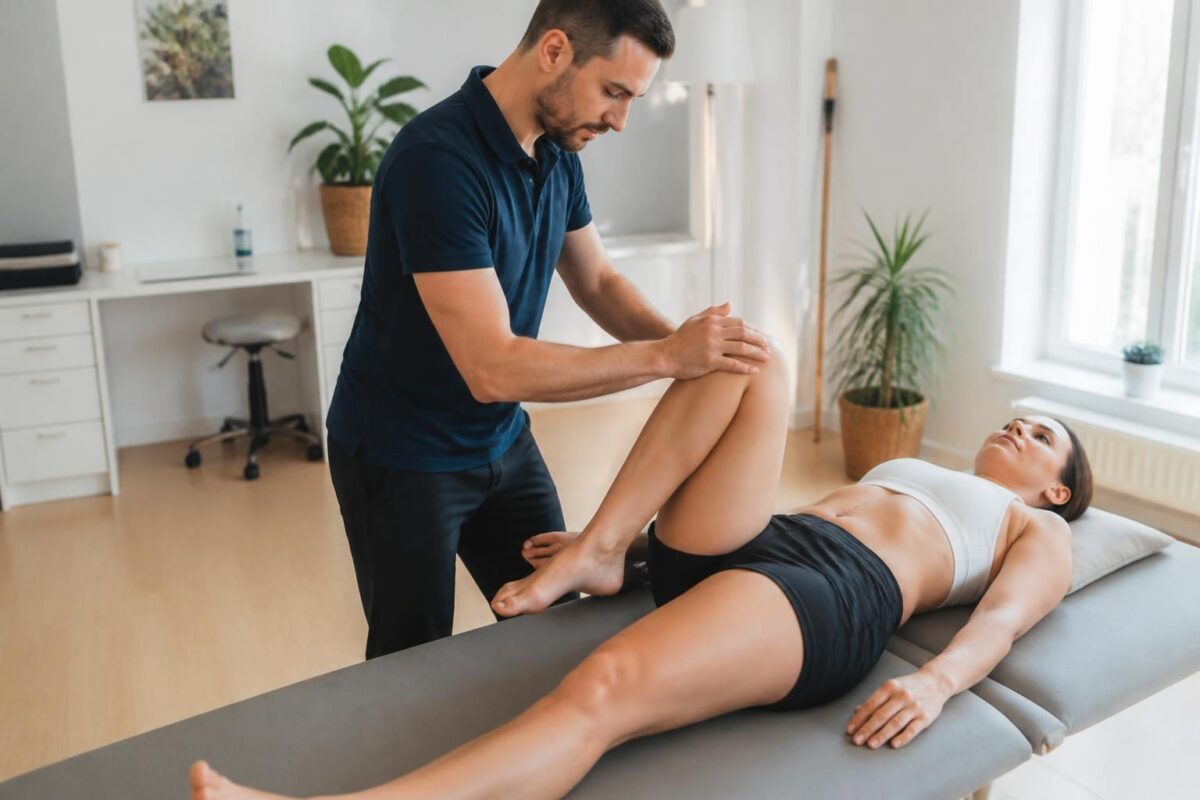
How osteopathy supports recovery after complex surgery
In short In short, Post-operative osteopathy is an approach fresh which supports the recovery After a Complex surgery. It helps to reduce the pain and the fatigue, improves the mobility and accelerates the healing thanks to a better vascularization and…
Prevent recurrences and support the return to movement
To promote long-term stability, adopt ergonomic postures at work, favor gentle activities such as swimming or pilates, and integrate trunk strengthening exercises. Physiotherapy support can be envisaged to progress towards stability and posture exercises. The alliance between osteopathy and physiotherapy Offers a complete, gentle and effective approach to regaining comfort and mobility.
| Aspect | Description |
|---|---|
| Framework and philosophy | osteopathy considers the body as a unit and acts on the chains tissue To support the Natural healing. |
| Main objective | Reduce tension and improve the mobility without intervention invasive. |
| Action mechanisms | Relaxation tissue, decompression and biomechanical rebalancing around records And some nerve roots. |
| Therapeutic scope | global approach rather than targeted on a single vertebra. |
| Softness and security | Practice sweet, adapted to the inflammatory phase, without trauma. |
| Effects on pain | relief from pain and inflammation by better circulation and drainage. |
| Limitations | does not act on the direct reduction of the slipped disc But on the constraints tissue peripherals. |
| complementarity | complementary to the physiotherapy and at the medicine, with necessary medical follow-up. |
Testimonials: osteopathy and herniated discs — a gentle approach
“After weeks of pain related to a herniated discs, I chose support by osteopathy. The approach is fresh, and tensions around the painful area gradually relax. At each session, I feel an improvement in the mobility and a decrease in inflammation without medication. »
“What convinced me is theGlobal approach : the practitioner does not just aim at the painful area, but seeks imbalances throughout the body (basin, column, breathing). Result: less overlaps and real comfort found during the movements. »
“During the acute phase, the gestures were particularly sweet and adapted to my pain. We worked on the fascias and deep tissues without ever forcing, which gave me confidence and quick relief. »
“After a few sessions, I was able to resume my daily activities and even my favorite sport. losteopathy acted as a real sweet support that allowed me to regain my motor skills and my confidence in my movements. »
“What helped me the most was the clear explanation of the mechanisms and the advice ofself-care to do between visits. This practical education is an integral part of the approach and avoids relapses. »
“I was told that osteopathy does not “cure” a slipped disc, but I found a lasting reduction in pain and better tolerance to effort. It’s a way fresh and effective to regain comfort without surgery. »
Dr. Sylvain Desforges, Expert in osteopathy, Naturopathy and manual medicine, occupies the role of founding president of TagMed and the ACMA association. With a career dedicated to innovation in health care, he specializes in the management of Chronic pain and the integration of advanced technologies such as spinal decompression, the laser and shockwave therapy. Its mission is to offer evidence-based care in order to optimize the health and well-being of its patients. His approach is part of a holistic and respectful vision of the body.
In his practice, he favors a gentle approach It front of slipped disc. By considering the body as a connected unit, it focuses on releasing muscle tension around the spine, improving joint mobility and decreasing the mechanical pressure exerted on the nerve roots. Thanks to non-invasive and personalized interventions, it aims to alleviate pain and inflammation while respecting the patient’s biological balance and promoting active resumption of movements.
To understand his approach, it is useful to remember what a slipped disc. The intervertebral discs play the role of shock absorbers, composed of a central pulpy nucleus surrounded by a resistant fibrous ring. Over time, microtraumas or poor postures can crack this ring. The nucleus can then protrude and compress a nearby nerve root, triggering acute pain and sometimes muscle weakness. The body reacts with reflex contractions which reinforce the musculoskeletal blockage. The osteopathic objective is to reduce these mechanical stresses by gentle manipulations and global postural reharmonization.
His approach begins with a Detailed anamnesis and an overall assessment exceeding the painful area. The practitioner analyzes posture, asymmetries and compensation patterns, identifies fascial tensions and joint restrictions that maintain inflammation. By working on the diaphragm, pelvis and myo-fascial chains, sometimes at a distance when necessary, it seeks to free these muscle chains and establish a more fluid biomechanics, promoting sustainable relief.
the techniques used remain sweet and adapted to the inflammatory state. Slow joint mobilizations, deep tissue work and liberation of the fascias help relieve pain without attacking sensitive tissues. The diaphragmatic relaxation and the resumption of mobility of adjacent segments contribute to reducing the pressure on the nerve and to promote natural self-healing. The objective is to support the patient towards a lasting functional recovery rather than aiming for an isolated mechanical reduction of the hernia.
From a modern and responsible perspective, theBack osteopathy is part of a multidisciplinary collaboration. When necessary, the intervention can be integrated into a global plan that includes conventional medical care. The practitioner remains attentive to the warning signals and refers to the attending physician in the event of persistence of symptoms, motor disorder or neurological signs. This approach favors prevention and rehabilitation to avoid long-term relaps.
This journey demonstrates a commitment to a Smooth and efficient support Herniated discs, focused on rapid pain relief and progressive restoration of mobility. Dr. Desforges combines solid clinical expertise with careful listening to support each patient towards a regained movement and better quality of life, while respecting the limits of the body and supporting the natural self-regulation of the nervous system.
back pain linked to slipped disc is often better apprehended by a gentle approach and global. theosteopathy seeks to release peripheral voltages, to improve the mobility and reduce the pressure on the nerves without resorting to invasive gestures. By considering the body as a unit, it aims to restore a Fluid biomechanics and promote theself-healing natural, while recalling that this approach does not replace a medical consultation if the symptoms worsen.
As part of a slipped disc, the main objective of osteopathy is not to have the disc “repaired” directly, but to reduce tissue constraints and restore a harmonious mobility of the trunk and associated structures. By releasing fascias and myo-fascial chains, manual treatment can reduce pain and inflammation, improve overall flexibility and promote a more balanced posture. This approach is non-invasive and adapted to each patient, while remaining complementary to medical follow-up if necessary.
The quality of life and the comfort of movements can improve thanks to a progressive and individualized approach. By working on the peripheral areas (diaphragm, pelvis, abdominal strap) and on postural compensation mechanisms, osteopathy contributes to reducing the tensions that accumulate around the injured area, promoting more sustainable rehabilitation and less painful.
It is essential to remember that osteopathy is part of a global reflection and does not replace a medical evaluation in the event of warning signs. Each session is adapted to the inflammatory state and tolerance of the patient, favoring gentle mobilizations and a tissue work that respects natural healing mechanisms.
The course can be supplemented by targeted rehabilitation, in particular to strengthen the abdominal strap and the back muscles, in order to prevent relapses and support the progress made. Collaboration with other health professionals can be beneficial to optimize long-term outcomes.
To deepen the benefits and applications of osteopathy in this area and in other contexts, discover these resources:
What kinds of pain can be treated with osteopathy,
Benefits of osteopathy for athletes,
How does osteopathy improve quality of life,
Relieve cervical pain with osteopathy,
Herniated discs and osteopathy,
Osteopathy and herniated discs – a gentle approach,
Benefits for chest pain,
Disc herniation – Support,
Healing a herniated disc – Osteopath,
osteopathy and herniated disc.

Dr Sylvain Desforges, B.Sc., D.O., N.D., osteopath, is the founding president of TAGMED and of the ACMA association. He dedicates his practice to chronic spinal pain, low back pain and symptoms compatible with sciatica, particularly when pain radiates toward the buttock, leg, calf, foot or toes.
Through SOS Sciatique, he publishes educational content on sciatica symptoms, possible causes such as disc herniation, disc narrowing, foraminal stenosis or irritation of a lumbar nerve root, as well as non-surgical approaches that may be considered according to the evaluation. At Clinique TAGMED, care may include, depending on the case, motorized neurovertebral decompression, specific osteopathic care or precision percussion.
For an evaluation related to sciatica treatment in Montreal / Mount Royal or sciatica treatment in Terrebonne, please consult the services available at Clinique TAGMED.
Medical disclaimer
The information published on SOS Sciatique is provided for educational purposes only and does not replace a consultation, diagnosis, opinion or treatment provided by a physician or another authorized healthcare professional. The author of this article is neither a medical doctor nor a specialist in a medical specialty recognized by the Collège des médecins du Québec. The osteopathic, manual medicine or functional support approaches described on this site do not constitute medical acts and are not intended to replace medical follow-up.
Consult a physician or emergency service in cases of loss of bladder or bowel control, anesthesia in the saddle area, significant or progressive weakness in the leg or foot, fever, recent trauma, severe pain or rapid worsening of symptoms. For more details, please read our Legal Notice.