


Sciatica: a comprehensive guide to understanding, alleviating, and preventing pain
Understand why pain may radiate from the lower back or buttock down to the thigh, calf, foot, or toes, and discover the signs that require prompt evaluation.
This guide brings together symptoms, possible causes, diagnosis, treatments, activity advice, and prevention measures. It provides general information and is not a substitute for personalized medical consultation.
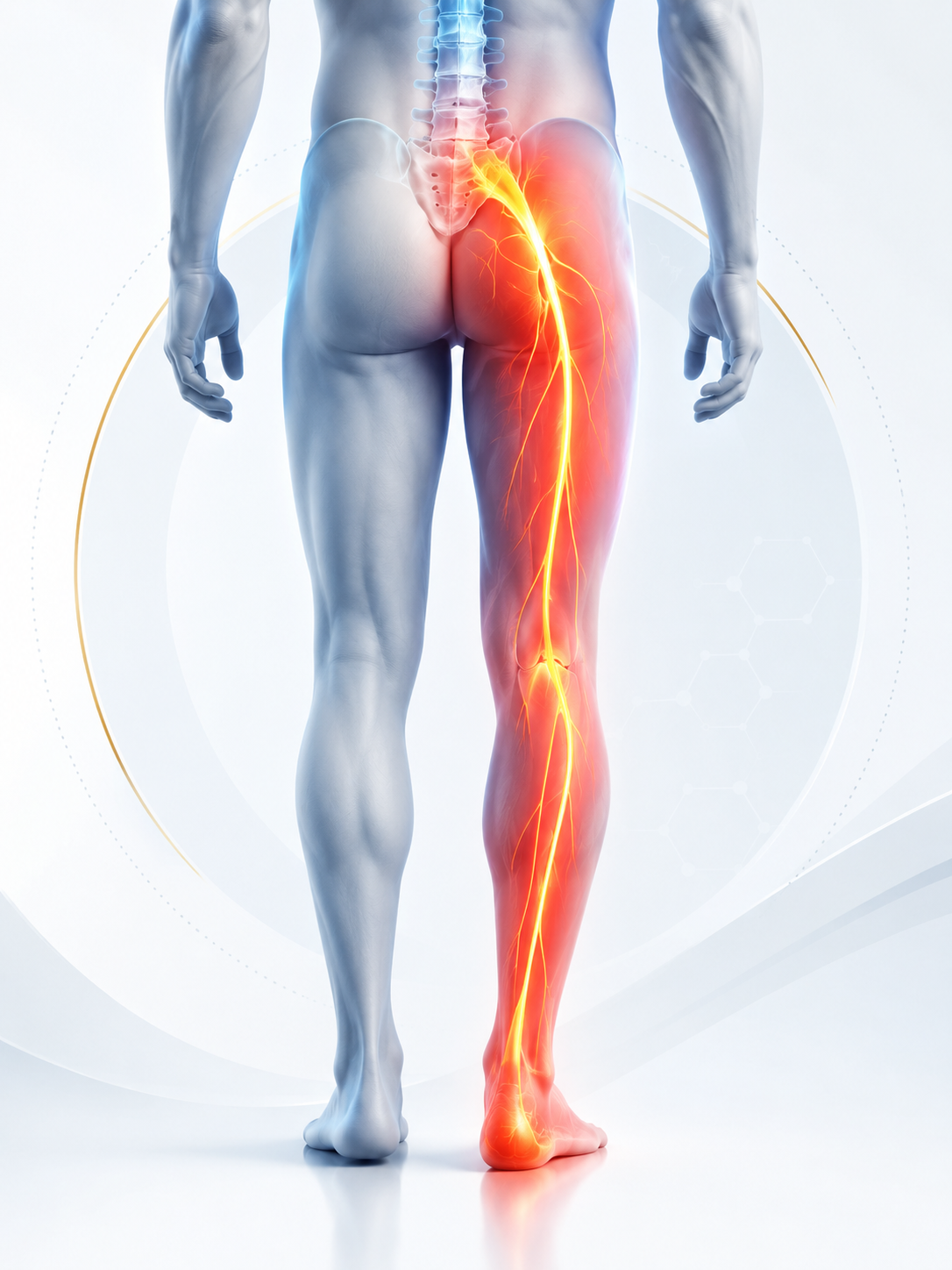
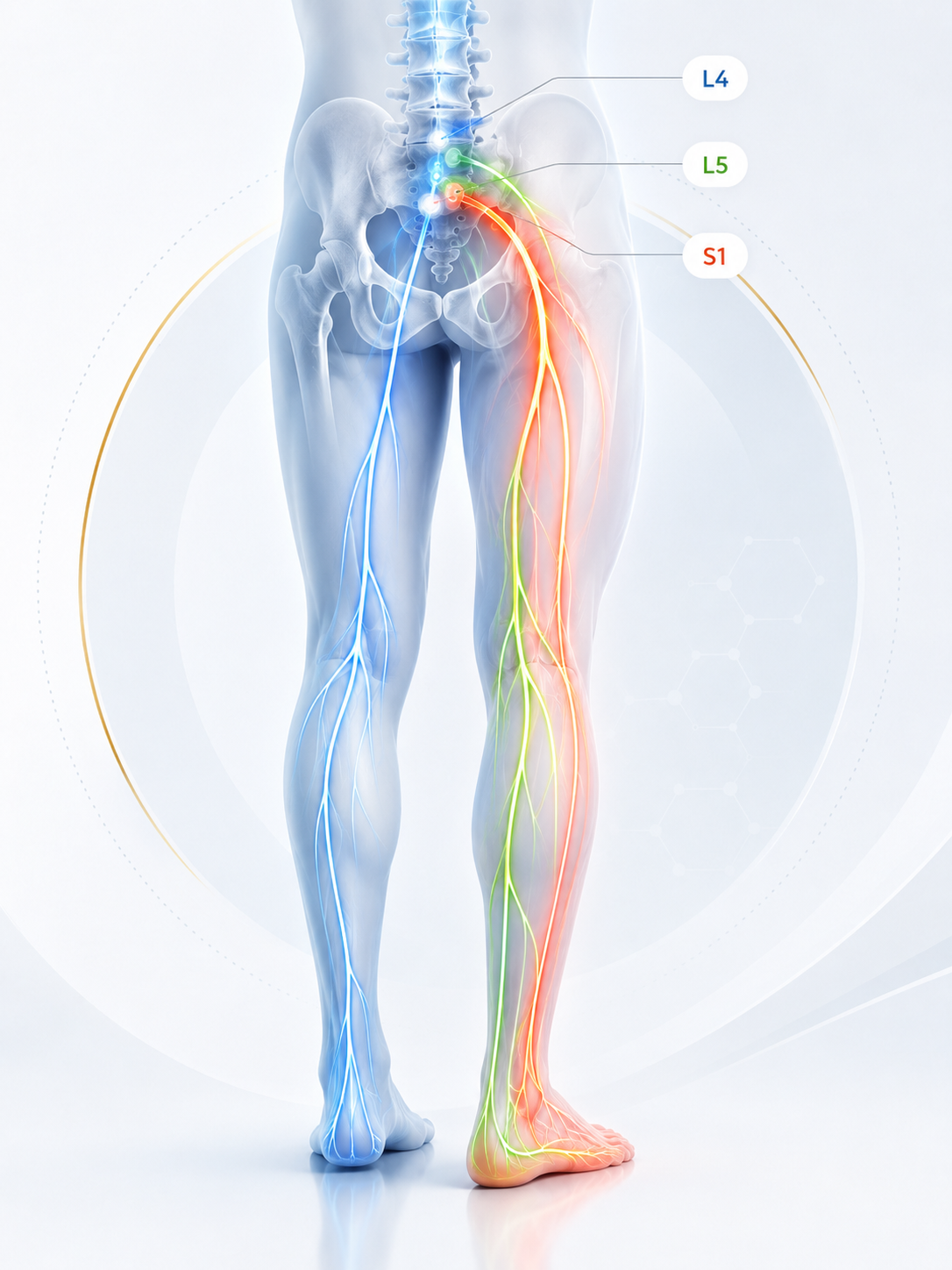
Where does sciatica pain occur?
The classic pathway of sciatica pain often starts in the lower back, the buttock, or the hip region. The pain may then radiate down the back of the thigh, towards the calf, heel, the outer edge of the foot, or certain toes. However, this pathway is not always complete. Some people only feel pain in the buttock, while others mainly experience symptoms in the calf or foot.
The pathway is important because it can guide the assessment. For example, pain radiating towards the big toe may suggest irritation consistent with the L5 root, while pain that descends towards the heel or the outer side of the foot may indicate involvement of S1. Pain more localized towards the front of the thigh might suggest a different condition, such as cruralgia or another type of irritation.
| Perceived pathway | Commonly referenced root | What this may suggest |
|---|---|---|
| Buttock, back of thigh, calf | L5 or S1 | Possible irritation of a lumbar nerve root associated with a disc or foraminal issue. |
| Pain towards the big toe | L5 | Pathway often associated with irritation consistent with L4-L5 or L5. |
| Pain towards the heel or the outer edge of the foot | S1 | Pathway often associated with irritation consistent with L5-S1 or S1. |
| Pain in the thigh | L3 or L4 | This may suggest a femoral nerve pain rather than a typical sciatica. |
Symptoms Often Associated with Sciatic Pain
Sciatic pain can manifest in several ways. Pain alone is just one element. It is also important to consider nerve sensations, muscle strength, tolerance to positions, ability to walk, and the evolution of symptoms over time.
Pain in the buttock
The pain can be deep, localized to one buttock, or sometimes felt as a pressure that descends to the back of the thigh. This pain may be aggravated by sitting, certain trunk movements, or prolonged driving.
Pain in the leg
The pain may follow a descending path towards the thigh, calf, or foot. It can be stronger in the leg than in the lower back, which is common in nerve pain of lumbar origin.
Burning or Electric Shock
A burning, current-like, or electric shock sensation may indicate nerve irritation. These symptoms should be interpreted with caution, especially if they increase with certain positions.
Pins and Needles
Pins and needles may appear in the leg, foot, or toes. They can be intermittent or persistent. Their presence deserves monitoring, especially if they descent further down over time.
Numbness
Numbness can indicate that the nerve root is transmitting sensory information less effectively. It is important to note its location, duration, and progression.
Muscle Weakness
Weakness in the foot, difficulty standing on tiptoes, lifting the foot, or walking normally are more concerning signs that should be evaluated quickly.
What Can Aggravate Sciatica Pain
Sciatica pain can vary depending on position, load applied to the spine, trunk bending, twisting, duration in a sitting position, prolonged walking, or repetitive efforts. These reactions sometimes provide clues about the likely cause.
It is unwise to automatically conclude that a movement is good just because it is generally recommended on the Internet. Even walking can become painful or exacerbate symptoms in some people, especially when a herniated disc, nerve compression, or stenosis is involved.
- Prolonged sitting can increase certain disc-related symptoms.
- Trunk bending can worsen certain herniated discs or protrusions.
- Twisting can irritate a structure that is already sensitive.
- Prolonged walking may be poorly tolerated in the presence of spinal or foraminal stenosis.
- Aggressive stretching can increase tension on an irritated nerve root.
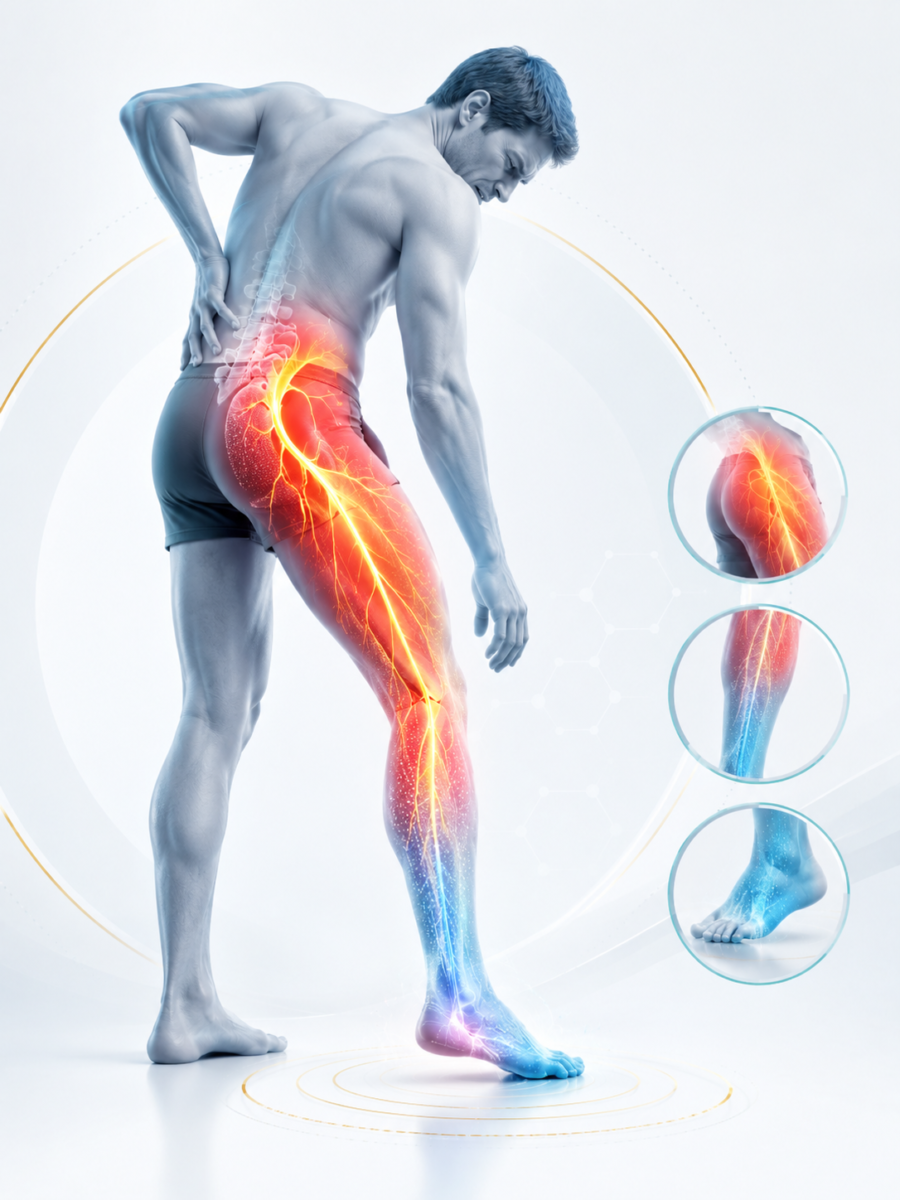
The reaction to positions and movements helps to better understand the profile of the pain.
Sciatica: the most common causes to consider
Sciatica pain is often related to nerve irritation or compression in the lower back. A herniated disc is a common cause, but stenosis, degenerative changes, or other conditions can produce comparable symptoms. The piriformis syndrome may also be mentioned, but it should not become the automatic explanation for pain in the buttock.
| Possible cause | Compatible symptoms | Why it’s important |
|---|---|---|
| Lumbar disc herniation | Radiating pain, burning, numbness, sometimes weakness. | Some movements or exercises may worsen symptoms if the root is irritated. |
| Disc bulge or protrusion | Lower back pain with possible radiation into the buttock or leg. | The disc can help reduce the available space around the nerve root. |
| Disc pinching | Lumbar stiffness, mechanical pain, possible irritation of a root. | The decrease in disc height can change the stresses on the foramina. |
| Foraminal stenosis | Pain in the leg in certain positions, sometimes numbness. | The exit passage of the nerve root becomes narrower. |
| Lumbar spinal stenosis | Pain, heaviness, or weakness while walking, sometimes relieved at rest. | A narrowed spinal canal can irritate multiple nerve roots. |
Diagnosis and imaging: MRI is not always necessary
The evaluation generally begins with the history of symptoms and a clinical examination. The professional checks, in particular, the pain pathway, strength, sensitivity, reflexes, walking, and movements that modify the symptoms.
Clinical interview
Onset of symptoms, pathway, aggravating positions, sleep, work, history, and warning signs.
Neurological examination
Strength, sensitivity, reflexes, walking, and neural tension tests are interpreted together.
Targeted imaging
MRI is mainly considered if the symptoms are complicated, persistent, progressive, or may require changes in treatment.
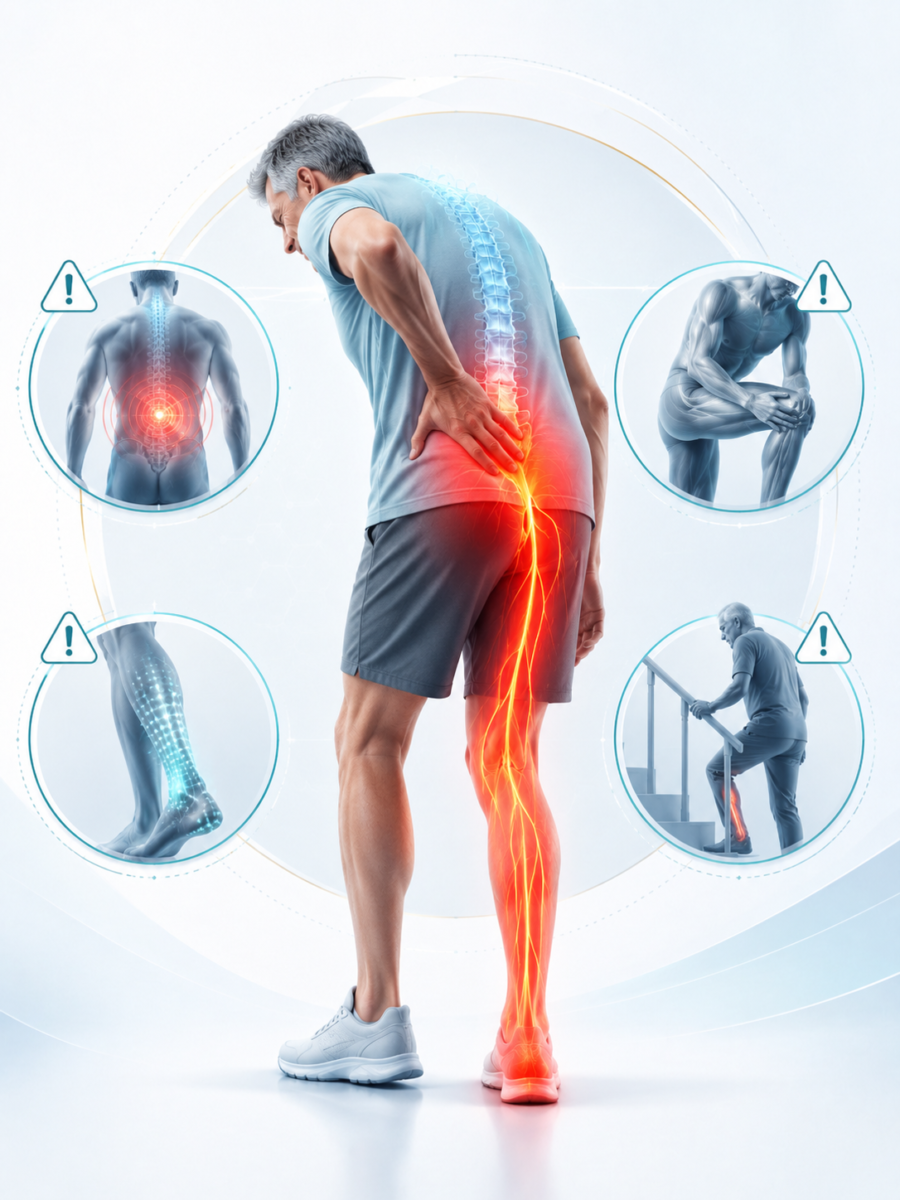
When to consult for sciatic pain?
Sciatic pain deserves evaluation when it persists, frequently recurs, extends below the knee, limits walking, disrupts sleep, or is accompanied by numbness, weakness, or loss of function.
You should also consult if the pain worsens despite precautions, becomes more intense in the leg than in the lower back, or gradually moves down toward the foot. Pain that changes location or is accompanied by neurological deficits must be taken seriously.
To monitor
Pain that extends lower, numbness, weakness, loss of strength, or difficulty walking.
Emergency
Loss of urinary or bowel control, saddle anesthesia, significant weakness, or rapidly progressive symptoms.
How to relieve and treat sciatica ?
The management is generally gradual. It starts with information, a temporary adaptation of activities, and maintaining a tolerable level of movement. Prolonged bed rest is usually not recommended, but one should not push an activity that significantly increases pain in the leg, numbness, or weakness.
There is no universal treatment. The choice depends on the probable cause, duration, neurological signs, general health status, and the reaction to initial measures.
| Option | Possible location | Precautions |
|---|---|---|
| Adapted activity | Maintain tolerated activities and gradually resume walking, work, and daily tasks. | Reduce what lowers the pain further or increases neurological symptoms. |
| Medications | Provide short-term relief according to the individual’s profile. | Consult a doctor or pharmacist and respect contraindications. |
| Exercises and rehabilitation | Improve function, tolerance to movement, and gradually resume activities. | The program should be individualized; interrupt a movement that significantly worsens radiation or weakness. |
| Manual therapy | Can be considered a complement to active management. | Should not delay a medical evaluation when a warning sign is present. |
| Infiltration or surgery | Medical options for certain persistent pains or certain neurological deficits. | Shared decision with a doctor or specialist after appropriate assessment. |
Prevent relapses without promising the impossible
No method guarantees that sciatica will never come back. A realistic strategy aims to maintain physical capacity, gradually resume activities, and quickly recognize signs of aggravation.
Move regularly
Maintain appropriate activity and avoid long periods of immobility when symptoms allow.
Progress gradually
Gradually increase walking, loads, sitting time, and efforts rather than trying to do everything at once.
Monitor the function
Have a recurring pain reevaluated if accompanied by numbness, loss of sensation, weakness, or difficulty walking.
Sciatica pain and TAGMED Clinic
The TAGMED Clinic is a specific osteopathy clinic using advanced technologies. It offers non-surgical and non-invasive care for spinal pain, certain joint pain, muscle pain, and sports injuries, depending on the evaluation.
For pain compatible with sciatica, the goal is to clarify the pathway, associated symptoms, aggravating factors, and the relevance of a personalized approach. The typical fee is $140 per consultation or treatment. Services are not covered by RAMQ, but osteopathy receipts can be provided and are eligible for reimbursement by several private insurance plans depending on your policy.
Please note that we do not offer physiotherapy, chiropractic, injections, naturopathy, or functional medicine services at the TAGMED Clinic.
TAGMED Clinic Terrebonne
1150 Lévis Street, Suite 200
Terrebonne, QC, J6W 5S6
Phone: 450-704-4447
Days: Monday, Wednesday, and Friday
TAGMED Clinic Montreal / Mont-Royal
1140 Beaumont Avenue
Mont-Royal, QC, H3P 3E5
Phone: 1-877-672-9060
Days: Tuesday and Thursday
Medical Sources and Limitations of Information
This guide is an educational resource. It does not confirm the cause of a pain, prescribe a treatment, or determine whether an intervention is suitable for a person. Recommendations must be adapted by a licensed healthcare professional.
French-speaking Resources
International Recommendation
NICE NG59 — Low back pain and sciatica: recommendations
This recommendation particularly outlines the role of activity, exercise, manual therapies, medications, and specialized interventions, as well as non-recommended approaches.
Frequently Asked Questions about Sciatica Pain
How can you recognize sciatica pain?
Sciatica pain often radiates from the lower back or buttock down to the thigh, calf, foot, or toes. It may be accompanied by tingling, burning, electric shock sensations, numbness, or weakness.
Does the pain always start in the lower back?
No. Some sciatica pains are mainly felt in the buttock, leg, or foot. The lower back may be painful, mildly painful, or sometimes almost absent from the picture.
Is pain in the buttock always sciatica?
No. Pain in the buttock can have several causes. It becomes more compatible with sciatica when it radiates down the leg, follows a nerve path, or is accompanied by numbness, tingling, or weakness.
What path is typical for sciatica?
The classic pathway descends into the buttock, the back of the thigh, the calf, and sometimes the foot. The exact area can vary depending on the affected nerve root, notably L4, L5, or S1.
Can pain in the big toe come from the back?
Yes. Pain, numbness, or tingling toward the big toe can be associated with irritation of the L5 root, often linked to the L4-L5 or L5-S1 region.
Can pain in the heel or outer edge of the foot be sciatica?
Yes. Pain that radiates to the heel or outer edge of the foot can be compatible with irritation of the S1 root, often associated with the L5-S1 region.
Is walking always good for sciatica pain?
No. Walking can be helpful for some people, but it can also worsen symptoms, especially if the cause is a herniated disc, nerve compression, or stenosis. It is important to monitor if the pain extends further down the leg.
Can stretching worsen sciatica pain?
Yes. Some stretches can increase tension on an irritated nerve root or exacerbate symptoms of disc origin. Exercises should not be chosen without considering the likely cause.
Is an MRI always necessary?
No. For recent sciatica without warning signs, imaging is generally not systematic. It becomes more relevant when symptoms are complicated, persistent, progressive, or likely to change treatment.
How long can sciatica last?
The duration varies depending on the cause and situation. Many sciatica cases gradually improve over a few weeks, but pain without improvement, recurrent pain, or accompanied by neurological signs warrants reevaluation.
Should I stay in bed during a flare-up?
Prolonged bed rest is generally not recommended. It is preferable to maintain tolerated activities and gradually resume, without forcing movements that significantly increase radiation, numbness, or weakness.
When does sciatica pain become concerning?
It becomes more concerning when accompanied by weakness, progressive numbness, loss of bladder or bowel control, anesthesia in the saddle region, fever, trauma, or rapid worsening.
What treatments are available at TAGMED Clinic?
Depending on the evaluation, possible approaches may include motorized neurovertebral decompression, specific osteopathy, or precision percussion. Medical laser and shockwave therapy are not used for treating back pain or sciatica.
Is your pain radiating down your leg or limiting your activities?
An evaluation can help clarify the pain pathway, identify signs that require medical guidance, and determine what non-surgical options can be discussed based on your situation. In case of an emergency sign, first consult a doctor or an emergency service.
Dr Sylvain Desforges, B.Sc., D.O., N.D., osteopath
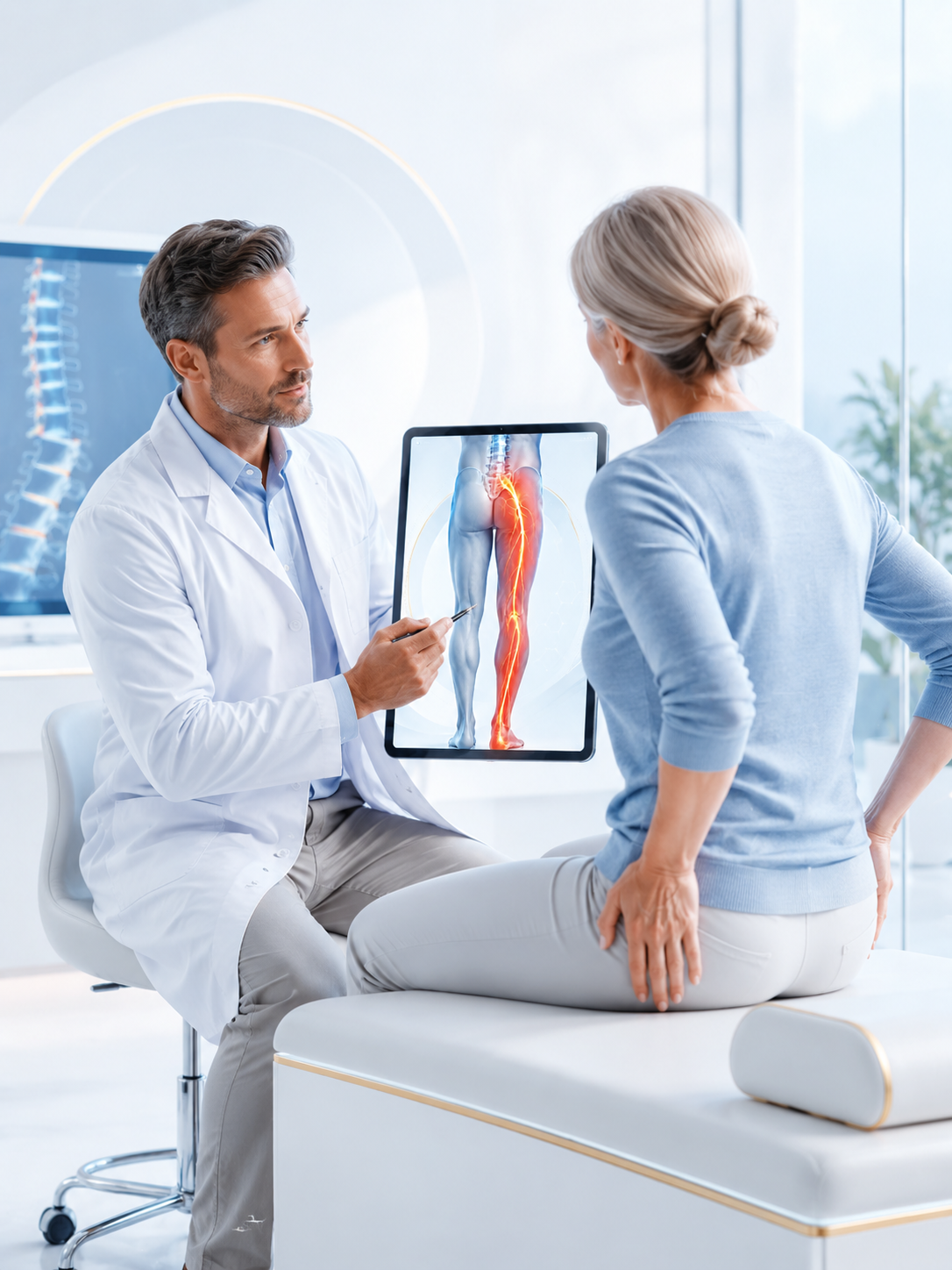
The path of the pain must be interpreted with all of the symptoms.
Editorial information, sources and limitations
This content is intended to inform patients about sciatica, possible causes, warning signs, and care options. It does not replace an individualized assessment.
Reference sources
References are selected according to the subject of the page: guidelines, systematic reviews, then institutional resources.
- NICE NG59 – Low back pain and sciatica in over 16s — National guideline
- HAS – Management of patients with common low back pain — French national guideline
- Cochrane – Corticosteroid injections for treatment of sciatica — Systematic review
- NCBI Bookshelf – Sciatica — Clinical institutional resource
Complementary resources from the TAGMED network
These internal resources complement the clinical information and thematic linking. They do not replace national guidelines or systematic reviews.
Editorial note on decompression
Clinical resource from the TAGMED network; it does not replace national guidelines. Some guidelines use the term “traction” and recommend caution for low back pain with or without sciatica. Any decompression option should therefore be presented as an individualized clinical approach, with limitations, indications, and contraindications clearly explained.
Limitations of this information
The information on this page is general. It does not constitute a diagnosis, prescription, or guarantee of results. Pain radiating into the leg may have several causes; assessment should consider clinical history, examination findings, symptom progression, and, when appropriate, complementary tests.
When to seek urgent medical care
Seek urgent medical care if you experience loss of bladder or bowel control, saddle anesthesia, major or progressive leg weakness, unexplained fever, pain after significant trauma, or severe pain that rapidly worsens.
