Sciatica in Terrebonne: nerve root, disc, and foramen explained simply
26/10/2026
Sciatica and aggressive stretches: possible sign of worsening
26/10/2026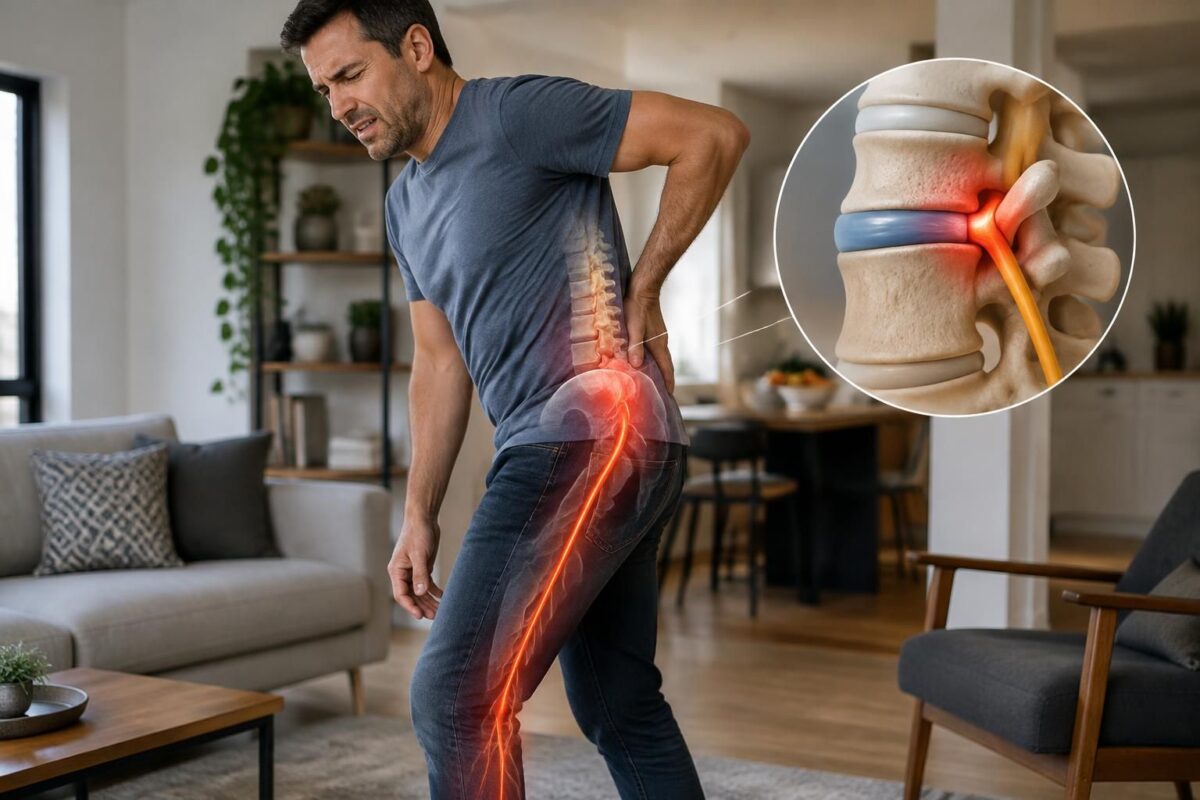
IN BRIEF
| A disc protrusion is a bulging of the disc that may be associated with recurring sciatica, without necessarily being the cause. The evaluation correlates symptoms, neurological examination, and imaging, if relevant. An appropriate plan can help improve function and reduce recurrences; progressive weakness or urinary or intestinal problems require urgent evaluation. |
A disc protrusion can sometimes irritate a nerve root and contribute to sciatica-like pain, but a visible abnormality on imaging does not always explain the symptoms. In the case of recurrence, it is useful to reassess pain, strength, sensitivity, and affected activities. Management is often gradual and non-surgical: temporary activity modification, pain relief, and appropriate exercises or rehabilitation. Worsening weakness, a dropping foot, saddle anesthesia, or urinary or bowel problems require urgent evaluation.
A disc protrusion may be associated with pain that travels from the buttock down the leg, but an MRI image alone does not prove that it causes recurring sciatica. The evaluation must compare the level and side of the protrusion with the symptoms, function, and neurological examination. Management depends on this concordance, evolution, and present signs; many cases can be monitored without surgery.
Disc Protrusion and Recurring Sciatica: Understanding the Link
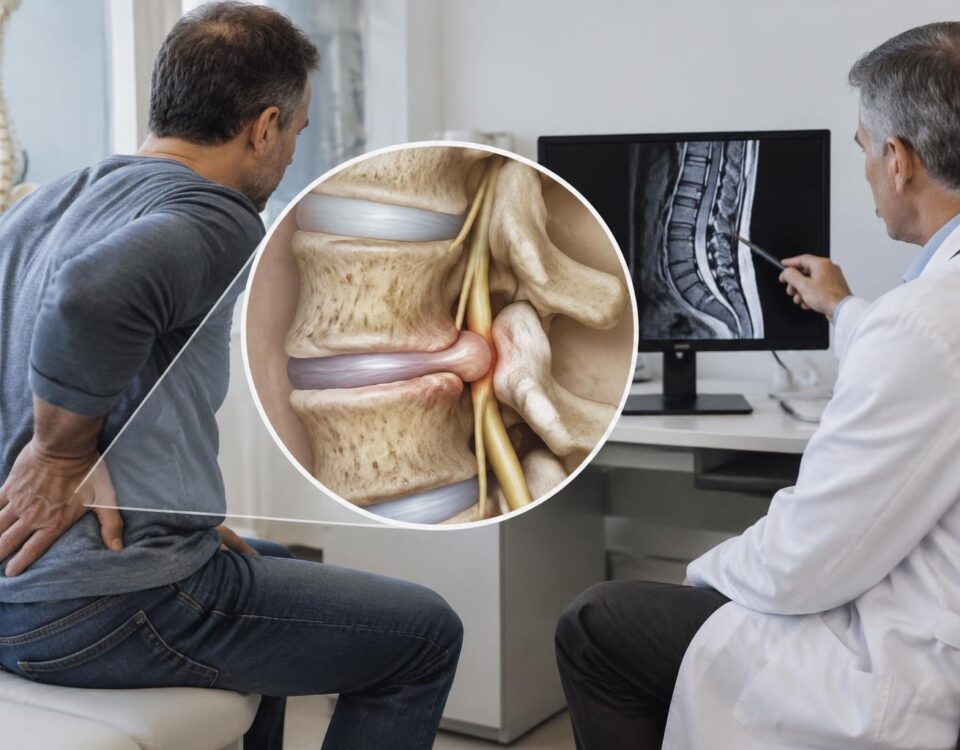
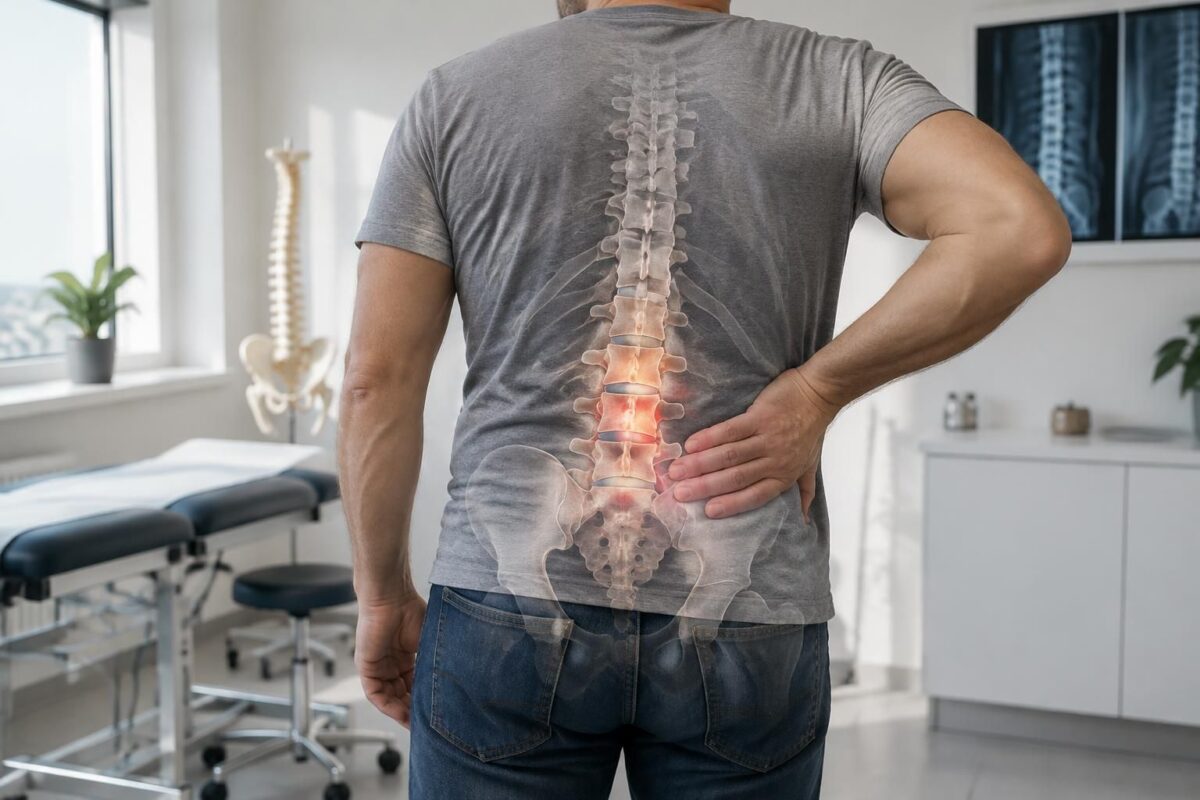
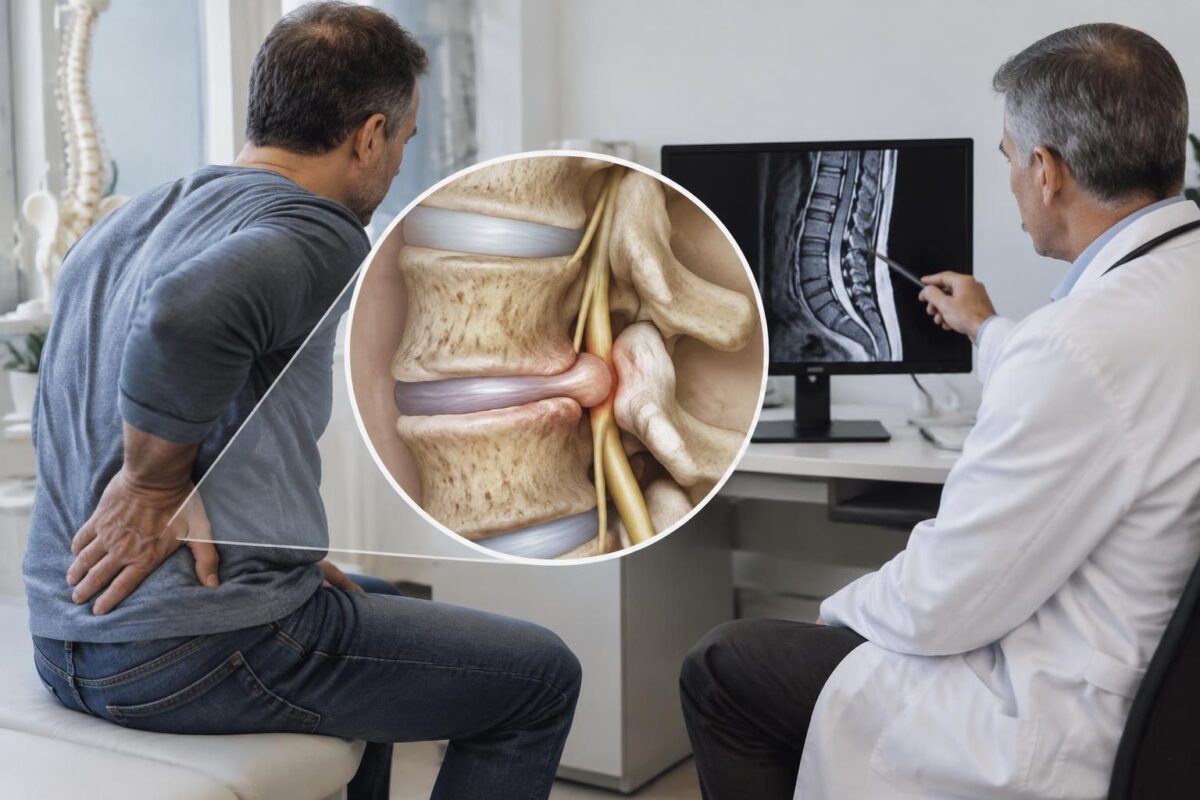
A protrusion is a localized deformation of the intervertebral disc. The disc bulges, but its outer ring remains continuous according to the definition used in imaging. A protrusion can irritate a nerve root, but it can also be found in a person who has no pain.
The term sciatica describes pain that often follows the pathway of the sciatic nerve. The term radiculopathy refers to damage to a nerve root that can cause radiating pain, numbness, or weakness. Distinguishing between radiating pain and neurological impairment helps guide the evaluation. To better understand these terms, consult the guide on disc bulging, protrusion, sciatica, and radiculopathy.
Protrusion and Disc Bulging: Different Terms
A disc bulge generally describes a more diffuse extension of the disc’s contour. A protrusion, on the other hand, corresponds to a localized bulge, with a base that is wider than its depth. Reports may use variable terms. It is therefore best to have their meanings explained in the context of the imaging report.
The size or name of the abnormality alone does not predict the intensity of pain or the necessary treatment. An image becomes more relevant when its level and side match the pathway of symptoms and examination results. A resource also presents the specifics of a disc protrusion at L4-L5.
Why Can Pain Return?
A recurrence can follow a period of improvement. It may be related to new irritation, a rapid resumption of certain activities, or persistent sensitivity in the area. It does not necessarily mean that the protrusion has grown or that a new lesion has appeared.
Recurring pain may also have another cause. The professional must re-examine the symptoms instead of assuming that each episode stems from the same abnormality. Radiating lower back pain can vary from person to person and requires evaluation tailored to specific sciatica situations.
Disc herniation and persistent pain in the leg
IN BRIEF A disc protrusion is a bulging of a disc that can irritate a nerve and cause persistent pain in the leg, sometimes accompanied by tingling or numbness. Imaging alone does not confirm the origin of the symptoms: clinical…
Disc herniation and lumbar degeneration
IN BRIEF A lumbar disc protrusion is a bulging of a disc often related to disc degeneration. It does not always cause symptoms but can contribute to lower back pain or pain radiating down the leg if a nerve is…
Symptoms to Monitor with Recurring Sciatica
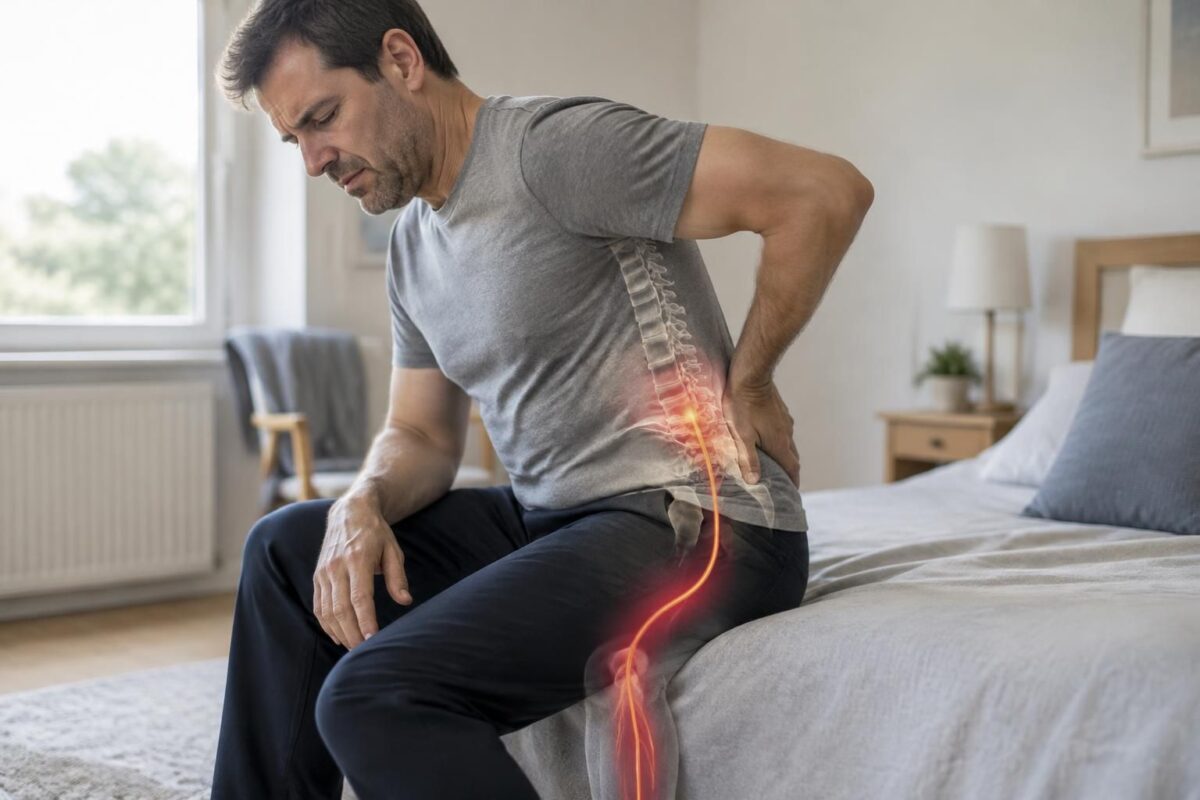
Lumbar protrusion may be accompanied by pain in the lower back, buttock, or leg. Some people experience tingling, a burning sensation, or numbness. Symptoms may increase during prolonged sitting, certain movements, or exertion.
The pathway of pain varies according to the affected nerve root. An L4-L5 protrusion may sometimes be associated with symptoms in the leg, but the MRI report alone does not confirm this relationship. To understand the terms associated with examinations and symptoms, you can consult this resource on disc protrusion, MRI, and symptoms.
Pain, Numbness, and Weakness
Pain that radiates down the leg does not automatically mean that there is a loss of nerve function. The evaluation can check strength, sensitivity, reflexes, and gait. It also considers affected activities, sleep, and the evolution of symptoms.
Note significant changes: the painful side, the affected area, positions that worsen or relieve the pain, and the onset of weakness. This information helps the professional compare episodes and determine if a reevaluation is necessary.
Disc protrusion and disc pinching: combined mechanisms
IN BRIEF A disc protrusion is a bulging of the disc, while a disc narrowing refers to a decrease in its height. These changes can coexist and sometimes irritate a nerve root, leading to pain or radiation, but they can…

Disc herniation and associated foraminal stenosis
IN BRIEF A disc protrusion associated with foraminal stenosis occurs when a bulging disc coexists with a narrowing of the opening through which a nerve root passes. This association can lead to lower back pain radiating into the leg, tingling,…
How to Evaluate a Disc Protrusion with Recurrent Pain
The evaluation begins with the history of symptoms and a clinical examination. The professional specifies the onset of episodes, their duration, frequency, trajectory, and effects on activities. They then examine relevant elements according to the situation, including mobility, strength, sensitivity, and reflexes.
An MRI is not systematic for every recurrence. It may be considered if the results are likely to change management, if symptoms persist, or if a neurological deficit appears. X-rays and MRIs do not answer the same questions. An image must always be interpreted with the symptoms and examination, and not in isolation.
Useful Documentation Elements
Before and during management, it is useful to note the territory of the pain, changes in sensitivity, the ability to walk, and activities that have become difficult. The professional can establish baseline measures and plan a reevaluation date.
A clear approach also specifies objectives, limits of treatment, signs that necessitate stopping it, and criteria that justify medical referral. To better understand how to choose an approach related to sciatica, consult the guide on referral for sciatica treatment.

Spinal disc protrusion and nerve inflammation
IN BRIEF A disc protrusion is a bulging of the disc that can irritate or compress a nerve, without necessarily causing symptoms. When it leads to nerve inflammation, it can cause pain in the back or neck, sometimes accompanied by…

Disc protrusion and irritation of L5
IN SHORT A disc protrusion is a bulging of the disc that can irritate the L5 root and cause lower back pain radiating to the buttock, leg, or foot, sometimes with tingling or weakness. MRI alone is not sufficient to…
Management of a Disc Protrusion with Recurring Sciatica
Care depends on the examination and progress. It may include a temporary adjustment of activities, pain management discussed with a healthcare professional, and monitoring of function. Medications, including pain relievers or anti-inflammatories, should be used according to the recommendations of a doctor or pharmacist and considering contraindications.
Manual or functional approaches may be considered as support, after a proper evaluation. They do not replace a medical diagnosis, prescribed follow-up, or urgent guidance. At the Clinique TAGMED, the evaluation can determine whether care such as specific osteopathy, precision impactor, or motorized neurovertebral decompression is relevant to the presented profile. No results can be guaranteed, and these approaches are not suitable for everyone.
The neurovertebral decompression should not be considered an automatic treatment for any protrusion. The professional must first verify the history, symptoms, possible contraindications, and clinical concordance. To learn more about this approach in a specific context, check the information on neurovertebral decompression and recovery after a severe disc herniation.
When to request a surgical opinion?
Surgery is not decided solely based on the presence of a protrusion on the MRI. A surgical opinion may be discussed when symptoms remain very disabling despite appropriate care or when a neurological deficit requires specialized evaluation. The decision depends on diagnosis, examination, progress, and available options.
To understand the situations where an operation may be considered, consult the article on sciatica surgery and its possible indications. General information on hernias and disc protrusions does not replace advice tailored to your situation.

Disc protrusion and pain after twisting the back
IN BRIEF A disc protrusion is a bulging of the disc that can contribute to pain after a back twist, but it alone does not confirm the cause. The pain can remain in the lower back or radiate to the…

Disc herniation and pain after lifting
IN BRIEF A disc protrusion is a bulging of a disc between the vertebrae. Pain that appears after lifting a load does not prove that it is the cause: the MRI must be interpreted alongside the symptoms and the clinical…
Preventing recurrences and monitoring progress
There is no single action that prevents all recurrences. It may be helpful to alternate positions, adjust the workstation, and distribute demanding tasks. When lifting a load, bring it closer to the body and avoid sudden movements when pain is present. Any return to activity should respect symptoms and recommendations from the professional following you.
Regular follow-up can compare pain, walking, sleep, sensitivity, and strength. A temporary improvement in pain does not necessarily prove that nerve function has returned. Conversely, variable pain does not always mean that the disc has deteriorated further.
The duration of an episode varies depending on its cause and intensity. For general benchmarks, check the page on the possible duration of sciatica. If you wish to have your situation assessed in Montreal or Terrebonne, the services of the Clinique TAGMED can be consulted following appropriate triage.
When to consult quickly or in an emergency
Request a quick medical evaluation if new or progressive weakness appears, if the foot becomes difficult to raise, or if numbness spreads. Consult urgently in case of loss of control of the bladder or bowels, numbness in the saddle area, significant weakness, or rapid worsening. A fever, recent trauma, or severe pain also justifies a quick medical opinion.
Do not continue a care protocol in the presence of these signs. An urgent evaluation may be necessary, even if a protrusion has already been diagnosed or if a previous episode had improved.
Frequently asked questions about disc protrusion and recurring sciatica
Does a disc protrusion always cause sciatica?
No. A protrusion can be present without symptoms. The link is more credible when the level and side of the image correspond to the trajectory of the pain and the results of the examination.
Does a recurrence mean the protrusion has worsened?
Not necessarily. An episode can return without visible change in the disc. A new evaluation helps check progress and look for another cause if the picture has changed.
Do I need to redo an MRI with each episode?
No. Imaging is mainly useful when it can change the management, when a deficit appears, or when persistent symptoms require targeted investigation. The professional determines if it answers a specific clinical question.
Is surgery necessary in cases of recurrent pain?
No. Recurrent pain does not automatically mean surgery is necessary. A surgical opinion depends on severity, progress, examination results, and response to appropriate care.
About the author
Sylvain Desforges, B.Sc., D.O., N.D., osteopath and naturopath, is the founding president of TAGMED and the ACMA association. He dedicates his practice to chronic pain in the spinal column, lower back pain, and pain compatible with sciatica, particularly when the pain radiates to the buttock, leg, calf, foot, or toes.
Through SOS Sciatique, he publishes educational content on sciatica symptoms, possible causes such as disc herniation, disc pinching, foraminal stenosis, or irritation of a lumbar nerve root, as well as non-surgical approaches that can be considered based on the evaluation. At the Clinique TAGMED, care may include, as applicable, motorized neurovertebral decompression, specific osteopathy, or precision impactor.
For an evaluation related to the sciatica treatment in Montreal / Mont-Royal or to the sciatica treatment in Terrebonne, consult the services available at the TAGMED Clinic.
Medical Warning
The information published on SOS Sciatique is provided for educational purposes and does not replace a consultation, diagnosis, opinion, or treatment performed by a physician or another licensed healthcare professional. The author of this article is neither a doctor nor a specialist in a medical specialty recognized by the Collège des médecins du Québec. The approaches of osteopathy, manual medicine, or functional coaching described on this site do not constitute medical acts and are not intended to replace medical follow-up.
Consult a doctor or an emergency service in case of loss of bladder or bowel control, anesthesia in the saddle area, significant or progressive weakness of the leg or foot, fever, recent trauma, severe pain, or rapid worsening. For more details, please read our Legal Notice.
Medical Disclaimer: The information and advice provided on this site do not replace the advice, diagnosis, or treatment of a healthcare professional. Please note that Dr. Sylvain Desforges, osteopath, is neither a medical doctor nor a physician and is not a specialist in a medical specialty as defined by the Collège des médecins du Québec. Manual medicine, functional medicine, and sports medicine as described on this site exclude any medical treatment or diagnosis made by a physician or specialist. Always consult your doctor for any medical questions. For more details, please read our full Legal Notice.
To Monitor
- Pain that radiates into the buttock or leg.
- Numbness or new weakness.
- Progression of symptoms and limited activities.
- An MRI alone does not confirm the cause of the pain.
To Do
- Adapt activities and remain mobile according to tolerance.
- Have persistent or different recurrences reassessed.
- Consult urgently in case of progressive weakness, saddle anesthesia, or urinary or bowel disorders.

A disc protrusion may be visible on imaging without solely explaining recurrent sciatica. To reduce the risk of new flare-ups, it is preferable to have symptoms reassessed, maintain appropriate activity, and follow a progressive plan with measurable goals. Worsening weakness or urinary or bowel disorders require urgent evaluation.
Check What Triggers Recurrences
When pain returns in the buttock or leg, note its starting point, its path, duration, and the activities that trigger or relieve it. Radiating pain does not always mean that a nerve root is involved. The healthcare professional can compare symptoms to an examination of strength, sensitivity, reflexes, and gait, then determine if another cause should be considered.
The result of an MRI should be interpreted in this context. The terms bulging and protrusion describe the shape of the disc but do not prove that this anomaly is the cause of the pain. New imaging is not necessary for every recurrence: it is primarily considered if symptoms change, persist, are accompanied by a deficit, or if the result is likely to affect treatment.
Stay Active Without Unnecessarily Aggravating the Pain
Adapt Activities During a Flare-Up
Prolonged rest can promote a loss of physical condition. Unless otherwise indicated by a professional, prefer relative rest: temporarily reduce movements that significantly worsen symptoms while maintaining tolerated activities. Short walks or regular position changes may be easier to tolerate than a long period of sitting. Gradually resume efforts without attempting to “tough it out” through intensifying pain or new neurological symptoms.
Gradually Resume Strengthening
Personalized exercises can help improve trunk and hip capacity, mobility, and tolerance for daily activities. Start at a comfortable intensity and increase one variable at a time, such as duration or number of repetitions. A physiotherapy or rehabilitation program can be adjusted based on your response; an exercise that leads to lasting pain in the leg should be reassessed rather than repeated exactly.
Reduce Factors That Promote Recurrences
At work, alternate positions and take regular breaks if you are sitting for long periods. To lift a load, bring it close to your body, bend your knees according to your abilities, and avoid twisting movements. Regular physical activity, adequate sleep, and realistic stress management strategies can also support recovery. Progression should remain adapted to your condition; no posture or routine alone guarantees the absence of recurrence.
Measure Progress and Know When to Consult
Choose a concrete goal, such as walking longer, sleeping better, or resuming a specific task. Track its evolution with pain, the trajectory of symptoms, and function. Agree on a re-evaluation time with a professional if improvement stalls, if flare-ups become more frequent, or if weakness or numbness worsens. Medications and injections should be discussed with an authorized professional; their relevance depends on your situation.
Quickly consult a medical service in case of significant or progressive weakness, foot drop, numbness in the saddle area, or loss of urinary or bowel control. These signs should not wait for the end of an exercise program.
| Comparison Point | Disc protrusion and recurrent sciatica |
|---|---|
| What it refers to | The protrusion is a form of the disc on imaging; sciatica describes pain radiating down the leg. |
| Link between the two | A protrusion can contribute to symptoms if its level and side coincide with the examination. |
| Recurrence | The return of pain does not prove that the protrusion has progressed. |
| Useful assessment | Specify the trajectory, triggering factors, strength, sensitivity, and limited activities. |
| Imaging | To consider if it can change management or if concerning signs appear. |
| Management | Often progressive: adapted activity, pain relief, and rehabilitation according to the assessment. |
| Urgency | Consult quickly in case of progressive weakness, saddle anesthesia, or urinary or bowel issues. |
Illustrative testimonials on disc protrusion and recurrent sciatica
The accounts below are fictitious and composite examples, created for educational purposes. They do not correspond to identifiable patients and do not predict the course of another person. A visible protrusion on imaging alone does not confirm the cause of pain or sciatica.
“The pain returned after long periods of sitting”
“I had episodes of pain in my lower back that sometimes radiated down to my buttock and leg. The MRI report mentioned a disc protrusion, but I didn’t know if it explained all my symptoms. An assessment helped me describe the painful areas and the activities that triggered them.”
In such a case, follow-up may focus on tolerance to sitting, walking, and symptoms in the leg. The plan is adapted progressively and reassessed according to evolution, rather than being based solely on the vocabulary of the imaging report.
“The symptoms had decreased, then reappeared”
“After a more comfortable period, pain radiating to the leg returned when I increased my activities. I learned to observe changes and temporarily adjust my effort, without stopping all movement.”
A recurrence does not necessarily mean the protrusion has worsened. It does, however, merit reevaluation if the pain persists, if its distribution changes, or if function decreases. Useful measures may include walking distance, sleep, and the ability to resume usual activities.
“I was mostly afraid to move”
“The pain made me hesitant to bend or walk. We established modest and progressive goals, taking into account what increased or decreased my symptoms. This helped me better track my abilities, without assuming a specific exercise was suitable for everyone.”
Any return to activity must be individualized. Mobility or strengthening exercises may be considered depending on the assessment and tolerance; they do not replace medical advice when neurological symptoms appear or worsen.
“The report spoke of protrusion, but I needed to understand the complete picture”
“I thought the word “protrusion” automatically explained my sciatica. I was explained that it was also necessary to examine the side and trajectory of the symptoms, strength, sensitivity, and limited activities to see if the elements matched.”
The radiological vocabulary describes the shape of the disc but does not alone determine the diagnosis or treatment. The history of symptoms, clinical examination, and, when necessary, additional tests help guide the appropriate action to take.
“I had to request a reevaluation when the signs changed”
“My pain had already been present for some time, but a new weakness in my foot worried me. I quickly contacted a healthcare professional to reevaluate the situation.”
A significant or progressive weakness, a foot drop, numbness in the saddle area, or loss of bladder or bowel control requires urgent evaluation. Do not wait for the end of an exercise program or planned treatment to ask for help.
About the author
Sylvain Desforges, B.Sc., D.O., N.D., osteopath and naturopath, is the founding president of TAGMED and the ACMA association. His practice focuses particularly on chronic spinal pain, low back pain, and pain compatible with sciatica.
Through SOS Sciatique, he publishes educational content on symptoms, possible causes, and non-surgical approaches that may be considered based on the assessment. The services offered in the clinic vary depending on each person’s situation.
Medical disclaimer
This information is provided for educational purposes and does not replace consultation, diagnosis, or treatment by a physician or another authorized healthcare professional. The author is neither a physician nor a specialist in a medical specialty recognized by the Collège des médecins du Québec. Osteopathy, manual therapy, or functional support approaches do not replace medical follow-up.
Quickly consult a physician or an emergency service in case of significant or progressive weakness, loss of urinary or bowel control, numbness in the saddle area, fever, recent trauma, severe pain, or rapid worsening.
Disc protrusion and recurrent sciatica: understanding symptoms and guiding management
A disc protrusion corresponds to a localized deformation of the disc between two vertebrae. The disc bulges beyond its usual contour, but its outer ring usually remains intact. This description does not alone indicate that a person will experience pain. Some protrusions are discovered on imaging in people without symptoms; their significance depends, among other things, on their concordance with pain, clinical examination, and functional limitations.
When symptoms recur in the lower back and radiate into the buttock or leg, it is commonly referred to as recurring sciatica. Irritation or compression of a lumbar nerve root can contribute to this pain, sometimes accompanied by tingling, numbness, or weakness. However, radiating pain is not necessarily caused by a protrusion: the assessment must consider the affected area, the onset of episodes, movements that worsen or relieve symptoms, and the neurological state.
Episodes may be favored by prolonged sitting, a sudden increase in efforts, repetitive movements, or a too-rapid return to certain activities. Lack of sleep, stress, and reduced activity can also complicate pain management. A recurrence does not automatically mean that the disc has further deteriorated. Rather, it invites a re-examination of the evolution of symptoms, physical capabilities, and factors that influence daily life.
The evaluation may include questions about history, pain location, and affected activities, as well as an examination of mobility, strength, sensitivity, and reflexes. An MRI or another imaging exam is not essential in every situation. It is particularly relevant when it can answer a specific clinical question, especially if symptoms persist, if a deficit appears, or if a procedure is being considered. The terms in the report — bulging, protrusion, or hernia — should be interpreted in conjunction with the clinical picture, not in isolation.
Management is generally gradual and tailored to the individual. It may include maintaining tolerated activities, a temporary adjustment of tasks, graduated mobility and strengthening exercises, as well as support aimed at resuming important movements. Medications or injections are subject to evaluation by a licensed healthcare professional. Surgery is not automatic; it may be considered in certain severe situations or when neurological complications require specialized intervention.
To limit recurrences, it can be helpful to break up sitting periods, vary positions, and gradually resume physical activities. When lifting a load, keeping it close to the body and using the legs can reduce certain strains. A trunk strengthening program, designed according to abilities and symptoms, can promote better tolerance for effort. Sleep, stress management, and regularity of activities are also among the elements to consider in a sustainable plan.
Significant or progressive weakness, a foot drop, loss of sensitivity in the saddle area, or urinary or bowel issues require urgent medical evaluation. Rapid deterioration, fever, or severe pain after trauma also warrants immediate consultation. These signs should not be managed solely by exercises or manual therapies.
Sylvain Desforges, B.Sc., D.O., N.D., is an osteopath and naturopath, founder and president of TAGMED and the ACMA association. His practice focuses on chronic spinal pain and supporting individuals with lower back pain or pain compatible with sciatica. His approach emphasizes evaluation, function, and non-surgical options that may be considered on a case-by-case basis, including specific osteopathy and motorized neurovertebral decompression. The information presented here is educational and does not replace a consultation, diagnosis, or medical follow-up.
A disc protrusion may be associated with pain radiating down the leg, but an MRI image alone does not suffice to explain recurring sciatica. To guide care, it is important to correlate symptoms, their evolution, the neurological examination, and activities that have become difficult, and then track progress with measurable objectives.
A protrusion describes a deformation of the intervertebral disc; it does not automatically mean that a nerve is compressed or that it is the cause of the pain. The relevance of this finding particularly depends on its location and its concordance with the side and pathway of the symptoms. To distinguish the terms used in reports, refer to this explanation on protrusion and disc hernia.
Pain that radiates into the buttock or down the back of the thigh may suggest irritation of the sciatic nerve, without on its own establishing radiculopathy. The painful area, factors that worsen or relieve symptoms, and changes in sensitivity or strength must be assessed together. For a better understanding of the pain pathway, also see the information about pain behind the thigh and its possible link to the sciatic nerve.
When episodes recur, it is helpful to document their frequency, duration, and effects on walking, sleeping, work, and daily activities. A baseline measurement allows for checking whether the chosen plan genuinely improves function, not just pain for a few hours. Persistent or changing symptoms may require a medical re-evaluation; the section on chronic sciatica provides additional benchmarks.
Management is generally gradual and adapted to the situation: maintaining tolerated activities, temporary adjustment of efforts, and guided rehabilitation can be discussed with a healthcare professional. Treatments should have a clear objective, a trial duration, and a re-evaluation date. Neurovertebral decompression, like any other approach, is not suitable for everyone and does not replace clinical evaluation or medical follow-up.
A loss of sensitivity or weakness deserves particular attention, especially if it worsens. Progressive weakness, foot drop, numbness in the saddle area, or urinary or bowel disturbances require prompt or urgent evaluation. To understand why these signs should be examined, refer to the information on loss of sensitivity associated with a disc hernia.

Dr Sylvain Desforges, B.Sc., D.O., N.D., osteopath, is the founding president of TAGMED and of the ACMA association. He dedicates his practice to chronic spinal pain, low back pain and symptoms compatible with sciatica, particularly when pain radiates toward the buttock, leg, calf, foot or toes.
Through SOS Sciatique, he publishes educational content on sciatica symptoms, possible causes such as disc herniation, disc narrowing, foraminal stenosis or irritation of a lumbar nerve root, as well as non-surgical approaches that may be considered according to the evaluation. At Clinique TAGMED, care may include, depending on the case, motorized neurovertebral decompression, specific osteopathic care or precision percussion.
For an evaluation related to sciatica treatment in Montreal / Mount Royal or sciatica treatment in Terrebonne, please consult the services available at Clinique TAGMED.
Medical disclaimer
The information published on SOS Sciatique is provided for educational purposes only and does not replace a consultation, diagnosis, opinion or treatment provided by a physician or another authorized healthcare professional. The author of this article is neither a medical doctor nor a specialist in a medical specialty recognized by the Collège des médecins du Québec. The osteopathic, manual medicine or functional support approaches described on this site do not constitute medical acts and are not intended to replace medical follow-up.
Consult a physician or emergency service in cases of loss of bladder or bowel control, anesthesia in the saddle area, significant or progressive weakness in the leg or foot, fever, recent trauma, severe pain or rapid worsening of symptoms. For more details, please read our Legal Notice.