Neurovertebral decompression: preventing additional back damage
26/06/2026
Neurovertebral decompression and herniated disc: a gentle and effective approach
26/06/2026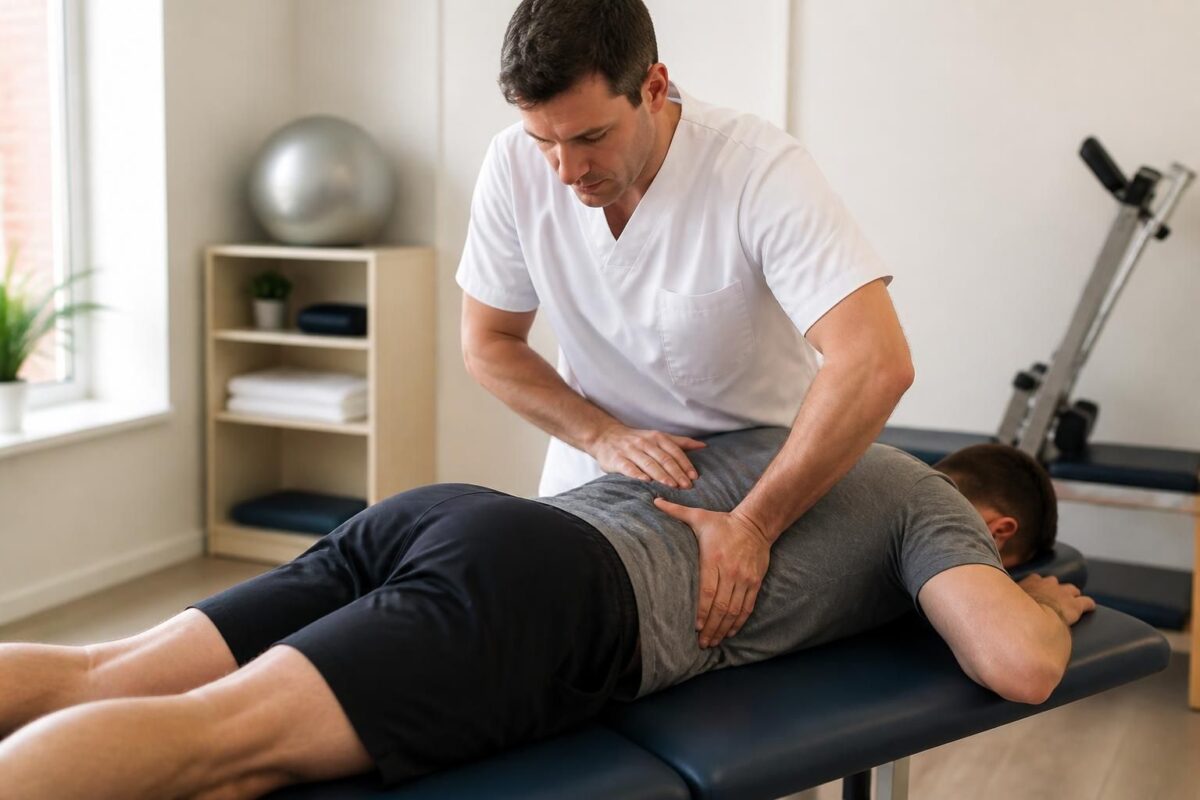
In short
| In short, the Manipulations in neurovertebral decompression are a treatment non-invasive intended to relieve pain related to a slipped disc, a bulge disc, a sciatica, a Foraminal stenosis or a Compression of a nerve root. They use a Bending-Distraction Table And some Soft mechanical tractions To act on the levels cervical and lumbar, increasing the space between the vertebrae, reducing the pressure on the discs and nerve roots, and favoring the Disc rehydration intervertebral and Joint mobility. Profits include a pain relief, a better mobility and a resumption of activities, with a high security profile. accessible in our local clinics, this approach can be a key step for pain management and of welfare, without surgery. |
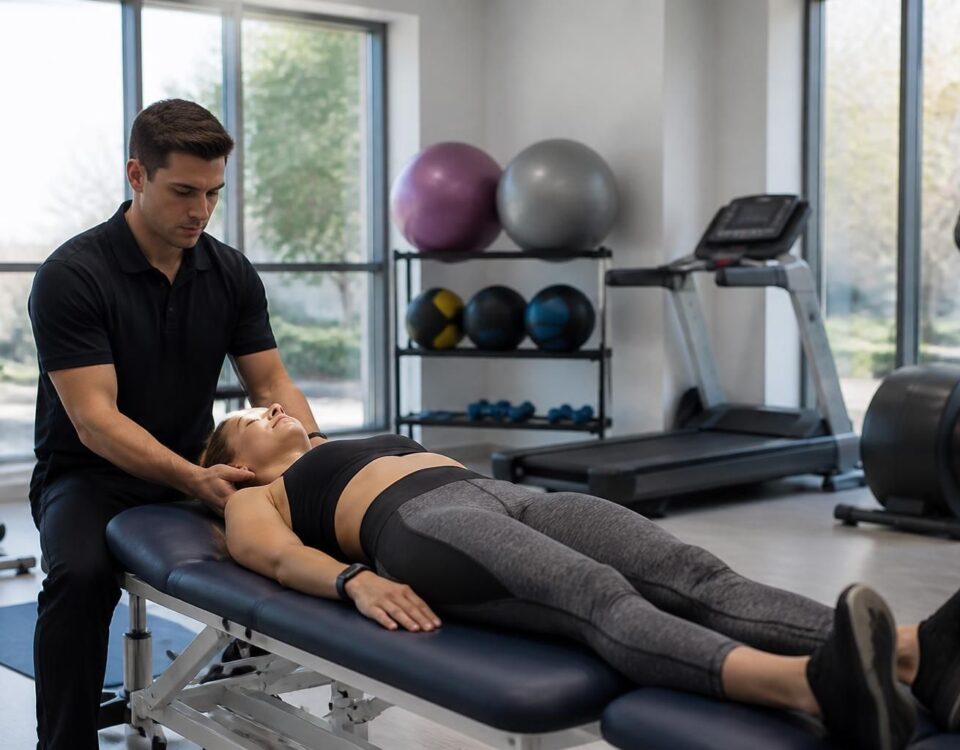
The neurovertebral decompression is a Non-invasive treatment and non-surgical Intended to relieve pain related to spinal disorders. It can be applied to segments cervical and lumbar and use a Bending-Distraction Table as well as joint mobilizations sweet and Controlled.
This process creates a Increased space between the vertebrae, a decrease in pressure on intervertebral discs and nerve roots, a Disc rehydration and an Improving mobility vertebral. The movement is applied on a small scale at each session, but is part of an effect accumulative in the long term.
Typical indications include slipped disc, the disc degeneration and theosteoarthritis, the bulge where the Disc protrusion, the sciatica, the stenosis, the Compression of a nerve root and theCervical and lumbar osteoarthritis.
This article, written by a health professional expert in manual therapies, presents manipulations in neurovertebral decompression, their mechanisms, their indications and what you can expect. It aims to enlighten the patient and facilitate dialogue with the practitioner during consultations at the TagMed Clinic. The objective is to provide clear and useful information without replacing a doctor’s advice.
What is neurovertebral decompression?
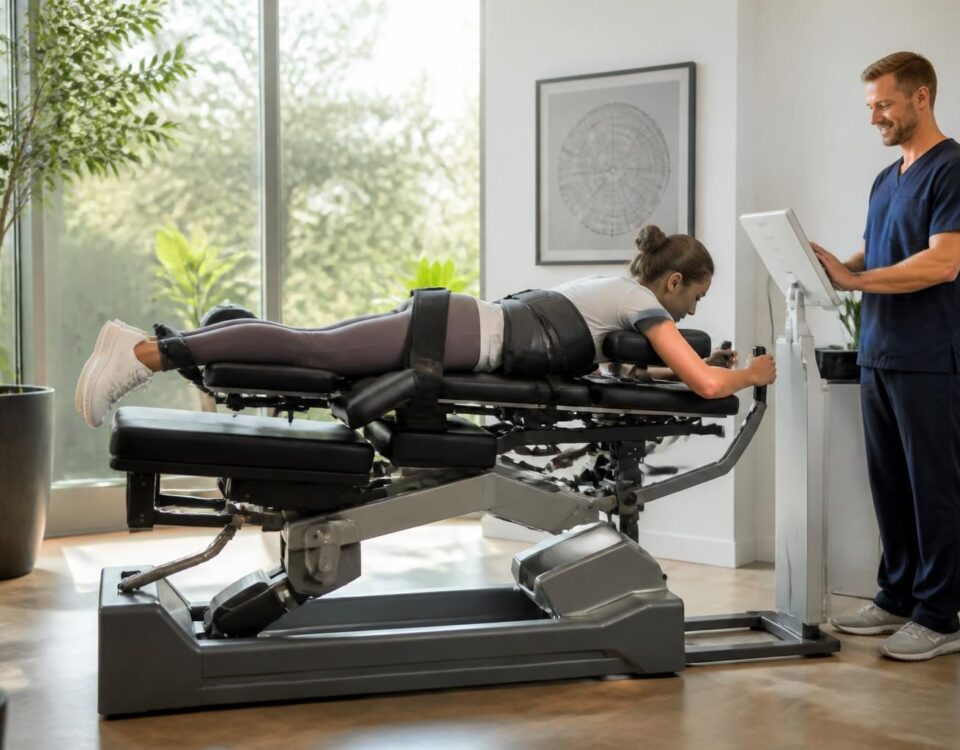
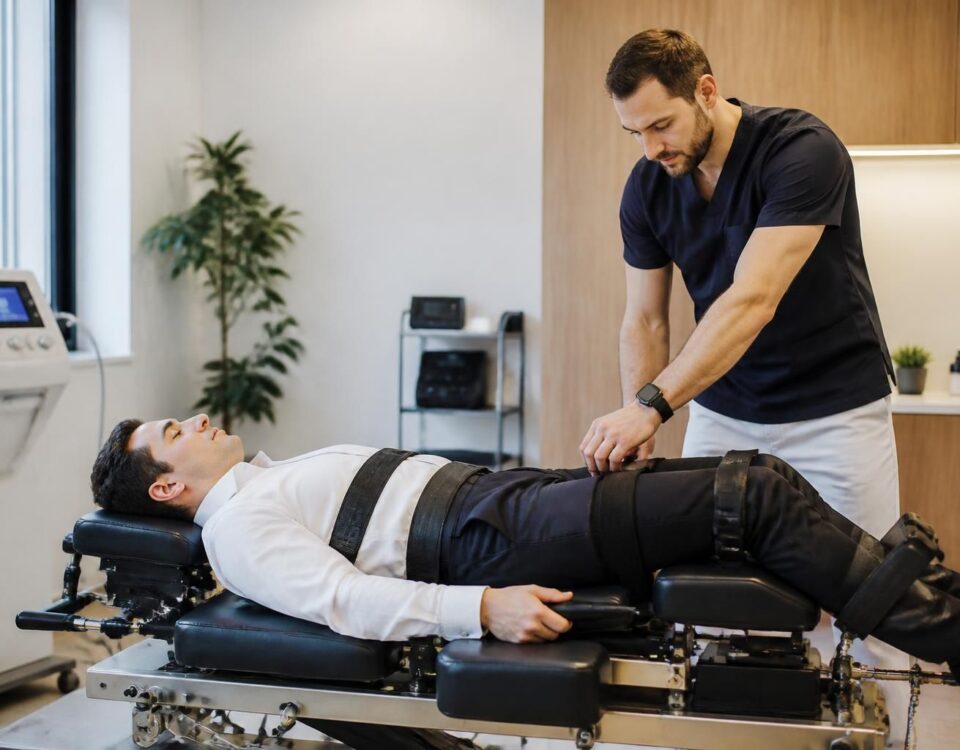
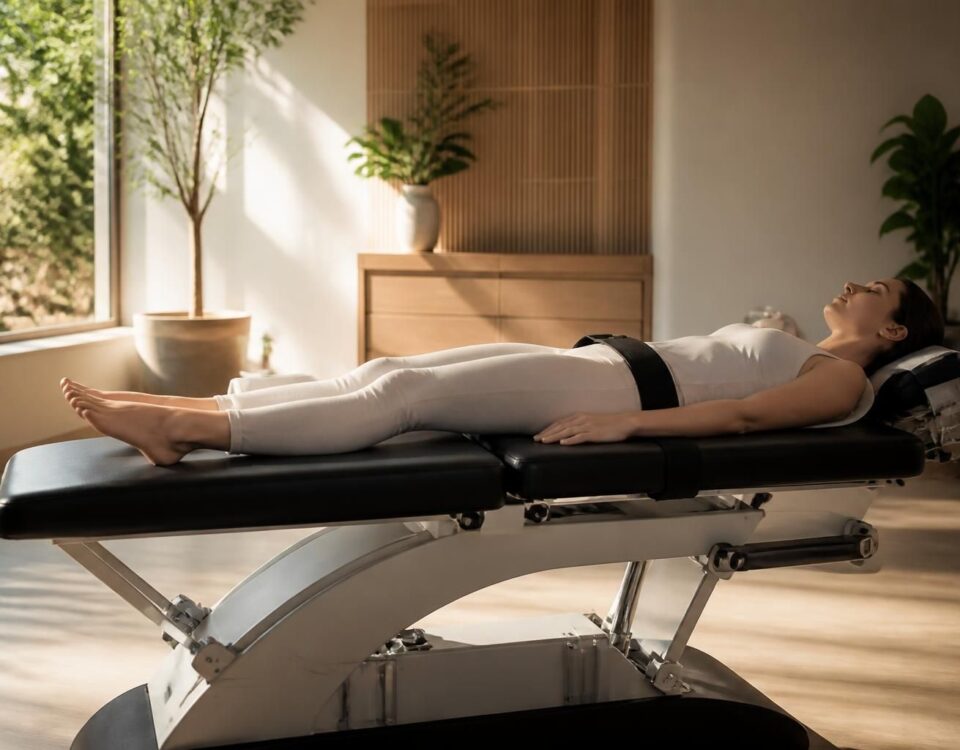
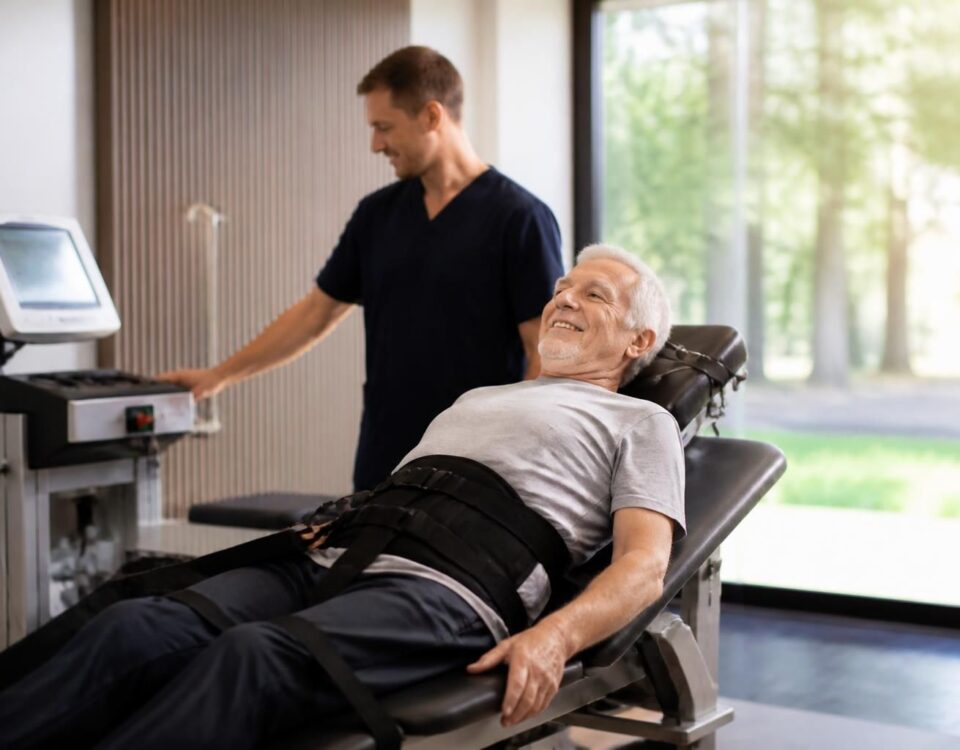
neurovertebral decompression is a non-invasive and non-surgical approach that aims to relieve symptoms related to disc problems and nerve roots. It can be applied at the level cervical and lumbar. The treatment is mechanized and controlled by a flexion-distraction table. Soft and controlled joint mobilizations can be carried out to promote the mobility of the segments without imposing aggressive movements. This approach can help reduce the pressure on discs and nerves, and promote better spinal alignment without surgery.
Decompression principles result in increased space between the vertebrae, decreased pressure in the intervertebral discs and nerve roots, better disc hydration and increased joint mobility.
To deepen the theoretical aspects and associated evidence, you can consult specialized resources available on dedicated sites such as Neurovertebral decompression and neuropathic pain and other informative articles about Prevention of recurrent pain. Additional resources related to this domain are also accessible via Q&A.
Decompression can be considered as part of a multidisciplinary approach. The practitioner can rely on recognized training in osteopathy and in manual therapies provided by accredited centers such as Numss, NAO, National University of Medical Sciences or National Academy of Osteopathy. Some professional associations, such as ACMA and the College of Canadian Osteopaths, support these approaches in an ethical and professional framework.
How does a session take place
A session begins with a targeted evaluation. The practitioner then adjusts the flexion-distraction table and performs smooth and controlled tractions. The work may include precise joint mobilizations, always performed with caution and supervision. The process is adapted to each patient and their specific needs. The objective is to achieve a gradual increase in the vertebral space and a reduction in pressure on the nerve structures, while promoting the mobility of the segments.
At the TagMed clinic, these manipulations are offered in a safe and professional environment, with personalized monitoring of effects and results. For more information on the procedures offered at the clinic, see Tagmed Clinic.
Potential indications and results
Manipulations in neurovertebral decompression target symptoms related to slipped disc, a disc degeneration, a bulge disc, a Disc protrusion, a sciatica due to nervous compression, Foraminal stenosis, a Spinal stenosis and an Cervical or lumbar osteoarthritis. The goal is to increase the space between the vertebrae and decrease the pressure on the discs and nerve roots. The effects are often progressive and cumulative over the sessions, without the need for surgical recourse.
For additional perspectives and feedback, refer to available resources at Lumbar duct stenosis and Prevention of recurrent pain.
Safety, contraindications and limits
Neurovertebral decompression is generally well tolerated when performed by qualified professionals. Certain conditions and situations require a prior assessment and may constitute contraindications; The practitioner will perform a full assessment to determine the treatment adaptation. In case of doubt, it is essential to discuss the expected benefits, risks and alternatives with the therapist and your attending physician.
It is important to note that specific exercises or stretching are not included in the advice provided in these treatments when discussing the conditions discussed here. The approach favors professional manipulations and clinical parameters adjusted according to each patient.
Who is it for and how to discuss it with your practitioner
This treatment can be considered in patients with symptoms related to discs or compressed nerves, after a thorough clinical evaluation. Discuss with your practitioner the objectives, the number of sessions recommended and the expected results. Ask how the table settings will be adapted to your morphology and pain profile. To benefit from quality supervision, you can contact specialized clinics such as Tagmed Clinic in Montreal and in the region.
To learn more about practical aspects and frequently asked questions, check out the dedicated resources such as neurovertebral decompression Questions about neurovertebral decompression and Neurovertebral decompression and neuropathic pain.
Training and practice resources in osteopathy mentioned in the context of this treatment refer to professional institutions and bodies such as NUMSS, NAO, National University of Medical Sciences and National Academy of osteopathy, as well as professional associations such as ACMA and the College of Canadian Osteopaths or the College of Canadian Osteopaths.
For additional information on the practical framework and feedback, you can consult specialized resources on Prevention of recurrent pain, and the informative pages relating to neurovertebral decompression on Questions and Answers.
To find out what expected results and comparisons with other approaches, you can look at separate resources on Lumbar duct stenosis and on Neuropathic pain.
Medical Warning: This text does not replace a doctor’s advice. For personalized advice, consult your healthcare professional.
Medical Disclaimer: The information and advice provided on this site does not replace the health professional’s diagnosis or treatment. Please note that Dr. Sylvain Desforges osteopath is neither a doctor of medicine nor a doctor, and is not a specialist in a medical specialty as defined by the Collège des Médecins du Québec. Manual medicine, functional medicine and sports medicine as described on this site exclude any medical treatment or diagnosis made by a doctor or specialist doctor. Always consult your doctor for any medical questions. For more details, please read our full legal notice.
- What is neurovertebral decompression : Non-invasive treatment aimed at relieving disc and nerve pain.
- goals : Increase intervertebral space and reduce the pressure on discs and nerve roots.
- Mechanism : gentle traction and controlled via the flexion-distraction table and joint mobilizations.
- Treated areas : cervical and lumbar.
- Key indications : herniated disc, bulge or Disc protrusion, disc degeneration, facet osteoarthritis, foraminal stenosis, sciatica.
- Expected benefits : Disc rehydration, Increased intervertebral space, Improved mobility.
- cumulative effect : The gains are modest at each session but add up in the long term.
- Security and control : Safe procedure, performed by a qualified professional, with supervision.
- Session process : Evaluation, settings, guided traction and typical duration.
- Contraindications and precautions : This treatment is not suitable for certain conditions — prior consultation recommended.
- Preparation and expectations : Clear information, realistic expectations and treatment planning according to a personalized plan.
- After the session : Follow the post-treatment, hydration and organization advice of the following sessions.

These recommendations present the essential principles of manipulation in neurovertebral decompression, their mechanisms, common indications and practical advice for safe and effective practice. They aim to help patients and professionals understand what these techniques can bring and how to integrate them into a course of care, under appropriate supervision.
What is neurovertebral decompression?
The neurovertebral decompression is a treatment non-invasive and non-surgical which aims to relieve pain related to the spine, in particular in case of herniated disc, bulging or disc degeneration. The treatment is based on a table of Bending-distraction or on controlled mechanical traction protocols. It can be applied at the level cervical and lumbar And is often accompanied by soft joint mobilizations. This approach is designed to create additional space between the vertebrae, decrease the pressure on the intervertebral discs and on the nerve roots, promote the Disc rehydration and improve the mobility articulatory.
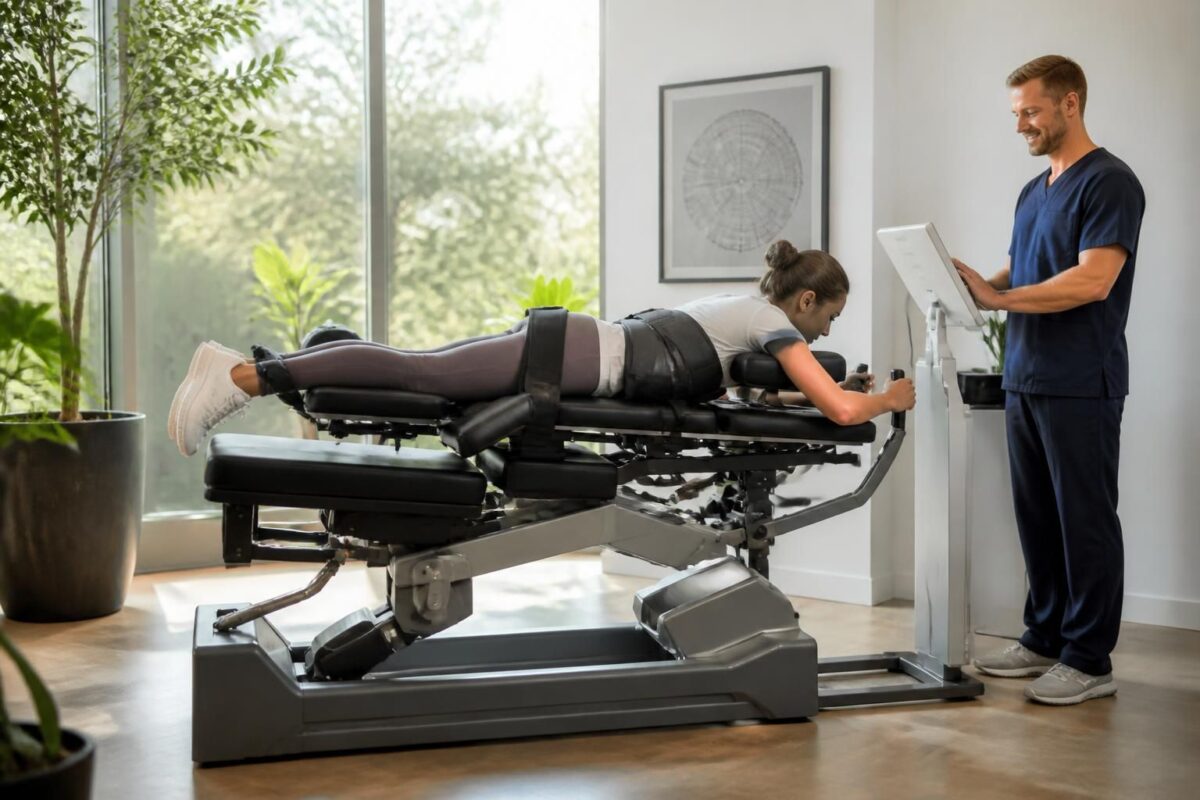
The long-term benefits of neurovertebral decompression for spinal health
In short In short, the neurovertebral decompression is a non-invasive approach that decreases the Pressure on intervertebral discs and nerves, favoring the Natural regeneration and tissue recovery. Its long-term benefits include Lasting pain reduction, Improving mobility and from the posture,…

Neurovertebral decompression and mobility: a return to an active life
In short In short, the neurovertebral decompression is therapy non-invasive who uses a gentle traction To create a space between the vertebrae and reduce the pressure on the Intervertebral discs and the nerves. It promotes a bloodstream improved, lowers tension…
How does this affect structures and pain?
At each session, a small reduction of the constraints exerted on the discs can occur, but the overall effect is built over the long term thanks to a cumulative action. The resorption movement gradually increases the intervertebral space, which reduces the pressure exerted on the discs and nerve roots. This effect can result in a decrease in symptoms and an improvement in overall column mobility. In practice, the intervention combines gentle decompression and targeted, secure and adapted joint mobilizations for each patient.
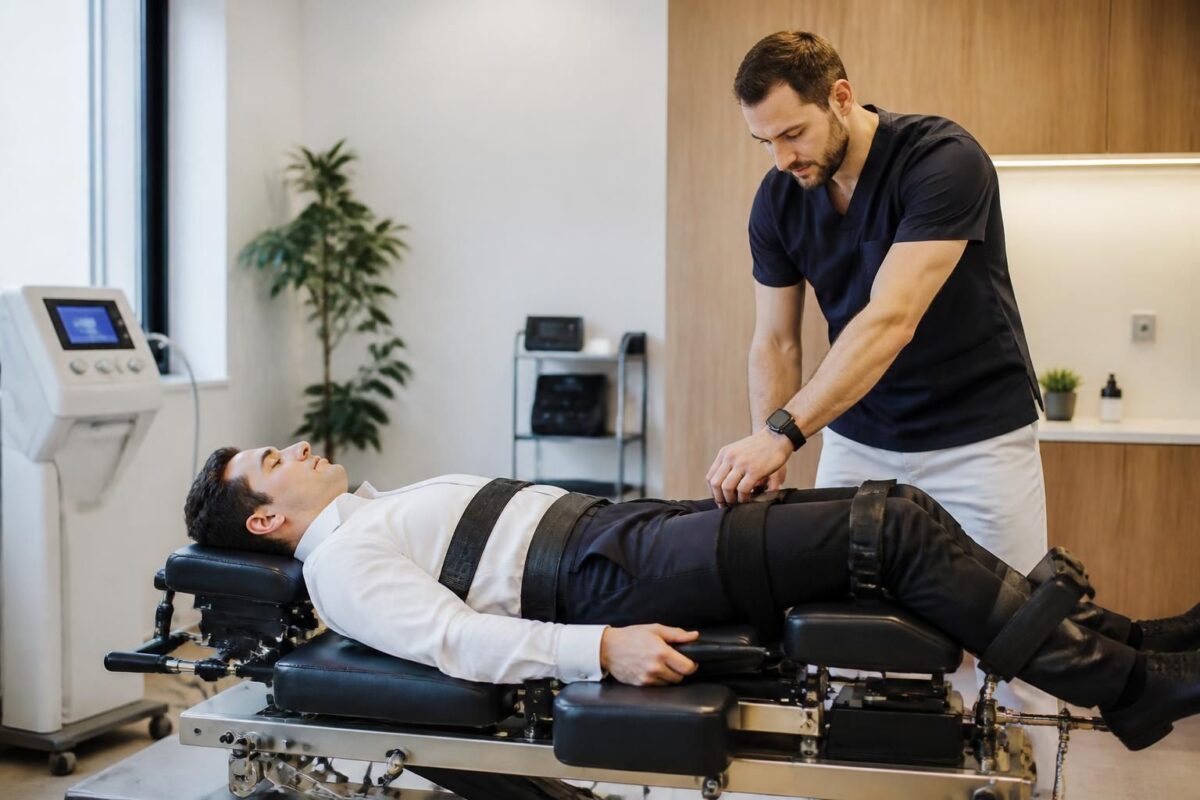
How Neurovertebral Decompression Prevents Diffuse Chronic Pain
In short decompression neurovertebral is one Non-invasive method aimed at reducing the Pressure on the intervertebral discs and the nerves, in order to prevent Diffuse chronic pain. It improves the circulation and thedisc hydration, decreases inflammation and promotes better mobility.…
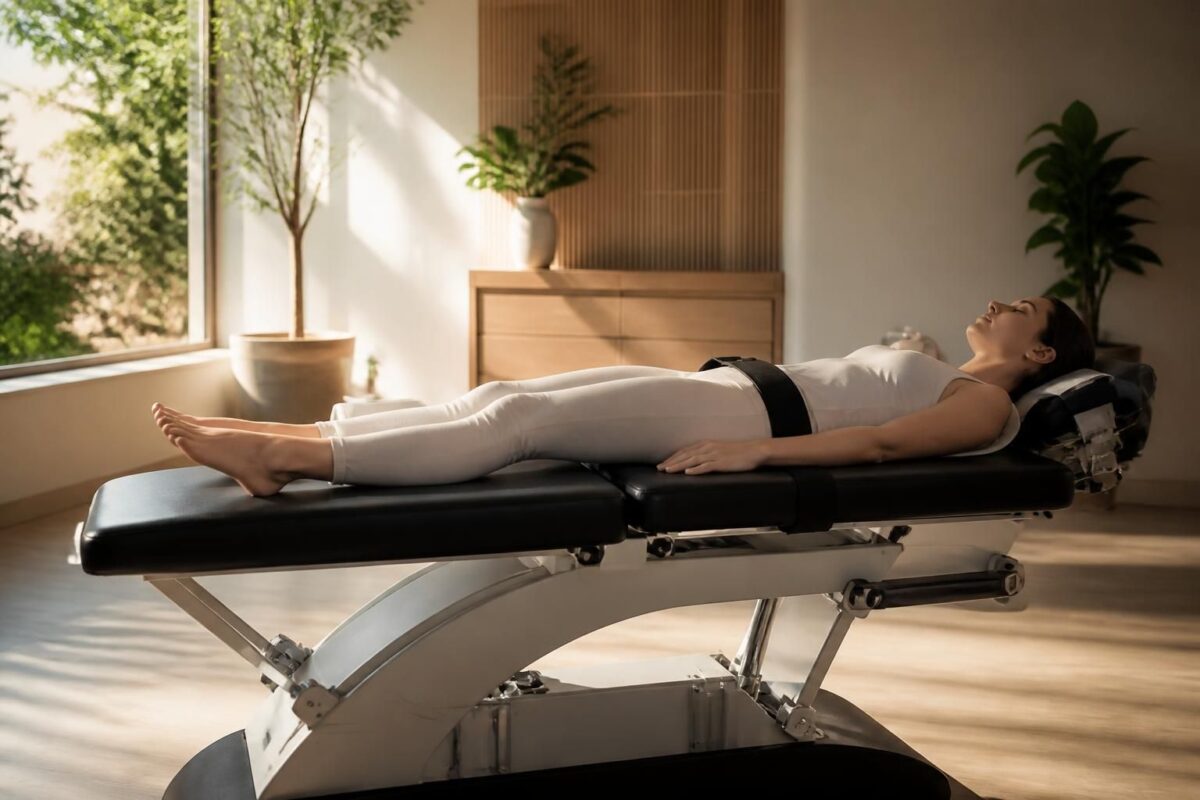
Neurovertebral Decompression and Body Alignment: Restoring Natural Balance
In short In short, neurovertebral decompression is one Non-invasive approach who restores theBody Alignment and thenatural balance back and neck. She acts by a Controlled traction of the spine to widen the intervertebral space and reduce the Pressure on discs…
Indications and expected results
Areas and conditions frequently dealt with by this approach include The disc herniation, disc degeneration or discopathy, bulge disc and Disc protrusion, sciatica associated with nerve compression, stenosis foraminal or central, and Cervical or lumbar osteoarthritis (including facet osteoarthritis). In these contexts, the sessions aim for a gradual reduction in pain, better mobility and increased tolerance of daily living activities. The results are built on the regularity and personalized adaptation of the protocol.
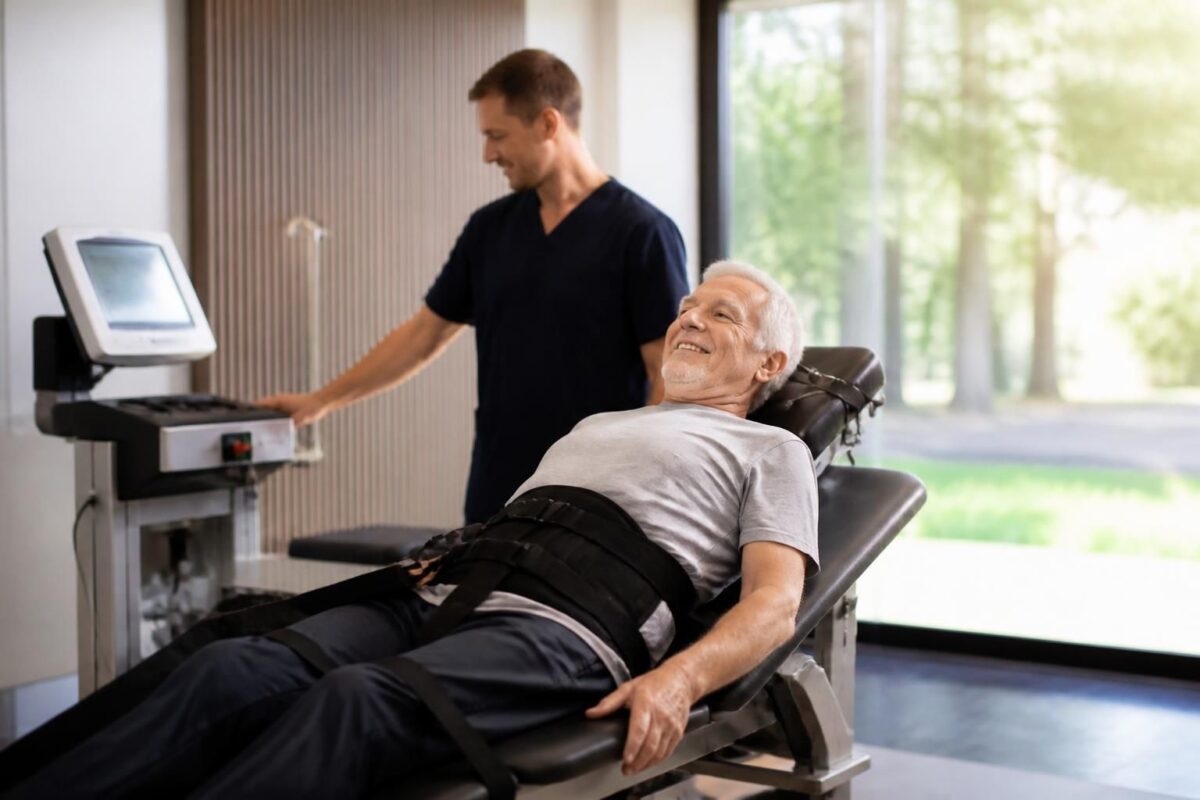
Why neurovertebral decompression is a lasting solution for active seniors
In short In short, the neurovertebral decompression is one Non-invasive therapy which sustainably relieves spinal pain in the spine active seniors By creating, by a Soft and controlled traction, a space between the vertebrae. At Montreal, it is recognized as…
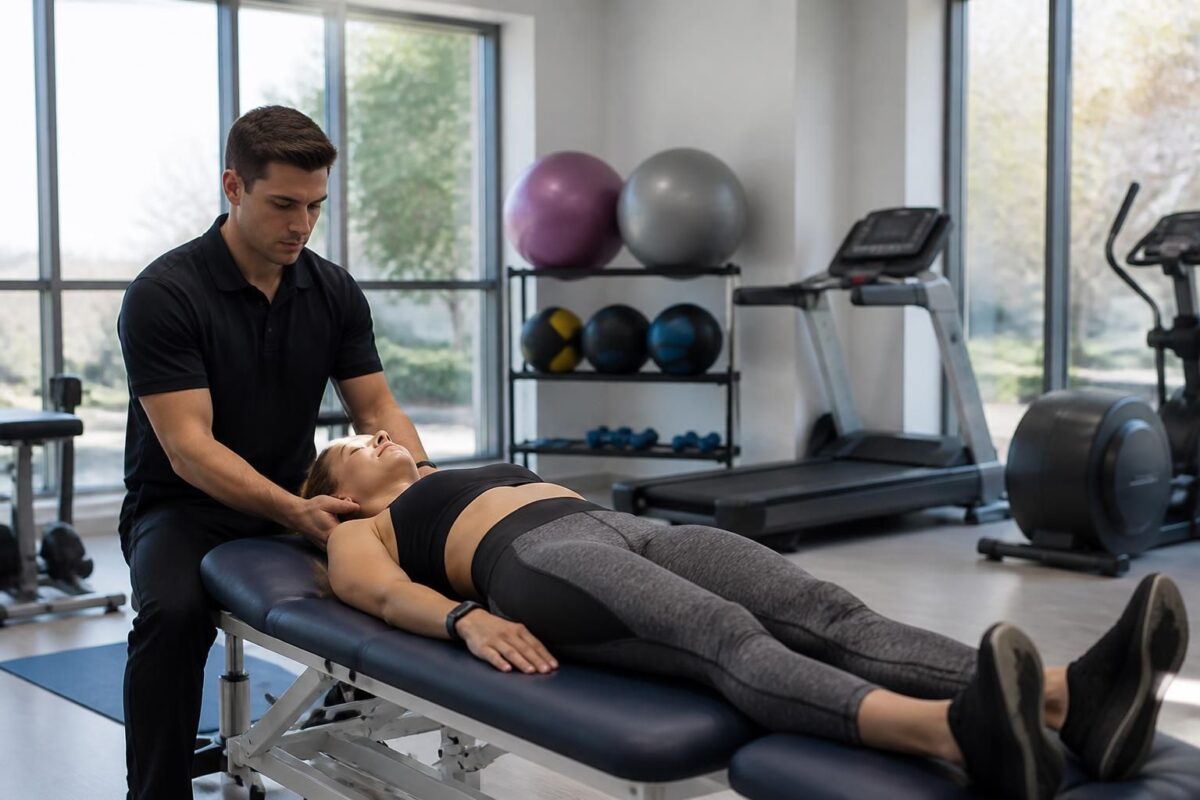
Neurovertebral decompression and recovery after severe sports injury
In short In short, the neurovertebral decompression is one Non-invasive method to Relieve the pressure on the Intervertebral discs and the gristle Via a Controlled traction, to facilitate the recovery After a severe sports injury. It improves the bloodstream towards…
Good practices and safety
practical driving
To obtain lasting benefits, neurovertebral decompression must be practiced by a qualified professional adapted to the clinical evolution of each patient. The session is based on a Soft and controlled traction and may include additional mobilization exercises. A preliminary assessment allows to adjust the intensity, duration and frequency of the sessions according to tolerance and progress.
Contraindications and precautions
For safety reasons, certain medical conditions require a prior assessment and may limit the use of neurovertebral decompression. Each patient should be assessed individually and the sessions adjusted according to clinical progression. In case of acute pain, fever, infection, recent fracture, vertebral instability, suspicious mass or pregnancy, it is essential to consult and follow the recommendations of a professional.
Frequency and tracking
Treatments are generally part of a progressive plan, with measured progression and regular reassessment. Improvements can gradually appear and consolidate over time, thanks to the synergy between decompression and targeted mobilizations, coupled with advice on physical activity and adequate postures.
| Element | Essential information |
|---|---|
| what is it | A Non-surgical technique aimed at increasing the intervertebral space and reducing the pressure on the nerve roots in the cervical and lumbar regions. |
| how it works | Use a Bending-Distraction Table and gentle mobilizations to stretch the joints, promote the Disc rehydration and increase theSpace between vertebrae. |
| Areas concerned | Cervical and lumbar, with options for foraminal areas and disc degeneration. |
| Common indications | herniated disc, bulging or disc protrusion, Foraminal stenosis, sciatica, cervical or lumbar osteoarthritis. |
| contraindications | Contraindicated in the presence of infections, fractures, tumors, pregnancy, or spinal instability. |
| Security and tolerance | Procedure secure and well tolerated, with controlled detwery sensations and natural progression of pain. |
| Duration and pace | Typical session of about 20 to 30 minutes; treatment plan over several weeks depending on the response. |
| Expected results | Effects cumulative in the long term on theDisc Space and spinal mobility. |
| Alternatives and supplements | Can be associated with other health approaches to optimize outcomes in an integrated treatment framework. |
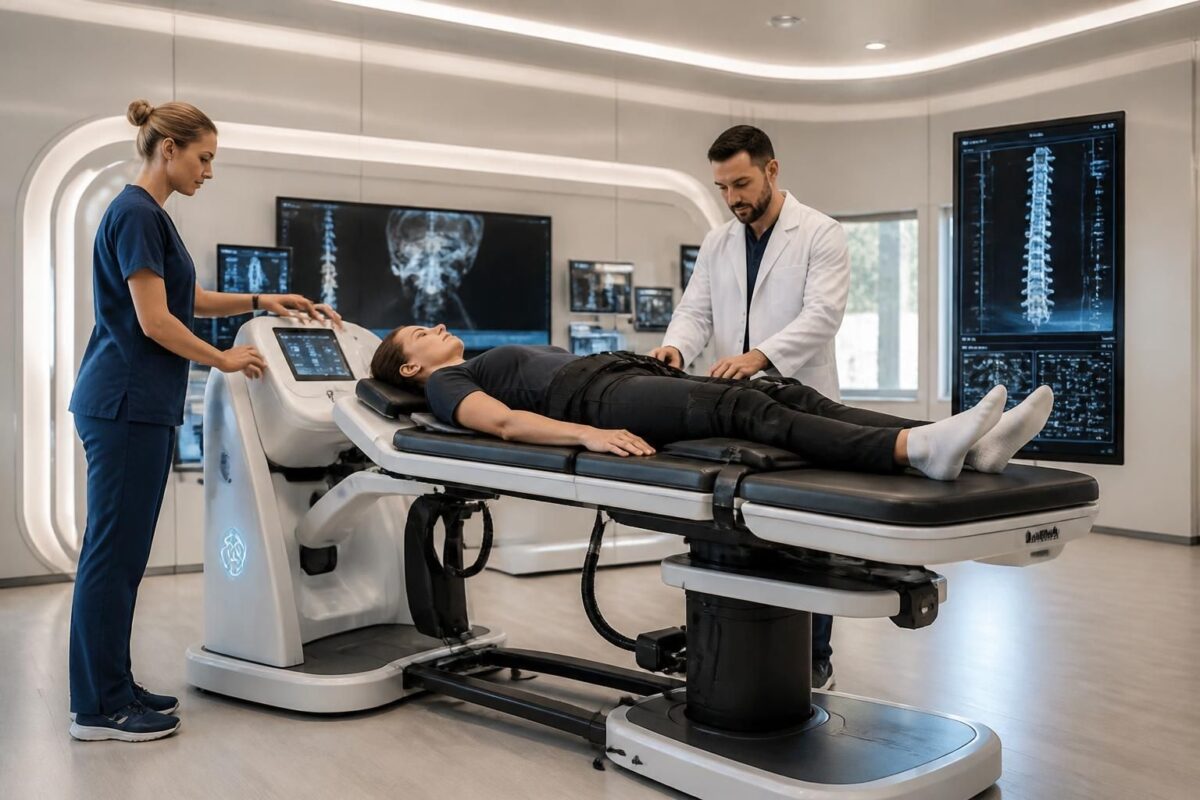
Recent innovations in neurovertebral decompression technologies
In short In short, the neurovertebral decompression is an approach non-invasive Aiming to reduce pressure on discs and nerves, and promote tissue regeneration. At Montreal, it is positioned as an effective option for lower back pain and herniated discs. The…
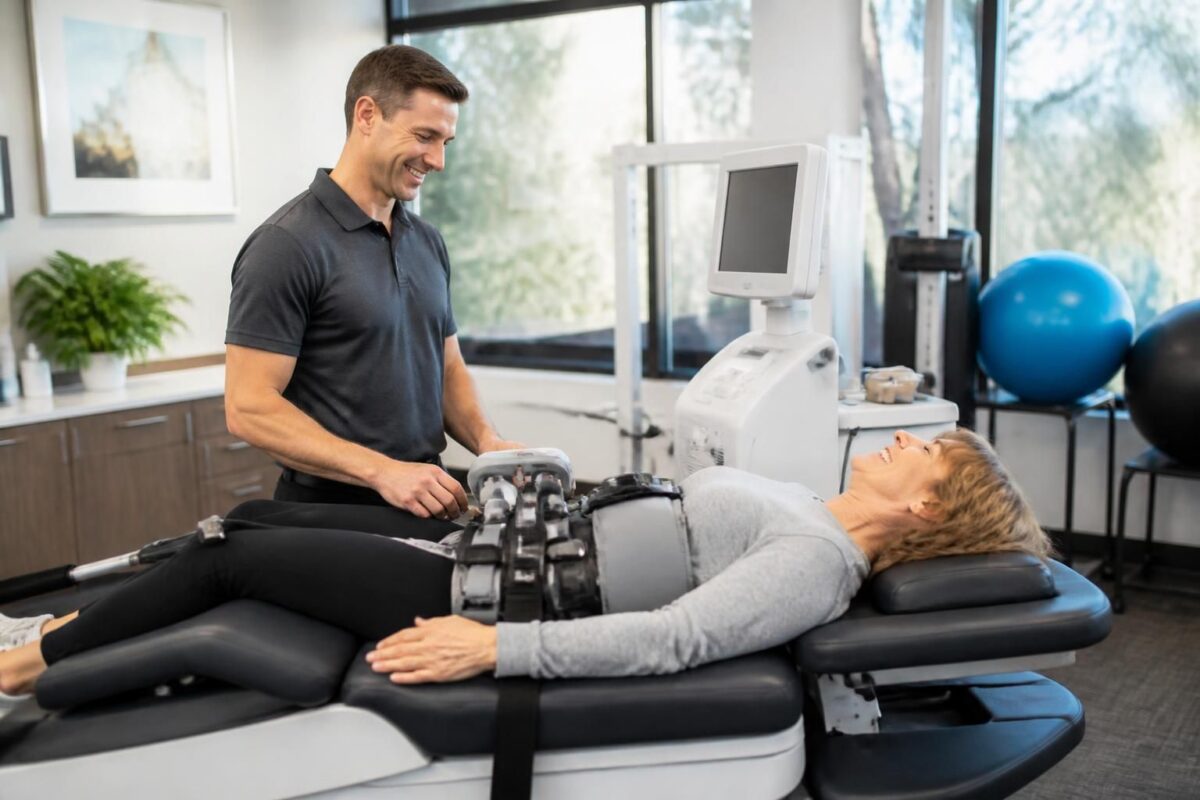
Neurovertebral decompression and diffuse pain: an appropriate solution
In short In short, the neurovertebral decompression is one Non-invasive solution For diffuse pain related to nerve irritation of the spine. She acts in Reducing pressure on intervertebral discs and nerves and improving the bloodstream, which promotes recovery and the…
Testimonials on manipulations in neurovertebral decompression: what you need to know
“Before starting the neurovertebral decompression, I was braked by a slipped disc and an sciatica that made my days difficult. This approach, non-invasive and non-surgical, was explained clearly and adapted to my case. After a few sessions, I noticed a marked reduction in the pain and a boost in mobility. »
“What surprised me was the gentleness and control of gestures. Thanks to the Bending-Distraction Table and joint mobilizations carried out with soft tractions, the pressure on the Intervertebral discs and on the nerve roots is reduced, without pain And without surgery. »
“After a few sessions, theintervertebral space clearly increased, the pain diminished and the overall mobility of the vertebrae returned, accompanied by a slight Disc rehydration. »
“For me who suffered from a Foraminal stenosis and dune Nerve root compression, the results were significant: less depisodes of pain And a smoother walk on a daily basis. »
“In the presence of disc degeneration and dosteoarthritis, This approach helps maintain mobility and reduce pain, while avoiding invasive treatments. »
“If you are considering this option, ask for a personalized evaluation: each session is adapted to your morphology and your pain. Many people report lasting improvement and better quality of life thanks to this non-invasive and secure protocol. »
This biography highlights a Expert in osteopathy, naturopathy and manual medicine, whose action is anchored in health innovation and in an evidence-based approach. Founding President of the TagMed Clinics and the ACMA Association, this speaker is dedicated to the Chronic pain management and the integration of advanced technologies such as vertebral decompression, the laser and shockwave therapy. Its objective is to provide effective and personalized care that optimizes the health and well-being of patients, favoring protocols supported by scientific data. This approach is based on a rich clinical experience and constant collaboration with the care teams to adapt the treatments to each patient journey. To discover its approach and the services available, contact the TagMed Clinic.
At the heart of his work are the manipulations of neurovertebral decompression, an approach non-invasive and non-surgical intended to relieve a set of common spinal disorders. This technique is practiced both at the cervical level and at the lumbar level and is based on precise stimulation of the spine using dedicated devices. The method is specially designed for situations such as slipped disc, the bulges and disc protrusions, the sciatica by nerve compression and stenosing processes that limit mobility and generate pain and dysfunction.
The mechanism is based on a Controlled extension and an gentle traction applied by a table of Bending-distraction. This approach increases the space between the vertebrae, reduces pressure on the intervertebral discs and nerve roots, and promotes Disc rehydration as well as a Joint mobility Improved. Although the decrease in pressure and the resorption of the elements bulged on a small scale during each session, the cumulative effect can lead to lasting improvements in stability and spinal function, with positive repercussions on pain and overall mobility.
The indications treated cover a wide range of vertebral issues, including herniated discs, disc degeneration and osteoarthritis disorders, bulges and disc protrusions, the Foraminal stenosis and nerve root compressions. This eventuality is particularly useful for patients with Cervical and lumbar osteoarthritis, including at the facet level, when traditional conservative approaches require complementarity with soft and targeted manual therapies.
The care pathway combines in-depth evaluation, personalized planning and structured sessions to ensure safety and effectiveness. The practitioner favors gradual progression, continuous monitoring of symptoms and adjustment of the protocol according to clinical feedback and results obtained. In addition to decompression, other modalities such as laser or shock wave therapy can be integrated when it adds value to the overall treatment plan. To learn more about this approach and the services offered, contact the TagMed Clinic.
This text sheds clear light on the Manipulations in neurovertebral decompression, explaining the principle, the conditions for which they agree, and the potential benefits while underlining the precautions and the necessary follow-up framework.
The neurovertebral decompression Aims to create additional space between the vertebrae and decrease the pressure exerted on the intervertebral discs and nerve roots. This approach non-invasive and non-surgical Can be applied at the cervical and lumbar level through a flexion-distraction table and soft, controlled joint mobilizations. Expected results include a Increased intervertebral space, a better Disc rehydration and an improvement in vertebral mobility.
Among the common indications are the slipped disc, the disc degeneration (discopathy or osteoarthritis), bulging or disc protrusion, the sciatica and the stenosis foraminal or root, as well as pain associated with cervical and lumbar osteoarthritis. To better understand the benefits and mechanisms, you can consult specialized resources with detailed explanations on neurovertebral decompression and its positive effects on the column: Chiropractic South Shore, Osteopath Cabinet and tagmed.
the mechanisms involved are progressive and low-intensity but cumulative In the long term: each session can bring a slight absorption of the discs, but the beneficial effects consolidate over time. For patients, this means that a structured treatment plan and appropriate follow-up remain essential to optimize results.
Regarding safety, neurovertebral decompression must be performed by a qualified professional adapted to each patient. It is not indicated in certain contexts (obvious contraindications). It is important to discuss with your osteopath or doctor to assess the directions and the contraindications specific, and to integrate this approach into a global care program.
For those interested in practical application and the impact on spinal health, other useful resources offer additional explanations and feedback, including articles on the links between neurovertebral decompression and nerve pressure reduction Spinals: sosciatica, Sossciatica – Spinal Health and Chiropractic city center.
To go further in understanding and potential benefits, you can consult additional resources such as Decompression and muscle pain associated with the back, Decompression and aging — Preserving spinal health, and Dudos Clinics.
To sum up, the neurovertebral decompression Represents an option non-invasive Interesting for certain vertebral pathologies, with clear mechanisms, progressive results and possible integration into a multidisciplinary care course. To learn more about benefits and mechanisms, feel free to explore the associated resources and discuss with your healthcare professional. Learn more about TagMed.

Dr Sylvain Desforges, B.Sc., D.O., N.D., osteopath, is the founding president of TAGMED and of the ACMA association. He dedicates his practice to chronic spinal pain, low back pain and symptoms compatible with sciatica, particularly when pain radiates toward the buttock, leg, calf, foot or toes.
Through SOS Sciatique, he publishes educational content on sciatica symptoms, possible causes such as disc herniation, disc narrowing, foraminal stenosis or irritation of a lumbar nerve root, as well as non-surgical approaches that may be considered according to the evaluation. At Clinique TAGMED, care may include, depending on the case, motorized neurovertebral decompression, specific osteopathic care or precision percussion.
For an evaluation related to sciatica treatment in Montreal / Mount Royal or sciatica treatment in Terrebonne, please consult the services available at Clinique TAGMED.
Medical disclaimer
The information published on SOS Sciatique is provided for educational purposes only and does not replace a consultation, diagnosis, opinion or treatment provided by a physician or another authorized healthcare professional. The author of this article is neither a medical doctor nor a specialist in a medical specialty recognized by the Collège des médecins du Québec. The osteopathic, manual medicine or functional support approaches described on this site do not constitute medical acts and are not intended to replace medical follow-up.
Consult a physician or emergency service in cases of loss of bladder or bowel control, anesthesia in the saddle area, significant or progressive weakness in the leg or foot, fever, recent trauma, severe pain or rapid worsening of symptoms. For more details, please read our Legal Notice.