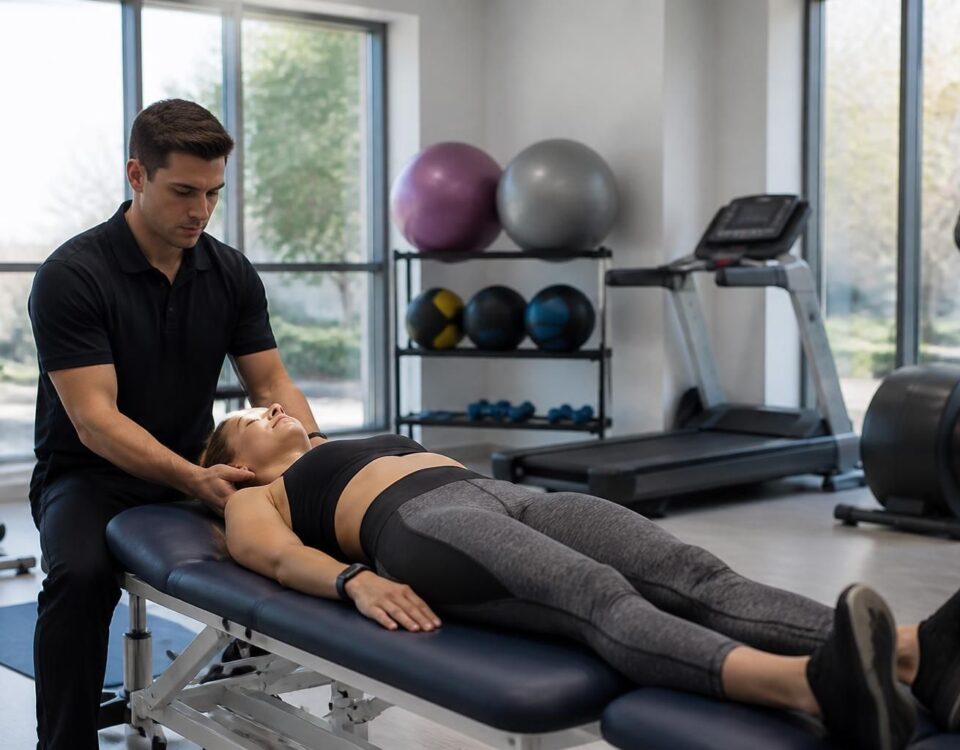
How Neurovertebral Decompression Prevents Diffuse Chronic Pain
26/06/2026
The long-term benefits of neurovertebral decompression for spinal health
26/06/2026
In short
In short, the neurovertebral decompression is therapy non-invasive who uses a gentle traction To create a space between the vertebrae and reduce the pressure on the Intervertebral discs and the nerves. It promotes a bloodstream improved, lowers tension and helps Restoring the spinal alignment, which increases therange of motion and the mobility. Result: a return to daily and sporting activities with less pain. In Montreal, this service is particularly recommended for people with Chronic pain and looking for a lasting solution without surgery or drugs. In short, it is an effective option to find mobility, comfort and quality of life. |
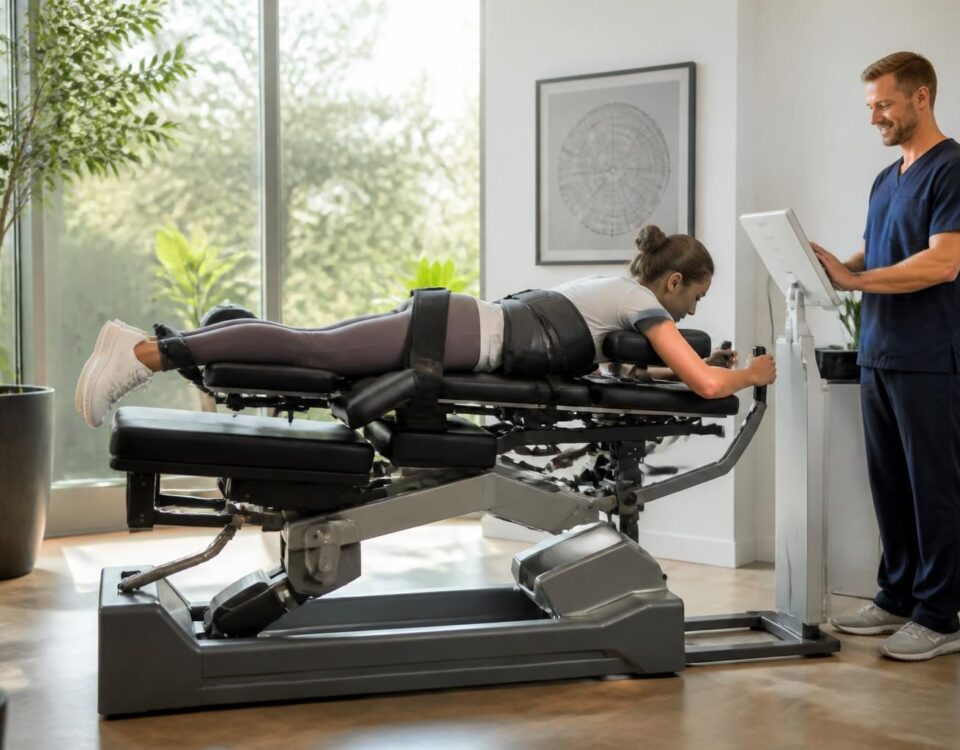
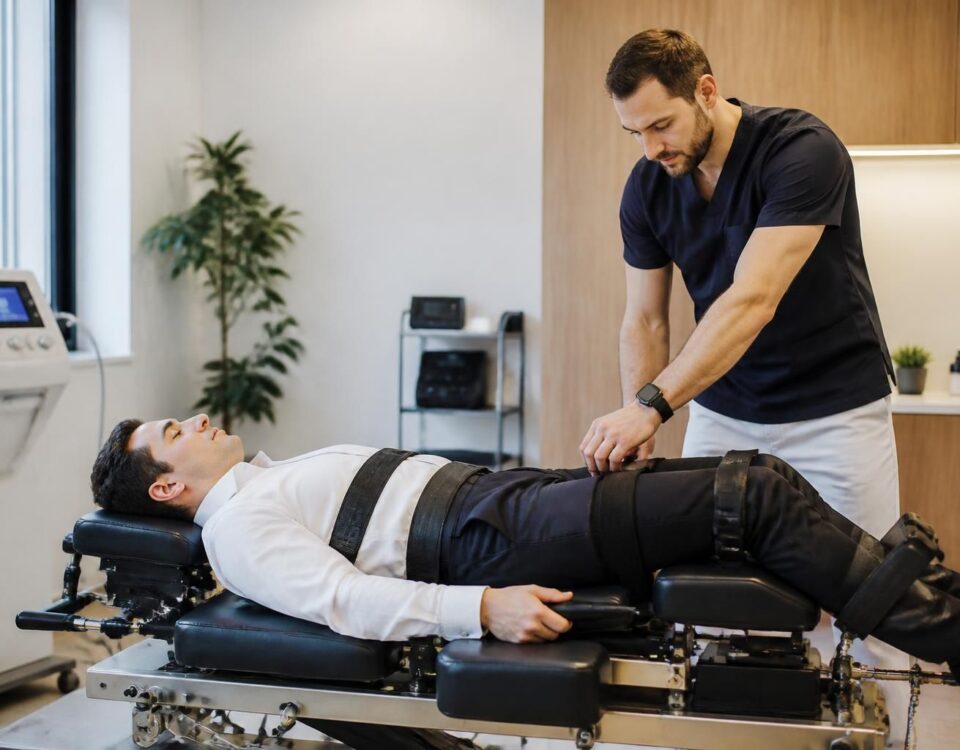
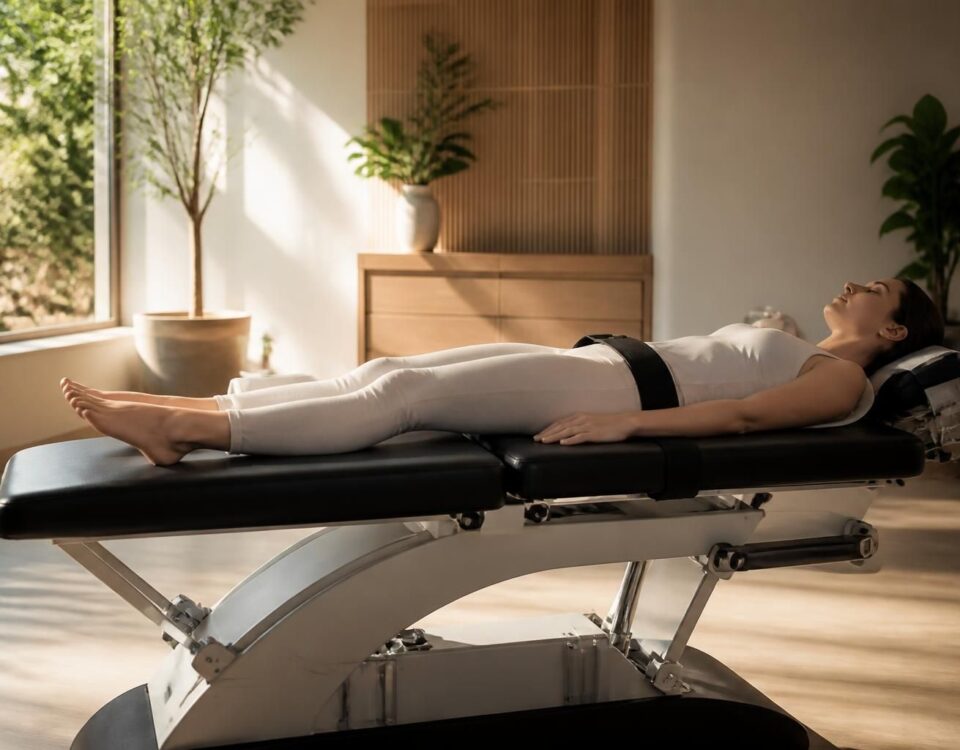
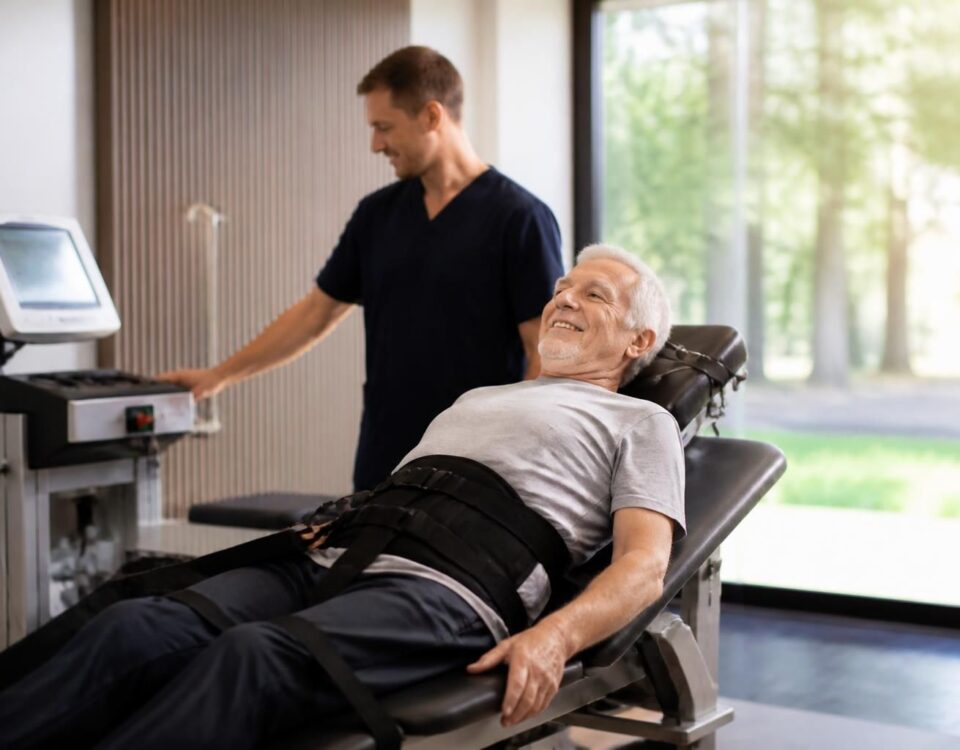
The neurovertebral decompression is an approach non-invasive which acts on the spine by a gentle traction and controlled. By creating a space between the vertebrae, it decreases the Pressure on intervertebral discs and nerves, improves the bloodstream and facilitates the rebalancing of thevertebral alignment.
The benefits for the mobility and everyday life translates into:
- A Improved range of motion and an pain reduction.
- a better one bloodstream and nutrition of the spinal tissues.
- The Restoring the spinal alignment and prevention of future tensions.
- An approach non-intrusive favoring the return to daily and sporting activities.
This treatment can promote the return to a working life, with more comfort and freedom of movement in the long term.
This article presents how the neurovertebral decompression can improve the mobility and promote a return to an active life. Soft traction creates a space between the vertebrae, soothes the pressure on the discs and nerves, and stimulates better circulation. Result: increased range of motion and gradual resumption of daily activities. The approach is part of a global logic of evidence-based care and is based on personalized follow-up at the TagMed clinic.
How does neurovertebral decompression work?
Neurovertebral decompression uses gentle traction on the spine. This spacing of the intervertebral spaces reduces the pressure exerted on the discs and nerves. This pressure reduction facilitates more balanced hydration and spinal posture. In addition, traction decreases muscle tension around the spine, opening the way to more fluid and less painful movements.
Impact on mobility and daily activities
patients describe a significant increase in their range of motion After a few sessions. This improvement translates into a better ability to move in everyday gestures, such as bends, gets up and moves without marked pain. For active people, rediscovered mobility facilitates sports activities and leisure activities without limiting participation.
Role of circulation and regeneration
Improved blood circulation in the spinal area brings more oxygen and nutrients to the tissues. This tissue nutrition supports the repair of spinal structures and helps maintain the elasticity and flexibility of the spine over the long term. The Tissue regeneration Associated with better vascularization supports sustainable mobility.
Support and follow-up plan
Neurovertebral decompression is part of an integrative approach. A practitioner evaluates the patient and then develops an appropriate care plan. Regular monitoring allows you to adjust treatments and ensure lasting results. The objective is to gradually integrate complementary measures adapted to each patient in order to support optimized mobility and continuous active life.
Resources and useful links
To learn more, you can consult the following resources. Clinique TagMed offers a multidisciplinary approach and adapted solutions in Montreal and Terrebonne: Tagmed Clinic. Additional information on neurovertebral decompression and cervical and lumbar pain management are available on specialized sites:
Neurovertebral decompression and chronic cervical pain management
How neurovertebral decompression improves spinal flexibility
Physical well-being and quality of life
For practical aspects of rehabilitation and clinical considerations, additional resources include:
Clinical results proving efficacy
neurovertebral decompression at the service of mobility
For a perspective focused on deep muscle pain and relief, visit:
Medical Disclaimer: The information and advice provided on this site does not replace the health professional’s diagnosis or treatment. Please note that Dr. Sylvain Desforges osteopath is neither a doctor of medicine nor a doctor, and is not a specialist in a medical specialty as defined by the Collège des Médecins du Québec. Manual medicine, functional medicine and sports medicine as described on this site exclude any medical treatment or diagnosis carried out by a doctor or specialist doctor. Always consult your doctor for any medical questions. For more details, please read our full legal notice.
- Gentle decompression creates a space between the vertebrae and Reduces pressure on discs and nerves.
- muscle relaxation around the column, decreasing tension and stiffness.
- vertebral alignment Improved for smoother movement.
- Improved traffic in the spine, promoting nutrition and recovery.
- Disc hydration and tissue regeneration.
- Improvement of amplitude and general mobility.
- pain reduction to resume activities.
- Gradual return to the activity with more confidence.
- Prevention of future pain thanks to better postural support.
- Follow-up and exercises complementary to consolidate the gains.

neurovertebral decompression is a non-invasive approach that can facilitate the Back to an active life By sustainably improving the mobility of the spine. This article offers practical recommendations for understanding how this therapy acts on mobility, how to integrate it into a care pathway and how to optimize its effects on a daily basis.
Understanding decompression and mobility
Neurovertebral decompression is based on a gentle traction targeted spine. By creating a space between the vertebrae, it reduces the pressure exerted on the intervertebral discs and nerves, which facilitates the return to a range of motion more fluid and less painful.
Mechanism of action
This light traction improves the bloodstream In the vertebral area, providing more nutrients and promoting tissue repair around the vertebrae. With a more harmonious alignment, muscle tension decreases and stiffness fades, contributing to a Increased mobility during daily gestures and sports activities.
Impact on discs and nerves
By releasing pressure on discs and nerves, therapy helps rehydrate and reorganize spinal structures. This can result in better flexibility of the back and neck, more natural movements and a decrease in pain that limit physical activity.
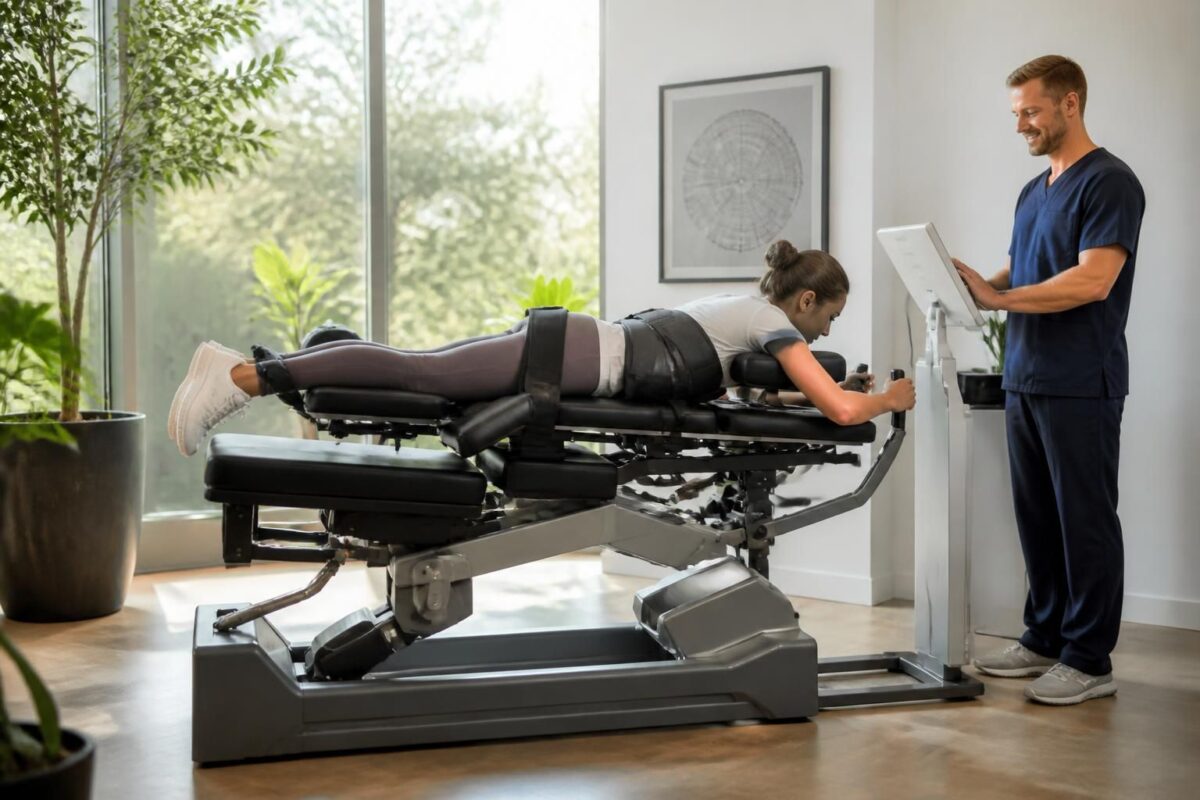
The long-term benefits of neurovertebral decompression for spinal health
In short In short, the neurovertebral decompression is a non-invasive approach that decreases the Pressure on intervertebral discs and nerves, favoring the Natural regeneration and tissue recovery. Its long-term benefits include Lasting pain reduction, Improving mobility and from the posture,…
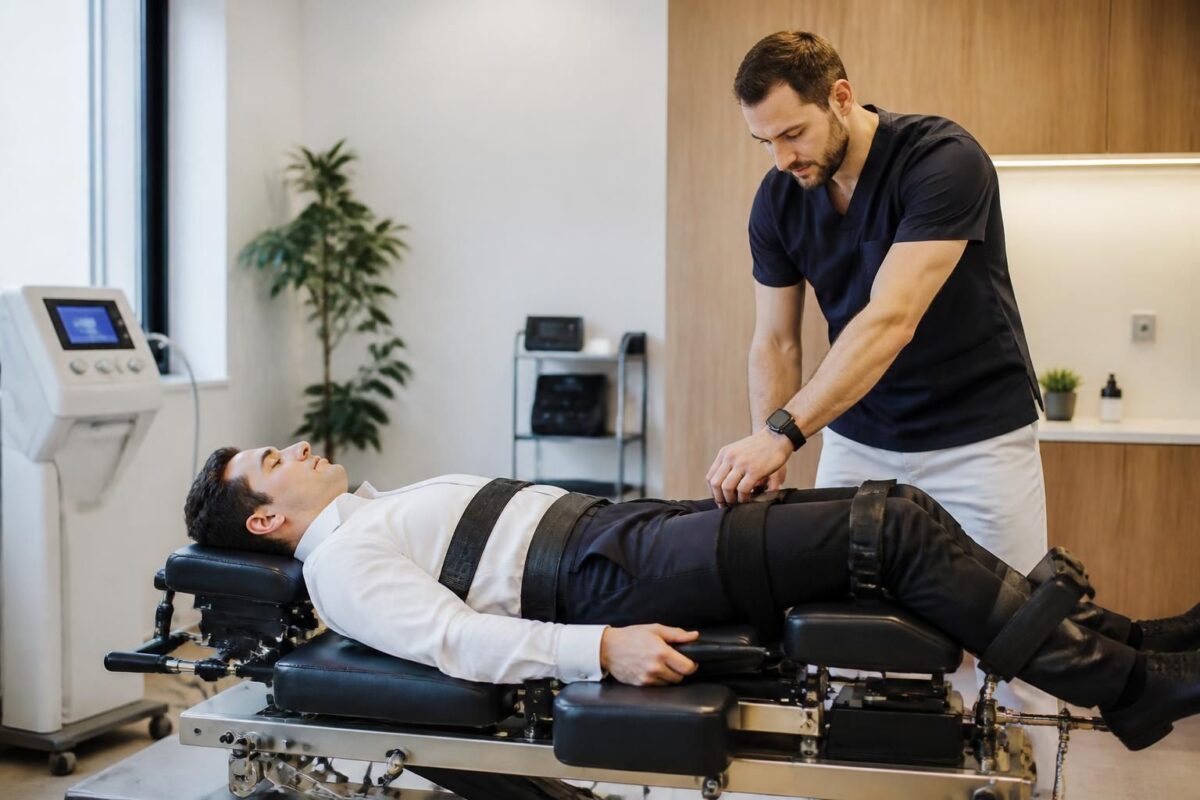
How Neurovertebral Decompression Prevents Diffuse Chronic Pain
In short decompression neurovertebral is one Non-invasive method aimed at reducing the Pressure on the intervertebral discs and the nerves, in order to prevent Diffuse chronic pain. It improves the circulation and thedisc hydration, decreases inflammation and promotes better mobility.…
concrete benefits for working life
the effects of decompression often result in a Improving mobility And greater freedom of movement in everyday gestures, like leaning over, walking, sitting and getting up painlessly. This progression allows many people to resume activities they had had to put aside, while reducing the risk of long-term relapse.
Posture and stability
a better vertebral alignment Contributes to more stable posture and better efficiency of movements, which reduces fatigue and releases energy for physical and social activities.
Recovery and trust
The decrease in pain and the increase in endurance promote a gradual resumption of leisure, sport and family activities. This rediscovered confidence in the body reinforces the motivation to maintain a regular and appropriate practice.
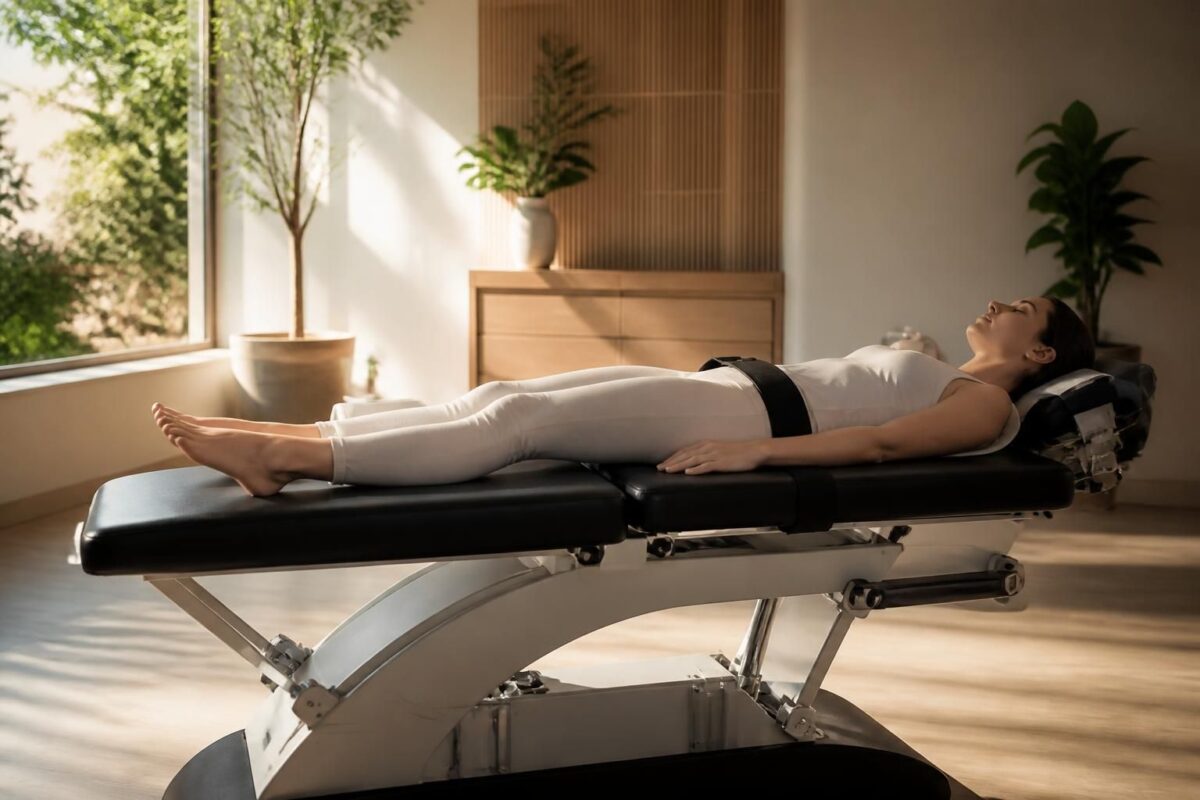
Neurovertebral Decompression and Body Alignment: Restoring Natural Balance
In short In short, neurovertebral decompression is one Non-invasive approach who restores theBody Alignment and thenatural balance back and neck. She acts by a Controlled traction of the spine to widen the intervertebral space and reduce the Pressure on discs…
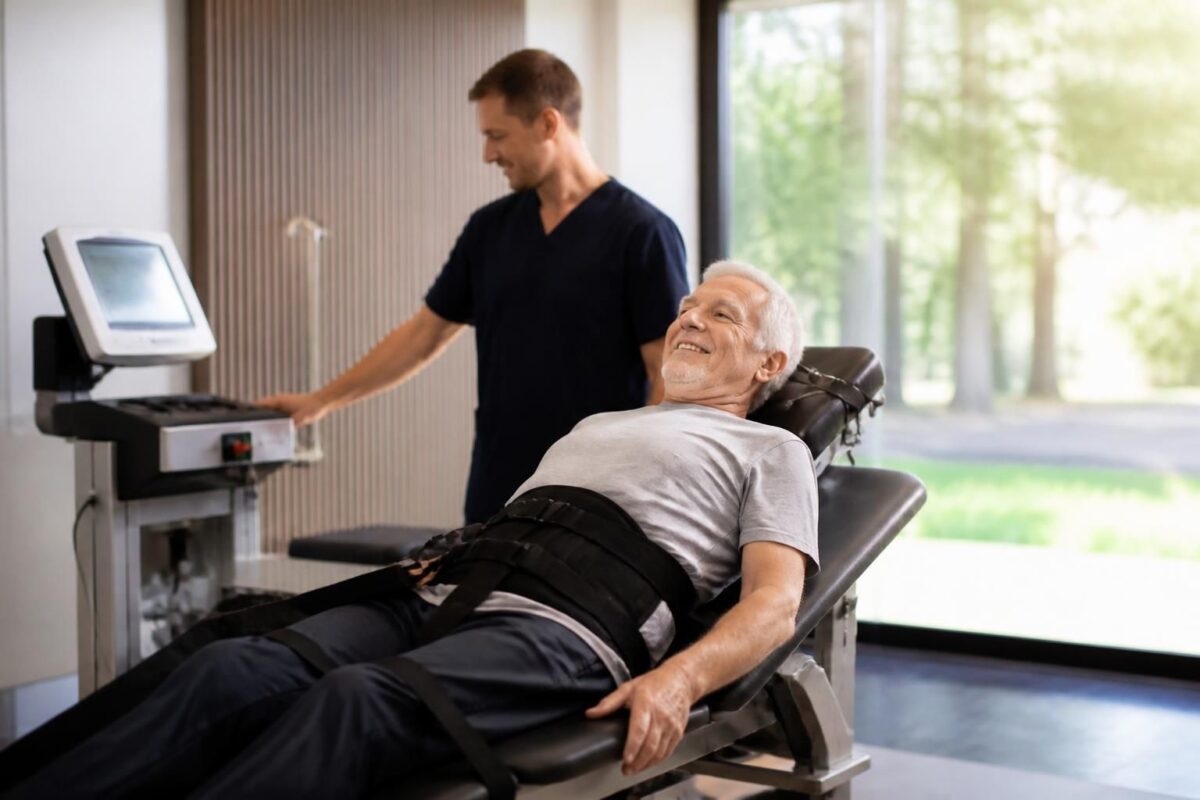
Why neurovertebral decompression is a lasting solution for active seniors
In short In short, the neurovertebral decompression is one Non-invasive therapy which sustainably relieves spinal pain in the spine active seniors By creating, by a Soft and controlled traction, a space between the vertebrae. At Montreal, it is recognized as…
Integration into a care pathway
To optimize the results, decompression must be part of a multidisciplinary approach including osteopathy, physiotherapy and advice from naturopathy and of manual medicine. One Regular follow-up Allows you to adapt the protocol, assess progress and prevent recurrences.
Personalized plan and prevention
Each patient benefits from a Personalized treatment plan Who can combine decompression sessions with appropriate stretching and strengthening exercises. The objective is to maintain mobility gains over time and to integrate preventive strategies against tension and pain.
Additional activities
Simple activities like walking, gentle yoga or controlled stretching can be integrated gradually. A Healthy lifestyle, hydration and a balanced diet support tissue repair and spinal health, promoting a lasting return to activity.
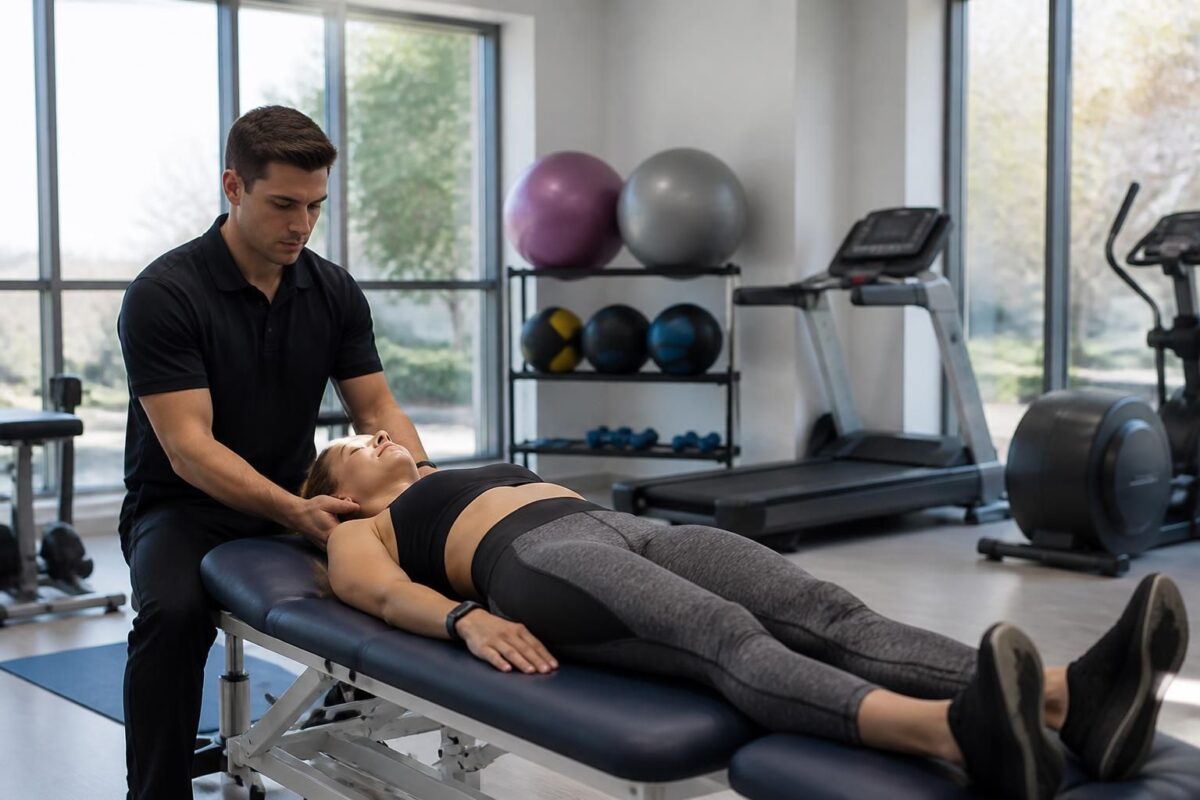
Neurovertebral decompression and recovery after severe sports injury
In short In short, the neurovertebral decompression is one Non-invasive method to Relieve the pressure on the Intervertebral discs and the gristle Via a Controlled traction, to facilitate the recovery After a severe sports injury. It improves the bloodstream towards…
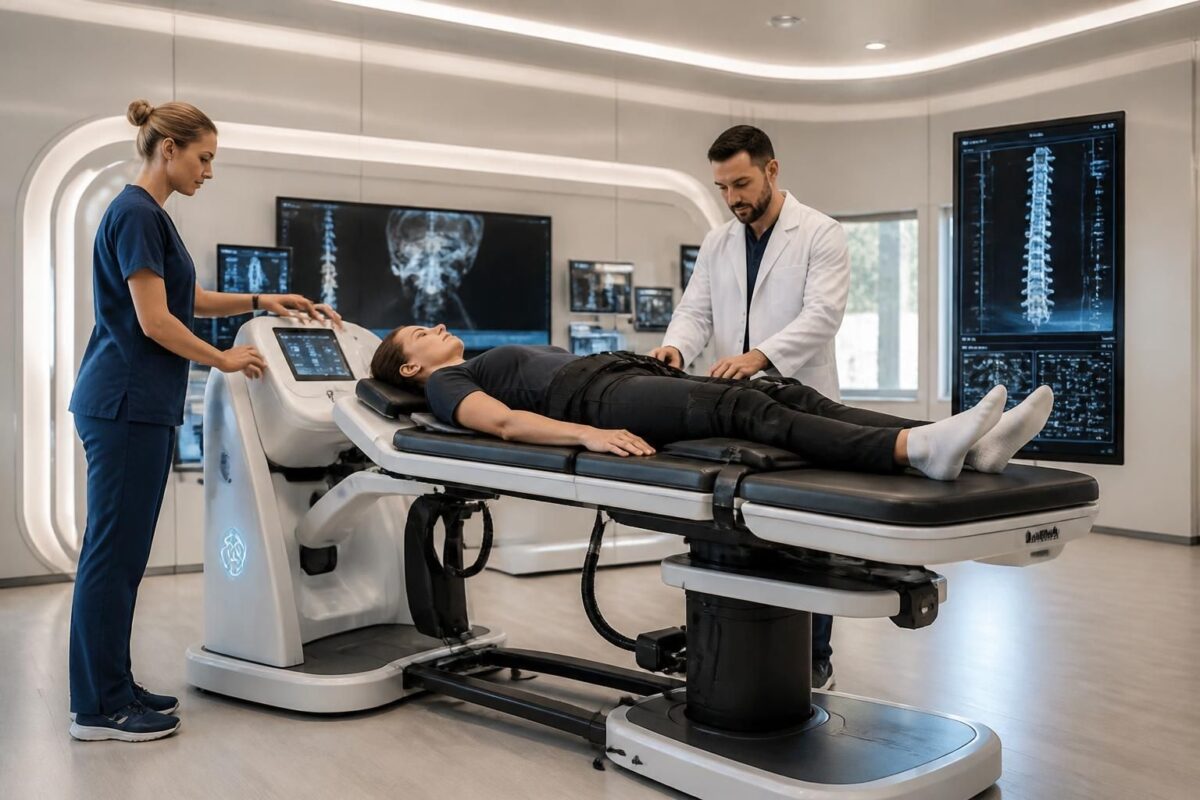
Recent innovations in neurovertebral decompression technologies
In short In short, the neurovertebral decompression is an approach non-invasive Aiming to reduce pressure on discs and nerves, and promote tissue regeneration. At Montreal, it is positioned as an effective option for lower back pain and herniated discs. The…
Practical advice to optimize your return to the activity
Before you begin, an assessment by a qualified health professional is essential to determine indications and contraindications and to adjust the treatment plan based on your situation. During the course, listen to your body, report any discomfort and openly communicate with your therapist to adapt the exercises and sessions.
Exercises and routines at home
Integrate simple mobility and breathing exercises that complement decompression and strengthen the trunk muscles. Maintain a progressiveness of loads and amplitudes to avoid overloads and promote lasting progression.
Continuing assessment
Program regular checkpoints to measure amplitude, pain and quality of life. A proactive and personalized approach maximizes the chances of a quick and lasting return to an active and fulfilling life.
| Axis | Concise description |
|---|---|
| Principle | Traction fresh and controlled who creates a space between the vertebrae and decreases the pressure on discs and nerves. |
| Impact on mobility | Improvement lasting range of motion thanks to the release of tensions and the restoration of thealignment. |
| pain reduction | gradual decrease in pain via the release of tensions and a better hydration discs. |
| muscle relaxation | releases the muscles surrounding the spine and improves the fluidity Movements. |
| bloodstream | Improvement of the circulation local, favoring the intake of nutrients and the disposal of waste. |
| vertebral alignment | Restoration of thealignment vertebral, stress reduction and movement more fluid. |
| Prevention of future pain | Reduction of pressures and risks of recurrence, facilitating the maintenance of regular physical activity. |
| Non-invasive nature | Method non-invasive, without surgery or medication, accessible to a wide range of patients. |
| Monitoring and integration | Monitoring personalized and integration into complementary exercises and therapies for lasting results. |
Mary, 34 years old : “After months of persistent pain, neurovertebral decompression changed my life. My mobility came back and I can bend over, masturbate and tie my shoes painlessly. »
John, 45 years old : “I was blocked by a lumbar stiffness which prevented me from teaching correctly. Thanks to neurovertebral decompression, my mobility became fluid again and I can demonstrate the exercises without pain — my clients and I regained confidence. »
Sophie, 28 : “In professional dance, every movement counts. After the sessions, my range of motion expanded and I dance with more precision and less pain thanks to this approach. »
David, 70 : “After these sessions, my mobility Goes back to natural and I can play with my grandchildren and take pain-free walks — a real rebirth at my age. »
Emilie, 40 years old “Before, I was constantly in pain. Now my pain decreased and my mobility is larger; I resumed yoga and daily walking without hesitation. »
Julien, 45 years old : “A herniated disc had taken me the ability to crouch and lift objects. After treatment, my mobility and my flexibility have improved; I feel rejuvenated and more confident. »
Claire, 52 years old : “Daily tasks, like shopping and driving, have become easy again. My mobility came back and my posture improved thanks to the neurovertebral decompression. »
Mark, 34 years old : “I have regained my ability to play football with my friends. After a few sessions, my pain decreased and my mobility greatly improved; I can play without embarrassment. »
Dr Sylvain Desforges is a recognized expert in osteopathy, naturopathy and manual medicine. He is the founding president of the clinics tagmed and association acma, and leads a career dedicated to Health Innovation. Its approach is based on evidence-based care, designed to optimize the health and the welfare of his patients. Its commitment aims to integrate advanced technologies in the service of a better quality of life, in particular through vertebral decompression, laser and shockwave therapy.
In his practice, the neurovertebral decompression occupies a central place to help patients find a mobility sustainable. This non-invasive technique is based on gentle traction applied to the spine, which creates a space between the vertebrae and reduces the pressure exerted on the intervertebral discs and nerves. By promoting better hydration and reorganization of the forces that support the spine, it helps to restore thevertebral alignment And to release the muscular tensions around.
The mechanism of action is based on a gradual improvement in the bloodstream in the vertebral region. This better infusion provides the necessary nutrients for tissue repair and accelerates recovery, while minimizing resistance and pain. Patients often find Increased range of motion, which facilitates daily gestures, work and sports activities. The objective is clear: to allow everyone to resume a life active and fulfilling without the limits imposed by recurring pain or stiffness.
The approach is not isolated. Dr Desforges favors a Integrative approach which combines decompression with other therapies, such as osteopathy, appropriate fitness and advice in naturopathy. Each patient benefits from a Personalized evaluation, followed by a Care plan planned and adjusted over time. The goal is not only to relieve pain, but also to sustainably improve the posture, the flexibility and the resilience of the body.
The results mentioned by the patients go beyond the physical improvement. Many speak of a renewed confidence in their body and a rediscovered motivation to engage in activities that had been put aside, whether it was walking, gardening, sport or family leisure. Neurovertebral decompression, coupled with a stretching and strengthening program, offers a sustainable path to a pain prevention and an Accelerated recovery.
Dr. Desforges also emphasizes the importance of a Regular follow-up. The effectiveness of this therapy is based on a continuous adaptation of treatment according to the patient’s progress and on the integration of complementary practices that support the healing and maintenance of functional gains over the long term.
For those looking to regain mobility and autonomy, the approach proposed by Dr Sylvain Desforges is part of a global vision where the neurovertebral decompression becomes a centerpiece of an efficient and accessible care pathway, serving a working life And without pain.
This conclusion highlights the benefits of the neurovertebral decompression for mobility and the return to a working life, highlighting the mechanisms, short and long-term effects, as well as practical resources for patients and professionals.
The neurovertebral decompression Acts by a gentle traction targeted that creates a space between the vertebrae, reducing the pressure on the Intervertebral discs and the gristle. This pressure reduction improves the bloodstream local and promotes tissue hydration and regeneration, contributing to a Sustainable improvement in flexibility and therange of motion. In parallel, the restoration of a vertebral alignment More neutral reduces muscle and ligament stress, facilitating daily movements and sports activities.
the effects on the mobility and the pain are generally reported as significant and progressive. Better mobility allows you to resume once difficult daily gestures, such as leaning over, walking long distances or practicing physical activities without irradiated pain. This dynamic is reinforced by a Increased traffic in the vertebral area and by a Reduction of muscle tension, which frees movement and prevents future limitations.
In terms of prevention, neurovertebral decompression helps to limit recurrence of pain and to prevent more serious complications associated with a misaligned spine. By restoring the intervertebral space and improving tone and neuromuscular coordination, it supports a more balanced posture and regular physical activity, essential to maintain a Optimal mobility in the long term.
Furthermore, this approach non-invasive Easily fits into a comprehensive therapeutic strategy and integrative, which may be associated with theosteopathy, at the physiotherapy and naturopathic interventions. This synergy maximizes the results and adapts the treatment according to the needs taken into account of the patient, while minimizing risks and side effects.
For those who wish to deepen and explore practical applications, several specialized resources illustrate the benefits and feedback around neurovertebral decompression. For example, you can view information about Neurovertebral decompression and mobility — recognized therapy, or even articles on theImportance of recurrence prevention. Other resources discuss The therapy adaptation and of Prevention of chronic neuropathic pain.
For feedback and practical considerations on the return to a working life, consult resources dedicated to mobility and recovery after injury or disc herniation, including the guides on Find an active life and Recovery after a recurrent disc herniation. Other articles address the benefits for the active seniors lastingly through analyzes and testimonials available through these resources: Durable solution for active seniors.
For an international perspective and additional information, resources such as Back to an active life and Reduction of radiant back pain Offer useful elements for patients and professionals.
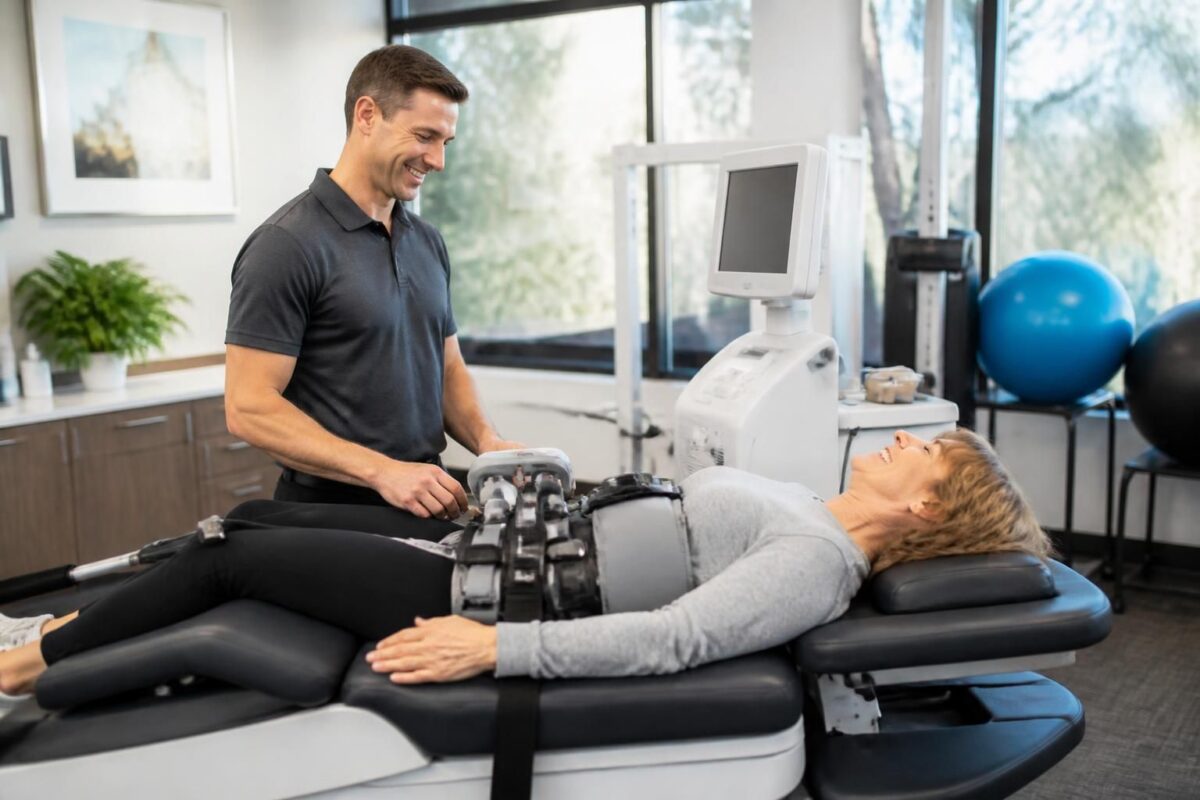
Neurovertebral decompression and diffuse pain: an appropriate solution
In short In short, the neurovertebral decompression is one Non-invasive solution For diffuse pain related to nerve irritation of the spine. She acts in Reducing pressure on intervertebral discs and nerves and improving the bloodstream, which promotes recovery and the…
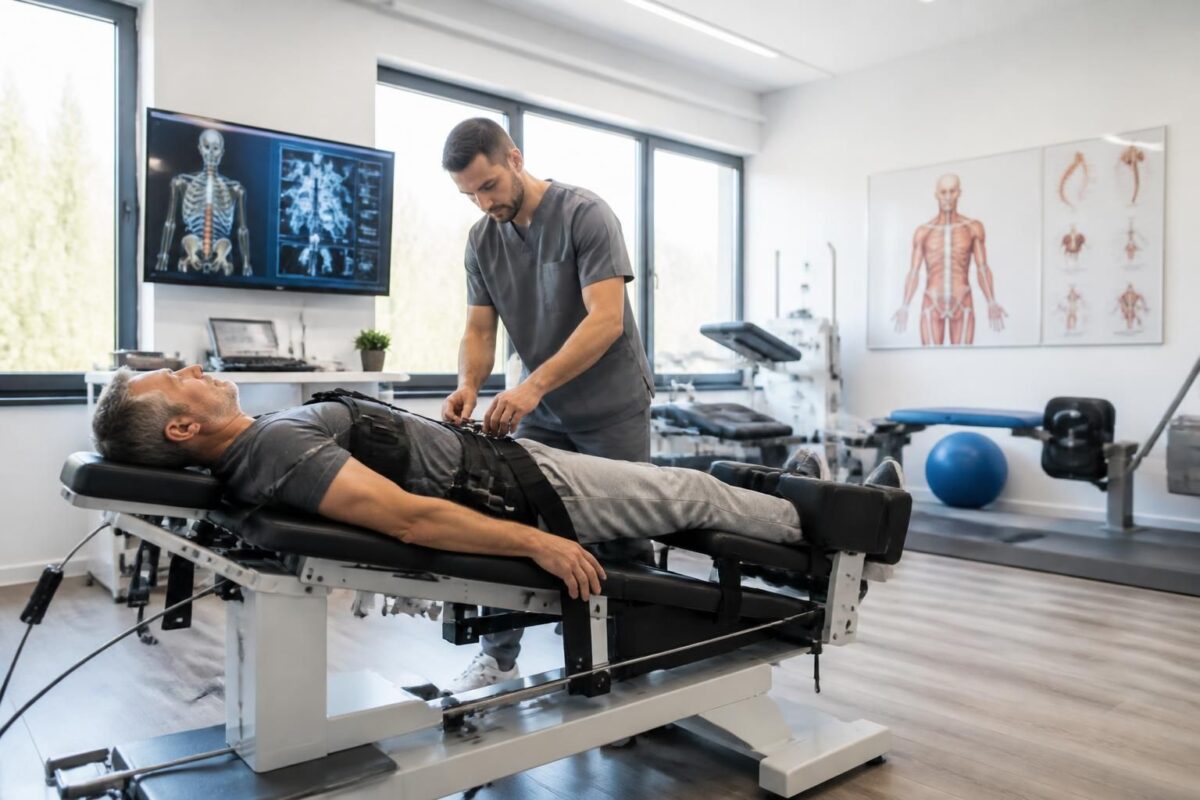
How neurovertebral decompression supports recovery after complex surgery
In short In short, the neurovertebral decompression is one Non-invasive method aimed at optimizing the recovery After a Complex surgery By applying a gentle traction on the spine to create a Space between the vertebrae and reduce the pressure on…

Dr Sylvain Desforges, B.Sc., D.O., N.D., osteopath, is the founding president of TAGMED and of the ACMA association. He dedicates his practice to chronic spinal pain, low back pain and symptoms compatible with sciatica, particularly when pain radiates toward the buttock, leg, calf, foot or toes.
Through SOS Sciatique, he publishes educational content on sciatica symptoms, possible causes such as disc herniation, disc narrowing, foraminal stenosis or irritation of a lumbar nerve root, as well as non-surgical approaches that may be considered according to the evaluation. At Clinique TAGMED, care may include, depending on the case, motorized neurovertebral decompression, specific osteopathic care or precision percussion.
For an evaluation related to sciatica treatment in Montreal / Mount Royal or sciatica treatment in Terrebonne, please consult the services available at Clinique TAGMED.
Medical disclaimer
The information published on SOS Sciatique is provided for educational purposes only and does not replace a consultation, diagnosis, opinion or treatment provided by a physician or another authorized healthcare professional. The author of this article is neither a medical doctor nor a specialist in a medical specialty recognized by the Collège des médecins du Québec. The osteopathic, manual medicine or functional support approaches described on this site do not constitute medical acts and are not intended to replace medical follow-up.
Consult a physician or emergency service in cases of loss of bladder or bowel control, anesthesia in the saddle area, significant or progressive weakness in the leg or foot, fever, recent trauma, severe pain or rapid worsening of symptoms. For more details, please read our Legal Notice.