Neurovertebral decompression and diffuse pain: an appropriate solution
26/06/2026
Neurovertebral decompression and recovery after severe sports injury
26/06/2026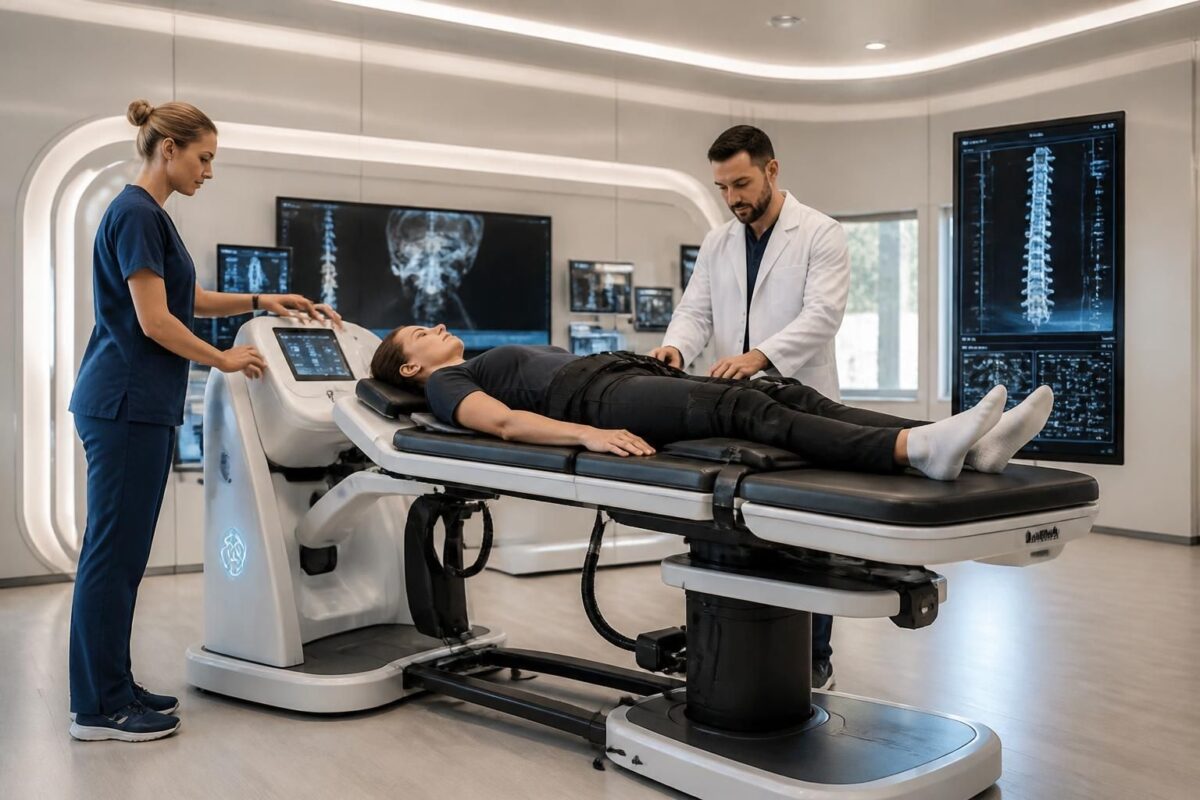
In short
| In short, the neurovertebral decompression is an approach non-invasive Aiming to reduce pressure on discs and nerves, and promote tissue regeneration. At Montreal, it is positioned as an effective option for lower back pain and herniated discs. The Recent innovations integrate a Soft and targeted traction with some Smart Sensors and computerized systems that allow a personalization real-time processing, sometimes via devices like the DRX9000. The result: rapid pain reduction, improvement of the mobility and faster return to theactivity. |
The Recent innovations In the technologies of neurovertebral decompression transform the treatment of spinal pain by offering an approach non-invasive and personalized. systems of Advanced traction Allow targeted reduction of pressure on the intervertebral discs while promoting tissue regeneration. These technologies include Smart Sensors and systems computerized who adjust in real time protocols. association with Complementary therapies (laser, shock waves) strengthens efficiency and rehabilitation. The use of theartificial intelligence and digital platforms facilitates remote monitoring and adaptation of treatment. In summary, these advances improve the pain and the mobility while offering more comfort and safety.
Recent advances in neurovertebral decompression technologies offer a non-invasive and more accurate approach to relieve spinal pain. This article describes key innovations, their mechanisms and their clinical implications. It highlights how modern systems improve the comfort, safety and efficiency of care without the need for surgery. To learn more about our services, you can consult Tagmed Clinic.
Targeted traction and modern devices
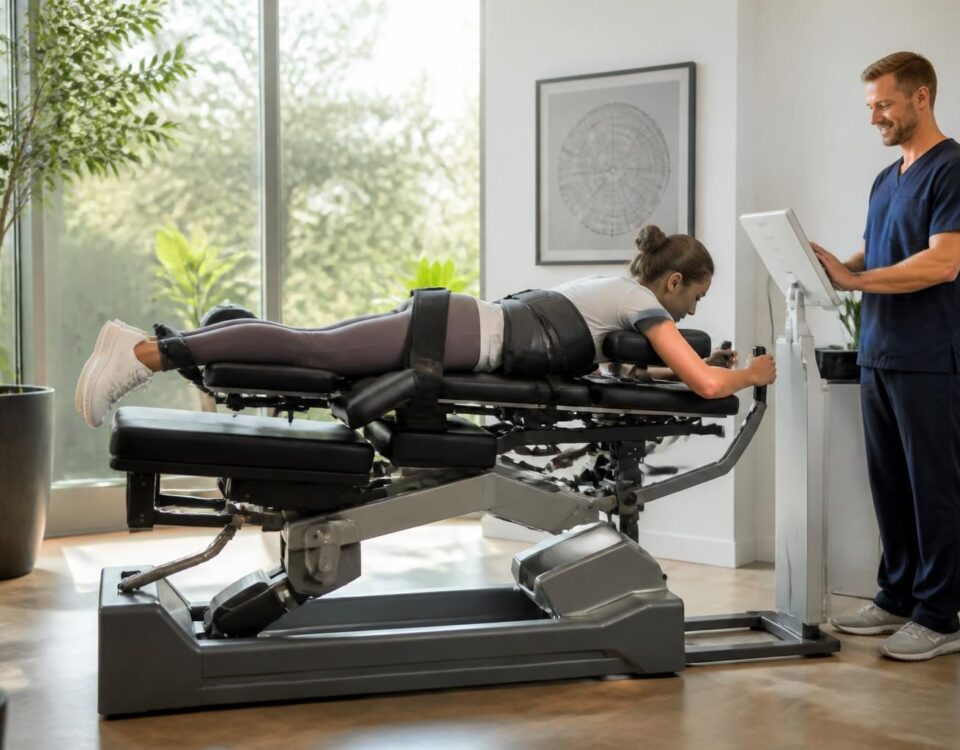
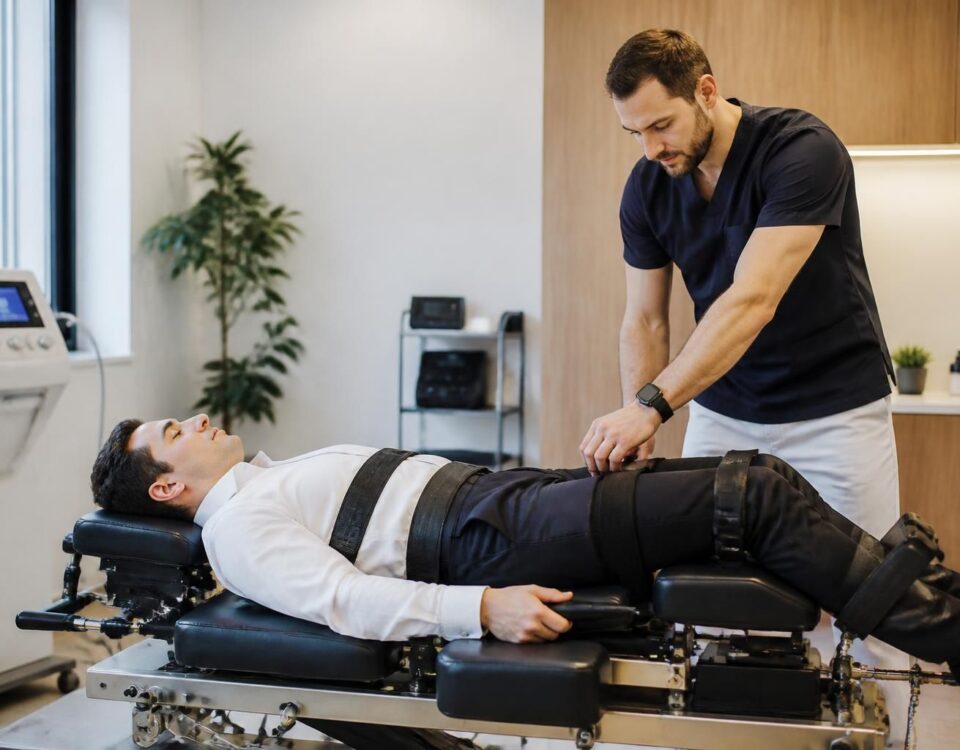
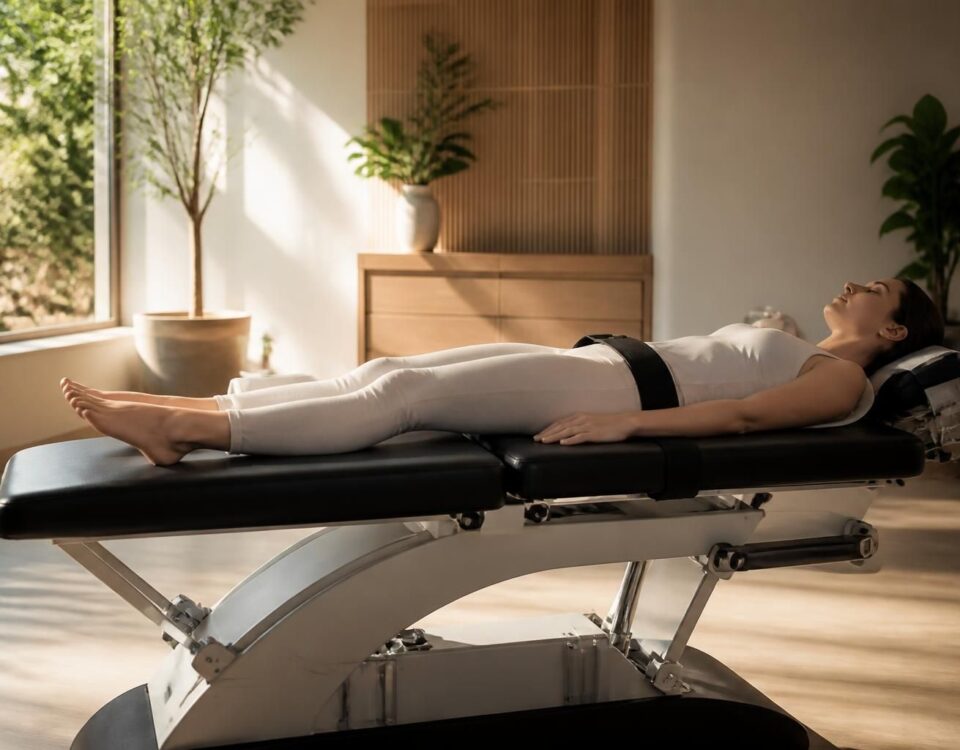
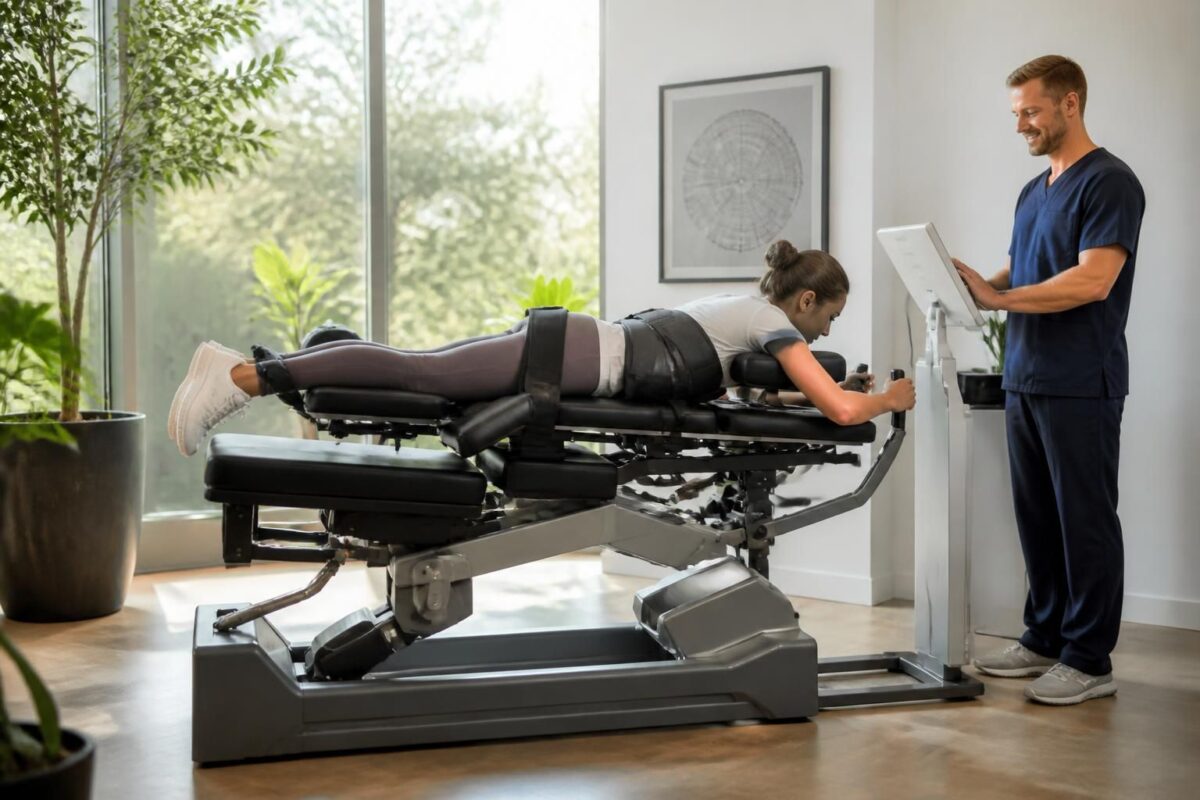
advanced systems of traction apply gentle force and targeted on intervertebral discs. These devices, including the DRX9000™ model, allow precise and progressive decompression, promoting nerve pressure reduction and tissue regeneration when appropriate. This approach non-invasive Adapts to each pathology and each patient, in order to promote comfort and effectiveness of the treatment. For an overview of the latest innovations, see Decompression technologies – Latest innovations.
Intelligent sensors and real-time adjustments
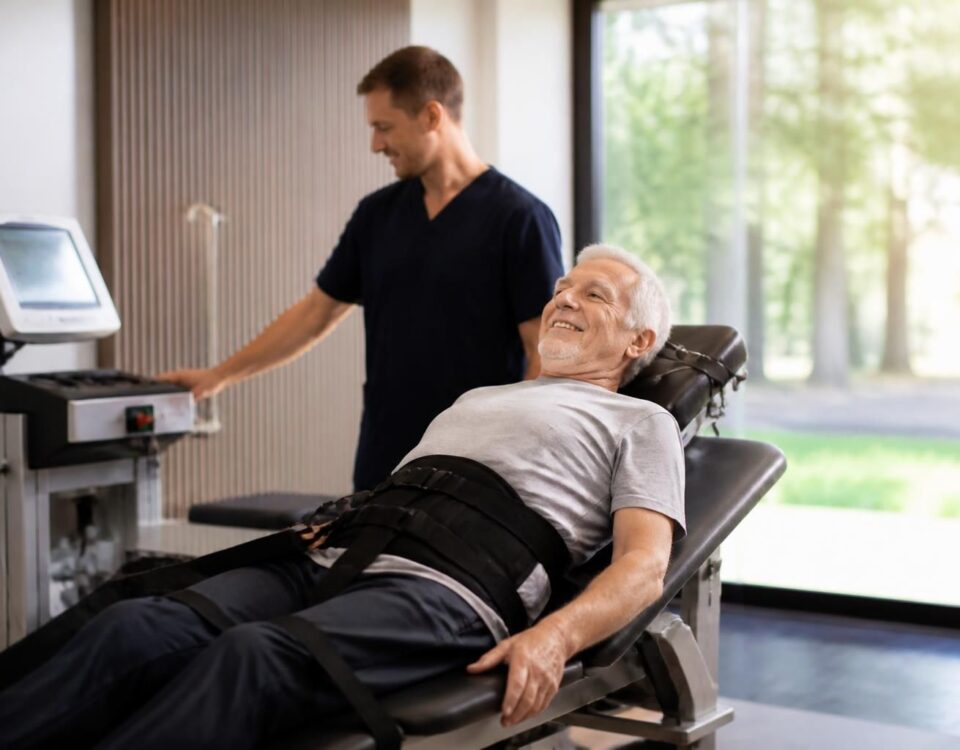
Modern equipment incorporates Smart Sensors that measure the pressure exerted and adjust the protocol in real time. This ability toDynamic adaptation Increases patient safety and comfort throughout the sessions. The use of these systems makes it possible to personalize the decompression parameters without invasive intervention, while ensuring a targeted response according to the clinical evolution of the patient. For a perspective on digital applications, see Decompression technologies – Latest innovations.
Integration of complementary therapies
Neurovertebral decompression is often accompanied by complementary non-invasive therapies, such as approaches that promote circulation and tissue recovery. The combination of these methods reinforces the beneficial effects and can accelerate the return to functional activity. As part of our practices, we favor clinically proven, evidence-based protocols, while remaining focused on patient well-being and compliance with evidence. For additional information, see the associated resources at Innovations in equipment – Advanced pathologies.
Neuromodulation and digital platforms
approaches to neuromodulation and platforms DIGITALS Allows you to track progress and adjust treatments according to the patient’s responses. These tools promote a better understanding of evolution, strengthening adherence to treatment and long-term results. For information on associated technologies, see Decompression and prevention of severe lower back pain and Diffused pain – adapted solution.
Clinical considerations and safety
Innovations in decompression technologies focus on safety and compatibility with best clinical practices. The protocols are designed to adjust to individual needs and to minimize risks. The field is evolving rapidly, with studies that support non-invasive use as a therapeutic option to relieve Chronic pain and improve mobility. For an overview of advances and digital applications, see Advantages of decompression – sports recovery and Future Innovations in Equipment – Optimize Results.
The practice is based on recognized training bases. Among the relevant institutions in this area are Numss, NAO, National University of Medical Sciences and National Academy of osteopathy. These references support the protocols that guide our interventions at the TagMed Clinic and the Affiliate Network.
For additional lighting, you can consult the following specialized resources: Innovations – advanced pathologies, Innovations – advanced pathologies (disc herniation), and Stenosis – ideal decompression.
For general information and clinical cases, the following pages may be useful: Decompression – Advanced pathologies and Accident therapy.
Academic and professional values guide our choices. We favor non-invasive approaches and evidence-based protocols, while remaining attentive to innervation and patient comfort.
Medical Disclaimer: The information and advice provided on this site does not replace the health professional’s diagnosis or treatment. Please note that Dr. Sylvain Desforges osteopath is neither a doctor of medicine nor a doctor, and is not a specialist in a medical specialty as defined by the Collège des Médecins du Québec. Manual medicine, functional medicine and sports medicine as described on this site exclude any medical treatment or diagnosis made by a doctor or specialist doctor. Always consult your doctor for any medical questions. For more details, please read our full legal notice.
Useful links and authorized references: sossciatica.com, SoshernieDiscale.com, SosherniatedDisc.com, decompressionneurovertebrale.com, sostunnelcarpien.com.
Medical Disclaimer: The information and advice provided on this site does not replace the health professional’s diagnosis or treatment. Please note that Dr. Sylvain Desforges osteopath is neither a doctor of medicine nor a doctor, and is not a specialist in a medical specialty as defined by the Collège des Médecins du Québec. Manual medicine, functional medicine and sports medicine as described on this site exclude any medical treatment or diagnosis made by a doctor or specialist doctor. Always consult your doctor for any medical questions. For more details, please read our full legal notice.
Recent innovations in neurovertebral decompression
- Targeted traction and adaptive with DRX9000™ to relieve discs
- Real-time sensors Measuring pressure and effort for immediate adjustments
- IA Integration and digital tracking to customize protocols
- multiple associated therapies (laser, shock waves) to boost healing
- Comfort and safety Soft and controlled traction
- Custom protocols adapted to each patient and imaging
- Accelerated recovery Improved mobility and faster rehabilitation
- Accessibility Clinical and portable solutions for home

This article quickly summarizes recent innovations in neurovertebral decompression and offers practical recommendations for their adoption in clinical practice. It highlights the systems of traction advanced, integration of sensors and ofartificial intelligence, as well as the association with complementary therapies to improve pain and mobility while remaining non-invasive and evidence-based.
Technological developments and flagship devices
Recent years have seen decompression systems become more targeted and safer. The central element is a gentle traction and precise on the intervertebral discs, with mechanisms that adapt the strength and duration according to the pathology and the comfort of the patient. Modern equipment incorporates relaxation phases and modular protocols, allowing controlled stretching that reduces pressure and promotes tissue rebalancing. The objective is to offer a personalized treatment that quickly reduces pain and improves mobility, while limiting risks.
The long-term benefits of neurovertebral decompression for spinal health
In short In short, the neurovertebral decompression is a non-invasive approach that decreases the Pressure on intervertebral discs and nerves, favoring the Natural regeneration and tissue recovery. Its long-term benefits include Lasting pain reduction, Improving mobility and from the posture,…
Smart traction and protocol customization
The Smart Sensors And the algorithms make it possible to adjust the pressure and the level of traction in real time. This adaptability is essential to respond to individual variability of symptoms and clinical course during treatment. The use of theartificial intelligence (IA) and connected systems facilitate response tracking, protocol adjustment and session security. Custom protocols are based on an initial assessment and feedback being processed, optimizing results while avoiding over-treatment.

Neurovertebral decompression and mobility: a return to an active life
In short In short, the neurovertebral decompression is therapy non-invasive who uses a gentle traction To create a space between the vertebrae and reduce the pressure on the Intervertebral discs and the nerves. It promotes a bloodstream improved, lowers tension…
Integration with complementary therapies
Shockwave and Laser Therapy
The association of the decompression with complementary therapies such as Shockwave therapy and the laser Offers favorable synergy: improved circulation, reduced inflammation and acceleration of tissue repair. This multimodal approach can amplify treatment efficacy and support faster functional rehabilitation.
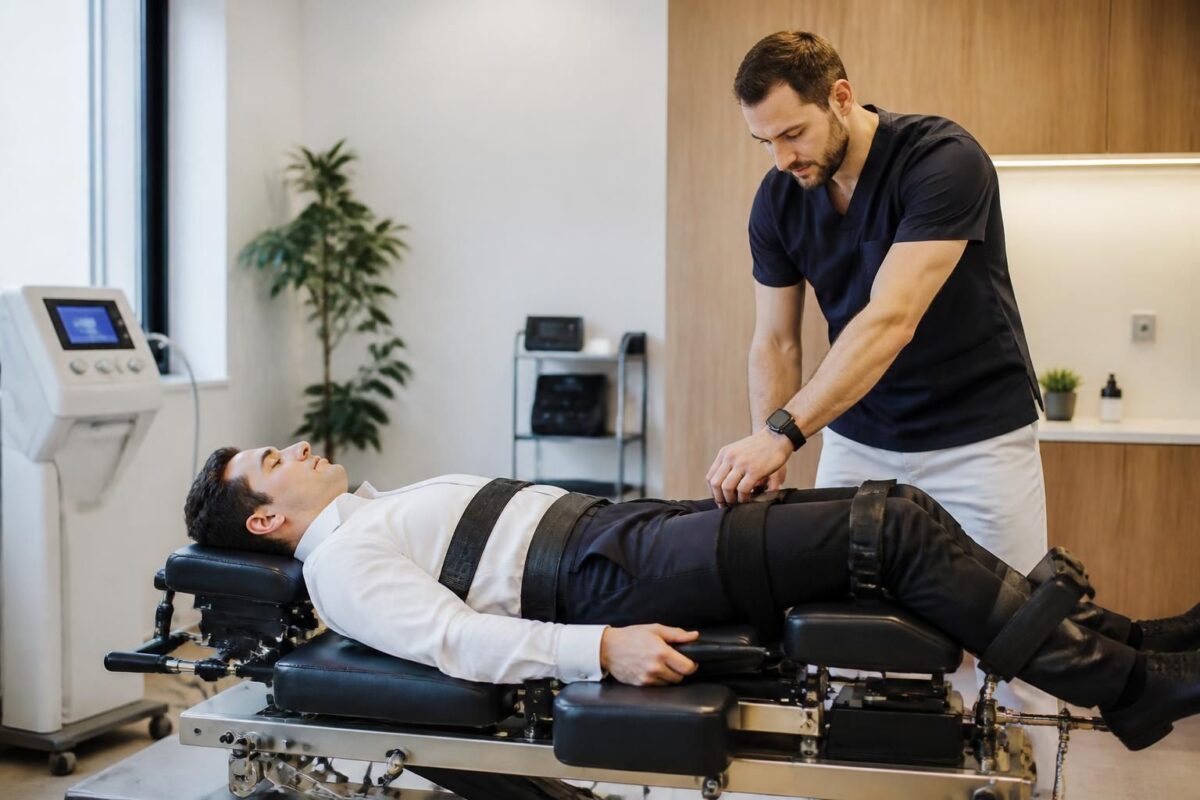
How Neurovertebral Decompression Prevents Diffuse Chronic Pain
In short decompression neurovertebral is one Non-invasive method aimed at reducing the Pressure on the intervertebral discs and the nerves, in order to prevent Diffuse chronic pain. It improves the circulation and thedisc hydration, decreases inflammation and promotes better mobility.…
Digital follow-up and patient experience
digital platforms allow a Continuous monitoring symptoms, mobility and level of pain between sessions. This real-time feedback guides adjustments and improves patient engagement and satisfaction. Digital monitoring promotes better communication between the patient and the practitioner and contributes to more predictable long-term results.
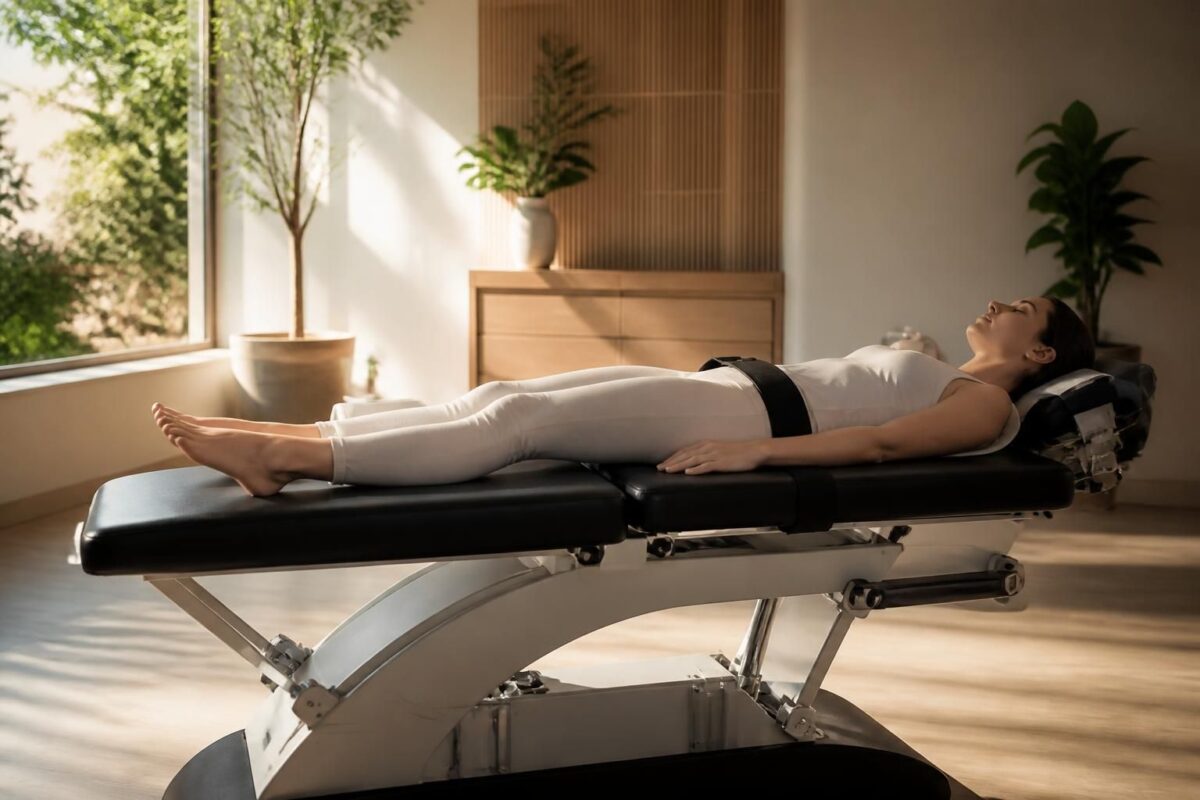
Neurovertebral Decompression and Body Alignment: Restoring Natural Balance
In short In short, neurovertebral decompression is one Non-invasive approach who restores theBody Alignment and thenatural balance back and neck. She acts by a Controlled traction of the spine to widen the intervertebral space and reduce the Pressure on discs…
Clinical and practical considerations
Patient selection and evidence
To make the most of innovations, patients should be selected according to clear indications: pain linked to disc pathologies, with little or no major contraindications. We must remain attentive to minor risks, such as a transient stiffness after session. The use of these technologies must be part of a framework based on evidence, with validated protocols and continuous staff training to ensure safety and efficiency.
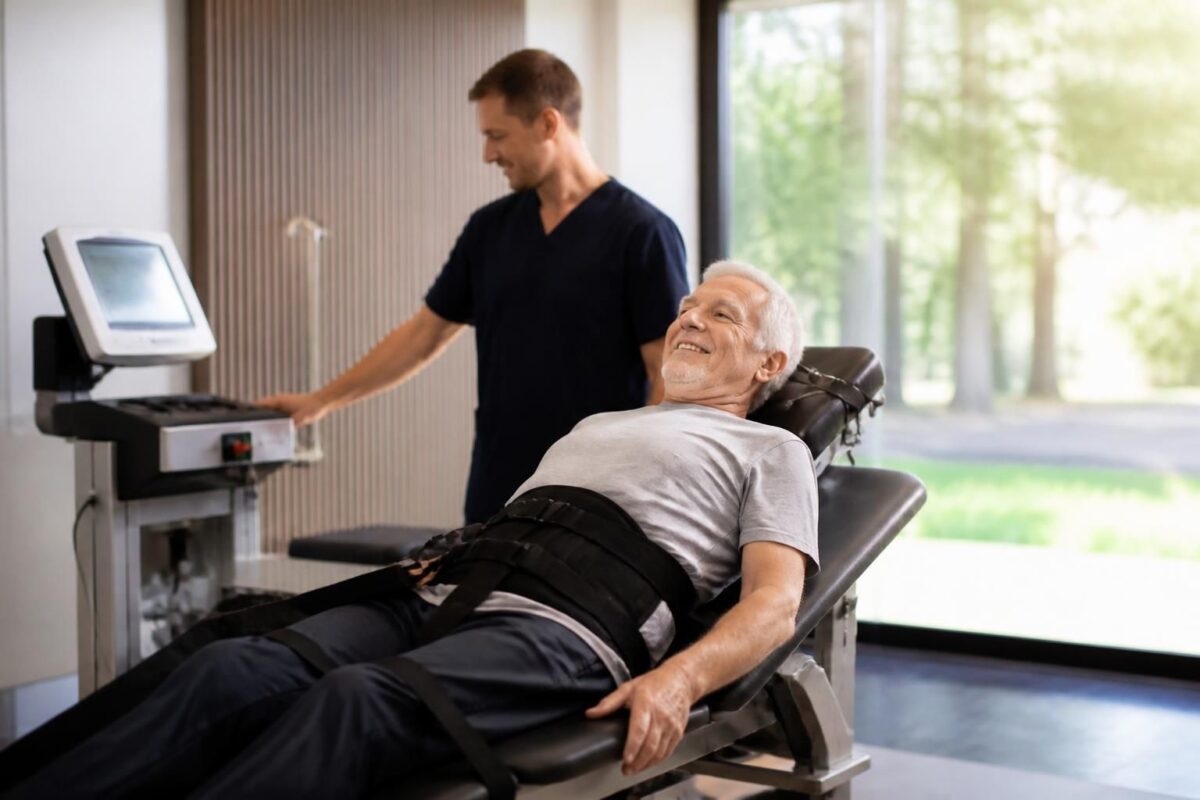
Why neurovertebral decompression is a lasting solution for active seniors
In short In short, the neurovertebral decompression is one Non-invasive therapy which sustainably relieves spinal pain in the spine active seniors By creating, by a Soft and controlled traction, a space between the vertebrae. At Montreal, it is recognized as…
Prospects and challenges
Among the challenges is investment cost and integration into workflows. In the future, theExtension of AI capabilities, the development of portable devices and improved interoperability between systems promise increased accessibility and more predictable results. Clinicians should remain vigilant about the evolution of evidence and systematically document the results to support sustainable and beneficial adoption for patients.
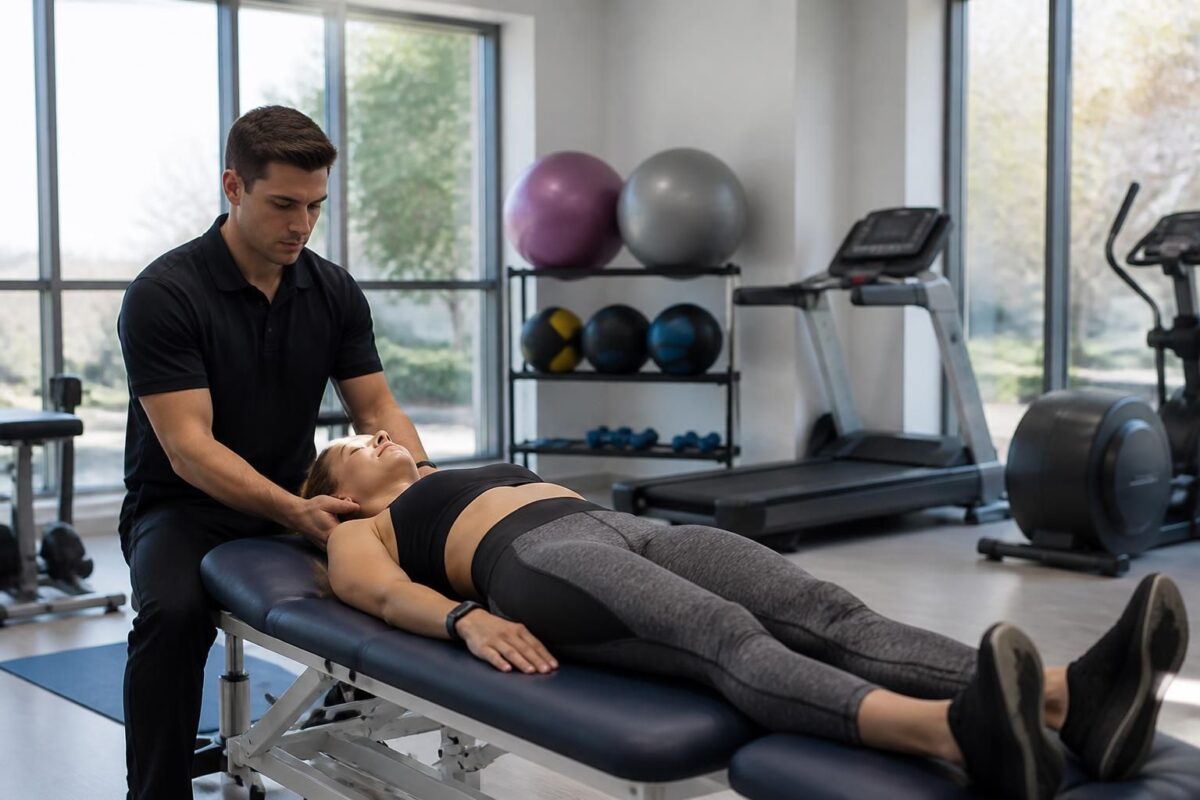
Neurovertebral decompression and recovery after severe sports injury
In short In short, the neurovertebral decompression is one Non-invasive method to Relieve the pressure on the Intervertebral discs and the gristle Via a Controlled traction, to facilitate the recovery After a severe sports injury. It improves the bloodstream towards…
Recent innovations in neurovertebral decompression technologies
| Key axis | concise statement |
|---|---|
| DRX9000™ and targeted traction | Soft and targeted traction that decreases pressure on discs and nerves. |
| Intelligent sensors and real-time adjustment | Measures pressure and adjusts traction for custom processing. |
| Dynamic traction and adaptable protocol | Continuous adjustments to optimize comfort and efficiency. |
| Integrated complementary therapies | They are combined with laser or shock waves to promote circulation and reduce inflammation. |
| Artificial Intelligence for Custom Protocols | IA analyzes responses and adjusts sessions continuously. |
| Digital follow-up and telemedicine | Applications allow remote tracking and adjustments. |
| Portable devices and home treatment | Comfort and increased accessibility thanks to portable systems. |
| Ergonomic and durable materials | Design focused on the comfort and durability of the material. |
| Pulse Align and Neuromodulation | Impulse vibrations that improve muscle tone and reduce pain. |
| Security and regulatory framework | Non-invasive processes with monitoring and low risk of adverse effects. |
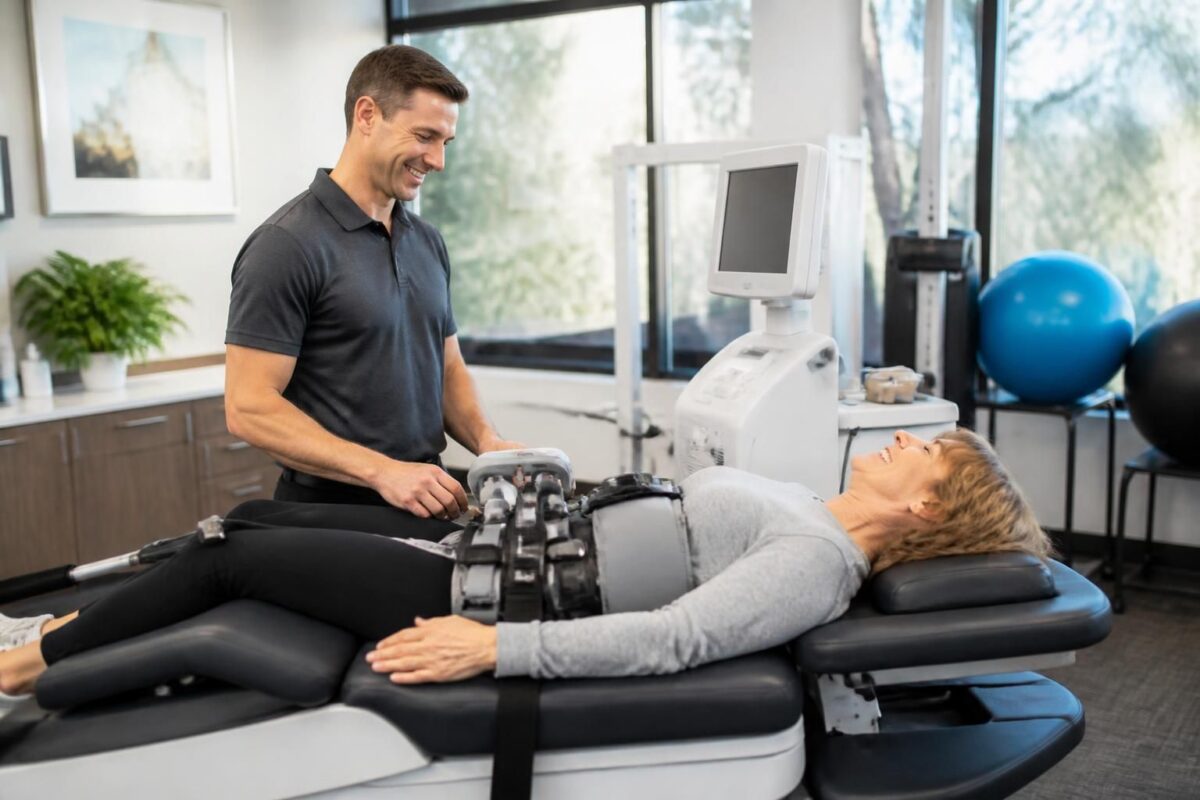
Neurovertebral decompression and diffuse pain: an appropriate solution
In short In short, the neurovertebral decompression is one Non-invasive solution For diffuse pain related to nerve irritation of the spine. She acts in Reducing pressure on intervertebral discs and nerves and improving the bloodstream, which promotes recovery and the…
Testimonials on recent innovations in neurovertebral decompression technologies
Testimony of Sophie, 38, sportswoman: “Since I started the neurovertebral decompression, my back pain decreased significantly. The Targeted traction is fresh and non-invasive, and I found a large part of my mobility without medication. »
Testimony of Laurent, 49, project manager: “Les Smart Sensors Integrated allows you to adjust the pressure and traction in real time. This makes the treatment personalized and increases comfort during the sessions. »
Testimony of Amélie, 46, teacher: “The integration of theAI in the decompression protocols offered me a Tailor-made program. Each session adapts to my answer, which optimizes the results and reduces the duration of rehabilitation. »
Testimony of Karim, 54, logistician: “To combine decompression with complementary therapies such as the laser where the shock waves increased efficiency. I feel better circulation and a decrease in inflammation after each session. »
Testimony of Anne-Sophie, 60, retired active: “The Digital monitoring Via an app allows me to follow my progress and stay committed. I feel more confident in my journey and motivated to continue the exercises at home. »
Testimony of Lucas, 33, physiotherapist: “As a practitioner, I see that innovations such as Adaptive traction And connected devices improve the safety and efficiency of treatments. This changes the game for our patients with chronic pain. »
Dr. Sylvain Desforges, osteopath, naturopath and doctor Manuel, is a visionary voice in the field ofHealth Innovation. Founding president of the Tagmed clinics and the ACMA association, he places scientific evidence at the heart of his approach and guides a practice focused on the sustainable improvement of the quality of life of patients. With extensive experience in the management of chronic pain, he strives to integrate the most efficient technologies, in particular the neurovertebral decompression, the laser and the Shockwave therapy, to offer personalized and effective care.
Recent advances in neurovertebral decompression equipment mark a major evolution in the treatment of vertebral pathologies. Gentle, targeted traction devices reduce the pressure exerted on the intervertebral discs and nerves, while supporting tissue regeneration. The use of intelligent systems—integrated sensors and advanced IT tools—allows real-time protocol adjustments, ensuring a genuinely personalized for each patient. This customization contributes to faster results and a more comfortable therapeutic experience.
In his practice, Dr. Desforges sheds light on the synergistic integration of technologies such as DRX9000 and other traction solutions associated with additional modalities. The objective is twofold: to quickly relieve pain and promote regained functional mobility. Through the use of Smart Sensors And to the analysis of the data collected, each session can be adjusted according to the individual response, thus reinforcing the overall effectiveness of the treatment and the confidence of the patient in his rehabilitation course.
Beyond the technique 纯, the rise of decompression technologies is based on a Robust evidence. Dr. Desforges focuses on an evidence-based approach based on clinical outcomes, functional indicators and ongoing assessment of patient status. This philosophy leads to protocols on measure and better prediction of results, while limiting risks and adverse effects. The integration of digital technologies also allows rigorous monitoring and dynamic adaptation of care according to the evolution of the patient.
On the prospective level, innovations in neurovertebral decompression are part of a trajectory of rapid evolution. The increasing use ofartificial intelligence To optimize protocols, the deployment of digital platforms for remote monitoring and convergence with complementary therapies promise an even more effective and accessible approach. Dr. Desforges is actively working to make these technologies smarter, safer and more user-friendly, to allow more patients to benefit from lasting relief and accelerated recovery.
This commitment to the future of spinal care illustrates Dr. Desforges’ vision: providing solutions non-invasive, effective and evidence-based to optimize health and well-being. His approach highlights a discipline in motion, where technological innovation at the service of the patient is reinventing the rehabilitation of the spine and paves the way for a better quality of sustainable life.
This article summarizes the Recent innovations in the Neurovertebral Decompression Technologies, highlighting the mechanisms of Targeted traction, the role of Smart Sensors, and the integration of Digital technologies which allow a real-time adjustment of the protocols, all in an approach non-invasive and personalized.
The Recent innovations in neurovertebral decompression equipment offer a Accurate targeting intervertebral discs and surrounding nerves thanks to systems of gentle traction and controlled. devices like the DRX9000 and the Smart Sensors allow dynamic pressure tracking and instant adjustment of parameters, ensuring Personalized session and better patient comfort. The combination of these technologies promotes the pain reduction and theImproving mobility, while supporting tissue healing processes.
The integration of Artificial Intelligence And some Digital platforms Optimize protocols based on individual responses and track progress remotely. This approach personalized Strengthens the effectiveness of treatments and facilitates Active commitment of the patient in his rehabilitation course. To discover the latest advances, consult specialized resources such as New in decompression and Recent innovations.
These technologies are not limited to traction; They are enriched byComplementary approaches like the shock waves and the laser, which strengthen the bloodstream and reduce theinflammation. The association of these methods in Custom protocols Improves rehabilitation results and can accelerate return to activity. To deepen these combinations, see Clinical innovations in neurovertebral decompression and Focus on neurovertebral decompression.
As the devices evolve, clinics are moving towards a telemedicine And some Portable devices which allow the follow-up and adjustment of treatments at home. This digitization improves accessibility and promotes Continuous recovery outside office sessions. To understand the practical implications, see Technological innovations in equipment.
Finally, the evolution towards an approach integrative and evidence-based opens the way to Tracking protocols more robust and better understanding of clinical outcomes. For perspectives and practical cases, see specialized resources on advanced protocols and the integration of technologies in the care of athletes and patients with disc pathologies.
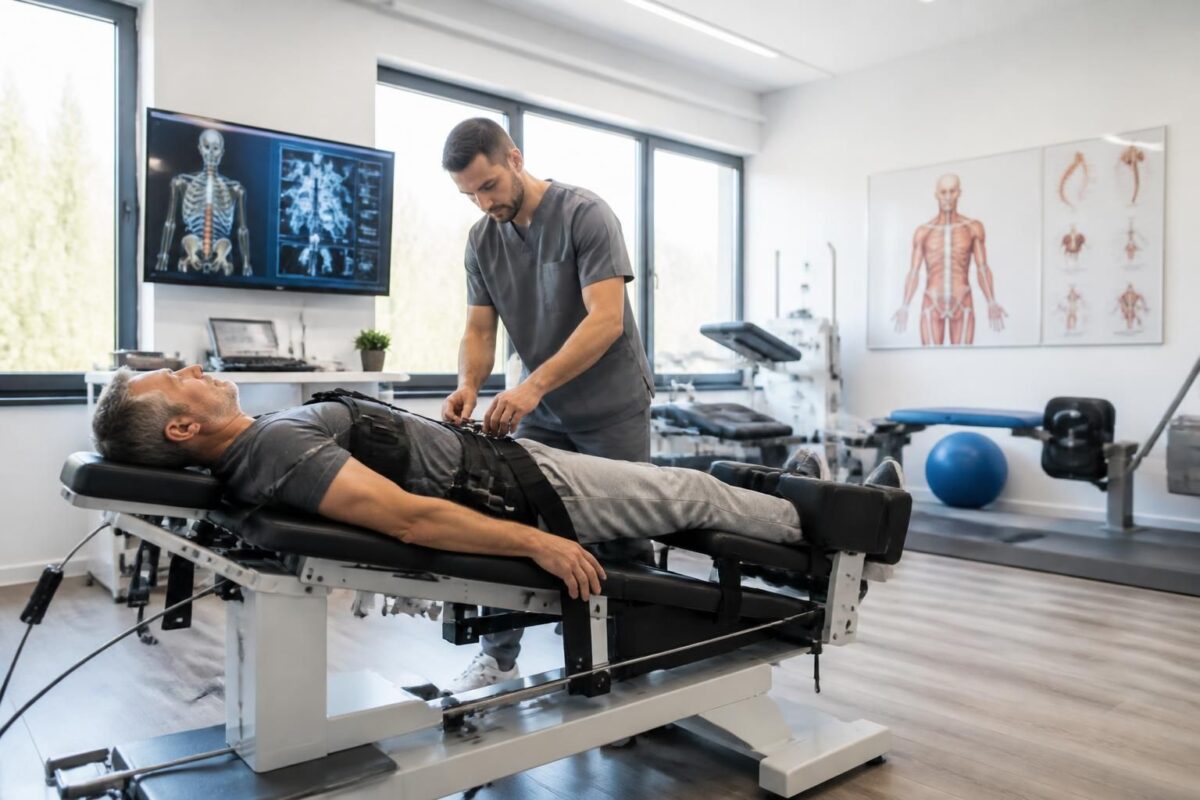
How neurovertebral decompression supports recovery after complex surgery
In short In short, the neurovertebral decompression is one Non-invasive method aimed at optimizing the recovery After a Complex surgery By applying a gentle traction on the spine to create a Space between the vertebrae and reduce the pressure on…

Dr Sylvain Desforges, B.Sc., D.O., N.D., osteopath, is the founding president of TAGMED and of the ACMA association. He dedicates his practice to chronic spinal pain, low back pain and symptoms compatible with sciatica, particularly when pain radiates toward the buttock, leg, calf, foot or toes.
Through SOS Sciatique, he publishes educational content on sciatica symptoms, possible causes such as disc herniation, disc narrowing, foraminal stenosis or irritation of a lumbar nerve root, as well as non-surgical approaches that may be considered according to the evaluation. At Clinique TAGMED, care may include, depending on the case, motorized neurovertebral decompression, specific osteopathic care or precision percussion.
For an evaluation related to sciatica treatment in Montreal / Mount Royal or sciatica treatment in Terrebonne, please consult the services available at Clinique TAGMED.
Medical disclaimer
The information published on SOS Sciatique is provided for educational purposes only and does not replace a consultation, diagnosis, opinion or treatment provided by a physician or another authorized healthcare professional. The author of this article is neither a medical doctor nor a specialist in a medical specialty recognized by the Collège des médecins du Québec. The osteopathic, manual medicine or functional support approaches described on this site do not constitute medical acts and are not intended to replace medical follow-up.
Consult a physician or emergency service in cases of loss of bladder or bowel control, anesthesia in the saddle area, significant or progressive weakness in the leg or foot, fever, recent trauma, severe pain or rapid worsening of symptoms. For more details, please read our Legal Notice.