

Neurovertebral decompression and acute nocturnal pain: a proven approach
26/06/2026
neurovertebral decompression and chronic herniated discs: sustainably relieve
26/06/2026
In short
| In short, neurovertebral decompression is one Non-invasive therapy which is based on a Targeted traction of the spine to reduce the pressure on the nerves and improve mobility. Its main advantages include a pain reduction And faster recovery, without surgery or incision, with protocol customization according to the patient. Its operation is based on innovative systems that adjust traction in real time and allow progress to be monitored. Accessible in Montreal, this treatment can be integrated into a multidisciplinary course to treat neuropathic pain and musculoskeletal disorders related to the spine. In Montreal, this service is particularly recommended for people with low back and neck pain due to nerve compression. |
The Innovations in non-invasive therapies redefine the treatment of back and neuropathic pain, focusing on the neurovertebral decompression. Here are the key points to remember:
- Advanced traction technologies (such as modern systems) that allow targeted and controlled traction, reducing the pressure on nerves and discs.
- Adaptive algorithms and real-time feedback To adjust the tensile force according to the patient’s reactions and improve the effectiveness of the sessions.
- Artificial intelligence and digital monitoring which personalize the protocols and ensure continuous monitoring of progress.
- Integration of complementary therapies such as the laser and neuromodulation, strengthening relief and promoting recovery.
- Multidisciplinary approach associate osteopathy, physiotherapy and sports medicine to treat pain from a global perspective.
- Comfort and safety Non-invasive treatments, with excellent tolerance and minimal risk of side effects.
This article presents key innovations in non-invasive therapies, with a precise focus on neurovertebral decompression. It describes the technologies, mechanisms, impact on pain and mobility, as well as the interest of a multidisciplinary approach without surgery. The objective is to clearly explain how these advances contribute to improving the quality of life of patients with spinal pain.
What is neurovertebral decompression?
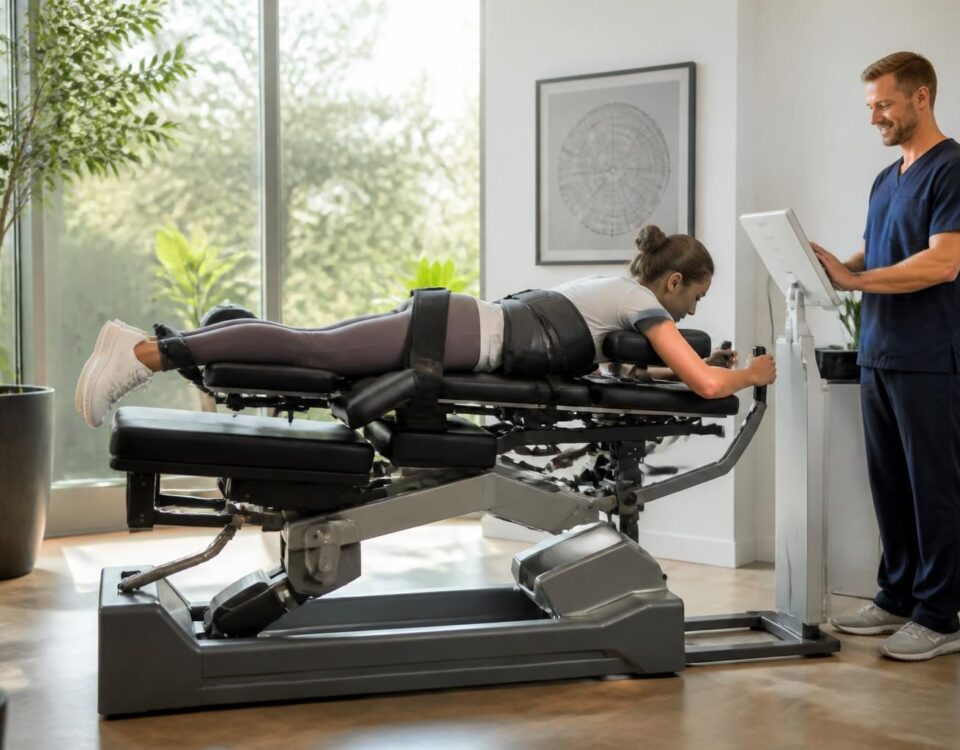
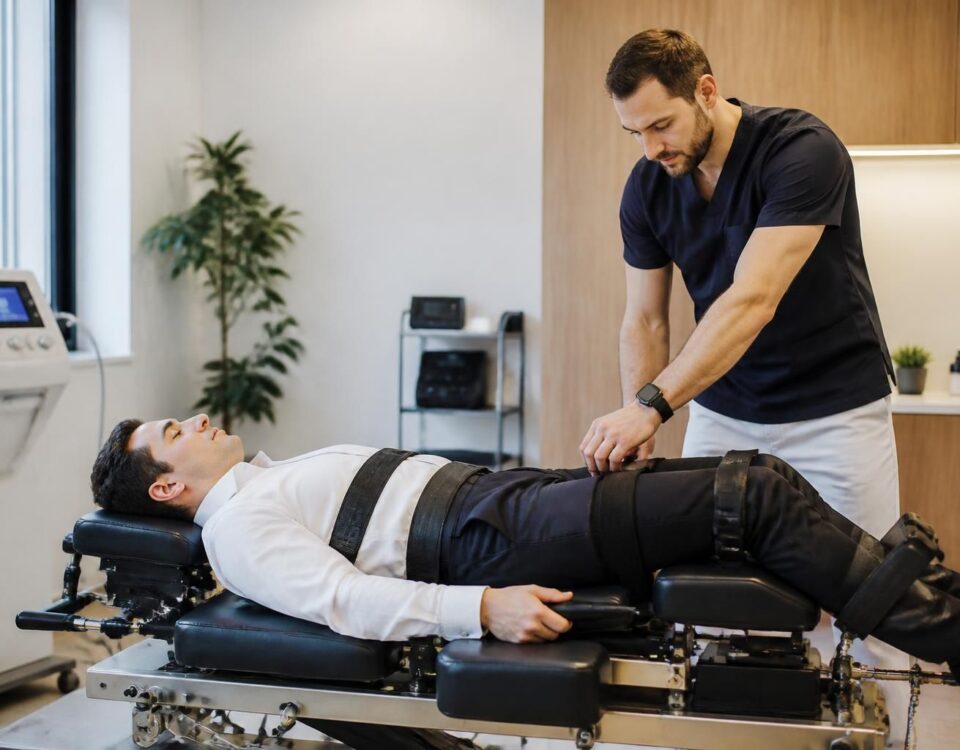
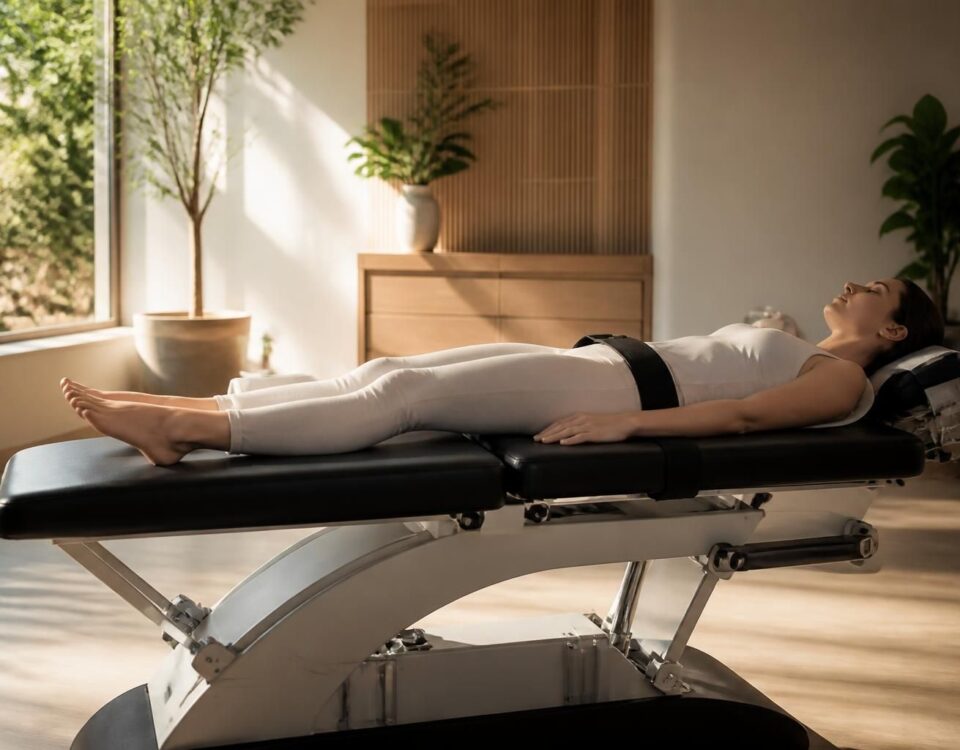
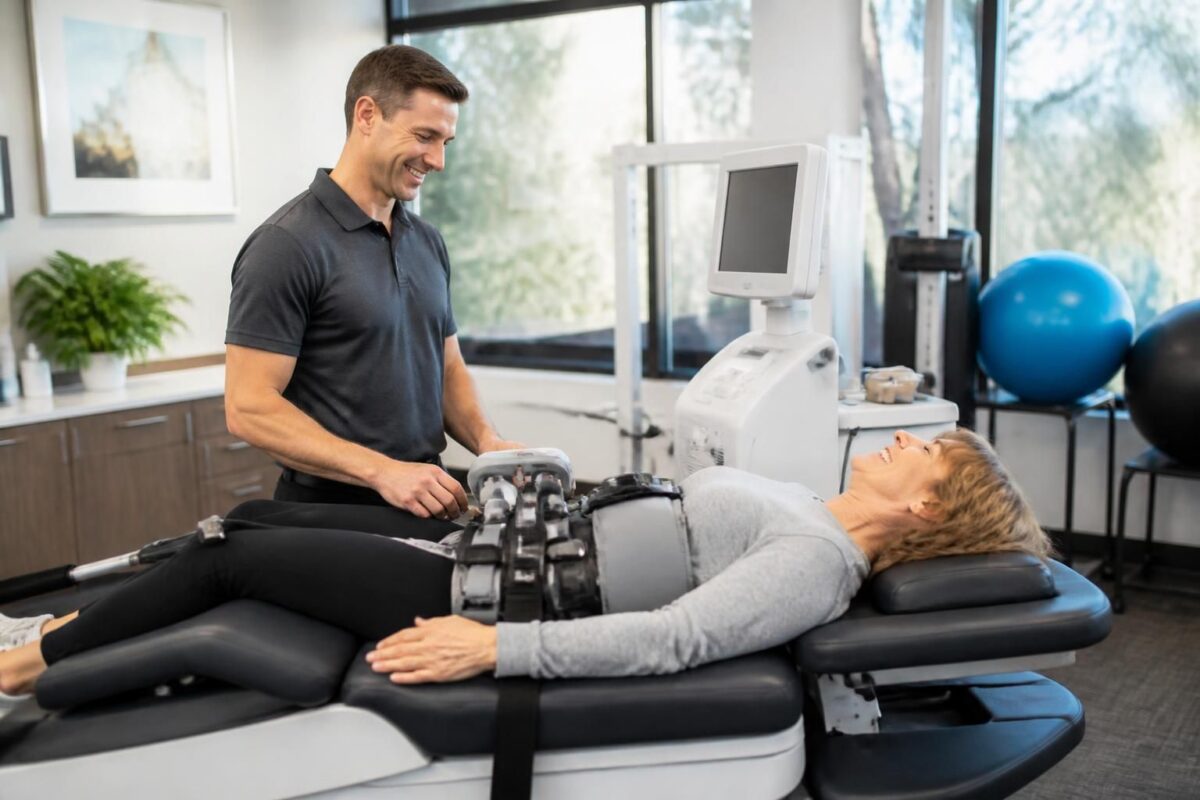
Neurovertebral decompression is a non-invasive approach that aims to reduce the pressure exerted on the nerves and discs. It uses controlled and targeted traction on the relevant vertebral segments. This traction promotes the intervertebral space and can decrease the pain associated with nerve compressions. Patients appreciate the comfort and results obtained without surgery.
Technologies and precision
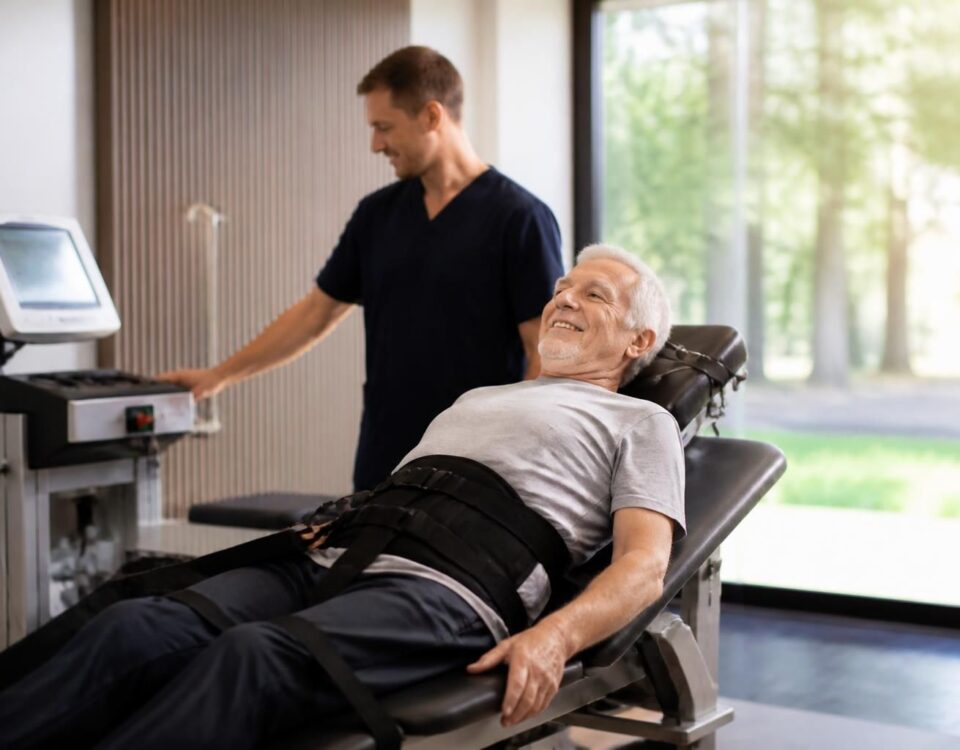
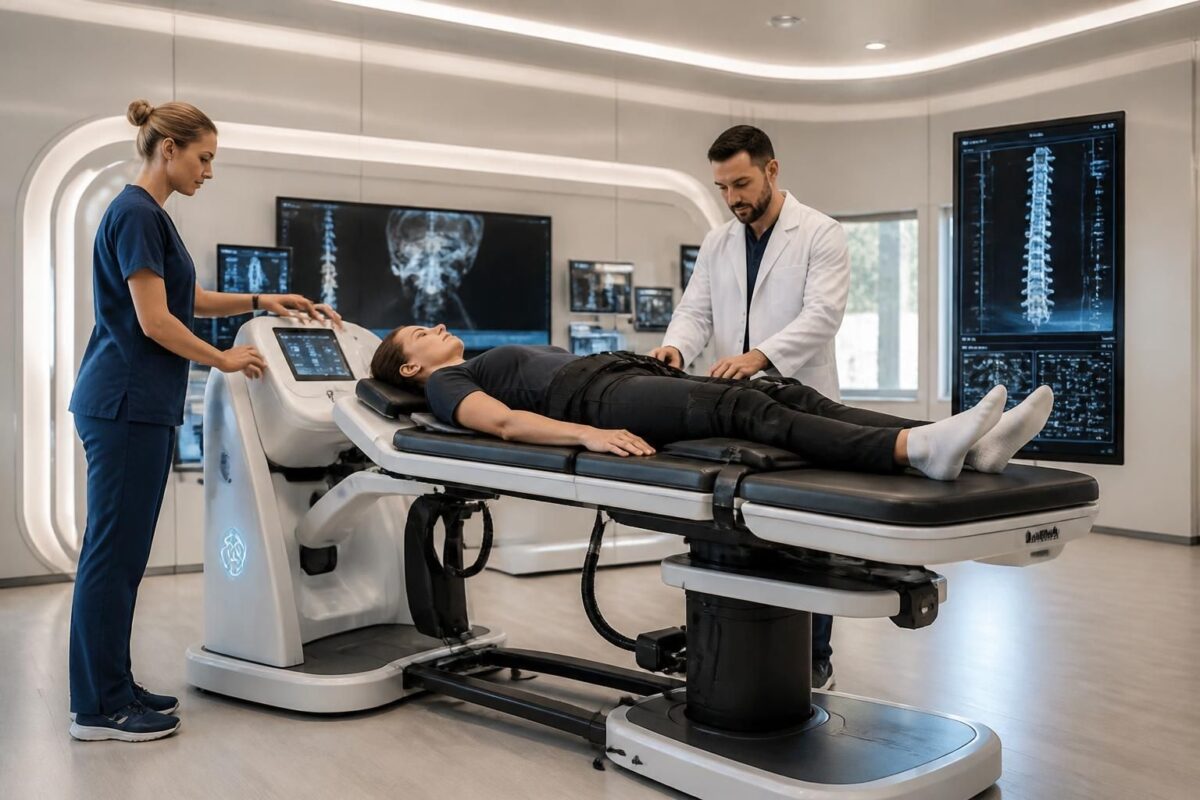
Modern devices, like the DRX9000, allow traction targeted and personalized through adaptive algorithms. They adjust the tractive force in real time according to the patient’s reaction, guaranteeing an individualized approach. The system often incorporates a Digital tracking progress, which allows you to quickly adjust the treatment parameters. These innovations improve the comfort and efficiency of the sessions.
To learn more about these advances, see the following resources: Advanced decompression technologies and Traction and tracking.
Artificial intelligence and digital monitoring
systems based onartificial intelligence Analyze patient data to refine protocols. They make it possible to anticipate the answers and to adjust the sessions. The Digital tracking Provides transparency and enhanced collaboration between patient and practitioner. These tools facilitate quick adjustments and better care planning.
Complementary therapies and holistic approach
Neurovertebral decompression may be associated with other non-invasive therapies. Laser therapy helps modulate inflammation and circulation, while neuromodulatory approaches target pain areas to promote lasting relief. Together, these methods contribute to better mobility and overall pain reduction, without the need for surgery. To understand these synergies, see the resources on Mobility and flexibility and Reduction of radiant pain.
Initiatives and training
Professionals who practice neurovertebral decompression follow recognized training and rely on validated approaches. In specialized clinics, a rigorous initial assessment and dynamic protocols are preferred. Practitioners can come from training such as NUMSS or NAO, and work within the framework of professional organizations recognized as ACMA.
For concrete examples and feedback, see the following resources: clinical studies and Testimonials and feedback.
In Montreal, TagMed Clinics offer these technologies and rely on evidence-based protocols. To learn more about their services, view Tagmed Clinic.
Additional resources explore the evolutions and benefits of decompression equipment. See in particular: Major developments and Recent innovations.
Testimonials and feedback can be viewed through several specialized platforms: Expert Reviews and Neuropathic pain.
Medical Disclaimer: The information and advice provided on this site does not replace the health professional’s diagnosis or treatment. Please note that Dr. Sylvain Desforges osteopath is neither a doctor of medicine nor a doctor, and is not a specialist in a medical specialty as defined by the Collège des Médecins du Québec. Manual medicine, functional medicine and sports medicine as described on this site exclude any medical treatment or diagnosis made by a doctor or specialist doctor. Always consult your doctor for any medical questions. For more details, please read our full legal notice.
- Targeted traction and real-time adjustment
- Adaptive algorithms To personalize the sessions
- Comfort and Advanced materials For patient experience
- DRX9000 and similar devices for targeted decompression
- Artificial intelligence Integrated to optimize protocols
- Digital tracking real time progress
- Complementary non-invasive therapies associated (laser, neuromodulation)
- Multidisciplinary approach For holistic support

The Innovations in non-invasive therapies transform the management of spinal pain, with increasing focus on the neurovertebral decompression. This article presents key advances, their benefits for patients and practical recommendations for effective and safe implementation in modern clinics.
Why neurovertebral decompression plays a central role
The neurovertebral decompression Aims to restore space around nerves and discs, reducing pressure and inflammation without the need for surgery. as therapy non-invasive, it fits easily into a multidisciplinary approach and can reduce addiction to analgesics while improving the mobility and quality of life of patients.
The long-term benefits of neurovertebral decompression for spinal health
In short In short, the neurovertebral decompression is a non-invasive approach that decreases the Pressure on intervertebral discs and nerves, favoring the Natural regeneration and tissue recovery. Its long-term benefits include Lasting pain reduction, Improving mobility and from the posture,…

Neurovertebral decompression and mobility: a return to an active life
In short In short, the neurovertebral decompression is therapy non-invasive who uses a gentle traction To create a space between the vertebrae and reduce the pressure on the Intervertebral discs and the nerves. It promotes a bloodstream improved, lowers tension…
Innovative technologies and approaches
Targeted traction and advanced devices
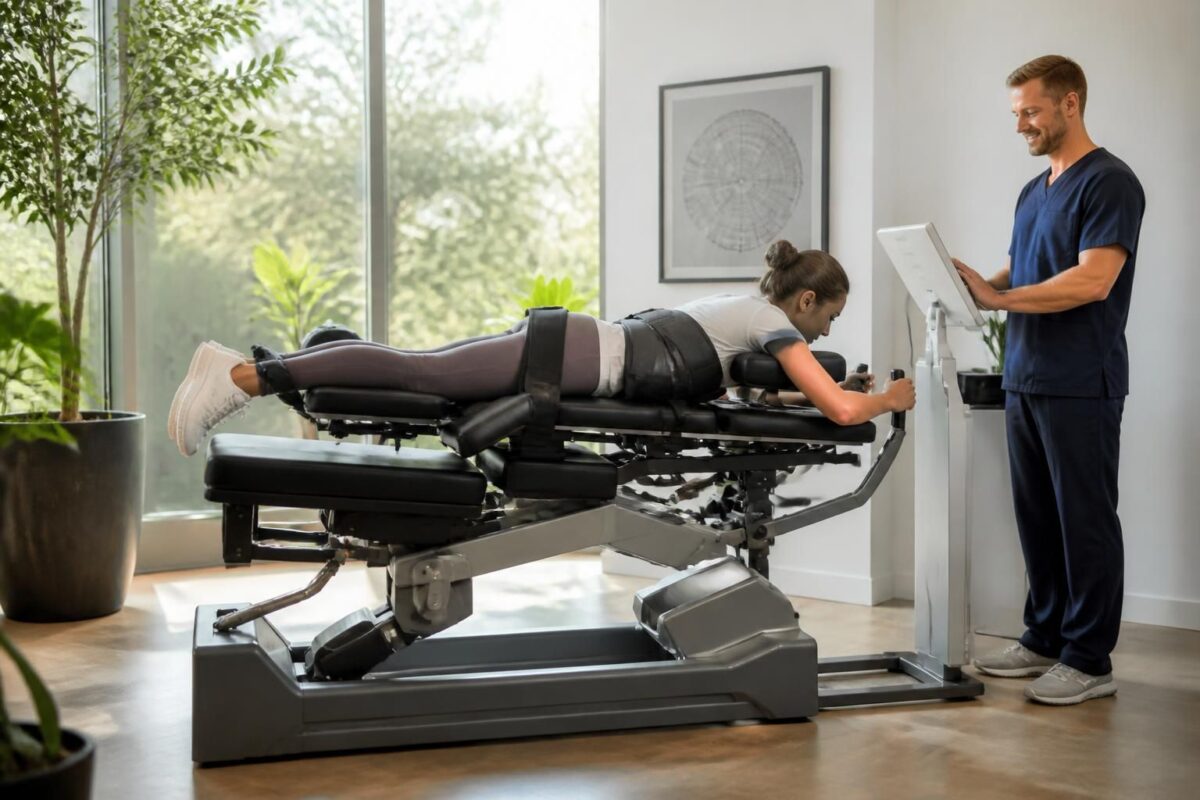
modern equipment deploys a Targeted traction and programmable on precise segments of the spine. This approach minimizes pressure on nerves and discs, promotes circulation and helps tissue recovery, while remaining non-invasive.
Real-time customization and adaptability
Recent systems include Adaptive algorithms which automatically adjust the tensile force according to the patient’s reactions. This customization ensures a session precisely aligned with the individual condition, improving both efficiency and comfort.
Artificial intelligence and digital monitoring
The use of theartificial intelligence and tools of Digital tracking Allows you to analyze session data and refine protocols continuously. Real-time follow-up sheds light on the patient’s progress and facilitates rapid treatment adjustments.
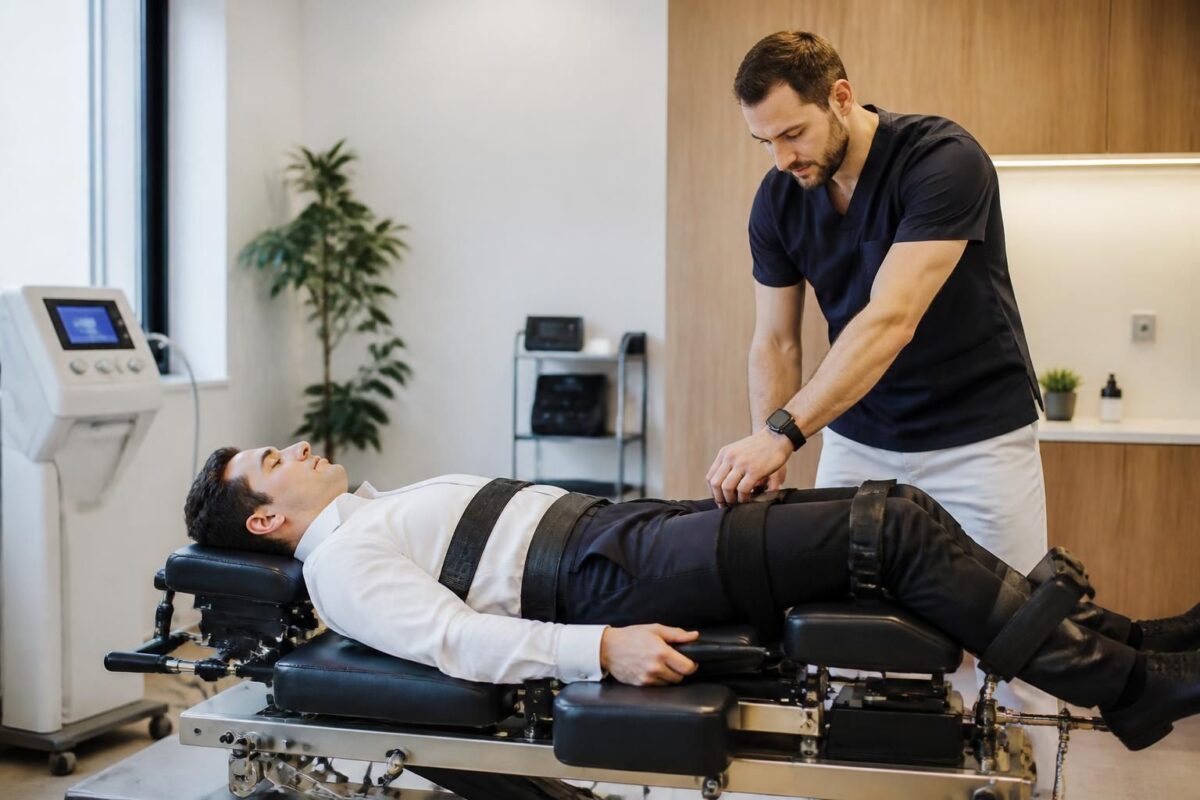
How Neurovertebral Decompression Prevents Diffuse Chronic Pain
In short decompression neurovertebral is one Non-invasive method aimed at reducing the Pressure on the intervertebral discs and the nerves, in order to prevent Diffuse chronic pain. It improves the circulation and thedisc hydration, decreases inflammation and promotes better mobility.…
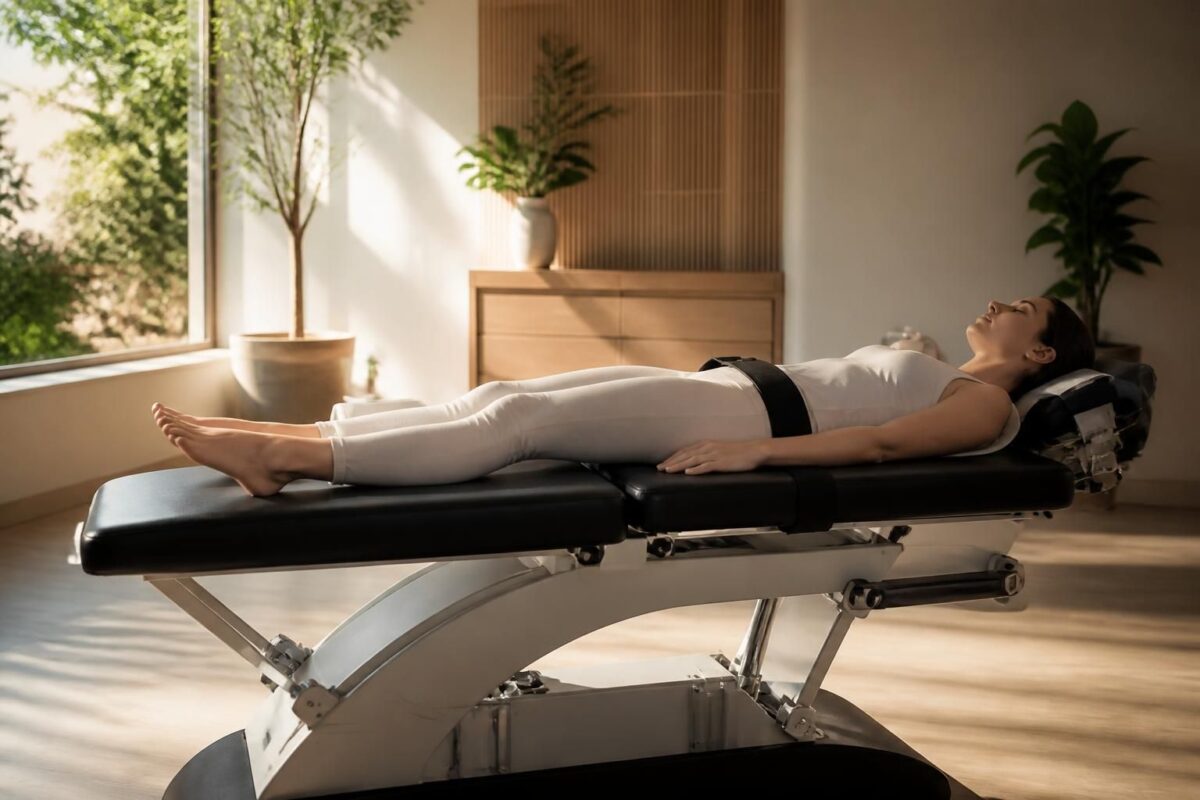
Neurovertebral Decompression and Body Alignment: Restoring Natural Balance
In short In short, neurovertebral decompression is one Non-invasive approach who restores theBody Alignment and thenatural balance back and neck. She acts by a Controlled traction of the spine to widen the intervertebral space and reduce the Pressure on discs…
Integration with other non-invasive therapies
Decompression can be associated with complementary approaches such as therapy with laser and the neuromodulation, offering a synergistic effect. This holistic combination helps to reduce inflammation, improve mobility and accelerate the rehabilitation process, without surgery.
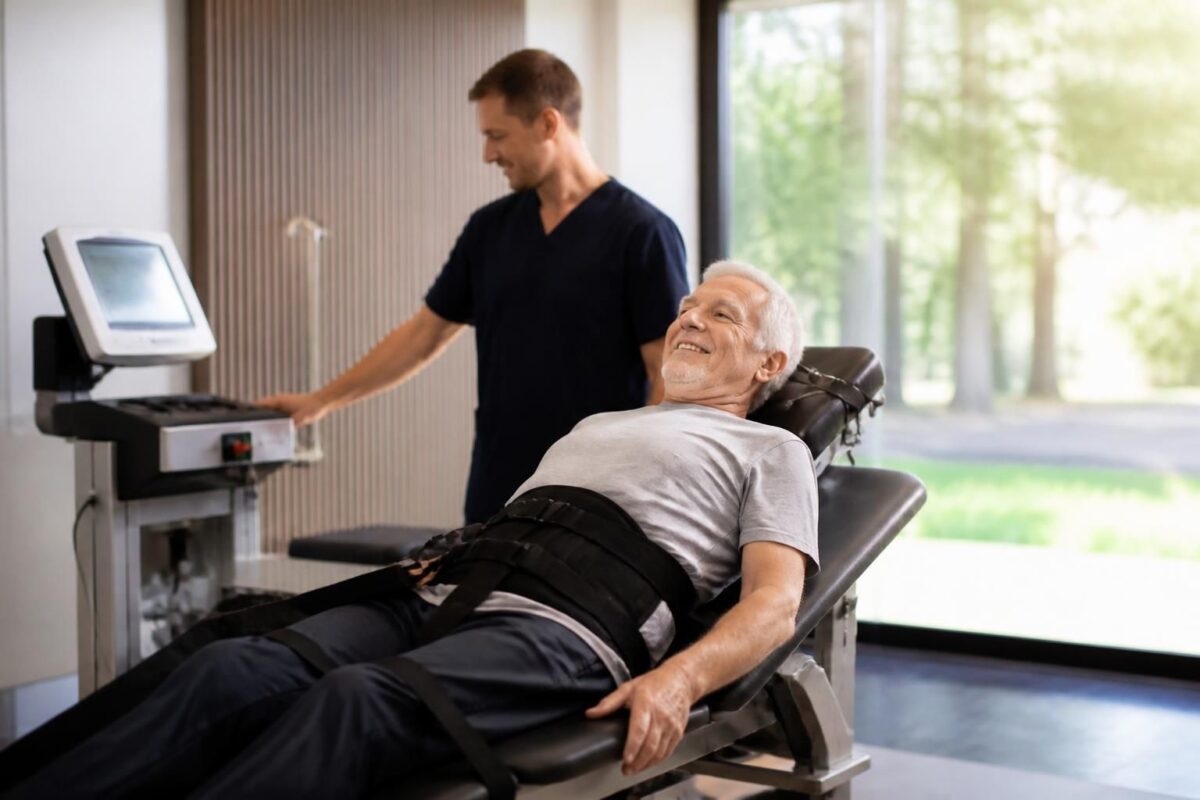
Why neurovertebral decompression is a lasting solution for active seniors
In short In short, the neurovertebral decompression is one Non-invasive therapy which sustainably relieves spinal pain in the spine active seniors By creating, by a Soft and controlled traction, a space between the vertebrae. At Montreal, it is recognized as…
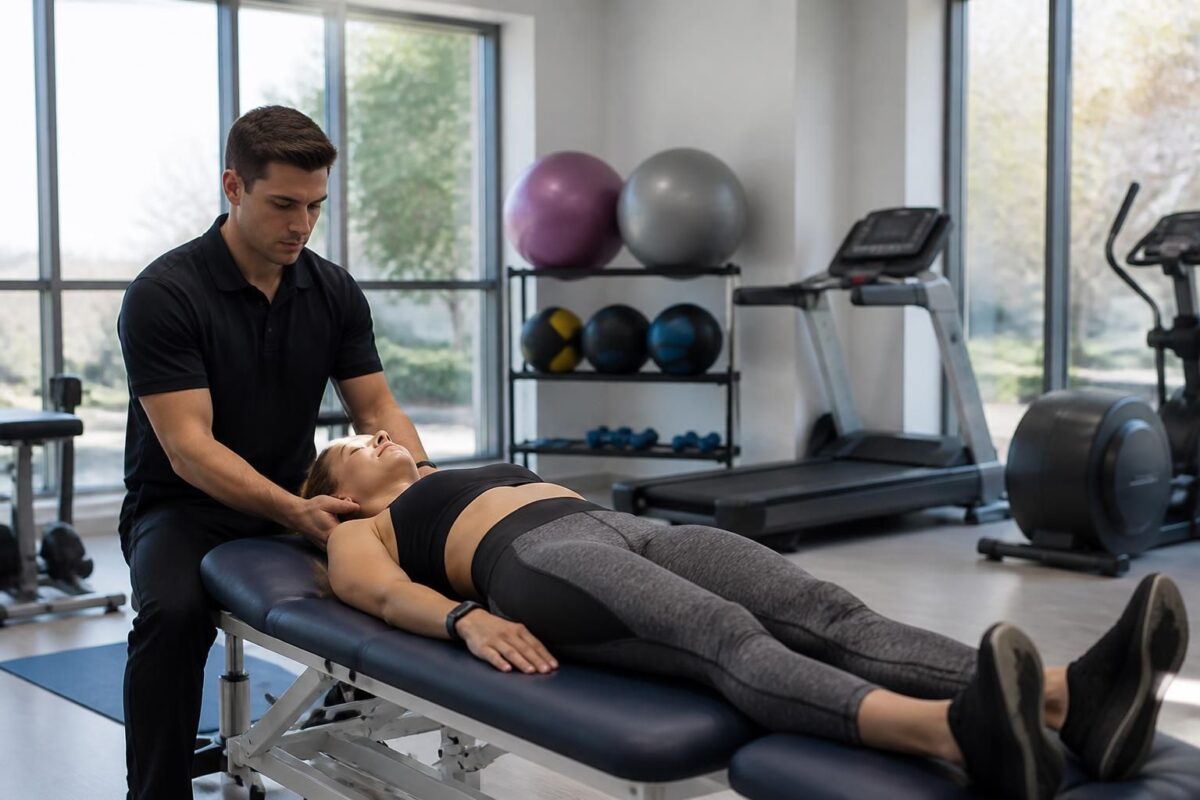
Neurovertebral decompression and recovery after severe sports injury
In short In short, the neurovertebral decompression is one Non-invasive method to Relieve the pressure on the Intervertebral discs and the gristle Via a Controlled traction, to facilitate the recovery After a severe sports injury. It improves the bloodstream towards…
Practical recommendations and safety
Indications and protocols
It is indicated for persistent spinal pain and signs of nerve compression when imaging and clinical evaluation confirm it. Protocols are dynamic and modulated based on progress, pain thresholds and functional goals of the patient.
Preparation and follow-up
To optimize the benefits, favor comfortable clothes and respect pre- and post-session advice (hydration, adapted physical activity, gradual resumption of activities). Regular monitoring makes it possible to assess the gains and to adjust the frequency of the sessions and the exercises to be carried out outside the visits.
Recent innovations in neurovertebral decompression technologies
In short In short, the neurovertebral decompression is an approach non-invasive Aiming to reduce pressure on discs and nerves, and promote tissue regeneration. At Montreal, it is positioned as an effective option for lower back pain and herniated discs. The…
Neurovertebral decompression and diffuse pain: an appropriate solution
In short In short, the neurovertebral decompression is one Non-invasive solution For diffuse pain related to nerve irritation of the spine. She acts in Reducing pressure on intervertebral discs and nerves and improving the bloodstream, which promotes recovery and the…
Innovations in non-invasive therapies: focus on neurovertebral decompression
| Aspect | Concise impact |
|---|---|
| Key technology | DRX9000 and customizable targeted traction for non-invasive relief |
| Real-time customization | adaptive algorithms adjust the traction according to the patient’s reaction |
| Artificial Intelligence and Data | IA analyzes data to optimize protocols and predict results |
| Digital tracking | Live tracking apps for immediate progress and adjustments |
| Associated therapies | Laser and neuromodulation complete decompression for a synergistic effect |
| Comfort and safety | Non-invasive approach focused on comfort, low risk and safety |
| Clinical efficacy | Pain reduction and improvement mobility, potential reduction of interventions |
| Accessibility | In a specialized clinic, short and reversible sessions |
| Evaluation and security | Essential initial assessment and management of contraindications |
Testimonials on innovations in non-invasive therapies: focus on neurovertebral decompression
“Since I started the sessions of neurovertebral decompression, my pain has decreased and my mobility has returned. It’s an approach non-invasive which targets exactly the areas to be treated and allows me to resume my activities without fear. »
“The Targeted traction Associated with real-time adjustments changed my way of experiencing my pain. The protocols adapt to my body and my sensations, which makes each session more effective than the previous one. »
“The integration of theartificial intelligence and of Digital tracking gave me clear visibility on my progress. I see my daily improvements and it motivates me to continue the treatment with confidence. »
“The Complementary therapies as the laser and the neuromodulation strengthen the results. It is a holistic approach that acts not only on pain but also on function and muscle recovery. »
“I am impressed by the level of comfort and safety offered by these methods non-invasive. No incisions, no significant risks, just targeted sessions that gradually release my tensions. »
“Initially, I was skeptical, but after a few sessions, I found an energy and mobility that I thought was lost. This technology, with Custom protocols, adapts to each stage of my rehabilitation. »
“This approach really changed my perspective on surgical prevention. By avoiding intervention thanks to decompression, I was able to resume my sports activities more quickly and safely. »
“Each session brings me a better understanding of my body thanks to the Digital tracking and real-time analysis of patient responses. This makes the practitioner’s work more accurate and my results more durable. »
Innovations in non-invasive therapies: focus on neurovertebral decompression
This expert in osteopathy and manual medicine is distinguished by a resolutely oriented approach to health innovation. His career focuses on the management of Chronic pain and the integration of advanced non-invasive technologies to sustainably improve patient well-being. As founding president of the TagMed clinics and the ACMA association, he leads a multidisciplinary approach that combines scientific rigor, clinical practice and sustainable development of care. His leadership is based on evidence-based protocols and a constant desire to evolve with the real needs of patients.
at the heart of its commitment is the neurovertebral decompression, a revolutionary therapeutic pathway for neuropathic pain related to the spine. Using state-of-the-art equipment, including targeted traction systems, this approach aims to free up the intervertebral space and reduce nerve pressure without surgery. modern devices include Adaptive algorithms that adjust traction in real time, offering a customization that responds exactly to the patient’s responses. This dynamic adjustment capability optimizes both the comfort and efficiency of the sessions, reducing functional improvement times and facilitating a faster resumption of activity.
The same philosophy ofDigital Innovation guides its approach, with the integration of systems of Digital tracking and artificial intelligence. By analyzing data from each session and patient feedback, protocols evolve proactively to maximize results and limit painful recurrences. This approach allows transparent communication and patient loyalty in his care pathway, while supporting clinical decision-making with measurable and traceable indicators.
In addition to decompression, other non-invasive therapies enrich the care offer. The use of Therapeutic laser and at the neuromodulation is particularly relevant for reducing inflammation, improving circulation and refocusing action on pain mechanisms. Soft vibrations and mechano-receptive stimulation are part of a coordinated set, aimed at restoring mobility and preventing recurrences. This holistic approach Favors a synergy between advanced technologies and manual techniques, in order to optimize the effectiveness of treatments while remaining minimally invasive.
The practitioner’s vision is based on a Personalized evaluation and multifaceted care planning. Decompression protocols are not limited to temporarily relieving pain: they aim to restore spinal alignment, restore range of motion and improve long-term quality of life. by an approach multidisciplinary Combining osteopathy, naturopathy and manual medicine, it offers an integrated strategy that also addresses the factors contributing to chronic discomfort and promotes the prevention of recurrences.
Driven by a strong conviction that modern technologies must remain at the service of the patient, it implements an adapted, transparent and results-oriented care experience. Neurovertebral decompression, combined with complementary non-invasive therapies, thus constitutes a compass to transform the journey of people suffering from back and neuropathic pain, by offering them a tangible and measurable improvement.
This article brings together the latest advances in non-invasive therapies, with a particular focus on neurovertebral decompression. It highlights how modern technologies optimize treatment efficiency while ensuring patient comfort, thanks to a personalized and multidisciplinary approach.
Neurovertebral decompression stands out as a major non-invasive option for spinal pain relief. Advanced traction technologies and the Adaptive algorithms Allows you to adjust the intensity and direction of the traction in real time, which promotes a targeted reduction in the pressure on the nerves and discs. This customization, made possible by intelligent systems, contributes to improving the comfort and theefficiency sessions, without resorting to surgery.
Beyond traction alone, the integration of technologies of artificial intelligence And some Digital tracking Transforms patient follow-up into an interactive and responsive experience. Real-time data allows immediate protocol adjustments and strengthens thecommitment of the patient in his care journey. To deepen these aspects, you can consult dedicated resources on technological innovations and personalized protocols.
An approach multidisciplinary and holistic is now the norm, associating neurovertebral decompression, Complementary therapies such as laser and neuromodulation, and non-invasive practices such as osteopathy or physiotherapy. This synergy maximizes the beneficial effects and paves the way for a faster and more sustainable recovery. For concrete examples and feedback, the publications and practical cases available online provide valuable insights into the results obtained and the protocols adopted.
Clinically, the protocols focus on being truly custom, starting with an in-depth assessment and adapting the treatment to the individual characteristics of the patient. The use of systems of Digital tracking and analytical tools enables to evaluate progress objectively and prevent recurrences through continuous adaptation of therapeutic measures. Informative links present the mechanisms of action and the practical benefits of these innovations, particularly with regard to the management of muscle tension and the prevention of long-term spinal lesions.
To deepen these topics and explore the latest advances, you can check out the following resources:
- How neurovertebral decompression affects diffuse muscle tension
- Neurovertebral decompression and chronic muscle tension
- Vertebral decompression and chronic cervical pain management
- Innovations in neurovertebral decompression tables
- Innovations, protocols and case studies in neurovertebral decompression
- Future innovations of neurovertebral decompression protocols
- Innovations in non-invasive therapies: focus on decompression
- Prevention of long-term spinal lesions
- Custom decompression protocols to maximize results
For those who wish to deepen the clinical applications and future prospects of these approaches, the specialized resources and sites of the dedicated clinics provide additional information and practical guides on the integration of these technologies into daily practice.

Dr Sylvain Desforges, B.Sc., D.O., N.D., osteopath, is the founding president of TAGMED and of the ACMA association. He dedicates his practice to chronic spinal pain, low back pain and symptoms compatible with sciatica, particularly when pain radiates toward the buttock, leg, calf, foot or toes.
Through SOS Sciatique, he publishes educational content on sciatica symptoms, possible causes such as disc herniation, disc narrowing, foraminal stenosis or irritation of a lumbar nerve root, as well as non-surgical approaches that may be considered according to the evaluation. At Clinique TAGMED, care may include, depending on the case, motorized neurovertebral decompression, specific osteopathic care or precision percussion.
For an evaluation related to sciatica treatment in Montreal / Mount Royal or sciatica treatment in Terrebonne, please consult the services available at Clinique TAGMED.
Medical disclaimer
The information published on SOS Sciatique is provided for educational purposes only and does not replace a consultation, diagnosis, opinion or treatment provided by a physician or another authorized healthcare professional. The author of this article is neither a medical doctor nor a specialist in a medical specialty recognized by the Collège des médecins du Québec. The osteopathic, manual medicine or functional support approaches described on this site do not constitute medical acts and are not intended to replace medical follow-up.
Consult a physician or emergency service in cases of loss of bladder or bowel control, anesthesia in the saddle area, significant or progressive weakness in the leg or foot, fever, recent trauma, severe pain or rapid worsening of symptoms. For more details, please read our Legal Notice.