Herniated disc and chronic sciatica: why the pain persists
24/08/2026
Sciatic pain in Montreal: calf, heel or outside edge of the foot?
25/08/2026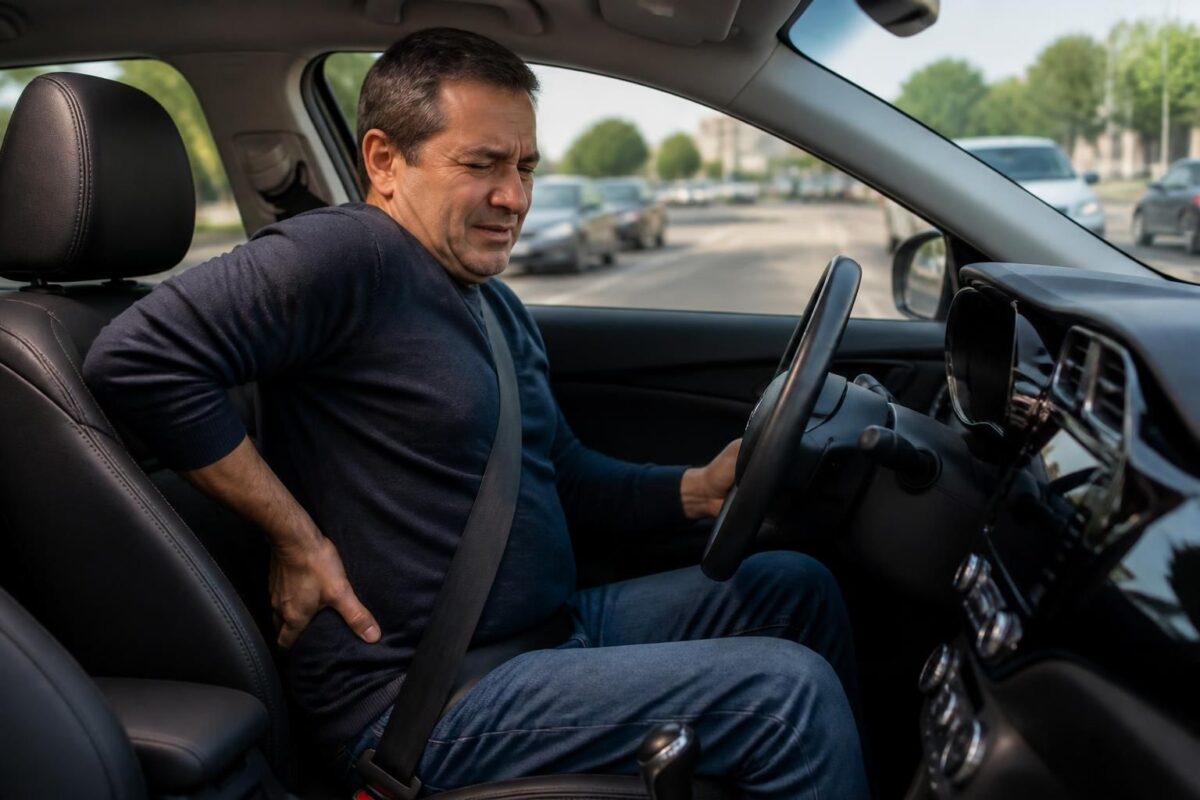
IN BRIEF
| In brief, sciatica and road vibrations describe how jolts and prolonged sitting can exacerbate symptoms (lower back pain, tingling, and radiating pain). The benefits of good practices include reducing pressure on the sciatic nerve, improving comfort, and decreasing painful flare-ups during trips. How it works: by adjusting the seat and posture, using an ergonomic cushion, and planning breaks and stretches, you relieve the tailbone and cushion vibrations, thus limiting irritations and symptoms. |
The sciatic nerve is an irritation or compression of the sciatic nerve. During a road trip, vibrations, sitting position, and vehicle movements can increase pressure on the lumbar discs and worsen symptoms like leg pain, electric shocks, and numbness.
- Posture and seat: keep your back against the seat back and your pelvis slightly tilted; avoid a seat that is too reclined or too far from the steering wheel.
- Lumbar support and tailbone relief: an ergonomic cushion can help limit pressure and tension.
- Regular breaks: plan a stop every 1 to 2 hours to walk and stretch, to revive circulation and reduce pressure.
- Shock absorption: prioritize a system that cushions vibrations and jolts to decrease nerve irritation.
- When to consult: if weakness, loss of sensitivity, urinary issues, or unbearable pain occur.
This article, written by a health professional and expert, explains how sciatica and road vibrations can influence symptoms. It outlines the mechanism, driving-related factors, and practical measures to reduce the impact of vibrations on lower back pain and the sciatic nerve during trips. The goal is to provide clear and useful information without replacing a doctor’s advice.
The sciatic nerve originates in the lower back and extends to the buttock, thigh, and leg. The vibrations and jolts associated with driving transmit forces to the lumbar region. This transmission can increase pressure on the intervertebral discs and on the structures surrounding the spinal canal. In some individuals, this may worsen irritation or compression of the nerve.
Mechanisms and Clinical Implications
Repeated jolts and road irregularities increase mechanical stress on the lumbar spine. In patients with a herniated disc or other dimensional factors of the canal, this strain can intensify pain along the path of the sciatic nerve and cause sensations of electric shocks, burning, or numbness.
Aggravating Factors While Driving
Several elements of driving promote the onset or worsening of symptoms. A prolonged sitting position, turbulence, and repeated micro-vibrations, an inadequate seat adjustment, and an inadequate posture increase pressure on the lower back and the nerve. Long trips, traffic jams, and uneven roads amplify this phenomenon, especially in sensitive individuals.
When Driving May Require a Different Approach
Driving remains possible for most individuals suffering from sciatica, but pain can become debilitating when it is intense, limits movement, or causes significant weakness in the leg. In some cases, a medical evaluation is recommended to assess risks and appropriate management options in the driving context.
Practical Measures to Limit the Impact of Vibrations
Simple adjustments can reduce the influence of vibrations on symptoms during trips. Adjust the seat and backrest to support lumbar curvature and keep the pelvis slightly tilted forward. Use a lumbar support cushion if necessary. Avoid leaning dangerously forward and bring the steering wheel close enough so you don’t strain your legs. A less aggressive shock transmission can also be encouraged by choosing the vehicle and by the suspension damping when possible.
Plan regular breaks during long trips, and walk for a few minutes to limit stiffness and promote better blood circulation. Note that some devices and accessories can help relieve the tailbone and distribute pressure on the pelvis, which can contribute to a more comfortable drive over time. For more information on available approaches, you can refer to resources like dedicated information on pain science and driving and clinical perspectives on neurovertebral decompression.
Practical tools and solutions exist to improve comfort in the car. For example, some supports and systems for decoupling vibrations can be considered after consultation with a health professional. For additional information on symptoms and options, see Herniated disc and associated pain.
In the case of persistent pain or worsening symptoms, it is essential to consult a health professional to assess the causes and appropriate treatments, especially when neurological signs appear or progress rapidly. Additional resources on therapeutic pathways and relevant indications can be consulted on the referenced websites above.
For those looking to explore specialized care options, additional information on approaches and associated training structures can be found with NUMSS, NAO, National University of Medical Sciences, and National Academy of Osteopathy, while staying aligned with professional recommendations and recognized practices.
Useful links to delve deeper into the subject and related resources: Sciatica and car – why driving can worsen pain, Tingling and nerve pathway, Progressive numbness, Herniated disc and pain.
Medical disclaimer: The information and advice provided on this site do not replace the opinion, diagnosis, or treatment of a healthcare professional. Please note that Dr. Sylvain Desforges, osteopath, is neither a medical doctor nor a physician, and is not specialized in a medical specialty as defined by the Collège des médecins du Québec. Manual therapy, functional medicine, and sports medicine as described on this site exclude any treatment or medical diagnosis made by a physician or specialist. Always consult your doctor for any medical questions. For more details, please read our full Legal Notice.
- Vibrations and micro-shocks increase pressure on the sciatic nerve and discs.
- Posture and lumbar pressure: prolonged sitting can worsen symptoms.
- Pressure on the L4-L5 and L5-S1 segments that increases while driving, promoting pain and stiffness.
- Electric shocks, tingling, or numbness may appear after a few minutes.
- Breaks every 1-2 hours and light walking relieve symptoms.
- Gentle exercises during breaks improve circulation and reduce stiffness.
- For an ideal posture, adjust the seat, keep the pelvis slightly tilted, and support the lumbar backrest.
- Ergonomic aids (lumbar cushion, pressure distribution) help limit exacerbation.
- An automatic transmission may limit movements and pain in some drivers.
- In case of increasing pain, consult quickly to avoid worsening.

This article explains how sciatica and road vibrations can influence symptoms, and provides practical recommendations to limit discomfort during trips. These are simple tools to better understand and act on your driving position, in order to preserve your comfort and safety.
Understanding the link between sciatica and road vibrations
The pain of sciatica can follow the path of the sciatic nerve, from the lower back to the leg. When the car vibrates and one stays seated for long periods, these micro-oscillations and repeated shocks transmit to the lumbar area, increasing pressure on the intervertebral discs and potentially irritating the nerve. The lumbar areas L4-L5 and L5-S1 are particularly sensitive, especially in cases of poor posture and prolonged confinement in the seat.
How vibrations influence symptoms
Jolts and vibrations interact with poor posture and a buildup of muscle tension accumulated during driving. As a result: lower back pain can become more pronounced, and some drivers describe sensations of electric shocks, tingling, or a feeling of numbness in the leg. The longer and more irregular the trip, the more intense these symptoms can become, especially in the presence of a poorly adjusted seat or insufficient support.
Adjustments and posture to limit effects while driving
Setup and seat
Configure your driving position to support the lumbar curve and keep the pelvis in a slight forward tilt. Avoid a seat that tilts too much and prefer a height that allows for slightly bent legs and hips aligned with the torso. If lumbar support is insufficient, add an ergonomic back cushion to reduce tension in the lower back.
Body position and driving
Avoid leaning too far forward and keep your back against the backrest. Maintain a sufficient distance from the steering wheel so as not to stretch your legs, and favor slow and controlled breathing to limit muscle tension. An automatic transmission can also limit repetitive movements that contribute to muscle fatigue while driving.
Managing trips and breaks
Plan regular breaks, ideally every one to two hours, to walk and gently stretch. These breaks relax the lumbar muscles, boost circulation, and decrease pressure on the sciatic nerve. During stops, a few simple stretches for the back and legs can provide temporary relief and help prevent stiffness.
Exercises and prevention
In daily life, a regular physical activity program focused on core strengthening and stabilization can reduce the impact of vibrations during trips. Strengthen the abdominal and back muscles, work on hip and hamstring flexibility, and integrate gentle stretches. A conscious posture in everyday life and on the road is a valuable ally in limiting symptoms and improving comfort during travel.
| Item | Impact on Symptoms |
|---|---|
| Prolonged Sitting Position | Increases lumbar pressure and on the sciatic nerve, intensifying pain and numbness. |
| Vibrations and Jarring | Exacerbate nerve irritation and sciatic pain during trips. |
| Poor Seat Inclination | Reduces the opening between the torso and legs, increasing disc pressure and pain. |
| Time Without Movement | Promotes stiffness and worsens symptoms; plan breaks every 1–2 hours. |
| Traffic Congestion Driving | Long stops and starts place stress on the muscles and increase pain. |
| Coccyx-Sacrum Pressure | Pressure on the coccyx can rise and amplify lower back pain. |
| Lumbar Support and Adjustments | Good support reduces tension and nerve irritation. |
| Planning Breaks | Breaks promote circulation and decrease pain. |
| Difficult Road Conditions | Uneven roads heighten strain and symptoms in certain drivers. |
Testimonials: Sciatica and Road Vibrations — Possible Influence on Symptoms
“Sciatica and road vibrations trigger my pain from the very first kilometers. The jarring causes shocks in my leg and a numbness that intensifies if I stay seated too long. By adjusting the seat, using a lumbar cushion, and planning regular breaks, I manage to limit discomfort and continue my trips.
“The jarring and vibrations of the road worsen my pain from my lower back to my knee. It’s more intense when the trip is long. I found comfort with an ergonomic cushion and better suspension in the vehicle, as well as a lumbar support that stabilizes my posture.
“During long trips, the numbness and sensitivity decrease when I take breaks and do gentle stretches. The vibrations are still present, but the difference is noticeable when the posture is adjusted and the vehicle is well set up.
“On the highway, the vibrations can start to hurt quickly. With effective suspension and appropriate lumbar support, the pain is much less pronounced and I manage better on long trips.
“Poorly maintained roads increase my symptoms. To limit the impact, I prioritize frequent breaks and do light exercises during stops. This helps release tension and calm my breathing.
“The driving position and the seat angle strongly influence my pain. By adjusting the seat and adopting a more relaxing breathing pattern, I feel less tension in my back and legs during the trip.
“Continuous driving sometimes worsens my sciatica. Taking breaks every hour and doing a few stretches allow me to maintain some mobility and get temporary relief without interrupting my day.”
Dr. Sylvain Desforges is a reference in the fields of osteopathy, naturopathy, and manual medicine. As the founding president and spokesperson for the ACMA association at the TAGMED clinics, he dedicates his career to innovation in health and the management of chronic pain. His approach is based on evidence-based practice and the integration of advanced technologies aimed at optimizing his patients’ well-being. His career illustrates a continuous quest for therapeutic effectiveness and respect for individual needs.
In this perspective, he examines the impact of road vibrations and driving conditions on the spinal system, particularly when it comes to sciatica. The car trip, the jolts, and the postures imposed by the vehicle can influence lumbar dynamics and the tension exerted on nerve roots. Dr. Desforges believes that the road itself can become an aggravating factor when the lumbar spine is already weakened by a herniated disc, osteoarthritis, or deep muscle tension. His view is holistic: he connects pelvic balance, trunk mobility, and the integrity of intervertebral discs to the experience of daily travel.
Mechanistically, he explains that sciatic pain is fueled by repetitive pressures and micro-movements transmitted through the seat and road surface. Prolonged sitting while driving, combined with vibrations and limited mobility, can increase the stress on the L4-L5 and L5-S1 segments and promote irritation of the sciatic nerve. In his consultations, he prioritizes a detailed assessment of posture, seat adjustment, and distance to the steering wheel to reduce long-term strain and avoid pain spikes during trips.
To support his patients, Dr. Desforges offers a synergy between manual physiotherapy and innovative approaches. He combines postural advice with targeted exercises to strengthen the core and improve lumbar stability, essential for limiting painful sequences in the car. He also incorporates modalities such as spinal decompression, laser, and shock wave therapy when relevant, to reduce inflammation and promote tissue repair. The goal is clear: to decrease pressure on the sciatic nerve, improve mobility, and enable more comfortable daily travel.
In practice, his therapeutic alchemy relies on patient education, personalized interventions, and careful monitoring of symptom evolution. He emphasizes the importance of regular breaks during long trips, gentle stretches, and ergonomic optimization of the driving position. With this approach, people suffering from sciatica can regain more freedom in their movements and better manage the demands of their professional and personal lives, even in the face of vibrations and road constraints.
This document summarizes how sciatica and road vibrations can influence symptoms during car journeys, focusing on posture, seat adjustments, and breaks. It explains potential mechanisms, the effects of jolts, and practical measures to limit discomfort and drive more calmly.
Road vibrations and pavement irregularities can increase pressure on the lumbar segments and the sciatic nerve, which can intensify pain and sensations of paresthesia in the leg. However, this relationship depends on the precise cause of sciatica (herniated disc, stenosis, muscle tension) and how one drives and settles in the vehicle.
Adapting the environment and driving can modulate the impact on symptoms. A well-adjusted seat, a posture that relieves the coccyx, and the use of a lumbar cushion or a shock-absorbing system can reduce tensions on the sciatic nerve and limit aggravation during trips, even over long distances.
Regular breaks play a key role: they allow walking and doing small stretches that relax lumbar muscles, restart blood circulation, and reduce pressure on the nerve. Simple exercises performed while stationary can also help maintain favorable mobility without straining the muscles.
In some cases, symptoms may remain difficult despite adjustments, and it may be necessary to consult a health professional. Signs such as weakness, loss of sensitivity, urinary issues, or pain becoming unbearable require rapid evaluation to rule out severe nerve compression.
To delve deeper into the subject and find advice suited to your situation, you can consult dedicated resources such as
Sciatica and pain radiating down the leg while driving,
Sciatica in Montreal: calf pain without significant lumbar pain,
Sciatica car: why driving can worsen pain and
Sciatica in the car: sitting position, vibrations, and pain in the leg.
For those wishing to explore complementary approaches, resources such as Sciatica in Terrebonne: why pain may be stronger in the leg or Relief from sciatica pain and driving offer practical advice and clear explanations for adapting your journey and daily habits.
Sciatica and pain that appears after a few minutes of walking
IN BRIEF Sciatica is a pain that follows the path of a nerve root from the lower back down to the leg. When it appears after a few minutes of walking, it indicates nerve irritation or compression, often due to…

Sciatica and prolonged walking: why does the pain increase?
IN BRIEF In brief, sciatica is pain that follows the path of the sciatic nerve and can intensify during prolonged walking, especially in the presence of lumbar stenosis or a herniated disc. The goal is an active and tailored management…

Sciatica and walking: helpful or aggravating?
IN BRIEF In brief, sciatica and walking is the analysis of whether walking can help or worsen pain related to the sciatic nerve. What is it? Sciatica is pain that radiates from the lower back down the leg, often due…

Sciatica and travel return: pain that travels down the leg
IN SHORT Sciatica is pain that runs down the leg, caused by irritation or compression of the sciatic nerve. In the context of return from travel, it may appear after long trips or repetitive movements. In practice, understanding this mechanism…

Sciatica and travel: how to recognize a worsening
IN BRIEF In brief, sciatica and travel describe the worsening of sciatic pain during a trip, with radiation into the leg and radicular signs. Benefits: it allows for quick identification of warning signs, adjustment of breaks and movements, and traveling…
Sciatica and airplane: prolonged sitting and leg pain
IN BRIEF In brief, sciatica related to prolonged sitting on the plane describes pain that arises or worsens when one remains seated for long periods during a flight, due to pressure on the lumbar discs and the sciatic nerve. How…

Sciatica and train: pain after a long journey
IN BRIEF In brief, Sciatica after a long train journey is pain that radiates along the sciatic nerve after long periods of sitting. The problem often arises from an inadequate posture and a poorly mobilized pelvis during the trip. The…

Sciatica and subway: stay standing or seated?
IN BRIEF In short, sciatica and metro: staying standing or sitting is a practical question for daily commutes. The goal is to manage pain without restricting mobility, favoring appropriate postures and micro-breaks to avoid twists and asymmetrical loads. Main benefits:…

Dr Sylvain Desforges, B.Sc., D.O., N.D., osteopath, is the founding president of TAGMED and of the ACMA association. He dedicates his practice to chronic spinal pain, low back pain and symptoms compatible with sciatica, particularly when pain radiates toward the buttock, leg, calf, foot or toes.
Through SOS Sciatique, he publishes educational content on sciatica symptoms, possible causes such as disc herniation, disc narrowing, foraminal stenosis or irritation of a lumbar nerve root, as well as non-surgical approaches that may be considered according to the evaluation. At Clinique TAGMED, care may include, depending on the case, motorized neurovertebral decompression, specific osteopathic care or precision percussion.
For an evaluation related to sciatica treatment in Montreal / Mount Royal or sciatica treatment in Terrebonne, please consult the services available at Clinique TAGMED.
Medical disclaimer
The information published on SOS Sciatique is provided for educational purposes only and does not replace a consultation, diagnosis, opinion or treatment provided by a physician or another authorized healthcare professional. The author of this article is neither a medical doctor nor a specialist in a medical specialty recognized by the Collège des médecins du Québec. The osteopathic, manual medicine or functional support approaches described on this site do not constitute medical acts and are not intended to replace medical follow-up.
Consult a physician or emergency service in cases of loss of bladder or bowel control, anesthesia in the saddle area, significant or progressive weakness in the leg or foot, fever, recent trauma, severe pain or rapid worsening of symptoms. For more details, please read our Legal Notice.