


Sciatica in Montreal: why the pain may be stronger in the leg
22/08/2026
Sciatica and tingling at bedtime: why does this happen?
22/08/2026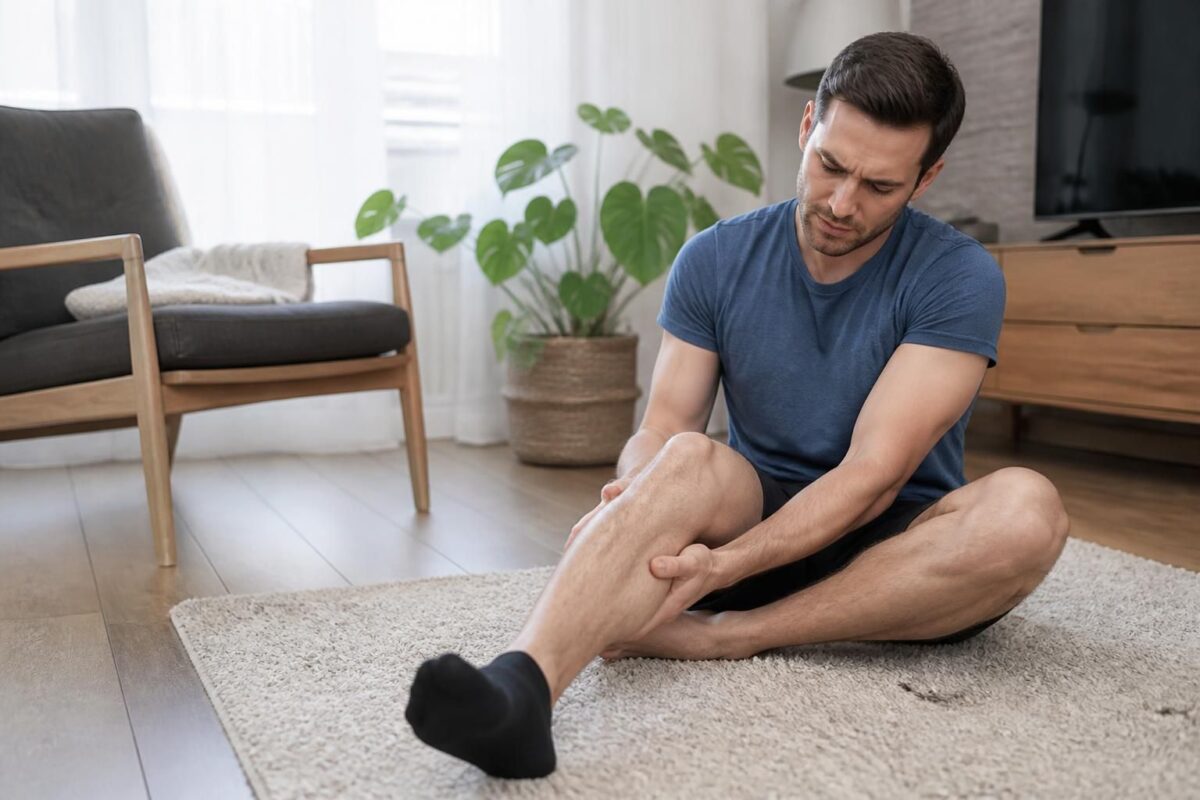
IN BRIEF
In brief, sciatica in Terrebonne is pain that follows the path of the sciatic nerve, starting from the lower back and descending into the buttock, leg, and sometimes the foot. The phenomenon may be stronger in the leg than in the back as it often involves irritation or compression of a lumbar root (L5/S1). The benefits of targeted non-surgical support include reducing inflammation, improving mobility, and rapid return to walking, without surgery when possible. Local assessment helps identify the source (disk, foraminal, muscle tension) and propose a personalized plan (osteopathy, neurovertebral decompression, exercises, and postural advice). Accessible in Terrebonne and the Montreal area via Clinique TAGMED, this pathway prioritizes effective and gentle approaches to relieve the leg and prevent recurrences. |
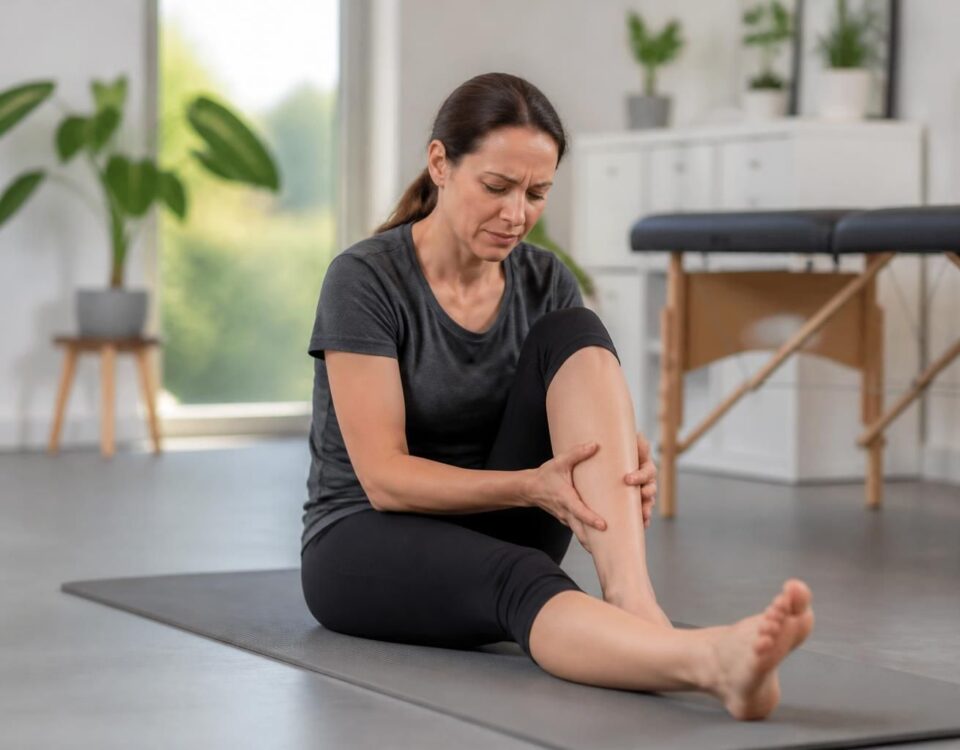
The sciatica in Terrebonne most often manifests as pain that follows the path of the sciatic nerve: lower back, buttock, thigh, leg, and sometimes the foot.
When the pain is stronger in the leg than in the back, it generally indicates a lumbar radicular involvement (L5-S1) rather than isolated lumbar pain.
Typical sensations include a burning feeling, electric shocks, paresthesias, and sometimes weakness.
The most frequent causes are a herniated disc, a protrusion, a foraminal stenosis, or irritation of the lumbar nerve root.
The local assessment prioritizes non-surgical approaches (targeted osteopathy, motorized neurovertebral decompression, exercises, and postural advice) to reduce inflammation and improve mobility.
The diagnosis is based on the medical history and clinical examination; imaging may be requested if necessary, especially if there are warning signs.
Warning signs requiring prompt consultation: loss of bladder or bowel control, saddle anesthesia, progressive weakness, fever, or recent trauma.
This summary, written by a healthcare professional expert in lumbar management, explains why, in Terrebonne, pain related to sciatica can be stronger in the leg and how a targeted assessment and non-surgical options at Clinique TAGMED can favor a return to walking and activity, without surgery when possible.
Pain following the path of the sciatic nerve can be more intense in the leg than in the lower back. This typical presentation often indicates lumbar radicular involvement. The sciatic nerve starts from the spine, runs along the buttock, and descends along the back of the leg to the foot. The described signs include a burning sensation, tingling, numbness, or even muscle weakness in the leg or foot. For more information, you can consult the following resources: Sciatica and pain in the leg stronger than in the back and Sciatica in Terrebonne — when the pain becomes stronger in the leg than in the back. The diagnosis is based on the clinical history and examination, and may require imaging to differentiate a herniated disc, protrusion, or foraminal stenosis. Neurovertebral decompression and targeted osteopathy are among the non-surgical approaches considered based on the assessment.
In Terrebonne, the pain may also be accompanied by burning sensations, electric shocks, and tingling radiating to the buttock, then the thigh, calf, and sometimes the foot. The painful pathway is a key element in distinguishing radicular involvement from referred back pain. To better understand the mechanisms and options, see the following resources: Sciatica and pain in the leg stronger than in the back and Sciatica in Terrebonne — when the pain becomes stronger in the leg than in the back.
Signs of Radicular Involvement and Triage
Signs to watch for include pain radiating down the leg, which may be accompanied by numbness, paresthesias, or weakness in the foot. The presence of loss of bladder or bowel control, or saddle anesthesia, requires urgent medical evaluation. For a practical overview, consult the following resources: Pain in one leg — possible sciatica in Terrebonne.
The diagnosis relies on the history of symptoms and neurological examination. Imaging may be requested if the signs persist, worsen, or if there are red flags. The goal is to identify the source (disk, stenosis, nerve irritation) and guide the non-surgical care plan.
Common Causes in Terrebonne
Common causes include a herniated disk, a protrusion or bulging disk, foraminal stenosis, lumbar osteoarthritis, or irritation of the sciatic nerve, for example, related to piriformis syndrome. The pathway may affect the buttock, back of the thigh, calf, heel, or toes. Warning signals require prompt consultation: loss of bladder control, feverish pain, progressive weakness, or very intense pain at rest. For more in-depth information, complementary resources exist on specialized sites: Sciatica and pain in the leg stronger than in the back and Sciatica in Terrebonne — when the pain becomes stronger in the leg than in the back.
Assessment and Diagnosis
The assessment combines history and clinical examination with, if necessary, imaging to confirm the radicular origin and rule out other causes. Resources like Doctissimo or Sciatica and pain in the buttock when sitting can supplement the information, but the local clinical approach remains decisive in guiding the care plan.
Non-Surgical Options at TAGMED
When possible, care prioritizes non-surgical approaches. At TAGMED Clinic, options include neurovertebral decompression when indications are met and specific osteopathy, combined with functional measures and postural advice. The aim is to improve mobility and reduce nerve irritation without surgery. For detailed information about non-surgical treatments and options in Terrebonne and Montreal, visit TAGMED Clinic.
To situate these approaches within the available resources, you can consult the following pages: neurovertebral decompression and protrusion and disc herniation. Other helpful resources on non-surgical options and local assessments are available through Sos Sciatique and Sostunnelcarpien.
When Surgery May Become Necessary
Surgery is considered when neurological deficits progress, when pain persists despite well-conducted conservative treatment, or in the presence of clear mechanical impairment that does not respond to non-surgical care. An informed decision is made in collaboration with the patient after thorough evaluation. TAGMED prioritizes non-invasive approaches when possible and adapts the course based on the evolution of symptoms.
Preventing Recurrences and Local Resources
To limit recurrences, maintain appropriate and regular activity, work on postural education, and prioritize active breaks when sitting for long periods. The pathway is personalized to facilitate a quick return to daily and professional activities, without systematic recourse to surgery. To learn more about local options and assessment pathways in Terrebonne, consult the associated pages and the following resources: Sciatica – Pain in the Leg, Sciatica in Terrebonne, and Pain in One Leg – Possible Sciatica in Terrebonne. For general information on sciatica and the care framework in Montreal and Terrebonne, consult Sciatica and Pain in the Leg Stronger than the Back.
Additional and demonstrative resources: Sciatica – Pain in the Leg, Sciatica in Terrebonne, and Pain in One Leg – Terrebonne.
Medical Disclaimer: The information and advice provided on this site do not replace the opinion, diagnosis, or treatment of a healthcare professional. Please note that Dr. Sylvain Desforges, osteopath, is neither a medical doctor nor a physician and is not specialized in a medical specialty as defined by the Collège des médecins du Québec. Manual medicine, functional medicine, and sports medicine as described on this site exclude any medical treatment or diagnosis made by a physician or medical specialist. Always consult your doctor for any medical questions. For more details, please read our full Legal Notice.

Sciatica in Terrebonne may present as stronger pain in the leg than in the back, due to irritation or compression of a lumbar root of the sciatic nerve (often L5 or S1). This article aims to explain why this pain may dominate the leg, how it is evaluated, what the common causes are, and what non-surgical options to prioritize locally through TAGMED Clinic in Terrebonne to support returning to walking and activity without surgery when possible.
Understanding Radicular Pain
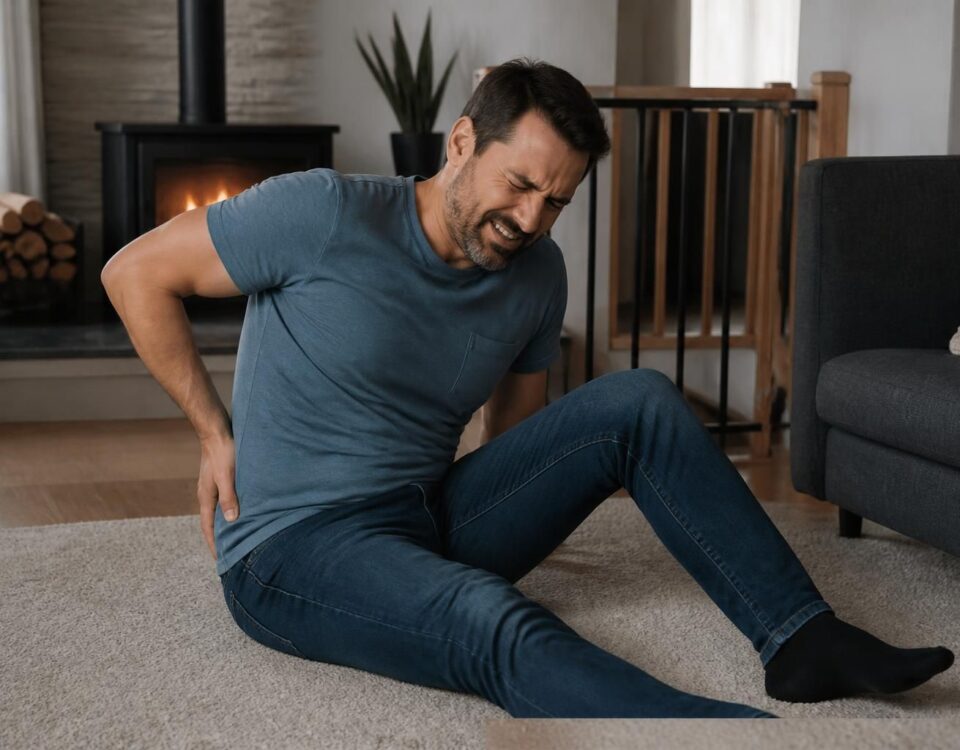
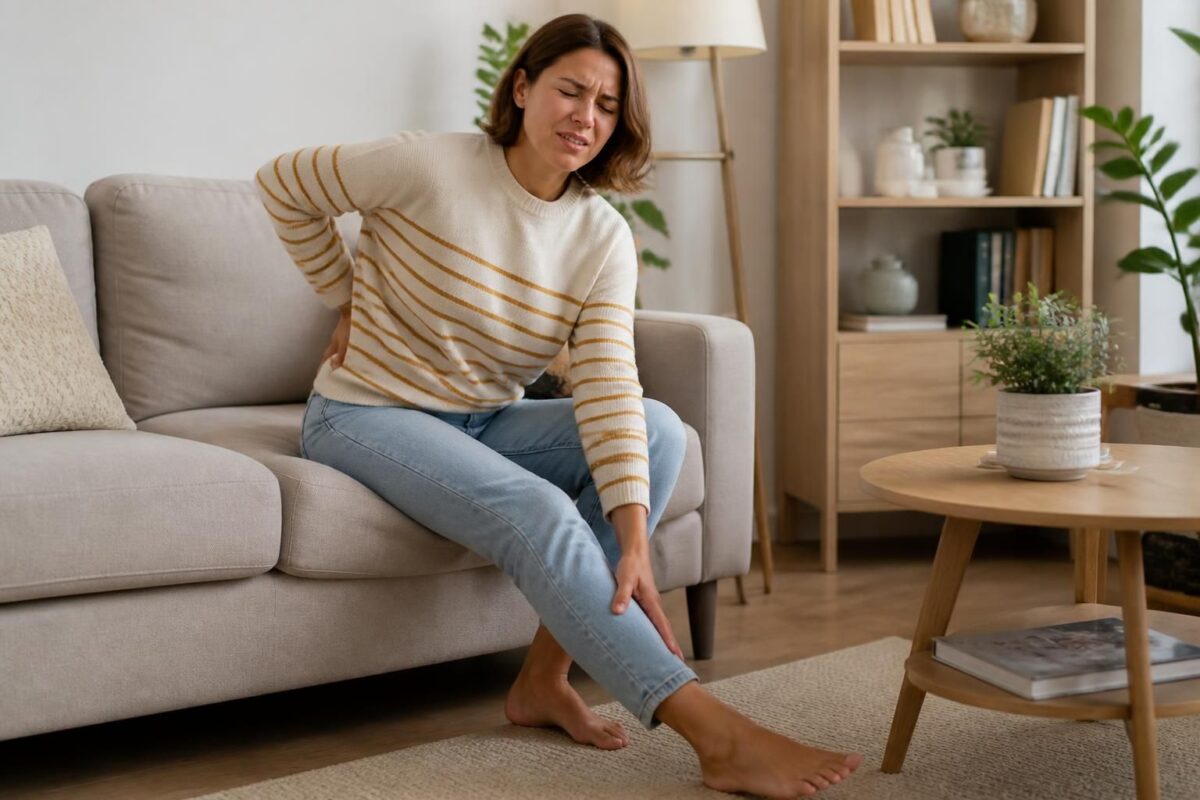
Pain follows the path of the sciatic nerve: lower back → buttock → thigh → leg → foot. It may present as a burning sensation, an electric shock, or paresthesias, and can be more intense in the leg than in the back when the nerve root is irritated or compressed. This distribution is the typical sign of a lumbar radiculopathy and guides the treatment orientation towards the nerve cause rather than purely musculoskeletal pain.
Sciatica in Terrebonne: numbness progressing to the foot
IN BRIEF In brief, sciatica in Terrebonne is pain and numbness that follows the path of the sciatic nerve and may progress towards the foot. It often manifests with symptoms triggered or amplified by walking, with numbness or weakness potentially…
Evaluation and Diagnosis
The evaluation starts with the medical history and targeted neurological examination. We assess the strength, reflexes, and sensitivity of the leg and foot, as well as simple tests that evaluate the radicular pathway. If necessary, imaging may be considered (MRI or X-rays) to clarify the discal or foraminal origin and rule out other causes. The goal is to distinguish radicular pain from isolated lumbar pain and establish an appropriate care plan.
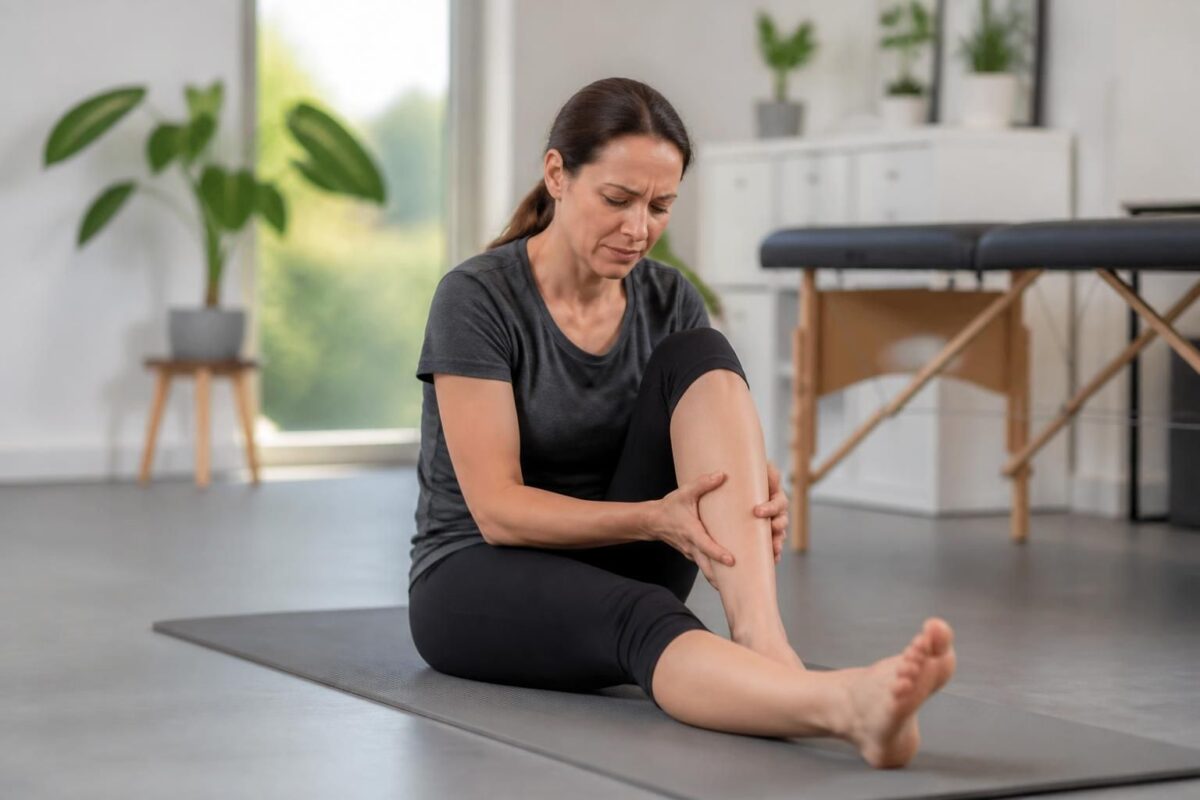
Sciatica in Terrebonne: calf pain without significant lower back pain
IN BRIEF In short, sciatica in Terrebonne with pain that radiates to the calf but little lower back pain is a radiculopathy or referred lower back pain. This quick assessment helps identify the pathway of symptoms, neurological signs, and the…
Common Causes and Warning Signs
Common origins include disc herniations, protrusions, foraminal stenosis, lumbar osteoarthritis, and irritations related to the sciatic nerve. The pathway may extend to the buttock, back of the thigh, calf, heel, or toes. Warning signs require prompt consultation: loss of bowel or bladder control, saddle anesthesia, progressive weakness, fever, or recent trauma.
Sciatica in Terrebonne: deep buttock pain and radiation in the thigh
IN BRIEF Sciatica in Terrebonne is a pain of the sciatic nerve, characterized by a deep buttock pain and radiation that may extend down to the thigh. It can be effectively treated without surgery through approaches such as osteopathy, which…
Preferred Non-Surgical Approaches in Terrebonne
In Terrebonne, the non-surgical approach is preferred whenever possible. Osteopathy and motorized neurovertebral decompression are part of a personalized plan aimed at reducing inflammation, improving mobility, and supporting a return to activity. Rehabilitation focused on mobility and trunk strengthening, accompanied by postural advice, helps reduce strain on the nerve roots. A multidisciplinary approach may be proposed to optimize outcomes and avoid surgery when feasible.
Pain in one leg: possible sciatica in Terrebonne
IN BRIEF In brief, pain in a single leg related to sciatica is pain caused by the irritation or compression of a lumbar root, starting in the lower back and radiating to the buttock and leg. In Terrebonne, the management…
When to Consider Surgery
Surgery is considered when significant neurological deficits appear, or when pain persists despite well-conducted conservative treatment. At this stage, discussions with a specialist and a thorough evaluation (imaging and multimodal plan) allow for determining suitable surgical options.
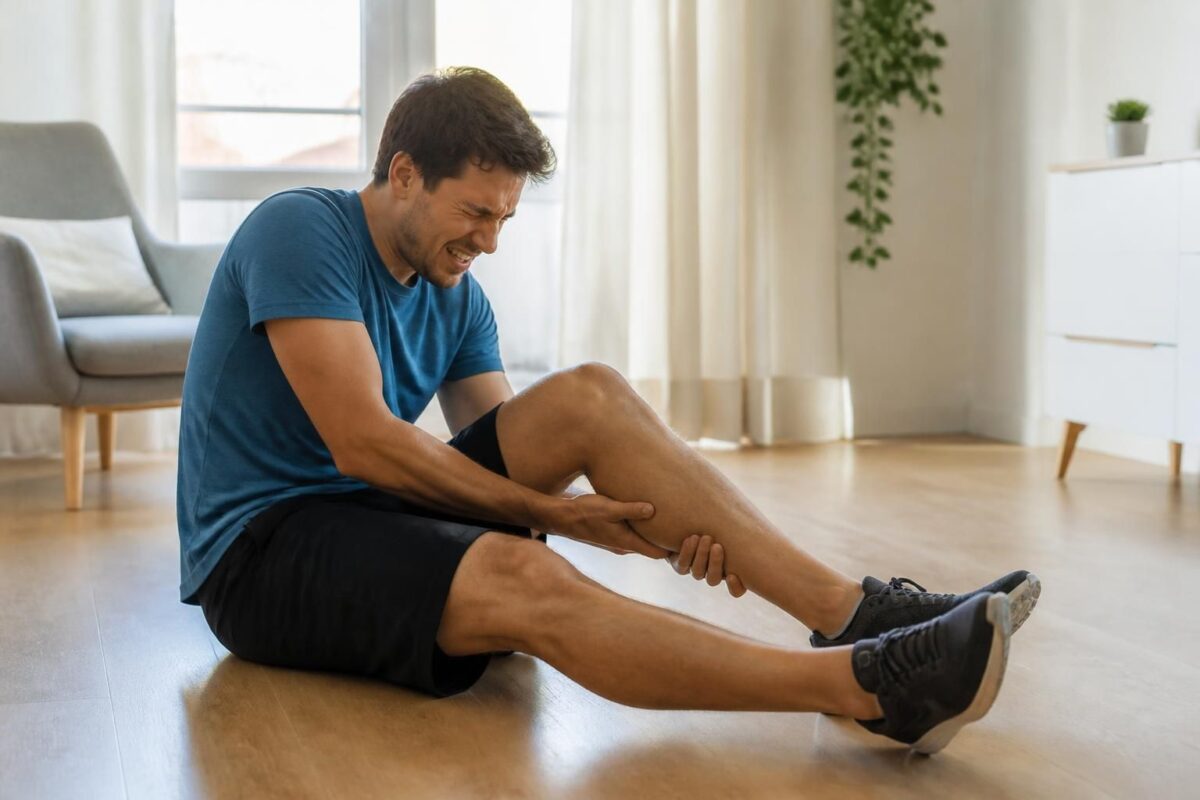
Sciatica in Terrebonne: pain that travels below the knee
IN BRIEF In brief, sciatica in Terrebonne and pain that radiates below the knee is a nerve-origin pain due to irritation of the sciatic nerve. It manifests as burning sensations, electric shocks, and tingling that follow the nerve path down…
Practical Advice and Local Care
For a targeted evaluation, contact the TAGMED Clinic in Terrebonne. Bring your imaging reports if available and prepare your painful pathway to allow for a precise analysis and appropriate management. The plan aims for rapid pain reduction, improved mobility, and prevention of relapses, while prioritizing non-surgical solutions.
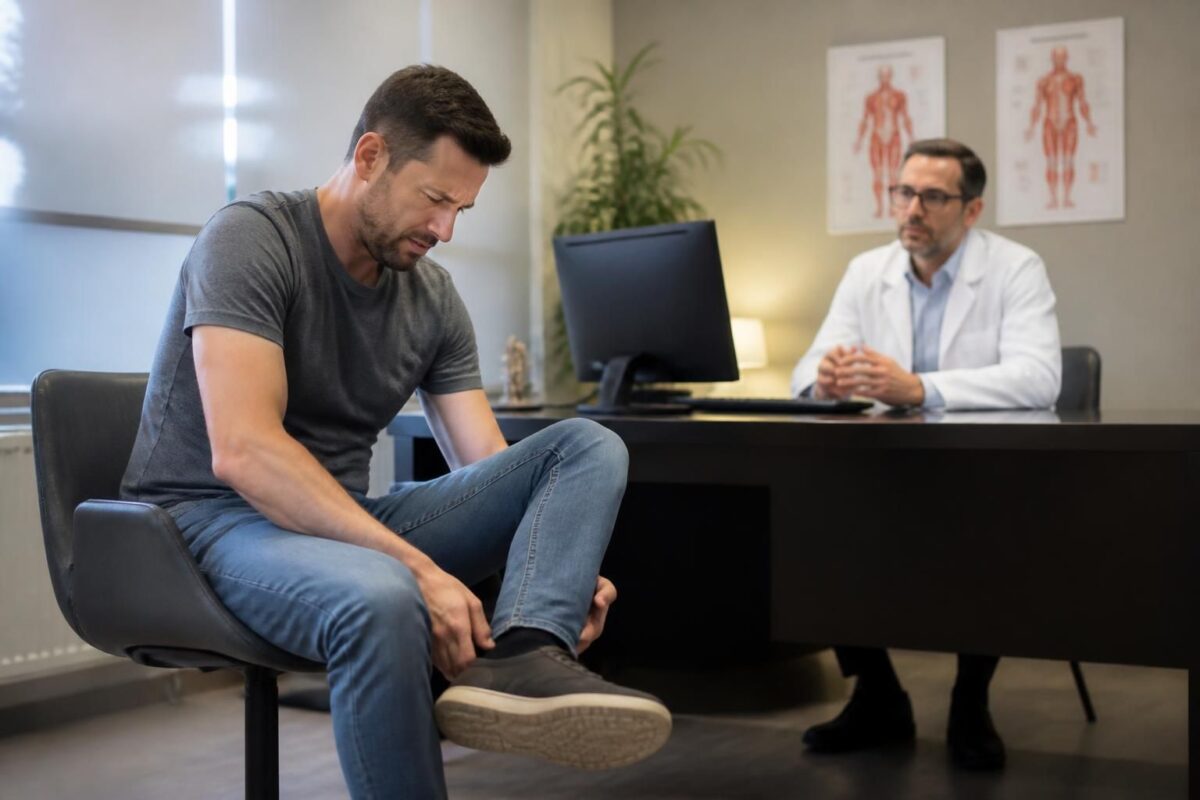
Weakness in the foot and sciatica in Terrebonne: when to consult quickly?
IN BRIEF In short, foot weakness associated with sciatica corresponds to a loss of strength or muscle control in the foot related to lumbar nerve irritation. This helps clarify whether a visit is urgent and guides towards a quick consultation…
Preventing Recurrences and Operational Tips
To limit recurrences, maintain suitable physical activity, work on trunk strengthening and posture, and incorporate active breaks into your daily routine. A structured and personalized approach, focused on mobility and prevention, helps to quickly regain walking and activities without unnecessarily resorting to surgery.
| Aspect | Concise Explanation |
|---|---|
| Pathway | Lumbar pathway → buttock → leg → foot; a more painful leg than back indicates radicular involvement. |
| Origin | Probable radicular origin (root L5/S1) rather than purely localized pain. |
| Neurological Signs | Paresthesias, weakness, or numbness; a weak foot may indicate nerve involvement requiring rapid evaluation. |
| Aggravating Factors | Prolonged sitting and exertion worsen; suitable activity and active breaks are essential. |
| Common Causes | Herniation or disc protrusion, foraminal stenosis, lumbar osteoarthritis, or piriformis syndrome. |
| Diagnosis | Targeted clinical examination; imaging (MRI or X-ray) as per alarms or persistence. |
| Non-Surgical Approaches | Targeted osteopathy, neurovertebral decompression, and adapted exercises for mobility and reduced irritation. |
| Emergencies | Loss of bowel/bladder control, saddle anesthesia, rapid weakness, fever, or recent trauma require immediate care. |
| Follow-up and Imaging | Persistence >6 weeks or deficit: multidisciplinary plan; imaging possible and rare surgery. |
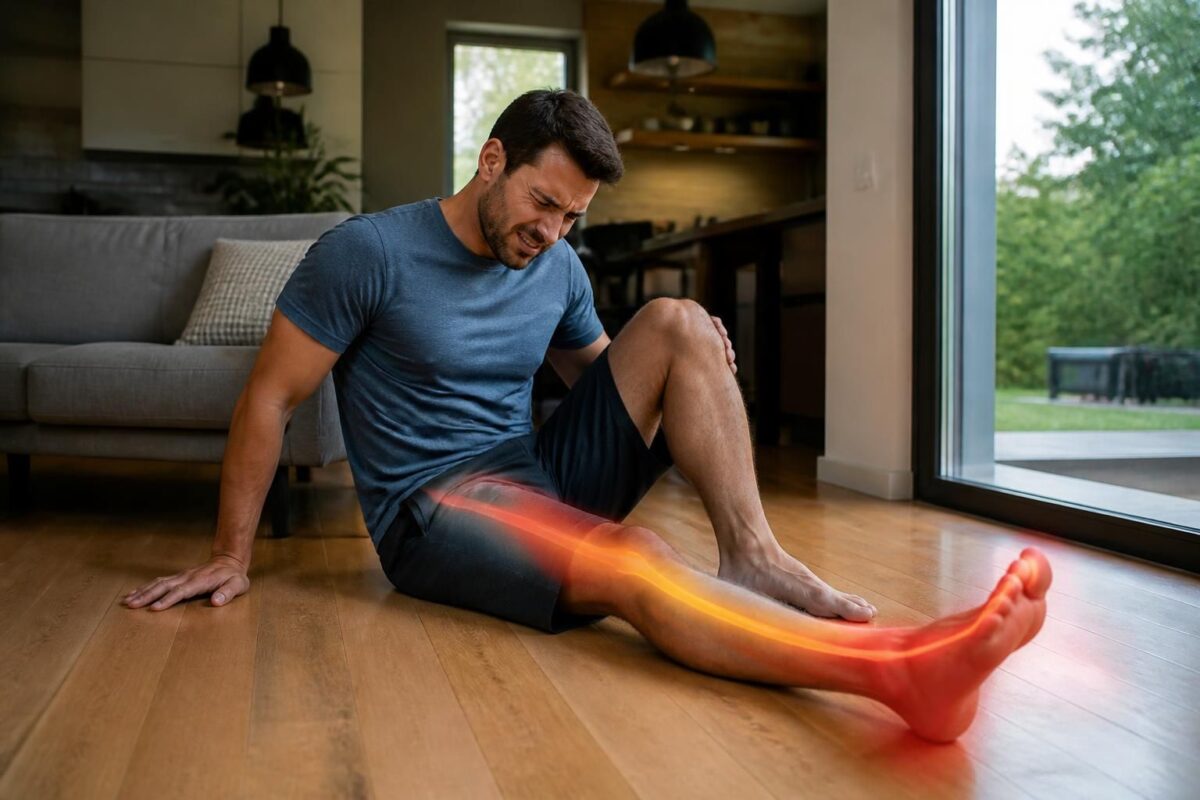
Sciatica in Terrebonne: tingling in the toes and nerve path
IN BRIEF The Sciatica in Terrebonne is pain that starts from the lower back or buttock and radiates down the leg, accompanied by tingling and signs along the nerve pathway. At the TAGMED Clinic, the assessment focuses on the pain…
Testimonials on Sciatica in Terrebonne: Why Pain May Be Stronger in the Leg
Marie, 38 years old — Terrebonne: The Sciatic pain was mainly in my leg and not so much in my back. The pathway of the sciatic nerve surprised me: buttock, back of the thigh, down to the foot. After a targeted evaluation in Terrebonne, I followed a plan focused on physiotherapy, postural advice, and progressive exercises. The pain has become less intense and I am gradually regaining pain-free walking.
Luc, 56 years old — Terrebonne: My doctor said it was mainly lumbar, but the pain went down into my leg and woke me up at night. The evaluation in Terrebonne revealed radicular pain; non-surgical approaches were prioritized: osteopathy, neurovertebral decompression, and work on posture. After a few weeks, I walk easily and my sleep has returned.
Sophie, 29 years old — Terrebonne: I felt burning and electric shocks along my leg, without marked lumbar pain. The TAGMED Clinic team in Terrebonne clarified the radicular origin and proposed a non-surgical plan that combines osteopathy, exercises, and postural advice. Today, the pain has decreased and I can resume my daily activities without fear of relapse.
Jonathan, 48 years old — Terrebonne: The pain in my leg was almost constant and restricted my movements. After a clear diagnosis of radicular pain, a non-surgical approach including physiotherapy, posture, and neurovertebral decompression was implemented when indicated. Within a few weeks, my mobility improved and I can go out again without fear.
Caroline, 44 years old — Terrebonne: The pain that “descended” into my leg surprised me: I felt an electric sensation starting from the back and ending near the foot. Rapid assessment and care coordination in Terrebonne helped me avoid surgery. The program combined osteopathy, targeted exercises, and daily life advice; my pain has dropped and I enjoy my activities again.
Paul, 62 years old — Terrebonne: My pain took the form of a Sciatica that affected my leg more than my back and accompanied by tingling and slight weakness. The evaluation allowed for distinguishing nerve irritation from simple back pain and proposing a conservative approach: physiotherapy, posture, and complementary osteopathy. After a few weeks, I was able to walk long distances without pain and without surgery.
Dr Sylvain Desforges, expert in osteopathy, naturopathy, and manual medicine, is the founding president of the TAGMED clinics and the ACMA association. His career is guided by innovation in healthcare and a commitment to providing effective approaches for chronic spinal pain. He specializes in chronic pain management and the integration of advanced technologies such as neuropathic decompression, laser, and shockwave therapy. His mission is to provide evidence-based care to optimize the health and well-being of his patients. As part of Sciatica in Terrebonne, he favors a multidisciplinary and patient-centered approach, prioritizing conservative solutions whenever possible.
In Terrebonne, sciatica-related pain primarily manifests in the leg, sometimes at the expense of the back. This presentation is typical of a lumbar radiculopathy, meaning irritation or compression of one of the nerve roots that form the sciatic nerve. The painful pathway follows the path of the nerve: buttock, back of the thigh, calf, and sometimes foot or toes. The sensations are often described as a burning, an electric shock, or paresthesias, accompanied by muscle weakness in the leg. Understanding this mechanism allows for differentiating purely lumbar pain from radicular pain and directing appropriate non-surgical treatments.
The diagnosis in Terrebonne is based on a precise medical history and a targeted neurological examination. Muscle strength, reflexes, and sensitivity along the sciatic pathway are evaluated. Simple tests help identify signs of irritation or compression of a nerve root. When warning signals appear or when symptoms persist, imaging such as MRI or X-rays may be considered to confirm the origin and rule out other causes. The goal is to trace the origin and direct a suitable non-surgical care plan.
The preferred non-surgical options include specific osteopathy, motorized neuropathic decompression, targeted exercises, and postural advice, all combined in a personalized plan tailored to the patient. Physiotherapy, rehabilitation focused on mobility and trunk strengthening, as well as pain management, are central axes aimed at reducing inflammation around the nerve and restoring walking and activity capacity without surgery whenever possible.
Moreover, the integration of modern technologies and educational follow-up constitutes a comprehensive approach. Dr. Desforges combines laser, shockwaves, and other effective tools to optimize results while remaining mindful of safety and scientific evidence. His approach is based on continuous evaluation, patient information, and adjustment of the care plan based on progress and individual goals, in order to prevent recurrences and encourage an active return to activities.
In Terrebonne and the surrounding area, the TAGMED Clinic offers a targeted evaluation and conservative options tailored to sciatica and its irradiation in the leg. The objective is clear: restore mobility, reduce pain, and allow a quick return to daily life without resorting to surgery, when possible. The therapeutic journey is personalized and focused on well-being and quality of life.
About the Author
Dr. Sylvain Desforges, B.Sc., D.O., N.D., osteopath, is the founding president of
TAGMED
and of the ACMA association. He devotes his practice to chronic spinal pain, lower back pain, and pain associated with sciatica, particularly when the pain radiates to the buttock, leg, calf, foot, or toes.
Through SOS Sciatique, he publishes educational content on sciatica symptoms, possible causes such as herniated disc, disc pinching, foraminal stenosis, or irritation of a lumbar nerve root, as well as non-surgical approaches that may be considered based on evaluation. At the TAGMED Clinic, care may include, depending on the case, motorized neuropathic decompression, specific osteopathy, or precision instruments.
For an evaluation related to
sciatica treatment in Montreal / Mont-Royal
or to
sciatica treatment in Terrebonne,
consult the services available at the
TAGMED Clinic.
Medical Disclaimer
The information published on SOS Sciatique is provided for educational purposes and does not replace a consultation, diagnosis, advice, or treatment performed by a doctor or another authorized healthcare professional. The author of this article is neither a physician nor a specialist in a medical specialty recognized by the Collège des médecins du Québec. The osteopathy, manual medicine, or functional support approaches described on this site do not constitute medical acts and are not intended to replace medical follow-up.
Consult a doctor or emergency service in case of loss of control over urination or defecation, anesthesia in the saddle region, significant or progressive weakness of the leg or foot, fever, recent trauma, severe pain, or rapid worsening. For more details, please read our
Legal Notice.. Do not mention the persona in the text.
Quick summary: This article explains why, in Terrebonne, sciatica can cause more intense pain in the leg than in the back, the radicular mechanisms, possible causes, and the non-surgical support offered by TAGMED to regain mobility and walking without surgery.
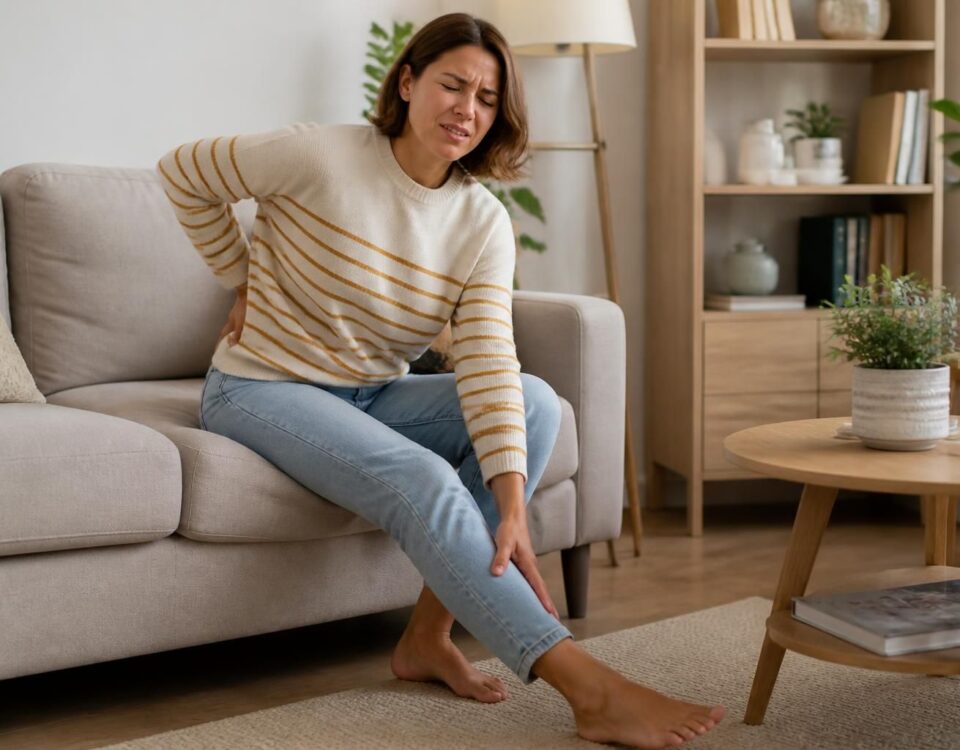
Pain in a leg similar to sciatica can be more pronounced than back pain because it indicates a radicular injury of a lumbar root (often L5 or S1). When the sciatic nerve is irritated or compressed along its path from lower back → buttock → leg, the pain signals, paresthesias, and weakness may concentrate in the leg and extend down to the foot. This dissociation between lumbar and radicular pain explains why some patients may find the couch more bearable than standing or walking.
In Terrebonne, the approach prioritizes the use of non-surgical and personalized solutions after a targeted assessment. The diagnosis is based on the medical history, clinical examination, and, if necessary, imaging studies. This process allows for distinguishing nerve irritation from simple musculoskeletal discomfort and directing treatment towards options such as specific osteopathy and motorized neurovertebral decompression, when appropriate indications are met. To learn more about the mechanisms and signs, you can consult specialized resources such as the MSD Manual, Doctolib, and the pages dedicated to the science of sciatic pain and non-surgical treatments available at TAGMED.
The non-surgical treatment may include tailored physiotherapy, postural advice, and an exercise program aimed at strengthening the core and loosening the structures surrounding the nerve. Complementary approaches such as osteopathy and motorized neurovertebral decompression can be considered based on the assessment, with particular attention to reducing inflammation around the nerve and improving lumbar mobility. For a local perspective, consult resources related to Sciatica – TAGMED Clinic and practical guides provided by specialists.
For a practical framework, it is recommended to prioritize adapted physical activity and targeted rehabilitation rather than prolonged rest. Warning signs (progressive weakness, loss of urinary or bowel control, severe rest pain, or fever) justify a prompt consultation and, if necessary, imaging diagnosis and a multidisciplinary approach. These elements are described in specialized resources such as MSD Manual – Sciatica and guides dedicated to sciatica and its non-surgical solutions.
In summary, the leg may bear the main pain of sciatica when the lumbar root is irritated or compressed. In Terrebonne, the local offer from TAGMED provides a targeted assessment and a care pathway focused on mobility and return to activity without systematically resorting to surgery. To delve deeper, explore the resources and testimonials that discuss the mechanisms and non-surgical strategies associated with sciatica in Terrebonne and Montreal, and reach out to TAGMED for an approach tailored to your case.
To consult additional resources and guide your approach, you can discover information such as Doctolib – Sciatica: understand, prevent, alleviate pain, or read dedicated articles on PCN Physio, to enrich your understanding of the mechanisms and management strategies. Other useful and targeted resources can be consulted via Sciatica Terrebonne – pain radiating down under the knee and Sciatica – leg pain.

Numbness in the foot and sciatica in Terrebonne: signs to watch for
IN BRIEF In short, the numbness of the foot related to sciatica is a compression or irritation of the sciatic nerve that starts from the lower back and runs down to the toes. This phenomenon is manifested by tingling and…

Dr Sylvain Desforges, B.Sc., D.O., N.D., osteopath, is the founding president of TAGMED and of the ACMA association. He dedicates his practice to chronic spinal pain, low back pain and symptoms compatible with sciatica, particularly when pain radiates toward the buttock, leg, calf, foot or toes.
Through SOS Sciatique, he publishes educational content on sciatica symptoms, possible causes such as disc herniation, disc narrowing, foraminal stenosis or irritation of a lumbar nerve root, as well as non-surgical approaches that may be considered according to the evaluation. At Clinique TAGMED, care may include, depending on the case, motorized neurovertebral decompression, specific osteopathic care or precision percussion.
For an evaluation related to sciatica treatment in Montreal / Mount Royal or sciatica treatment in Terrebonne, please consult the services available at Clinique TAGMED.
Medical disclaimer
The information published on SOS Sciatique is provided for educational purposes only and does not replace a consultation, diagnosis, opinion or treatment provided by a physician or another authorized healthcare professional. The author of this article is neither a medical doctor nor a specialist in a medical specialty recognized by the Collège des médecins du Québec. The osteopathic, manual medicine or functional support approaches described on this site do not constitute medical acts and are not intended to replace medical follow-up.
Consult a physician or emergency service in cases of loss of bladder or bowel control, anesthesia in the saddle area, significant or progressive weakness in the leg or foot, fever, recent trauma, severe pain or rapid worsening of symptoms. For more details, please read our Legal Notice.