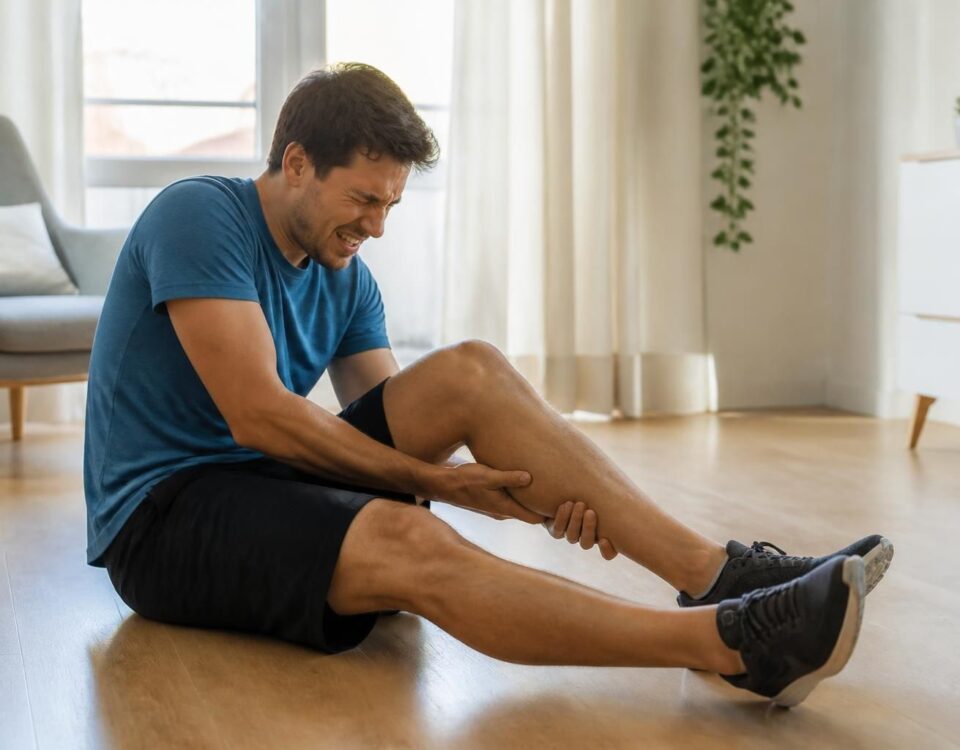
Sciatica in Montreal: tingling in the toes and nerve pathway
16/08/2026
Sciatica and numbness in the leg: neurological sign
16/08/2026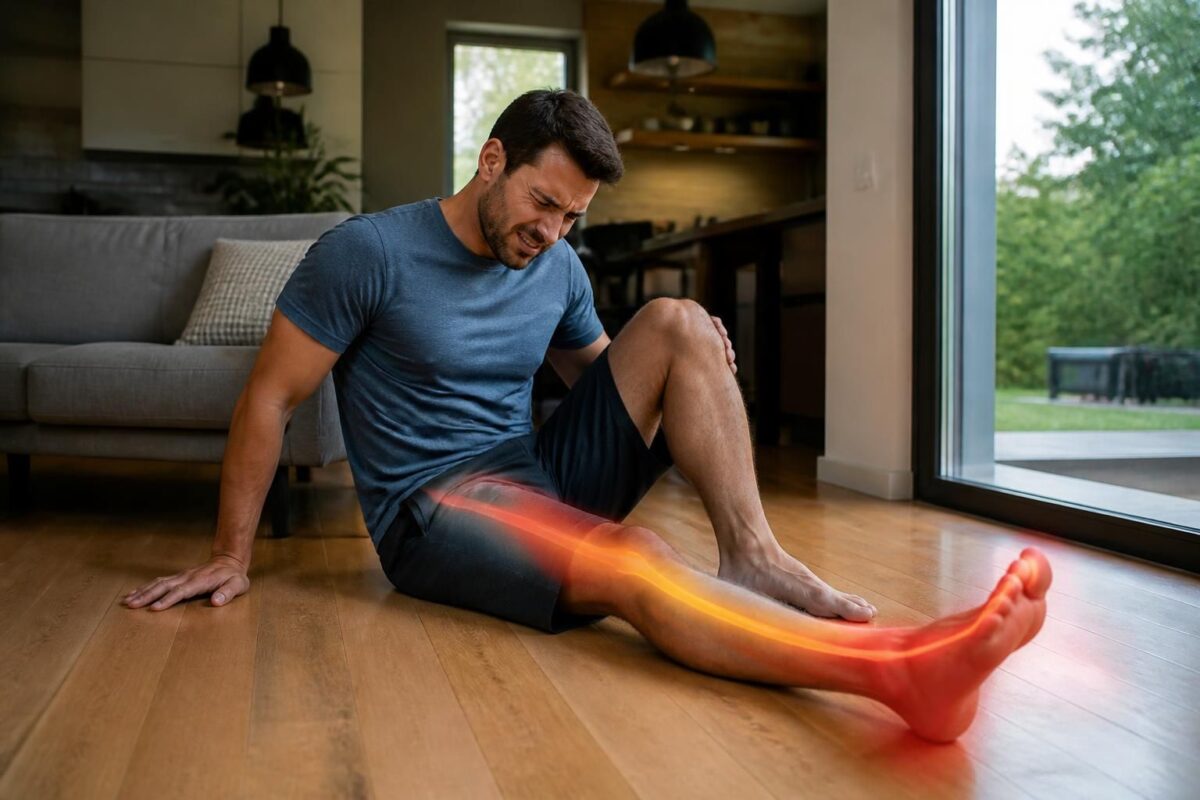
IN BRIEF The Sciatica in Terrebonne is pain that starts from the lower back or buttock and radiates down the leg, accompanied by tingling and signs along the nerve pathway. At the TAGMED Clinic, the assessment focuses on the pain trajectory and neurological signs to determine if non-surgical approaches like neurovertebral decompression or specific osteopathy may be relevant for you. This quick and localized approach allows for personalized care aimed at reducing pain, restoring mobility, and avoiding surgery when possible. |
Sciatica in Terrebonne can manifest as tingling in the toes and a nerve pathway that starts from the lower back or buttock and descends into the leg down to the foot. At the TAGMED Clinic Terrebonne, the assessment aims to identify this pathway and the neurological signs to determine if a conservative approach (appropriate exercises, non-surgical decompression, or other specialized care) is relevant based on the case.
This article, written by Dr. Sylvain Desforges, osteopath, explains how tingling in the toes relates to a nerve pathway associated with sciatica. It describes the typical pathway, warning signs, possible assessment in Terrebonne, and the non-surgical options available at the TAGMED Clinic, with reliable resources to better understand and manage the pain that radiates down the leg.
Tingling in the toes can reflect irritation of a lumbar nerve root. The painful trajectory helps guide the assessment, but a comprehensive clinical analysis remains essential. Pain that radiates toward the toes may be associated with paresthesias and neurological signs such as weakness or loss of sensation. At the TAGMED Clinic, the assessment aims to understand the pain profile, identify signs needing medical referral, and determine if a non-surgical approach is relevant based on the case.
Pathway and Potential Roots
The painful pathway may involve the L4, L5, or S1 roots. Pain that travels toward the big toe is often associated with L5, while pain following the back of the leg and heel may suggest S1. The lower back, buttock, and back of the thigh often serve as starting points, but the exact pathway guides careful interpretation and treatment orientation.
Associated Sensations and Signs to Watch For
Referred sensations may include burning, electric shocks, tingling, or numbness, sometimes accompanied by loss of sensation or weakness. A progression of numbness or new or increased weakness warrants prompt evaluation.
Possible Causes and Diagnostic Context
Radicular pain may result from a disc herniation, protrusion, disc pinching, foraminal stenosis, or other lumbar nerve irritation. Imaging can be helpful, but the diagnosis primarily relies on the history, symptom trajectory, and clinical examination.
Assessment and Care Plan at TAGMED Clinic Terrebonne
The structured assessment is based on the history, precise symptom trajectory, and neurological examination, complemented by functional tests and, if necessary, available imaging studies. The plan may include a motorized neurovertebral decompression, specific osteopathy, or instrument-assisted intervention, depending on the assessment and patient tolerance. For more information, consult TAGMED resources tailored for Terrebonne.
Important Elements to Know
This approach emphasizes a clear understanding of the symptom trajectory and neurological signs to determine if a conservative strategy is appropriate and safe. The perceived trajectory and imaging should be interpreted in the context of function and daily activities.
When to Seek Prompt Attention and Signs of Emergency
Seek prompt attention in the presence of progressive weakness, significant numbness, or rapidly worsening pain. Signs of emergency include loss of urinary or bowel control, saddle anesthesia, significant bilateral pain with neurological signs, fever, or major trauma.
Resources and Useful Links
To better understand sciatica and nerve pathways, you can consult specialized resources, including general information on sciatica and non-surgical approaches available at TAGMED:
SOS Sciatica – information on symptoms, causes, and cautious approaches.
TAGMED Clinic – Treatment of sciatica in Terrebonne – contact information and possible options in Terrebonne.
Neurovertebral decompression – a pathway to explore based on the assessment.
Disc herniation and radiculopathy – additional information on disc contexts.
Herniated Disc – associated resources
SCOis – Choose a safe approach based on your symptoms
Sciatica in the car and sitting position
Burning pain in the leg – case in Terrebonne
For further exploration, please consult the dedicated pages on SOS Sciatica and TAGMED resources related to Terrebonne and Montreal.
Medical disclaimer: The information and advice provided on this site do not replace the opinion, diagnosis, or treatment of a healthcare professional. Please note that Dr. Sylvain Desforges, osteopath, is neither a doctor of medicine nor a physician and is not a specialist in a medical specialty as defined by the Collège des médecins du Québec. Manual medicine, functional medicine, and sports medicine as described on this site exclude any medical treatment or diagnosis performed by a doctor or specialist physician. Always consult your doctor for any medical questions. For more details, please read our full Legal Notice.
- Main axis: Painful pathway and nerve signals to guide the assessment in Terrebonne.
- Main symptom: Tingling in the toes with pain following the nerve pathway.
- Typical pathway: Lower back or buttock → thigh → calf → foot → toes.
- Affected roots: L5 and/or S1, depending on the extension towards the big toe or heel.
- Associated signs: Numbness, paresthesias, possible weakness of the foot or walking.
- Alarm signs: Loss of urinary/bowel control, saddle anesthesia, rapid weakness, fever.
- TAGMED Team Terrebonne: Pain profile, pathway, and neurological signs to evaluate conservative options.
- Conservative options: Motorized neuro-vertebral decompression, specific osteopathy, precision thumper (evaluation necessary).
- To avoid: Aggressive stretching and movements that worsen pain; avoid “cracking” without evaluation.
- When to consult: Increasing pain, progressive numbness, weakness, pain disrupting sleep, or alarm signs.

In Terrebonne, a sciatica manifested by tingling in the toes and a precise nerve pathway requires a structured assessment to determine the root and choose an appropriate approach. This article offers clear recommendations to understand the painful pathway, monitor warning signs, and consider effective non-surgical options at the TAGMED Clinic in Terrebonne.
Assessing the pathway and signs: understanding sciatica in Terrebonne
The pain pathway is a useful clue to guide the assessment, but it does not replace a complete clinical analysis. The goal is to connect the pathway, sensations, and neurological signs to identify a discal, foraminal, or other lumbar cause consistent with pain radiating in the buttock, thigh, calf, or foot.
Components of the pathway and sensitivity
Sensations such as burning, electric shocks, tingling, or numbness often accompany the pain. The presence of progressive numbness or weakness should be considered to adjust management and direct towards non-surgical treatments when relevant.
Signs to monitor and emergencies
Pain may require special attention in the case of progressive weakness, loss of urinary or bowel control, saddle anesthesia, or rapid deterioration. In the presence of these signs, urgent medical evaluation is indicated, and the consultation should not be delayed.
Recommended approaches in Terrebonne
In Terrebonne, the evaluation helps determine if a non-surgical approach is appropriate. Three axes can be considered based on results and patient tolerance.
Motorized neuro-vertebral decompression
This approach aims to reduce certain mechanical constraints on the discs and nerve roots when the evaluation concludes a discal origin, protrusion, or mechanical compression. It is not suitable for all cases and is part of a personalized overall plan.
Specific osteopathy
The intervention is adapted to the mobility, compensations, and tolerance of the patient. It can aim to improve lumbar mobility, reduce tensions, and support a gradual return to tolerated activities without worsening symptoms.
Precision thumper
Targeted and low-amplitude instrumental intervention, reserved for specific mechanical dysfunctions revealed by the evaluation. This option is discussed only when deemed relevant and tolerated by the patient.
What to bring before a consultation
To optimize the evaluation, gather your pain history, the precise pathway, aggravating and relieving factors, and any available documents (imaging, assessments). This helps connect symptoms to possible mechanisms and discuss appropriate treatment options.
Warning signs and when to consult quickly
Consult quickly if you notice loss of urinary or bowel control, saddle anesthesia, significant and progressive weakness, or pain that rapidly worsens or severely disrupts sleep. In these situations, seek immediate attention from an emergency medical service.
Practical tips for the coming weeks
Adopt a gradual and tolerated approach: prioritize activities that do not trigger increased pain, focus on moderate walking and positions that limit pressure on the lumbar structures. Avoid forced stretches and movements that sharply increase pain in the leg. Work with your practitioner to establish a personalized rehabilitation plan, with measurable goals and regular reassessment.
| Pain Path | Concise Description |
|---|---|
| Pain Path | Pain path starts from the lower back or buttock and descends toward the leg and foot, depending on the involved root (L4-L5/S1). |
| Location of Tingling | Tingling in the toes or foot, sometimes intermittent, aligned with the nerve path. |
| Neurological Signs | Numbness, paresthesia, and sometimes weakness of the foot dorsiflexor. |
| Probable Causes | Herniated disc, protrusion, foraminal stenosis, or muscle irritation. |
| Emergency or Rapid Consultation | Marked weakness, loss of bladder control, saddle anesthesia, or rapid progression require urgent evaluation. |
| Conservative Approaches | Adapted activity and non-surgical treatments (targeted osteopathy, decompression based on evaluation). |
| Assessment Elements | History, path, neurological tests, and possible correlation with available imaging. |
| Self-Management Advice | Stay active within tolerated limits; avoid movements that worsen symptoms and consult if progression occurs. |
| Objective of TAGMED Evaluation | Clarify the path, identify signs of medical orientation, and discuss appropriate non-surgical options. |
Testimonials on Sciatica in Terrebonne: Tingling in the Toes and Nerve Path
In Terrebonne, Valérie L. experienced tingling that rose from the toes and followed the nerve path related to Sciatica. After a thorough evaluation, a plan focused on conservative treatments reduced her pain and improved her tolerance to movements.
In the same vein, Marc D. describes pain that started from the buttock and descended into the calf, with paresthesias in the toes. The team in Terrebonne explained the path and guided progressive exercises, avoiding movements that aggravated the nerve path.
For Camille P., the tingling and prickling in the toes accompanied pain radiating along the nerve path. After a consultation in Terrebonne, she received a non-surgical approach tailored to her situation, with encouraging results.
Antoine M. described pain that extended down to the foot and signs in the lower back. Thanks to the structured evaluation, he gained mobility and confidence, and the nerve path was better understood to guide care.
Finally, Élise R. discusses burning sensations and numbness along the path. The approach in Terrebonne prioritized conservative options and a gradual return to activities, allowing for better tolerance of Sciatica in daily life.
Dr. Sylvain Desforges is an expert in osteopathy, naturopathy, and manual medicine, whose work is centered in Terrebonne and TAGMED clinics. His professional path is guided by innovation in healthcare and a patient-centered approach to chronic pain of the spine and radicular disorders that sometimes manifest as tingling in the toes and pain following the nerve path. In this context, he emphasizes a precise understanding of the nerve path and neurological signs to adapt the most relevant non-surgical treatments. His vision always aims for a care based on evidence to optimize patient health and well-being.
The proposed care pathway for Sciatica in Terrebonne begins with in-depth listening and mapping of the pain path. The doctor focuses on connecting sensations passing through the buttock, thigh, calf, or foot to the lumbar nerve roots that may be involved. This approach does not settle for an isolated symptom: it connectshistory, affected areas, nerve sensation, and functional limitations. The goal is to develop a personalized plan that specifies which movements to prioritize, the precautions to take, and measurable objectives for returning to mobility and active life.
At the TAGMED Clinic in Terrebonne, the structured evaluation combines the symptom path, neurological examination, movement tolerance, and available imaging results when relevant. This approach allows for identifying possible causes such as a herniated disc, protrusion, or foraminal stenosis, while also being vigilant for signs that require urgent medical orientation. Emphasis is placed on safety and the gradual progression of exercises, to prevent any worsening of symptoms and promote lasting recovery.
The proposed interventions fall within a conservative and targeted palette. The use of motorized neurovertebral decompression may be considered when the assessment points to a discal origin or mechanical compression. Specific osteopathy adjusts the mobilities and compensations of the body, while the precision percussor provides low-amplitude instrumental intervention for precise mechanical dysfunctions. Each approach is chosen based on the patient’s profile and tolerance, with regular reassessment to adjust the care plan.
Dr. Desforges believes that the key to success lies in a cautious and gradual approach that focuses on understanding what aggravates and what alleviates the pain. The aim is to restore functionality, reduce nerve irritation, and limit recurrences through simple and realistic actions adapted to the daily life of the patient in Terrebonne. For those suffering from a nerve pain path in the leg and toes, the consultation offers a clear evaluation, a structured plan, and non-surgical care options likely to quickly restore a better quality of life.
Are you looking for an assessment for a sciatica in Terrebonne? The TAGMED Clinic offers a structured and personalized approach that links history, the trajectory, and function to tailored solutions. The follow-up is designed to be tangible and measurable, with clear objectives and transparent communication to guide the patient step by step towards recovery.
Dr. Sylvain Desforges, osteopath and naturopath, acts as a committed partner in managing sciatic issues in Terrebonne, combining clinical experience and advanced technologies to optimize patients’ health and comfort.
Quick summary: this article addresses sciatica in Terrebonne by focusing on tingling in the toes and the nerve pathway that guides the assessment and choices for non-surgical care. It emphasizes the importance of associating the pain pattern, neurological signs, and functional tolerance to guide the appropriate treatment.
Summary
Sciatica can start in the lower back or buttock and travel down the leg to the toes, with tingling, paresthesias, or a feeling of numbness. The painful pathway informs about the affected roots (e.g., L4-L5 or S1) and potentially irritated structures like a herniated disc, protrusion, or foraminal stenosis. In Terrebonne, the assessment aims to connect this pathway to neurological signs and function, to determine if a non-surgical approach can be considered based on a comprehensive clinical evaluation.
Associated sensations, such as burning, electric shocks, or numbness in the toes or foot, should be interpreted cautiously and in correlation with the pain dynamics and functional limitations. The analysis of the pathway is just one essential element of the diagnosis; it must be integrated into the overall clinical examination and, if necessary, imaging to clarify the cause and guide the care plan.
Signs to monitor include progressive weakness, loss of bladder or bowel control, or saddle anesthesia. Their presence requires urgent medical evaluation and may influence the choice between conservative options and more in-depth investigations. To deepen the understanding of symptoms and possible causes, see the related resources, including specialized pages on sciatica and nerve pathways.
In Terrebonne, the discussed non-surgical options include approaches such as motorized neurovertebral decompression, specific osteopathy, and precision gauge, when the assessment allows for their consideration. The goal is to reduce strain on the discs and roots, improve mobility, and promote gradual recovery, while respecting the patient’s tolerances.
For further insights, you can consult various online resources that address the link between leg pain, nerve pathways, and sciatica, including guides and specialized analyses. For example, experts and clinics provide explanations on calf pain, toe numbness, and associations with sciatica in Montreal and Terrebonne: Sciatica and leg pain, Calf pain and sciatica – interpretation, Sciatica Evaluation Terrebonne, and other useful resources listed in management guides.
This structured approach helps avoid a simplistic and singular interpretation (for example, a potential herniated disc) and favors a strategy suited to the individual profile. The structured assessment connects the symptom pathway, neurological examination, function, and available tests to formulate a realistic and measurable plan for ongoing care.
For cases where symptoms progress or complicate, referral to a specialized consultation remains essential. Clear communication about objectives, timelines, and the limitations of conservative treatments is at the heart of safe and effective support in Terrebonne.
For more information and relevant resources, see the following pages: Neuro-sciatic pathology and foot, Sciatica in Terrebonne – foot pain, Sciatica and one-sided pain – possible causes, Big toe pain and sciatica – L5, electric shock in the leg. You can also check reference resources like Sciatica and leg pain stronger than back pain and Calf pain and sciatica – interpretation.

Sciatica in Terrebonne: numbness progressing to the foot
IN BRIEF In brief, sciatica in Terrebonne is pain and numbness that follows the path of the sciatic nerve and may progress towards the foot. It often manifests with symptoms triggered or amplified by walking, with numbness or weakness potentially…

Sciatica in Terrebonne: why the pain may be stronger in the leg
IN BRIEF In brief, sciatica in Terrebonne is pain that follows the path of the sciatic nerve, starting from the lower back and descending into the buttock, leg, and sometimes the foot. The phenomenon may be stronger in the leg…
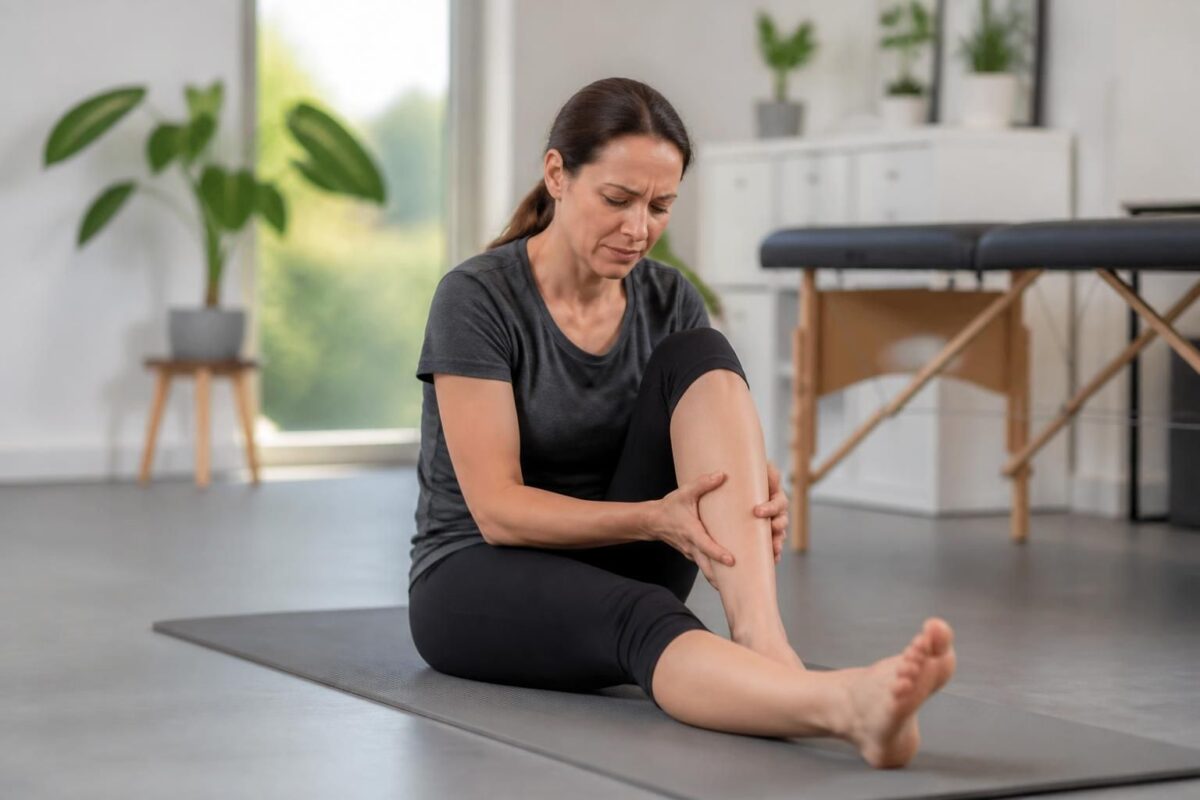
Sciatica in Terrebonne: calf pain without significant lower back pain
IN BRIEF In short, sciatica in Terrebonne with pain that radiates to the calf but little lower back pain is a radiculopathy or referred lower back pain. This quick assessment helps identify the pathway of symptoms, neurological signs, and the…
Sciatica in Terrebonne: deep buttock pain and radiation in the thigh
IN BRIEF Sciatica in Terrebonne is a pain of the sciatic nerve, characterized by a deep buttock pain and radiation that may extend down to the thigh. It can be effectively treated without surgery through approaches such as osteopathy, which…
Pain in one leg: possible sciatica in Terrebonne
IN BRIEF In brief, pain in a single leg related to sciatica is pain caused by the irritation or compression of a lumbar root, starting in the lower back and radiating to the buttock and leg. In Terrebonne, the management…
Sciatica in Terrebonne: pain that travels below the knee
IN BRIEF In brief, sciatica in Terrebonne and pain that radiates below the knee is a nerve-origin pain due to irritation of the sciatic nerve. It manifests as burning sensations, electric shocks, and tingling that follow the nerve path down…
Weakness in the foot and sciatica in Terrebonne: when to consult quickly?
IN BRIEF In short, foot weakness associated with sciatica corresponds to a loss of strength or muscle control in the foot related to lumbar nerve irritation. This helps clarify whether a visit is urgent and guides towards a quick consultation…

Numbness in the foot and sciatica in Terrebonne: signs to watch for
IN BRIEF In short, the numbness of the foot related to sciatica is a compression or irritation of the sciatic nerve that starts from the lower back and runs down to the toes. This phenomenon is manifested by tingling and…

Dr Sylvain Desforges, B.Sc., D.O., N.D., osteopath, is the founding president of TAGMED and of the ACMA association. He dedicates his practice to chronic spinal pain, low back pain and symptoms compatible with sciatica, particularly when pain radiates toward the buttock, leg, calf, foot or toes.
Through SOS Sciatique, he publishes educational content on sciatica symptoms, possible causes such as disc herniation, disc narrowing, foraminal stenosis or irritation of a lumbar nerve root, as well as non-surgical approaches that may be considered according to the evaluation. At Clinique TAGMED, care may include, depending on the case, motorized neurovertebral decompression, specific osteopathic care or precision percussion.
For an evaluation related to sciatica treatment in Montreal / Mount Royal or sciatica treatment in Terrebonne, please consult the services available at Clinique TAGMED.
Medical disclaimer
The information published on SOS Sciatique is provided for educational purposes only and does not replace a consultation, diagnosis, opinion or treatment provided by a physician or another authorized healthcare professional. The author of this article is neither a medical doctor nor a specialist in a medical specialty recognized by the Collège des médecins du Québec. The osteopathic, manual medicine or functional support approaches described on this site do not constitute medical acts and are not intended to replace medical follow-up.
Consult a physician or emergency service in cases of loss of bladder or bowel control, anesthesia in the saddle area, significant or progressive weakness in the leg or foot, fever, recent trauma, severe pain or rapid worsening of symptoms. For more details, please read our Legal Notice.