Sciatica and daily commute: when driving becomes an aggravating factor
27/08/2026
Sciatic pain in Terrebonne: tingling, burning or numbness?
28/08/2026
IN BRIEF The sciatic pain is pain that follows the path of the sciatic nerve from the lower back to the buttock and leg, and may be accompanied by tingling, burning, or numbness. In Montreal, a precise clinical evaluation helps identify the origin (for example herniated disc, foraminal stenosis, muscle tension) and guide towards effective non-surgical treatments, such as manual therapy, osteopathy, and, if necessary, motorized neurovertebral decompression. The benefits include pain relief, better mobility, and prevention of complications, all while being suitable for the local context of Montreal. |
In Montreal, sciatic pain manifests as radiation from the lower back to the leg, often accompanied by tingling, burning, or numbness.
This pain reflects a combination of causes, including a herniated disc, foraminal stenosis, or local muscle tension; a clinical evaluation is essential to identify the source and guide treatment. Available options range from manual approaches to motorized neurovertebral decompression, with a personalized plan to reduce pain and restore function.
To benefit from tailored guidance and quick follow-up, make an appointment for an evaluation at TAGMED Clinic in Montreal.
Sciatic pain in Montreal sometimes manifests as tingling, a burning sensation, or numbness radiating from the lower back to the buttock and leg. This article, written by a health professional expert in back disorders, describes the signs, possible causes, and management options in Montreal, emphasizing a precise and individualized clinical evaluation for each patient. The goal is to clarify the symptoms, guide towards the right resources, and present the available solutions in a specialized clinic like TAGMED.
Symptoms and Typical Trajectory
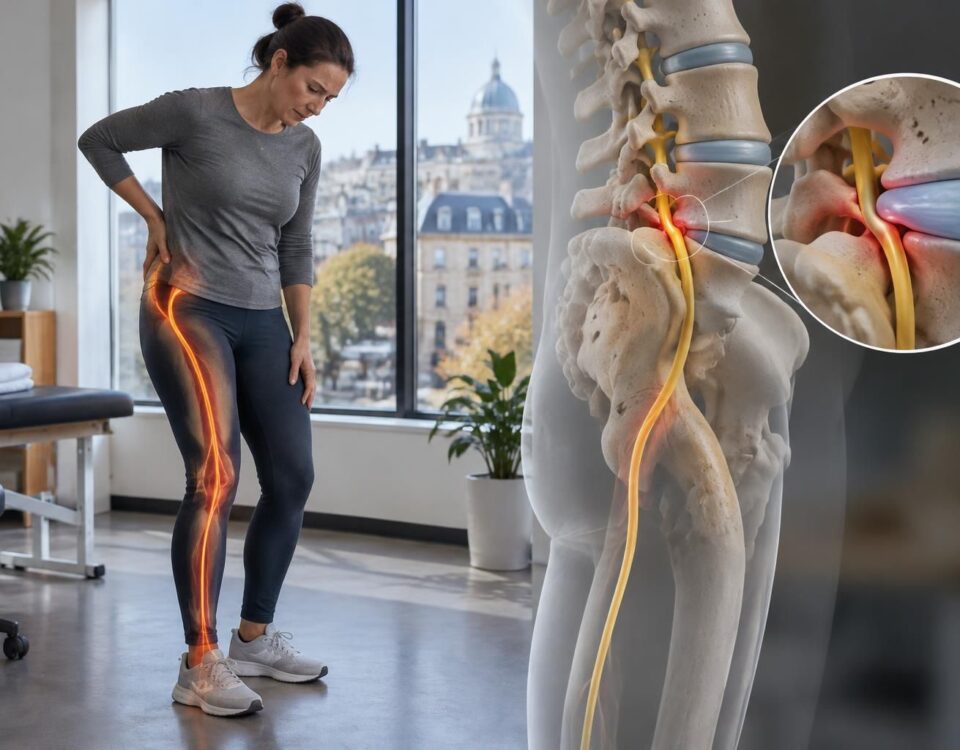
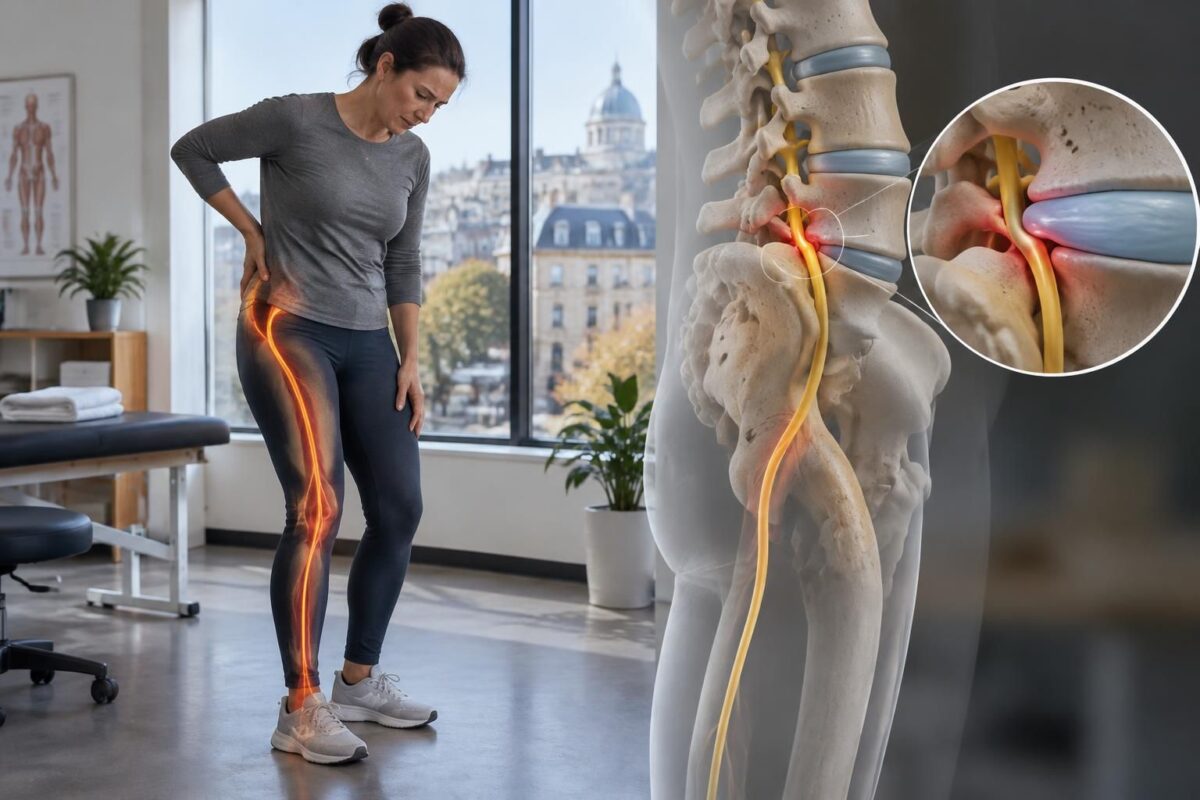
Sciatic pain is often felt as pain that follows the path of the sciatic nerve. It can be throbbing or acute, extending from the lumbar region to the buttock, thigh, then the calf and sometimes down to the foot. Some patients may experience tingling, numbness, or muscle weakness. The pain can vary depending on the mechanical origin and the affected root. To better understand the signs and mechanisms, consult specialized resources such as those offered by associations dedicated to sciatica and specialized clinics. SOS Sciatica provides clear explanations of the manifestations and potential treatments. TAGMED Clinic describes possible approaches in Montreal.
Common Causes in Montreal
Several mechanisms can cause sciatic pain. Among the most common causes are lumbar disc herniation, disc protrusion, foraminal stenosis, lumbar osteoarthritis, or piriformis syndrome. These origins can coexist and complicate diagnosis. For a deeper understanding of these conditions, you can refer to specialized resources on discopathies and radiculopathies. Additional information is available on SOS Herniated Disc and SOS Herniated Disc.
Evaluation and Treatment Guidance
In Montreal, a detailed clinical evaluation helps identify the cause and guide the most suitable treatment. The process relies on the association between symptoms, examination, and sometimes imaging when it changes management. Depending on the profile, approaches like specific osteopathy and motorized neurovertebral decompression may be offered. Neurovertebral decompression is a controlled technique designed to temporarily reduce mechanical stress on the discs and nerve roots, following a thorough assessment. This option is discussed when the indications are met and is not suitable for all patients. Furthermore, treatments may be part of a comprehensive approach at TAGMED Clinic in Montreal or Terrebonne.
For tailored guidance, the use of specialized clinics like TAGMED Clinic is common. If necessary, resources on disc mechanisms and their impact on the nerve can be consulted on SOS Sciatica.
Treatment Options at TAGMED
After evaluation, preferred options may include:
- A personalized approach via osteopathy and functional techniques to relieve tension and improve mobility, without aiming for invasive procedures.
- Motorized neurovertebral decompression when the indication criteria are met, to mechanically relieve stress on the discs and nerve roots.
- Targeted medical interventions and appropriate follow-ups when necessary, while avoiding invasive approaches as long as the indications are not met.
For more information on the solutions offered, visit TAGMED Clinic and check the associated resources on SOS Sciatica.
When to Seek Quick Consultation
Some alerts require prompt consultation. Seek medical help if you notice a new or progressive weakness, loss of bladder or bowel control, numbness in the perineal region, severe bilateral pain, or fever associated with persistent back pain. In these cases, urgent evaluation is necessary.
Factors Influencing Symptoms
Symptoms can vary according to several factors, including position (sitting for long periods can worsen pain if the source is disc-related), walking or prolonged standing (in cases of foraminal stenosis), and local muscle tension. Stress and anxiety can also amplify the perception of pain. A global and personalized approach allows for better targeting of aggravating and soothing factors.
To deepen your understanding of the pathway and neurological signs, you can consult specialized resources on radicular pain and its evolution and on burning sensations.
Description of the pathway and signs to monitor
The diagnosis is based on the concordance between the symptom progression, the examination, and imaging when necessary. The pathway of a symptom, strength and reflexes, and evolution over time guide decisions. A consultation can clarify whether the treatment is focused on a local cause, joint, muscular, or vascular depending on the context.
For specific information on manifestations and therapeutic options, resources like Sciatica and foot pain in the car and Sciatic pain in the calf, heel, or outer edge of the foot can be useful for understanding the variety of presentations.
In some cases, information related to neurovertebral decompression and associated conditions may require an approach without exercises or stretches. For technical details and clinical implications, consult specialized resources like Neurovertebral Decompression.
If you are looking for additional information on discopathies, you can refer to SOS Hernie Discale.
For a medically supervised and osteopathic approach in Montreal or Terrebonne, the TAGMED Clinic remains a key resource. To learn more about symptoms and treatments, you can consult SOS Sciatique.
Medical Disclaimer: The information and advice provided on this site do not replace the opinion, diagnosis, or treatment of a health professional. Please note that Dr. Sylvain Desforges, osteopath, is neither a medical doctor nor a physician, and is not a specialist in any medical specialty as defined by the Collège des médecins du Québec. Manual medicine, functional medicine, and sports medicine as described on this site exclude any treatment or medical diagnosis made by a physician or specialist. Always consult your doctor for any medical questions. For more details, please read our full Legal Notice.
Types of sensations
- Tingling and numbness: signals of nerve irritation near the lower spine.
- Burning: indication of radicular irritation; may accompany projected pain.
- Numbness: local loss of sensitivity, useful guide to locate the nerve root.
- Typical pathway: pain starting from the lower back and may radiate to the hip and leg.
Recommended actions and follow-up
- Detailed clinical assessment to identify the source and guide treatment.
- Emergency signs: loss of bowel/bladder control, rapidly worsening leg weakness, perineal numbness, severe bilateral pain.
- Plan for a personalized rehabilitation and gradual resumption of tolerated activities.
- Complementary options depending on the case: physiotherapy, osteopathy, and motorized neurovertebral decompression if indicated.

This practical summary addresses sciatic pain in Montreal, with its typical manifestations of tingling, burning, or numbness. You will find guidelines on the evolution of symptoms, the importance of a clinical evaluation, and graduated management options tailored to your situation and Montreal lifestyle.
Typical manifestations and what they indicate
Sciatic pain often manifests as pain radiating from the lower back to the hip and leg, sometimes down to the foot. It may accompany sensations of tingling, numbness, or muscle weakness. The exact pathway depends on the affected nerve root (usually L4, L5, or S1) and the underlying mechanical cause, such as a herniated disc, foraminal stenosis, or local muscle tensions. In Montreal, this variability necessitates a clinical evaluation to distinguish true sciatica from other referred pain. A progression of symptoms or emergence of neurological signs may lead to further investigations and targeted treatments.
Sciatica in Montreal: nerve root, disc, and foramen explained simply
IN BRIEF Sciatica corresponds to pain linked to the irritation of a nerve root, sometimes near a lumbar disc or a narrowed foramen. In Montreal, distinguishing an L4-L5 issue that may affect the L5 root from an L5-S1 problem that…

Sciatica in Montreal: understanding L5-S1 foraminal compression
IN BRIEF L5-S1 foraminal compression is a narrowing of the opening where a nerve root exits, which can cause sciatica with pain, tingling, or weakness in the buttock and leg. In Montreal, an assessment allows for correlating symptoms, clinical examination,…
Evaluation and diagnosis: what to expect
During a consultation, a professional will examine the location and evolution of the painful pathway, the presence of neurological signs (reflexes, strength, sensitivity), and factors that aggravate or relieve the pain. Physical tests and a neurological examination will guide the diagnostic direction. Imaging (for example, MRI) is considered when clinical results or suspicion of structural causes may change management, but it must be interpreted in the clinical context, as an imaging abnormality does not necessarily indicate a symptomatic cause. In Montreal, a comprehensive evaluation may be offered by a specialized clinic that integrates osteopathy, physiotherapy, and decompression when relevant.
Warning signs and emergencies
Quickly consult in case of loss of urinary or fecal control, saddle anesthesia, significant and rapid leg weakness, or fever associated with back pain. These signs may require urgent medical attention. In the absence of these red flags, a gradual and appropriate approach remains the best way to restore function while managing pain.

Sciatica in Montreal: why L5-S1 is often involved
IN BRIEF The sciatica L5-S1 often corresponds to irritation of the S1 root, sometimes related to a herniated disc. The pain may start in the buttock and descend behind the thigh to the calf or the foot. In Montreal, understanding…
Sciatica in Montreal: L5 and difficulty lifting the foot
IN BRIEF The difficulty in lifting the foot with sciatica can indicate weakness related to the involvement of the L5 root, sometimes caused by a herniated disc. This foot drop increases the risk of falling and requires prompt medical evaluation;…
Management Strategies in Montreal
Managing sciatica relies on a graduated approach that prioritizes the maintenance or gradual resumption of tolerated activities to avoid atrophy and stiffness. Preferred conservative options include physiotherapy and osteopathy, focused on releasing tension and improving mobility, as well as gentle decompression techniques when indicated. Medication measures may be proposed to relieve inflammation and pain, and injections or surgery are considered only when symptoms persist despite treatment or when significant neurological deficits are present. In Montreal, personalized programs exist, often developed in collaboration between osteopaths and physiotherapists, with particular attention to your daily life and professional activities.
Conservative Approaches and Rehabilitation
An individualized program of movements and stretches, complemented by postural advice and ergonomic adjustments, can reduce pain and improve function. The goal is to strengthen the supporting muscles of the back, enhance flexibility, and decrease mechanical strain on the sciatic nerve.
The Role of Osteopathy and Manual Techniques
Osteopathic techniques can help release joint and muscle tensions that irritate the nerve while promoting better alignment and coordination of the vertebral segments. They often integrate into a comprehensive plan focused on movement and the resumption of daily activities.
When to Consider More Invasive Options
If pain remains severe, is accompanied by significant neurological deficits, or persists after appropriate management, additional options, including targeted interventions or specialized opinions, may be considered after thorough evaluation.
| Element | Impact and Management in Montreal |
|---|---|
| Tingling (paresthesias) | Indication of radicular irritation; clinical evaluation recommended to locate the root and guide treatment. |
| Burning (electric sensations) | Typical symptom of radicular pain; guides the approach towards mechanical measures and, if necessary, decompression as indicated. |
| Numbness (sensory) | Indicates nerve involvement; follow-up to detect progression or deficit; neurological tests useful for therapeutic orientation. |
| Radiating pain along the sciatic pathway | Signals irritation of the L4-S1 root; treatment plan aimed at freeing the root and restoring function. |
| Typical pathway lumbar → buttock → leg | Useful trajectory to distinguish sciatica from other pains; orientation towards targeted evaluation and therapeutic choice. |
| Aggravating factors | Prolonged sitting, sustained walking, flexion/extension; adapt activity and posture according to evaluation. |
| Warning signs (emergency) | Loss of urinary/bowel control, rapid weakness, saddle numbness; quick consultation recommended. |
| Approaches in Montreal | Comprehensive evaluation followed by graduated management: physiotherapy, osteopathy, or motorized neurovertebral decompression as indicated. |
| Imaging and urgency | Targeted imaging if necessary and according to context; certain situations require quick consultation. |
Marie, 42, a office worker in Montreal, describes tingling and episodes of numbness that rise from her lower back to her leg after long days in front of the computer. Thanks to a personalized evaluation and a plan focused on mobility and targeted exercises, she has experienced a significant reduction in her pain and a satisfactory return to her daily activities.
Antoine, 55, experienced a persistent burning sensation, especially during movements and after exertion. By consulting in Montreal, he benefited from support that combines manual techniques and solutions tailored to his daily life. After a few weeks, his symptoms have decreased, and he now speaks of a better quality of life and renewed confidence in his physical abilities.
Sophie, 38, noted more pronounced numbness at night and in certain positions. After a clinical evaluation in Montreal, she followed a program including personalized exercises and ergonomic advice. She now reports a significant reduction in discomfort and better stability during her nighttime and daytime activities.
Luc, 62, suffered from pain with electric sensations and a burning feeling that limited his mobility. After an approach integrating osteopathic techniques and work on posture, he regained better tolerance for walking and reduced painful episodes, allowing him to gradually resume his regular activities in Montreal.
Clara, 29, experienced tingling and pain that limited her favorite sport. A personalized program in Montreal helped her strengthen her back muscles, improve her posture, and adjust her training. She can now continue her workouts with less irritation and more comfort.
Jean-Pierre, 47, presented with pain radiating to the buttock and leg with periods of relief followed by discomfort returning. After a comprehensive evaluation in Montreal, he integrated a graduated approach of tolerated activities and manual techniques that stabilized his spine and reduced the frequency of flare-ups, allowing him to return to work and leisure with more peace of mind.
Dr. Sylvain Desforges is an accomplished practitioner, recognized for his expertise in osteopathy, manual medicine, and naturopathy. At the helm of TAGMED clinics and as a founding figure of the ACMA association, he places innovation and evidence at the heart of his practice. His professional journey is guided by a simple conviction: every pain, especially sciatica, deserves a concerted approach that combines scientific rigor and a human touch. In his daily practice, he strives to understand the patient as a whole, prioritizing clear dialogue and realistic goals to improve quality of life and mobility.
Specializing in the management of chronic pain of the spine, he integrates advanced technologies when their use is supported by research data. His practice combines gentle manipulations in osteopathy, targeted rehabilitation protocols, and, when necessary, technological approaches like motorized neurovertebral decompression, laser, and shock wave therapies. This combination aims to reduce pressure on the nerve roots and promote the gradual restoration of function, without immediately resorting to surgery.
In Montreal, the clinician’s work involves transforming a pain perceived as diffuse into a clear and actionable profile. The detailed clinical evaluation takes into account the symptom pathway, exact location, neurological signs, and aggravating or relieving factors. The patient may describe tingling, burning, or numbness radiating from the lower back down to the leg; this presentation is analyzed in light of the physical examination and, if necessary, targeted imaging. The goal is to distinguish possible causes such as a herniated disc, foraminal stenosis, or local muscle tension to guide the most appropriate treatment.
The care plan is not fixed: it adapts over time and according to the patient’s response. The work may involve sessions of osteopathy and postural education, strengthening and mobility exercises, and decompression techniques when conditions allow. The approach is graduated and centered on empowering the patient: learning to recognize the signals from their body, adjusting daily activities, and progressing at their own pace to reduce painful episodes and delay potential worsening.
In addition to the direct treatment of pain, Dr. Desforges emphasizes prevention and lifestyle. He stresses the need for appropriate activity, a balance between rest and movement, and regular follow-ups to adjust the program according to the evolution of symptoms. His goal is to enable everyone to regain an active and unrestricted life, minimizing the risk of relapse and promoting sustainable recovery.
For patients suffering from sciatica in Montreal, the proposed approach aims to combine effectiveness and safety, with attentive listening to individual needs. Care is conceived as a continuous collaboration between the patient and the practitioner, in order to achieve measurable and sustainable results. Dr. Desforges is committed to providing evidence-based care tailored to each context, in order to quickly restore functionality and well-being.
This summary clarifies how sciatic pain manifests in Montreal, notably through tingling, burning, and numbness, and describes the evaluation and treatment axes adapted to the local context, from conservative measures to motorized neurovertebral decompression when indicated. It underscores the importance of accurate diagnosis to guide effective and safe management.

Sciatica in Montreal: S1 and difficulty rising up on the toes
IN BRIEF S1 sciatica can cause pain from the buttock to the calf and foot, as well as difficulty getting on tiptoe. This weakness may suggest irritation of the S1 nerve root, but is not sufficient to establish a diagnosis.…

Sciatica in Montreal: L4-L5 and pain towards the top of the foot
IN BRIEF The sciatica related to L4-L5 can radiate from the lower back to the buttock and the leg; pain on the top of the foot may suggest involvement of the L5 root, but the pathways vary and symptoms overlap.…
Summary
Sciatic pain is characterized by pain that may start in the lower back and radiate to the buttock and leg, sometimes down to the foot. It is often accompanied by tingling, burning, and numbness, with occasional muscle weakness. The pathway follows the route of the sciatic nerve and depends on the affected nerve root (typically L4-L5-S1). This variability makes clinical evaluation essential to identify underlying mechanisms and guide treatment.
The most common causes include a lumbar disc herniation, a disc protrusion, foraminal stenosis, lumbar osteoarthritis, and, in some cases, tension in the piriformis muscle. In Montreal as elsewhere, the therapeutic choice depends on the precise origin and degree of nerve irritation, justifying a personalized and graduated approach.
For the evaluation, a detailed clinical assessment combining history and a neurological examination is essential, and can be supplemented by imaging when necessary to clarify diagnostic doubts (for example about a herniated disc or spinal canal narrowing). However, it should be noted that imaging alone is not sufficient to diagnose sciatica and must be interpreted within the clinical context.
The therapeutic plan favors a graduated approach: maintaining or gradually resuming tolerated activities, physiotherapy and osteopathy to relieve tension and improve posture, and, when appropriate, motorized neurovertebral decompression in well-selected cases. Medications or injections may complement treatment, while surgery is generally considered as a last resort, when neurological deficits persist or when pain is debilitating despite other options.
Warning signs should prompt rapid or emergency consultation: loss of urinary or fecal control, saddle anesthesia, significant and rapid weakness in a leg, severe bilateral pain, fever, or major trauma. In the presence of these factors, prompt medical evaluation is necessary to prevent potential neurological complications.
To guide your journey in Montreal and Terrebonne, specialized resources offer tailored evaluations and treatments. For example, sciatica treatment in Montreal highlights a personalized and comprehensive approach, including manual techniques and options such as decompression when the indications are met. Other resources provide additional insights on neurological evaluation and situations that require targeted treatment, notably the SOS Sciatica pages and the experts who publish practical advice on the signs indicating that targeted treatment is necessary.
To enhance your understanding of the mechanisms and modern approaches, you can consult specialized sources such as modern treatments and symptoms in 2026, as well as resources that describe the role of neurological evaluation in the context of sciatic pain, including those presented on neurological evaluation in Terrebonne.
To explore complementary perspectives and practical recommendations, you can also consult pages dedicated to Montreal and symptom management, such as advice on sciatica, numbness, and weakness in Montreal and resources addressing issues of positioning and irregularity of symptoms, including nerve pain in a stationary position.
If you wish to go further and plan an assessment tailored to your situation, additional resources and practical guides are available through professionals and specialized clinics, particularly regarding sciatica treatment in Montreal and options for personalized rehabilitation. For further explanations on the mechanisms and current approaches, you can consult resources such as Understanding Sciatic Nerve Pain Better.

Sciatica in Montreal: pain in the big toe, L5 root or another cause?
IN BRIEF Pain that radiates toward the big toe may indicate irritation of the L5 root, sometimes related to a herniated disc, but other causes are possible. In Montreal, evaluating the pain pathway, strength, sensitivity, and walking helps guide management…

Sciatica in Montreal: why the affected root changes the pain pathway
IN BRIEF Sciatica refers to pain or nerve symptoms that vary depending on the affected lumbar root. Pain, tingling, or numbness may manifest in the buttock, thigh, calf, or foot. Understanding this distribution helps guide the assessment, without diagnosing based…

Dr Sylvain Desforges, B.Sc., D.O., N.D., osteopath, is the founding president of TAGMED and of the ACMA association. He dedicates his practice to chronic spinal pain, low back pain and symptoms compatible with sciatica, particularly when pain radiates toward the buttock, leg, calf, foot or toes.
Through SOS Sciatique, he publishes educational content on sciatica symptoms, possible causes such as disc herniation, disc narrowing, foraminal stenosis or irritation of a lumbar nerve root, as well as non-surgical approaches that may be considered according to the evaluation. At Clinique TAGMED, care may include, depending on the case, motorized neurovertebral decompression, specific osteopathic care or precision percussion.
For an evaluation related to sciatica treatment in Montreal / Mount Royal or sciatica treatment in Terrebonne, please consult the services available at Clinique TAGMED.
Medical disclaimer
The information published on SOS Sciatique is provided for educational purposes only and does not replace a consultation, diagnosis, opinion or treatment provided by a physician or another authorized healthcare professional. The author of this article is neither a medical doctor nor a specialist in a medical specialty recognized by the Collège des médecins du Québec. The osteopathic, manual medicine or functional support approaches described on this site do not constitute medical acts and are not intended to replace medical follow-up.
Consult a physician or emergency service in cases of loss of bladder or bowel control, anesthesia in the saddle area, significant or progressive weakness in the leg or foot, fever, recent trauma, severe pain or rapid worsening of symptoms. For more details, please read our Legal Notice.