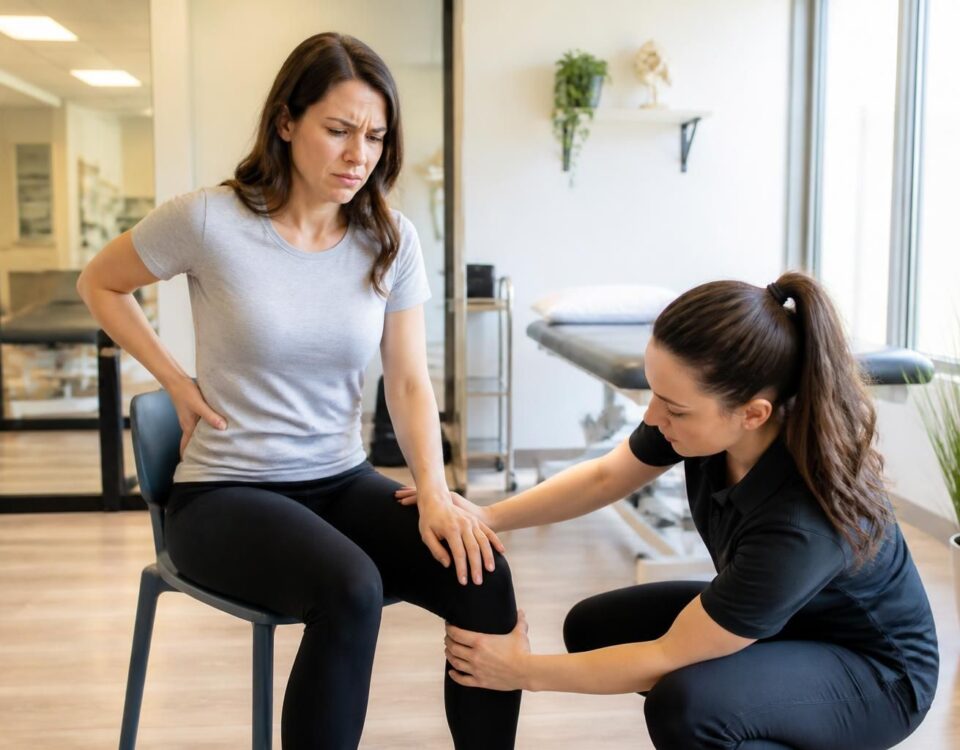
Sciatica in Montreal: heavy leg or painful leg?
10/09/2026
Sciatica and foot weakness: risk of drop foot
10/09/2026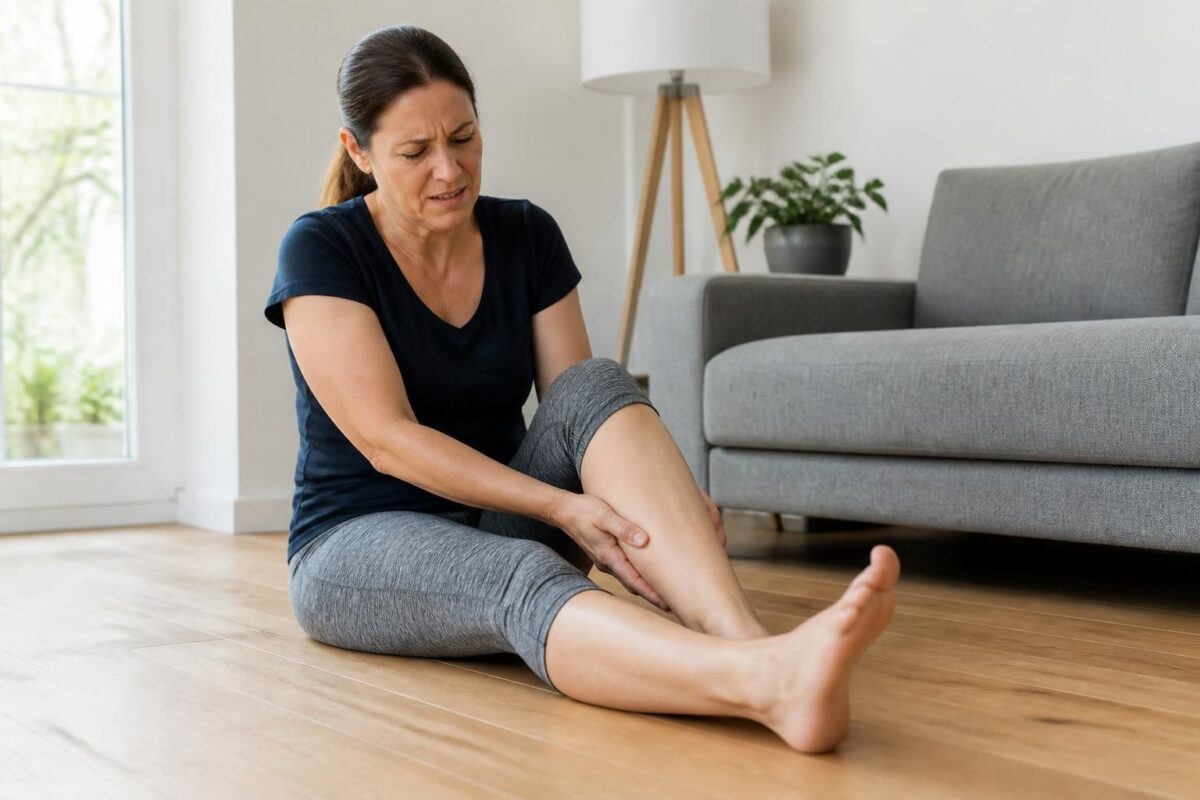
IN BRIEF
| Sciatica is pain that follows the path of a nerve root from the lower back to the leg, with sensations of pain, burning, or numbness. In Terrebonne, management favors non-surgical and progressive approaches to relieve the painful leg or heavy leg and restore mobility. The main advantages include pain relief, improvement in walking and sleeping, and a gradual return to daily activities without surgery. The process relies on an appropriate assessment, advice on positions, gentle exercises, and a tailored return to activities, while remaining attentive to warning signals that require medical attention. |
In Terrebonne, sciatica can manifest through two key symptoms, sometimes simultaneous, that influence the choice of treatment.
- Heavy leg: sensation of heaviness in the leg that may accompany nerve irritation or lumbar stenosis, especially during walking or standing. It may be associated with muscle fatigue without sharp pain.
- Painful leg (radicular pain): pain that follows the path of a nerve root, often described as burning, electric shock, or pulling, which can affect the buttock, back or side of the thigh, the calf, and the foot, and may appear on one leg.
What to do quickly: stay active with suitable movements, favor short and regular walks, avoid positions that strongly trigger pain, and prefer comfort methods like heat or cold according to tolerance. Appropriate physiotherapy can help regain mobility and confidence in movement. Consult quickly if you present warning signs such as significant loss of strength, urinary or bowel problems, or numbness of the perineum.
This article, written by a healthcare professional expert in osteopathy, clarifies the distinctions between sciatica and leg pain, particularly when it occurs in Terrebonne. You will find simple guidelines to evaluate symptoms, understand nerve pathways, and consider appropriate approaches without putting oneself at risk. The text favors a clear and pragmatic approach, with local clinical resources and explanatory links to delve deeper into certain points.
Sciatica is pain that follows the path of a sciatic nerve root. It can manifest as sharp pain, burning, electric shocks, tingling, or numbness. In most cases, it is associated with lower back pain and radiates into the buttock, then into the back or side of the leg, down to the foot and sometimes to the toes. In some individuals, the pain is accompanied by a sensation of heavy leg or progressive muscle weakness, which can influence walking and sleeping.
Understanding the Pathway and Typical Signs
The exact pathway may vary depending on the affected root. An L5 involvement may descend behind the thigh and over the top of the foot, towards the big toe. An S1 involvement may extend further down the back of the leg and reach the heel or the outer edge of the foot. Tingling, numbness, or reduced sensitivity may accompany these pains. This information helps the clinician locate the involved nerve root and differentiate sciatica from other causes.
Heavy Leg vs Painful Leg: How to Differentiate
The heavy leg may reflect nerve irritation or lumbar stenosis that limits circulation or normal extension of the limb. The painful leg is often central and may be associated with electric shocks or burning sensations. Neurological assessment, how symptoms evolve with effort, and daily activities help distinguish mechanisms and guide management. To delve deeper into the concepts, specialized resources on sciatica are available on dedicated sites in Terrebonne and Montreal.
When to Consult Quickly and What Are the Alarms
Consult if you present a significant decrease in strength, a loss of sensation in the perineum, or urinary and bowel problems. Other signs requiring prompt evaluation include extreme pain that persists despite treatment, or significant bilateral symptoms. The onset of “cauda equina syndrome” is a medical emergency requiring immediate attention.
Management Elements in Terrebonne and Montreal
After evaluation, non-surgical options can be considered. A targeted osteopathic approach, combined with measures tailored to pain and mobility, can help make daily activities more bearable and facilitate gradual recovery. Specific care may be considered at the TAGMED Clinic (Montreal / Mont-Royal) as needed.
To learn about the options offered at the TAGMED Clinic, you can consult the information available on TAGMED Clinic.
Additionally, several resources allow for a deeper exploration of aspects related to pain radiating down the leg and the underlying mechanisms. For example, specialized resources describe situations where pain increases after long walks, or when pain is stronger in the leg than in the back, which can guide evaluation and treatment. To learn more about these mechanisms, see the information published on Sciatica and pain that increases after a long walk and Sciatica in Terrebonne: pain in the leg > than in the back. Other useful resources on the topic include dedicated pages on pain radiating to the foot and the hip region, accessible via Sciatica L5 and pain radiating in the hip.
Additional information on non-surgical options and symptom trajectories can also be found on Sciatica in Terrebonne – Coughing Pain and Pain that Descends into the Leg while Coughing.
Summary Table of Approaches (Comparison)
| Therapy | Role | Relative Effectiveness |
|---|---|---|
| Physical Therapy | Mobilization, strengthening, and pain control | Variable evidence; may be useful but sometimes less durable than other approaches |
| Osteopathy / Neurovertebral Decompression | Targeted manual elements after assessment | Results depend on the case; offers non-surgical avenues |
| Pharmacology and rest | Point management of pain | Utility dependent on context; does not replace assessment |
For technical aspects and more specific options, it is best to discuss with a professional during a consultation at the TAGMED Clinic. Neurovertebral decompression, disc herniation, and other conditions discussed in specialized resources require individual assessment and should not be generalized into exercises or stretches without appropriate professional advice.
Prevention and Practical Advice
Prevention relies on movement and alternating positions. Stay active, but adapt movements to the pain. Avoid prolonged periods without posture change and favor short, regular outings. In case of recurrent pain, a professional assessment can help define a personalized and safe plan.
To deepen the content and access additional resources, refer to the pages on Sciatica in Terrebonne – Coughing Pain and doubt about the leg trajectory. For general information on pain that can rise and fall, you can consult dedicated resources on Sciatica L5.
For an evaluation and management tailored to Terrebonne, a specialized consultation can be considered via the TAGMED Clinic. The non-surgical aspect may include osteopathic approaches and pain management options after assessment.
“Medical Disclaimer: The information and advice provided on this site do not replace the opinion, diagnosis, or treatment of a healthcare professional. Please note that Dr. Sylvain Desforges, osteopath, is neither a medical doctor nor a physician and is not a specialist in a medical specialty as defined by the Collège des médecins du Québec. Manual medicine, functional medicine, and sports medicine as described on this site exclude any medical treatment or diagnosis made by a physician or specialist. Always consult your doctor for any medical questions. For more details, please read our full Legal Notice.”
- Heavy Leg: heaviness or sensation of weight, often related to mechanical irritation or stenosis; can occur when walking or standing.
- Painful Leg: radicular pain following the trajectory of the sciatic nerve (L5/S1), with burning, jolting, or pulling sensations; numbness possible.
- Other common signs: numbness, weakness, decreased sensitivity.
- Red flags: paralysis or urinary/intestine disturbances.
- Recommended actions: stay active, avoid prolonged rest; adapted and gradual activity.
- Helpful approaches: physical therapy, heat, gentle exercises; adapt according to contraindications.
- Evaluation and action plan: if symptoms persist, consider imaging or specialist advice.
- Urgency: presence of cauda equina, loss of bladder/bowel control, or rapid weakness → rapid consultation.

This guide helps you differentiate a sciatica that causes pain in the leg and a sensation of heavy leg in Terrebonne, explaining possible trajectories, recommended actions, and signs that require local evaluation. You will find practical advice to stay active and prepare effectively for a consultation.
Understanding Sciatica: Pathways and Mechanisms
Sciatica refers to pain that follows the pathway of a nerve root involved in the sciatic nerve. The symptom can extend from the lumbar area down to the buttock, the back or side of the thigh, and then the calf and foot. This pain can coexist with lower back pain and may vary among individuals and clinical settings.
Heavy Leg or Painful Leg: How to Interpret
The sensation of a heavy leg may reflect nerve irritation or reduced circulation, and it can occur when stepping or walking. The pain in the leg, on the other hand, is more commonly described as specific radicular pain, sometimes with sensations of burning, shooting, or electric shocks. In some cases, heaviness may indicate nerve involvement or lumbar stenosis, especially when walking or after prolonged standing.
Typical Symptoms and Warning Signs
Common symptoms include pain that may be described as burning, electric, or pulling, sometimes associated with tingling, numbness, or a sensation of a heavy leg. Warning signs that require rapid evaluation include marked loss of strength, urinary or intestinal disturbances, perineal numbness, or rapidly worsening pain, particularly at night.
What to Do in Terrebonne: Practical Recommendations
For most uncomplicated episodes, moving is preferable to prolonged immobility. Start with suitable and progressive activities, favor short and regular walks, and avoid positions that clearly trigger pain. Heat can help relax the muscles around the back, while cold can be useful in very acute phases. Use resting positions that relieve, but avoid prolonged periods without changing posture.
Activity and Posture
Alternate positions daily and favor movements that do not exacerbate symptoms. If a position triggers pain that radiates down the leg, adjust it temporarily and resume gradually.
Exercises and Physiotherapy
Gentle exercises for the lower back and pelvis, combined with a progressive strengthening component, can be beneficial. Physiotherapy and, based on assessment, specific osteopathy can help restore mobility, confidence in movements, and reduce recurring pain.
When to Consult Quickly or in an Emergency in Terrebonne
Consult quickly in cases of new or progressive weakness, a dropped foot, very intense pain not relieved by analgesics, or signs of cauda equina syndrome (urinary or fecal disturbances, loss of perineal sensation).
Preventing Recurrences and Optimizing the Resumption of Activities
To reduce recurrences, prioritize regular appropriate physical activity, strengthen core and upper body muscles, and vary work positions. Maintain good mobility and listen to your pain: gradually increase effort and avoid sudden movements that worsen pain.
| Aspect | Interpretation and Management |
|---|---|
| Definition | Heavy leg: sensation of muscle fatigue; painful leg: more pronounced radicular pain along the nerve pathway. |
| Pathway | Typical pathway related to L5 or S1 roots down to the foot; the orientation helps target assessment. |
| Symptoms | Frequent tingling and numbness; possible weakness; pain that can be dominant or diffuse. |
| Impact on Walking | Heavy leg may limit endurance; painful leg can interrupt walking due to sharp pain. |
| Aggravating Factors | Prolonged sitting and repeated bending/twisting can increase symptoms. |
| Initial Management | Appropriate activity and physiotherapy; heat or cold according to tolerance; avoid prolonged rest. |
| Alert and Emergency | Significant loss of strength or urinary/intestinal disturbances: urgent consultation. |
| Imaging | MRI considered if persistence or alert signs; not systematic during a mild episode. |
| Lumbar Relationship | Sciatica often associated with low back pain, referred to as lumbosciatica. |
| When to Consult Quickly | Pain that worsens, new weakness, or signs of cauda equina require rapid evaluation. |
Testimonials on Sciatica in Terrebonne: Heavy Leg or Painful Leg?
Marie, Terrebonne: “My heavy leg was preventing me from walking normally, and sciatica appeared especially after long sitting. The local evaluation in Terrebonne and the progressive exercise plan helped me differentiate sensations and regain movement without pushing through the pain.”
Lucas, Terrebonne: “When my painful leg felt like an electric shock, I doubted I could resume my activities. The team suggested non-surgical approaches, clearly explained and tailored, and over the weeks I regained mobility and sleep.”
Sophie, Terrebonne: “My painful journey extended to my calf, with a sensation of heavy leg that blocked my movements. After personalized support, gentle exercises, and a few physiotherapy sessions, I regained smooth walking and better nights.”
Émilie, Terrebonne: “The painful leg returned in the evening and I couldn’t stand; the approach focused on a gradual resumption and pain management with practical advice. Today, I am active again and less worried.”
Romain, Terrebonne: “At first, I feared isolated sciatica and a persistent heavy leg. Thanks to precise assessment and targeted actions, I regained safe movements and better sleep quality.”
Dr. Sylvain Desforges is a recognized expert in osteopathy, naturopathy, and manual medicine, serving as the president and founder of the TAGMED clinics as well as the ACMA association. With a career dedicated to innovation in health, he focuses his work on managing chronic pain and the integration of advanced technologies into clinical practice. His approach aims to provide evidence-based care to optimize patient health and well-being, especially in cases of sciatica that can complicate daily life in Terrebonne. Rigorously guided by training and protocols, his approach is implemented during consultations or within the options offered at the TAGMED Clinic, without systematically resorting to surgical intervention.
In the context of sciatica in Terrebonne, Dr. Desforges emphasizes the distinction between heavy leg and painful leg, two manifestations that may reflect different nerve pathways and specific underlying mechanisms. He explains that radicular pain follows the pathway of a sciatic nerve root, descending from the lower back to the lower limb, and that sensations can take various forms—burning, electric shocks, tingling, or numbness—while being influenced by position and daily movements. This fine reading of the symptom allows for guiding the assessment and treatment plan towards Terrebonne, adjusting movements and activities according to the patient’s triggers and limits.
Dr. Desforges’ philosophy is based on an evidence-based approach, combining manual techniques and appropriate technologies to reduce pain and restore mobility. In practice, this may include non-surgical approaches combining targeted osteopathy, stabilization and mobility exercises, as well as the cautious use of technological tools like motorized neurovertebral decompression, laser-based solutions, and shockwave therapy when indicated. The goal is to relieve symptoms, improve function, and reduce anxiety related to movement, so that patients in Terrebonne can gradually resume their daily and professional activities.
For patients suffering from Sciatica in Terrebonne, Dr. Desforges’ approach is based on a comprehensive assessment involving clinical history, neurological examination, and, when relevant, imaging. The painful pathway and neurological signs will guide the decision between conservative treatments and additional investigations. Emphasis is placed on patient education, adapting daily movements, and maintaining an appropriate level of activity. Physiotherapy and progressive strengthening programs play a central role while respecting the pace and limits expressed by the patient.
In parallel, the physician is engaged in a multidisciplinary approach, prioritizing communication among healthcare professionals and the active involvement of the patient. This alliance aims to reduce fears related to movement, prevent recurrences, and preserve nerve and muscle function. In everyday practice in Terrebonne, care can be supplemented with personalized advice on sleep, posture, and stress management to optimize long-term results and improve patients’ quality of life.
The course proposed by Dr. Desforges stands out for its attentive perspective and commitment to the continuous improvement of care. His mission is to provide accessible and tailored support, prioritizing a swift return to meaningful activities and minimizing limitations associated with Sciatica. Through his expertise and tools, he strives to demonstrate that a heavy leg or painful leg does not necessarily define a patient’s future, but rather constitutes signals to be accurately interpreted to guide effective rehabilitation in the Terrebonne area.
Quick summary: this synthesis on sciatica in Terrebonne helps you distinguish the heavy leg from the painful leg and understand the movements that can improve or worsen symptoms. Pain follows the pathway of a nerve root and may be accompanied by burning sensations, electric shocks, tingling, or weakness. An appropriate assessment and non-surgical approaches often improve walking, sleeping, and daily activities.
Summary and Advice
In case of a heavy leg associated with lower back pain, it is essential to assess the pathway and neurological signs to guide management. In Terrebonne, local resources offer non-invasive screening and treatment solutions aimed at getting patients moving and reducing pain. To explore options related to the heavy leg, consult the dedicated information on Sciatica heavy leg.
For pain radiating down the leg that may be more severe during certain activities or positions, the assessment should check the L5 and S1 roots, possible causes like herniated discs or foraminal stenosis, and suggest appropriate movements, exercises, and physiotherapy if necessary. Useful and relevant resources include situations described as difficulty walking on toes (root S1) and night pain in the leg.
In some cases, the pain may be associated with signs of numbness, loss of strength, or perineal sensitivity. These elements require a rapid assessment and may indicate situations needing urgent management, such as significant weakness or urinary or intestinal disturbances. To understand what these signs may imply, consult resources like loss of strength or associated signs.
In Terrebonne, non-drug approaches like physiotherapy, gentle exercises, and appropriate neurovertebral decompression can contribute to improvement. To know the specific treatments available in the area, discover the sciatica treatment in Terrebonne.
Symptoms requiring urgent management include significant loss of strength, perineal numbness, or urinary or intestinal disturbances, as well as major signs that rapidly worsen. In these situations, a quick consultation or emergency services are indicated and may be associated with further investigations like imaging or infiltration if deemed appropriate by the physician.
To enrich your understanding, you may also consult supplementary resources such as Sciatica numbness and weakness and foraminal stenosis, which illustrate how pathways and neurological signs guide clinical decisions.
For patients wondering about causes or management methods, practical resources and clear explanations can complement a clinical assessment. Notably, viewing the dedicated pages on treatment in Terrebonne and explanations of the painful pathway can help decide when to request a specialized consultation or undertake appropriate exercises and self-care measures.
If you want to delve deeper into the mechanisms and practical advice, you can check the following resources: why the pain may be stronger in the leg, sciatica heavy leg, and sciatica treatment Terrebonne.

Sciatica in Terrebonne: nighttime pain in the leg
IN BRIEF In brief, nocturnal sciatica is a pain that starts from the lower back and radiates to the leg, sometimes waking you up at night. In Terrebonne, non-invasive management can reduce nighttime awakenings and improve sleep, while preserving mobility…
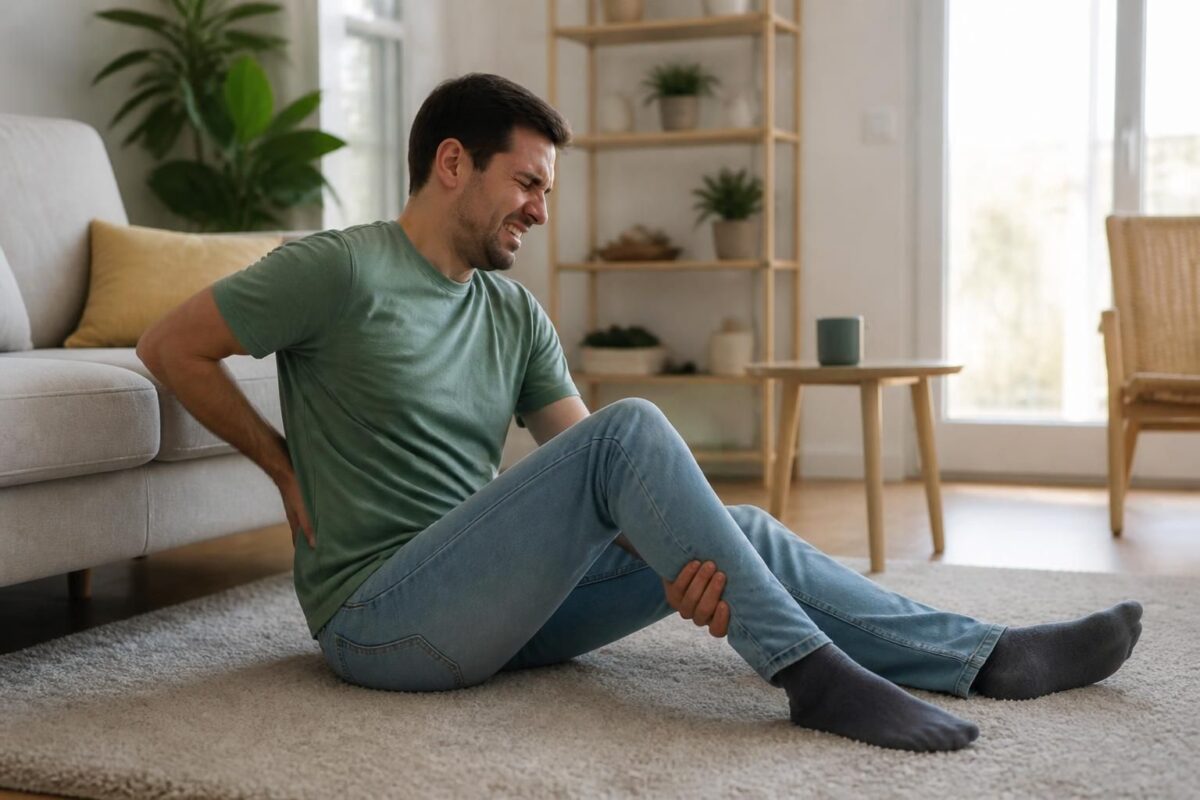
Sciatica in Terrebonne: pain from the lower back to the calf
IN BRIEF Sciatica is pain that follows the path of the sciatic nerve, starting from the lower back and radiating down the leg to the calf or foot. In Terrebonne, local evaluation allows for quick identification of the causes and…
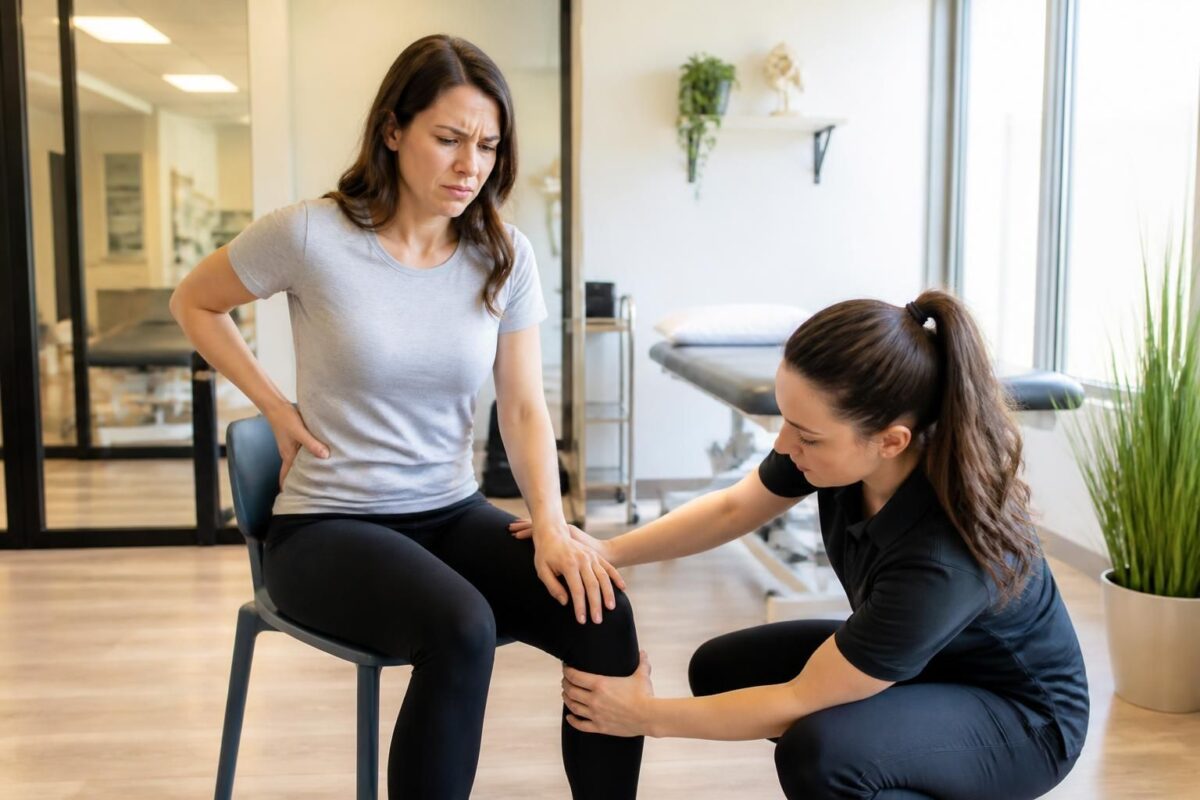
Sciatica in Terrebonne: hip pain or true nerve radiation?
IN BRIEF Sciatica is a pain that follows the path of the sciatic nerve, from the lower back to the foot. In Terrebonne, it can manifest as pain in the hip or as true nerve irradiation. Key benefits: pain reduction,…

Sciatica pain in Terrebonne: incomplete journey, should we be worried?
IN BRIEF The subject is sciatic pain in Terrebonne, which can follow the incomplete path of the sciatic nerve and project pain down to the foot. Key benefits: pain reduction, improved mobility, and prevention of recurrences through tailored exercises and…

Sciatica in Terrebonne: pain towards the little toe and S1 root
IN BRIEF In brief, sciatica associated with pain towards the little toe and the S1 root is a neuropathic pain that follows the path of the sciatic nerve and often results from compression or irritation of the affected lumbar root.…
Sciatica in Terrebonne: pain towards the top of the foot and L5 root
IN SHORT The Sciatica in Terrebonne with pain radiating to the top of the foot and probable involvement of the L5 root describes a radicular injury manifested by pain following the nerve path, sometimes accompanied by numbness or weakness. The…

Sciatica in Terrebonne: pain radiating to the outer edge of the foot
IN BRIEF Concise definition: Sciatic pain that reaches the outer edge of the foot follows the path of the sciatic nerve from the lower back to the foot. Benefits and applications: In Terrebonne, a conservative approach provides quick and safe…

Sciatica in Terrebonne: pain in the buttock after a long sitting position
IN BRIEF In brief, sciatica in Terrebonne with buttock pain after a long sitting position corresponds to a compression or irritation of the sciatic nerve. Main benefits: pain reduction, better mobility, and prevention of recurrences through postural education and simple…

Dr Sylvain Desforges, B.Sc., D.O., N.D., osteopath, is the founding president of TAGMED and of the ACMA association. He dedicates his practice to chronic spinal pain, low back pain and symptoms compatible with sciatica, particularly when pain radiates toward the buttock, leg, calf, foot or toes.
Through SOS Sciatique, he publishes educational content on sciatica symptoms, possible causes such as disc herniation, disc narrowing, foraminal stenosis or irritation of a lumbar nerve root, as well as non-surgical approaches that may be considered according to the evaluation. At Clinique TAGMED, care may include, depending on the case, motorized neurovertebral decompression, specific osteopathic care or precision percussion.
For an evaluation related to sciatica treatment in Montreal / Mount Royal or sciatica treatment in Terrebonne, please consult the services available at Clinique TAGMED.
Medical disclaimer
The information published on SOS Sciatique is provided for educational purposes only and does not replace a consultation, diagnosis, opinion or treatment provided by a physician or another authorized healthcare professional. The author of this article is neither a medical doctor nor a specialist in a medical specialty recognized by the Collège des médecins du Québec. The osteopathic, manual medicine or functional support approaches described on this site do not constitute medical acts and are not intended to replace medical follow-up.
Consult a physician or emergency service in cases of loss of bladder or bowel control, anesthesia in the saddle area, significant or progressive weakness in the leg or foot, fever, recent trauma, severe pain or rapid worsening of symptoms. For more details, please read our Legal Notice.