Herniated disc and disc disease: understanding the differences
09/09/2026
Sciatica in Montreal: heavy leg or painful leg?
10/09/2026
IN BRIEF in English
In brief, Sciatica and pain that increases after a long walk is pain that follows the path of the sciatic nerve and may worsen during walking. This phenomenon can arise from nerve irritation or compression at the lumbar level and may require quick assessment depending on the signs. Benefits: staying active, maintaining mobility, and avoiding surgery through a personalized approach. How it works: targeted assessment, gentle progression of walking, and activity guidance; if the pain becomes debilitating or is accompanied by neurological signs, consult quickly. In Montreal, this service is especially recommended for a non-surgical approach tailored to your lifestyle. |
Sciatica can manifest as pain that follows the path of the sciatic nerve and worsens after a long walk.
The pain may radiate from the buttock to the calf or foot, sometimes accompanied by burning sensations, tingling, or weakness.
It results from irritation or compression of one or more lumbar nerve roots and can have various origins (nerve, disc, piriformis, etc.).
Red flags require a quick consultation: constant and intense pain, loss of strength, significant numbness, urinary/defecatory issues, fever, recent trauma, or pain persisting beyond 3 months.
To stay active without worsening the situation, favor progressive and low-intensity walking, adjust distance and pace, alternate walking and rest, and combine gentle mobility and strengthening exercises based on medical assessment.
This article, written by a health professional and expert, explains why sciatica and pain that increases after a long walk can coexist. It describes simple mechanisms, signals to watch for, and activity choices that allow you to stay active without worsening the pain. The goal is clear: understand the nerve and adapt walking to maintain mobility and comfort, without pushing beyond the body’s tolerances.
Origin and path of the sciatic nerve and implications during a long walk
The sciatic nerve originates in the lower back and travels through the buttock, then descends along the back of the leg to the foot. This trajectory explains why pain can radiate from the buttock to the calf, even to the toes. Irritation or compression of the nerve roots can manifest as a burning sensation, tingling, numbness, or weakness in the leg. After prolonged walking, the nerve may become more sensitive, amplifying the pain or radiating discharge. Some situations involve symptoms that increase with effort, while others manifest mainly after effort or during periods of inactivity. To better understand what is happening, consult the following resources: Sciatica and pain that increases after a long walk, sciatic pain and tingling or numbness.
Common variants and useful distinctions
Lumbo-sciatica can occur when lumbar pain is accompanied by radiation into the leg. A truncated sciatica may stop in the buttock or around the knee. Diagnosis depends on clinical assessment and relies on the appearance of signs, not just one pain. Non-disc-related causes may exist, such as osteoarthritis or an inflammatory condition. In any case, a medical evaluation is essential if the pain is marked or persistent.
Sciatica and pain that appears after a few minutes of walking
IN BRIEF Sciatica is a pain that follows the path of a nerve root from the lower back down to the leg. When it appears after a few minutes of walking, it indicates nerve irritation or compression, often due to…
Red flags and quick evaluation
Learn to distinguish signals requiring a quick consultation. Intense and continuous pain, loss of strength or significant numbness, urinary or fecal issues, fever, recent trauma, pain persisting beyond three months indicate the need for consultation. To understand the mechanisms and warning signs, you can consult the following resources: Sciatica and pain that increases after a long walk, sciatic pain and tingling or numbness.

Sciatica and prolonged walking: why does the pain increase?
IN BRIEF In brief, sciatica is pain that follows the path of the sciatic nerve and can intensify during prolonged walking, especially in the presence of lumbar stenosis or a herniated disc. The goal is an active and tailored management…
Staying active without worsening pain after a long walk
Walking can remain beneficial if it is adapted to your tolerance. Stay within a comfortable stride and a moderate pace. If pain increases while walking, stop the activity and prioritize recovery without impact. Avoid difficult routes or efforts that trigger nerve irritation. To delve deeper into this topic, consult the associated resources: Sciatica and pain that increases after a long walk.
Simple rules while walking
Start with short distances or times and gradually increase. Alternate walking and resting if necessary. Choose a flat terrain and maintain a steady stride. A pain that settles quickly or becomes debilitating indicates a necessary adjustment and may require evaluation.

Sciatica and walking: helpful or aggravating?
IN BRIEF In brief, sciatica and walking is the analysis of whether walking can help or worsen pain related to the sciatic nerve. What is it? Sciatica is pain that radiates from the lower back down the leg, often due…
What to do during and after a long walk
If the pain persists, favor low-impact or low-intensity activities, such as swimming or cycling on flat terrain, while remaining attentive to tolerance. The goal is to maintain movement and circulation without triggering persistent irritation. Useful resources for understanding these activity choices: Sciatica and pain that increases after a long walk, Sciatica and vibrations while sitting (bus transport), Burning in the calf and sciatic pain.

Sciatica and travel return: pain that travels down the leg
IN SHORT Sciatica is pain that runs down the leg, caused by irritation or compression of the sciatic nerve. In the context of return from travel, it may appear after long trips or repetitive movements. In practice, understanding this mechanism…
Management options and resources
In Montreal and Terrebonne, non-surgical options exist and can be offered by specialized teams. The TAGMED Clinic provides a comprehensive and personalized approach to stay active without worsening pain. To see the services offered and related resources, visit TAGMED Clinic. Other useful resources include information on neurovertebral decompression and associated approaches: Neurovertebral decompression, Sos Sciatica, and specialized resources on disc herniations: Disc herniation and pain. To better understand the mechanisms and signs to watch for while walking, you can also refer to content on pain that increases while walking and numbness in the leg.
For general information and additional resources, also see: incomplete journey and should you be worried, how to relieve sciatic pain, and running and light pain – warning signs.
For resources on walking and pain related to sciatica, you can also check the dedicated link to walking and guides on non-surgical approaches available through partners and associated clinics.
To learn more about the mechanisms and practical tips related to walking and sciatica, visit the additional resources provided by the specialized groups and clinics mentioned below: pain that increases while walking, transport and sciatic pain, and burning in the calf.
Medical disclaimer: The information and advice provided on this site do not replace the opinion, diagnosis, or treatment of a healthcare professional. Please note that Dr. Sylvain Desforges, osteopath, is neither a doctor of medicine nor a physician, and is not a specialist in a medical specialty as defined by the Collège des médecins du Québec. Manual medicine, functional medicine, and sports medicine as described on this site exclude any medical treatment or diagnosis made by a physician or a medical specialist. Always consult your doctor for any medical questions. For more details, please read our complete Legal Notice.
- Origin: pain that follows the path of the sciatic nerve, potentially radiating to the buttock and leg after prolonged walking.
- Signs: pain after walking, sometimes burning, tingling, numbness, or weakness.
- Aggravating factors: fatigue, elevation changes, irregular stride, hard surfaces, and repeated impacts.
- Alarm signals: persistent pain, loss of strength, significant numbness, urinary issues, fever, or pain >3 months.
- Management during walking: prefer flat routes, active breaks, tolerable stride; stop if it worsens.
- Tolerated alternatives: swimming, gentle cycling, regular moderate walking according to tolerance.
- Warm-up and posture: gradual warm-up, activation of pelvic muscles, neutral posture, and regular stride.
- Return and progression: gradual progression with alternating walking-light running, measured increase in distance/duration.
- What to avoid: avoid prolonged limping, painful flares, long or intense sessions right away.
- When to consult: sustained pain, neurological deficit, loss of urinary/bowel control, recent trauma; urgent consultation.

This article provides practical recommendations for understanding and managing sciatica that appears or worsens after a long walk. It explains why walking can influence the sciatic nerve, how to identify signals that require consultation, and what strategies to adopt to stay active without triggering painful flare-ups.

Sciatica and travel: how to recognize a worsening
IN BRIEF In brief, sciatica and travel describe the worsening of sciatic pain during a trip, with radiation into the leg and radicular signs. Benefits: it allows for quick identification of warning signs, adjustment of breaks and movements, and traveling…
Understanding the relationship between walking and sciatica
Sciatica refers to irritation or compression of the sciatic nerve, which emerges from the lumbar structures and travels down to the foot. During prolonged walking, repeated support cycles put stress on the spine and deep muscles; if the nerve is already sensitive, these efforts can amplify the pain and cause radiation that sometimes travels up to the buttock. The pain can vary depending on intensity, elevation, and fatigue, and it does not always appear at the same level: it can emerge after starting or during the walk.
The pain can also stem from other causes related to the spine or the tissues around the nerve. A sensation of irritation may be felt deeper in the buttock or thigh, and the signs may not necessarily be limited to the back. In any case, an accurate diagnosis remains essential to determine the origin(s) and guide management.
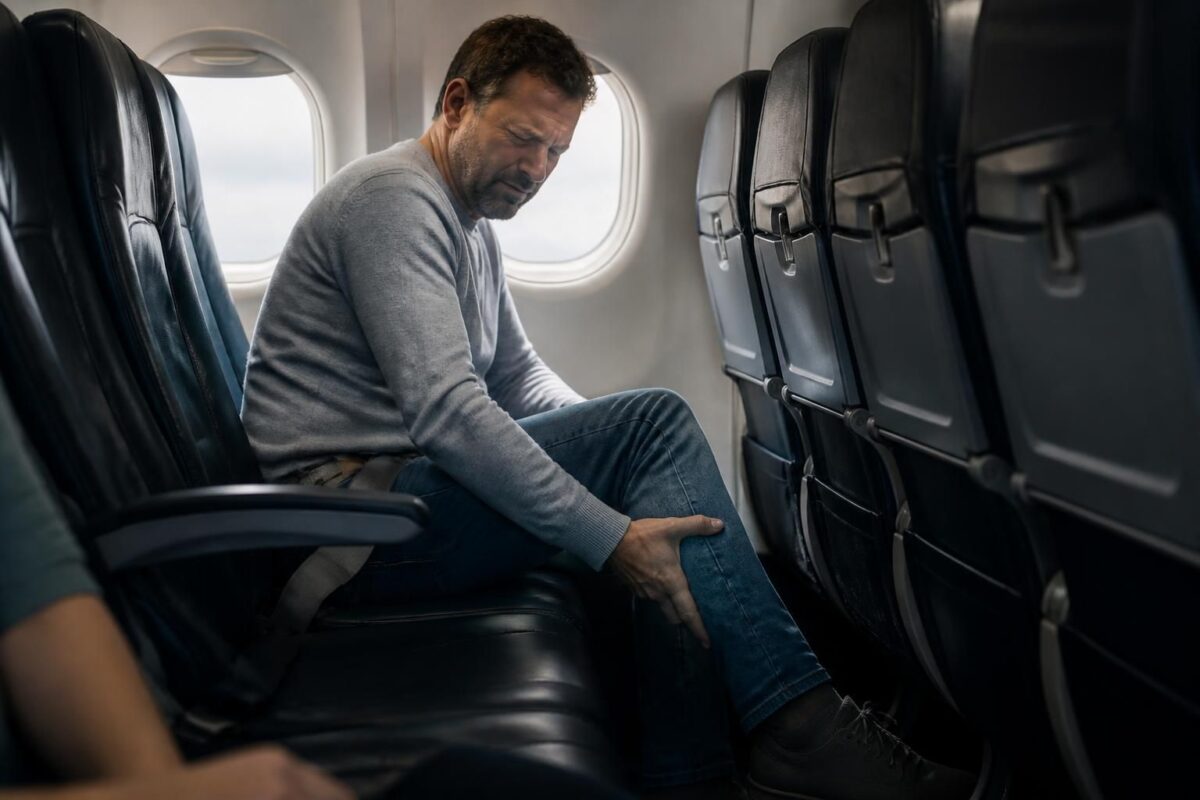
Sciatica and airplane: prolonged sitting and leg pain
IN BRIEF In brief, sciatica related to prolonged sitting on the plane describes pain that arises or worsens when one remains seated for long periods during a flight, due to pressure on the lumbar discs and the sciatic nerve. How…
Signs and red flags to watch for
In cases of radiating pain along the leg, stay alert for elements that require rapid evaluation. Signs such as marked numbness, muscle weakness, loss of urinary or bowel control, pain at rest, fever, or recent trauma require urgent consultation. Pain that persists beyond three months despite conservative treatments is also a red flag indicating the need for medical re-examination.

Sciatica and train: pain after a long journey
IN BRIEF In brief, Sciatica after a long train journey is pain that radiates along the sciatic nerve after long periods of sitting. The problem often arises from an inadequate posture and a poorly mobilized pelvis during the trip. The…
How to adapt walking and when to consult
Adopting a gradual approach is crucial: prefer flat routes, a moderate pace, and short sessions with breaks. Maintain a neutral stride and avoid uneven terrain or significant elevation that aggravates strain on the back. If the pain worsens while walking or there are neurological signs, stop the activity and seek a rapid evaluation.
Steps for recovery after a painful long walk
Start with simple walk–run sequences on flat terrain without performance goals. Progress slowly: first increase the duration or distance, then the intensity, but never both simultaneously. Plan rest days between outings and observe the back and leg’s reaction over 24 hours.
Progression and Loads
Increase frequency or duration when symptoms remain under control. The goal is to establish a regular stride and neutral posture to limit loads on the nerve and vertebrae. A conscious and measured progression promotes a return to comfortable walking without triggering new flare-ups.

Sciatica and subway: stay standing or seated?
IN BRIEF In short, sciatica and metro: staying standing or sitting is a practical question for daily commutes. The goal is to manage pain without restricting mobility, favoring appropriate postures and micro-breaks to avoid twists and asymmetrical loads. Main benefits:…
Exercises and Non-Invasive Approaches
Focus on gentle lumbar mobility exercises, light core stabilization, and activities that relieve the nerve without directly stressing it. Work on breathing and relaxation of the glutes, gradually activating the deep muscles of the pelvis and trunk. Avoid painful stretches that could further irritate the nerve. A professional (physiotherapist, sports doctor, osteopath) can tailor exercises to your case and adjust the program when pain returns upon resuming.
| Assessment Axis | Concise Description |
|---|---|
| Probable Origin | Pain related to an irritated sciatic nerve or a lumbar cause; triggered after prolonged walking. |
| Typical Symptoms | Pain radiating down the back of the leg, sometimes burning, tingling, or weakness. |
| Tolerance to Walking | Variable tolerance; short and regular walking possible if pain is stable and mild. |
| Progression and Tolerance | Improvement after a few minutes indicates increasing tolerance; slow progression recommended. |
| Immediate Management | Alternate walking and resting; prioritize gentle, low-impact activity; stop if pain worsens. |
| Alternative Activity | Swimming or comfortable biking to maintain movement without overload. |
| Resuming Walking | Gradual resumption with alternate walk-run on flat terrain, without aiming for performance. |
| Warning Signals | Persistent pain, new weakness, significant numbness, or urinary issues; consult. |
| Prevention and Plan | Warm-up, lumbar mobility, and pelvis strengthening to limit flare-ups during long walks. |
Testimonials: Sciatica and Pain That Increases After Long Walks
Marie, 52 years old: “My sciatica flares up after my long walks, and I felt it was inevitable… until I tried a personalized plan focused on mobility and strengthening. After a few weeks, I can walk further with breaks and without the pain blocking me.”
Jean, 59 years old: “Each step during a long walk triggers pain that rises… I had to adapt my routine by alternating walking and resting… and working on my posture. Today, I enjoy regular walks on flat terrain without pain overshadowing the pleasure.”
Claire, 46 years old: “After a day standing, my sciatica worsens as soon as I start walking… personalized support and gentle exercises have taught me to walk gently and prioritize active breaks.”
Thomas, 33 years old: “An athlete for a long time, my sciatica increases quickly on uneven terrain… a progressive walking program and postural advice have changed everything: I can go on long outings without fearing the pain flare-up.”
Amandine, 40 years old: “After hours standing, the pain shot through me with every step. I was directed to adapted exercises and a gentle progression; by integrating active breaks and mobilizations, I’ve regained comfortable walking.”
Jean-Paul, 65 years old: “Months of pain, and each step became a challenge. The targeted approach combining osteopathy and exercises, with a gradual return to more robust walks, allowed me to regain pain-free walking.”
Sciatica and Pain That Increases After Long Walks: Profile of Dr. Sylvain Desforges
Dr. Sylvain Desforges, an expert in osteopathy, naturopathy, and manual medicine, is the founding president of TAGMED clinics and the ACMA association. His career, dedicated to innovation in healthcare, is centered around one goal: to provide care for chronic pain and radicular disorders that is evidence-based and patient-centered. In this context, sciatica and pain that increases after long walks play a major role, as they often combine nerve irritation and long-term biomechanical imbalances. Dr. Desforges’ work aims to restore mobility, stability, and bodily confidence without immediately resorting to surgical intervention.
His approach is based on a targeted assessment that differentiates the various possible origins of radiating pain. He does not merely label a pain as “sciatica” and stop there: he precisely identifies the nerve pathway and the involved lumbar structures in order to propose a personalized treatment plan. In his practice, technological advancements play a key role: motorized neurovertebral decompression, laser therapy, and shockwave therapy, combined with manual approaches and targeted exercises. The goal is clear: alleviate pain, restore function, and enable the patient to resume progressive and sustainable physical activity.
The account of pain increasing during walking requires a vigilant and gradual approach. Dr. Desforges firmly believes that movement is not the enemy, but it must be framed by clear and safe protocols. The idea is to maintain activity that stimulates circulation and muscle strengthening without triggering painful flare-ups. To achieve this, he favors gradual action plans based on the patient’s evolution: adjusting loads, varying terrains and intensities, as well as integrating lumbar mobility exercises, gentle stabilization, and strengthening of the deep muscles of the pelvis and glutes.
In practice, his approach for worsening walking after a long walk revolves around a clear cycle: initial assessment, personalized rehabilitation plan, then measured progression. The path may include an alternating walk/low-impact activity, walking sessions on flat terrain up to maximum tolerance, and, when necessary, advanced therapies to limit nerve irritation while preserving mobility. Dr. Desforges pays special attention to the evolution of symptoms over time: decreasing pain, regained stability, and absence of motor loss in the affected leg indicate favorable progression.
The patient benefits from a comprehensive support, where prevention and strengthening occupy a central place. Anticipating future flare-ups involves developing a sustainable program: working on posture, adapting gestures and surfaces, and personalized advice to maintain physical activity suitable for one’s lifestyle. The protocol may also include complementary non-invasive solutions and ergonomic advice to limit aggravating factors and consolidate functional gains achieved during rehabilitation sessions.
To learn more about Dr. Desforges’ approach and the services available in his TAGMED clinics, a personalized consultation can be considered to assess your situation and design an action plan tailored to your walking and pain.
This article offers a practical and commercial view of sciatica that may intensify after a long walk. It explains why pain may progress during walking, how to identify signs needing medical evaluation, and what active strategies to adopt to stay mobile without worsening the pain. You will find practical advice for recovery, activity variations, and reliable resources to support your approach.
Assess Tolerance and Identify Warning Signs
Sciatica may present as pain following the nerve’s path and may radiate to the buttock, thigh, calf, or foot. During prolonged walking, your tolerance may vary from day to day based on inflammation and potential compression of the nerve roots. Watch for the appearance of warning signs such as pain that becomes debilitating, marked tingling, loss of strength, or urinary disturbances. If these elements appear or worsen, rapid medical evaluation is recommended. To delve deeper into the mechanisms and red flags, you can consult specialized resources like those presented on SGCA.
It is also useful to distinguish possible presentations: a sciatica, a lumbosciatica, or a truncated sciatica that does not extend to the foot. Causes such as radicular irritation, a herniated disc, osteoarthritis, or other pathologies may be at play; a medical diagnosis remains essential if the pain is significant or atypical. To learn more about non-surgical options and approaches, refer to resources such as Tout pour sa Santé.
Adapting Walking and Activities
Walking can be compatible with sciatica if it is adapted and tolerated by your nerve. In cases of mild and stable pain, short and regular walking may be considered, but one must be ready to stop if symptoms worsen. Low-impact alternatives such as cycling at moderate intensity or swimming can also help maintain activity without overloading the lumbar structures. Certain situations, such as pain worsening during prolonged walking, require prioritizing gentle activities and reducing impacts. To better understand why pain may increase during walking and the mechanisms involved, you can consult dedicated resources like SosSciatique – Prolonged Walking.
To progress safely, prioritize flat routes, regular strides, and a neutral posture. Avoid long descents and steep hills that place additional stress on the spine and deep muscles. A limp or adaptation in stride is a sign that the load is too high and that distance or intensity should be reduced. Resources like UNR Santé offer practical guidelines for maintaining movement without worsening pain.
Progression and Recovery After a Flare-Up
If a long walk triggers or worsens the pain, prioritize a gradual and controlled resumption. Start with cycles of walking-light walking on flat terrain, favoring very short and easy sessions, then gradually increase duration and distance as tolerated. It is crucial to avoid simultaneously increasing distance, speed, and elevation. A first realistic goal is to return to regular walking without a marked increase in pain in the following hours. To understand progression dynamics and associated strategies, consult resources like SosSciatique – Pain Increasing During Walking and Possible Stenosis.
In some cases, the presence of significant or persistent neurological symptoms may require a faster evaluation and adaptation of the activity plan. The goal is to preserve movement and circulation while removing factors that irritate the nerve, such as impact, intensity, and duration of effort. For practical and personalized advice, consulting a physiotherapist, sports doctor, or osteopath could be crucial; resources like SosSciatique – Numb Foot often accompany this type of evaluation.
Exercises and Non-Surgical Approaches
Exercises for sciatica should aim to reduce irritation while respecting the limits of the nerve and lumbar structures. Gentle lumbar mobilizations, light core stability, and progressive activation of the pelvic and gluteal muscles can help stabilize the back and promote a lasting return to walking. It is important not to force painful stretches and to adjust exercises based on individual reactions. To explore complementary approaches, you can refer to general resources like Root S1 – Tiptoes or seek help from a professional.
Maintaining regular movement remains a key component of effective management. Targeted practices combining mobility, deep muscle work, and postural control often provide benefits without triggering painful flare-ups. For options and personalized advice, you can also explore resources like Foot Lift – Emergency or Quick Consultation.
Warning Signs and Timing for Intervention
A quick consultation should be considered when the pain becomes intense and persistent, or when it is accompanied by significant neurological signs (weakness, major numbness, loss of urinary or bowel control). Other signals requiring rapid evaluation include calf or foot pain that persists, a recent trauma, or associated fever. Pain that lasts beyond three months despite conservative treatment is also a relevant indicator for reevaluating the treatment plan. If these red flags appear, do not hesitate to consult a healthcare professional. To better understand the mechanisms and consultation guidelines, you can refer to resources such as SosSciatique – when to consult and SGCA.
Useful Resources and Recommended Readings
To enhance your understanding and access practical advice, these resources can guide you in a non-surgical approach tailored to your needs. The site SGCA – Sciatica offers a summary of the mechanisms and warning signs. Tout pour sa Santé details approaches for treating sciatica without surgery. For specific situations in Terrebonne and the region, SosSciatique – Terrebonne and SosSciatique – possible stenosis provide targeted information. Other useful resources cover the link between sciatic pain and the foot (UNR Santé – foot), the challenges of prolonged walking, and nighttime radiation signs (SosSciatique – prolonged walking). For quick advice on warning signs and management, visit SosSciatique – asleep foot and Foot lift – emergency.

Dr Sylvain Desforges, B.Sc., D.O., N.D., osteopath, is the founding president of TAGMED and of the ACMA association. He dedicates his practice to chronic spinal pain, low back pain and symptoms compatible with sciatica, particularly when pain radiates toward the buttock, leg, calf, foot or toes.
Through SOS Sciatique, he publishes educational content on sciatica symptoms, possible causes such as disc herniation, disc narrowing, foraminal stenosis or irritation of a lumbar nerve root, as well as non-surgical approaches that may be considered according to the evaluation. At Clinique TAGMED, care may include, depending on the case, motorized neurovertebral decompression, specific osteopathic care or precision percussion.
For an evaluation related to sciatica treatment in Montreal / Mount Royal or sciatica treatment in Terrebonne, please consult the services available at Clinique TAGMED.
Medical disclaimer
The information published on SOS Sciatique is provided for educational purposes only and does not replace a consultation, diagnosis, opinion or treatment provided by a physician or another authorized healthcare professional. The author of this article is neither a medical doctor nor a specialist in a medical specialty recognized by the Collège des médecins du Québec. The osteopathic, manual medicine or functional support approaches described on this site do not constitute medical acts and are not intended to replace medical follow-up.
Consult a physician or emergency service in cases of loss of bladder or bowel control, anesthesia in the saddle area, significant or progressive weakness in the leg or foot, fever, recent trauma, severe pain or rapid worsening of symptoms. For more details, please read our Legal Notice.