Sciatica and leg pain stronger than back pain
10/08/2026
Sciatica and driving: why the pain may increase
10/08/2026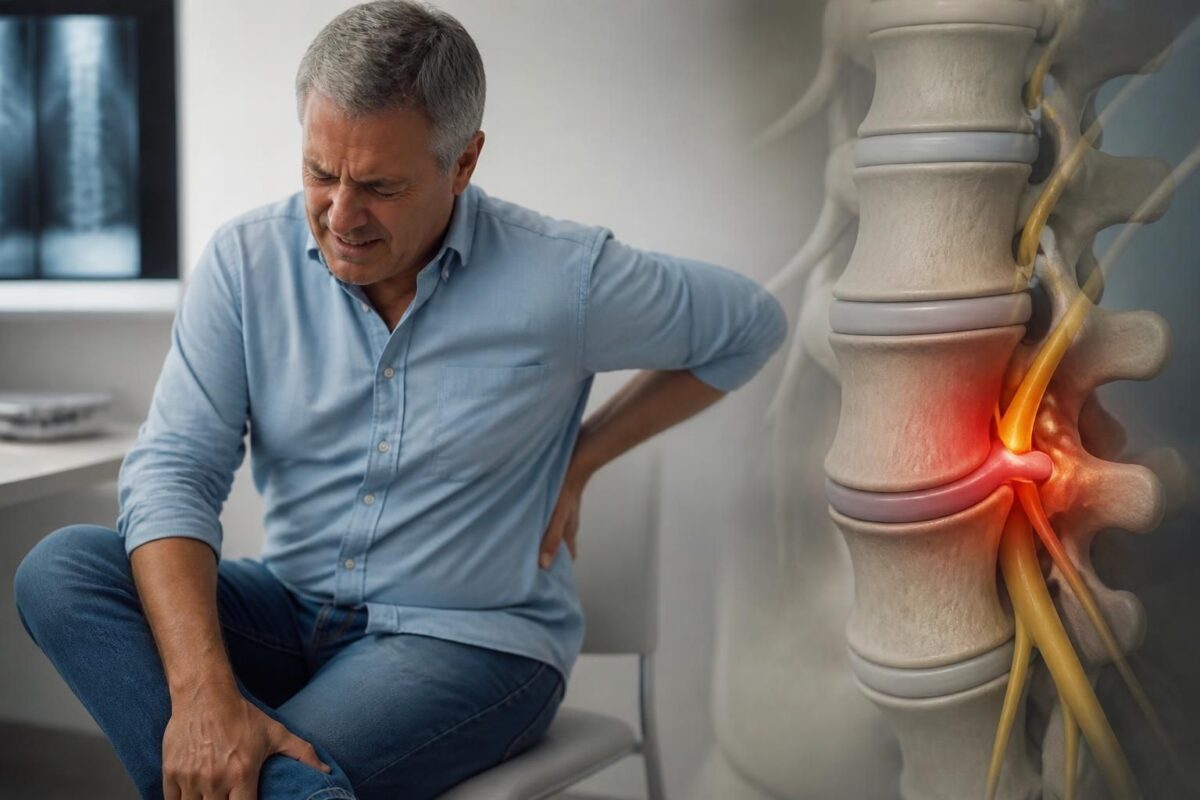
IN BRIEF
| In brief, the foraminal disc herniation and sciatica is a compression of the nerve root at the foraminal level that triggers radiating pain along the path of the sciatic nerve. Benefits: rapid pain relief through effective non-surgical options and gradual improvement in mobility, while limiting the risk of complications if managed early. Mechanism: the diagnosis relies on imaging (MRI/CT) and clinical assessment; management combines relative rest, analgesics and anti-inflammatories, physiotherapy, and, if necessary, epidural injections; surgery is only indicated in emergencies, treatment failure or major neurological deficits. |
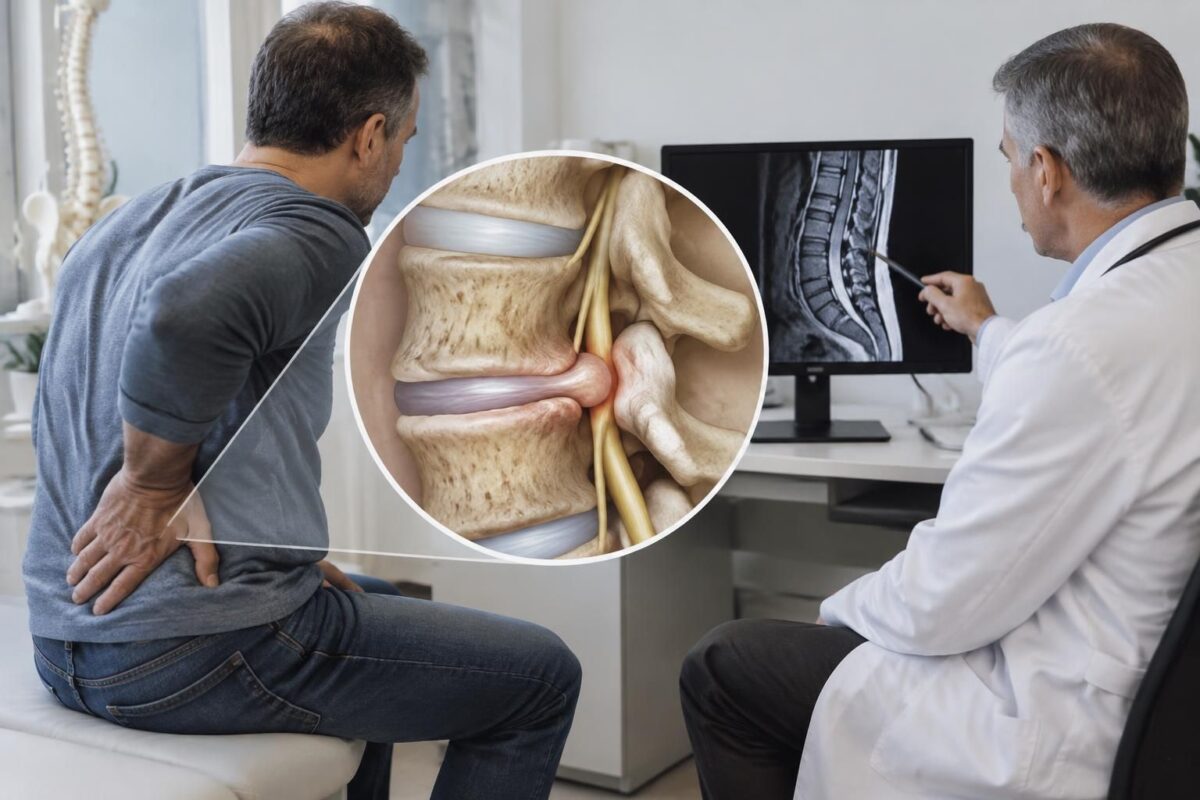
A foraminal disc herniation is a protrusion of the intervertebral disc that compresses the nerve root that exits through the foramen, leading to sciatica according to the path of the affected root.
When the space around the root is insufficient, the pain becomes radicular and precisely follows the territory of the affected root (for example L4-L5 or L5-S1). It may be accompanied by paresthesias and, sometimes, muscle weakness in the area supplied by the root.
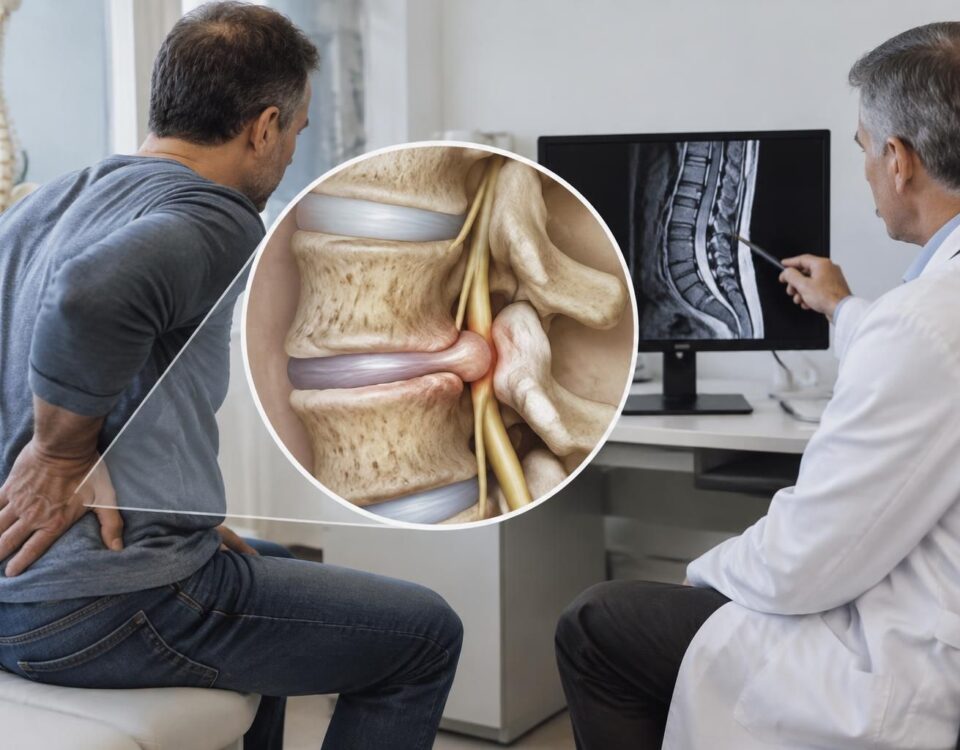
The diagnosis combines clinical examination and imaging, with lumbar MRI being the reference examination to visualize the herniation and its foraminal relationship. X-rays and CT scans can be useful in some cases.
The treatment initially favors a conservative approach (analgesics, anti-inflammatories, physiotherapy, postural advice). In case of persistent pain or motor deficit, options such as epidural injections or foraminal decompression surgery may be considered, with good results for radicular pain.
This article written by a healthcare professional explains the mechanisms, diagnosis, and treatment options surrounding foraminal disc herniation and sciatica. It specifies why the nerve root may lack space at the foraminal level and how this manifests in the patient.
Definition and Mechanism
The foraminal disc herniation occurs when the gelatinous nucleus of the intervertebral disc pushes through the annulus and occupies the space of the foramen through which the nerve root exits the spine. This direct compression of the nerve root leads to typical radicular pain, which follows the path of the affected root. The foraminal character may make the pain more localized to the lumbar region and buttock, then descend down the leg.
The foramen can become narrow due to a damaged disc, thickening of ligaments, or degenerative changes. The pain and neurological signs depend on the compressed root, most often L4-L5 or L5-S1 in the lumbar region.
Typical Signs and Symptoms
Low back pain is often associated with pain radiating into the buttock and leg. Depending on the location of the radicular compression, the pain can reach specific areas of the foot and toes.
Sensory disturbances sometimes occur, with dysesthesia or loss of sensitivity in the territory of the irritated root. The Achilles reflex may be decreased when the S1 root is affected. The Lasègue sign may be positive during examination, indicating irritation of the sciatic nerve.
The pain may worsen with efforts, cough, or sneezing. In some cases, signs of gravity such as urinary disturbances or progressive weakness necessitate urgent medical evaluation.
Diagnosis and Imaging
The diagnosis is based on history and clinical examination, followed by imaging to precisely determine the exact location and degree of compression.
Lumbar MRI is the reference examination to visualize the disc, the foramen, and the compressed root. CT scans can be useful when MRI is not possible. Simple X-rays can be used to evaluate the condition of the vertebrae but are not very informative about the discs and nerves. The assessment of the foraminal space guides therapeutic decisions.
Treatment Options
Treatment begins with a conservative approach tailored to the patient’s pain and function. Anti-inflammatories and analgesics may be prescribed to relieve acute pain. Oral corticosteroids may be considered in some severe cases to reduce radicular inflammation.
As part of a multidisciplinary approach, interventional options exist when pain persists despite medical treatment. Epidural injections under radiological guidance can provide significant relief and avoid surgery in a significant number of cases.
Neurovertebral decompression may be considered in specialized centers when foraminal compression is persistent and associated with disabling symptoms, although not systematic in all cases.
In the presence of progressive neurological deficits, signs of urgency, or failure of conservative treatments over several weeks, surgical intervention may be indicated. The most frequent option is microdiscectomy or targeted foraminal decompression, performed by a neurosurgeon or orthopedic surgeon after clinical and radiological evaluation.
When to Operate and What Role Does TAGMED Clinic Play
A surgical decision is generally considered if the pain is hyperalgesic and persists after an adequate period of medical treatment, or if a motor deficit appears or progresses. Foraminal decompression and microdiscectomy yield solid results on radicular pain and functional recovery, when the indications are well established.
In some cases, specialized non-surgical interventions may be offered at the TAGMED Clinic in Montreal or Terrebonne, depending on the evaluation and available resources.
Resources and Supplemental Resources
To better understand sciatica associated with lumbar disc herniation and safe approaches, consult the following resources:
• Article on disc sclerosis and sciatica: sciatica and lumbar disc herniation
• Guide on choosing a safe approach in Montreal: sciatica in Montreal – choice of approach
• Understanding sciatic pain in Montreal and its significance down to the foot: sciatic pain in Montreal
• To learn more about treatments and options at TAGMED: TAGMED Clinic
For an approach that may include neurovertebral decompression techniques, also check Neurovertebral Decompression.
Additional resources can be consulted on specialized websites dedicated to disc pathology and sciatica, focusing on authorized areas such as sossciatique.com and the associated pages mentioned above.
Medical disclaimer: The information and advice provided on this site do not replace the opinion, diagnosis, or treatment of a healthcare professional. Please note that Dr. Sylvain Desforges, osteopath, is neither a doctor of medicine nor a physician and is not a specialist in a medical specialty as defined by the College of Physicians of Quebec. Manual medicine, functional medicine, and sports medicine as described on this site exclude any medical treatment or diagnosis made by a physician or specialist. Always consult your physician for any medical questions. For more details, please read our full Legal Notice.
- Foraminal localization: compression of the nerve root at its exit from the foramen.
- Pain and pathway: low back pain radiating according to the affected root (e.g. L4-L5, L5-S1).
- Sensory signs: dysesthesias or hypoesthesias in the corresponding territory.
- Lasègue’s sign: pain upon leg elevation in supine position, a sign of radicular tension.
- Imaging: lumbar MRI recommended to visualize foraminal and compression; CT scan may be useful in specific contexts.
- Differential diagnosis: other causes of lumbosciatica: posterior arthrosis, infections, tumors, etc.
- Conservative treatment: initial rest, analgesics/anti-inflammatories, physiotherapy, and postural education.
- Advanced treatments: guided epidural injections; surgery (microdiscectomy) in cases of refractory pain or progressive neurological deficit; emergency in cauda equina presentation.

Quick summary: this article explains what a foraminal disc herniation is and why sciatica can occur when the nerve root lacks space in the foramen. You will find the typical signs, mechanisms, treatment options, and situations that require intervention, as well as practical prevention and activity resumption advice.
Understanding foraminal herniation and sciatica
In a foraminal herniation, the material of the intervertebral disc can protrude directly into the foramen, the space through which the nerve root exits the spine. This specific localization can cause radicular pain that follows the pathway of the affected root and may radiate to the buttock, thigh, or leg, sometimes down to the foot. The foramen can narrow due to degenerative processes or a herniation pressing on the root, leading to typically unilateral symptoms and sometimes muscle weakness if the compression is significant. Low back pain is common when the lumbar segment is involved.
Typical signs and symptoms
Symptoms depend on the level affected and the compressed nerve pathway. Foraminal sciatica presents as pain that follows the radicular territory: from the lower back to the buttock, then along the thigh and leg, sometimes to the foot. Paresthesias (dysesthesias) are often observed, and in advanced cases, motor weakness or decreased corresponding reflex may occur. Pain may be aggravated by bending movements, sneezing, or coughing, and some patients experience pain that remains localized at the level of the affected foramen rather than in the entire sciatic nerve. A clinical evaluation also searches for signs of severity, such as genitourinary symptoms or progressive motor weakness, which require urgent attention.
Management options: stepwise approach
Conservative approach
For the majority of cases, treatment begins with a conservative approach aimed at relieving pain and promoting inflammatory resorption. This includes analgesics and anti-inflammatories, progressive resumption of physical activity, and physiotherapy focused on strengthening the trunk and improving mobility. Neurodynamic exercises may be useful to gradually relieve the compressed root and restore better mobility. The goal is to reduce inflammation and allow for readjustment of spacing in the foramen during daily movements.
Targeted interventions and repeated options
If pain persists despite appropriate management over several weeks, epidural techniques or nerve blocks may be considered to reduce inflammation around the root. In some refractory cases, an intervention aimed at decompressing the root in the foramen may be proposed. The decision is based on clinical evaluation, imaging, and the evolution of symptoms.
When to operate and what indications
Surgery is considered in the presence of progressive motor deficit, hyperalgic pain that does not respond to conservative treatment after an appropriate period, or the presence of alarming signs such as cauda equina syndrome (medical emergency). The foraminal option generally consists of targeted decompression of the foramen (foraminotomy) or a microdiscectomy adapted to the location of the hernia, aiming to restore the movement of the roots and relieve radicular pain.
Prevention and practical tips for daily life
To reduce the risk of recurrence and protect the lumbar spine, prioritize an appropriate posture at work and when lifting loads. Keep your back straight, feet flat, and forearms close to your body when working seated or standing. Incorporate regular exercises for abdominal and lumbar strengthening, and avoid sudden efforts that heavily strain the spine. Sedentarism is an avoidable risk factor: moderate and ongoing physical activity supports mobility of the segments and long-term disc health.
| Aspect | Description |
|---|---|
| Anatomopathological aspect | Foraminal hernia compresses the nerve root at the entrance of the foramen, triggering a mono-radicular sciatica depending on the level. |
| Pain and irradiation | Radicular pain faithful to the course of the affected root (L4-L5 or L5-S1); buttock and leg with possible dysesthesias. |
| Clinical signs | Lasègue’s sign positive; pain aggravated by effort, coughing or sneezing; possible muscle weakness. |
| Imaging diagnosis | Lumbar MRI highlighting the foraminal protrusion; CT if MRI is contraindicated. |
| Location and progression | Foraminal location possibly coexisting with foraminal stenosis and progressive irritations. |
| Differential diagnosis | To be distinguished from posterior osteoarthritis and other radicular compressions. |
| Conservative treatment | Physiotherapy, anti-inflammatories, analgesics, maintenance of activity, and postural education. |
| Injections and options | Epidural or foraminal injections considered in case of resistant pain; variable results. |
| Surgical indications | Urgency: progressive motor deficit or cauda equina syndrome; otherwise foraminal microdiscectomy after 6–8 weeks of conservative treatment failure. |
| Prevention and rehabilitation | Proper posture, load lifting, abdominal and back strengthening, regular physical activity. |
Foraminal disc herniation and sciatica: when the root lacks space
My name is Claire, 38 years old, and I am sharing my journey facing a foraminal disc herniation that compressed a nerve root. The pain came on suddenly, starting from the lower back radiating into the buttock and along the leg to the foot. The doctor confirmed that the foraminal space was reduced, explaining this pain centered along the course of the sciatica. Thanks to a personalized program combining targeted physiotherapy and associated injections, I gradually regained my mobility and daily life without pain dictating my actions.
I am Julien, 52 years old, and repetitive work led me to a foraminal disc herniation that compressed the S1 root. The persistent pain in my buttock and leg made moving difficult and nights hard as well. After a radiological assessment, I underwent a treatment combining rehabilitation and techniques to release tensions around the paravertebral muscles, followed by a targeted injection. Today, with good postures and regular exercises, the sciatica no longer controls my days, and I can drive and walk again without pain during family outings.
My name is Sophie, 29 years old, and I am an athlete. A foraminal disc herniation settled at the L5-S1 level and triggered intense radicular pain that radiated from the buttock to the outer side of the leg. I experienced paresthesias and discomfort during training, which disrupted my schedule. With a tailored physiotherapy plan and a gradual increase in activities, I was able to resume my sessions and performance level, maintaining a preventive attitude to avoid painful flare-ups related to the narrowing of the foraminal space.
I am Marc, 66 years old, and my lower back has suffered for years. An aggravation is due to foraminal osteoarthritis compressing the nerve root, causing mechanical lumbosciatica. Living with this limitation required daily adjustments, but a multidisciplinary approach focused on postural concepts, abdominal and back strengthening, and pain management allowed for a smoother walk. The pain sign has eased, and I have regained a more peaceful quality of life, though I remain vigilant about daily movements and efforts exerting on the foraminal space.
My name is Nadia, 45 years old, and being an active mom can aggravate a foraminal disc herniation. I experienced burning pain traveling up my leg and a feeling of weakness in my foot, a sign that a nerve root was compressed. The diagnosis revealed a narrowing of the foraminal space, with pain accompanied by dysesthetic sensations. After a personalized therapeutic journey—combining guided mobility, strengthening, and postural advice—the pain decreased, and I regained my ability to care for my family without being limited by sciatica.
Foraminal disc herniation and sciatica: when the root lacks space
Dr Sylvain Desforges, a recognized osteopath, is the founding president of TAGMED clinics and the ACMA network. His journey is guided by innovation in care and a practice focused on managing chronic pain of the spine. An expert in integrating modern technologies such as neurovertebral decompression, lasers, and shock wave therapies, he works to provide evidence-based care to optimize the health and well-being of his patients facing foraminal disc herniation and sciatica issues.
A foraminal disc herniation occurs when the space where the nerve exits the spine (the foramen) narrows, leaving the nerve root compressed. This compression may result from a damaged disc that dehydrates and protrudes, or from a degenerative process of the posterior joints. The lack of space can cause pain radiating along the course of the sciatic nerve, associated with paresthesias, muscle weakness, and sometimes altered sensitivity in the lower limb. Dr. Desforges emphasizes the distinction between foraminal radiculalgia and other forms of low back pain, in order to tailor treatment appropriately and avoid inappropriate therapies.
Clinically, it focuses on accurately describing the painful area and identifying warning signs that influence the therapeutic decision. The diagnosis relies on a thorough examination, evaluation of the pain journey, and appropriate imaging studies. The monosymptomatic nature and orientation of the symptoms help to locate the affected root, typically L5 or S1, and to estimate the degree of nerve compromise. In his approach, the goal is always to relate the symptoms to an identifiable mechanism in order to propose a realistic and efficient therapeutic pathway for each individual.
Regarding management, Dr. Desforges first favors a non-surgical approach when possible and effective. He combines targeted osteopathy techniques with functional rehabilitation focused on trunk strengthening, postural correction, and the neurodynamics of the sciatic nerve. The program may include practical advice on daily actions, workplace ergonomics, and a gradual progression of physical activities to limit painful flare-ups and promote sustainable recovery. When symptoms persist or worsen, he organizes multidisciplinary care and coordinates options that align with the patient’s profile and goals.
Additionally, Dr. Desforges ensures patient education and disseminates clear knowledge about the mechanisms of sciatica and potential causes of foraminal compressions. His commitment to evidence-based practice, combined with attentive listening and transparent communication, aims to quickly restore mobility and improve quality of life. In his professional framework, each patient benefits from a personalized pathway that combines accurate diagnosis, tailored treatments, and continuous follow-up to prevent recurrences and support an active and healthy return.
In summary, through an integrated and patient-centered approach, Dr. Sylvain Desforges embodies a modern and humane response to the issue of foraminal disc herniations and sciatica when action is needed in the face of a narrowing of the space around the root.
This text summarizes the mechanisms, symptoms, and care related to foraminal disc herniation and sciatica, highlighting the space conflict around the nerve root at the level of the intervertebral foramen. It provides guidelines for recognizing signs, understanding diagnostic options, and exploring therapeutic avenues while directing towards practices that help limit pain and improve function.
The foraminal disc herniation occurs when the nucleus of the disc protrudes into the intervertebral foramen and compresses the nerve root that exits. This situation causes radiating pain along the pathway of the root, often described as sciatica, with sensory signs and sometimes motor signs reflecting the radicular impairment. The diagnosis primarily relies on modern imaging (MRI, sometimes CT), which precisely locates the level and assesses radicular compression while distinguishing these symptoms from other lumbar causes. For many patients, the pain may decrease spontaneously or with conservative treatments over a few weeks to a few months before considering targeted techniques such as injections or, as a last resort, surgical intervention.
In a conservative approach, options prioritize pain control and gradual return to physical activity, with measures such as appropriate analgesics, NSAIDs, physiotherapy, and postural education. Epidural injections can offer notable relief and avoid surgery in a significant proportion of cases, especially when pain is resistant to oral treatment. When progressive neurological deficiency or urgent signs (such as urinary issues or loss of sphincter control) appear, surgical intervention may be necessary, and microdiscectomy remains the standard technique to remove the disc fragment compressing the root.
Prevention and lifestyle adaptation play a key role: maintaining a balanced weight, regular physical activity, and appropriate posture in all situations (sitting work, carrying loads, flexion and twisting movements). To further explore the mechanisms and practical avenues, you can consult specialized resources available online, including explanations about the nerve’s pathway and non-surgical approaches.
To enrich your understanding and access additional information, here are useful resources that explore the nerve’s pathway, diagnosis, and treatment options related to foraminal disc herniation and sciatica:
Nerve pathway and understanding healing
Duration and recovery from a foraminal hernia
Sciatica from disc herniation: inflammatory pain
Diagnosis and localization of the disc herniation
Relationship between lumbar disc and sciatic nerve
Factors to evaluate before treatment
Signs to watch for when the pain goes lower
Difference between cause and aggravating factor
Pain starting from the buttock to the foot
Foraminal hernia: causes and treatments
For any personalized assessment, contact your health professional or Clinique TAGMED to obtain support tailored to your situation and daily life.
Disc herniation and lumbar degeneration
IN BRIEF A lumbar disc protrusion is a bulging of a disc often related to disc degeneration. It does not always cause symptoms but can contribute to lower back pain or pain radiating down the leg if a nerve is…
Disc protrusion and disc pinching: combined mechanisms
IN BRIEF A disc protrusion is a bulging of the disc, while a disc narrowing refers to a decrease in its height. These changes can coexist and sometimes irritate a nerve root, leading to pain or radiation, but they can…

Disc herniation and associated foraminal stenosis
IN BRIEF A disc protrusion associated with foraminal stenosis occurs when a bulging disc coexists with a narrowing of the opening through which a nerve root passes. This association can lead to lower back pain radiating into the leg, tingling,…

Spinal disc protrusion and nerve inflammation
IN BRIEF A disc protrusion is a bulging of the disc that can irritate or compress a nerve, without necessarily causing symptoms. When it leads to nerve inflammation, it can cause pain in the back or neck, sometimes accompanied by…

Disc protrusion and irritation of L5
IN SHORT A disc protrusion is a bulging of the disc that can irritate the L5 root and cause lower back pain radiating to the buttock, leg, or foot, sometimes with tingling or weakness. MRI alone is not sufficient to…

Disc protrusion and pain after twisting the back
IN BRIEF A disc protrusion is a bulging of the disc that can contribute to pain after a back twist, but it alone does not confirm the cause. The pain can remain in the lower back or radiate to the…

Disc herniation and pain after lifting
IN BRIEF A disc protrusion is a bulging of a disc between the vertebrae. Pain that appears after lifting a load does not prove that it is the cause: the MRI must be interpreted alongside the symptoms and the clinical…

Disc herniation and lumbar flexion: why caution is necessary
IN BRIEF A disc protrusion is a bulge of the intervertebral disc, which can be silent or irritate a nerve. Lumbar flexion is not necessarily dangerous but can worsen symptoms in some individuals. Adapting movements, avoiding those that aggravate pain,…

Dr Sylvain Desforges, B.Sc., D.O., N.D., osteopath, is the founding president of TAGMED and of the ACMA association. He dedicates his practice to chronic spinal pain, low back pain and symptoms compatible with sciatica, particularly when pain radiates toward the buttock, leg, calf, foot or toes.
Through SOS Sciatique, he publishes educational content on sciatica symptoms, possible causes such as disc herniation, disc narrowing, foraminal stenosis or irritation of a lumbar nerve root, as well as non-surgical approaches that may be considered according to the evaluation. At Clinique TAGMED, care may include, depending on the case, motorized neurovertebral decompression, specific osteopathic care or precision percussion.
For an evaluation related to sciatica treatment in Montreal / Mount Royal or sciatica treatment in Terrebonne, please consult the services available at Clinique TAGMED.
Medical disclaimer
The information published on SOS Sciatique is provided for educational purposes only and does not replace a consultation, diagnosis, opinion or treatment provided by a physician or another authorized healthcare professional. The author of this article is neither a medical doctor nor a specialist in a medical specialty recognized by the Collège des médecins du Québec. The osteopathic, manual medicine or functional support approaches described on this site do not constitute medical acts and are not intended to replace medical follow-up.
Consult a physician or emergency service in cases of loss of bladder or bowel control, anesthesia in the saddle area, significant or progressive weakness in the leg or foot, fever, recent trauma, severe pain or rapid worsening of symptoms. For more details, please read our Legal Notice.