Sciatica and burning sensation in the toes
01/09/2026
Sciatica and subway: stay standing or seated?
01/09/2026
IN BRIEF
| In brief, the herniated disc and generic exercises can worsen the pressure on the discs and the pain if the movements are inappropriate. The advantage of personalized approaches lies in tailored exercises, controlled progression, and better recovery, while reducing the risk of poor choices. How does it work? Through a professional assessment, the guidance of a professional, and safe movements that strengthen the spine without exposure to high-risk gestures. In Montreal, this framework helps individuals prioritize safe and effective exercises. |
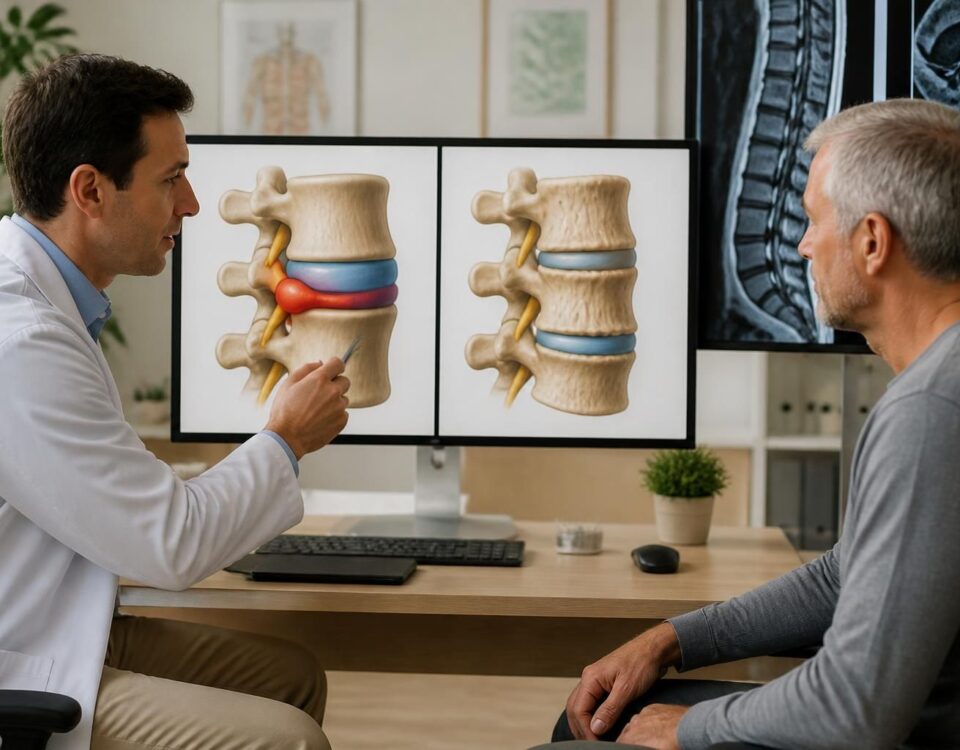
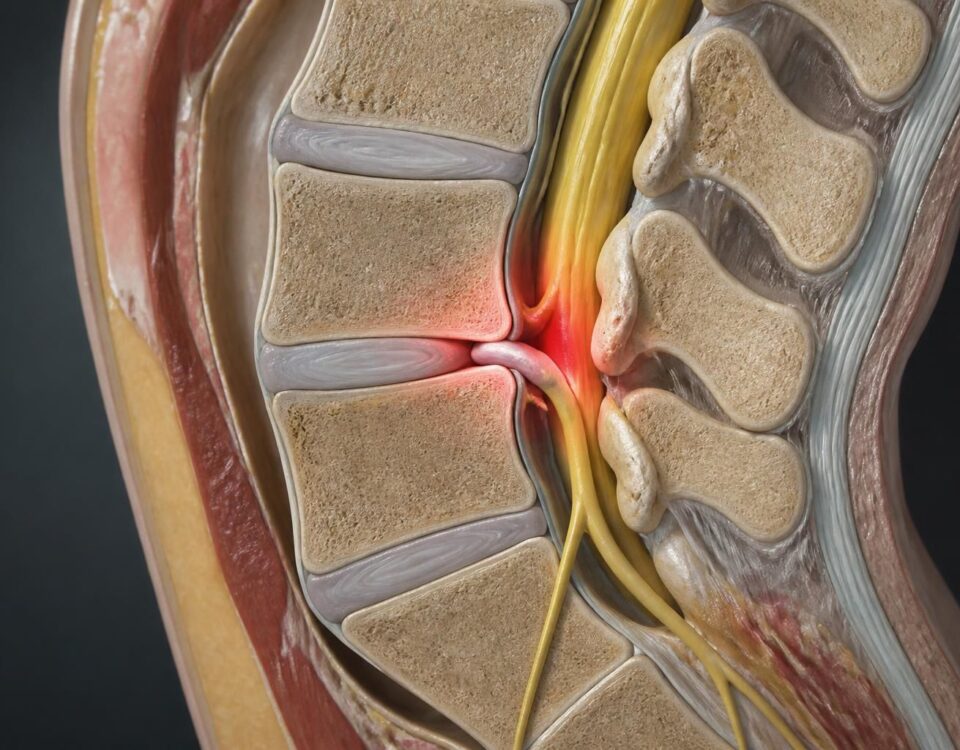
The herniated disc corresponds to the displacement of an intervertebral disc that can compress a nerve root, causing pain and limitation. When we talk about generic exercises, the risk of poor choices is real: some ill-suited movements can increase pressure on the spine and worsen symptoms.
An unsuitable program can increase pain, delay recovery, and encourage new flare-ups. Conversely, safe and progressive exercises tailored to the level and pain can strengthen back muscles, improve stability, and reduce the risk of relapse.
To limit risks, prioritize gentle and appropriate activities, and have your program corrected by a competent professional to avoid poor choices and move towards recovery.
This article explains why generic exercises can pose risks when suffering from a herniated disc. It outlines why a universal program can be ineffective or even harmful, and provides clear paths to prioritize a safe and personalized approach, particularly at TAGMED Clinic in Montreal and Terrebonne.
Understanding the Risk of Generic Exercises
Non-personalized exercises do not take into account the precise location of the herniated disc, the painful stage, and the functional limitations of each individual. Excessive bending, trunk twisting, or lifting heavy objects can increase pressure on the discs and worsen nerve irritation. Programs found online may seem simple, but they are not suited to your reality and can prolong pain or delay recovery.
Key Elements to Avoid Poor Choices
Prioritizing a professional assessment can help avoid risky movements. A personalized approach may include postural advice, equipment when necessary, and appropriate supervision. Relying on professional resources ensures that the choices made respect your physiology and pain, rather than applying a one-size-fits-all model. To delve deeper into the risks and options, consult specialized resources and pages dedicated to decompression and non-surgical rehabilitation.
Role of TAGMED Clinic and Professionals
Adapted care can be offered after a thorough clinical evaluation. TAGMED professionals rely on recognized training and adhere to strict professional standards to provide a comprehensive and safe approach. For personalized support, you can reach out to TAGMED Clinic in Montreal or Terrebonne.
Resources and Useful Links
For additional information on movements to avoid and safe approaches, check the resources available on the following sites: Sos Sciatique, Sos HernieDiscale, Sos Herniated Disc, Décompression neurovertébrale, Sostunnel Carpien, Clinique TAGMED. These resources are supplementary to an individual assessment and do not replace the advice of a health professional.
For aspects related to education and training, professionals rely on institutions such as NUMSS and NAO, and align with the recommendations of ACMA and the College of Osteopaths of Canada.
Also see the content on Neurovertebral Decompression and Recovery after a Severe Herniated Disc and on Prohibited Movements (ergonomics).
- Deep forward bends increasing pressure on the discs and worsening the herniated disc.
- Sudden trunk twists that increase nerve irritation.
- Lifting heavy loads without properly bending the knees, overloading the lower back.
- Hyperextensions of the back causing strains on the discs and acute pain.
- Repeated jumps and impacts that amplify shocks on the spine.
- Analytical focus: moving from generic exercises to safe choices by assessing disc pressure, pain, and control.
- Prefer movements that are gentle with a slow progression and pain-free.
- Maintain a neutral posture and favor gentle bracing instead of heavy twisting.
- Favor low-impact activities (light swimming, adjusted cycling) to limit shocks.
- Request a professional adaptation of exercises to your specific case to avoid poor choices.

This article highlights that generic exercises, if not tailored to a disc herniation, can worsen pain and pressure on the discs. It explains how to identify actions to avoid, how to favor safe movements, and how to organize a personalized program to avoid missteps that delay recovery. The goal is to guide you toward activities that strengthen the trunk and protect the spine without increasing symptoms.
Understanding the risks of generic exercises in the presence of a disc herniation
With a disc herniation, certain repeated or poorly executed movements increase pressure on the intervertebral discs and irritate the nerve roots. Movements that involve significant bending of the trunk, sudden twisting, or heavy loads without bent knees can trigger or amplify pain. An unsuitable program can also lead to uncontrolled stretching or repeated micro-traumas, diminishing your stability and delaying healing. Adopting a gradual, guided, and safety-centered approach is crucial to limit risks and promote sustainable recovery.
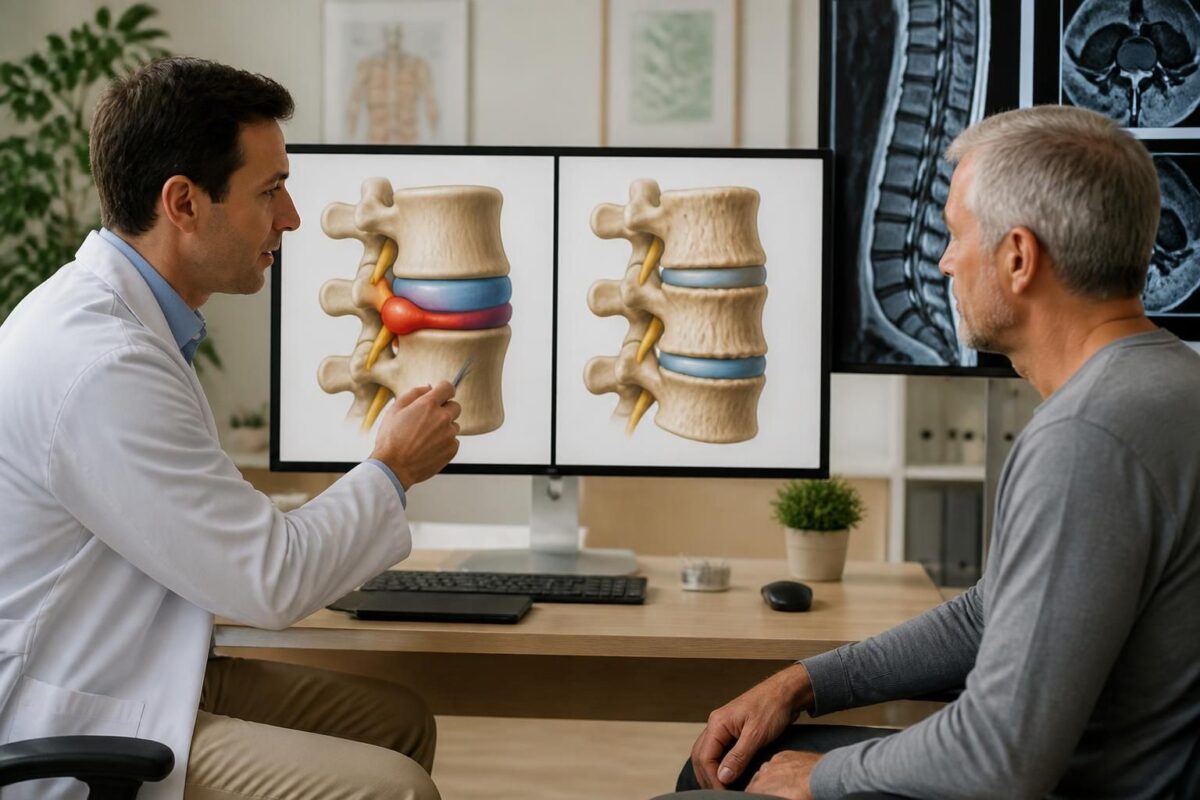
Herniated disc and disc disease: understanding the differences
IN BRIEF In brief, a herniated disc and discopathy are two distinct causes of spinal pain: wear of the intervertebral disc (discopathy) and the protrusion of the gelatinous nucleus that can compress a nerve (herniated disc). Understanding these differences helps…
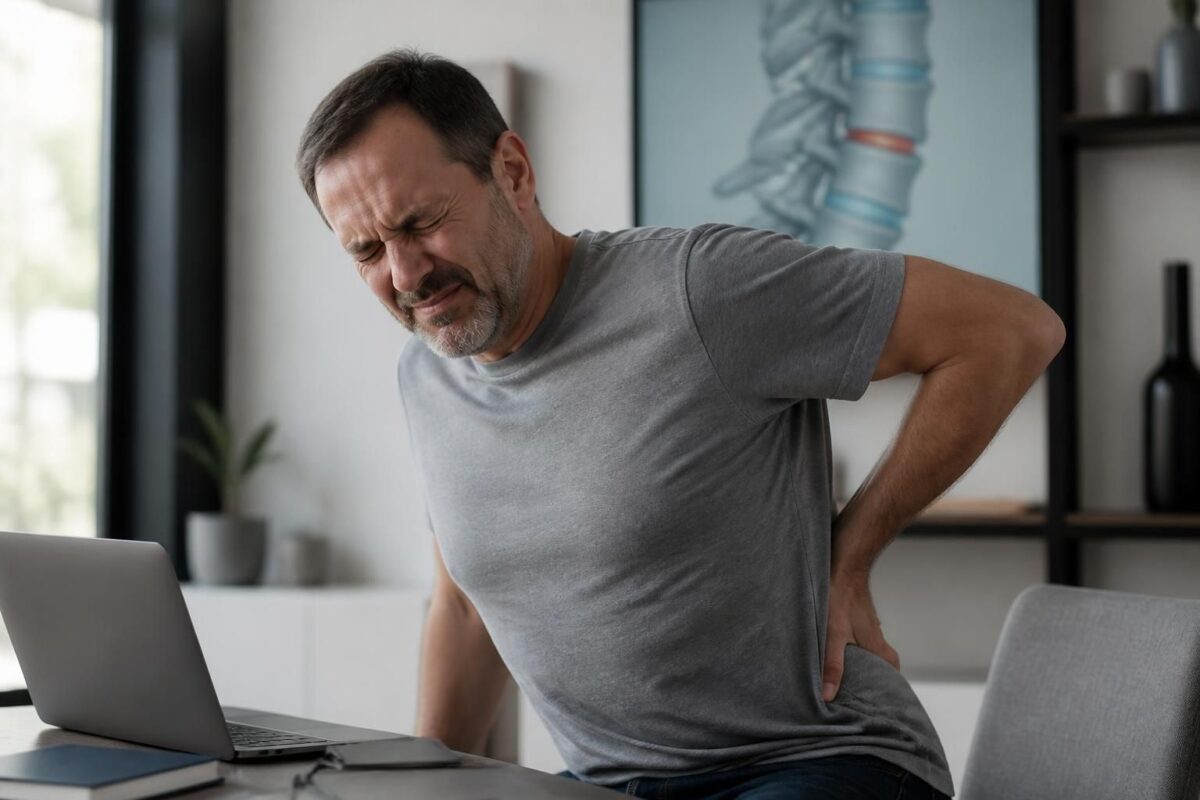
Herniated disc and annular tear: possible pain
IN BRIEF In short, Herniated disc and annular tear refer to issues with the intervertebral disc that can cause lower back pain and, at times, pain radiating down the leg. Symptoms vary and can mimic sciatic pain. Treatment favors conservative…
Examples of actions and exercises to avoid or adapt
Exercises to avoid
Avoid deep forward bends and sudden twists of the trunk, which directly increase pressure on the discs. Do not practice lifting heavy loads without proper technique and professional approval. Avoid back hyperextensions and activities that involve jumps or repeated impacts, as they worsen inflammation and can cause acute pain. These actions, although sometimes common in general routines, are not suitable in cases of disc herniation.
Exercises to favor or adapt
Favor movements that strengthen bracing and lumbar stability without excessive bending of the back. Gradual walking, swimming with adapted technique, and stationary cycling, adjusted to avoid poor posture, provide useful muscle work without putting significant strain on the spine. Integrate trunk strengthening exercises on a neutral surface with controlled breathing, as well as gentle stretches that maintain flexibility without straining the spine. The goal is to develop a solid foundation around the spine while avoiding constraints that trigger pain.
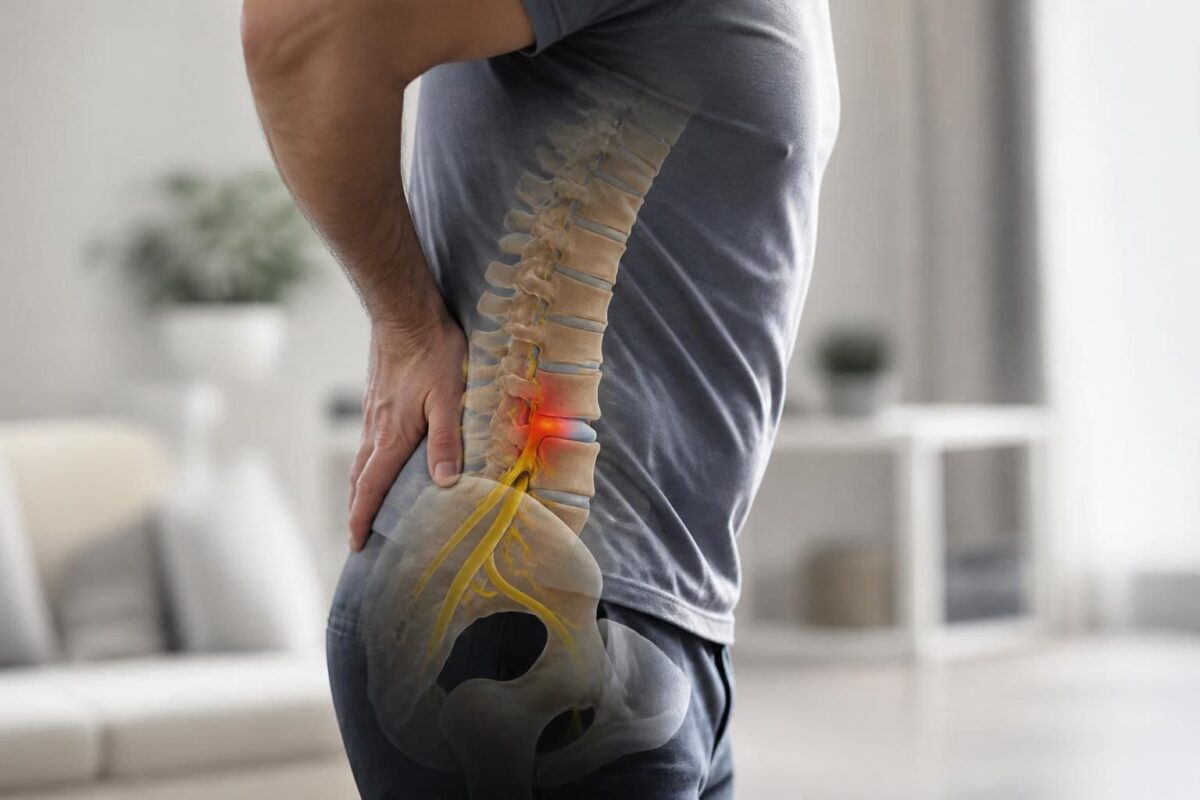
Herniated disc and chemical irritation of the nerve root
IN BRIEF In brief, Herniated disc and chemical irritation of the nerve root describe pain and dysfunction due to compression and inflammatory chemical exchanges affecting a spinal nerve root. This association explains radiating pain, abnormal sensations, and sometimes muscle weakness…
Herniated disc and mechanical compression of the nerve
IN BRIEF In brief, a herniated disc is a prolapse of the intervertebral disc that can lead to mechanical compression of the nerve root, causing pain and numbness that often radiate down the leg. This compression explains radiculopathy and sensations…
Conditions to start a tailored program
Elements to check
Before starting, ensure your pain is stable and that you have a professional assessment to validate the exercises. Start slowly, with a gradual increase in intensity and duration, and monitor any splitting or new pain that persists after effort. Adopt a neutral posture and favor movements that protect the lumbar region, without forcing the back beyond your current capabilities.
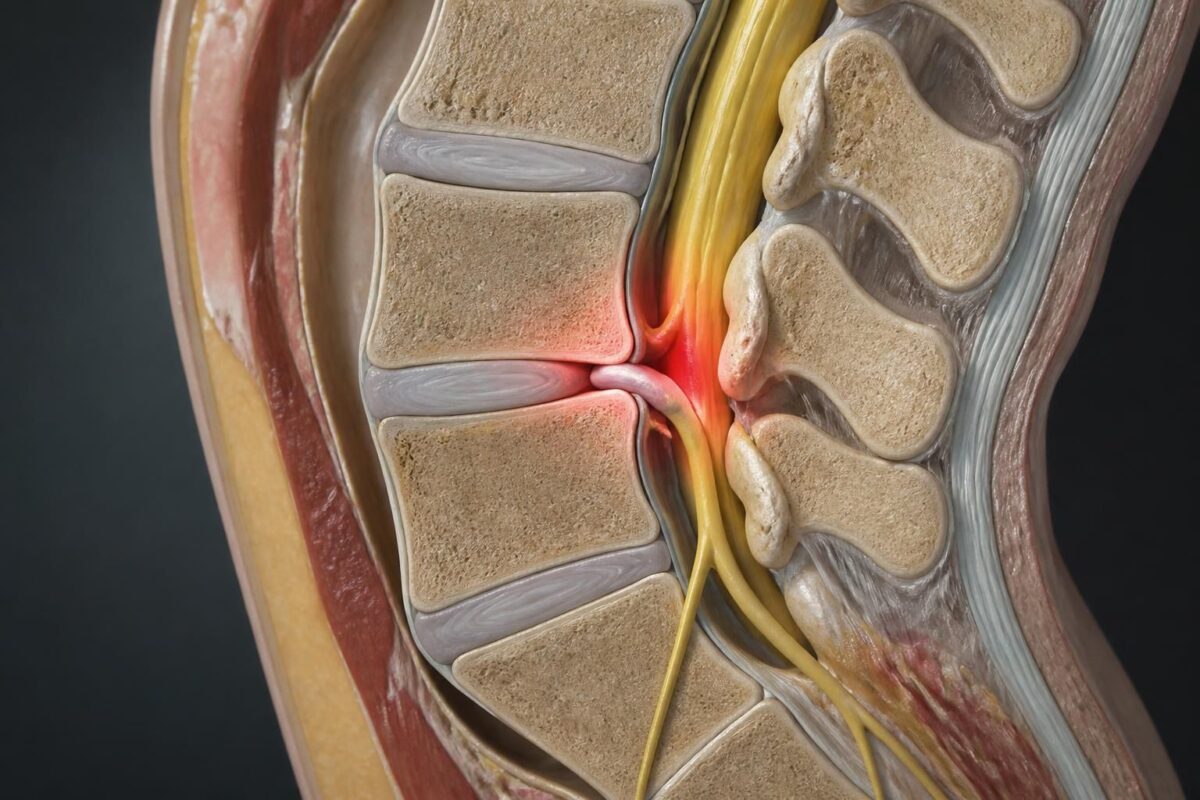
Herniated disc and nerve root inflammation
IN BRIEF In brief, lumbar disc herniation and nerve root inflammation refer to compression and irritation of a spinal root causing radiating pain, paresthesias, and sometimes muscle weakness. The mechanism combines disc protrusion and radicular inflammation, hence the importance of…
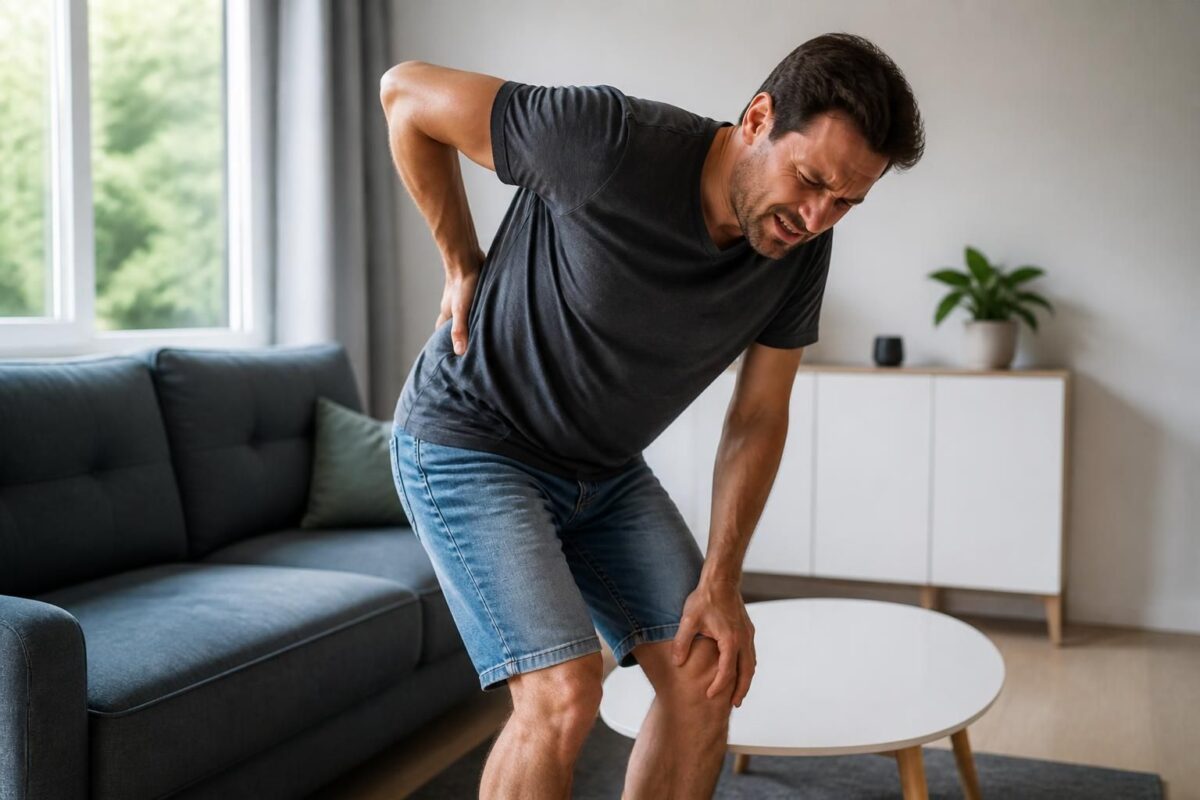
Herniated disc and peripheral pain: sign to watch out for
IN BRIEF In brief, Herniated disc is the partial protrusion of the gelatinous nucleus of an intervertebral disc through the fibrous ring, which can compress a nerve root and trigger radiating pain in the limb. The key benefits of rapid…
How to benefit from professional support
Role of the osteopath and participants
A professional can assess your situation, clarify actions to avoid, and propose a personalized program that combines strengthening, mobility, and motor control. Consulting a specialist allows for adjusting exercises based on your progress and integrating adapted variations in cases of pain or limitation. Regular follow-up helps prevent relapses and optimize the return to safe physical activity.

Herniated disc and centralizing pain: sign to interpret
IN BRIEF In brief, a herniated disc is a protrusion of the intervertebral disc that can compress a nerve root, causing centralized pain and signs such as radiating pain, numbness, and weakness. The treatment is mostly conservative: guided activity, physical…
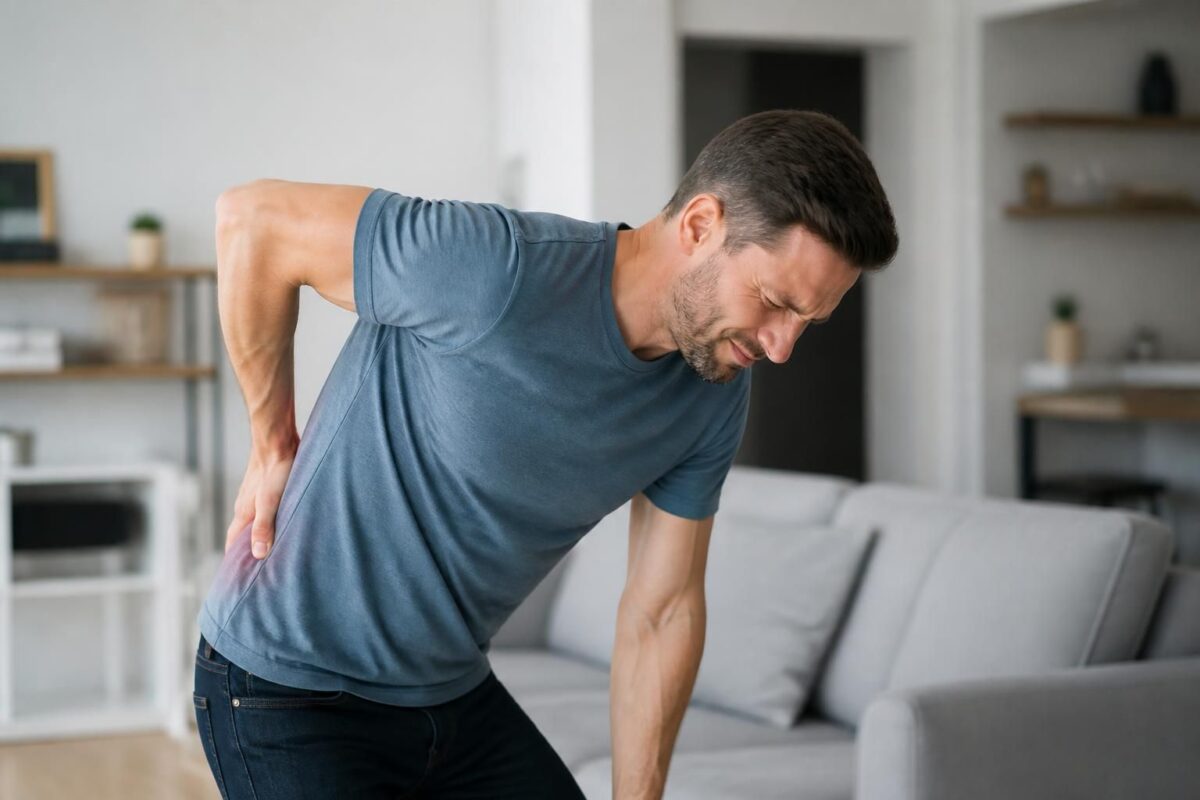
Herniated disc and pain that travels lower after movement
IN BRIEF The Herniated Disc is a protrusion of the intervertebral disc that can compress a nerve root, leading to a pain that radiates down after a movement. The benefits include better guidance for non-surgical treatment and a gradual reduction…
Practical tips and action plan
4-week action plan
1) Initial consultation to assess limitations and establish goals. 2) Implementation of a simple trunk strengthening program, with exercises without load and a measured progression. 3) Gradual integration of low-impact activities (walking, light swimming, cycling), monitoring tolerance. 4) Weekly or bi-weekly follow-up to adjust the plan and avoid risky actions. By adopting a cautious and tailored approach, you will reduce the risk of poor choices and support effective recovery.
| Element | Concise impact |
|---|---|
| Deep forward bend | Increases disc pressure and may worsen the herniation |
| Trunk twisting | Irritates roots and intensifies pain |
| Carrying heavy loads without bending knees | Lumbar overload and possible progression |
| Lumbar hyperextensions | Excessive arching, possible acute pain |
| Repeated impacts and jumps | Increased lumbar pressure and inflammation |
| Contact sports | Unexpected shocks and twists aggravate symptoms |
| Generic unsupervised exercises | Risk of poor choices, possible worsening |
| Prolonged postures in bending/rotation | Pain and increased stiffness if not corrected |
Testimonials: the dangers of generic exercises against a disc herniation
I suffered from a herniated disc and tried generic exercises found on the internet, convinced that simple movements would suffice. Quickly, the pain intensified and my leg began to tingle. It was a bad choice that hindered my progress and added a layer of suffering to my daily life.
One day, I wanted to touch my toes by doing a deep forward bend, thinking it would mobilize my back. On the contrary, the pressure on the disc increased and the pain became sharper. This bad choice left me flat for several weeks and convinced me of the importance of an adapted program.
I then tried planking exercises and heavy squats without supervision or posture control. The result: recurrent lower back pain and an inability to continue daily activities. It was a new example of the danger of generic exercises when the back is fragile.
I also attempted intense cardio sessions (running and jumping) without progression or specific warm-up. The repeated impacts irritated the nerve and caused painful flare-ups, perfectly illustrating the risk associated with inappropriate exercises for a herniated disc.
A close friend advised me on a universal program without individual assessment. This well-meaning advice turned out to be a bad choice: the movements didn’t fit my profile and worsened my symptoms. Fortunately, I eventually understood the usefulness of a personalized assessment before moving.
Today, after stopping the inappropriate exercises, I received suitable supervision that readjusted my movements. The gestures are now gradual and focused on my posture and breathing, allowing me to reduce pain and regain some mobility without additional risk.
What I retained is that generic exercises can be tempting, but without a personalized approach, they often hide more dangers than benefits for a herniated disc. A professional evaluation and guidance transform these gestures into safe and effective tools, tailored to each symptom and stage of recovery.
Herniated Disc and Generic Exercises: Risks of Bad Choices
In the context of managing a herniated disc, exercises play a crucial role in reducing pain, improving mobility, and preventing relapses. Yet, poorly adapted choices can quickly turn a promising rehabilitation into a painful and prolonged journey. This professional biography follows the path of an expert dedicated to prevention, functional rehabilitation, and patient education, to demonstrate how simple movements, performed correctly, can protect the spine and promote a safe return to activities.
Trained in movement medicine and manual therapies, this specialist has established himself as a pioneer in the systematic evaluation of lower back pain related to a herniated disc. His approach is based on a clear understanding of pain mechanisms, the distinction between acute pain and chronic pain, and the use of safe exercises that strengthen the trunk without overloading the spine. Through evidence-based practice, he integrates progressive and personalized protocols that take into account each patient’s limits and the signals sent by the body.
At the heart of his work is a rigorous evaluation methodology. Before prescribing an exercise, he prioritizes identifying red flags indicating medical urgency or complication, and carefully distinguishes symptoms belonging to the lumbar sphere from manifestations that may originate from other structures. This vigilance guides the planning of an adapted physical activity program that emphasizes trunk stability, controlled mobility, and progressive strengthening. Progress is measured and adjusted to avoid bad choices that could worsen pain or delay healing.
In practice, this specialist advises a range of exercise options clearly differentiated between what is beneficial and what should be avoided. Activities backed by research and adapted to pain, such as regular walking, gentle swimming, and low-resistance cycling, form the pillars to preserve mobility without causing adverse effects. At the same time, he warns against too deep back bends, sharp twists, heavy loads, and high-impact movements that can increase pressure on the discs, risking exacerbating the herniated disc.
For rehabilitation patients, he prioritizes safe exercises focusing on posture, deep muscle work, and pelvic stability. He describes what a gradual progress tailored to each individual’s pace means, with regular checks to adjust the intensity, duration, and frequency of sessions. The goal is to improve mobility and resilience of the spine without triggering painful flare-ups or radiculopathy.
This approach relies on patient education and active collaboration. The specialist’s role is to explain the mechanisms of pain, clarify objectives, and co-build a program of adapted physical activity that respects individual limits. By avoiding the pitfalls of uncontextualized advice and poorly dosed training, the patient can regain a better quality of life, resume meaningful activities, and prevent recurrences related to a herniated disc.
This text highlights the risks associated with using generic exercises in the presence of a herniated disc and underscores the importance of a personalized program, supervised by a professional, to protect the back and optimize recovery.
A poorly adapted choice of exercises can exacerbate pain and the progression of symptoms. Movements that involve deep bending, sharp twisting, or carrying heavy loads increase pressure on the intervertebral discs and can intensify nerve compression. Avoiding these forbidden movements is essential to prevent aggravations and promote a gradual return to activities.
To understand which activities to avoid and which practices to favor, several specialized resources summarize the actions to eschew and the strategies to adopt. For example, guides and articles offer a comprehensive approach that combines gentle decompression, appropriate strengthening, and postural improvement. You can consult dedicated sources such as neurovertebral decompression and disc herniations, as well as prohibited movements and sports to avoid.
The activities to prioritize, when tailored to your condition, can help strengthen the protective muscles of the spine and improve mobility without exacerbating pain. Options such as moderate swimming, regular walking, and stationary cycling, combined with flexibility and light core exercises, are among the choices recommended by professionals and specialized guides. For practical advice on exercises to focus on and those to avoid, refer to tailored sports advice and dedicated resources like stretching and its effects.
Supplementary information details the movements and positions that may aggravate a foraminal hernia or sciatica, which can guide the selection of exercises and the progression of your program. To delve deeper, you can consult dedicated analyses such as foraminal disc herniation and nerve root and other resources illustrating the links between lower back pain, sitting posture, and symptom exacerbation (pain that increases while sitting).
In summary, the major risk lies in using varied programs without proper evaluation. To limit this risk, prioritize approaches supervised by a professional and focus on exercises and activities that respect the limits imposed by your disc herniation, relying on specialized resources such as careful and progressive support and the recommendations from Decathlon.

Dr Sylvain Desforges, B.Sc., D.O., N.D., osteopath, is the founding president of TAGMED and of the ACMA association. He dedicates his practice to chronic spinal pain, low back pain and symptoms compatible with sciatica, particularly when pain radiates toward the buttock, leg, calf, foot or toes.
Through SOS Sciatique, he publishes educational content on sciatica symptoms, possible causes such as disc herniation, disc narrowing, foraminal stenosis or irritation of a lumbar nerve root, as well as non-surgical approaches that may be considered according to the evaluation. At Clinique TAGMED, care may include, depending on the case, motorized neurovertebral decompression, specific osteopathic care or precision percussion.
For an evaluation related to sciatica treatment in Montreal / Mount Royal or sciatica treatment in Terrebonne, please consult the services available at Clinique TAGMED.
Medical disclaimer
The information published on SOS Sciatique is provided for educational purposes only and does not replace a consultation, diagnosis, opinion or treatment provided by a physician or another authorized healthcare professional. The author of this article is neither a medical doctor nor a specialist in a medical specialty recognized by the Collège des médecins du Québec. The osteopathic, manual medicine or functional support approaches described on this site do not constitute medical acts and are not intended to replace medical follow-up.
Consult a physician or emergency service in cases of loss of bladder or bowel control, anesthesia in the saddle area, significant or progressive weakness in the leg or foot, fever, recent trauma, severe pain or rapid worsening of symptoms. For more details, please read our Legal Notice.