




Sciatica treatment: what should you really do?
Treating sciatica does not rely on a single technique. It starts by checking for signs of urgency, specifying the course and neurological deficits, and then choosing a progression suitable to the probable cause, duration, and functional impact.
This page compares self-management measures, activity, medication, rehabilitation, physical care, injections, decompression, and surgery, along with their indications and limitations.
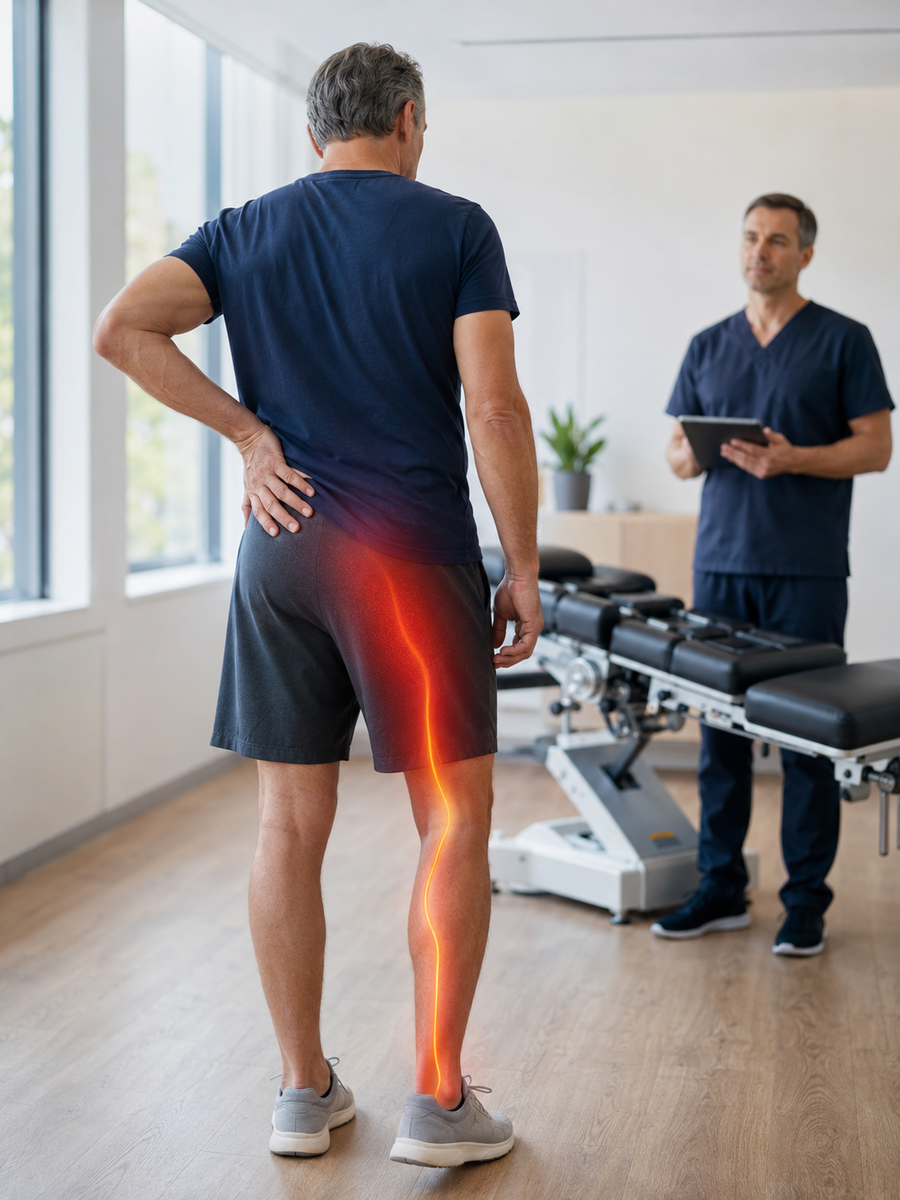
What results should be followed?
Pain is significant, but it is not the only indicator. Improvement can also manifest as better walking, less disturbed sleep, greater tolerance for sitting, or returning to an important activity.
Journey
Does the pain radiate less down the leg or become more diffuse?
Strength
Do the foot, big toe, calf, and leg maintain their capability?
Function
Is walking, transferring, working, and daily activities progressing?
Tolerance
Are positions and movements better tolerated without lasting aggravation?
When is home treatment not enough?
A recent, stable pain without significant deficit can often be monitored with cautious measures. However, some signs warrant urgent or rapid evaluation.
Neurological emergency
Urinary retention or incontinence, loss of bowel control, saddle anesthesia, severe symptoms on both sides, or rapidly progressive weakness.
Quick consultation
Dropped foot, weak leg, spreading numbness, increasingly difficult walking, or worsening pain despite precautions.
Concerning context
Fever, recent infection, known cancer, immunosuppression, unexplained weight loss, significant trauma, or unusual nighttime pain.
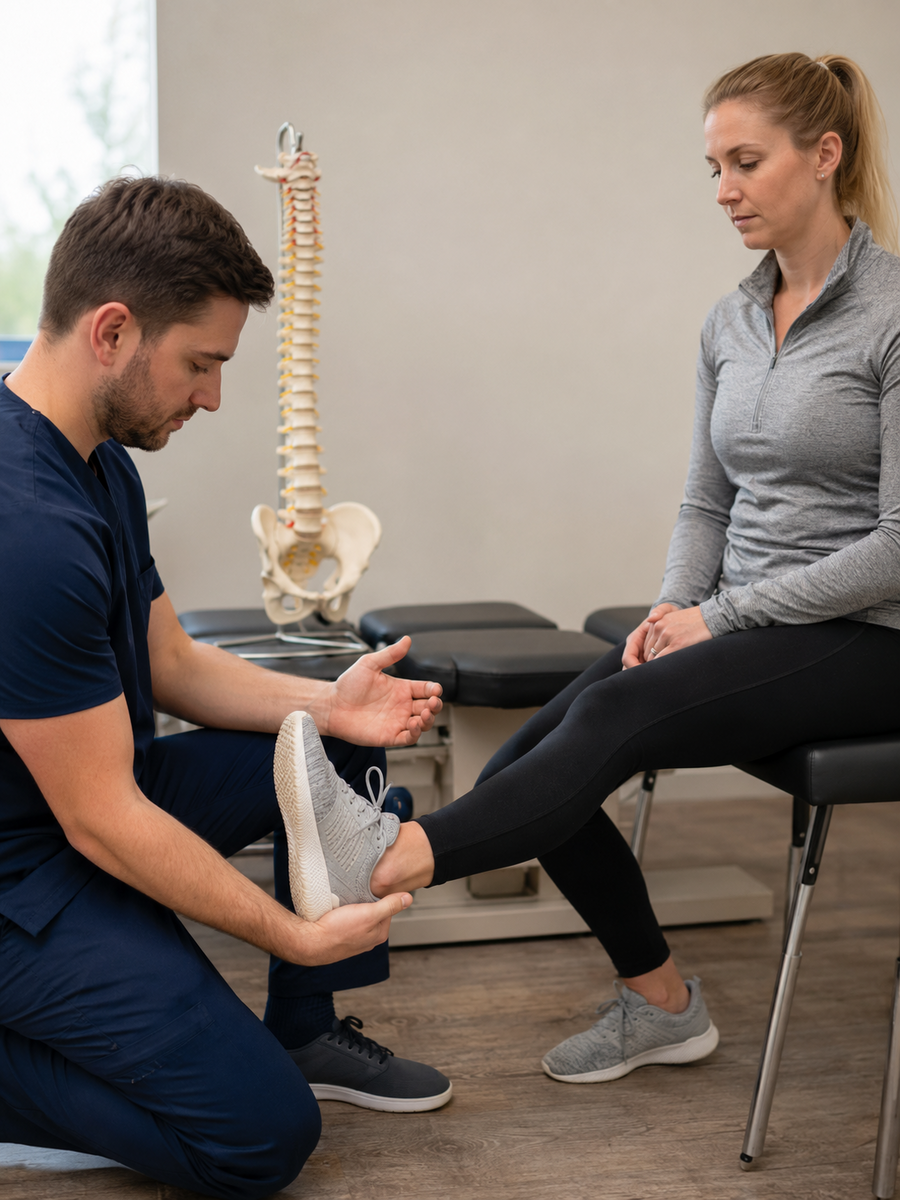
Why does the evaluation precede the treatment?
Pain in the leg can originate from an L5 or S1 root, but also from the hip, a peripheral nerve, a vascular issue, or another condition. Starting a generic protocol without checking the profile may delay appropriate guidance.
- Onset, duration, intensity, and progression of the pain.
- Pathway toward the buttock, thigh, calf, foot, or toes.
- Presence of burning, shocks, tingling, or numbness.
- Strength of the foot, big toe, calf, knee, and hip.
- Reflexes, sensitivity, and ability to walk.
- Reaction to sitting position, walking, movements, and exertion.
- Warning signs, medications, history, and treatments already tried.
What to do in the first few days?
Recommendations generally encourage the continuation of normal activities as much as possible and an early return to movement. A short period of relative rest may be necessary when the pain is very intense, but prolonged inactivity tends to reduce capacity.
| Measure | Goal | How to adapt it |
|---|---|---|
| Move regularly | Avoid stiffness and loss of capacity. | Alternate short walks, comfortable positions, and light activities. |
| Break tasks down | Reduce long periods that worsen symptoms. | Take breaks before the pain becomes difficult to control. |
| Heat or cold | Provide temporary comfort. | Protect the skin, limit duration, and avoid numb areas. |
| Rest position | Facilitate sleep or calm a flare-up. | Use rest as a break, not as the only strategy of the day. |
| Monitor the pathway | Identify any nerve worsening. | Reassess if the pain travels lower, if numbness extends, or if strength changes. |
Walking, exercise, and gradual recovery
There is no single exercise that suits all sciatica cases. The choice depends on the likely cause, aggravating positions, neurological deficits, and the observed response. Walking is often a practical entry point when tolerated.
A progression can start with several short periods rather than one long session. Distance, speed, and terrain can be gradually increased when symptoms remain stable and function improves.
Acceptable response
Mild and temporary discomfort that returns to baseline after activity, without new weakness.
Concerning response
Pain that radiates more, increasing numbness, dragging foot, or enduring aggravation.

Which medications can be discussed?
The choice of medication is up to a doctor or pharmacist and depends on other illnesses, medications already taken, and individual risks. Do not start, change, or stop a prescribed treatment without professional advice.
| Option | What the recommendations say | Caution |
|---|---|---|
| Non-steroidal anti-inflammatory drugs | The benefit for sciatica is limited and uncertain, but they may be considered in certain contexts. | Digestive, renal, cardiovascular, and hepatic risks; use the minimum effective dose for the shortest duration possible. |
| Paracetamol or acetaminophen | Paracetamol alone is unlikely to help with sciatica according to the NHS. | Adhere to the maximum dose and check combined products to avoid overdose. |
| Gabapentinoids and other antiepileptics | NICE recommends not offering them for treating sciatica due to a lack of overall benefit and risks. | Do not suddenly stop taking a medication that is already being used; ask the prescriber for a review plan. |
| Oral corticosteroids and benzodiazepines | NICE recommends not offering them for sciatica. | Side effects and risks of dependence or withdrawal depend on the medication. |
| Opioids | NICE recommends not offering them for chronic sciatica; data remains limited for acute sciatica. | Drowsiness, constipation, tolerance, dependence, and withdrawal; decision and medical follow-up required. |
What role for rehabilitation and manual therapy?
An exercise program can be chosen based on needs, preferences, and abilities. Approaches may include biomechanical, aerobic, or mind-body activities. The goal is to improve function, not to pursue perfect pain or impose a universal movement.
NICE states that manual therapy should only be considered as part of a program including exercise, with or without a psychological approach. For persistent sciatica, a program combining physical and psychological dimensions may be relevant when fear of movement or other obstacles hinder recovery.
Adapted exercise
Gradually rebuild mobility, endurance, strength, and confidence.
Manual Therapy
Temporarily facilitate movement when integrated into an active and re-evaluated plan.
Psychological Support
Address fear, stress, and avoidance behaviors without denying the physical aspect of pain.
Is an MRI necessary before treating sciatica?
Not systematically. NICE advises against routine imaging in a non-specialized context and recommends considering it when it is likely to change management. Choosing Wisely Canada also recommends avoiding imaging for low back pain without warning signs.
Imaging often unnecessary upfront
Recent pain, compatible presentation, preserved strength, stable evolution, and absence of warning signs.
Imaging that may become relevant
Severe or progressive deficit, suspicion of serious cause, persistent symptoms, or decisions regarding infiltration or surgery.
When to discuss infiltration or surgery?
| Option | Possible Situation | Limits to be aware of |
|---|---|---|
| Epidural Infiltration | NICE suggests considering it for acute and severe sciatica after medical evaluation. | The 2025 review from the American Academy of Neurology describes a modest benefit, primarily short-term, for certain radiculopathies. |
| Surgical Opinion | Concerning neurological deficit, emergency or pain, and persistent disability despite appropriate non-surgical treatment. | The decision depends on the alignment between symptoms, examination, and imaging, as well as individual benefits and risks. |
| Surgical Decompression | NICE indicates that it may be considered when non-surgical treatment does not improve pain or function and imaging is consistent. | This is a surgical procedure, different from the neuromuscular decompression offered on a table. |
What is the role of motorized neuromuscular decompression?
Motorized neuromuscular decompression is a form of controlled mechanical traction applied to the spine using a specialized table. At TAGMED Clinic, it can be discussed after evaluation when the situation appears to involve a discal or foraminal component and no contraindications are identified.
It is not suitable for all sciatica cases, does not automatically reposition a disc, and does not guarantee a result. NICE recommends against routinely offering traction for low back pain with or without sciatica. This divergence should be explained in an informed decision regarding possible benefits, limitations, costs, and other options.
Selection
Check the route, deficits, probable cause, examinations, and contraindications.
Controlled Trial
Define functional objectives and monitor symptom reactions.
Reevaluation
Modify or interrupt the approach if the situation worsens or if no relevant progress is observed.

What mistakes should be avoided?
Staying in bed too long
Extended rest can increase stiffness and reduce physical capacity.
Overdoing generic stretches
A popular movement can aggravate a specific nerve or disc profile.
Treating only the MRI
The image must match the side, route, strength, and sensitivity.
Ignoring a weakness
A tolerable pain accompanied by a motor deficit may be more concerning than intense pain without deficit.
Changing medications on your own
Some treatments expose patients to risks of dependence or withdrawal and should be reviewed with the prescriber.
Believing in Guarantees
No exercise, device, injection, or treatment guarantees uniform healing.
Sciatica Treatment at TAGMED Clinic
The TAGMED Clinic offers osteopathic assessment and non-surgical, non-invasive approaches for certain lower back pain and pain compatible with sciatica. Depending on the situation, possible treatments include motorized neurovertebral decompression, specific osteopathy, or precision percussion.
This evaluation does not replace a medical diagnosis, prescription, imaging, infiltration, or surgical consultation. Medical referral is recommended when the situation exceeds the practice scope of osteopathy.
TAGMED Clinic Terrebonne
1150 Lévis Street, Suite 200
Terrebonne, QC, J6W 5S6
Phone: 450-704-4447
Days: Monday, Wednesday and Friday
TAGMED Clinic Montreal / Mont-Royal
1140 Beaumont Avenue
Mont-Royal, QC, H3P 3E5
Phone: 1-877-672-9060
Days: Tuesday and Thursday
Frequently Asked Questions about Sciatica Treatment
What is the best treatment for sciatica?
There is no universal best treatment. The plan depends on the probable cause, duration, neurological deficit, function, and response to initial measures.
Should I stay at rest?
A short period of relative rest may be helpful during an intense flare-up, but recommendations generally favor the continuation of tolerated activities and a gradual return to movement.
Is walking recommended?
Walking can be helpful if tolerated. Start with short periods and adjust the distance if pain increases, numbness worsens, or strength changes.
Which medications should be taken?
The choice should be discussed with a doctor or pharmacist. The benefits of several medications are limited for sciatica and some carry significant risks.
Is an MRI needed before starting?
No, not for all recent uncomplicated sciatica. Imaging becomes more relevant when it can change management or when a deficit, a serious cause, or persistent symptoms justify it.
Can an injection cure sciatica?
An epidural injection can provide modest and often temporary relief in certain radiculopathies. It does not necessarily correct the cause and requires a medical decision.
When should one consult a surgeon?
A surgical opinion may be urgently necessary in the presence of certain deficits or when pain and disability persist despite appropriate non-surgical treatment with concordant imaging.
Is neurovertebral decompression suitable for everyone?
No. It may be discussed in certain profiles after an evaluation, but traction is not routinely recommended by NICE, and no outcome can be guaranteed.
Sources and references
- NICE NG59 — Low back pain and sciatica: assessment and management.
- NHS — Sciatica.
- Choosing Wisely Canada — radiology recommendations for low back pain.
- American Academy of Neurology — epidural steroids for radicular pain and spinal stenosis, 2025.
TAGMED guides by city
Choose a condition and city to view the corresponding TAGMED treatment guide.
SOS Sciatique and TAGMED Clinic are part of the same website portfolio.
Does your sciatica limit walking, sleeping, or sitting?
An assessment can help clarify the profile, signs to monitor, functional goals, and the relevance of a non-surgical approach. No outcome can be guaranteed and medical guidance remains necessary when the situation demands it.
Sylvain Desforges, B.Sc., D.O., N.D., osteopath
Editorial information, sources and limitations
This content is intended to inform patients about sciatica, possible causes, warning signs, and care options. It does not replace an individualized assessment.
Reference sources
References are selected according to the subject of the page: guidelines, systematic reviews, then institutional resources.
- NICE NG59 – Low back pain and sciatica in over 16s — National guideline
- HAS – Management of patients with common low back pain — French national guideline
- Cochrane – Corticosteroid injections for treatment of sciatica — Systematic review
- NCBI Bookshelf – Sciatica — Clinical institutional resource
Complementary resources from the TAGMED network
These internal resources complement the clinical information and thematic linking. They do not replace national guidelines or systematic reviews.
Editorial note on decompression
Clinical resource from the TAGMED network; it does not replace national guidelines. Some guidelines use the term “traction” and recommend caution for low back pain with or without sciatica. Any decompression option should therefore be presented as an individualized clinical approach, with limitations, indications, and contraindications clearly explained.
Limitations of this information
The information on this page is general. It does not constitute a diagnosis, prescription, or guarantee of results. Pain radiating into the leg may have several causes; assessment should consider clinical history, examination findings, symptom progression, and, when appropriate, complementary tests.
When to seek urgent medical care
Seek urgent medical care if you experience loss of bladder or bowel control, saddle anesthesia, major or progressive leg weakness, unexplained fever, pain after significant trauma, or severe pain that rapidly worsens.
