




Sciatica and pregnancy: what to do without taking risks?
A pain that starts from the lower back or buttock and descends into a leg can occur during pregnancy. However, it is not always true sciatica: pelvic girdle pain, hip pain, or another condition may produce similar symptoms.
During pregnancy, advice must take into account the trimester, obstetrical state, medications, neurological signs, and overall health. The midwife, doctor, or obstetrical team remains the first point of contact when new pain is significant, worsening, or accompanied by other symptoms.
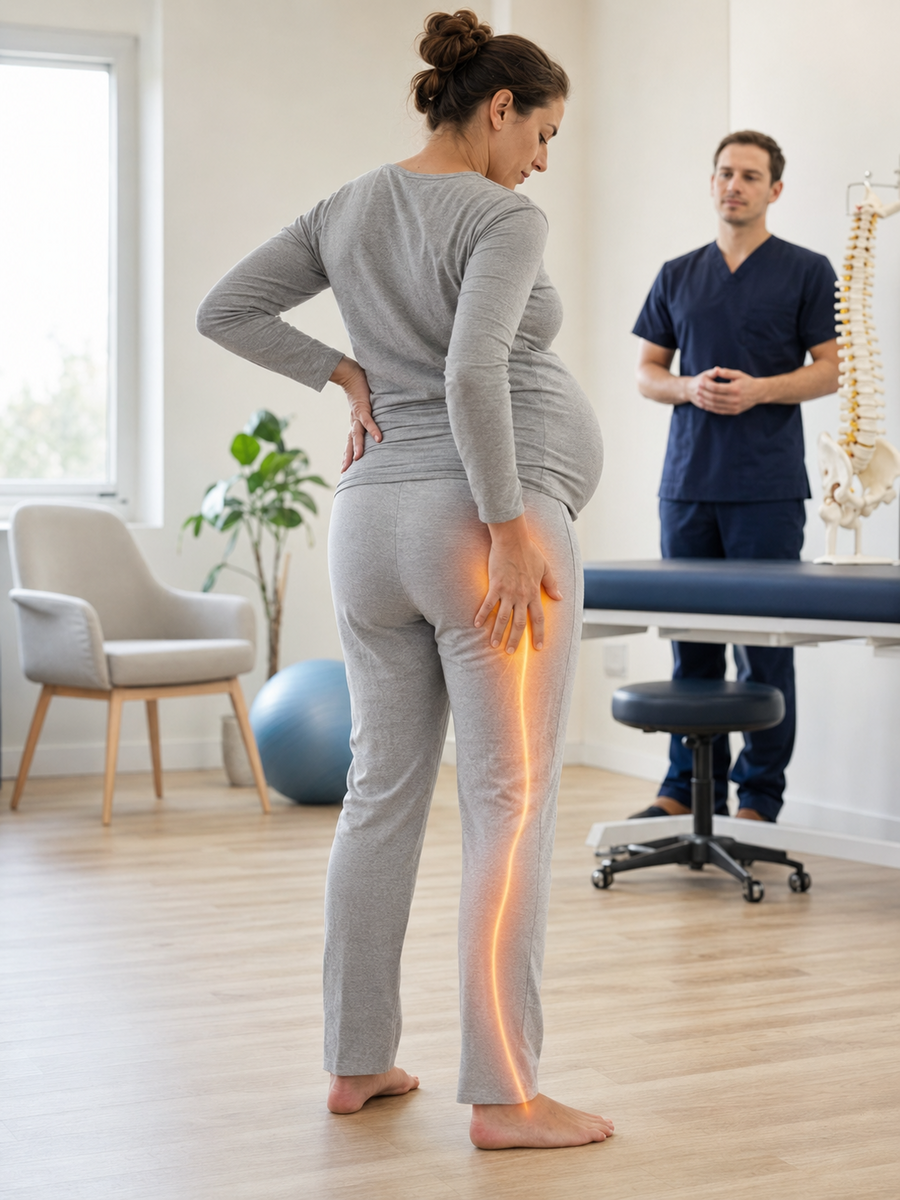
Sciatica or pelvic girdle pain?
Pelvic girdle pain related to pregnancy can affect the pubic area, groin, hips, sacroiliac joints, buttocks, or thighs. It can make walking, going up stairs, putting weight on one leg, and turning in bed difficult. Cambridge University Hospitals estimates it affects about one in five pregnancies.
Classic sciatica typically follows a neurological pathway from the lower back or buttock down to the back or side of the thigh, the calf, the foot, or certain toes. It may be accompanied by burning sensations, shocks, tingling, numbness, or weakness.
| Characteristic | Possible pelvic pain | Possible sciatica |
|---|---|---|
| Location | Pubis, groin, pelvis, sacroiliac, hip, or buttock. | Buttock followed by a descending path in one leg. |
| Typical activities | Turning in bed, climbing stairs, dressing on one leg, getting into a car. | Sitting, coughing, walking, or certain positions depending on the cause. |
| Sensations | Mechanical pain, feeling of instability, or pain around the pelvis. | Burning, jolting, tingling, numbness, or weakness. |
| Examination | Assessment of the pelvis, hip, gait, and triggering activities. | Pathway, strength, sensitivity, reflexes, and appropriate neurological tests. |
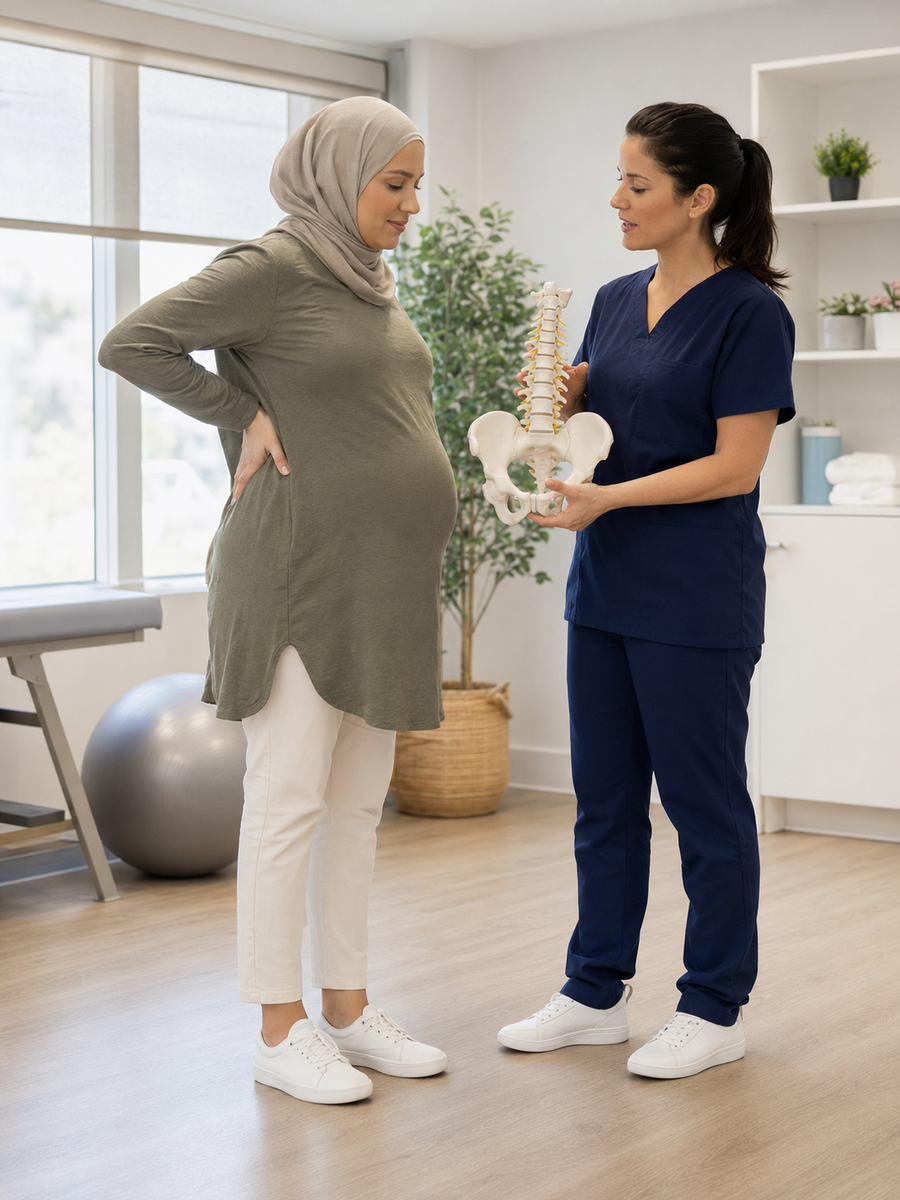
Why can sciatic pain occur during pregnancy?
Pregnancy progressively alters weight distribution, lumbar curvature, mobility, sleep, and the strategies used to get up, walk, or carry. These changes can make an already symptomatic area more sensitive, but they do not prove that a nerve root is compressed.
Previous lumbar history
A herniated disc, protrusion, stenosis, or previous episode may become symptomatic again, but this is not automatic.
Mechanical changes
The center of gravity, gait, pelvic position, and daily activities evolve over the trimesters.
Pelvic pain
Pain originating from the pelvis, hip, or surrounding tissues can be confused with sciatica.
Position and sleep
Difficulty finding a position and changes in sleep can increase sensitivity and reduce recovery.
Load and fatigue
Long periods of standing, stairs, carrying another child, or certain tasks can worsen symptoms.
Cause not related to pregnancy
An infection, urinary, vascular, hip problem, or another condition may sometimes need to be excluded.
What signs require urgent evaluation?
Pregnancy adds obstetrical and medical signs to the usual neurological symptoms. If in doubt, promptly contact your obstetrical team or the appropriate emergency service.
Neurological Signs
New urinary or gastrointestinal issues, loss of bowel sensation, significant or progressive weakness, severe symptoms in both legs, or very unstable walking.
Obstetrical Signs
Vaginal bleeding, fluid loss, regular contractions, severe abdominal pain, or unusual decrease in fetal movements.
Medical Signs
Fever, chills, pain during urination, pain under the ribs, trauma, shortness of breath, chest pain, or sudden swelling of a leg.
What can be done cautiously while waiting for advice?
If the obstetrical team has not imposed any restrictions and there are no signs of urgency, light and appropriate activity is generally preferable to prolonged lying down. The goal is not to force the pain, but to maintain tolerable movement.
| Measure | How to adapt it | When to stop |
|---|---|---|
| Short walk | Choose stable ground, supportive shoes, and several short periods rather than one long outing. | Pain that radiates downward, weakness, dizziness, cramps, or discomfort. |
| Change position | Alternate between supported sitting, standing, side resting, and movement before any worsening occurs. | Symptoms that worsen despite changes. |
| Split tasks | Minimize stairs, avoid heavy lifting, and ask for help with uneven tasks. | Pelvic or sciatic pain making walking unstable. |
| Warmth | Use a comfortable temperature for a short duration, protecting the skin and avoiding overheating the body. | Numb skin, irritation, discomfort, or elevated body temperature. |
| Familiar exercise | Continue only if it has been approved, remains comfortable, and can be adjusted to the trimester. | Pain, bleeding, unusual dizziness, shortness of breath, contractions, or weakness. |
The NHS recommends staying active within comfort limits and slowing down as pregnancy progresses. If a midwife or obstetrician has advised limiting activity, that guidance takes precedence over all general advice.
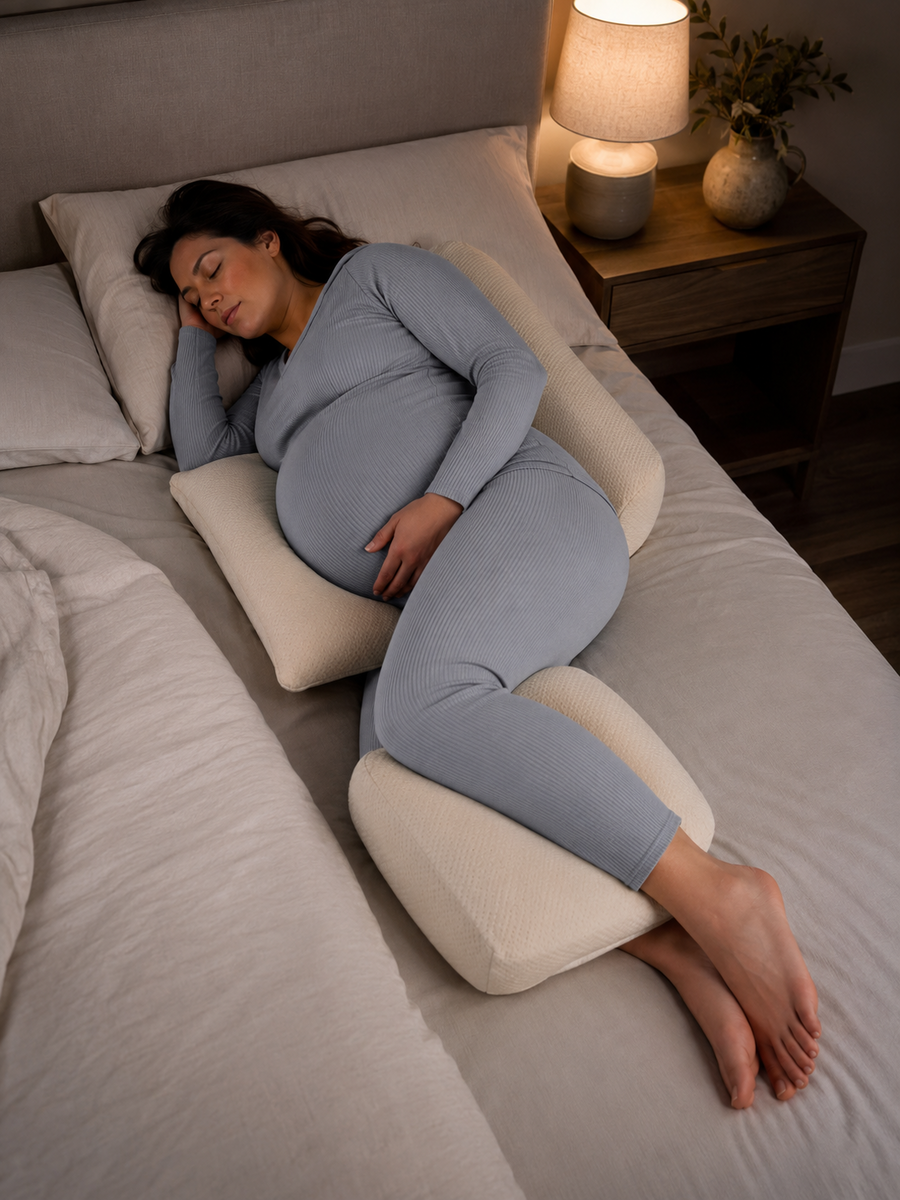
Which position to choose for sleeping?
In the second and third trimesters, the American College of Obstetricians and Gynecologists indicates that side sleeping may be preferable. A pillow between the knees and ankles, another under the belly, and support behind the back can improve comfort.
- Gently bend your knees without curling up too tightly.
- Support the upper leg to limit pelvic rotation.
- Choose the side that feels most tolerable; the left side is not the only possible position for everyone.
- Use a comfortable block method to get in and out of bed if twisting aggravates pain.
- Avoid lying flat on your back for long after about 16 weeks, especially if you feel dizzy or unwell.
If you wake up on your back, there’s no need to panic. Simply reposition yourself on your side and discuss any concerns with your obstetrical team.
What exercises are safe during pregnancy?
There is no universal exercise for sciatica during pregnancy. The choice depends on the trimester, obstetrical restrictions, previous activity level, the probable cause, and symptom response. Before starting a new program, seek approval from the team monitoring the pregnancy.
Family Activity
A gentle walk, swimming, or an activity already practiced can be continued as long as it remains comfortable and permitted.
Adapted movement
Exercises in a standing, seated, or crawling position may sometimes be better tolerated than prolonged lying on the back.
Gradual progression
The duration, range, and effort should remain modest, without holding the breath or seeking intense stretching.
What medications can be used during pregnancy?
The decision depends on the trimester, dosage, duration, other medications, and the health of the mother and baby. Check any product with a doctor, midwife, or pharmacist, including over-the-counter products.
| Product | Safety reference | Caution |
|---|---|---|
| Acetaminophen | Health Canada considers it a recommended treatment for pain or fever during pregnancy when used according to directions. | Use the lowest effective dose for the necessary duration, follow the label, and check for combined products. |
| Non-steroidal anti-inflammatories | Health Canada advises against using them from about 20 to 28 weeks unless professional advice is given; they are contraindicated after 28 weeks. | Do not take ibuprofen, naproxen, diclofenac, aspirin, or similar products without validation from the medical team. |
| Prescription Medications | Opioids, muscle relaxants, and neuropathic pain medications require an individualized decision. | Do not start, modify, or abruptly stop a prescribed treatment without contacting the prescriber. |
| Natural Products and Creams | “Natural” does not mean safe during pregnancy; some ingredients or essential oils have restrictions. | Present the complete list of ingredients to the pharmacist or obstetrical team. |
How to assess leg pain during pregnancy?
The assessment should be adapted to the trimester and avoid any uncomfortable positions or pressure on the abdomen. It primarily aims to clarify the course, function, and warning signs.
- Onset, progression, and link with pregnancy or activity.
- Location in the pubic area, groin, pelvis, buttock, or leg.
- Presence of burning, discharges, tingling, or numbness.
- Strength of the foot, big toe, calf, and knee.
- Walking, stairs, turning in bed, and putting weight on one leg.
- Urinary, vaginal, abdominal, or general symptoms.
- History of lumbar, pelvic, and obstetric issues.
A musculoskeletal assessment does not replace obstetrical evaluation. Relevant information should be shared with the team monitoring the pregnancy.

Is an MRI possible during pregnancy?
Imaging is not necessary for any uncomplicated recent pain. When the result is likely to change management, ACOG indicates that ultrasound and MRI are not associated with known risk and are the preferred techniques during pregnancy. They should still be used cautiously and to address a relevant clinical question.
Non-contrast MRI
May be considered by the medical team when a neurological deficit or serious cause needs to be evaluated.
Gadolinium
Its use should be limited and reserved for situations where it genuinely improves diagnosis and expected outcomes.
Other examinations
A necessary X-ray or CT scan should not be denied solely due to pregnancy; the decision belongs to the medical and radiological team.
What role do physical care and decompression play?
A professional with training suitable for pregnancy can provide education, activity modifications, exercises, or certain gentle manual therapies. Any intervention must respect obstetrical restrictions, avoid abdominal pressure, allow for position changes, and be discontinued if symptoms worsen.
Tailored Rehabilitation
Can help manage walking, stairs, sleep, transfers, and daily activities.
Cautious Manual Care
May aim for comfort and mobility, without forced manipulation or promises to correct pregnancy or realign any structures.
Motorized Decompression
Is not a standard treatment for sciatica during pregnancy. Harnesses, positioning, and lack of data impose great caution.
Evaluation at TAGMED Clinic during pregnancy
The TAGMED Clinic can discuss a careful osteopathic assessment of lower back or pelvic pain, or a journey compatible with sciatica, when the obstetrical team has not recommended any restrictions. The priority is to identify signs that require medical referral and to adjust any intervention based on the trimester and comfort.
The TAGMED Clinic does not provide obstetrical follow-up, and this assessment does not replace a midwife, doctor, ultrasound, imaging, prescription, or hospital consultation.
TAGMED Clinic Terrebonne
1150 Lévis Street, Suite 200
Terrebonne, QC, J6W 5S6
Telephone: 450-704-4447
Days: Monday, Wednesday, and Friday
TAGMED Clinic Montreal / Mont-Royal
1140 Beaumont Avenue
Mont-Royal, QC, H3P 3E5
Telephone: 1-877-672-9060
Days: Tuesday and Thursday
Frequently Asked Questions about Sciatica and Pregnancy
Is sciatica common during pregnancy?
Lumbar and pelvic pain is common, but not all are sciatica. True radicular pain follows a neurological pathway more along one leg.
Does the baby press directly on the sciatic nerve?
Not necessarily. Changes in load, posture, sleep, and a pre-existing lumbar condition can contribute. Direct compression should not be presumed.
How to differentiate between sciatica and pelvic pain?
Pelvic pain often affects the pubis, groin, pelvis or sacroiliacs and hinders rotations or putting weight on one leg. Sciatica tends to extend more towards the calf or foot with nerve sensations.
Can one walk with sciatica during pregnancy?
Short walks can be attempted if permitted and if symptoms do not increase. Stop in case of increasing pain, weakness, contractions, dizziness, or any other concerning signs.
What position should be chosen for sleeping?
In the second and third trimesters, lying on the side is often preferred. Placing pillows between the legs, under the belly, and behind the back can improve comfort.
Can acetaminophen be taken?
Health Canada recommends it for pain or fever during pregnancy when used as directed, at the lowest effective dose, and for the necessary duration. Confirm with your healthcare professional.
Why should ibuprofen be avoided?
Non-steroidal anti-inflammatory drugs may harm the baby starting from about 20 weeks and are contraindicated after 28 weeks according to Health Canada, unless specific medical advice is given prior to this period.
Is an MRI possible during pregnancy?
Yes, when medically indicated. An MRI without contrast does not use ionizing radiation; gadolinium should be limited to situations where its benefit is significant.
Is neurovertebral decompression recommended during pregnancy?
It is not a standard treatment during pregnancy. Harnesses, positioning, and lack of data require great caution and specific obstetrical validation.
When should you go to the emergency room?
Consult immediately in case of urinary or intestinal disturbance, loss of bowel control, progressive weakness, symptoms in both legs, bleeding, contractions, fever, fluid loss, or unusual decrease in the baby’s movements.
Sources and References
- NHS — Back pain in pregnancy.
- NHS — Exercise in pregnancy.
- Cambridge University Hospitals — Pelvic girdle pain in pregnancy.
- ACOG — Back Pain During Pregnancy.
- ACOG — Guidelines for Diagnostic Imaging During Pregnancy and Lactation.
- Santé Canada — Acetaminophen during pregnancy.
- Santé Canada — NSAIDs beyond 20 weeks of pregnancy.
Do you feel pain radiating down your leg during pregnancy?
First, inform the midwife, doctor, or obstetrical team overseeing the pregnancy. If no restrictions are imposed, cautious musculoskeletal assessment can help distinguish pelvic pain, low back pain, and nerve pathway issues.
Sylvain Desforges, B.Sc., D.O., N.D., Doctor of Osteopathy
Editorial information, sources and limitations
This content is intended to inform patients about sciatica, possible causes, warning signs, and care options. It does not replace an individualized assessment.
Reference sources
References are selected according to the subject of the page: guidelines, systematic reviews, then institutional resources.
- NICE NG59 – Low back pain and sciatica in over 16s — National guideline
- HAS – Management of patients with common low back pain — French national guideline
- Cochrane – Corticosteroid injections for treatment of sciatica — Systematic review
- NCBI Bookshelf – Sciatica — Clinical institutional resource
Complementary resources from the TAGMED network
These internal resources complement the clinical information and thematic linking. They do not replace national guidelines or systematic reviews.
Editorial note on decompression
Clinical resource from the TAGMED network; it does not replace national guidelines. Some guidelines use the term “traction” and recommend caution for low back pain with or without sciatica. Any decompression option should therefore be presented as an individualized clinical approach, with limitations, indications, and contraindications clearly explained.
Editorial note on imaging
Imaging is mainly considered when the presentation is complicated, prolonged, or likely to change management. Routine imaging is generally not necessary for every simple and recent sciatica-like pain presentation.
Limitations of this information
The information on this page is general. It does not constitute a diagnosis, prescription, or guarantee of results. Pain radiating into the leg may have several causes; assessment should consider clinical history, examination findings, symptom progression, and, when appropriate, complementary tests.
When to seek urgent medical care
Seek urgent medical care if you experience loss of bladder or bowel control, saddle anesthesia, major or progressive leg weakness, unexplained fever, pain after significant trauma, or severe pain that rapidly worsens.
