


Authors and editorial review committee of SOS Sciatique
Every health content should allow the reader to know who wrote it, what relevant qualifications that person has, how the sources were verified, and if an external reviewer truly participated.
SOS Sciatique does not present an anonymous “medical committee” to create an impression of authority. The current main author is identified below. When an article undergoes external review, the name, qualification, role, date, and conflicts of interest of the reviewer must appear on the relevant article.
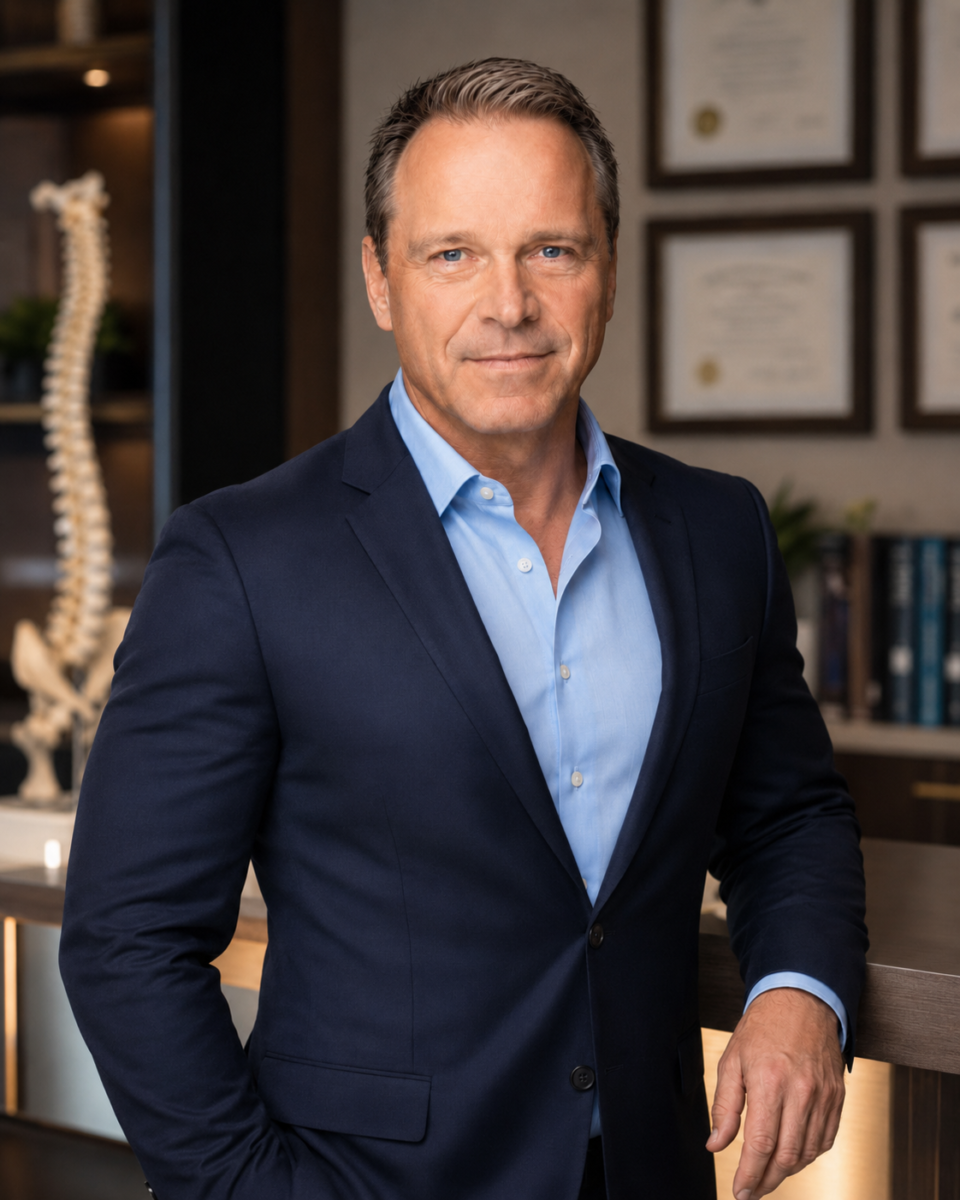
Main author and editorial responsible
The profile below distinguishes the declared professional experience, relevant degrees, editorial role, and limits of the practice area.
Dr. Sylvain Desforges, B.Sc., D.O., N.D., Osteopath
Sylvain Desforges has been practicing in the field of manual medicine since 1991. His clinical and editorial work focuses primarily on back pain, symptoms consistent with sciatica, disc issues, and non-surgical approaches.
- Role on SOS Sciatique: lead author, editorial manager, and final reviewer of the content published under his name.
- Declared experience: practicing since 1991 and clinical use of neurovertebral decompression since 2007.
- Editorial areas: osteopathy, manual medicine, spinal pain, sciatica, functional limitations, and information about decompression.
- Languages: French and English.
What this role does not signify
- It does not confer the status of a doctor or medical specialist.
- It does not allow for making a medical diagnosis remotely through the website.
- It does not convert general information into personalized recommendations.
- It does not replace the review of a doctor when this is necessary for a medical claim.
- It does not guarantee that a presented option is suitable for every person.
Declared training and qualifications
The following information comes from the public professional profile of Sylvain Desforges. It is presented to help the reader understand his background, and not to suggest a medical recognition that does not exist.
| Training | Declared establishment and year | Relevant to SOS Sciatica |
|---|---|---|
| B.Sc. in Human Biology | Palmer University, 1990. | General scientific background related to anatomy and human sciences. |
| Certificate in Osteopathy | College of Osteopathy of Quebec in Montreal, 2004. | Training in osteopathy and manual techniques. |
| Diploma in Naturopathy | College of Naturopathy of Quebec in Montreal, 2004. | Training context; the SOS Sciatica pages do not offer naturopathy services. |
| D.O. in Osteopathy | National University of Medical Sciences, Spain, 2016. | Qualification in osteopathy; does not mean doctor in Quebec. |
| Training in Neurovertebral Decompression | Declared training in 2008, after the clinical introduction of the method in 2007. | Relevant practical experience when the limits and level of evidence are clearly explained. |
| Continuing Education | Courses registered in manual medicine, spinal health, and related fields. | Completes the training path but does not replace a regulated medical qualification. |

Professional Numbers and Independent Verification
The RPPS number is a French identifier and does not apply to this Canadian site. SOS Sciatique does not publish a fictitious number or association identifier as if it were a governmental medical license.
Degrees
The reader may request to know the institution, year, and exact nature of a qualification.
Associations
Association membership must be distinguished from a license issued by a governmental professional order.
External Auditors
When an auditor belongs to an order, their number or a verification link can be added with their consent.
Declaration of Interests and Affiliations
A conflict of interest does not automatically mean that information is false. However, it must be declared so that the reader can judge the content with the necessary context.
Clinical and Commercial Interests
- Sylvain Desforges is the founder of the TAGMED Clinic.
- The pages may contain appointment links to clinics in Montreal/Mont-Royal and Terrebonne.
- The TAGMED Clinic offers, among other services, osteopathy and motorized neurovertebral decompression.
- Making an appointment could therefore provide a direct commercial advantage to the clinic.
Professional and Editorial Interests
- Sylvain Desforges is the founding president of the ACMA Association and is linked to the College of Canadian Osteopaths.
- He has editorial control over SOS Sciatique and chooses the topics published under his name.
- He has experience and a professional interest in neurovertebral decompression.
- These affiliations should never be presented as independent medical validation of the content.
Is there currently a permanent medical committee?
No: no permanent medical committee composed of identified members is presented as active on SOS Sciatique as of the creation date of this page. The site uses an internal editorial process and external sources. This is different from independent medical review.
Internal Writing
A designated author prepares the content, checks for consistency, professional boundaries, and references.
Independent Sources
Recommendations and scientific reviews are cited, but their authors do not become reviewers of the site.
Potential External Review
This will only be announced when a qualified person has actually reviewed a specific version of the content.
How will a future reviewer be presented?
A complete biography must be published before permanently associating a person with the site’s review. The presence of a photo or a generic title is not enough.
| Information | What should be displayed | Why |
|---|---|---|
| Identity | Full name and authentic photograph with consent. | Avoid fictitious or anonymous profiles. |
| Qualification | Degree, profession, institution, and genuinely relevant specialty. | Allow the reader to assess expertise. |
| License | Authority, jurisdiction, and means of verification where applicable. | Distinguish a regulated profession from a private association. |
| Scope of review | Medical accuracy, pharmacology, surgery, imaging, exercise, or another specific field. | Avoid giving the impression that limited validation covers the entire article. |
| Date and version | Date of review and date of the last updated version examined. | An older validation does not automatically cover future changes. |
| Conflicts of interest | Relevant financial, clinical, associative, or editorial relationships. | Provide the reader with the necessary context. |
Writing and Review Process
- Define the issue. Identify the reader’s intention and the health decisions the page might influence.
- Prioritize sources. First seek official recommendations, systematic reviews, relevant trials, and public agencies.
- Write with caution. Distinguish established information, possible benefits, uncertainty, clinical experience, and opinion.
- Check the limits. Remove promises, remote diagnoses, misleading headings, and claims that exceed the scope of practice.
- Verify references. Ensure that each source genuinely supports the associated statement and remains accessible.
- Publish responsibilities. Display author, date, potential reviewer, sources, warning, and correction mechanism.
- Update. Review the page when recommendations change or an error is reported.

Use of artificial intelligence tools
Digital tools or artificial intelligence can assist with preliminary research, organization, rephrasing, translation, technical control, or the creation of illustrations. They are not considered authors, health professionals, or medical reviewers.
Assistance, not authority
A generated response should not be cited as scientific evidence and must be cross-referenced with original sources.
Human responsibility
The person named as the author remains responsible for the text published under their name and for its final validation.
Illustrative images
Generated images must be identified as illustrations when they could be confused with documentary photographs.

What does ‘revised’ mean on an article?
The mention should only appear if an identifiable person has reviewed the content. It does not necessarily mean that every sentence constitutes a medical recommendation or that the reviewer endorses a commercial service presented elsewhere on the site.
- The reviewer’s name leads to their biography.
- The review date is visible.
- The scope of the verification is described.
- Conflicts of interest are declared.
- A significant change triggers a new validation.
- The badge is removed or clearly dated if the version is no longer covered.
Report an error or request a correction
A reader, patient, or professional can report a factual error, inadequate source, misleading wording, broken link, or unreported conflict of interest. The request should identify the URL, the passage, the proposed correction, and, if possible, a verifiable source.
Reception
The request is recorded and linked to the relevant page.
Verification
The case is compared to the original sources and the applicable field of practice.
Correction
A significant error is corrected with an updated date and, if necessary, an explanatory note.
Frequently Asked Questions about Authors and Review
Who writes the articles for SOS Sciatique?
Dr. Sylvain Desforges, B.Sc., D.O., N.D., osteopath, is the current main author. Each page should display its own signature and identify any other actual authors or contributors.
Is Sylvain Desforges a doctor?
No. He is an osteopath and is neither a doctor nor a specialist in a medical field recognized by the Quebec College of Physicians.
Does the site have a permanent medical committee?
No, no permanent medical committee composed of appointed members is currently presented as active. The site must not suggest otherwise through a badge or generic images.
Are all articles reviewed by a doctor?
No. A medical review should only be announced on articles that have actually been examined by an identified doctor, along with their qualifications, date, and scope of validation.
Why use the word ‘committee’ in the page address?
The slug comes from the initial strategic architecture. The visible title specifies ‘review committee’ and the page honestly explains the current status to avoid any misleading representation.
How are the author’s qualifications verified?
The page presents the institutions, years, and declared qualifications in the public profile. A reader may request clarifications; these diplomas should not be confused with a medical specialty.
Why declare links with the TAGMED Clinic?
The pages may direct to appointments and present services offered by a clinic founded by the author. This business relationship is relevant to assess the independence of the content.
Does artificial intelligence write the articles?
Tools may assist certain steps, but they are neither authors nor reviewers. The assigned human author remains responsible for the final content, source verification, and corrections.
How to become a site reviewer?
Participation should be based on relevant qualifications, a verifiable identity, acceptance of a public biography, a declaration of conflicts, and a clearly defined review scope.
How to correct an error?
Use the contact page, specifying the URL, the relevant passage, the proposed correction, and a primary or official source when possible.
Sources and verification profiles
- Clinique TAGMED — Public profile of Sylvain Desforges, osteopath.
- Professional site of Dr. Sylvain Desforges.
- ACMA Association — Public presentation of the organization founded in 2008.
- Google Search Central — Creating helpful, reliable, people-first content.
- Google Search Central — Article structured data and author markup.
Do you want to verify information or better understand sciatica?
Consult the main guide to explore symptoms, causes, treatments, and warning signs. If you spot an error or information to update, please send us the page and the relevant source.
Dr. Sylvain Desforges, B.Sc., D.O., N.D., osteopath
Editorial information, sources and limitations
This content is intended to inform patients about sciatica, possible causes, warning signs, and care options. It does not replace an individualized assessment.
Reference sources
References are selected according to the subject of the page: guidelines, systematic reviews, then institutional resources.
- NICE NG59 – Low back pain and sciatica in over 16s — National guideline
- HAS – Management of patients with common low back pain — French national guideline
- Cochrane – Corticosteroid injections for treatment of sciatica — Systematic review
- NCBI Bookshelf – Sciatica — Clinical institutional resource
Complementary resources from the TAGMED network
These internal resources complement the clinical information and thematic linking. They do not replace national guidelines or systematic reviews.
Editorial note on decompression
Clinical resource from the TAGMED network; it does not replace national guidelines. Some guidelines use the term “traction” and recommend caution for low back pain with or without sciatica. Any decompression option should therefore be presented as an individualized clinical approach, with limitations, indications, and contraindications clearly explained.
Limitations of this information
The information on this page is general. It does not constitute a diagnosis, prescription, or guarantee of results. Pain radiating into the leg may have several causes; assessment should consider clinical history, examination findings, symptom progression, and, when appropriate, complementary tests.
When to seek urgent medical care
Seek urgent medical care if you experience loss of bladder or bowel control, saddle anesthesia, major or progressive leg weakness, unexplained fever, pain after significant trauma, or severe pain that rapidly worsens.
