


Test: is it sciatica? Recognize the symptoms
Pain in the buttock, thigh, calf, or foot is not automatically sciatica. This questionnaire analyzes the pain pathway and the presence of nerve sensations to indicate if your profile is compatible, possible, or less typical.
The tool neither confirms a herniated disc nor a specific nerve root. It provides an initial educational orientation and indicates situations that warrant a prompt professional or medical evaluation.

Is your pain compatible with sciatica?
Answer the nine questions based on your current situation. The questionnaire always takes the most cautious approach.
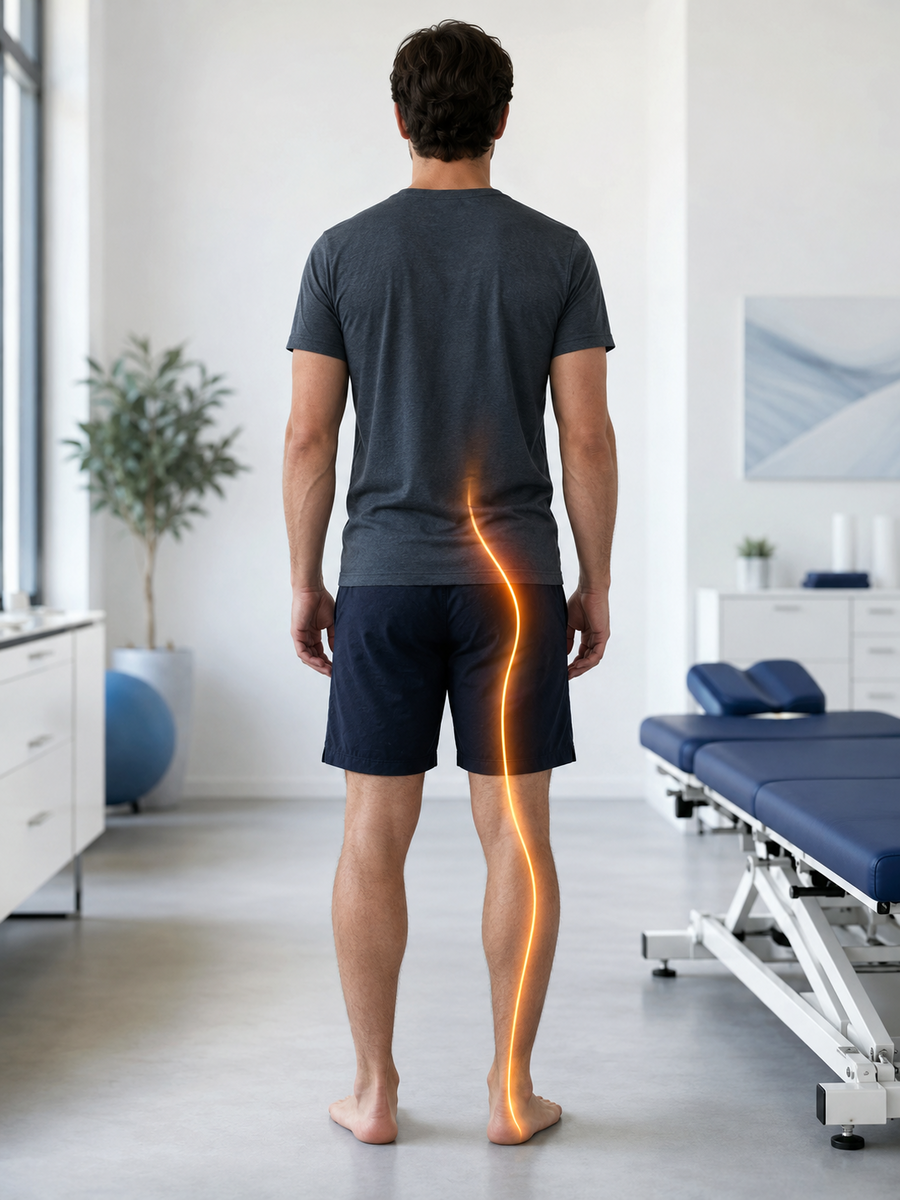
Is the pain path typical for L5 or S1?
Irritation of L5 can cause pain or abnormal sensations on the outer side of the leg, the top of the foot, and towards the big toe. Irritation of S1 is often described behind the thigh and calf, towards the heel, sole, or outer edge of the foot.
These descriptions are not exact maps. The same person may experience a partial, variable, or overlapping pathway. Furthermore, referred pain from the lumbar joints, hip, or muscles can radiate down the thigh without nerve involvement.
| Profile | Commonly described pathway | Other possible clues |
|---|---|---|
| L5 | Outer side of the leg, top of the foot, big toe | Possible difficulty in lifting the foot or big toe |
| S1 | Back of the calf, heel, sole, or outer edge of the foot | Possible difficulty standing on tiptoes |
| Less typical | Groin, front of the thigh, strictly joint pain | Hip, cruralgia, or other causes to be evaluated |
What symptoms strengthen the hypothesis of nerve irritation?
Pain alone does not always allow for distinguishing sciatica from muscular or joint pain. The combination of several elements is more informative: radiation below the knee, a relatively precise pathway, a burning or discharge sensation, tingling, numbness, and weakness corresponding to the same territory.
A leg pain more severe than back pain is also common in sciatica. Coughing, sneezing, or certain physical efforts can worsen symptoms, but this sign is neither mandatory nor specific. Conversely, strictly lumbar pain without irradiation makes sciatica less likely.

What pains can resemble sciatica?
Pain in the buttock or leg can have several origins. A cruralgia primarily affects the front of the thigh. An issue with the hip can cause pain in the groin, limited rotation, or difficulty putting on shoes. Muscle pain is often more localized and related to contraction or palpation.
A swollen, red, warm calf or one with an unusual color is not a typical presentation of sciatica and may require prompt medical evaluation. Pain accompanied by shortness of breath or chest pain warrants urgent medical assistance.
Hip or joint
Groin pain, localized limitation, pain triggered by certain joint movements.
Muscle or tendon
More localized pain, sensitive to contraction, stretching, or palpation.
Cruralgia
Pathway more located at the front of the thigh, sometimes towards the inner side of the leg.
Vascular cause
Swelling, warmth, color change, or pain in the calf should not be taken lightly.
How is sciatica evaluated in a clinic?
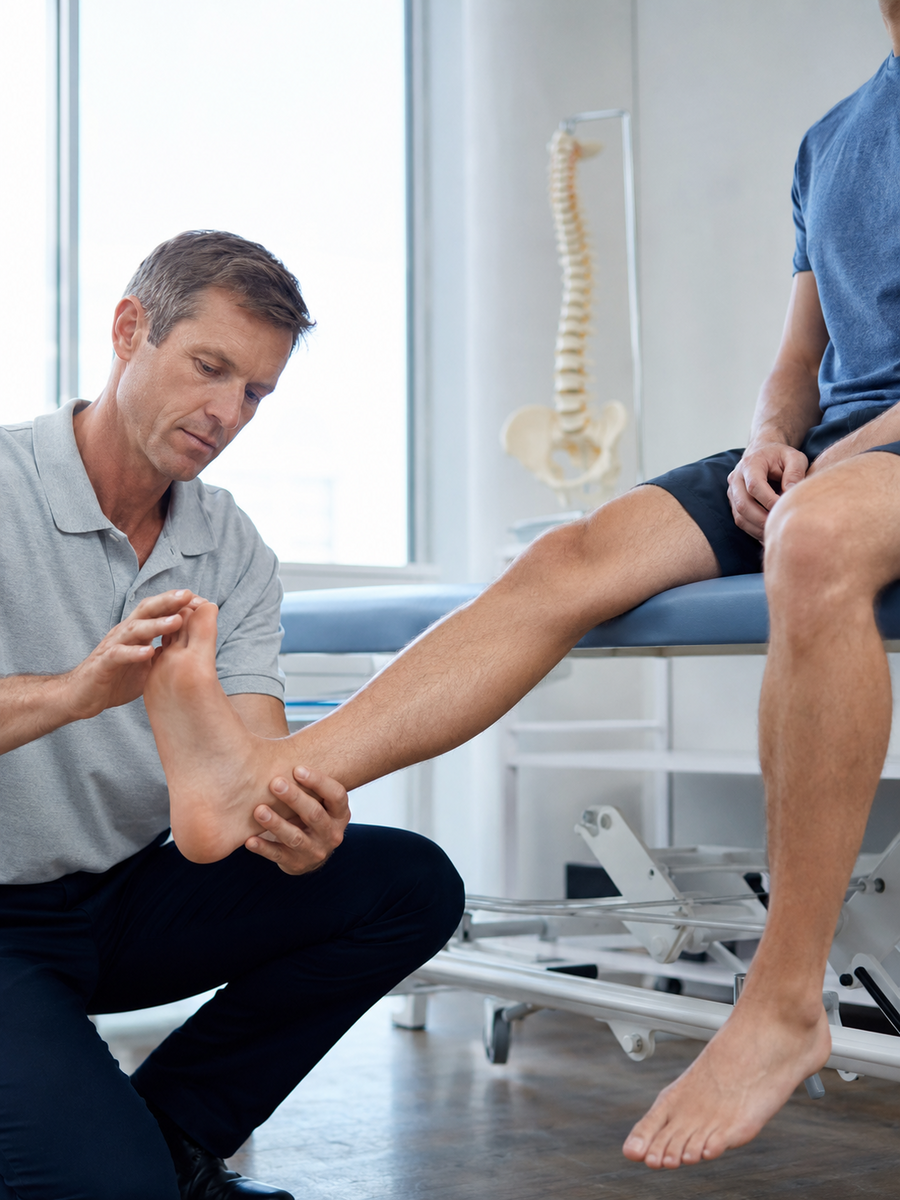
The evaluation begins with the history of the symptoms: date of onset, pathway, aggravating factors, progression, and effect on walking, sleep, and activities. The professional can then compare strength, sensitivity, reflexes, mobility of the back and hip, as well as the reaction to certain nerve tension tests.
Imaging is not always necessary to recognize a sciatic condition. It can be discussed when the diagnosis remains uncertain, when a neurological deficit is present, when symptoms persist despite appropriate management, or when a result would genuinely change the course of action.
Testing Calculation Method
The algorithm gives more weight to radiation below the knee, to the posterior or lateral pathway, to nerve sensations, and to sensory disturbances. It reduces compatibility when pain remains in the back or is concentrated in the groin and a joint. A warning sign or progressive weakness always takes precedence over the score.
Frequently Asked Questions about the test ‘Is it sciatica?’
Can this test confirm sciatica?
No. It compares your responses to characteristics commonly associated with root pain. Only a clinical assessment can determine if your symptoms truly correspond to sciatica and investigate the cause.
Can you have sciatica without back pain?
Yes. Pain in the buttock, leg, or foot can be more significant than lumbar pain, and some people report very little back pain.
Is pain that stays in the buttock sciatica?
It can be, but this profile is less specific. Muscles, lumbar joints, the sacroiliac joint, or the hip can also cause buttock pain.
Does the pain need to go below the knee?
No, but radiation below the knee towards the calf or foot often makes the profile more compatible with nerve irritation than pain limited to the back or buttock.
Do tingling sensations prove that a nerve is compressed?
No. They are a neurological indicator but can also be associated with peripheral neuropathy, local nerve compression, or another condition.
Is pain in the front of the thigh sciatica?
Typical L5 or S1 sciatica rarely presents mainly in the front of the thigh. This path may suggest cruralgia, hip involvement, or another cause that needs to be evaluated.
Why can coughing or sneezing worsen the pain?
These efforts temporarily increase pressure around the spine and may exacerbate radicular pain. However, this sign is not present in everyone and is not sufficient for making a diagnosis.
Can a swollen leg be caused by sciatica?
Sciatica generally does not cause swelling or color change in the leg. A swollen, red, or warm calf requires prompt medical evaluation to rule out a vascular cause or another condition.
Do I need an MRI if the result is consistent?
Not automatically. Imaging depends on the examination, the evolution, the presence of neurological deficit, and the likelihood that the result will change management.
What to do after a consistent result?
Monitor the progression and request an evaluation if the pain persists, significantly limits your activities, is accompanied by numbness or weakness, or if you wish to clarify the cause before choosing a treatment.
Clinical Sources and References
- Health Insurance — Sciatica, how to recognize it?
- Health Insurance — Sciatica: what to do and when to consult?
- NICE — Low back pain and sciatica in over 16s
- NHS — Sciatica and lumbar radiculopathy
Dr Sylvain Desforges, B.Sc., D.O., N.D., osteopath
The information on this page is educational. It does not replace the advice, diagnosis, or treatment of a physician or another qualified healthcare professional.
Your profile is compatible or your symptoms persist?
A planned evaluation can clarify the pain pathway, check strength and sensitivity, investigate causes that mimic sciatica, and determine if a non-surgical approach is appropriate.
An urgent result should be directed to the medical services indicated by the tool rather than to a regular clinic appointment.
Dr. Sylvain Desforges, B.Sc., D.O., N.D., osteopath

Editorial information, sources and limitations
This content is intended to inform patients about sciatica, possible causes, warning signs, and care options. It does not replace an individualized assessment.
Reference sources
References are selected according to the subject of the page: guidelines, systematic reviews, then institutional resources.
- NICE NG59 – Low back pain and sciatica in over 16s — National guideline
- HAS – Management of patients with common low back pain — French national guideline
- Cochrane – Corticosteroid injections for treatment of sciatica — Systematic review
- NCBI Bookshelf – Sciatica — Clinical institutional resource
Complementary resources from the TAGMED network
These internal resources complement the clinical information and thematic linking. They do not replace national guidelines or systematic reviews.
Editorial note on decompression
Clinical resource from the TAGMED network; it does not replace national guidelines. Some guidelines use the term “traction” and recommend caution for low back pain with or without sciatica. Any decompression option should therefore be presented as an individualized clinical approach, with limitations, indications, and contraindications clearly explained.
Limitations of this information
The information on this page is general. It does not constitute a diagnosis, prescription, or guarantee of results. Pain radiating into the leg may have several causes; assessment should consider clinical history, examination findings, symptom progression, and, when appropriate, complementary tests.
When to seek urgent medical care
Seek urgent medical care if you experience loss of bladder or bowel control, saddle anesthesia, major or progressive leg weakness, unexplained fever, pain after significant trauma, or severe pain that rapidly worsens.
