


Sciatica and foraminal stenosis: when the passage of the nerve root becomes too narrow
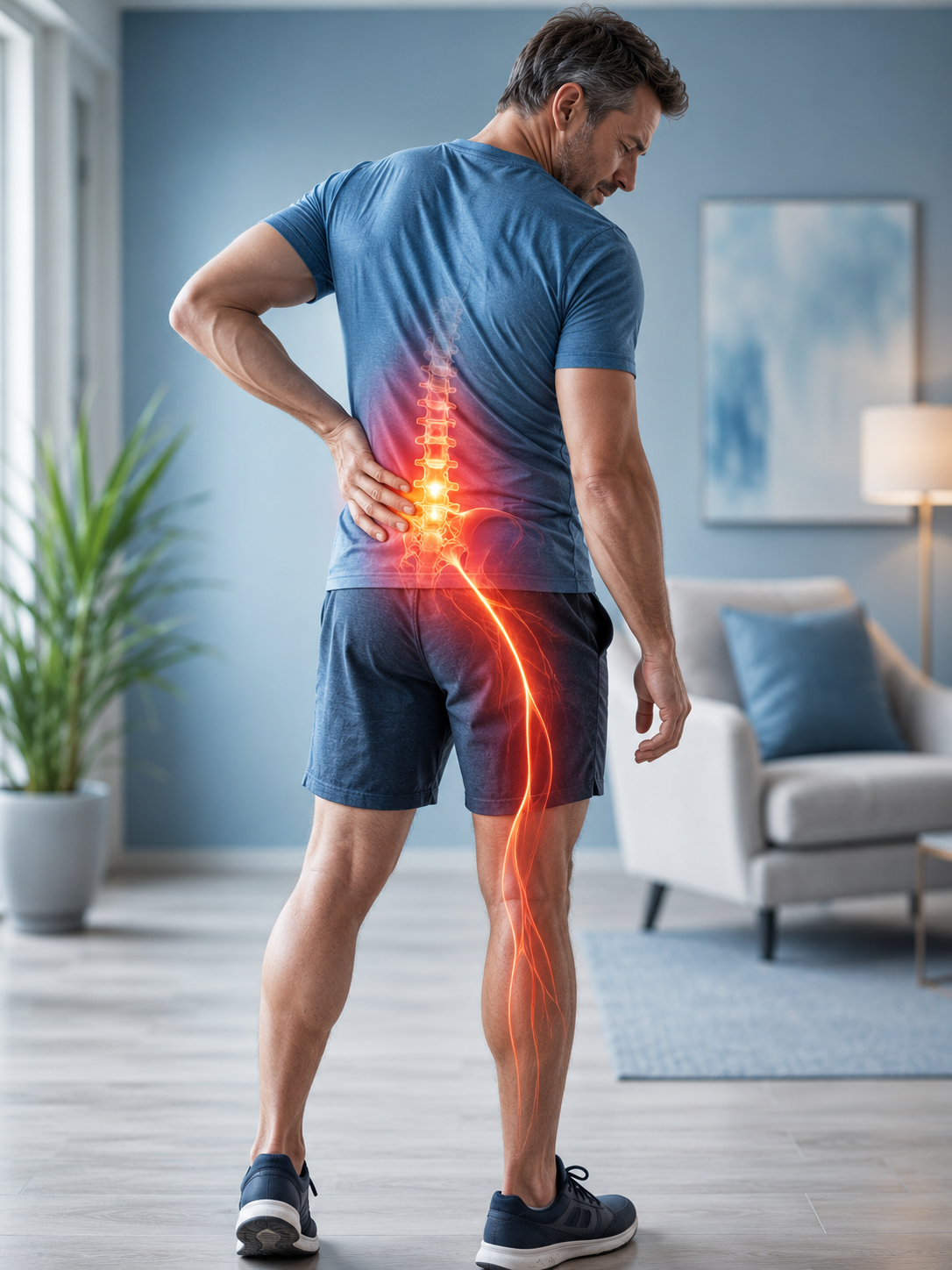
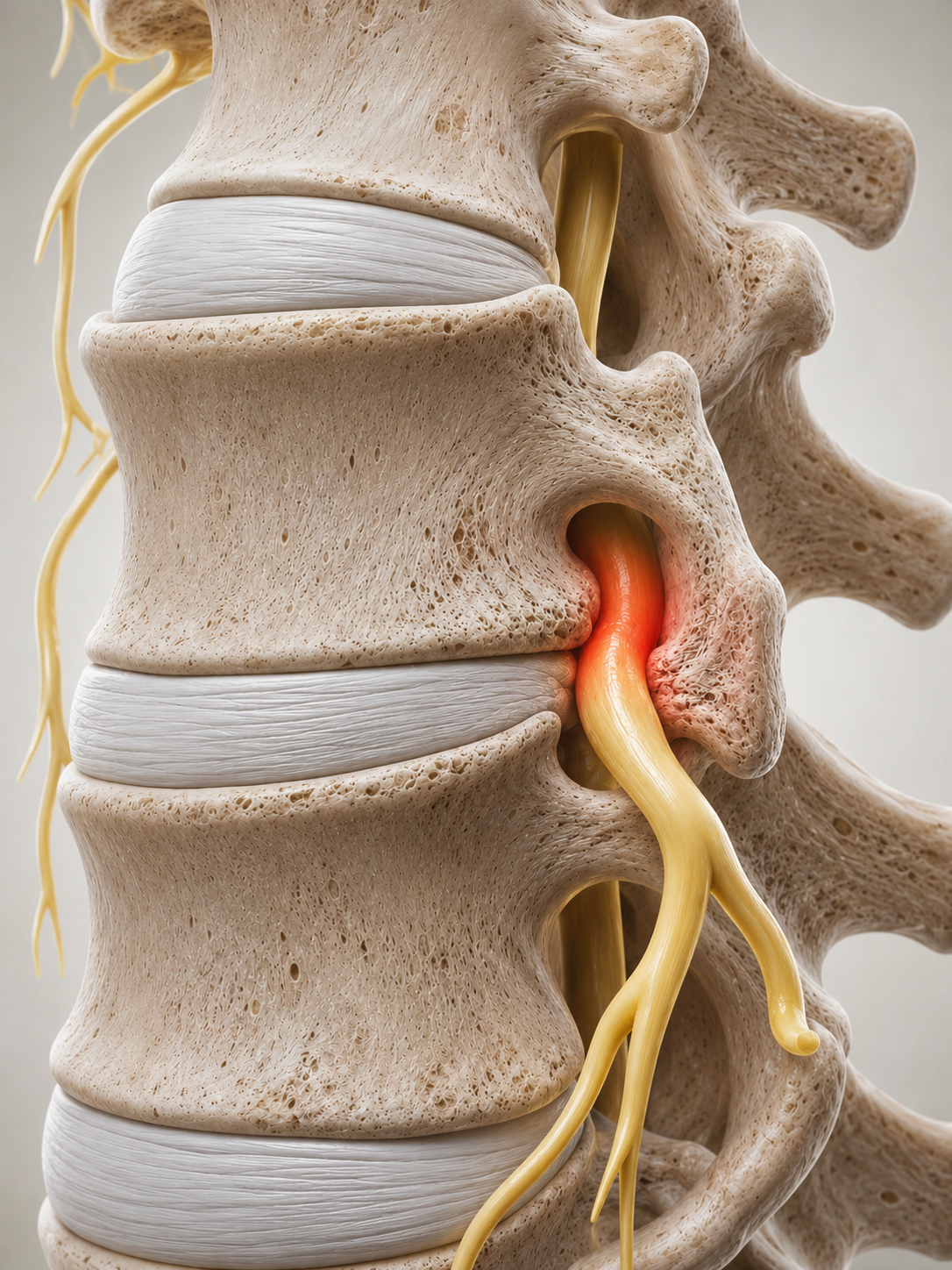
A lumbar foraminal stenosis corresponds to a narrowing of the foramen, that is to say the passage through which a nerve root comes out of the spine. When this passage becomes too narrow, the root can be irritated or compressed, which can cause pain compatible with sciatica.
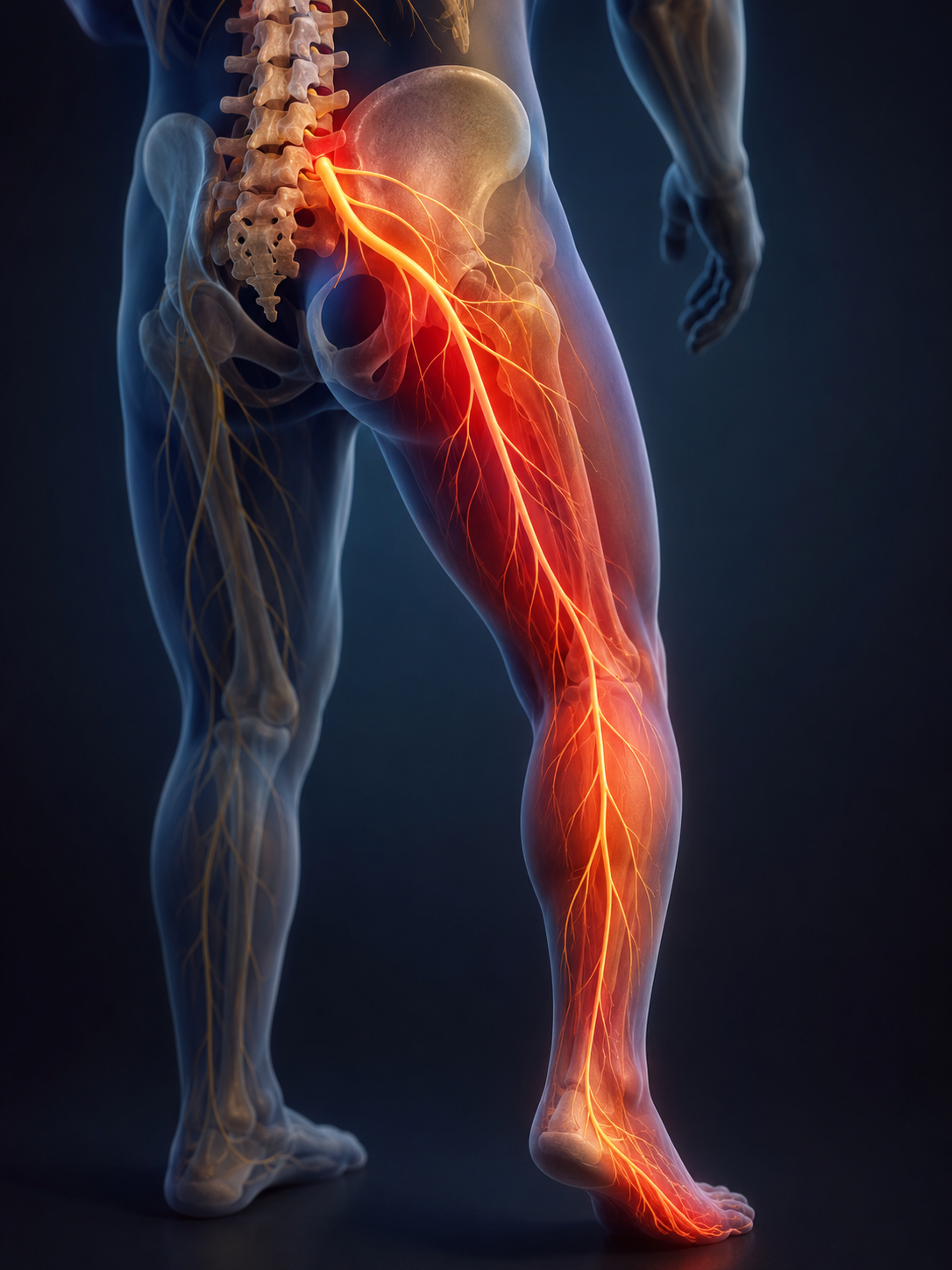
This pain can descend into the buttocks, thigh, calf, foot or certain toes depending on the nerve root involved. Foraminal stenosis may be associated with disc pinching, lumbar osteoarthritis, disc herniation, protrusion, spondylolisthesis or a decrease in available space around the root.
Why can the foramen become too narrow?
Several changes can reduce the available space in the foramen. A disc pinching may decrease the height between two vertebrae. Osteoarthritis can modify the posterior joints. A protrusion or herniated disc may encroach on the root exit area. A spondylolisthesis can also change the alignment and available space.
These changes do not automatically mean that invasive intervention should be considered. The essential question is whether the observed narrowing actually corresponds to the patient’s symptoms. Pain on the same side, a compatible journey, precise numbness or weakness can make foraminal stenosis more clinically relevant.
| Possible cause of shrinkage | Possible effect | Why is it important |
|---|---|---|
| disc pinch | Decreased disc height and foraminal space. | May reduce the exit passage of the nerve root. |
| Lumbar osteoarthritis | Thickening or modification of joints and bone structures. | May contribute to progressive mechanical shrinkage. |
| Protrusion or herniated disc | Disc protrusion near the nerve root. | May irritate the root in an already narrow area. |
| spondylolisthesis | Vertebral glide modifying lumbar alignment. | Can influence the space available in some forams. |
| Multiple attacks | Combination of disc, articulation, posture and degeneration. | May produce more persistent or difficult pain to attribute to a single factor. |
What symptoms may suggest foraminal stenosis?
Symptoms vary depending on the nerve root concerned, the lumbar level, the affected side and the severity of the shrinkage. The pain can be intermittent or persistent. It can sometimes be influenced by standing, walking, back extension or certain lumbar movements.
Leg pain
The pain can go down into the buttocks, thigh, calf, heel or foot depending on the irritated root.
Positional pain
Some patients experience aggravation when standing, walking or during certain postures.
Numbness
Numbness in a specific territory can help identify the potentially affected nerve root.
tingling
Tingling or electrical sensations may accompany the irritation of the nerve root.
Weakness
Weakness of the foot, calf or leg should be assessed quickly, especially if it progresses.
recurrent pain
Foraminal stenosis can contribute to pain that occurs depending on the activities or positions.
Foraminal stenosis, nerve root and pain path
Foraminal stenosis can affect different lumbar levels. L4-L5 level damage may be associated with L4 or L5 root irritation depending on the exact location. An attack at the L5-S1 level can influence the L5 or S1 root depending on the foramen concerned. This is why the interpretation requires more than a simple reading of the level entered in the report.
The path of pain remains a key element. Pain towards the big toe can evoke L5. Pain towards the heel or the outer edge of the foot can evoke S1. Pain in front of the thigh or towards the knee can rather direct towards a higher root or cruralgia.
- Pain towards the big toe: often compatible with L5.
- Pain towards the heel or the outer edge of the foot: often compatible with S1.
- Pain in front of the thigh: can evoke L3 or L4.
- Aggravated pain standing or walking: May suggest a foraminal or stenosing component.
- Weakness or progressive numbness: sign to be assessed quickly.
How to read a report that mentions foraminal stenosis?
An MRI report may indicate mild, moderate or severe foraminal stenosis. He can also mention an attack on the right or on the left, a possible conflict with a root, disc protrusion, osteoarthritis, disc pinching or a decrease in disc pitch.
This information is important, but it should be related to the symptoms. Right side stenosis is more relevant if the pain descends from the right side in a compatible journey. Severe stenosis may be poorly symptomatic in one person, while a more moderate stenosis can be very irritating in another depending on the context.
| Report term | what it can mean | Clinical question to ask |
|---|---|---|
| mild foraminal stenosis | Moderate reduction in root output space. | Do the symptoms correspond to the level and side? |
| moderate foraminal stenosis | More marked reduction in space, sometimes symptomatic. | Is there pain, numbness or weakness in a compatible territory? |
| Severe foraminal stenosis | Very small output space around the root. | Are function, walking and muscle strength affected? |
| ForaMal Conflict | Possibility of contact or irritation of a root in the foramen. | Does the path of pain follow this root? |
| Bilateral involvement | Both sides can be shrunk. | Are the symptoms unilateral, bilateral or asymmetrical? |

Why personalized evaluation is essential
Foraminal stenosis is an imaging data that must be interpreted in a clinical context. Two people may have stenosis at the same level, but have very different symptoms. One can have severe pain in the leg, the other lumbar pain or intermittent discomfort.
At TagMed Clinic, the assessment aims to link the level of the stenosis, the affected side, the path of pain, the location of numbness, muscle strength, walking, sitting, standing, and aggravating factors. This approach makes it possible to determine whether a non-surgical and non-invasive approach can be relevant.
Clinical agreement
Compare the imaging ratio with pain, nervous territory and found signs.
Neurological follow-up
Check strength, sensitivity, walking and symptoms.
What options should be considered for sciatica related to foraminal stenosis?
The choice of an approach depends on the severity of the symptoms, the level reached, the side, the duration, the function, the walking, the presence of numbness or weakness and the tolerance of the patient. Foraminal stenosis should not automatically lead to the same recommendation for all.
According to the evaluation, certain non-surgical and non-invasive approaches can be discussed, including neurovertebral decompression motorized, specific osteopathy or the precision striker. In some situations, a medical reference or other orientation may be more appropriate.
| Approach | Possible role | When to consider it with caution |
|---|---|---|
| Motorized neurovertebral decompression | Reduce certain mechanical stresses on discs and foramen. | Profile compatible with mechanical root irritation, with no sign of urgency. |
| osteopathy specific | Adapt the interventions to the patient’s restrictions, compensation and tolerance. | Pain associated with stiffness, limitation or mechanical overload. |
| Precision striker | Instrument assisted intervention, targeted and low amplitude. | Accurate mechanical dysfunction depending on the assessment and tolerance. |
| Medical reference | Orientation when the signs go beyond the framework of a conservative approach. | Progressive weakness, uncontrollable pain, significant loss of function or red flags. |
Sciatica, Foraminal stenosis and Tagmed Clinic
TagMed Clinic receives patients with pain consistent with lumbar nerve irritation, especially when imaging reports mention foraminal stenosis, disc pinch, protrusion, herniated disc or osteoarthritis Lumbar.
The typical rate is $140 per consultation or treatment. The services are not covered by the RAMQ, but osteopathy receipts may be provided and are eligible for reimbursement by several private insurance plans according to your contract.
Please note that we do not offer physiotherapy, chiropractic, injection, naturopathic or functional medicine services at the TagMed Clinic.
Tagmed Terrebonne Clinic
1150 rue Lévis, Suite 200
Terrebonne, QC, J6W 5S6
Phone: 450-704-4447
Days: Monday, Wednesday and Friday
Clinic Tagmed Montreal / Mont-Royal
1140 Avenue Beaumont
Mount Royal, QC, H3P 3E5
Phone: 1-877-672-9060
Days: Tuesday and Thursday
Frequently asked questions about sciatica and foraminal stenosis
What is foraminal stenosis?
Foraminal stenosis is a narrowing of the passage where a nerve root emerges between two vertebrae. If the space becomes insufficient, the root can be irritated and cause pain in the leg.
Does foraminal stenosis always cause sciatica?
No. It can be visible at imaging without explaining all the symptoms. It becomes more relevant when the level, side and path of pain match.
What is the difference between foraminal stenosis and disc herniation?
The disc herniation corresponds to a projection or migration of the disc. Foraminal stenosis corresponds to a narrowing of the root exit passage. Both can sometimes coexist.
Can foraminal stenosis give numbness to the foot?
Yes I do. If a nerve root is irritated, it can cause pain, tingling or numbness in a specific territory of the leg or foot.
What signs should be consulted quickly?
Progressive weakness, loss of urinary or intestinal control, stool anesthesia, rapidly aggravated pain or expanding numbness should be assessed without delay.
Does walking still make the foraminal stenosis worse?
Not always. Some people tolerate walking well, while others see their symptoms increase. The reaction to walking should be interpreted with the entire clinical profile.
Does sitting relieve foraminal stenosis?
In some patients, sitting may be better tolerated than standing. In others, it can also irritate the symptoms, especially if there is an associated disc component.
Can neurovertebral decompression be considered?
It can be discussed in certain profiles compatible with mechanical or foraminal irritation of the root, if the evaluation does not reveal any sign of urgency or obvious contraindication.
Does a foraminal stenosis always require surgery?
No. The decision depends on severity, function, pain, weakness, progression and response to non-surgical approaches. Severe or progressive cases should be evaluated medically.
When should a foraminal stenosis be evaluated again?
A reassessment is recommended if the pain persists, worsens, falls lower, limits walking, disrupts sleep or is accompanied by numbness or weakness.
Your report mentions foraminal stenosis?
A personalized assessment can help link your imaging, the level reached, the side of pain, the path in the leg, muscle strength and neurological signs to determine if a non-surgical approach may be relevant.
Dr Sylvain Desforges, B.Sc., D.O., N.D., Osteopath
Editorial information, sources and limitations
This content is intended to inform patients about sciatica, possible causes, warning signs, and care options. It does not replace an individualized assessment.
Reference sources
References are selected according to the subject of the page: guidelines, systematic reviews, then institutional resources.
- NICE NG59 – Low back pain and sciatica in over 16s — National guideline
- HAS – Management of patients with common low back pain — French national guideline
- Cochrane – Corticosteroid injections for treatment of sciatica — Systematic review
- NCBI Bookshelf – Sciatica — Clinical institutional resource
Complementary resources from the TAGMED network
These internal resources complement the clinical information and thematic linking. They do not replace national guidelines or systematic reviews.
Editorial note on decompression
Clinical resource from the TAGMED network; it does not replace national guidelines. Some guidelines use the term “traction” and recommend caution for low back pain with or without sciatica. Any decompression option should therefore be presented as an individualized clinical approach, with limitations, indications, and contraindications clearly explained.
Limitations of this information
The information on this page is general. It does not constitute a diagnosis, prescription, or guarantee of results. Pain radiating into the leg may have several causes; assessment should consider clinical history, examination findings, symptom progression, and, when appropriate, complementary tests.
When to seek urgent medical care
Seek urgent medical care if you experience loss of bladder or bowel control, saddle anesthesia, major or progressive leg weakness, unexplained fever, pain after significant trauma, or severe pain that rapidly worsens.
