


Stretches for sciatica: why you should be cautious according to the cause
Stretches are often suggested when sciatica pain radiates into the buttock, thigh, calf, foot, or toes. However, a poorly chosen stretch can sometimes increase pain, tingling, numbness, or the sensation of an electrical discharge.
The problem is not the stretch itself, but the underlying cause of the sciatica. Pain related to an irritated nerve root, a herniated disc, protrusion, foraminal stenosis, or localized buttock pain does not always react in the same way. Before stretching, you need to understand what the movement provokes.

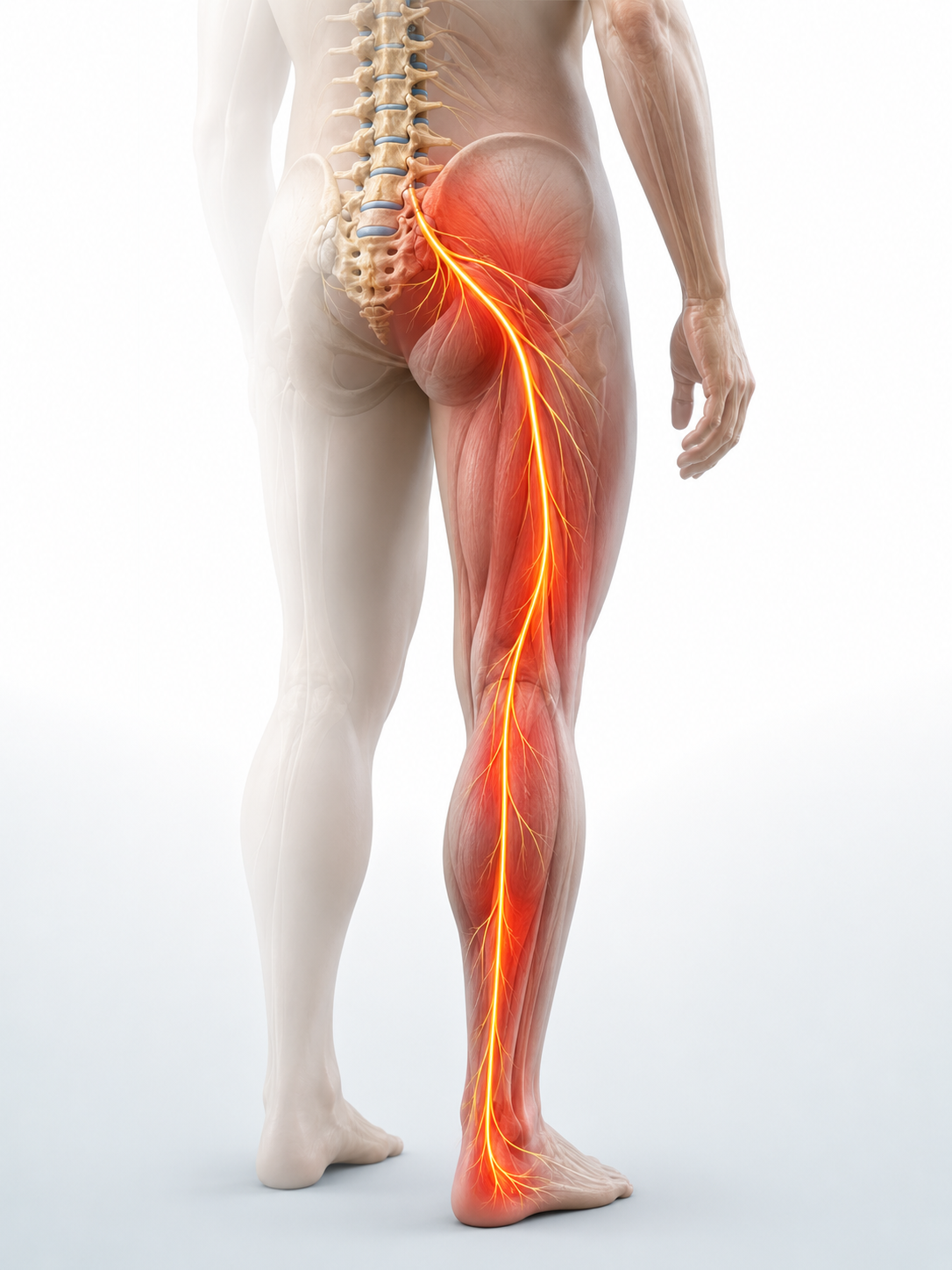
Muscle stretch or nerve tension: how to tell the difference?
A muscle stretch is generally felt as localized tension, often in the buttock, the back of the thigh, or the calf. It should remain manageable, not cause sharp pain, and not lead to symptoms further down.
Nerve tension is different. It can feel like a discharge, a burning sensation, an electric current, tingling, or pain that travels down into the calf, foot, or toes. If a stretch reproduces this type of pathway, it should not be forced.
| Reaction during the stretch | Possible interpretation | Cautious approach |
|---|---|---|
| Slight local tension | Muscle stretch possibly tolerated. | Stay gentle, short, and without forcing. |
| Pain that radiates down the leg | Possible nerve tension or radicular irritation. | Stop or reduce the stretch. |
| Tingling | Possible nerve irritation. | Avoid repeating if symptoms increase. |
| Numbness | Neurological sign to monitor. | Reassess if numbness is spreading or persistent. |
| Weakness after stretching | More concerning sign. | Quick evaluation recommended. |
Signs that a stretch is poorly tolerated
A stretch should not be judged solely by the intensity of the sensation. The most important factor is whether the symptoms move, spread, or become more neurological.
Pain that goes lower
Pain that moves from the buttock to the calf or from the calf to the foot after stretching is a signal to be cautious.
Burning or electric shock
A sensation of current in the leg may indicate excessive nerve tension.
Tingling in the foot
Tingling that appears or increases in the foot or toes should be noted.
Increasing numbness
More extensive or constant numbness after stretching warrants reevaluation.
Weakness
A dragging foot, difficulty pushing, or a buckling leg alters the security level.
Prolonged aggravation
Pain that remains worse several hours after stretching is more significant than a brief discomfort.
Piriformis Stretch: Helpful or Risky?
The piriformis stretch is often recommended for sciatic pain. However, it is not suitable for everyone. If the pain is truly related to local irritation in the buttock, some gentle stretches may be well tolerated. But if the main cause is lumbar or radicular, stretching can increase tension on an already sensitive nerve.
The piriformis syndrome is also often overestimated. Pain in the buttock does not automatically mean the piriformis is the cause. A herniated disc, a protrusion, foraminal stenosis, or another lumbar cause can produce similar pain.
- Pain strictly in the buttock: possible piriformis, but not automatic.
- Pain that radiates below the knee: lumbar origin to consider.
- Stretch that reproduces foot or toe pain: proceed with caution.
- Stretch that relieves locally without irradiation: sometimes better tolerated.
- Stretch with numbness or weakness: to be avoided and reassessed.
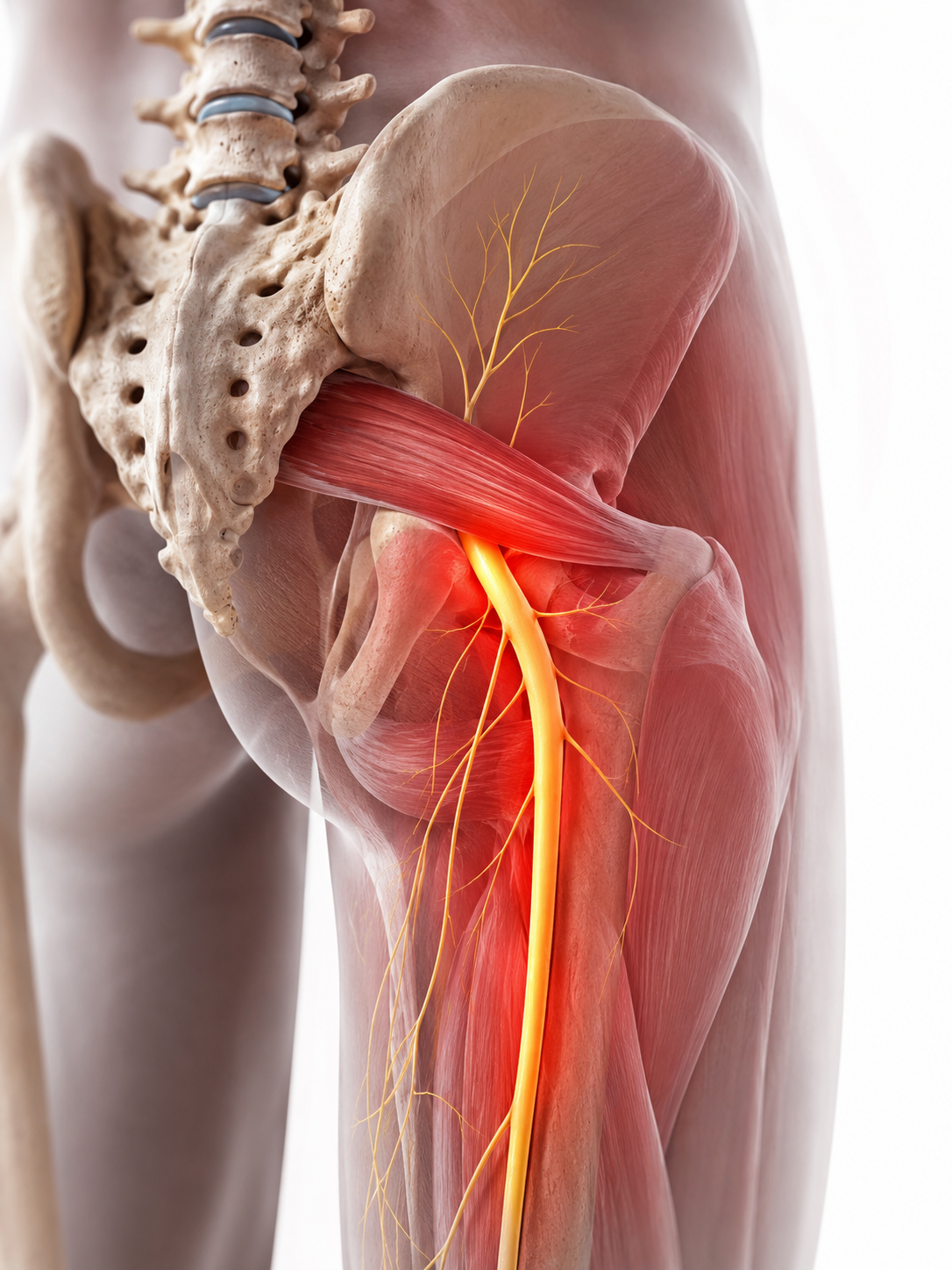
Which stretches to avoid based on symptom reactions?
There is no universal list of prohibited stretches. The right choice depends on the probable cause and the actual reaction of the patient. A stretch becomes less appropriate when it increases the nerve path or neurological signs.
| Stretch or situation | Why to be cautious | Signs to watch for |
|---|---|---|
| Straight leg stretch | May increase tension on the sciatic nerve. | Electric pain or tingling down to the foot. |
| Aggressive hamstring stretch | May be confused with a muscle strain while the nerve is irritated. | Pain radiating below the knee. |
| Forced piriformis stretch | May increase local compression or tension in certain patients. | Buttock pain radiating down the leg. |
| Prolonged trunk flexion | May worsen certain disc profiles. | Pain radiating to the calf or foot. |
| Repeated stretches despite worsening | Repeating a poorly tolerated movement can prolong irritation. | More intense symptoms after the session. |

Why personalized evaluation is essential
Choosing a stretch without understanding the cause can lead to worsening. It is necessary to determine if the pain originates more from a lumbar nerve root, a disc, a foramen, a narrow lumbar canal, localized buttock pain, the hip, or another cause.
The evaluation aims to compare the route of the pain, aggravating positions, better tolerated movements, tingling, numbness, strength, and walking. It helps avoid stretches that actually aggravate the nerve pathway.
Immediate Reaction
Observe if the stretch only increases local tension or alleviates the pain.
Reaction After the Stretch
Check if the symptoms remain worsened after the stretch or return to normal quickly.
What to do if a stretch worsens sciatica?
The first step is to stop forcing the stretch that reproduces or increases the nerve pathway. It may be useful to note which movement triggers the pain, how far it extends, how long it lasts, and if it is accompanied by numbness or weakness.
According to the assessment, non-surgical and non-invasive approaches can be discussed. If the table suggests a lumbar origin, the approach should target the likely cause: disc, foramen, lumbar canal, disc pinch, stenosis, or another mechanical factor. If the cause is rather hip or joint related, the advice should be adapted.
| Response to Stretching | Priority | Why |
|---|---|---|
| Slight local tension | Adjust the intensity and duration. | A gentle muscle tension can sometimes be tolerated. |
| Downward pain | Stop or modify the stretch. | The downward trajectory increases caution. |
| Numbness or tingling | Identify the area and evolution. | These signs may indicate nerve irritation. |
| Weakness after stretching | Quick re-evaluation. | The loss of strength changes the level of safety. |
Stretching and Clinical Orientation
An educational page like this serves to better understand possible reactions, but it does not replace an evaluation. Stretches should be interpreted according to the likely cause, pain pathway, neurological signs, strength, and reaction after movement.
For a local appointment or a geolocalized treatment page, the main conversion page should be hosted on the TAGMED Clinic site to avoid SEO cannibalization with the educational content from SOS Sciatica.
The educational pages of SOS Sciatica should explain the causes and guide the reader. Local treatment, appointment, and conversion pages should remain on the TAGMED Clinic site.
Understanding the reaction
Local muscle tension and descending nerve pain do not have the same meaning.
Adapting the advice
The likely cause should guide stretches, rather than a general routine applied to everyone.
Frequently Asked Questions about Stretches and Sciatica
Are stretches good for sciatica?
Sometimes yes, sometimes no. A stretch can be useful if it remains comfortable and does not increase pain lower down. It may be poorly tolerated if it increases nerve signs.
Why does a stretch increase my sciatic pain?
It may increase tension on a nerve root or along the sciatic nerve pathway. Pain that travels down, burns, or causes tingling should be taken seriously.
Should I stretch the piriformis with sciatica?
Not automatically. The piriformis is sometimes involved, but often overestimated. If pain radiates below the knee or down to the foot, a lumbar cause should also be considered.
Are hamstring stretches recommended?
They may be poorly tolerated if the pain is nerve-related. A local muscle strain is different from pain that travels down to the calf or foot.
Should I continue if the stretch hurts?
No, especially if the pain travels lower, becomes electric, increases numbness, or causes tingling. Movement should be reduced or stopped.
Can stretching aggravate a herniated disc?
For some people, yes, especially if the stretch combines lumbar flexion, straight leg, and downward pain. The response of the symptoms should guide caution.
What is the difference between muscle pain and nerve pain?
Muscle pain is often localized and manageable. Nerve pain can be electric, burning, radiating, and associated with tingling or numbness.
When to consult after a stretch?
You should consult if stretching triggers pain that goes down to the foot, extended numbness, weakness, a dragging foot, or persistent worsening.
Are exercises preferable to stretches?
It depends on the likely cause and the patient’s reaction. Some active movements are better tolerated than passive stretches, but evaluation should guide the choice.
Can one resume stretching after sciatica?
Yes, in some cases, but the recovery should be gradual, gentle, and adapted. Symptoms should not worsen or increase after the session.
Does stretching lower your pain?
A personalized assessment can help determine if a stretch worsens nerve irritation or if the pain is rather due to another lumbar, gluteal, joint, or mechanical cause.
Dr Sylvain Desforges, B.Sc., D.O., N.D., osteopath

Editorial information, sources and limitations
This content is intended to inform patients about sciatica, possible causes, warning signs, and care options. It does not replace an individualized assessment.
Reference sources
References are selected according to the subject of the page: guidelines, systematic reviews, then institutional resources.
- NICE NG59 – Low back pain and sciatica in over 16s — National guideline
- HAS – Management of patients with common low back pain — French national guideline
- Cochrane – Corticosteroid injections for treatment of sciatica — Systematic review
- NCBI Bookshelf – Sciatica — Clinical institutional resource
Complementary resources from the TAGMED network
These internal resources complement the clinical information and thematic linking. They do not replace national guidelines or systematic reviews.
Editorial note on decompression
Clinical resource from the TAGMED network; it does not replace national guidelines. Some guidelines use the term “traction” and recommend caution for low back pain with or without sciatica. Any decompression option should therefore be presented as an individualized clinical approach, with limitations, indications, and contraindications clearly explained.
Limitations of this information
The information on this page is general. It does not constitute a diagnosis, prescription, or guarantee of results. Pain radiating into the leg may have several causes; assessment should consider clinical history, examination findings, symptom progression, and, when appropriate, complementary tests.
When to seek urgent medical care
Seek urgent medical care if you experience loss of bladder or bowel control, saddle anesthesia, major or progressive leg weakness, unexplained fever, pain after significant trauma, or severe pain that rapidly worsens.