


Musculoskeletal chronic pain: understand, evaluate, and better guide yourself
A pain that persists does not always correlate with a visible injury. It can involve mechanical, nervous, inflammatory, functional, psychological, and social factors that vary from one person to another.
This page explains the main mechanisms of chronic pain, its possible connection with lower back pain or sciatica, signs to watch for, and options that may be discussed after a personalized evaluation.
Three mechanisms of pain to distinguish
The classification of the dominant mechanism helps in choosing realistic goals. It does not rely on an isolated sensation or a medical image taken out of context. The history, symptom distribution, examination, function, and available investigations must be considered together.
| Mechanism | What it describes | Possible examples |
|---|---|---|
| Nociceptive | Activation of pain receptors by strain or tissue damage. | Symptomatic osteoarthritis, tendinopathy, muscle overload, or mechanical joint pain. |
| Neuropathic | Pain related to a lesion or disease of the somatosensory system. | Radiculopathy, pain consistent with irritation of a lumbar root, or peripheral neuropathy. |
| Nociplastic | Alteration in pain processing without sufficient evidence of tissue or nerve damage explaining the whole picture. | Diffuse pain, increased sensitivity, and symptoms disproportionate to the observed stresses. |
These mechanisms can coexist. A person with a disc injury may also develop heightened sensitivity, a loss of physical condition, and apprehension of movement that contribute to certain limitations.
What is the link between chronic pain and sciatica?
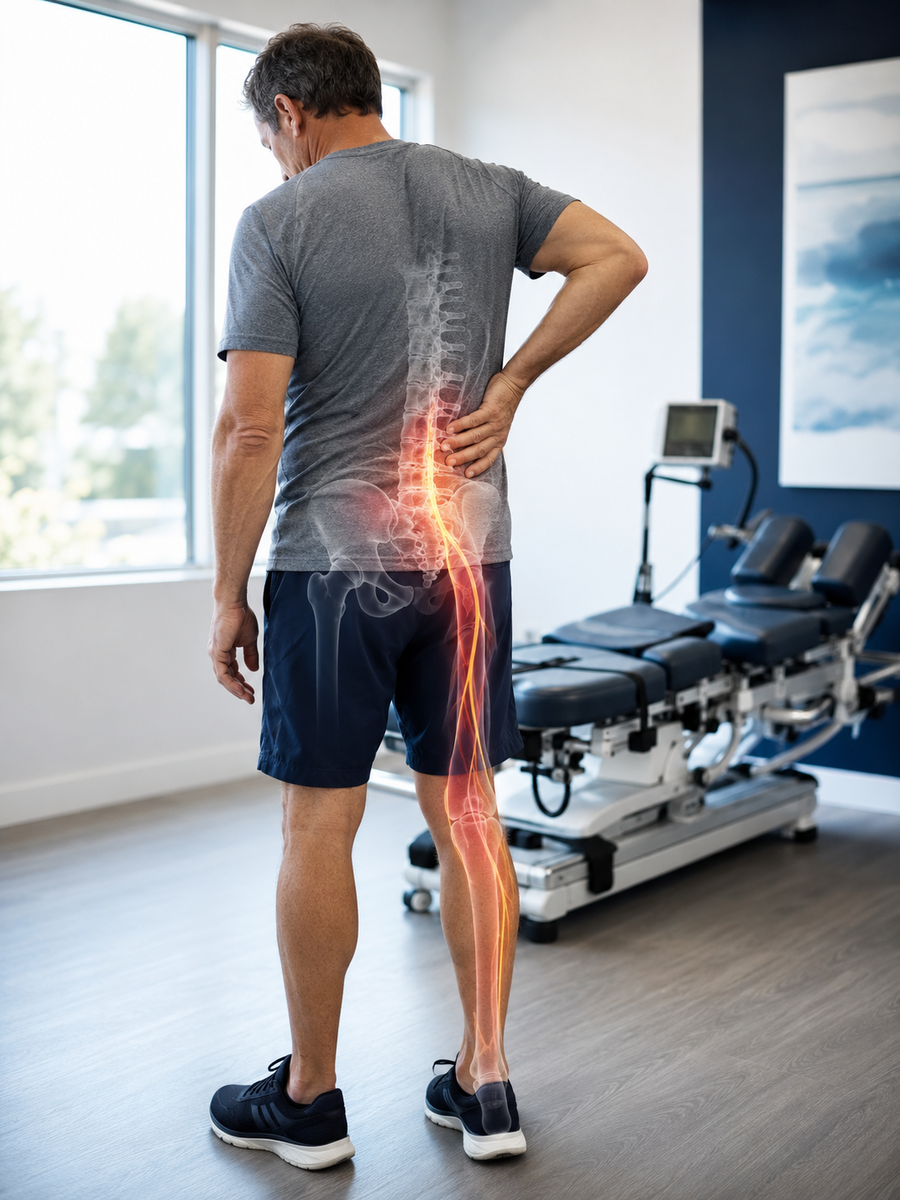
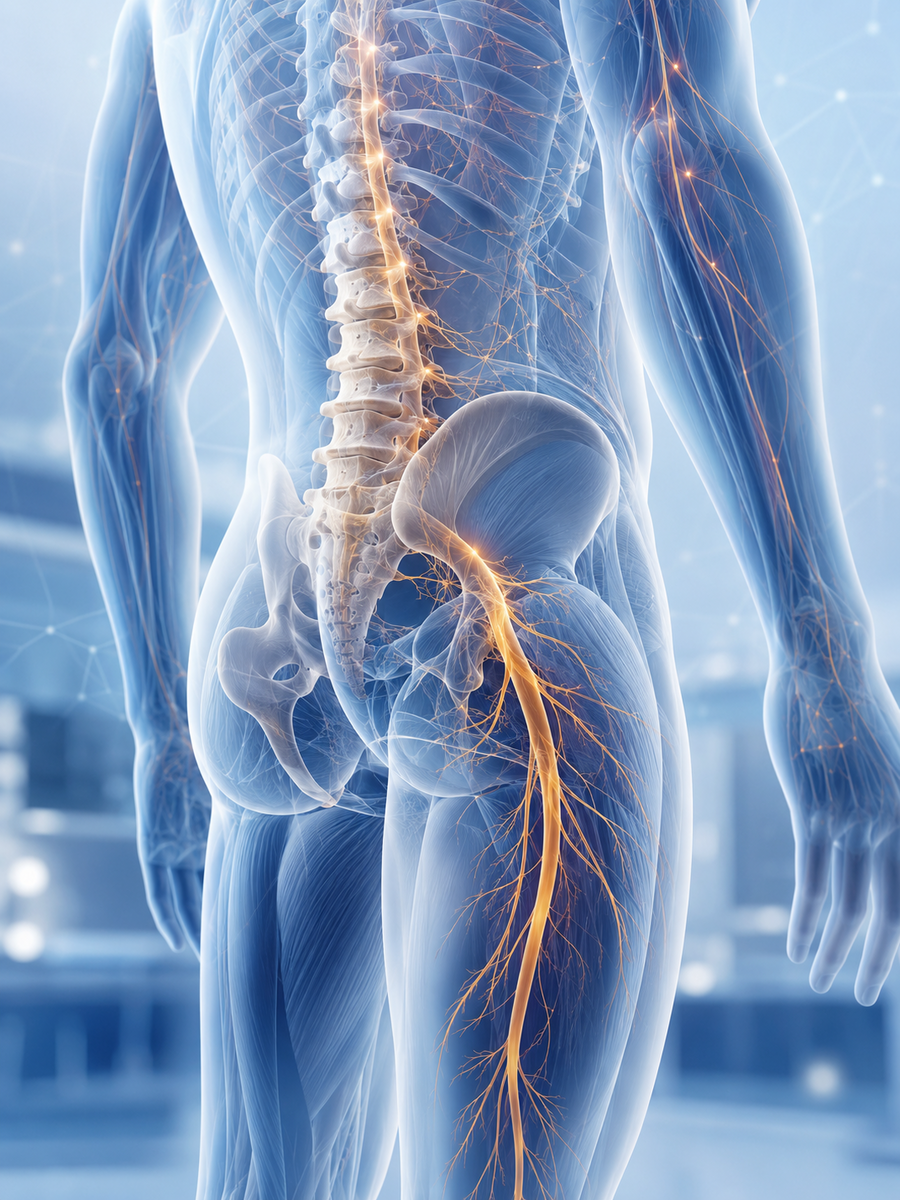
Sciatic pain can become persistent when the irritation of a lumbar nerve root prolongs or when several factors continue to maintain the symptoms. The pain can start from the lower back or buttock and radiate down the thigh, calf, foot, or toes.
Nerve Pathway
Pain that follows a consistent territory in the leg may suggest a radicular or neuropathic component.
Associated Sensations
Burning, electric shock, tingling, or numbness may accompany the pain.
Neurological Function
Weakness, difficulty lifting the foot, or progressive loss of sensitivity requires prompt attention.
Why does chronic pain affect daily life so much?
The persistence of pain can lead to a cycle of limitation: reduced activity, loss of ability, disrupted sleep, worry, isolation, and difficulty in resuming important tasks. Therefore, the goal is not only to measure the intensity of the pain but also to assess what the person can do and what they wish to regain.
Mobility
Walking, sitting, bending, lifting, or changing positions can become difficult.
Sleep
Pain can disrupt falling asleep, changing positions, and recovery.
Work
Tolerance to postures, efforts, and concentration may decrease.
Personal Life
Hobbies, relationships, and confidence in movement may be affected.
An evaluation before choosing an intervention
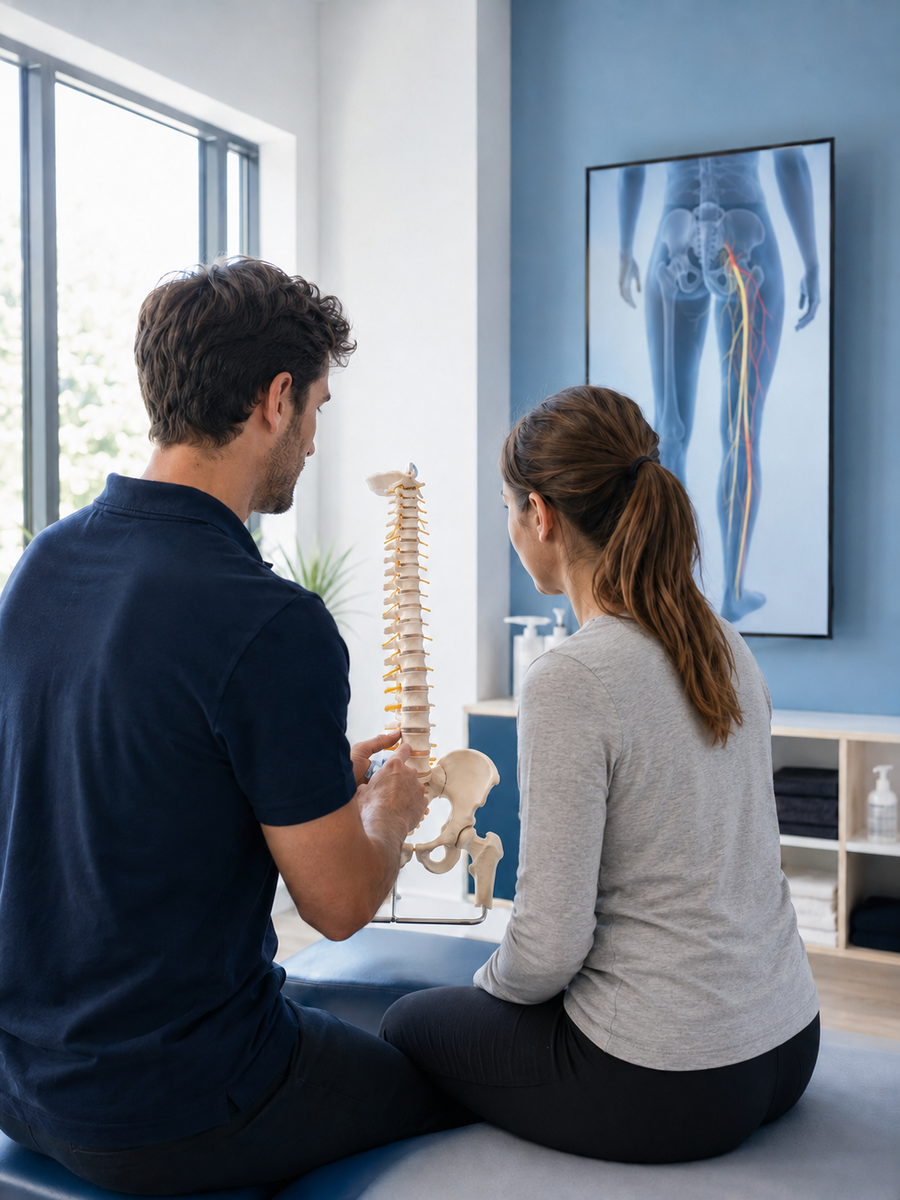
The evaluation aims to clarify the likely mechanism, functional impact, and situations requiring medical guidance. It also helps set measurable goals: walking longer, sleeping better, resuming a task, or reducing episodes of exacerbation.
- Onset, duration, location, and evolution of the pain.
- Positions, movements, and loads that worsen or relieve symptoms.
- Presence of numbness, tingling, or weakness.
- Ability to walk, work, sleep, and carry out important activities.
- Treatments already attempted, medications, and observed effects.
- Available imaging reports and alignment with symptoms.
- Warning signs and contraindications for the proposed interventions.
What signs require urgent medical consultation?
An old pain does not exclude the occurrence of a new problem. Consult a doctor or emergency service quickly when the situation involves one or more of the following signs:
Neurological signs
Significant or progressive weakness, foot drop, saddle anesthesia, or loss of bowel or bladder control.
General context
Fever, chills, unexplained weight loss, known cancer, immunosuppression, or unusual nighttime pain.
Trauma or exacerbation
Recent trauma, new severe pain, sudden disability, or rapid worsening without explanation.
What principles guide care?
Contemporary recommendations favor a personalized and coordinated approach rather than a single technique. For primary chronic low back pain, the World Health Organization particularly emphasizes education, appropriate activity or exercise, certain physical interventions, psychological approaches, and the cautious use of medications when indicated.
| Component | Objective | Cautionary Note |
|---|---|---|
| Information and self-management | Better understand aggravating factors and plan for a gradual return. | Avoid alarmist messages and promises of universal cure. |
| Adapted activity | Preserve or rebuild capacity according to tolerance. | An exercise should be modified if it causes neurological or lasting aggravation. |
| Support for sleep and well-being | Reduce factors that amplify pain and fatigue. | Psychological symptoms deserve attention without minimizing physical pain. |
| Physical or manual care | Temporarily improve mobility and facilitate a return to activities. | They should integrate into a broader plan and be re-evaluated based on response. |
| Medical evaluation | Clarify a diagnosis, medications, investigations, or specialized referral. | Essential when the situation exceeds the practice scope of osteopathy. |
What role for neurovertebral decompression?
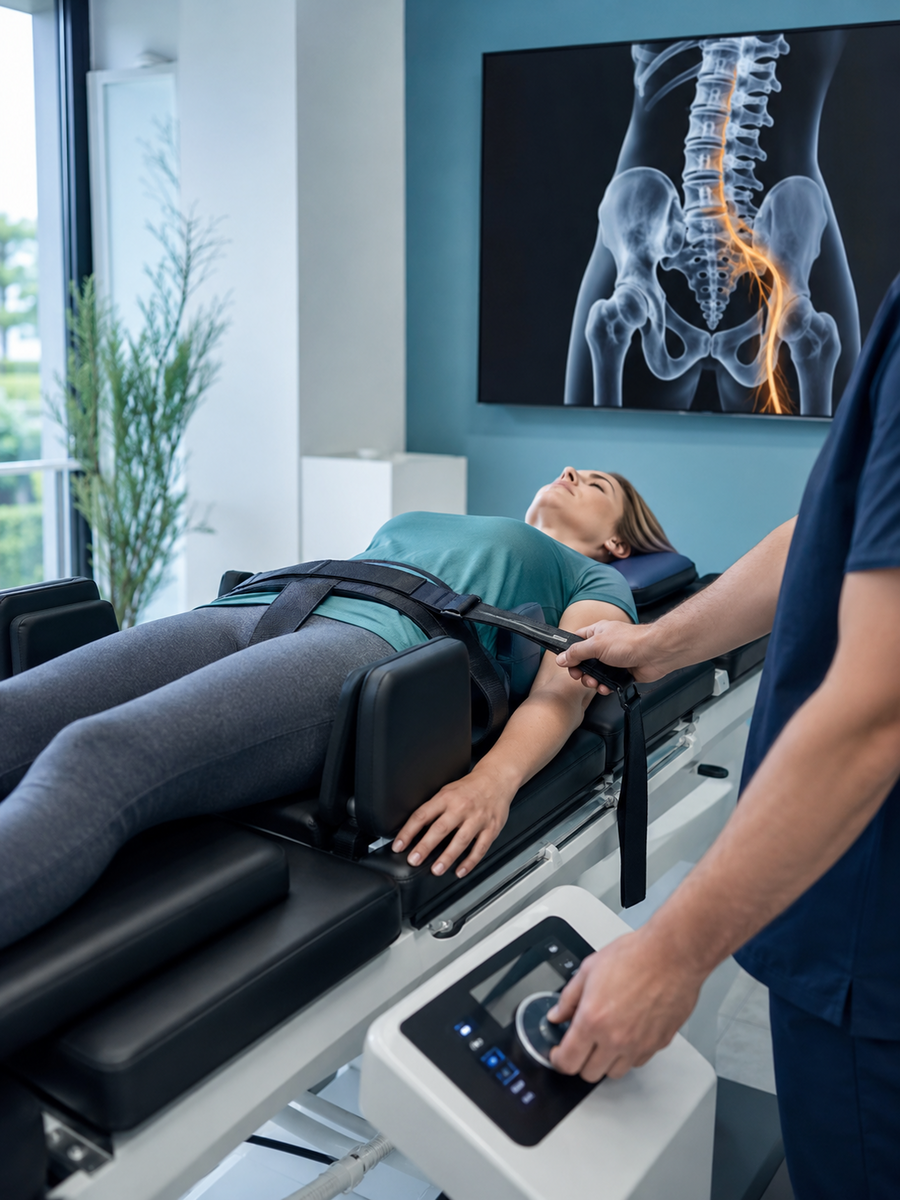
The spinal decompression therapy is a form of controlled mechanical traction applied to the spine using a specialized table. At TAGMED Clinic, it can be discussed after evaluation when the condition is compatible with certain disc or mechanical factors and no contraindications are identified.
It is not suitable for all chronic pain, does not automatically reposition a disc, and does not guarantee a result. The WHO recommendations on primary chronic low back pain and those from NICE on low back pain with or without sciatica advise against routine use of traction. This information should be part of an informed decision about potential benefits, limitations, costs, and other options.
Eligibility
Check the pain profile, available examinations, contraindications, and warning signs.
Supervised Trial
Define functional objectives and monitor tolerance as well as the evolution of symptoms.
Reevaluation
Modify or interrupt the approach if the pain worsens or if no significant progress is observed.
Chronic Pain and TAGMED Clinic
The TAGMED Clinic offers osteopathic evaluations and non-surgical, non-invasive approaches for certain spinal pain, pain compatible with sciatica, joint pain, muscle pain, and sports injuries, depending on the situation.
The care that may be discussed includes motorized neurovertebral decompression, specific osteopathy, or precision impact. The choice depends on the probable mechanism, function, contraindications, and observed response.
TAGMED Clinic Terrebonne
1150 Lévis Street, Suite 200
Terrebonne, QC, J6W 5S6
Phone: 450-704-4447
Days: Monday, Wednesday, and Friday
TAGMED Clinic Montreal / Mount Royal
1140 Beaumont Avenue
Mount Royal, QC, H3P 3E5
Phone: 1-877-672-9060
Days: Tuesday and Thursday
Frequently Asked Questions about Chronic Pain
After how long does pain become chronic?
Pain is generally considered chronic when it persists or recurs for more than three months. This duration alone does not allow for identifying the cause.
Does chronic pain mean that tissues are always damaged?
Not necessarily. An injury or illness can contribute to the pain, but the sensitivity of the nervous system, function, sleep, and other factors can also influence its persistence.
What is the difference between nociceptive, neuropathic, and nociplastic pain?
Nociceptive pain is related to the activation of tissue receptors, neuropathic pain to an injury or disease of the somatosensory system, and nociplastic pain to a disruption in pain processing that is not adequately explained by the first two mechanisms. They can coexist.
Is sciatica a neuropathic pain?
Confirmed lumbar radiculopathy may have a neuropathic component. However, any pain that radiates down the leg is not automatically sciatica nor neuropathic pain.
Is an MRI always necessary?
No. Imaging depends on the context, neurological signs, red flags, duration, and impact of the symptoms. A doctor determines if it is indicated.
Is complete rest recommended?
Prolonged rest can reduce physical capacity. An appropriate and gradual activity is generally preferred, unless contraindicated or in a phase of worsening requiring professional advice.
Is decompression suitable for all chronic pain?
No. It can be considered in certain lumbar or disc profiles after evaluation, but it is not a universal solution and traction is not routinely recommended by several guidelines.
What results should be monitored?
In addition to pain intensity, it is useful to monitor walking, sleep, tolerance to positions, work, significant activities, and neurological signs.
Sources and references
- International Association for the Study of Pain — definitions of chronic pain syndromes.
- World Health Organization — non-surgical management of primary chronic low back pain.
- NICE NG59 — low back pain and sciatica: assessment and management.
- Government of Canada — information on chronic pain.
Is your pain persistent or radiating down your leg?
An assessment can help clarify the probable mechanisms, warning signs, functional goals, and the relevance of a non-surgical approach. No results can be guaranteed, and medical guidance remains necessary when the situation demands it.
Sylvain Desforges, B.Sc., D.O., N.D., osteopath
Editorial information, sources and limitations
This content is intended to inform patients about sciatica, possible causes, warning signs, and care options. It does not replace an individualized assessment.
Reference sources
References are selected according to the subject of the page: guidelines, systematic reviews, then institutional resources.
- NICE NG59 – Low back pain and sciatica in over 16s — National guideline
- HAS – Management of patients with common low back pain — French national guideline
- Cochrane – Corticosteroid injections for treatment of sciatica — Systematic review
- NCBI Bookshelf – Sciatica — Clinical institutional resource
Complementary resources from the TAGMED network
These internal resources complement the clinical information and thematic linking. They do not replace national guidelines or systematic reviews.
Editorial note on decompression
Clinical resource from the TAGMED network; it does not replace national guidelines. Some guidelines use the term “traction” and recommend caution for low back pain with or without sciatica. Any decompression option should therefore be presented as an individualized clinical approach, with limitations, indications, and contraindications clearly explained.
Limitations of this information
The information on this page is general. It does not constitute a diagnosis, prescription, or guarantee of results. Pain radiating into the leg may have several causes; assessment should consider clinical history, examination findings, symptom progression, and, when appropriate, complementary tests.
When to seek urgent medical care
Seek urgent medical care if you experience loss of bladder or bowel control, saddle anesthesia, major or progressive leg weakness, unexplained fever, pain after significant trauma, or severe pain that rapidly worsens.
