


Neurovertebral and sciatic decompression: a targeted approach depending on the cause
Motorized neurovertebral decompression is a non-surgical and non-invasive approach that can be considered in certain sciatic pain profiles, especially when the symptoms seem compatible with a disc origin or mechanical compression of a lumbar nerve root.
However, it should not be presented as a universal solution. Pain that descends into the leg can have several causes: disc herniation, disc protrusion, disc pinching, foraminal stenosis, spinal stenosis or mechanical irritation of a nerve root. This is why evaluation remains essential before determining whether this approach is relevant.
How can neurovertebral decompression be related to sciatica?
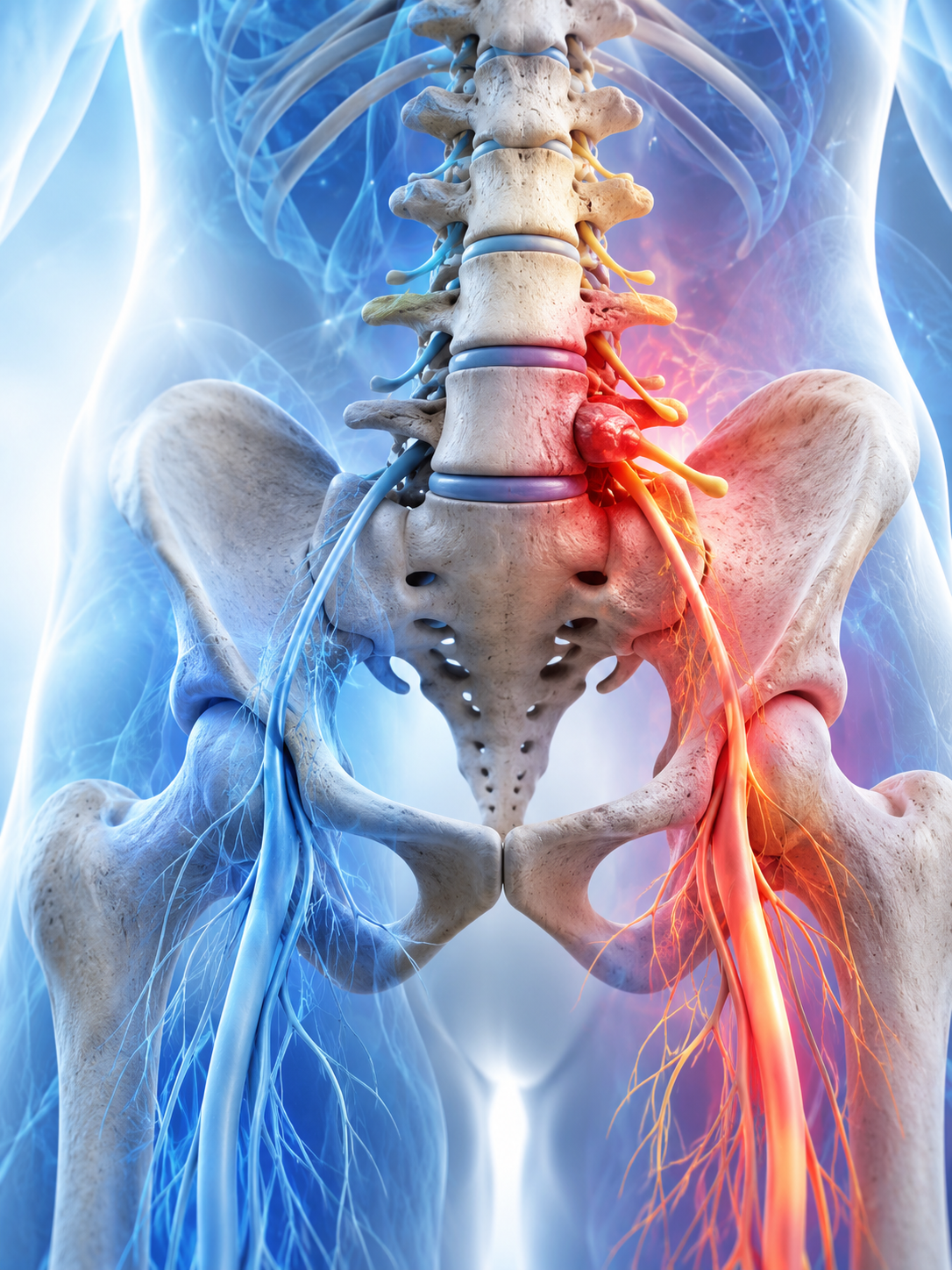
In some cases, sciatic pain may be linked to mechanical stress on a nerve root. This constraint can come from a disc that bombs, a herniated disc, a reduction in disc pitch or a narrowing of the passage where the nerve root comes out.
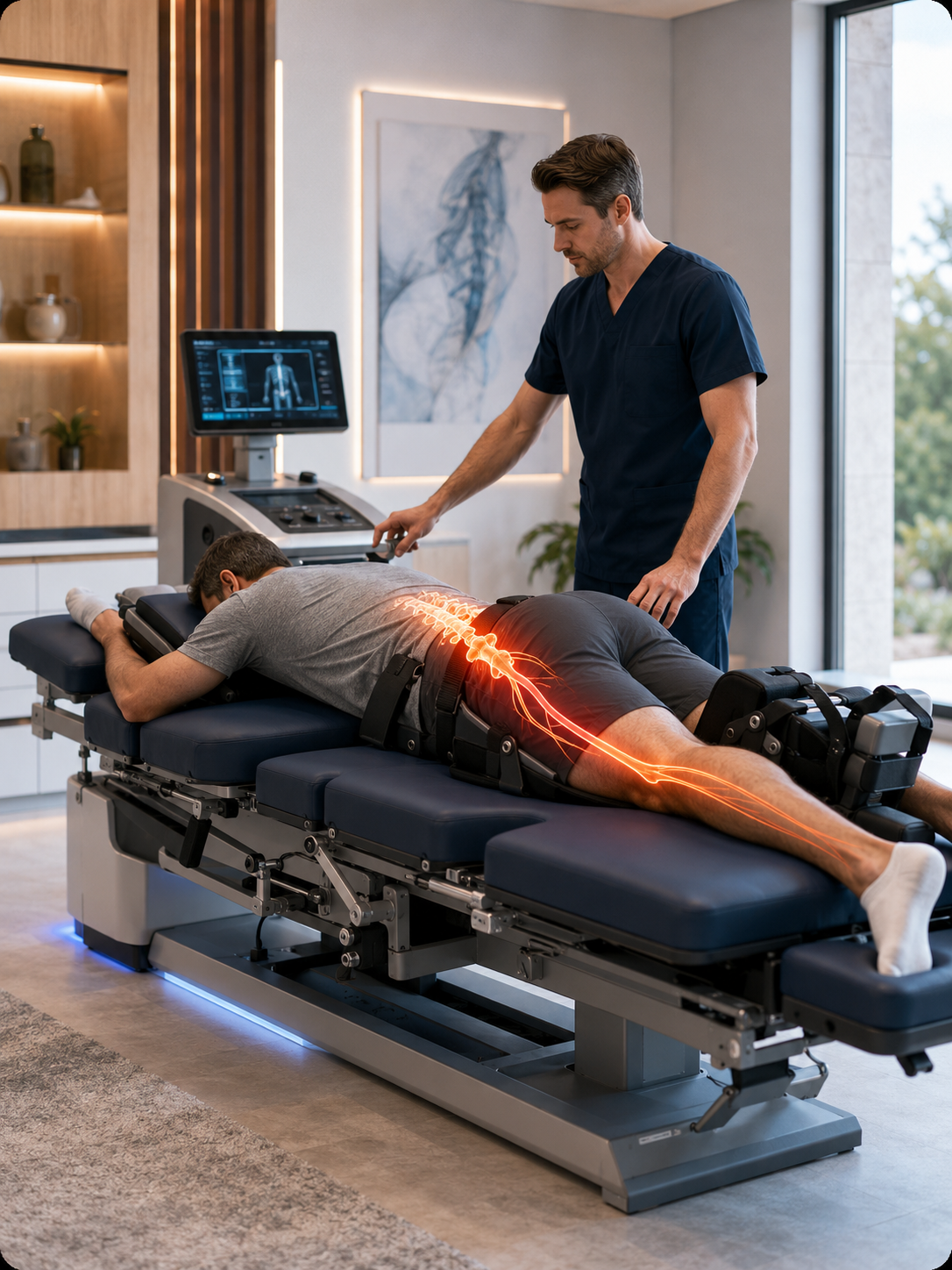
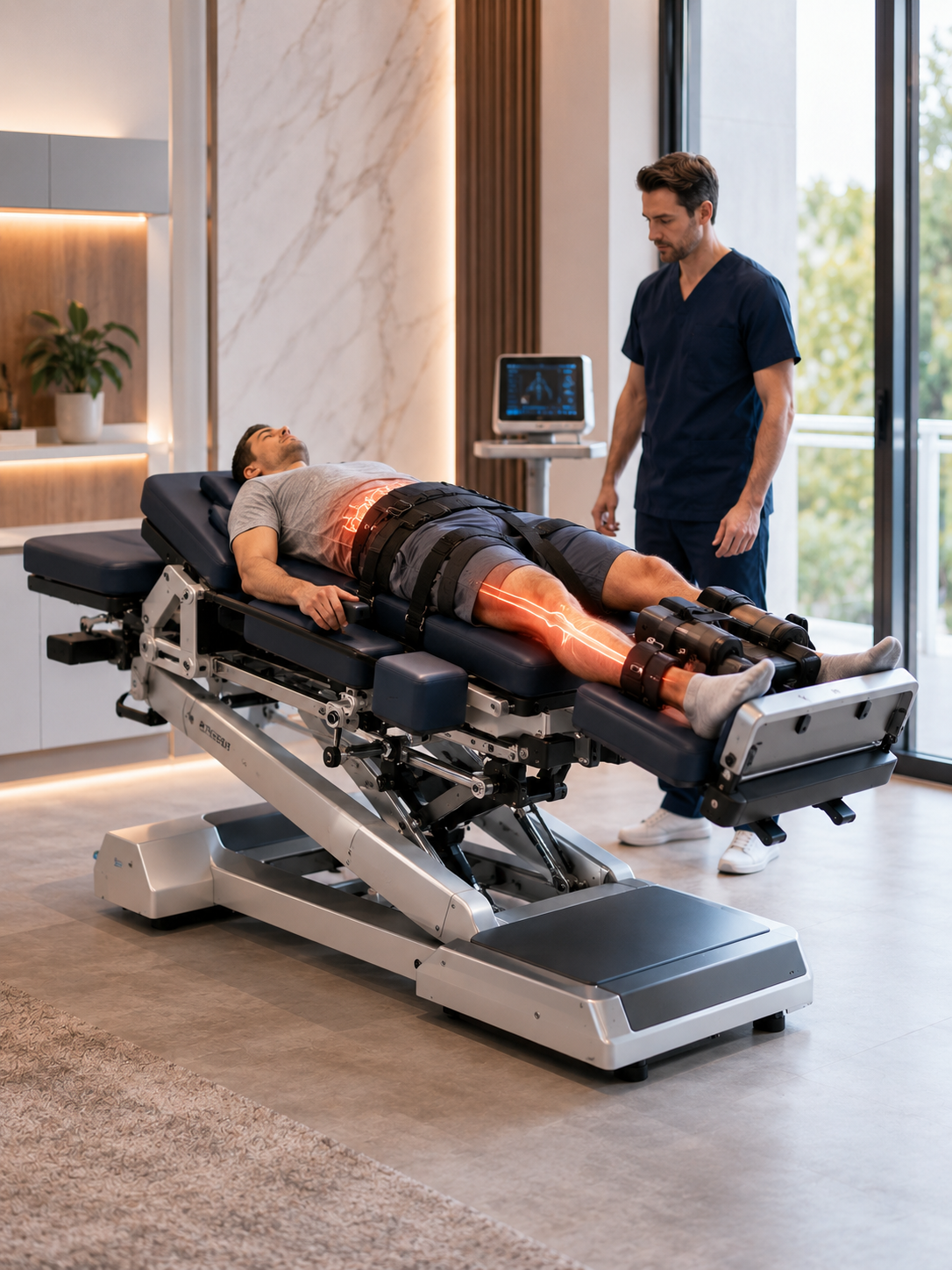
Motorized neurovertebral decompression applies controlled traction force. The objective is to reduce certain constraints on the sensitive lumbar structures. It is generally used in a context where one seeks to reduce the mechanical pressure, improve functional tolerance and allow a prudent progression of activities.
| Possible situation | Link with sciatica | Possible relevance of decompression |
|---|---|---|
| lumbar disc herniation | The nerve root can be irritated by a disc component. | Can be considered if the profile is compatible and without an emergency. |
| Protrusion or bulge disc | The disk can reduce the available space around the root. | Can be considered depending on location, symptoms and tolerance. |
| disc pinch | The decrease in disc height can influence the forams. | May be relevant in some well-selected mechanical profiles. |
| Foraminal stenosis | The exit passage from the nerve root can be narrowed. | Requires careful evaluation, as tolerance varies among patients. |
| Lumbar spinal stenosis | The lumbar canal can be narrower, sometimes with walking symptoms. | should be assessed with caution, especially if the symptoms are bilateral or progressive. |
In what profiles can neurovertebral decompression be considered?
Neurovertebral decompression is not chosen just because a person says they have sciatica. It is considered when the clinical profile suggests that the pain could be influenced by a mechanical or disc component, and when the evaluation does not reveal any obvious signs of urgency or contraindication.
Descending pain in the leg
Pain that starts from the lower back or buttocks and descends towards the thigh, calf or foot may suggest lumbar nerve irritation.
symptoms aggravated by certain positions
Prolonged sitting, trunk flexion or certain movements can sometimes increase symptoms of disc origin.
Context of hernia or disc protrusion
When the imaging or clinical picture suggests a disc attack, decompression may be part of the options discussed.
Persistent pain despite precautions
Pain that does not resolve quickly or that limits activities may warrant a more structured assessment.
absence of red flag
The presence of severe neurological signs or systemic symptoms should be excluded before considering this approach.
Realistic functional goals
The objective is to improve tolerance and function, without promising an immediate disappearance or guarantee of pain.
what neurovertebral decompression should not replace
Neurovertebral decompression must be integrated into a careful clinical approach. It does not replace warning signs, pain path analysis, muscle strength examination, sensitivity assessment, or medical reference when the context requires it.
Nor should it be confused with a simple stretch or with a non-specific traction. Parameters, target region, duration, applied force and progression should be adjusted depending on the patient.
- It does not replace a medical consultation in the presence of emergency signs.
- It does not replace imaging analysis when it is relevant.
- It is not automatically suitable for all lower back pain.
- It should not be continued if neurological symptoms worsen.
- It must be adapted gradually according to the patient’s tolerance.
Why personalized evaluation is essential
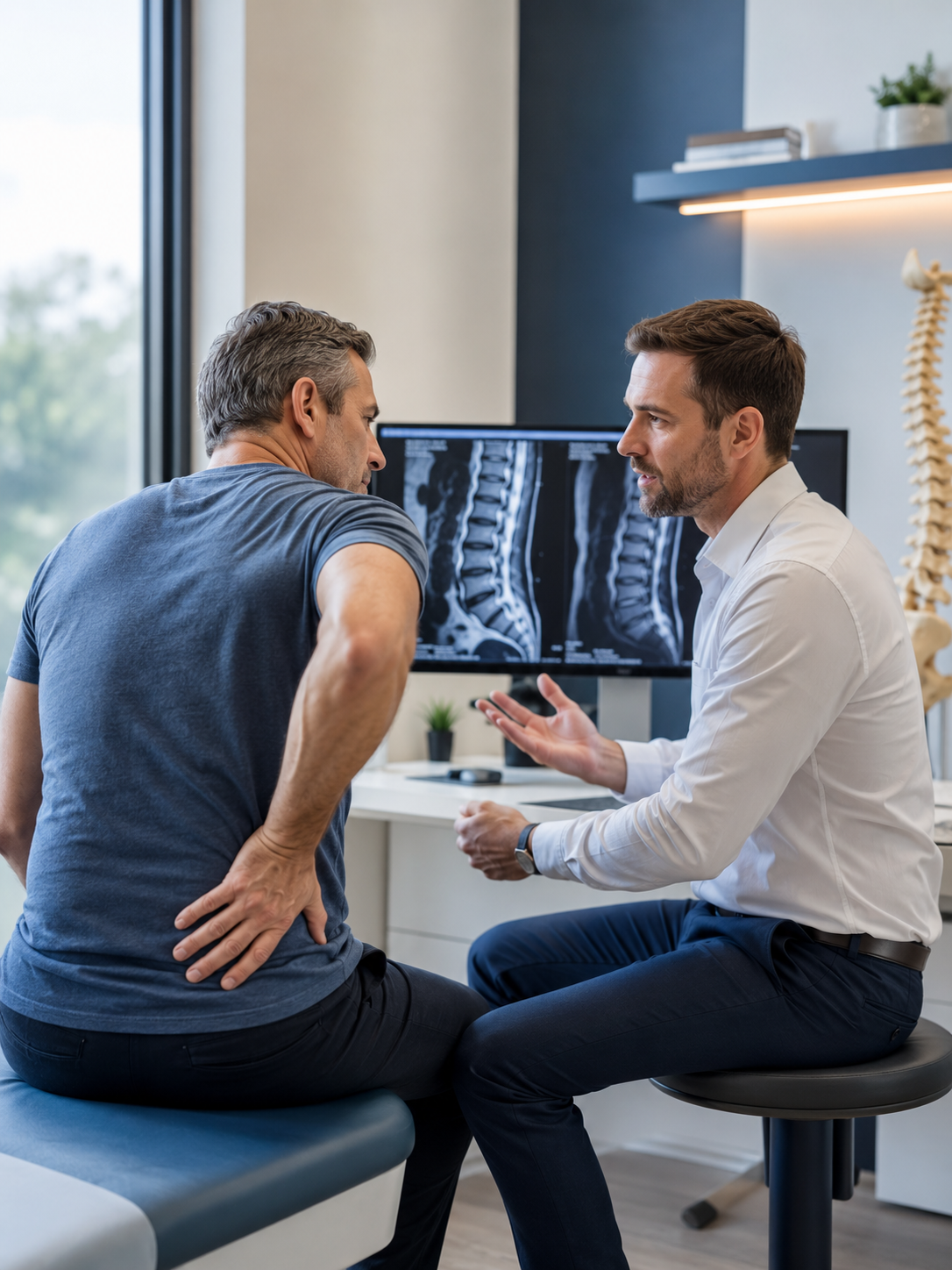
The same pain described as “sciatica” can correspond to very different situations. Two patients may experience leg pain, but one may have recent disc irritation, the other foraminal stenosis, chronic pain, referred pain or neurological impairment requiring another orientation.
| rated item | Why is it useful | Impact on the decision |
|---|---|---|
| Pain Path | Allows you to see if the pain follows a territory compatible with L4, L5 or S1. | guides the understanding of the possibly involved root. |
| muscle strength | Look for weakness in the foot, calf or leg. | A progressive weakness requires increased caution. |
| Sensitivity and numbness | Allows you to monitor the progress of neurological symptoms. | A deterioration may require another orientation. |
| reaction to positions | Sitting, standing, walking, flexing or extending can influence symptoms. | Helps to adapt settings and recommendations. |
| Alert signs | Look for situations that should not be trivialized. | Determines whether an urgent medical consultation is required. |
Neurovertebral decompression at the TAGMED Clinic
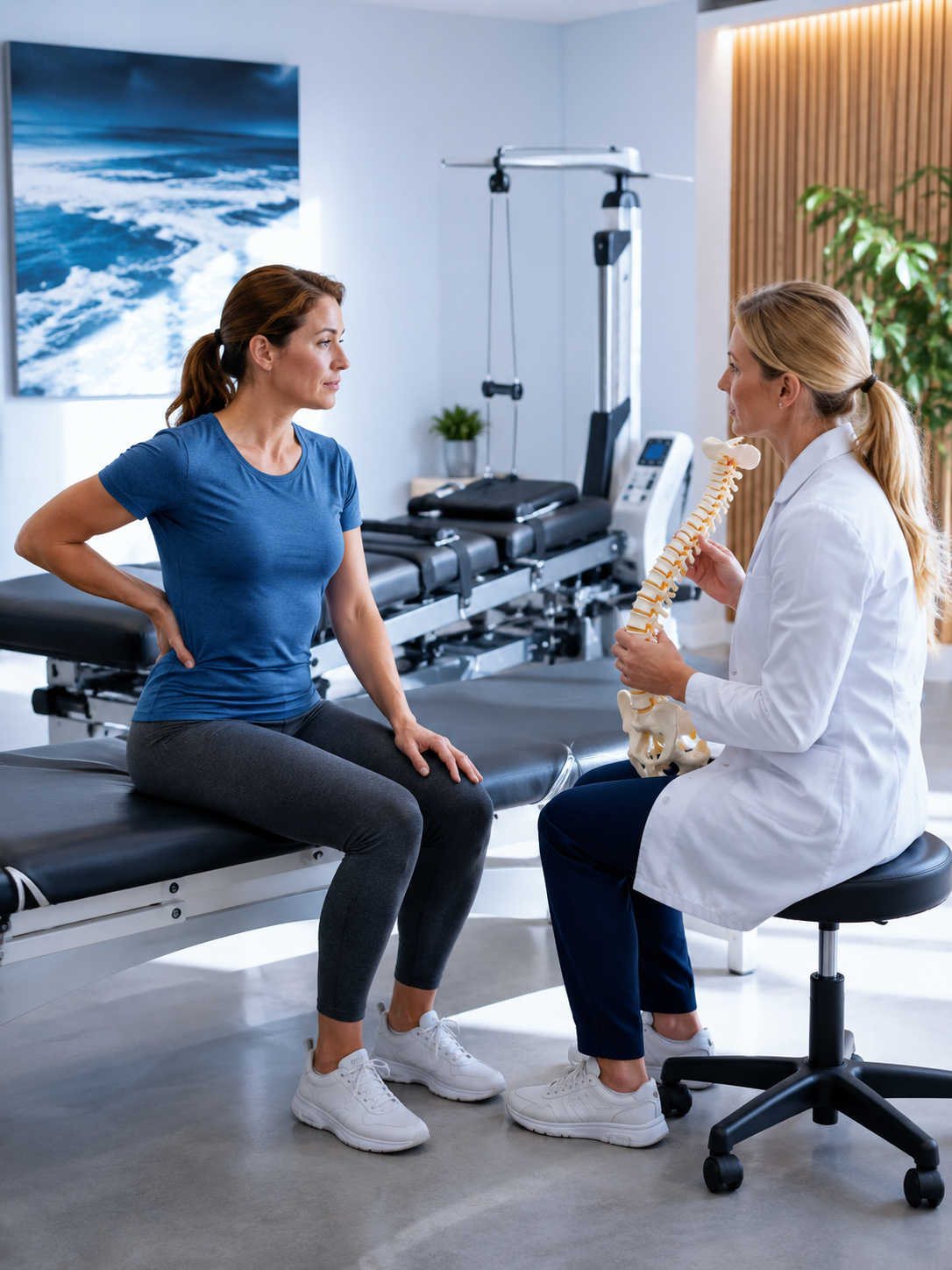
At the TagMed clinic, motorized neurovertebral decompression is used in a personalized approach for certain profiles of vertebral and sciatic pain. The objective is to determine whether the clinical picture corresponds to a situation where this approach may be relevant.
The typical rate is $140 per consultation or treatment. The services are not covered by the RAMQ, but osteopathy receipts may be provided and are eligible for reimbursement by several private insurance plans according to your contract.
Terrebonne
1150 rue Lévis, Suite 200
Terrebonne, QC, J6W 5S6
Phone: 450-704-4447
Montreal / Mount Royal
1140 Avenue Beaumont
Mount Royal, QC, H3P 3E5
Phone: 1-877-672-9060
Frequently Asked Questions about Neurovertebral Decompression and Sciatica
Is neurovertebral decompression a treatment for sciatica?
It may be part of the non-surgical options for certain sciatic pain profiles, especially when the symptoms are compatible with a disc or mechanical origin. However, it must be preceded by a personalized evaluation.
Is it suitable for all sciatica?
No. Some sciatica require an urgent medical assessment, others may be linked to causes that are less favorable to decompression. The clinical context determines the relevance of this approach.
Can decompression be used in case of herniated disc?
It can be considered in some cases of pain compatible with a lumbar disc herniation, if the evaluation does not reveal any sign of urgency or contraindication. The decision must be individualized.
How many sessions are needed?
The number of sessions depends on the duration of the symptoms, their intensity, the level reached, the patient’s tolerance and the clinical course. It is not prudent to promise a fixed number applicable to all.
Is neurovertebral decompression painful?
It should be progressive and appropriate. A mild discomfort can sometimes occur, but a clear increase in leg pain, weakness or neurological aggravation requires reassessment.
Can we do exercises at the same time?
Exercises should be chosen with caution. Some movements may help, while others may worsen symptoms depending on the cause. They must be adapted to the clinical profile.
Does decompression replace an MRI?
No. Imaging can be useful in some contexts, especially in the presence of persistent, progressive or neurological symptoms. Decompression does not replace medical assessment when imaging is indicated.
What signs do you need to consult quickly?
Loss of urinary or intestinal control, stool anesthesia, significant weakness, rapidly progressive pain, fever or recent trauma should be assessed without delay.
Does the TagMed Clinic use the laser Or shock waves for sciatica?
No. Medical laser and shock waves are not used at the TagMed Clinic for the treatment of back pain or sciatica.
What is the realistic goal of this approach?
The objective is to improve tolerance, reduce certain mechanical constraints and promote better function when the clinical profile lends itself to it. No approach should be presented as a guarantee of results.
Could your sciatica come from a targeted mechanical approach?
A personalized assessment can assist in determining whether your pain is compatible with disc or mechanical irritation and whether motorized neurovertebral decompression can be relevant in your situation.
Dr Sylvain Desforges, B.Sc., D.O., N.D., Osteopath
Editorial information, sources and limitations
This content is intended to inform patients about sciatica, possible causes, warning signs, and care options. It does not replace an individualized assessment.
Reference sources
References are selected according to the subject of the page: guidelines, systematic reviews, then institutional resources.
- NICE NG59 – Low back pain and sciatica in over 16s — National guideline
- HAS – Management of patients with common low back pain — French national guideline
- Cochrane – Corticosteroid injections for treatment of sciatica — Systematic review
- NCBI Bookshelf – Sciatica — Clinical institutional resource
Complementary resources from the TAGMED network
These internal resources complement the clinical information and thematic linking. They do not replace national guidelines or systematic reviews.
Editorial note on decompression
Clinical resource from the TAGMED network; it does not replace national guidelines. Some guidelines use the term “traction” and recommend caution for low back pain with or without sciatica. Any decompression option should therefore be presented as an individualized clinical approach, with limitations, indications, and contraindications clearly explained.
Limitations of this information
The information on this page is general. It does not constitute a diagnosis, prescription, or guarantee of results. Pain radiating into the leg may have several causes; assessment should consider clinical history, examination findings, symptom progression, and, when appropriate, complementary tests.
When to seek urgent medical care
Seek urgent medical care if you experience loss of bladder or bowel control, saddle anesthesia, major or progressive leg weakness, unexplained fever, pain after significant trauma, or severe pain that rapidly worsens.
