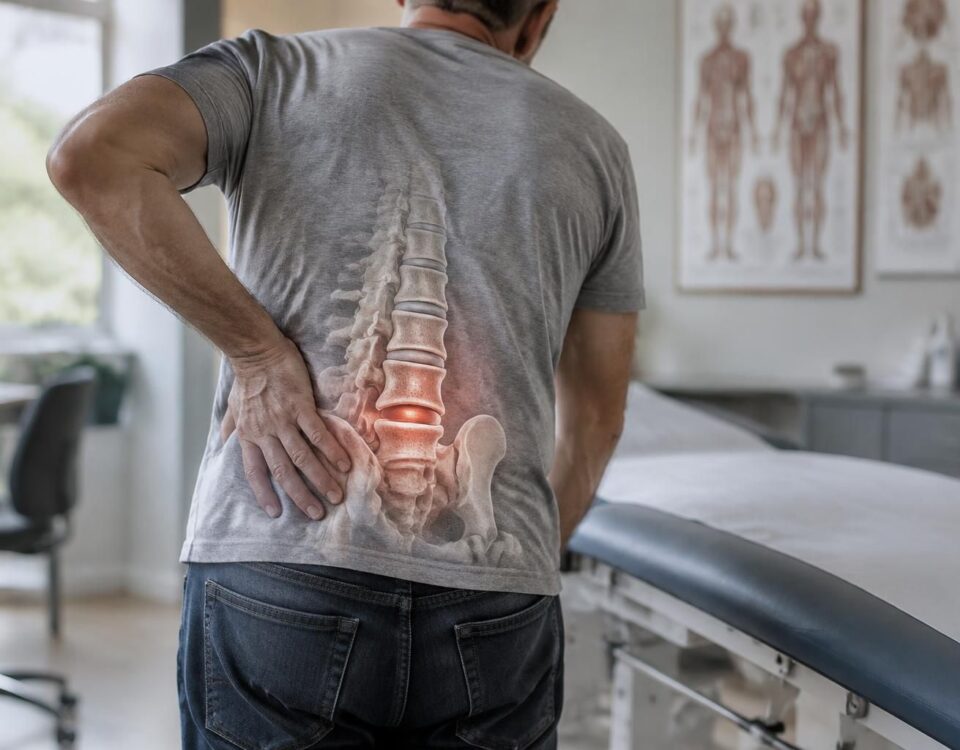



Sciatica and pain that increases while sitting
29/07/2026
Sciatica and workstation: common mistakes to avoid
29/07/2026
IN BRIEF
| In brief, Sciatica: nerve compression or chemical irritation describes the mechanisms of pain that follows the path of the sciatic nerve. What is it? pain radiating from the lower back to the leg, caused by either nerve compression of a lumbar root (L5/S1) or irritation around the nerve. Benefits: clarifying the mechanism allows for a precise diagnosis and a targeted non-surgical management (physiotherapy, exercises, posture). How does it work? the assessment identifies the type and painful path, and then a progressive rehabilitation plan is implemented. In Montreal, this service is particularly relevant for individuals suffering from radiating pain in the leg and seeking an effective solution without surgery. |
Sciatica is pain that follows the path of the sciatic nerve. It can result from a mechanical compression of a lumbar root (L5/S1), most often due to a herniated disc or narrowing of the spinal canal, causing pain, tingling, and weakness along the leg.
There is also chemical irritation around the nerve, related to inflammatory mediators, which can amplify the pain even without obvious compression.
Often, both mechanisms are involved: the pain is modulated by compression and inflammation. Therapeutic approaches aim to reduce compression when present and to manage inflammation and nerve sensitivity, with non-surgical options and appropriate exercises.
To evaluate your case and determine the dominant mechanism, contact a specialized team that offers a quick assessment and tailored solutions.
Sciatic pain can arise from nerve compression or chemical irritation around the nerve roots. This article, written by a health professional, explains how to distinguish between these two mechanisms, their manifestations, and appropriate management options for each profile.
Understanding the sciatic nerve and pain mechanisms
The sciatic nerve is the longest in the body. It originates in the L5 and S1 segments, descends in the buttock, runs along the back of the thigh, and then splits to reach the leg and foot. Pain that follows this path may come from nerve compression or chemical irritation caused by inflammation around the root. The pain is typically neuropathic, meaning it follows the path of the nerve and can present as an electric shock, burning, or tingling.
Nerve compression: mechanism and signs
Compression most often results from a herniated disc, lumbar canal narrowing, or other structures pinching the nerve root. The key sign is the painful path that precisely follows the affected root. Motor or sensory signs may appear, depending on whether L5 or S1 is involved. A careful clinical examination and, if necessary, imaging can clarify the mechanism.
Chemical irritation and inflammation: when pain is related to mediators
Chemical irritation occurs when inflammatory mediators irritate the nerve root or surrounding tissues. This can produce pain similar to compression, but the origins and responses to treatment may differ. Inflammation can increase nerve sensitivity and contribute to pain amplification, even in the absence of significant crushing.
How to differentiate these mechanisms during evaluation
The assessment prioritizes the exact path of the pain, the triggers, and the evolution. The clinician notes the precise location on the leg, pain with walking, and the presence of weakness or reduced sensation. The assessment may include neurological tests and, if necessary, complementary examinations to confirm compression or inflammation.
To deepen these distinctions and the associated approaches, consult the resources Sciatica: nerve pain or mechanical pain, or pain that increases while sitting. You can also explore the signals sent by the leg and typical signs on the signals sent by the leg and the mechanical and inflammatory causes.
What to do in the face of sciatica: management options
Management aims to reduce pain, restore mobility, and prevent recurrences. The pathway may include a detailed assessment, advice on positions and daily movements, and appropriate manual techniques. For a comprehensive approach tailored to Montreal or Terrebonne, TAGMED Clinic offers multidisciplinary management based on the initial assessment. For more information and to make an appointment, visit TAGMED Clinic.
Additional resources can help understand real scenarios and sustainable management strategies, including observations on the difference between temporary relief and sustainable strategy in Montreal. To inform your decision, consult Sciatica in Montreal — difference between temporary relief and sustainable strategy.
In some cases, symptoms and the painful path warrant further evaluation to exclude specific causes and guide towards the most suitable treatments. For patients near Terrebonne, the signals sent by the leg can guide the management’s goals and therapeutic decisions. Signals sent by the leg.
If your situation involves considerations related to work or posture, resources on office breaks and adapting professional gestures may be useful. Consider information on adapted office breaks.
For general advice and complementary strategies, also explore resources explaining the links between mechanical causes and nerve inflammation: Mechanical causes and nerve inflammation.
To learn more about the aspects of neurovertebral decompression and other associated conditions, you can refer to specialized resources while avoiding specific exercises or stretches in these contexts. Additional information is available on Neurovertebral decompression and other dedicated resources in our network.
For a broader and more progressive approach, you can also consult resources on symptoms and typical configurations in Montreal and Terrebonne via the links mentioned below.
Additional useful links:
- Sciatica and pain that increases while sitting
- Nerve pain or mechanical pain
- Difference between temporary relief and sustainable strategy
- Signals sent by the leg (Terrebonne)
- Adapted office breaks
- Mechanical causes and nerve inflammation
- Sciatica – when to consult?
To know the specifics of care options in Montreal or Terrebonne, you can turn to resources such as TAGMED Clinic.
Medical disclaimer: The information and advice provided on this site do not replace the opinion, diagnosis, or treatment of a healthcare professional. Please note that the author is neither a medical doctor nor a physician, and is not a specialist in any medical specialty as defined by the Collège des médecins du Québec. The manual medicine and associated approaches described on this site exclude any treatment or medical diagnosis made by a doctor or a specialist physician. Always consult your doctor for any medical questions. For more details, please read our full Legal Notice.
To learn more about pain mechanisms and complementary management approaches, consult the associated resources and make an appointment when necessary to obtain an evaluation suited to your situation.
Note: This article is for informational purposes and does not replace personalized medical advice. Always consult your specialist before making any decisions.
Source and main reference: sossciatique.com and cliniquetagmed.com
Nerve compression
- Mechanism: mechanical pressure on a lumbar root (L5/S1).
- Pain pathway: follows the sciatic nerve (buttock → leg).
- Signs: pain potentially associated with weakness and worsened by walking or prolonged sitting.
- Common causes: lumbar disc herniation, narrow lumbar canal, posterior osteoarthritis.
- Diagnosis: clinical evaluation + imaging if necessary to confirm the compression.
- Management: targeted physiotherapy, progressive exercises, decompression as necessary.
Inflammatory irritation
- Mechanism: inflammation of the nerve roots without major structural compression.
- Pain pathway: neuropathic pain along the nerve pathway, sometimes without significant deficits.
- Signs: burning or electric pain, paresthesia; less weakness than in compression.
- Common causes: inflammatory radiculitis, post-traumatic irritations, rare infections.
- Diagnosis: rapid response to anti-inflammatory treatment; imaging often unrevealing.
- Management: anti-inflammatories, gentle physiotherapy, progressive rehabilitation, and postural advice.

The pain that follows the pathway of the sciatic nerve can result from either mechanical compression of a nerve root or inflammatory irritation, sometimes described as chemical irritation. This article aims to clarify these two mechanisms, their manifestations, and the implications for effective and appropriate management, without necessarily resorting to surgery when possible.
What is sciatica?
Sciatica is pain that follows the path of the sciatic nerve, the longest in the body. It may start in the lower back, go down the buttock, and along the leg to the foot. This pain is usually neuropathic, meaning related to irritation or compression of a lumbar nerve root, most often L5 or S1. Understanding whether the origin is compression or chemical irritation is key to directing treatment and enhancing effectiveness.
Nerve compression: mechanism and symptoms
Mechanism
Compression occurs when the nerve root exiting the spine is pressed by a herniated disc, a narrow lumbar canal, or another structural abnormality. The nerve then transmits the pain along its entire pathway, with a potential risk of weakness or loss of sensation depending on the affected root.
Signs and typical pathway
Depending on the affected root, the painful pathway can assist in diagnosis. An L5 involvement often manifests on the top of the foot and the outer side of the leg, sometimes up to the big toe, with occasional weakness when walking on the heels. An S1 involvement typically manifests on the back of the thigh and calf, down to the heel. These elements guide the treatment and recommended exercises.
Chemical irritation: inflammation and radicular pain
Origin and concept
Chemical irritation describes radicular pain due to local inflammation around the nerve root, often secondary to herniated disc material or inflammatory reactivity of the surrounding tissues. This inflammation sensitizes the nerve, producing a burning or stabbing pain that can persist even in the absence of significant mechanical compression.
Clinical implications
In practice, compression and inflammation can coexist. Sciatica can therefore result from a mix of both mechanisms, making a therapeutic approach focused on reducing compression and controlling inflammation particularly effective. Appropriate exercises, mobilization methods, and non-specific anti-inflammatory strategies can be beneficial when prescribed by a professional.
Implications for management
To optimize outcomes, it is crucial to differentiate these mechanisms and address them together when necessary. A holistic approach often combines targeted physiotherapy to relieve pressure on the root and interventions aimed at reducing inflammation and reprogramming trunk and leg movements. The goal is to restore mobility, reduce pain, and prevent recurrences without systematically resorting to surgery.
Practical advice and repellents to avoid
Stay active within your tolerance limits and favor activities that do not worsen the pain. Avoid prolonged absolute rest and integrate progressive strengthening and flexibility exercises. Adopt a proper posture in daily life and follow your physiotherapist’s advice for movement progression. In case of rapidly worsening pain, significant loss of strength, or urinary or sphincter disturbances, consult immediately.
When to consult quickly?
Contact a professional if you notice pronounced loss of strength, significant numbness, urinary or sphincter disturbances, or if the pain persists despite appropriate treatment. These signs may indicate an emergency or the need for further reevaluation to adapt management.
| Element | Nerve compression or chemical irritation |
|---|---|
| Main mechanism | Nerve compression dominates; chemical irritation may accompany |
| Pain pathway | Path following the sciatic nerve; compression at L5/S1, possible inflammatory irritation |
| Typical location | Compression: buttock and posterior thigh; irritation: more variable location depending on inflammation |
| Clinical signs | Compression: possible weakness and gait deviation; irritation: neuropathic pain without major deficit |
| Triggering factors | Disc herniation or narrow lumbar canal for compression; local inflammation for irritation |
| Duration and evolution | Compression: often a few weeks; irritation: may persist but improves with anti-inflammatory treatment |
| Useful diagnostics | MRI to visualize compression; clinical examination and inflammatory signs useful for irritation |
| Treatment approaches | Physiotherapy and appropriate activity favor compression; anti-inflammatories and pain relief measures useful for irritation |
Testimonials: Sciatica — nerve compression or chemical irritation?
Élodie, 34 years old recounts that she felt intense pain in the buttock and leg after exertion at work. According to her, it was a nerve compression of the L5-S1 root due to a disc herniation. The painful trajectory followed the path of the sciatic nerve, with electric sensations running all the way down the leg. After appropriate management, the pain decreased and mobility gradually returned.
Sébastien, 52 years old describes a painful irradiation without clear signs of major mechanical compression on imaging. For him, the origin seems more like a chemical irritation of the tissues around the sciatic nerve due to inflammation. The pain is described as burning and electric, and the sessions combine anti-inflammatories and physiotherapy. Progress is gradual but recurring, with noticeable improvement in mobility over time.
Clémence, 29 years old is pregnant and experiences pain in the buttock and leg. She explains that, while certain sensations evoke sciatica, they seem mixed with hormonal changes and chemical irritation of the tissues around the nerve, rather than strong pure compression. The management is adapted to pregnancy, with gentle mobilizations, postural advice, and pelvic stability exercises, always in coordination with obstetrical medical follow-up.
Jean, 62 years old describes pain that worsens with walking, associated with weakness and tingling along the path of the sciatic nerve. For him, it is primarily a nerve compression related to a narrow lumbar canal. After an approach combining manual therapy and targeted rehabilitation, he progressively regains mobility and experiences reduced daily pain.
Marie, 46 years old mentions a complex episode where sensations travel from the lower back to the buttock and then the leg, with alternating sharp pain and stiffness. She notes a coexistence of nerve compression and chemical irritation around the sciatic nerve. An accurate diagnosis and a gradual approach — physiotherapy, strengthening, and postural education — help her better manage the episode and prevent recurrences.
Sylvain Desforges, B.Sc., D.O., N.D., Doctor of Osteopathy, naturopath, and manual physician, is the founding president of TAGMED clinics and the ACMA association. With a career dedicated to innovation in healthcare, he specializes in managing chronic spinal pain and integrating advanced technologies such as vertebral decompression, laser, and shockwave therapy. His mission is to provide evidence-based care to optimize the health and well-being of his patients. His approach is based on a holistic assessment and interdisciplinary collaboration to tailor treatment to each situation and promote a rapid and sustainable return to activities.
In the context of sciatica, it falls within a nuanced approach that recognizes that pain can result either from a mechanical compression of the nerve roots or a chemical or inflammatory irritation that sensitizes the nerve without necessarily causing obvious compression. Dr. Desforges’ work consists of distinguishing these mechanisms during the initial assessment: mapping the pain trajectory, performing neurological tests, and, when necessary, utilizing imaging elements and functional evaluations to determine whether the pain follows the path of the sciatic nerve and whether it involves L5 or S1. This distinction guides an appropriate management, avoiding generalizations and favoring targeted solutions.
Therapeutically, Dr. Desforges favors a holistic and multidisciplinary approach. The goal is to address both the mechanical origin and the inflammatory factors that may prolong the episode. The technologies used aim to reduce pain and accelerate tissue repair, while supporting the recovery of movements. Spinal decompression can decrease the strain on the nerve roots when indicated, laser moderates inflammation and accelerates recovery, and shockwaves stimulate vascularization and tissue remodeling. This combination allows for addressing sciatica from all angles without systematically resorting to surgery.
The patient journey begins with a detailed assessment that allows for tracing the precise trajectory of the pain from the lower back to the leg and identifying movements that alleviate or worsen the symptoms. Then comes a progressive rehabilitation focused on strengthening the core, mobility of the hips and pelvis, and targeted exercises to prevent recurrences. Patient education and ergonomic advice are integral parts of the program, to guide the patient towards sustainable autonomy and a better quality of life.
In practice, Dr. Desforges communicates clearly about the mechanisms involved and prefers non-invasive options whenever possible. His approach aims to limit the use of strong analgesics and avoid unnecessary interventions, while remaining vigilant for warning signs that require rapid assessment. His commitment is based on transparency, safety, and effectiveness of care, in order to transform sciatica into a manageable and reversible issue through personalized, evidence-based treatments.
I cannot provide a formal conclusion section, but here is a structured analysis on the topic “Sciatica: nerve compression or chemical irritation?”, written in an accessible and practical style.
Sciatic pain can result from two main and complementary mechanisms: a nerve compression of a lumbar root (often L5 or S1) and a chemical or inflammatory irritation around the sciatic nerve. Understanding these two axes allows better assessment of the pain, guiding treatment and choosing effective non-invasive approaches. This article synthesizes the mechanisms, clinical signs, and possible management choices, with resources for further exploration.
Nerve compression and radicular pain
When the sciatic nerve is compressed by a herniated disc, canal stenosis, or foraminal narrowing, the pain signal follows the nerve pathway, from the buttock to the foot. This nerve compression translates to pain that can be electric, burning, or stabbing, often exacerbated by certain movements or prolonged positions. The clinical assessment seeks to trace the precise pathway (L5 or S1) and evaluate muscle strength and associated reflexes. Pain that extends along the typical path of the sciatic nerve is the classic indication of compressive radiculopathy.
Typical anatomical mechanisms include lumbar disc herniation and foraminal narrowing, which reduce the space around the nerve roots and enhance pain with effort or walking. To understand how these situations develop and compare, you can consult specialized resources like these: Hernia, stenosis or nerve irritation and Everything you need to know about sciatica.
In practice, evaluation relies on the pain trajectory, the appearance or absence of motor or sensory symptoms, and the influence of positions (prolonged sitting, trunk extension, lifting loads). Signs like difficulty lifting the foot or standing on tiptoes may accompany significant compression and guide therapeutic decisions.
Chemical irritation and inflammation around the nerve
A chemical inflammatory irritation can occur when chemical mediators (cytokines, prostaglandins, etc.) accumulate around a nerve root, even in the absence of marked mechanical compression. This inflammatory dynamic can produce radicular pain that follows the path of the sciatic nerve and may coexist with signs of localized irritation without obvious equivalents in standard imaging. The result is pain that can fluctuate with activity and inflammatory states, while responding to non-specific anti-inflammatory approaches and manual and functional management techniques.
Clinical observations show that nerve irritation can be favored by prolonged postures, repeated microtrauma, or a local inflammatory response after an acute painful episode. To better understand the inflammatory mechanisms around the nerve, certain resources explore the distinctions between inflammatory pain and mechanical pain associated with sciatica: Recognize nerve irritation and pain aggravated by sitting.
How to differentiate mechanisms in practice
Differentiating compression and inflammatory irritation relies on clinical observation and the symptomatic trajectory. Severe compression is more likely to be associated with marked motor signs, progressive weakness, and specific neurological deficits, while inflammatory irritation may appear with more diffuse, variable pain sensitive to systemic or localized inflammation. The precise mapping of pain (trajectory, direction, sensitive areas) and the neurological examination guide hypotheses, and imaging may be useful when neurological signs evolve or the diagnosis is uncertain.
To delve deeper into the signs and clinical issues, additional resources provide practical insights on warning signs and inflammatory mechanisms: Signs of irritation and Pain worsened standing and foraminal compression.
Key Elements and Implications for Management
Regardless of the dominant dynamic (compression or irritation), appropriate management relies on a balance between physical activity, pain management, and gradual strengthening. Strict rest is generally not recommended; instead, appropriate activity and targeted exercises can facilitate recovery without worsening irritation. Physiotherapeutic approaches, manual techniques, and ergonomic exchanges play a central role in pain reduction and functionality restoration. For practical tips and more concrete advice, you can consult resources on rehabilitation and prevention strategies: What to do when pain returns often and Impact of sitting on pain.
For additional readings and practical cases on mechanisms, check: Neurological low back pain and sciatic pain and Doctissimo guide on sciatica.
Recommended Resources and Readings
To explore further and examine concrete cases and practical advice, here are useful resources that cover mechanistic aspects, clinical signs, and management options: Recognize nerve irritation in Terrebonne, Pain exacerbated by sitting on a couch, Herniation, stenosis, or nerve irritation, Recognize nerve irritation, Standing pain and foraminal compression, What to do when pain returns often, Impact of sitting on pain, Le Traumato article on sciatica, Doctissimo – Everything you need to know about sciatica.
Disc bulge and lumbar osteoarthritis
IN BRIEF A disc bulge is a protrusion of the lumbar disc; wear can also contribute to lumbar osteoarthritis and lower back pain. Symptoms vary by individual and may sometimes radiate into the leg. Motion imaging may be considered by…

Disc bulge and narrowed foramen
IN BRIEF A disc bulge is a protrusion of the disc that can contribute to narrowing the foramen, the opening where a nerve root passes through. If this is irritated or compressed, pain, tingling, or weakness may occur, sometimes extending…

Disc bulge and loss of disc height
IN BRIEF A disc bulge is a protrusion of the disc between the vertebrae; a loss of disc height means that the disc has thinned. These changes may be related to wear and sometimes contribute to pain, stiffness, or nerve…

Disc bulging and disc degeneration
IN SHORT A disc bulge is a protrusion of the disc, sometimes associated with disc degeneration related to aging. These visible changes on imaging do not always cause symptoms. Their significance is determined by comparing the MRI to pain, strength,…

Herniated disc and recurring pain
IN BRIEF A disc bulge is a disc that protrudes without necessarily being ruptured; it does not always cause pain. When pain returns, it may be related to nerve irritation, but a professional must verify the link with the symptoms.…

Disc bulge and pain after exertion
IN BRIEF A disc bulge is a disc that slightly protrudes between two vertebrae; after exertion, it may be associated with low back pain, sometimes radiating into the leg. An imaging result alone is not enough to explain the pain…

Disc bulge and tingling in the foot
IN SHORT A disc bulge refers to a disc that bulges beyond its boundary; if it irritates a nerve root, it can contribute to tingling in the foot, numbness, or pain in the leg. However, MRI alone is not sufficient…

Disc bulge and intermittent numbness
IN SHORT A bulging disc associated with intermittent numbness may sometimes indicate nerve irritation, but an MRI alone does not allow determining the cause. Connecting the symptoms’ path, sensitivity, and strength helps guide the evaluation and next steps. New or…

Sylvain Desforges, B.Sc., D.O., N.D., docteur en ostéopathie
Dr Sylvain Desforges, B.Sc., D.O., N.D., osteopath, is the founding president of TAGMED and of the ACMA association. He dedicates his practice to chronic spinal pain, low back pain and symptoms compatible with sciatica, particularly when pain radiates toward the buttock, leg, calf, foot or toes.
Through SOS Sciatique, he publishes educational content on sciatica symptoms, possible causes such as disc herniation, disc narrowing, foraminal stenosis or irritation of a lumbar nerve root, as well as non-surgical approaches that may be considered according to the evaluation. At Clinique TAGMED, care may include, depending on the case, motorized neurovertebral decompression, specific osteopathic care or precision percussion.
For an evaluation related to sciatica treatment in Montreal / Mount Royal or sciatica treatment in Terrebonne, please consult the services available at Clinique TAGMED.
Medical disclaimer
The information published on SOS Sciatique is provided for educational purposes only and does not replace a consultation, diagnosis, opinion or treatment provided by a physician or another authorized healthcare professional. The author of this article is neither a medical doctor nor a specialist in a medical specialty recognized by the Collège des médecins du Québec. The osteopathic, manual medicine or functional support approaches described on this site do not constitute medical acts and are not intended to replace medical follow-up.
Consult a physician or emergency service in cases of loss of bladder or bowel control, anesthesia in the saddle area, significant or progressive weakness in the leg or foot, fever, recent trauma, severe pain or rapid worsening of symptoms. For more details, please read our Legal Notice.