Sciatica and pain that radiates from the buttock to the foot
27/07/2026
Sciatica in Montreal: difference between temporary relief and sustainable strategy
28/07/2026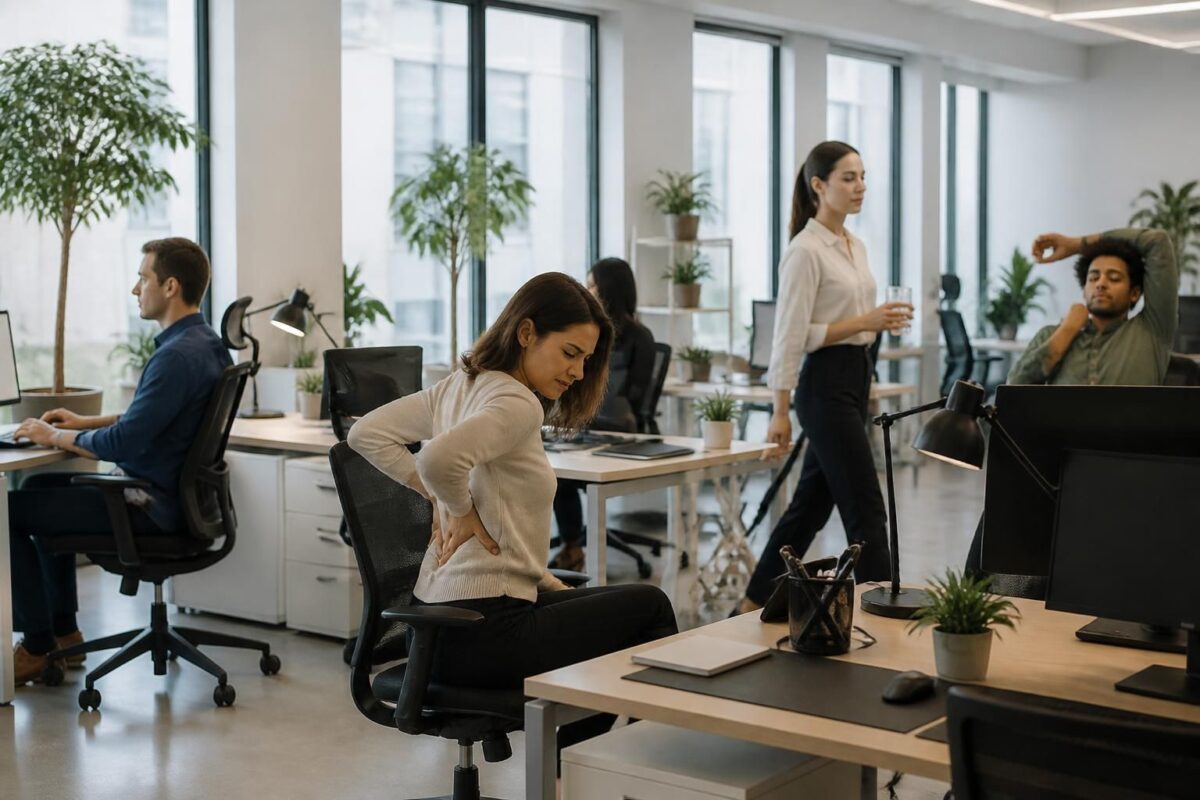
IN BRIEF In short, sciatica and breaks at the office form an ergonomic approach aimed at reducing pressure on the sciatic nerve and preserving productivity. What is this topic? It is the adaptation of the workstation and break times to limit pain and irritation of the sciatic nerve. What are the benefits? Pain reduction, better blood circulation, less stiffness, quicker and more sustainable return to work, and better focus. How does this device work? In practice, favor a chair with lumbar support, a height-adjustable desk to alternate sitting/standing, a screen at eye level, regular breaks every 30–45 minutes, and support accessories like a footrest or lumbar cushion. In Montreal, this rearrangement is particularly recommended for professionals wishing to remain effective without worsening their condition. |
Sciatica can make working at the office difficult, but appropriate breaks and an ergonomic workstation can help reduce pain. Use an ergonomic chair with lumbar support and a height-adjustable desk to alternate between sitting and standing, which relieves pressure on the sciatic nerve. Ensure that the screen is at eye level and maintain a neutral posture to limit tension. Finally, introduce regular breaks and gentle movements to promote circulation and prevent symptom worsening.
This article, written by a healthcare professional and expert in osteopathy, explains why breaks at the office need to be adapted for sciatica. It describes how regular breaks and good ergonomics reduce pressure on the sciatic nerve. It offers simple guidelines for setting up the workstation and improving comfort without delaying productivity.
Understanding the link between Sciatica and breaks
Sciatica manifests as pain that follows the path of the sciatic nerve. This pain can worsen when sitting for long periods. Regular breaks help relieve tension and reduce pressure on the nerve. Quickly alternating positions improves circulation and overall comfort. The goal is to avoid a static posture that can amplify symptoms throughout the day.
Importance of ergonomics at the workstation
A properly adjusted workstation reduces strain on the spine and sciatic nerve. The chair should offer appropriate lumbar support, and the desk should be height-adjustable. The screen should remain at eye level to avoid cervical strain. The keyboard and mouse must be within easy reach to limit excessive movements. A neutral posture with feet flat on the floor greatly contributes to pain reduction.
Good practices for breaks and work organization
Schedule breaks every 30 to 45 minutes. During these breaks, stand up, walk briefly, and change positions. Moving slightly helps improve circulation and relieve pressure in the lower back. Keep shoulders relaxed and avoid excessive twisting during repetitive movements. Stay hydrated and practice calm breathing to reduce stress, which can amplify pain.
Ergonomic elements to consider
Choose an ergonomic chair with adequate lumbar support. Opt for a height-adjustable desk to alternate between sitting and standing. Position the screen at eye level and adjust the distance to about 50–60 cm. Ensure the keyboard is close to the body and the forearms rest naturally on the desk. Use a footrest if necessary. Good lighting reduces eye strain and helps maintain a correct posture.
When to consult and treatment limits
If pain persists despite ergonomic measures, it is important to consult a healthcare professional to evaluate the causes and treatment options. In Montreal and the surrounding area, treatments like neurovertebral decompression can be considered in an appropriate setting. Treatment choices should be discussed with your doctor or specialist based on your individual situation. In some cases, the TAGMED clinic team may offer suitable options in conjunction with ongoing medical follow-up.
Useful links and resources
To further explore ergonomic aspects and office management, you can refer to resources such as
Sciatica and sitting position at the office and
Seat cushion and comfort. Other information and useful tools can be found on the sites cliniquetagmed.com and decompressionneurovertebrale.com to clarify choices in clinical and rehabilitation contexts.
For more information on prevention and workplace adaptation, additional resources can be accessed through TAGMED and SCS pages on pain and posture at the office.
Additional useful links:
Sciatica and sitting at the office,
Relieve sciatica — TAGMED Clinic,
Pain in the back thigh or muscle pain.
As part of prevention and management, it is important to adapt the workstation and daily habits. Simple measures, applied regularly, can improve quality of life and productivity without resorting to invasive approaches. For personalized advice, discuss with your healthcare professional and consider the clinical options available in your area.
“Medical disclaimer: The information and advice provided on this site do not replace the advice, diagnosis, or treatment of a healthcare professional. Please note that Dr. Sylvain Desforges, osteopath, is neither a medical doctor nor a physician, and is not specialized in any medical specialty as defined by the Collège des médecins du Québec. Manual therapy, functional medicine, and sports medicine as described on this site exclude any medical treatment or diagnosis by a physician or specialist. Always consult your doctor for any medical questions. For more details, please read our complete Legal Notice.”
Axis: work-break cycle as a lever for improving comfort and productivity.

This article explains why, in the case of sciatica, breaks at the office and the arrangement of the workstation must be adapted. Alternating between sitting and standing, reducing pressure on the sciatic nerve, and implementing regular breaks can alleviate pain and facilitate a more comfortable and sustainable return to work.
Why adapt breaks and the work environment
Sciatica leads to pain that can worsen during prolonged sitting or repetitive movements. A neutral posture and regular breaks help limit pressure on the nerve and improve blood circulation in the lower back and legs. In practice, these adjustments promote recovery and reduce the risk of recurrence while preserving your professional efficiency.
Adapting the work environment is not limited to a comfortable chair: it involves an ergonomic setup that supports the back, restructures daily actions, and promotes healthy habits over time.
Equipment and posture
Choose an ergonomic chair with appropriate lumbar support and an adjustable desk in height to alternate between sitting and standing. Position the screen at eye level to avoid tilting your head and limit cervical tension, and keep the keyboard and mouse close for a neutral posture of the wrists and shoulders. Footrests or support cushions can help reduce pressure on the spine and naturally align the pelvis.
Effective breaks
Plan breaks every 30 to 45 minutes to stand up, walk for a few minutes, and perform gentle stretches for the back and hips. These micro-movements restart circulation, reduce stiffness, and allow the sciatic nerve to relax. During these breaks, prefer simple activities like light walking and deep breathing to manage stress and promote muscle recovery.
Organization and implementation
Set up a workstation that promotes accessibility: frequently used tools should be within reach to avoid repetitive motions and twisting. Ensure adequate lighting and a comfortable work atmosphere to prevent eye strain and overall tension. Stay hydrated during breaks and plan a dedicated space for simple stretches.
Sciatica and piriformis stretching: useful or worsening depending on the case
IN BRIEF Piriformis-related sciatica can cause deep pain in the buttock, sometimes radiating down the back of the thigh. A gentle stretch can loosen the hip and relieve discomfort if the muscle is involved, but it can worsen symptoms if…

Sciatica and popular stretches: why to stay cautious
IN BRIEF Sciatica causes pain that radiates from the lower back down the leg. Popular stretches, such as the pigeon pose or hamstring stretches, are not always suitable: pulling on an irritated nerve can worsen the symptoms. Favor gentle movements,…
What to do right now
Start by auditing your workstation: check the lumbar support of your chair, the desk height, and the position of the screen. Schedule a plan for regular breaks and stick to it strictly. Invest, if necessary, in accessories such as a footrest or portable lumbar support to achieve a customized setup suited to your body type. Finally, if pain persists, consult a healthcare professional to evaluate complementary options and tailor your adjustments at work. This way, you can maintain your comfort and productivity throughout the day.
| Ergonomic Element | Concise Benefit |
|---|---|
| Break Frequency | Regular breaks reduce pressure on the nerve and improve circulation, decreasing pain. |
| Sitting vs Standing Posture | Alternating sitting/standing helps distribute loads and avoid spikes in disc pressure. |
| Lumbar Support | A lumbar support and an ergonomic chair maintain lordosis and limit irritation. |
| Screen and Keyboard Position | Screen at eye level and keyboard within reach prevent neck and back tension. |
| Movements and Mobility | Gentle movements during breaks (wrists, shoulders, feet) decrease stiffness. |
| Breathing and Stress Management | Breathing and relaxation techniques reduce muscle tension and pain. |
| Hydration and Circulation | Proper hydration improves blood circulation and promotes recovery. |
| Gentle Stretching | Gentle stretching of the back and legs during breaks improves mobility. |
| Workstation Organization | Placing tools within reach avoids twists and repetitive movements. |

Sciatica and Pilates: movements to adapt
IN SHORT Sciatica causes pain that can radiate from the lower back down to the leg. The Pilates Reformer can promote a gradual return to movement and strengthen core control, provided that the movements, range, and resistance are adapted. Favor…

Sciatica and core stability: variable tolerance depending on symptoms
IN BRIEF Core strengthening in case of sciatica consists of progressively strengthening the trunk muscles. Its tolerance varies depending on pain and symptoms: suitable without worsening the pain, it can support mobility and the resumption of activities, but does not,…
Testimonials: Sciatica and Office Breaks — Why They Need to Be Customized
Claire, administrative assistant in Montreal: “I found that my sciatica was exacerbated by long hours of sitting. By adopting regular breaks and reorganizing my workspace to prioritize ergonomics, my pain has decreased, and my concentration has returned to its best.”
Thomas, IT consultant: “Sciatica sometimes kept me glued to my chair. Since I got a height-adjustable desk and include active breaks every hour, I feel less pressure on the nerve and more energy to work on my projects.”
Sophie, teacher: “My desk was poorly set up, and my breaks were nearly invisible. After reorganizing the space to encourage short, regular stretches, I have regained my vitality, and my students also benefit from guided active breaks.”
Jean, freelance marketer: “Working standing and then sitting has really changed things. Thanks to an ergonomic chair and an adjustable workstation, my sciatica is better managed, and my days are more productive.”
Lila, graphic designer: “I added simple accessories that make breaks easier: footrest, monitor stand, and a layout that allows me to move effortlessly. Result: less pain and more creativity.”
Antoine, merchant: “Standing all day was torture. By alternating between standing and sitting with an adjustable workstation and taking breaks every 30 minutes, my sciatica has greatly improved, and I’ve regained my sales performance.”

Sciatica and lunges: leg pain to watch out for
IN BRIEF Sciatica is pain that starts from the lower back or buttock and radiates down the leg. If a lunge triggers or worsens this pain, stop the movement and adjust your activity: this exercise does not address sciatica. Consult…

Sciatica and deadlifts: risk depending on the cause
IN BRIEF Sciatica and deadlifts are not always incompatible: the risk depends on the cause of the pain and its intensity. During acute episodes, it’s best to avoid heavy loads and seek medical or physiotherapy advice before resuming. A gradual…
Detailed Biography: Sciatica and Office Breaks, Why They Need to Be Customized
Dr. Sylvain Desforges is a recognized expert in osteopathy, naturopathy, and manual medicine. He is the founding president of the TAGMED clinics and the ACMA association, and his career is marked by a constant quest for innovation in the health field. His work focuses on managing chronic pain and integrating advanced technologies such as spinal decompression, laser therapies, and shock waves, to offer evidence-based care tailored to the daily lives of patients.
In the context of the theme Sciatica and Office Breaks, Dr. Desforges infuses a holistic approach that connects medical treatment to concrete adjustments in the workplace. He argues that pain related to sciatica does not have a single origin; it also arises from daily habits, prolonged postures, and a lack of targeted rest. His philosophy is based on personalized care that combines biomechanical assessment, ergonomic advice, and structured breaks to reduce pressure on the sciatic nerve and promote sustainable recovery.
His work prioritizes a proactive approach: each patient benefits from an individualized plan that includes practical recommendations for the office. Advice such as choosing an appropriate chair, a height-adjustable desk, and regular breaks to stretch and walk are incorporated into broader therapeutic programs. Dr. Desforges emphasizes active breaks and reprogramming work movements to avoid repeated microtrauma and muscle tensions that worsen sciatica.
In therapeutic terms, Dr. Desforges utilizes and supervises approaches aimed at reducing pain and restoring function. Spinal decompression, laser technologies, and shockwave therapies are part of a set of tools designed to release tissues, improve circulation, and restore a more natural alignment of the spine. This combination of treatments is designed to enable a quicker and less painful return to work while minimizing the risk of relapse when professional habits are readjusted.
As a health educator, Dr. Desforges places a central focus on the education of patients and the teams around them. His goal is for professionals to understand the issues of ergonomics and to implement work environments that sustainably support the spine. Through his clinics and his associative commitment, he promotes protocols that harmonize caregivers, technologies, and the daily practices of modern offices.
The voice of Dr. Desforges resonates in the field of chronic pain and sciatica as that of an advocate for comprehensive and pragmatic solutions. His approach shows that ergonomics and well-thought-out breaks are not mere adjustments, but essential elements of a healing process that can transform professional life. With him, science meets the everyday workspace to offer a better quality of life and regained productivity.
This text summarizes why sciatica and office breaks need to be adapted: good ergonomics and regular breaks reduce pressure on the sciatic nerve, alleviate pain, and preserve productivity. You will find practical advice on furniture, workstation organization, and daily habits, along with resources for delving deeper into each point.
Regular breaks and simple movements during the day play a key role in limiting tension around the sciatic nerve and promoting better blood circulation. By getting up and moving briefly every hour, you reduce pressure on the disc and prevent symptom worsening. For more in-depth approaches suitable for your case, consult the advice of specialists and resources dedicated to sciatica treatment orientation and work environment adaptation.
The role of ergonomics is central: opting for an ergonomic chair with lumbar support and a height-adjustable desk allows for alternating between sitting and standing without excessively straining the nerve. Ensure that the screen is at eye level and that the keyboard is placed nearby to avoid neck and back tension. For practical advice on sitting position, see Sciatica: sitting position – how to do it.
Stress management and active breaks are essential for promoting well-being and limiting relapses. Incorporate micro-breaks with short walks, gentle stretches, and breathing exercises to release tension and improve mobility. To get started, you can explore dedicated resources and services, including through making an appointment and the sciatic treatment orientation.
Non-invasive complementary approaches and gentle technologies can support daily work when pain persists. Inquire about the options offered by specialists and their integration into a routine of breaks and rest at the office. For an action framework focused on adaptation, consult Sciatica – adapting your work environment.
Finally, medical follow-up remains essential: a professional can adjust recommendations and optimize your exercise program for a quicker and more sustainable return to work. To begin this personalized journey, get in touch via Make an appointment and benefit from support tailored to your situation.

Sciatica and squats: why caution is needed
IN BRIEF Sciatica does not always prohibit squats, but a deep or loaded squat can aggravate symptoms, especially during a flare-up. Gradually resume with a neutral back and a comfortable range of motion, and stop if the pain travels down…
Sciatica and stationary bike: useful or aggravating depending on the case
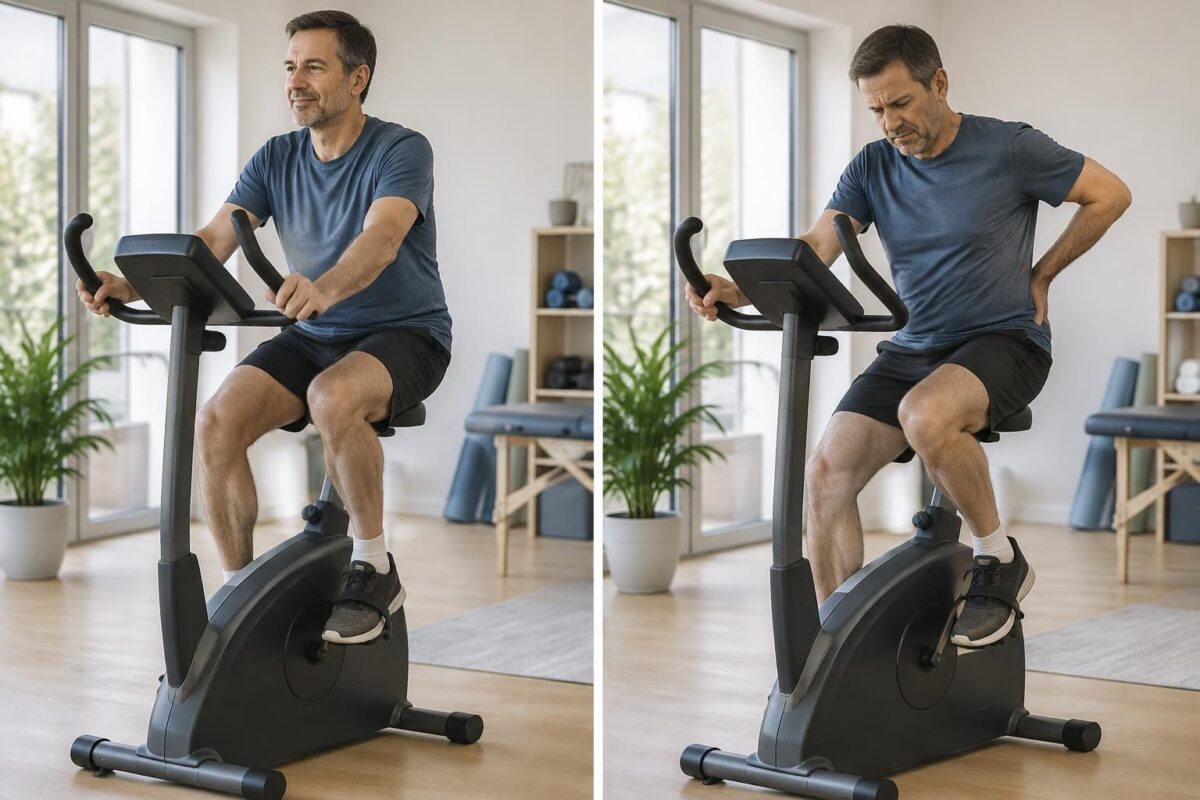
IN BRIEF The stationary bike with sciatica can help you stay active if the pain is mild and stable. Start with a short session, at low resistance and in a comfortable position. If the pain goes further down the leg,…

Dr Sylvain Desforges, B.Sc., D.O., N.D., osteopath, is the founding president of TAGMED and of the ACMA association. He dedicates his practice to chronic spinal pain, low back pain and symptoms compatible with sciatica, particularly when pain radiates toward the buttock, leg, calf, foot or toes.
Through SOS Sciatique, he publishes educational content on sciatica symptoms, possible causes such as disc herniation, disc narrowing, foraminal stenosis or irritation of a lumbar nerve root, as well as non-surgical approaches that may be considered according to the evaluation. At Clinique TAGMED, care may include, depending on the case, motorized neurovertebral decompression, specific osteopathic care or precision percussion.
For an evaluation related to sciatica treatment in Montreal / Mount Royal or sciatica treatment in Terrebonne, please consult the services available at Clinique TAGMED.
Medical disclaimer
The information published on SOS Sciatique is provided for educational purposes only and does not replace a consultation, diagnosis, opinion or treatment provided by a physician or another authorized healthcare professional. The author of this article is neither a medical doctor nor a specialist in a medical specialty recognized by the Collège des médecins du Québec. The osteopathic, manual medicine or functional support approaches described on this site do not constitute medical acts and are not intended to replace medical follow-up.
Consult a physician or emergency service in cases of loss of bladder or bowel control, anesthesia in the saddle area, significant or progressive weakness in the leg or foot, fever, recent trauma, severe pain or rapid worsening of symptoms. For more details, please read our Legal Notice.