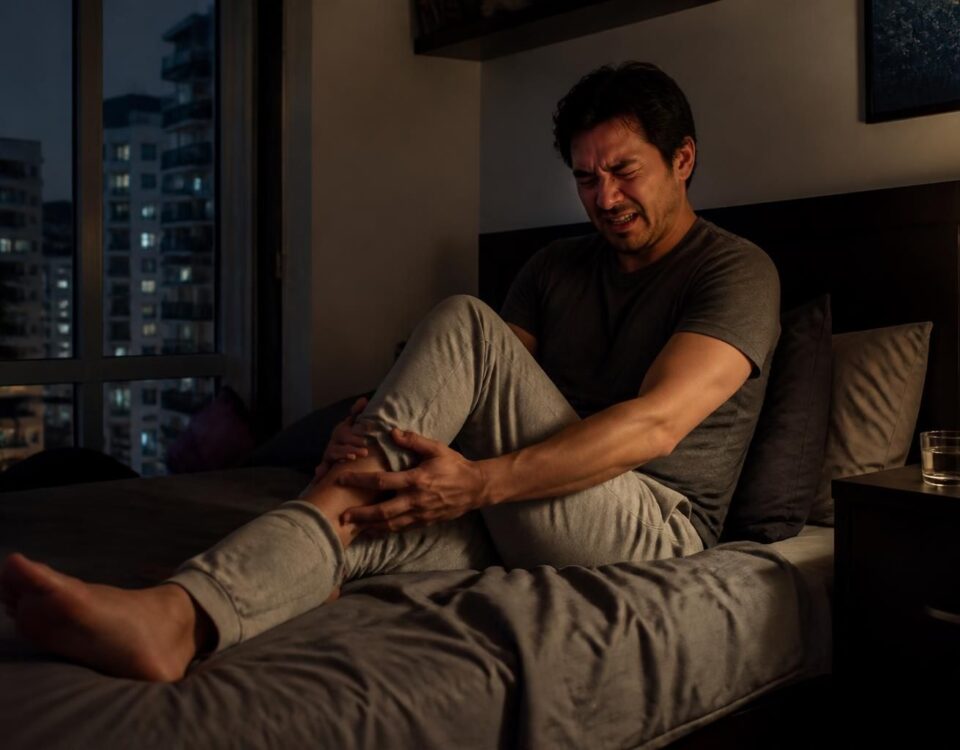
Sciatica and drivers: leg pain after several hours
29/08/2026
Sciatica in Terrebonne: pain that radiates down the leg when coughing
30/08/2026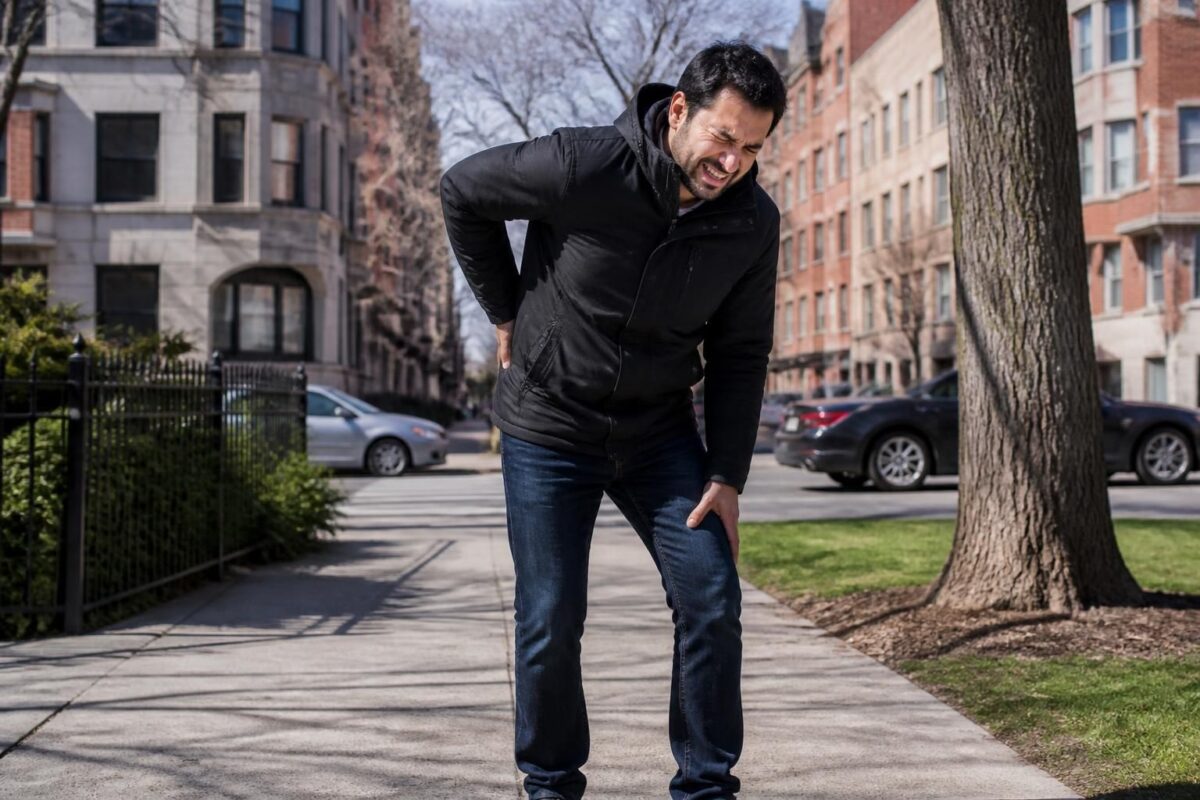
IN BRIEF
| Sciatica is pain following the path of the sciatic nerve, starting from the lower back and descending towards the buttock, leg, and sometimes the foot. When it is more intense in the leg and worsens when coughing, we talk about typical nerve irradiation. The key benefits are a clear diagnosis, non-surgical management, targeted exercises, and a progressive improvement in mobility. In Montreal, this service is particularly recommended for assessing sciatica and offering adapted approaches to relieve pain and restore mobility. How it works: a quick assessment allows us to distinguish sciatica from other lower back pain and establish a personalized treatment plan based on non-surgical approaches and neurodynamic exercises, without surgery. |
In Montreal, sciatica often presents as a pain radiating down the leg starting from the lower back or buttock, potentially reaching the calf or foot. When this pain worsens with coughing or during exertion, it indicates nerve irradiation of the sciatic nerve and requires a quick assessment.
Treatment prioritizes non-surgical approaches, with specialized osteopathy and neurodynamic exercises aimed at promoting nerve gliding and restoring mobility. In Montreal, a personalized plan can help reduce pain and regain daily activities without surgery.
Sciatica is pain following the path of the sciatic nerve. In Montreal, it may manifest when coughing or exertion aggravates nerve irritation or compression. This article, written by a healthcare professional expert in osteopathy, describes how to recognize this pain, what causes it, and what non-surgical approaches can be considered in Montreal to relieve and restore mobility without resorting to surgery.
What is sciatica and why it radiates down the leg during coughing
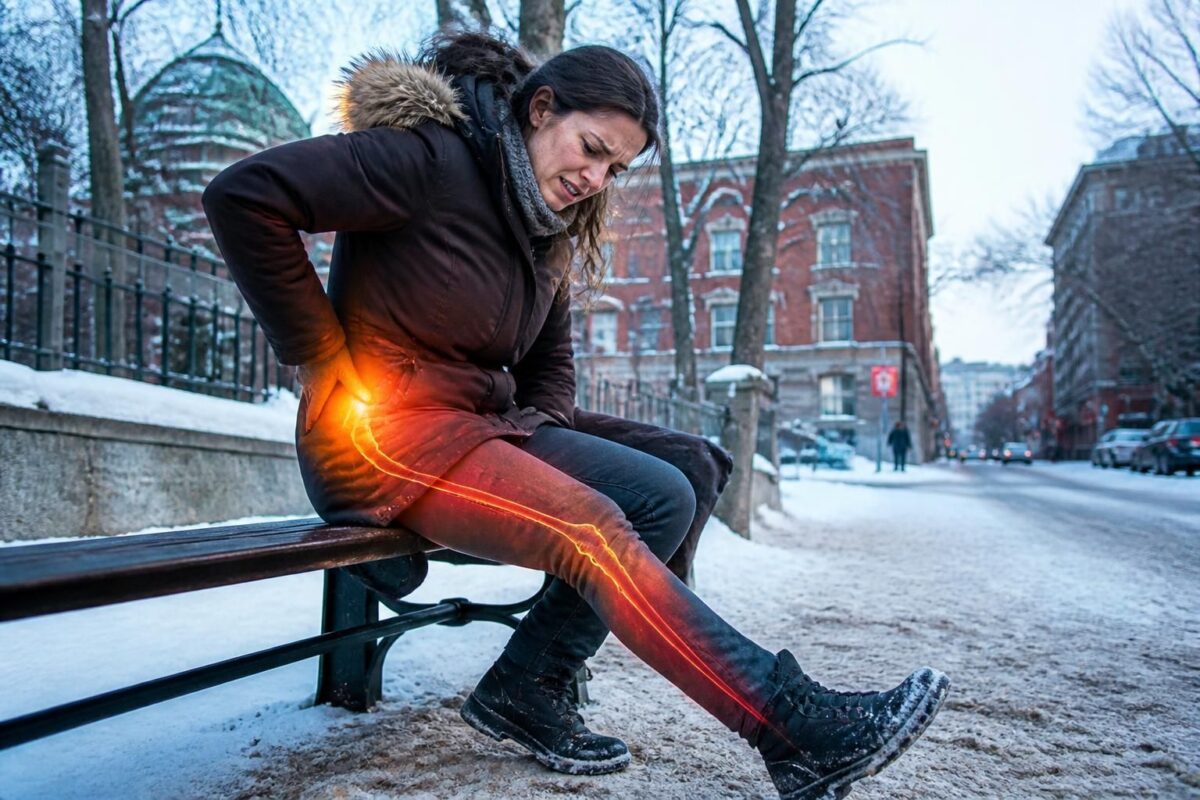
Sciatica is pain following the path of the sciatic nerve, from the lower back to the foot. Coughing can increase abdominal pressure and amplify the pain radiating towards the buttock, thigh, calf, or foot. The most common causes include a herniated disc or other lumbar compressions, but piriformis syndrome and lumbar osteoarthritis can also play a role. A rapid local assessment can differentiate simple lower back pain from sciatica and establish an appropriate management plan.
Signs and symptoms to watch for
Typical signs include a sharp pain radiating to the buttock or leg, paresthesia or numbness in the foot, muscle weakness or difficulty lifting the toe, and pain that worsens with coughing or laughing. If these symptoms persist for several weeks or significantly limit movement, an evaluation should be sought.
Assessment and diagnosis in Montreal
During a consultation in Montreal, the professional can determine whether the pain is due to nerve compression or another painful source. The assessment may include a clinical examination and, if necessary, targeted investigations. Non-surgical care may be considered after the assessment to reduce symptoms and restore function. At Clinique TAGMED, approaches may include motorized neurovertebral decompression and specialized osteopathy, as appropriate.
When to consider a quick consultation
Consult promptly if you experience loss of bladder or bowel control, marked or progressive numbness in the leg or foot, pain associated with fever, recent trauma, or severe pain that persists despite conservative measures.

Sciatica in Montreal: nighttime pain in the leg
IN BRIEF In brief, nocturnal sciatica is a root pain in the lower back that irritates the sciatic nerve and worsens when lying down, causing nighttime awakenings. In Montreal, this service offers a non-surgical approach focused on posture, bedding, and…

Sciatica in Montreal: pain from the lower back to the calf
IN BRIEF In brief, sciatica is a pain that starts in the lower back and can radiate down to the calf, caused by irritation or compression of the sciatic nerve. In Montreal, this service offers a personalized evaluation and non-surgical…

Sciatica in Montreal: hip pain or true nerve radiation?
IN BRIEF Sciatica is a nerve pain that follows the path of the sciatic nerve and can radiate from the buttock to the foot, which can be perceived as pain in the hip. Lower back pain, on the other hand,…
Non-surgical treatment options at TAGMED
In Montreal, non-surgical care prioritizes the restoration of mobility and the reduction of nerve irritation without systematically resorting to surgery. Approaches may include targeted osteopathy and other non-invasive modalities. The therapeutic plan is personalized and may include functional advice, postural support, and gentle interventions aimed at restoring nerve gliding and lumbar stability, while avoiding surgical measures when possible.
To better understand local options and available resources, you can consult the dedicated pages for sciatica treatments in Montreal and information on Clinique TAGMED.
Practical elements for daily life
Maintain suitable activities and avoid prolonged inactivity. Correct posture at work and active breaks can help prevent painful flare-ups. Walking and moderate movement, done without straining, support recovery. For additional information, refer to local resources and professional advice.

Sciatica pain in Montreal: incomplete journey, should we be concerned?
IN BRIEF In brief, sciatic pain is a lumbar nerve-origin pain whose pathway may be incomplete and may not reach the foot. In Montreal, the evaluation clarifies the pathway, strength, and function, and determines if imaging can change the approach.…
Sciatica in Montreal: pain towards the little toe and S1 root
IN BRIEF Sciatica is pain radiating along the path of the sciatic nerve, typically from the lower back to the leg and down to the little toe when the S1 root is irritated or compressed. In Montreal, this phenomenon is…

Sciatica in Montreal: pain towards the top of the foot and L5 root
IN BRIEF Sciatica in Montreal with pain in the top of the foot and a possible involvement of the L5 root is a lumbar radiculopathy where the pain follows the path of the sciatic nerve to the dorsum of the…
To delve deeper into practical and therapeutic aspects, the following resources may be relevant:
Sciatica in Montreal – Numbness that progresses towards the foot
Calf pain without significant lower back pain
Prolonged braking and tension in the leg
Sciatica treatment in Montreal – What to do when the pain radiates down the leg
Medical Disclaimer
“Medical disclaimer: The information and advice provided on this site do not replace the advice, diagnosis, or treatment of a healthcare professional. Please note that Dr. Sylvain Desforges, osteopath, is neither a doctor of medicine nor a physician, and is not a specialist in any medical specialty as defined by the Collège des médecins du Québec. Manual medicine, functional medicine, and sports medicine as described on this site exclude any treatment or medical diagnosis made by a physician or medical specialist. Always consult your physician for any medical questions. For more details, please read our full Legal Notice.”
- Key Signs
- Radiating pain along the leg that worsens with coughing or laughing
- Starts in the lower back or buttock and descends to the calf/foot
- Paresthesias or numbness in the leg or foot
- Pain more pronounced in the leg compared to the back
- Warning: significant weakness or loss of bowel/bladder control
- Management Strategy
- Rapid local assessment in Montreal and a non-surgical approach
- Neurodynamic exercises and gentle movements
- Gentle mobilizations and posture advice
- Objective: regain mobility and autonomy without surgery
- When to seek quick consultation: loss of strength, fever, trauma

This practical guide on Sciatica in Montreal explains why a pain radiating down the leg can occur and worsen during coughing. It summarizes the signs, possible causes, and non-surgical approaches to relieve pain and restore mobility, with practical advice for quick assessment, adapting activities, and planning progressive rehabilitation in the Montreal area without resorting to surgery.
Understanding Why Pain Worsens When Coughing
Coughing increases intra-abdominal pressure and can irritate the sciatic nerve when it is compressed or irritated by a herniated disc or other lumbar injuries. This dynamic can make the pain radiating down the leg more pronounced than that in the lower back and is often accompanied by tingling, numbness, or muscle weakness. The radiation can affect the buttock, thigh, and calf, and may vary with movement and the effort of coughing or sneezing.
Assessment and Diagnosis in Montreal
In Montreal, a targeted assessment can distinguish between simple lower back pain and sciatica. The evaluation includes a postural analysis, neurodynamic tests, assessment of muscle strength and reflexes, as well as detection of red flags such as loss of bladder control, fever, or significant progressive weakness. An accurate diagnosis guides towards non-surgical options and a tailored rehabilitation plan to relieve nerve irritation and restore mobility.
Non-Surgical Approaches and Exercises
In Montreal, management prioritizes non-surgical and personalized solutions. Targeted osteopathy techniques combined with neurodynamic exercises and progressive stretching can alleviate pain and speed up recovery. The program aims at nerve gliding and strengthening the posterior leg muscles as well as the trunk, to allow for a gradual return to activity and limit recurrences. Gentle and tailored interventions complement the treatment, without systematic recourse to surgery.
Practical Tips and Lifestyle
Adopt a routine that combines movement and active rest: alternate periods of activity with active breaks, prioritize walking, and avoid repeated heavy lifting. Maintaining a stable weight and good posture at work helps prevent recurrences. Regular sessions with a professional allow for adjusting exercises and intensity according to progress, to maximize gains without overloading the nerve.
Simple Exercises to Do at Home
Perform targeted and neurodynamic exercises at home several times a day. Start slowly, listen to your tolerance, and gradually increase intensity to promote nerve gliding and decrease irritation, without causing sharp pain.
When to Seek Quick Consultation
Consult quickly in case of loss of bladder control, fever associated with pain, marked weakness, or rapidly worsening pain, or if symptoms persist beyond 3 weeks despite conservative measures.
Warning Signs and When to Seek Quick Consultation
Warning signs such as loss of urinary control, febrile pain, significant progressive weakness, or pain occurring after trauma should prompt quick medical evaluation in Montreal. A non-surgical and tailored approach may then be favored, with a personalized rehabilitation plan aimed at restoring mobility and autonomy.
| Criterion | Concise description |
|---|---|
| Key feature | Radiating pain along the path of the sciatic nerve, worsened by coughing and certain movements. |
| Associated signs | Paresthesias and numbness, possible weakness of the lower limb. |
| Common causes in Montreal | Herniated disc, foraminal stenosis, and sometimes piriformis syndrome. |
| Trigger/aggravating factors | Coughing and effort increase pain; prolonged sitting does too. |
| Quick diagnosis | Local assessment to distinguish radiculopathy from simple low back pain. |
| Non-surgical approaches | Osteopathy, neurodynamic exercises, and gentle mobilizations. |
| Self-management and exercises | Targeted exercises, regular walking, and proper posture. |
| When to seek emergency care | Loss of urinary/anal control, progressive weakness, fever, or acute pain requiring quick evaluation. |
| Prevention and follow-up | Progressive rehabilitation, maintaining activity, and gradual return to tasks. |
Testimonials about Sciatica in Montreal: pain radiating down the leg when coughing
Marie, 39 years old, Montreal: “Whenever I coughed, an intense pain would radiate down my leg and to my foot. I felt like it became impossible to continue my activities. After a local assessment, I followed a non-surgical program with targeted osteopathy and neurodynamic exercises; the pain gradually faded, and I can walk outside again without fear.”
Alexandre, 46 years old, Montreal: “The pain radiating down my leg when coughing prevented me from working and driving long distances. The team identified a specific nerve irritation and guided me towards suitable exercises and gentle techniques. Within a few weeks, the pain decreased, and I regained natural mobility, without surgery.”
Élise, 33 years old, Montreal: “Every cough caused a painful radiation in my leg. I was offered a progressive and personalized approach: specialized osteopathy, gentle decompression, and neurodynamic training. Today, the pain is much less present, and I’m getting back to my daily activities without avoiding the movements that used to hurt me.”
Thomas, 54 years old, Montreal: “The hallmark symptom was that pain radiating down my leg when coughing, which made me doubt my ability to resume my professional tasks. The local assessment pinpointed the cause, and the non-surgical treatment plan was clear and reassuring. After a few weeks, I noticed significant improvement and better tolerance for effort.”
Sophie, 41 years old, Montreal: “I dreaded every movement that triggered pain radiating down my leg during coughing. Thanks to a combination of osteopathy and simple exercises I could do at home, I regained smooth walking and a marked reduction in painful episodes. My energy and confidence in my body returned, without undergoing surgery.”
Dr Sylvain Desforges, 59 years old, is an experienced osteopath, specialist in manual medicine and naturopathy. He is the founding president of TAGMED clinics and the ACMA association, and he is committed to providing innovative care in Montreal. His practice focuses on chronic pain of the spine and on non-surgical approaches that restore mobility and well-being for patients suffering from sciatica or recurrent low back pain.
In treating sciatica in Montreal, Dr Desforges frequently observes symptoms marked by pain that radiates down the leg, which can intensify when coughing. This presentation, typical when the sciatic nerve is irritated or compressed, means that the pain does not confine itself to the lower back but radiates along the path from the buttock to the thigh to the calf to the foot. Understanding this dynamic is essential for providing a quick local assessment and appropriate treatment without surgical intervention.
His approach relies on a rigorous clinical evaluation that maps the nerve’s path and identifies signs of radiation. The examination aims to differentiate simple lower back pain from true sciatica and to spot factors such as herniated discs, foraminal stenosis, piriformis syndrome, or other mechanical sources. This approach allows for developing a treatment plan focused on non-surgical techniques and targeted exercises to relieve symptoms and restore function.
Care is centered on specialized osteopathic techniques and neurodynamic exercises designed to promote the gliding of the sciatic nerve and reduce tensions that irritate the nerve roots. Gentle self-stretching programs for the hamstrings and the piriformis, combined with postural advice and a gradual resumption of activities, form the core of rehabilitation. The objective is to enable lasting improvements while preventing future flare-ups.
To optimize results, Dr Desforges incorporates gentle and effective technologies into a comprehensive approach. Motorized neurovertebral decompression, laser sessions, and shockwave therapies are part of a range of tools, used judiciously alongside mobilizations and exercises. This integration aims to improve nerve gliding, reduce inflammation, and support a gradual return to daily activities, without routinely resorting to surgery when possible.
In Montreal, this multidisciplinary approach addresses a common reality: a pain that radiates down the leg can be triggered or worsened by daily efforts and repeated postures. Dr Desforges places particular importance on patient education, explaining the mechanisms of pain and the gestures to favor. By actively engaging in their rehabilitation, patients learn to manage symptoms, regain confidence in their bodies, and prevent recurrences.
The journey through TAGMED illustrates how a sciatica that is well supported can be favorably resolved in Montreal through a combination of osteopathic techniques, targeted exercises, and a reasoned use of technology. The approach is evidence-based and centered on the patient, with particular attention given to the local context and the regained independence of individuals suffering from lumbar and radicular pain.
Quick summary: in cases of sciatica in Montreal, the pain may radiate down the leg, and can sometimes worsen when coughing; a quick assessment distinguishes simple lumbar pain from sciatica and sets up a non-surgical approach with targeted exercises and postural advice.
Sciatica manifests as pain that follows the pathway of the sciatic nerve, starting from the lower back and descending to the buttock and the back of the leg. When the pain is worse in the leg than in the back, it typically reflects nerve irradiation and requires a rapid local evaluation to establish an appropriate treatment plan.
In Montreal, non-surgical approaches take a central role: specialized osteopathy, neurodynamic exercises, and functional advice aimed at reducing nerve irritation and restoring mobility, without systematically resorting to surgery.
Signs and symptoms to watch for include sharp pain and radiation to the buttock or leg, paresthesias, muscle weakness, or loss of control in exceptional cases. In the presence of red flags such as loss of urinary control or fever, prompt medical consultation is recommended.
For those affected, local and specialized resources offer tailored assessments and personalized programs aimed at restoring function and preventing recurrences. You can explore approaches like motorized neurovertebral decompression, targeted osteopathy, or neurodynamic exercises that promote nerve gliding without surgery.
Details and practical resources for Montreal and surrounding areas are available through several local organizations and clinics. For example, information on the use of osteopathy in Montreal and the pathways of sciatica can be consulted through the following resources: Sciatica and osteopathy – Montreal, When the pain becomes worse in the leg, and Sciatica and pain that radiates down the leg while driving.
Resources and useful links to further explore these approaches and strategies in Montreal include mentions of osteopathy, acupuncture, and other complementary approaches: Acupuncture for sciatica – Montreal, Sciatica in Terrebonne – pain that changes pathway, and Sciatica – deep buttock pain and radiation.

Sciatica in Montreal: pain radiating to the outer edge of the foot
IN BRIEF In brief, sciatica is pain that follows the path of the sciatic nerve, starting from the lower back and extending down to the foot, often radiating to the outer edge of the foot. In Montreal, this condition is…

Sciatica in Montreal: pain in the buttock after a long sitting position
IN BRIEF In brief, sciatalgia is pain that follows the path of the sciatic nerve, often triggered after a prolonged sitting position and lumbar irritation. In Montreal, this issue is mainly managed without surgery thanks to a careful diagnosis and…

Dr Sylvain Desforges, B.Sc., D.O., N.D., osteopath, is the founding president of TAGMED and of the ACMA association. He dedicates his practice to chronic spinal pain, low back pain and symptoms compatible with sciatica, particularly when pain radiates toward the buttock, leg, calf, foot or toes.
Through SOS Sciatique, he publishes educational content on sciatica symptoms, possible causes such as disc herniation, disc narrowing, foraminal stenosis or irritation of a lumbar nerve root, as well as non-surgical approaches that may be considered according to the evaluation. At Clinique TAGMED, care may include, depending on the case, motorized neurovertebral decompression, specific osteopathic care or precision percussion.
For an evaluation related to sciatica treatment in Montreal / Mount Royal or sciatica treatment in Terrebonne, please consult the services available at Clinique TAGMED.
Medical disclaimer
The information published on SOS Sciatique is provided for educational purposes only and does not replace a consultation, diagnosis, opinion or treatment provided by a physician or another authorized healthcare professional. The author of this article is neither a medical doctor nor a specialist in a medical specialty recognized by the Collège des médecins du Québec. The osteopathic, manual medicine or functional support approaches described on this site do not constitute medical acts and are not intended to replace medical follow-up.
Consult a physician or emergency service in cases of loss of bladder or bowel control, anesthesia in the saddle area, significant or progressive weakness in the leg or foot, fever, recent trauma, severe pain or rapid worsening of symptoms. For more details, please read our Legal Notice.