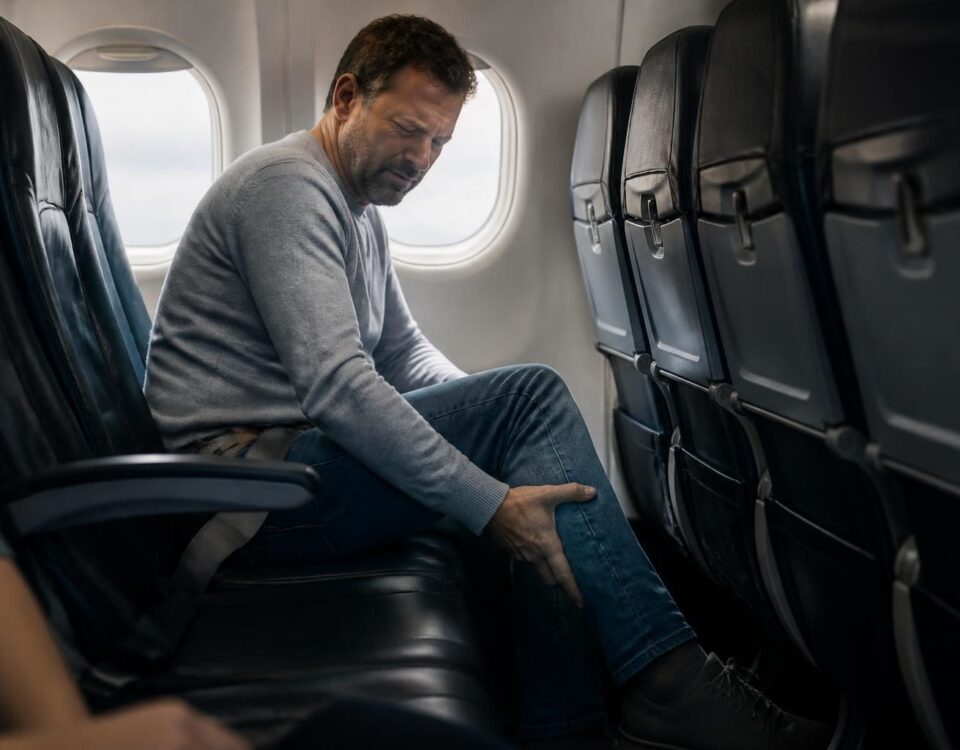
Herniated disc and generic exercises: risk of poor choices
01/09/2026
Sciatica in Montreal: pain in the buttock after a long sitting position
02/09/2026
IN BRIEF
| In short, sciatica and metro: staying standing or sitting is a practical question for daily commutes. The goal is to manage pain without restricting mobility, favoring appropriate postures and micro-breaks to avoid twists and asymmetrical loads. Main benefits: reduction of pain, better circulation, and comfort during the trip; operation: alternate a seated position with lumbar support and, when pain increases, stand up and walk slightly every 20–30 minutes, while avoiding movements that worsen the pain. In case of warning signs, consult quickly. |
Quick summary on Sciatica and metro: to stay standing or sitting? In the context of urban commutes, radiating pain can vary depending on position and effort. The goal is to move intelligently without exacerbating the pain.
- When sitting, prioritize lumbar support and change position every 20–30 minutes to avoid compressing the lower back.
- When standing, avoid being stationary; alternate between standing and sitting and take a few steps whenever possible.
- Avoid twisting and bending forward; favor simple and gentle movements if you need to bend.
- In case of a painful flare-up, prefer decompression movements (slow breathing, active breaks, short walks) rather than aggressive stretching.
This guide written by a health professional addresses a common question: in the metro, should you stand or sit when sciatic pain occurs? The goal is simple: to choose the posture that limits pain, to alternate between standing and sitting appropriately, and to recognize signs that require medical evaluation. The text offers safe movements and useful guidelines for traveling without worsening the pain.
Understanding What Happens During the Journey
When the pain radiates, it can descend from the lumbar region to the buttock, then to the front or back of the thigh. In the metro, prolonged positions can trigger or intensify the pain. The pain may feel like an electric shock, burn, or tingling. Context matters: a position that relieves may differ from one trip to another.
How to Choose Between Standing and Sitting in the Metro
Prefer a position that allows you to quickly modify your posture. If you feel better sitting, look for a seat that offers lumbar support or use a small cushion. If you choose to stand, keep your back straight and lean on a bar or armrest to reduce pressure on the lower back. Alternate every 5 to 15 minutes depending on your tolerance. Avoid asymmetrical loads and carrying a heavy bag on one side.
Practical Tips for Commuting
Change position regularly even if the pain is mild. Take small active breaks when you can’t exit the carriage. Wear comfortable shoes and make sure to distribute weight evenly on both feet. If you need to carry a bag, distribute the weight across two lighter bags and keep them close to your body. For more tips on positions and movements that relieve, consult dedicated resources like these: calf pain and nerve irritation or feedback on L5 root and tingling. Other useful references can be found at possible factors for recurrences and disc herniation.
Situations to Monitor and Warning Signs
If the pain is accompanied by significant weakness, loss of sensation, or urinary control issues, seek medical evaluation promptly. This may be necessary even if the pain seems isolated during a trip.
When and How to Seek Professional Advice
If the pain is very intense, severely limits walking or sleeping, or persists despite posture adjustments, it is useful to consult. Specialized resources such as lumbar pain with shooting pain in the leg or significant lumbar pain provide information tailored to these situations, while remaining within the framework of safe approaches.
Practical Resources Related to the Topic
To delve deeper into movements and postures suitable for sciatica during commutes, you can consult dedicated guides on sitting positions and effective movements: tingling and nerve pain and L5 root and big toe tingling. Other useful resources can be found on recurrence factors and disc herniation.
To learn more about technical aspects and recommended positions in urban settings, you can also consult the content from positions to avoid and analyses of everyday postures offered by other professionals.
“Medical disclaimer: The information and advice provided on this site do not replace the opinion, diagnosis, or treatment of a health professional. Please note that Dr. Sylvain Desforges, osteopath, is neither a medical doctor nor a physician, and is not a specialist in any medical specialty as defined by the Collège des médecins du Québec. Manual therapy, functional medicine, and sports medicine as described on this site exclude any treatment or medical diagnosis made by a physician or medical specialist. Always consult your doctor for any medical questions. For more details, please read our complete Legal Notice.”
As part of clinical resources, note that the information described is based on general approaches and practical directions. For specific treatments or in-depth evaluations, turn to recognized clinical resources such as TAGMED clinic and the associated organizations mentioned above.
To learn more about comprehensive approaches related to sciatica and posture in movement, you can consult the resources available on sossciatique.com and cliniquetagmed.com.
Advanced: if you are looking for information on neurovertebral decompression or other associated conditions, it is important not to prescribe exercises or stretches without appropriate professional supervision. Refer to specialized sources and your treating physician for an approach tailored to your specific case.
“Medical disclaimer: The information and advice provided on this site do not replace the advice, diagnosis, or treatment of a healthcare professional. Please note that Dr. Sylvain Desforges, osteopath, is neither a doctor of medicine nor a physician, and is not a specialist in a medical specialty as defined by the Collège des médecins du Québec. Manual therapy, functional medicine, and sports medicine as described on this site exclude any medical treatment or diagnosis made by a physician or medical specialist. Always consult your doctor for any medical questions. For more details, please read our full Legal Notice.”
Sciatica and subway: stay standing or sitting?
Standing in the subway
- Balance: shift weight between both feet; if possible, place one foot on a step or the edge of the platform to relieve the back.
- Posture: knees slightly bent, back straight, pelvis stable; shoulders relaxed.
- Support: stand close to a support (bar, pole) and avoid locking the hips.
- Breaks: change position at each stop; take a few steps to relax the muscles.
- Signal: if the pain worsens quickly, prefer a short seated step as soon as possible.
Sitting in the subway
- Support: use a lumbar support or rolled towel; keep feet flat and knees aligned with hips.
- Adjustment: backrest adjusted, cushion under knees if possible; avoid backless seats and overly crossed positions.
- Micro-breaks: every 20–30 minutes, stand up briefly and march in place or slightly change position.
- Breathing: breathe calmly and release tension around the lower back.
- Adaptation: if space is limited, prefer a neutral posture and avoid twisting or sudden gestures.

Are you wondering whether it is better to sit or stand in the subway when suffering from sciatica? This article provides simple guidelines to choose your position, test cautious movements, and adopt an express routine that allows you to move without triggering painful discomfort during your trips. The goal is to stay mobile without worsening the pain, using suitable postures and useful micro-breaks during your urban travels.
Sciatica and pain that appears after a few minutes of walking
IN BRIEF Sciatica is a pain that follows the path of a nerve root from the lower back down to the leg. When it appears after a few minutes of walking, it indicates nerve irritation or compression, often due to…

Sciatica and prolonged walking: why does the pain increase?
IN BRIEF In brief, sciatica is pain that follows the path of the sciatic nerve and can intensify during prolonged walking, especially in the presence of lumbar stenosis or a herniated disc. The goal is an active and tailored management…
Staying seated in the subway: when it can help and when it can worsen
The seated position can provide relief when the seat offers good lumbar support and you can adjust your back. However, prolonged sitting on a seat without support or poorly adjusted can compress the lower back and increase pain, especially if you lean forward or slouch as the stops go by. To limit this, prefer seats with a backrest and support, or place a small rolled towel or cushion against the lower back. Change position every 20–30 minutes and, as soon as possible, stand briefly to walk or simply stretch your back and legs slightly. Avoid significant twisting and bending that compress the sciatic nerve.
Posture and support: if a seat is available, use it with lumbar support. While seated, keep your feet flat and knees roughly at 90 degrees, avoiding slumping that increases lower back pressure. Movements during the trip: take advantage of every stop to stand up, take a few steps, and take deep breaths. If pain begins to rise in your leg, quickly adjust your position and prefer a slight release rather than a worsening hold.
Posture and support
Use a lumbar cushion or rolled towel to maintain the natural curve and limit pressure on the discs. Avoid seats that are too low that force you to lean forward and worsen the pain.
Movements during the trip
At each stop, stand up and walk a few steps if space allows; breathe slowly and deeply to reduce tension. If the subway is crowded, remain seated in a neutral posture, then do small movements of the torso and ankles when you can.

Sciatica and walking: helpful or aggravating?
IN BRIEF In brief, sciatica and walking is the analysis of whether walking can help or worsen pain related to the sciatic nerve. What is it? Sciatica is pain that radiates from the lower back down the leg, often due…

Sciatica and travel return: pain that travels down the leg
IN SHORT Sciatica is pain that runs down the leg, caused by irritation or compression of the sciatic nerve. In the context of return from travel, it may appear after long trips or repetitive movements. In practice, understanding this mechanism…
Staying standing in the subway: how to do it without worsening the pain
Staying standing may be necessary when seats are scarce or to avoid prolonged lumbar pressure. However, standing for long periods can fatigue the muscles and reduce circulation. To protect the lower back, shift weight from one leg to the other and avoid twisting the torso. Stand straight, shoulders relaxed, and use the bars to stabilize yourself without arching your back. If possible, gently press the lower back against a wall or support to maintain a more neutral posture.
When you must stand for a long time, prefer micro-breaks: stay in place for a few seconds, then take a small step into the aisle. Breathe slowly and deeply to decrease muscle tension. Avoid bending over and turning your torso at the same time; keep your knees slightly bent and your torso aligned.
Position and safety
Avoid twisting and advanced bending of the back. Keep the torso aligned, shoulders relaxed, and feet slightly apart. Diaphragmatic breathing helps limit tonic reflexes that aggravate the pain.
Express routine during transit
Simple example: alternate 5–10 minutes standing with a short break to walk or lean on a bar; practice slow abdominal breathing and relax the shoulders to maintain body awareness that protects the back.
| Aspect | Impact and advice |
|---|---|
| Immediate comfort | Choose the position that limits pain and avoids discharge in the leg; prioritize what soothes without forcing. |
| Origin and irradiation | Pain can follow different patterns; the term sciatica encompasses several situations without being a single explanation. |
| Lumbar pressure | Sitting for long periods without support increases pressure on the discs; prolonged standing without movement can also create stiffness. Alternate. |
| Mobility and movement | Gentle walking and active breaks promote circulation and reduce inflammation; avoid frozen postures for too long. |
| Energy and posture | Avoid holding tension; favor short periods of movement with breaks and readjustments. |
| Practices in the subway | Use a support or sit on a comfortable seat; carry a balanced bag and plan stops to move. |
| Load and equipment | Carry loads close to the body; prefer a backpack or two light bags rather than a heavy bag on one side. |
| Warning signs | Significant weakness, loss of sensitivity, bladder/bowel issues or fever: consult quickly. |
| Quick action plan | Alternate movement and rest, take micro-breaks every 20–30 minutes, and practice slow breathing to relax the muscles. |

Sciatica and travel: how to recognize a worsening
IN BRIEF In brief, sciatica and travel describe the worsening of sciatic pain during a trip, with radiation into the leg and radicular signs. Benefits: it allows for quick identification of warning signs, adjustment of breaks and movements, and traveling…
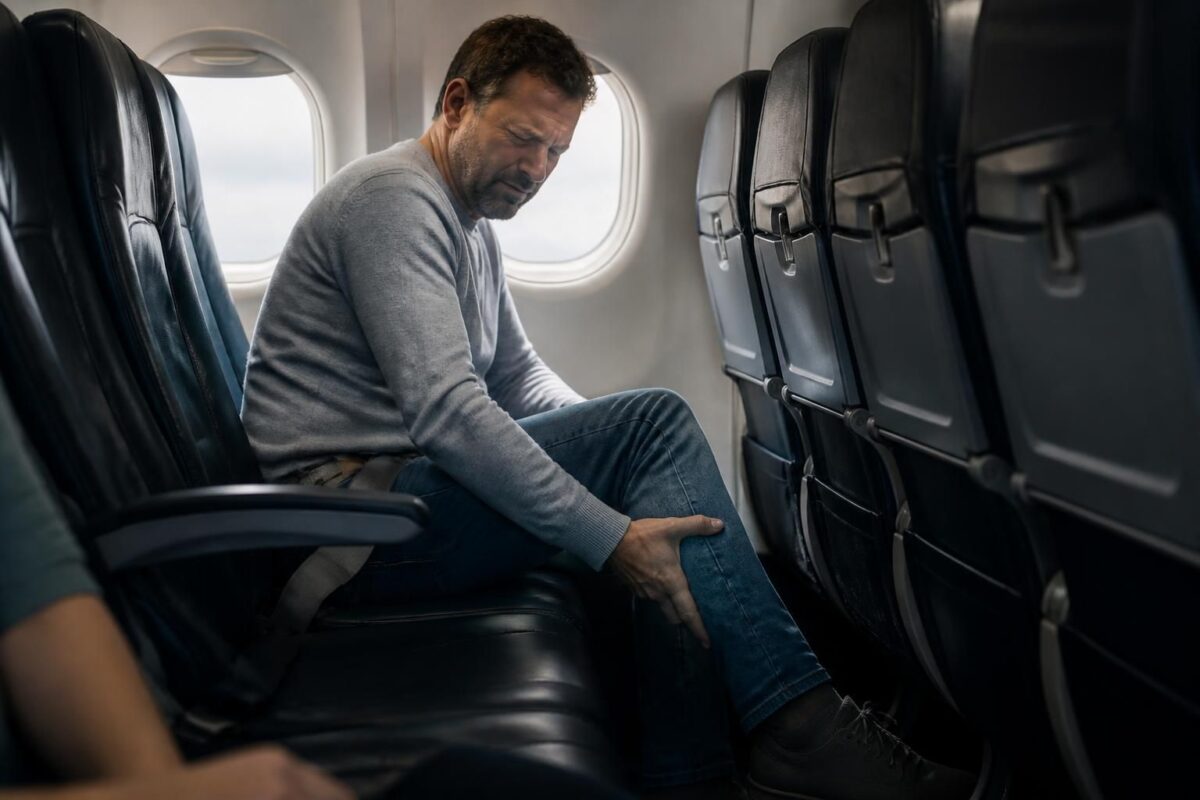
Sciatica and airplane: prolonged sitting and leg pain
IN BRIEF In brief, sciatica related to prolonged sitting on the plane describes pain that arises or worsens when one remains seated for long periods during a flight, due to pressure on the lumbar discs and the sciatic nerve. How…
Testimonials: Sciatica and subway — stay standing or sit down?
Marie, 42 years old: In the subway, my sciatica flares up if I stand too long. I prefer micro-breaks: a few steps between each train, then a short seated break with back support. With this rhythm, the pain radiating to my leg becomes less overwhelming and I leave more calmly.
Alex, 29 years old: Staying standing can be tolerable if I lean on a bar and stand up straight, but as soon as the sciatic pain crosses my thigh, I quickly switch to a sitting position and use my bent knees to reduce lumbar tension.
Sophie, 35 years old: When I need to sit, I choose a seat with good lumbar support and, if possible, I add a small cushion between my knees. While standing in the car, I prioritize short movements and avoid twists that trigger pain.
Karim, 50 years old: The subway can be exhausting in the morning: I alternate between standing and sitting every two stations. I make sure not to stay still and look for positions where I can balance without putting all the weight on one leg.
Léa, 27 years old: When the car is crowded, I favor small active breaks: breathing, changing position, and sometimes a short walk between two trains. I stay standing as long as I can without twisting my torso, then I sit using lumbar support as soon as the pain rises.
Thomas, 60 years old: For my daily commutes, I have become an expert in alternating: standing for a few stations, sitting for one or two stations, then standing again. I have also incorporated deep breathing to avoid flare-ups and I get off as soon as the pain intensifies to leave with a better posture.
Dr. Sylvain Desforges, expert in osteopathy, naturopathy, and manual medicine, is the founding president of the TAGMED clinics and the ACMA association. His career combines medicine and innovation, with a marked specialization in managing chronic pain and integrating advanced technologies such as spinal decompression, laser, and shockwave therapy. His goal is to provide care (evidence-based) that optimizes patients’ health and well-being, even in everyday situations like subway travel.
In the context of urban commuting, particularly during trips in the subway, his reflection revolves around two simple and pragmatic axes: posture and appropriate activity. For him, the question of “stay standing or sit?” is not reduced to a universal rule, but depends on the place, the moment, and the intensity of the sciatica or any lumbar pain. He encourages a conscious alternation between positions, with micro-breaks and adjustments of load and movement that preserve the nerve and muscles without increasing tension.
Dr. Desforges’ approach combines precise assessment with patient education. He explains that when pain radiates or when the leg reacts quickly to a position, a flexible and progressive strategy is preferred rather than a dogma of standing or sitting. His approach relies on simple markers: identify the movements that trigger or relieve, prioritize controlled movements, and smooth transitions between sitting and standing, and incorporate preventive exercises that remain tolerable during urban commuting.
Therapeutically, Dr. Desforges’ approach favors a synergy between manual techniques and technologies. Osteopathy, complemented by specific protocols, aims to release the tensions that compress the sciatic nerve, while innovations such as decompression or laser and shockwave therapies can accelerate relief and recovery. This combination allows for supporting patients in real situations, such as the time spent in the subway, where repeated constraints can exacerbate lumbar pain without appropriate management.
In his narrative practice, Dr. Desforges emphasizes the importance of an accessible and transportable care framework. He sees each commute as an opportunity to apply simple principles: adopt a neutral posture whenever possible, alternate positions every 20 to 30 minutes, and prioritize movements as much as possible without triggering painful discharges. Patient education is essential: knowing when to stop to avoid worsening, and when it is appropriate to consult for more personalized support.
Through his actions, he demonstrates that managing sciatica and associated pain can fit into the daily rhythm of city dwellers, including those who spend a significant part of their lives on public transport. His clinical framework, focused on innovation and evidence, offers concrete and adapted solutions for the urban context so that each subway ride becomes a step toward prevention and rehabilitation rather than a trigger for pain.
Quick summary: when traveling by subway with sciatic-type pain, it is important to prioritize simple movements and positions that relieve the nerve, alternate between standing and sitting, and remain vigilant to signals indicating that the pain is worsening. This article provides the essential guidelines to choose between standing or sitting, test gentle routines, and avoid common pitfalls during your journeys.
Summary and Practical Tips
In transport, the goal is to move smartly without triggering discomfort. If you are standing, hold onto a bar or support and alternate your weight between both feet, avoiding prolonged deep or twisting positions. If you are seated, prefer a chair with a backrest and, if possible, lumbar support. Change your position every 20–30 minutes and opt for active micro-breaks on the platform or during stops, rather than remaining rigid in the same posture.
For longer trips, alternating between standing and sitting can be very helpful: standing for a few stations then sitting for a few stations helps relieve the back and avoid accumulated tension in the lumbar and gluteal areas. Adopt a light walk when the train permits, to stimulate circulation without excessively straining the sciatic nerve.
Additionally, observe your pain and adjust your behavior. If the pain is lower back and radiating into the leg, avoid movements that increase tension, such as twisting your trunk while carrying a bag or turning abruptly while pulling yourself up on the platform.
To guide you in the movements to prioritize and those to avoid, you can consult practical resources on postures to avoid and adaptations for daily travel and movement. For example, detailed explanations on positions to avoid and ergonomic advice are available through several specialized sources, particularly on pages dedicated to sciatica and postures during public transport. Some useful references address the risks associated with twisting, bending the back, and asymmetrical load-carrying, and suggest gentler, more tolerated alternatives.
When it comes to exploring complementary solutions, approaches such as osteopathy can provide targeted relief by helping to release tension and improve spinal mobility as part of personalized support. To delve deeper into these concepts and discover points of caution regarding daily movements, you can consult the following resources and read them in addition to your usual travel habits.
Finally, if the pain persists despite your adjustments to travel or is accompanied by concerning signs (marked weakness, loss of control over bladder/bowels, high fever), it is recommended to quickly consult a healthcare professional to evaluate the situation and avoid worsening.
To enrich your thinking and deepen the advice on positions to avoid and movements to adapt during trips, you can consult the following resources: Postures to avoid for sciatica, Positions to avoid and practical advice, Sciatica and long-distance driving, Sciatica and osteopathy.
For a more general approach and explanations on the mechanisms and movements to prioritize, you can also take a look at resources dedicated to sciatica and postures during travel, which detail different situations and associated recommendations.

Sciatica and train: pain after a long journey
IN BRIEF In brief, Sciatica after a long train journey is pain that radiates along the sciatic nerve after long periods of sitting. The problem often arises from an inadequate posture and a poorly mobilized pelvis during the trip. The…

Sciatica and bus: vibrations, seating, and sciatica pain
IN BRIEF In brief, sciatica related to trips by bus is pain that follows the sciatic nerve, worsened by seated position and vibrations during the journey. The benefits of a tailored approach include improved posture, reduced pressure on the tailbone…

Dr Sylvain Desforges, B.Sc., D.O., N.D., osteopath, is the founding president of TAGMED and of the ACMA association. He dedicates his practice to chronic spinal pain, low back pain and symptoms compatible with sciatica, particularly when pain radiates toward the buttock, leg, calf, foot or toes.
Through SOS Sciatique, he publishes educational content on sciatica symptoms, possible causes such as disc herniation, disc narrowing, foraminal stenosis or irritation of a lumbar nerve root, as well as non-surgical approaches that may be considered according to the evaluation. At Clinique TAGMED, care may include, depending on the case, motorized neurovertebral decompression, specific osteopathic care or precision percussion.
For an evaluation related to sciatica treatment in Montreal / Mount Royal or sciatica treatment in Terrebonne, please consult the services available at Clinique TAGMED.
Medical disclaimer
The information published on SOS Sciatique is provided for educational purposes only and does not replace a consultation, diagnosis, opinion or treatment provided by a physician or another authorized healthcare professional. The author of this article is neither a medical doctor nor a specialist in a medical specialty recognized by the Collège des médecins du Québec. The osteopathic, manual medicine or functional support approaches described on this site do not constitute medical acts and are not intended to replace medical follow-up.
Consult a physician or emergency service in cases of loss of bladder or bowel control, anesthesia in the saddle area, significant or progressive weakness in the leg or foot, fever, recent trauma, severe pain or rapid worsening of symptoms. For more details, please read our Legal Notice.