


Sciatica after lumbar surgery: why the pain can persist or come back
Sciatic pain can sometimes persist, come back or change after lumbar surgery. This does not automatically mean that the operation has failed, but it deserves a careful analysis of the path of pain, strength, sensitivity, evolution and examinations available.
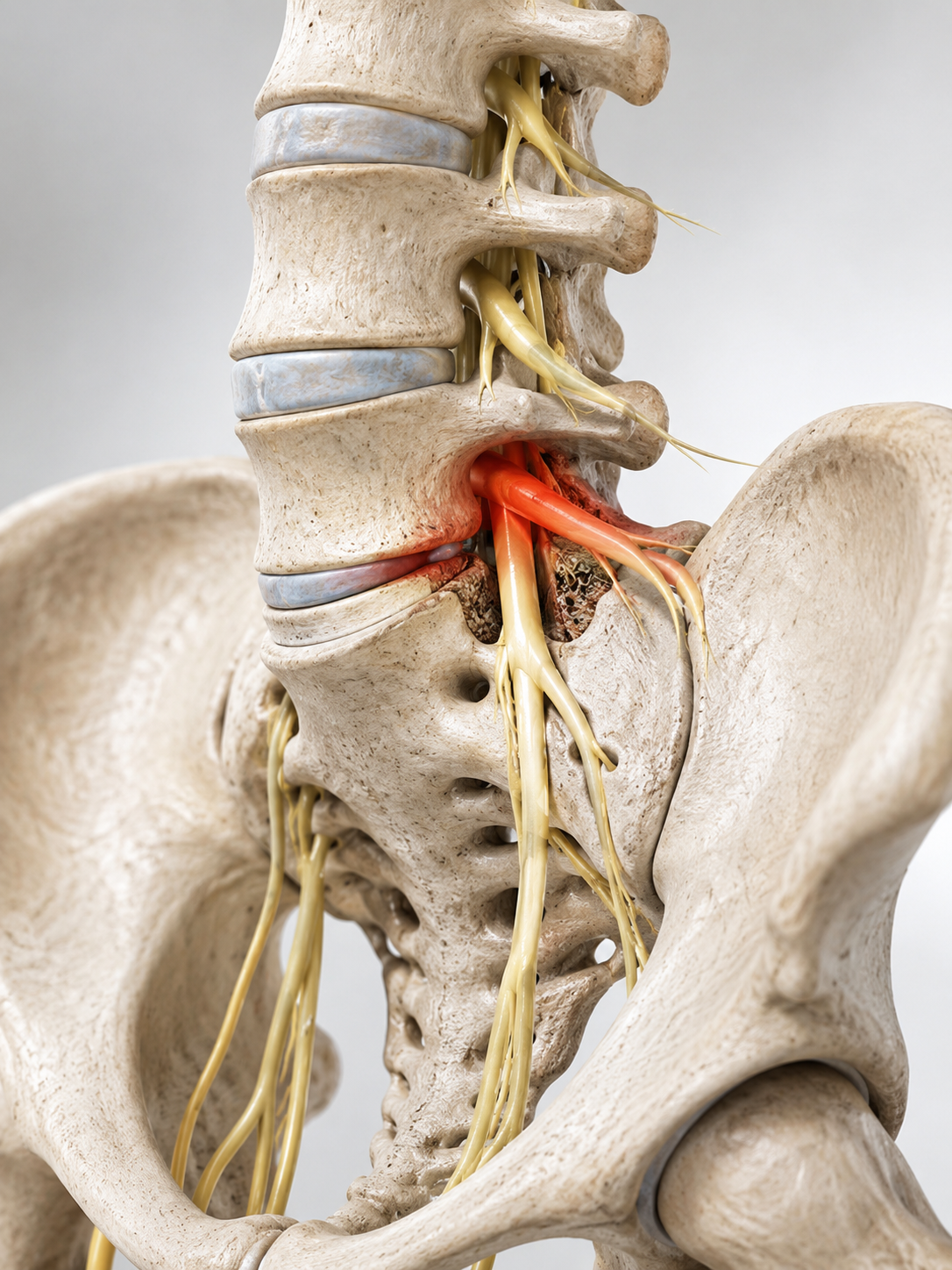
After surgery for herniated disc, stenosis or other lumbar problem, several mechanisms can explain pain in the leg: residual irritation of a nerve root, postoperative inflammation, disc recurrence, persistent foraminal stenosis, Adhesions, fibrosis or other associated mechanical cause.

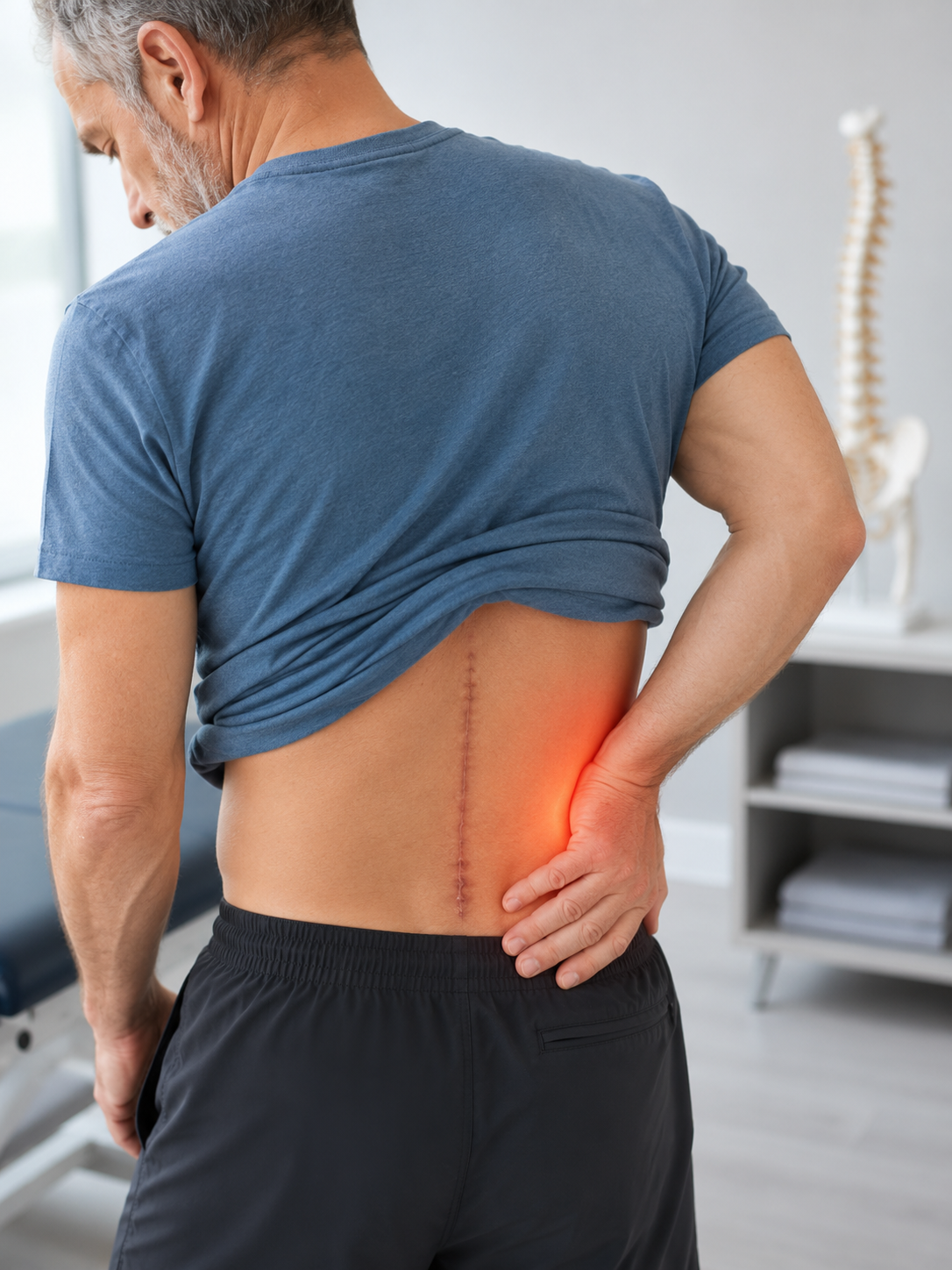
Possible causes of sciatic pain after surgery
It is important not to automatically assign any postoperative pain to a single cause. Pain in the leg after surgery can come from a still irritated nerve root, local inflammation, recurrence of hernia, persistent stenosis, internal healing or another lumbar level that has become Symptomatic.
The time to onset often gives clues. Pain present immediately after the procedure, pain that gradually decreases, pain that returns after a period of improvement or pain that quickly worsens is not reasoned in the same way.
| Possible mechanism | possible presentation | Why is it important |
|---|---|---|
| Residual nerve irritation | Pain or numbness that persists after surgery. | The root can slowly recover after prolonged compression. |
| Postoperative inflammation | Variable pain within days or weeks of surgery. | The evolution should be monitored, especially if the pain increases instead of decreasing. |
| Disc recurrence | Return of descending pain after initial improvement. | May require new imaging or medical advice. |
| Persistent foraminal stenosis | pain in a specific territory of the leg or foot. | The exit passage from the root may remain narrow. |
| Fibrosis or adhesions | Persistent pain or symptoms difficult to distinguish. | Must be interpreted with clinical history and examinations. |
What symptoms to monitor after lumbar surgery?
After lumbar surgery, some symptoms may be part of a normal recovery, while others should lead to a rapid reassessment. The central element is evolution: improvement, stability, aggravation or appearance of new symptoms.
Descending pain
Pain that descends into the buttocks, thigh, calf or foot should be compared to the preoperative path.
Numbness
Numbness may persist after nerve compression, but it should be monitored if it increases.
Weakness
New or progressive weakness of the foot, calf or leg should be assessed quickly.
pain that comes back
Pain that reappears after a period of improvement can suggest recurrence or other irritation.
Bilateral pain
Symptoms in both legs may suggest a more central involvement or a situation to be clarified.
General signs
Fever, chills, red sore, discharge or general malaise after surgery ask for rapid medical advice.
Irritated nerve root after surgery: how to understand the journey?
The path of pain remains very useful after surgery. Pain towards the big toe may remain compatible with L5 irritation. Pain towards the heel or the outer edge of the foot can evoke S1. Pain in front of the thigh may suggest a higher root or cruralgia.
It is also necessary to compare the symptoms after surgery with those present before the operation. Identical pain, reduced but persistent pain, different pain or pain that appears in a new territory do not have the same meaning.
- Similar but less intense pain: may correspond to incomplete recovery.
- New or different pain: must be reassessed depending on the context.
- Pain that comes back after improvement: may suggest recurrence or new irritation.
- Increased numbness: a sign to watch closely.
- Progressive weakness: Recommended quick consultation.
Normal recovery pain or problem sign?
The question is not only whether the pain is present, but to understand its evolution. After lumbar surgery, postoperative pain may be expected, but rapid worsening, weakness or general signs should be taken seriously.
| Situation | possible interpretation | careful driving |
|---|---|---|
| pain that gradually decreases | Evolution compatible with progressive recovery. | Continue the planned follow-up and follow the postoperative instructions. |
| Stable numbness | May persist if the root has been irritated for a long time. | Monitor evolution and function. |
| pain that comes back after improvement | recurrence, irritation or other possible mechanism. | Recommended reassessment. |
| New or progressive weakness | more worrying neurological sign. | Quick consultation. |
| fever, red wound or discharge | possible postoperative complication. | Urgent medical assessment. |

Why personalized assessment is essential after surgery
Sciatic pain after surgery should not be evaluated as a first lower back pain. The type of surgery, date of surgery, symptoms before the operation, results after the operation and control examinations change the interpretation.
The evaluation aims to compare pain path, strength, sensitivity, walking, aggravating positions, general signs and medical documents available. In some cases, a reference to the surgeon or attending physician is the best decision.
Compare before and after
The pain path, intensity, numbness and strength should be compared to the preoperative state.
Check warning signs
fever, suspicious wound, progressive weakness or urinary disorders should be considered in priority.
What options should be considered after lumbar surgery?
The options depend on the delay since the surgery, the surgeon’s instructions, the stability of the symptoms, the presence or absence of warning signs, and the type of initial problem. The same approaches should not be applied automatically as before the operation.
Depending on the assessment and the medical context, some non-surgical and non-invasive approaches can sometimes be discussed, but only when the situation is stable and no signs of urgency are present. In other cases, the priority is to return to the surgeon, the attending physician or the responsible medical team.
| Approach | Possible role | prerequisite |
|---|---|---|
| Medical or surgical follow-up | Check postoperative progression, possible complications or need for imaging. | Priority in case of fever, suspicious wound, weakness or rapidly aggravated pain. |
| neurovertebral decompression motorized | Can be discussed in some stable mechanical profiles. | Never without careful evaluation of the surgical context and possible contraindications. |
| osteopathy specific | Adapt interventions to mobility, compensation and tolerance. | Only if the situation is stable and compatible with a conservative approach. |
| Precision striker | Instrument assisted intervention, targeted and low amplitude. | To be considered only according to the patient’s assessment and tolerance. |
Sciatica after lumbar surgery and clinical orientation
An educational page like this serves to better understand the possible mechanisms, but it does not replace postoperative follow-up. After lumbar surgery, the surgeon’s instructions, recovery time and warning signs should always be respected.
For a local appointment or a geolocated treatment page, the main conversion page must be hosted on the TagMed Clinic website in order to avoid SEO cannibalization with the educational content of SOS Sciatica.
The educational pages of SOS Sciatica must explain the causes and guide the reader. The local treatment, appointment and conversion pages should remain on the TagMed Clinic website.
Understand the evolution
Comparing symptoms before and after surgery prevents quick findings.
Orient the sequel
A pain that worsens, suddenly comes back or is accompanied by weakness, deserves a reassessment.
Frequently Asked Questions about Sciatica After Lumbar Surgery
Is it normal to still have sciatica pain after lumbar surgery?
Some pain or sensitivity may persist depending on the context, especially if the nerve root has been compressed for a long time. However, the evolution must be monitored.
Why can the pain come back after an improvement?
Pain that returns after a period of improvement may be related to recurrence, nerve irritation, persistent stenosis or other mechanism to be clarified.
Is a herniated disc recurrence possible?
Yes, a recurrence is possible after certain disc surgeries. Descending pain that reappears should be assessed in context.
Can numbness persist after the operation?
Yes, numbness may persist if the nerve root has been irritated for a long time. However, it is necessary to monitor whether it is increasing or if it is accompanied by weakness.
What signs are urgent after lumbar surgery?
Fever, red or flowing wound, progressive weakness, loss of urinary or intestinal control, stool anesthesia or rapidly aggravated pain should be assessed without delay.
Is neurovertebral decompression possible after surgery?
It can sometimes be discussed in certain stable profiles, but never without careful evaluation of the surgical context, the type of intervention and possible contraindications.
Should I see my surgeon again if the pain returns?
If the pain returns strongly, worsens, is accompanied by weakness or appears with general signs such as fever or suspicious wound, it is necessary to communicate quickly with the medical team.
Why can the pain in the leg be different after the operation?
Different pain may indicate residual irritation, compensation, another level involved or a change in mechanical stress. It should be interpreted with caution.
Does pain after surgery mean that the operation failed?
Not necessarily. Nerve recovery may be slow, but pain that gets worse or comes back after improvement deserves reassessment.
When should sciatic pain be assessed after surgery?
A reassessment is recommended if the pain goes lower, if walking decreases, if numbness increases, weakness appears or if the pain changes rapidly.
Does your sciatic pain persist or returns after lumbar surgery?
A personalized assessment can help compare your symptoms before and after the procedure, check strength, sensitivity, walking and warning signs, and then determine the most cautious orientation.
Dr Sylvain Desforges, B.Sc., D.O., N.D., Osteopath

Editorial information, sources and limitations
This content is intended to inform patients about sciatica, possible causes, warning signs, and care options. It does not replace an individualized assessment.
Reference sources
References are selected according to the subject of the page: guidelines, systematic reviews, then institutional resources.
- NICE NG59 – Low back pain and sciatica in over 16s — National guideline
- HAS – Management of patients with common low back pain — French national guideline
- Cochrane – Corticosteroid injections for treatment of sciatica — Systematic review
- NCBI Bookshelf – Sciatica — Clinical institutional resource
Complementary resources from the TAGMED network
These internal resources complement the clinical information and thematic linking. They do not replace national guidelines or systematic reviews.
Editorial note on decompression
Clinical resource from the TAGMED network; it does not replace national guidelines. Some guidelines use the term “traction” and recommend caution for low back pain with or without sciatica. Any decompression option should therefore be presented as an individualized clinical approach, with limitations, indications, and contraindications clearly explained.
Limitations of this information
The information on this page is general. It does not constitute a diagnosis, prescription, or guarantee of results. Pain radiating into the leg may have several causes; assessment should consider clinical history, examination findings, symptom progression, and, when appropriate, complementary tests.
When to seek urgent medical care
Seek urgent medical care if you experience loss of bladder or bowel control, saddle anesthesia, major or progressive leg weakness, unexplained fever, pain after significant trauma, or severe pain that rapidly worsens.
