




Sciatica and spondylolisthesis: when a vertebra slips and irritates a nerve root
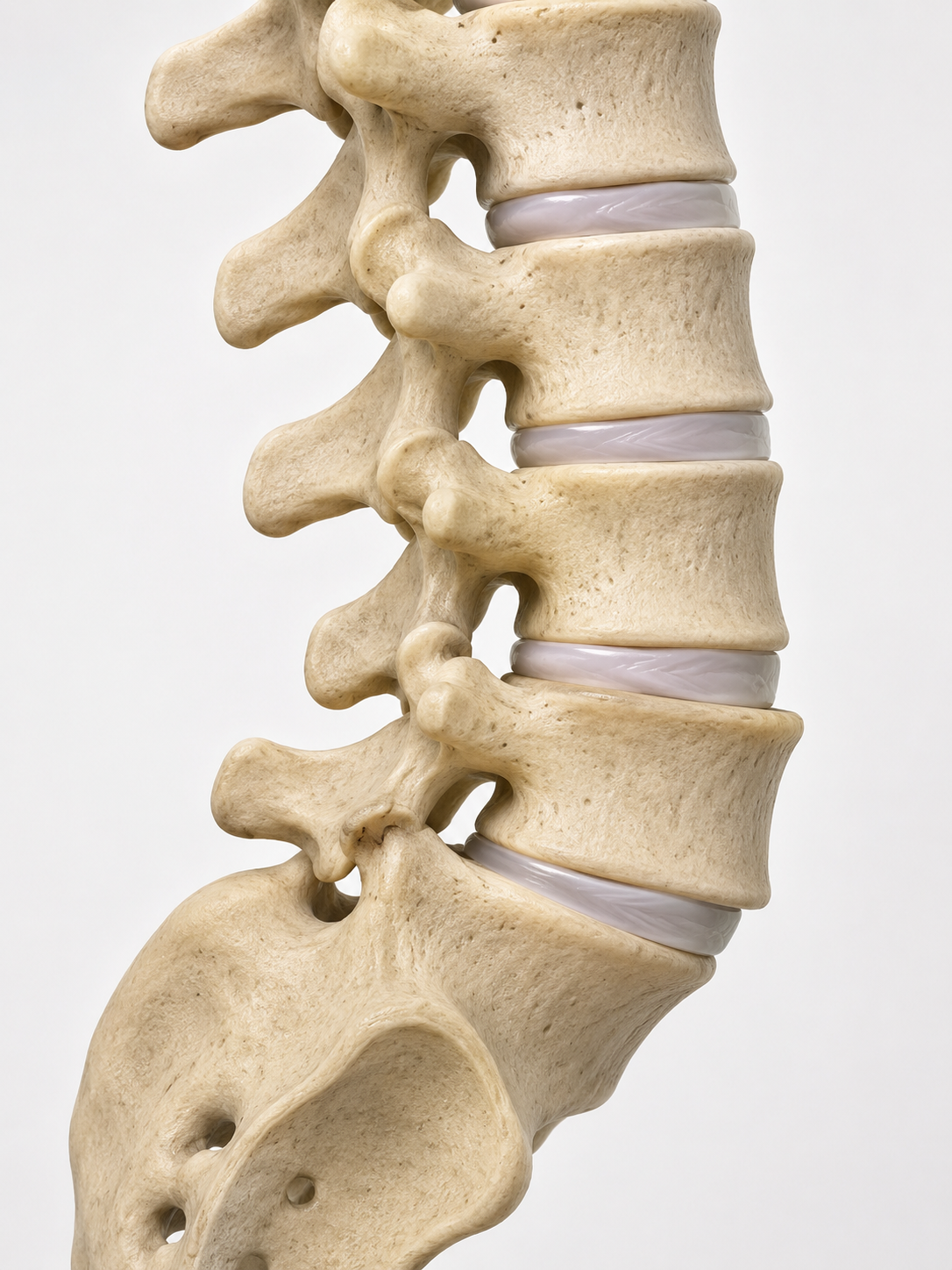
A lumbar spondylolisthesis corresponds to a slip of a vertebra compared to that located below. When this slip changes the alignment of the column or reduces the space around a nerve root, it can contribute to pain compatible with sciatica.
The pain may descend into the buttocks, thigh, calf, foot or certain toes depending on the level reached, the touched side and the irritated nerve root. Spondylolisthesis may also be associated with disc pinching, lumbar osteoarthritis, foraminal stenosis or spinal stenosis.
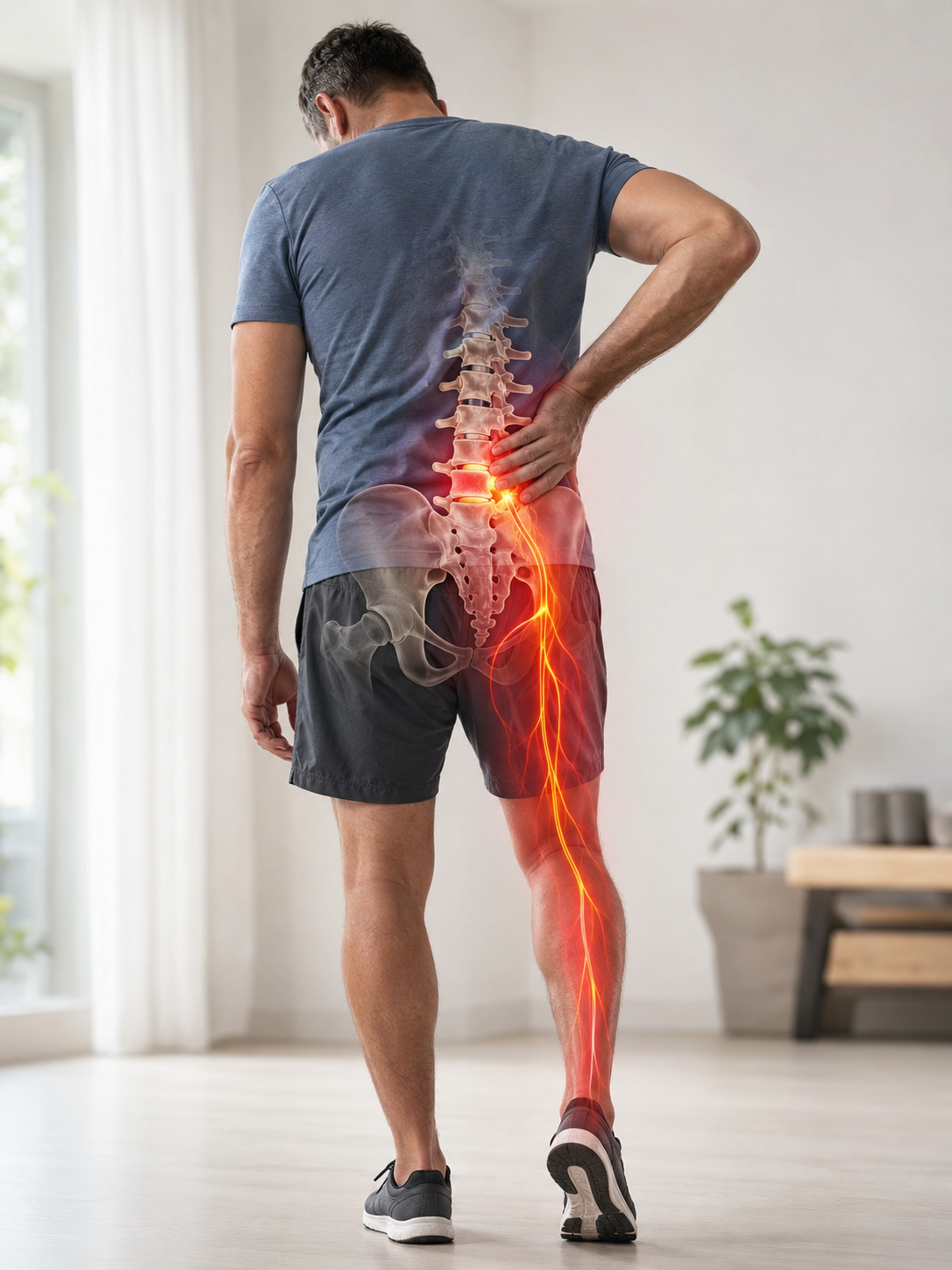
How can spondylolisthesis cause sciatica?
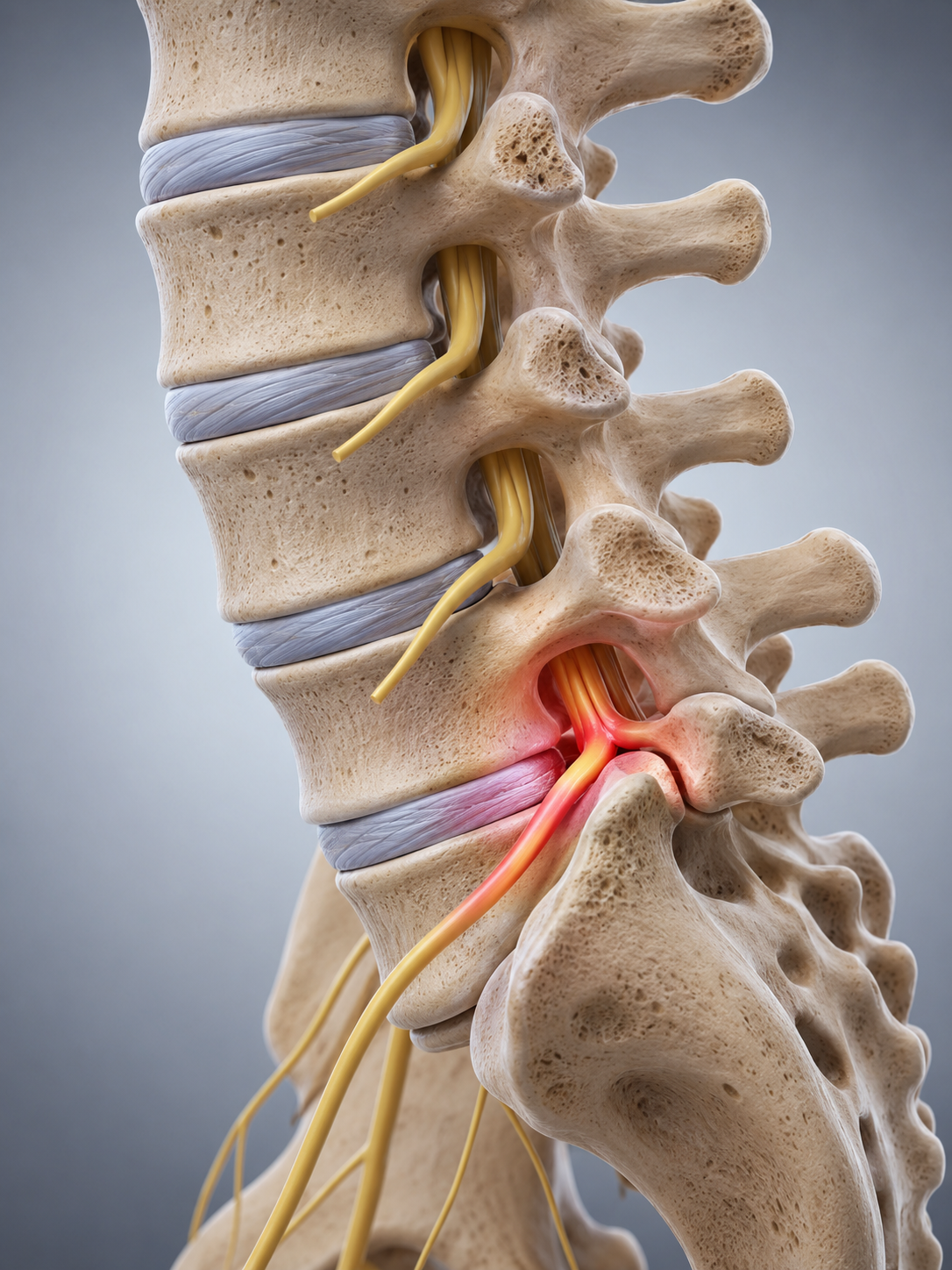
Sliding of a vertebra can alter lumbar alignment, disc height, stress on the posterior joints and the space of the foramen. The foramen is the passage through which a nerve root comes out of the column. If this passage becomes too narrow, the root can be irritated.
Spondylolisthesis can also contribute to spinal stenosis, especially when it is accompanied by osteoarthritis, thickened ligaments, disc pinching or degenerative changes. The pain can then be more diffuse, sometimes related to walking or standing.
| Possible mechanism | mechanical effect | Possible symptom |
|---|---|---|
| vertebral glide | Change in alignment between two vertebrae. | Lumbar pain, stiffness or feeling of instability. |
| Foraminal stenosis | Reduced the exit passage of a nerve root. | pain in a specific territory of the leg or foot. |
| Spinal stenosis | Reduction of the central channel or areas close to the channel. | Heaviness, numbness or pain sometimes in both legs. |
| Associated disc pinch | Decreased disc height at the touched level. | Reduction of the foraminal space and possible irritation of a root. |
| Lumbar osteoarthritis | Thickening of joints and increased mechanical stress. | Lumbar pain, gluteal pain or positional symptoms. |
What symptoms can accompany spondylolisthesis?
Symptoms vary depending on the degree of slippage, the level reached, the segment stability, the condition of the disc, the presence of osteoarthritis and the possible irritation of the nerve roots. Some people mostly experience lower back pain, while others have descending pain in the leg.
lumbar pain
The pain can be mechanical, deep or aggravated by certain positions and movements.
Pain in the buttock
Buttock pain may accompany local or root irritation.
Descending pain
The pain can go down to the thigh, calf, foot or toes depending on the affected root.
Numbness
Numbness in a specific territory may suggest nervous irritation.
Weakness
Weakness of the foot, calf or leg should be assessed quickly, especially if it progresses.
Difficulty walking
A limitation of walking can suggest associated stenosis or irritation of several roots.
spondylolisthesis, nerve roots and pain path
When a spondylolisthesis reduces the space around a nerve root, the pain can follow a path compatible with sciatica. Depending on the level affected, the symptoms may suggest irritation of L4, L5 or S1.
L4-L5 level spondylolisthesis can sometimes be associated with L5 compatible symptoms. A spondylolisthesis at the L5-S1 level can influence L5 or S1 depending on the foramen, disc, joints and shrink location.
- Pain towards the big toe: often compatible with L5.
- Pain towards the heel or the outer edge of the foot: often compatible with S1.
- Pain in front of the thigh: may evoke a higher root or cruralgia.
- Walking pain: May suggest an associated stenosis.
- Weakness or progressive numbness: sign to be reassessed quickly.
spondylolisthesis, stenosis, pinching: how to distinguish them?
Imaging reports often mention several terms at once. A spondylolisthesis may be associated with disc disease, disc pinching, osteoarthritis, foraminal stenosis or spinal stenosis. The goal is to determine which elements actually correspond to the symptoms.
| Term | What this describes | Important clinical question |
|---|---|---|
| spondylolisthesis | Slip one vertebra relative to another. | Is slip associated with pain, stenosis or nerve irritation? |
| disc pinch | Decrease in height of a disc. | Does the loss of height reduce the foramen or change the constraints? |
| Foraminal stenosis | Nerve root exit passage narrows. | Does the pain path correspond to the root concerned? |
| Spinal stenosis | central channel narrowing. | Are walking, heaviness or bilateral symptoms present? |
| Lumbar osteoarthritis | Degenerative changes in the lumbar joints. | Does osteoarthritis help reduce space around the roots? |

Why personalized evaluation is essential
Two people may have a visible spondylolisthesis in imaging, but have very different symptoms. One may have mild and stable lower back pain, while another may have descending pain, numbness, weakness, or significant limitation of walking.
The evaluation aims to link the degree of slip, the level reached, the path of pain, numbness, muscle strength, walking, functional stability and warning signs. This approach makes it possible to better understand if spondylolisthesis is simply present or if it really participates in the symptoms.
Clinical agreement
Compare imaging with painful territory, strength, sensitivity and real symptoms.
Function and evolution
Check walking, position tolerance, neurological signs and progression.
What options should be considered if spondylolisthesis contributes to sciatica?
The choice of an approach depends on the degree of slip, stability, duration of symptoms, walking, strength, sensitivity, imaging and tolerance of the patient. A spondylolisthesis should not automatically lead to the same recommendation for all.
According to the evaluation, certain non-surgical and non-invasive approaches can be discussed, including neurovertebral decompression motorized, specific osteopathy or the precision striker. In some cases, a medical reference or specialized assessment may be more appropriate, especially if the symptoms progress.
| Approach | Possible role | When to consider it with caution |
|---|---|---|
| Motorized neurovertebral decompression | Reduce some mechanical stress on discs, foramen and nerve roots. | Profile compatible with mechanical irritation, without major instability or sign of urgency. |
| osteopathy specific | Adapt the interventions to the patient’s restrictions, compensation and tolerance. | Pain associated with stiffness, mobility limitation or mechanical overload. |
| Precision striker | Instrument assisted intervention, targeted and low amplitude. | Accurate mechanical dysfunction depending on the assessment and tolerance. |
| Medical reference | Orientation when the situation is beyond the scope of a conservative approach. | Progressive weakness, loss of function, uncontrollable pain or suspected significant instability. |
Sciatica, spondylolisthesis and clinical orientation
An educational page like this serves to better understand the possible mechanisms, but it does not replace an evaluation. Sciatic pain associated with spondylolisthesis should be interpreted according to the degree of slippage, stability, pain path, walking, strength, sensitivity and imaging results.
For a local appointment or a geolocated treatment page, the main conversion page must be hosted on the TagMed Clinic website in order to avoid SEO cannibalization with the educational content of SOS Sciatica.
The educational pages of SOS Sciatica must explain the causes and guide the reader. The local treatment, appointment and conversion pages should remain on the TagMed Clinic website.
Understand the slip
Connect the degree of spondylolisthesis, the level reached and the symptoms to avoid quick conclusions.
Orient the sequel
When the pain persists, worsens or limits walking, a clinical evaluation becomes more important.
Frequently Asked Questions about Sciatica and Spondylolisthesis
Can a spondylolisthesis cause sciatica?
Yes, it can contribute if the slippage reduces the space around a nerve root or if it is associated with foraminal or spinal stenosis.
Does spondylolisthesis always cause pain in the leg?
No. Some people have spondylolisthesis without sciatic pain. It becomes more significant when it corresponds to the path of symptoms, walking, strength and sensitivity.
What is the difference between spondylolisthesis and herniated disc?
Spondylolisthesis corresponds to a vertebral shift. The disc herniation corresponds rather to a projection or migration of the disc. Both can sometimes irritate a nerve root.
Can spondylolisthesis cause foraminal stenosis?
Yes I do. Sliding, decreased disc height and associated osteoarthritis can reduce the exit passage of a nerve root.
Can spondylolisthesis cause spinal stenosis?
Yes I do. In some cases, vertebral slip and associated degenerative changes can reduce lumbar canal space.
What signs should be consulted quickly?
Progressive weakness, difficulty walking, loss of urinary or intestinal control, stool anesthesia or extending numbness should be assessed quickly.
Is walking still recommended?
Not always. It can be well tolerated in some people, but it can also make symptoms worse if stenosis or nervous irritation is present.
Can neurovertebral decompression be considered?
It can be discussed in some profiles compatible with mechanical irritation, if the evaluation does not reveal any sign of urgency, progressive deficit or significant instability.
Does spondylolisthesis still require surgery?
No. The decision depends on the degree of slippage, stability, function, pain, weakness, evolution and response to non-surgical approaches.
When should spondylolisthesis be evaluated again?
A reassessment is recommended if the pain drops lower, if walking decreases, numbness increases, weakness appears or symptoms change rapidly.
Could your spondylolisthesis irritate a nerve root?
A personalized assessment can help connect your imaging, walking ability, muscle strength, numbness, and the path of your symptoms to better understand the likely cause.
Sylvain Desforges, B.Sc., D.O., N.D., Doctor of Osteopathy

Editorial information, sources and limitations
This content is intended to inform patients about sciatica, possible causes, warning signs, and care options. It does not replace an individualized assessment.
Reference sources
References are selected according to the subject of the page: guidelines, systematic reviews, then institutional resources.
- NICE NG59 – Low back pain and sciatica in over 16s — National guideline
- HAS – Management of patients with common low back pain — French national guideline
- Cochrane – Corticosteroid injections for treatment of sciatica — Systematic review
- NCBI Bookshelf – Sciatica — Clinical institutional resource
Complementary resources from the TAGMED network
These internal resources complement the clinical information and thematic linking. They do not replace national guidelines or systematic reviews.
Editorial note on decompression
Clinical resource from the TAGMED network; it does not replace national guidelines. Some guidelines use the term “traction” and recommend caution for low back pain with or without sciatica. Any decompression option should therefore be presented as an individualized clinical approach, with limitations, indications, and contraindications clearly explained.
Limitations of this information
The information on this page is general. It does not constitute a diagnosis, prescription, or guarantee of results. Pain radiating into the leg may have several causes; assessment should consider clinical history, examination findings, symptom progression, and, when appropriate, complementary tests.
When to seek urgent medical care
Seek urgent medical care if you experience loss of bladder or bowel control, saddle anesthesia, major or progressive leg weakness, unexplained fever, pain after significant trauma, or severe pain that rapidly worsens.
