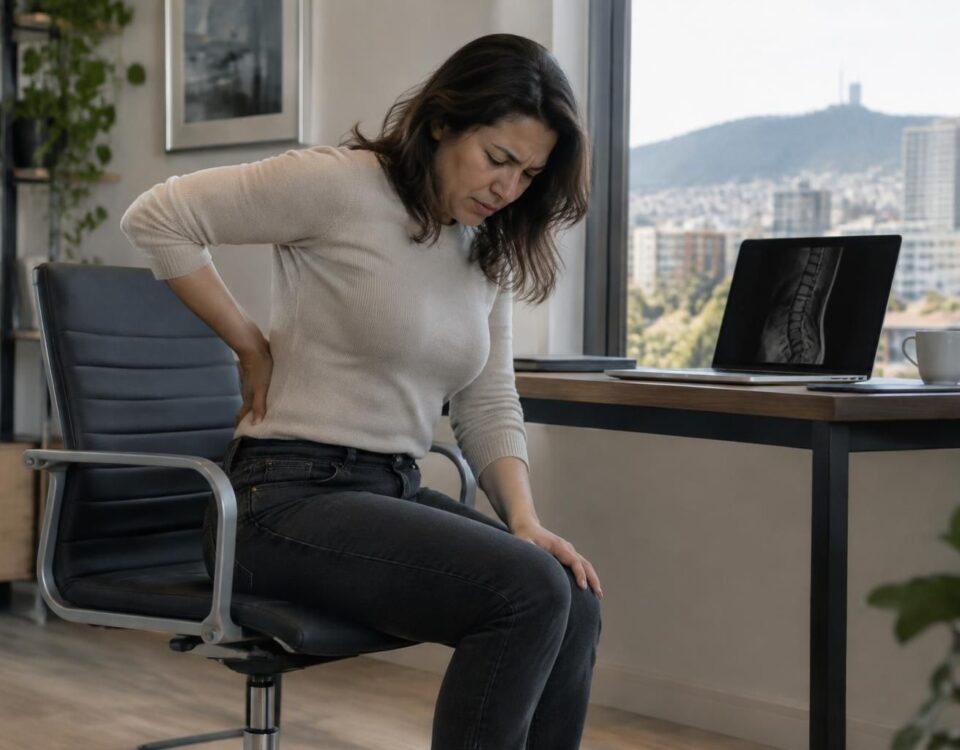
Sciatica and carrying groceries: pain in the leg
27/11/2026
Sciatica in Terrebonne: disc degeneration and symptoms in the leg
28/11/2026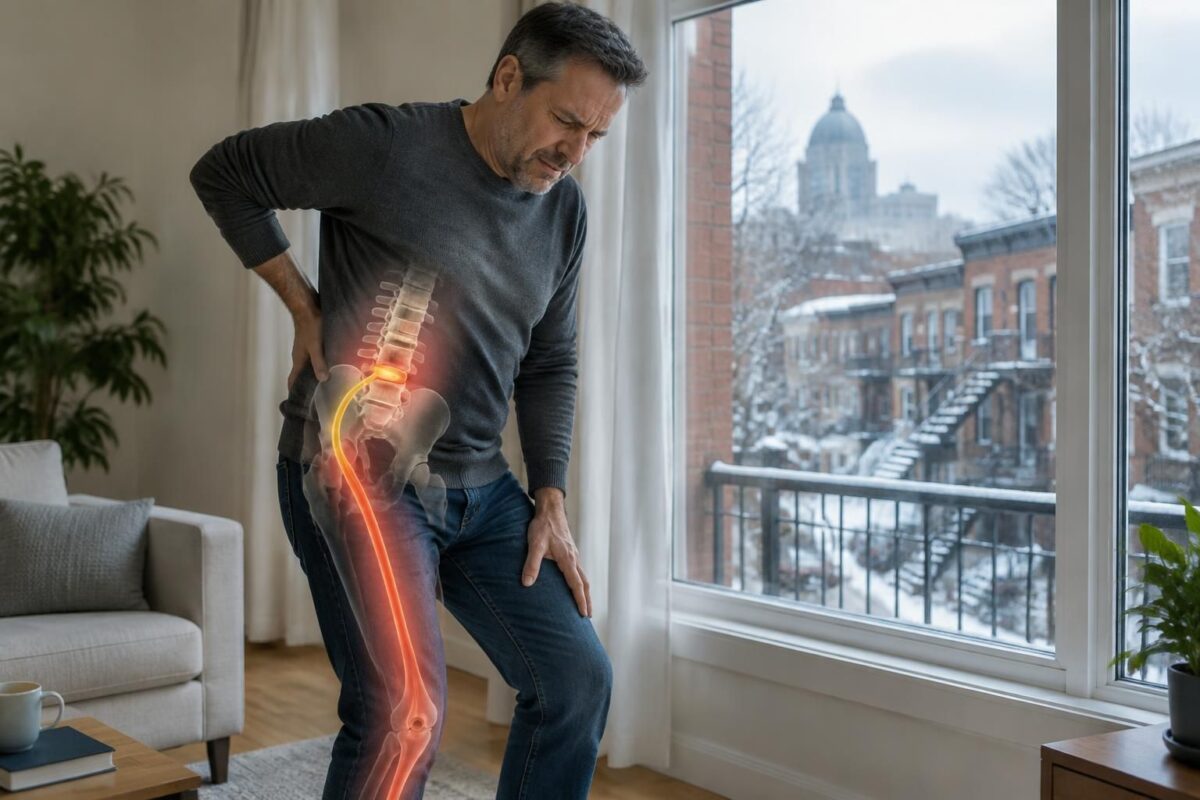
IN BRIEF The sciatica related to disc degeneration can cause pain that radiates from the lower back to the buttock and leg, sometimes as far as the foot. In Montreal, an evaluation helps identify the cause of the symptoms and determine suitable non-surgical options, without guaranteeing the same outcome for everyone. |
The disc degeneration can contribute to irritation of the lumbar nerve structures and be associated with symptoms consistent with sciatica: pain in the buttock, leg, or foot, tingling or numbness. Their origin varies from person to person and requires a tailored evaluation.
In Montreal, non-surgical management may be considered based on the evaluation results. At TAGMED Clinic, options may include specific osteopathy or motorized neurovertebral decompression. Quickly consult a healthcare professional in case of significant or progressive weakness, or loss of bladder or bowel control.
The disc degeneration refers to changes affecting one or more discs in the lumbar spine. It can sometimes contribute to irritation of a nerve root and cause pain radiating into the buttock or leg. However, an image of a degenerated disc alone is not sufficient to explain the symptoms: the evaluation must also consider their course, intensity, and evolution.
Understanding Lumbar Disc Degeneration
The lumbar discs are located between the vertebrae. They help distribute loads and allow for movement of the back. Over time, their structure can change: the disc may lose some of its hydration, become thinner, or bulge. These changes are often described in imaging exams.
The disc degeneration does not always cause pain. Some people show visible changes on imaging without marked symptoms. In others, a disc or nearby structures may contribute to lumbar pain or nerve irritation. Therefore, the results of an X-ray or MRI must be interpreted alongside the symptoms and clinical examination.
An Aged Disc Alone Cannot Determine a Diagnosis
A report may mention desiccation, a decrease in disc height, or disc narrowing. These terms describe observations, but do not always specify the exact cause of leg pain. The healthcare professional also assesses strength, sensitivity, reflexes, and the course of the pain.
To better understand some associated results, refer to the articles on disc desiccation and radiating pain and on the lumbar disc and nerve root inflammation.
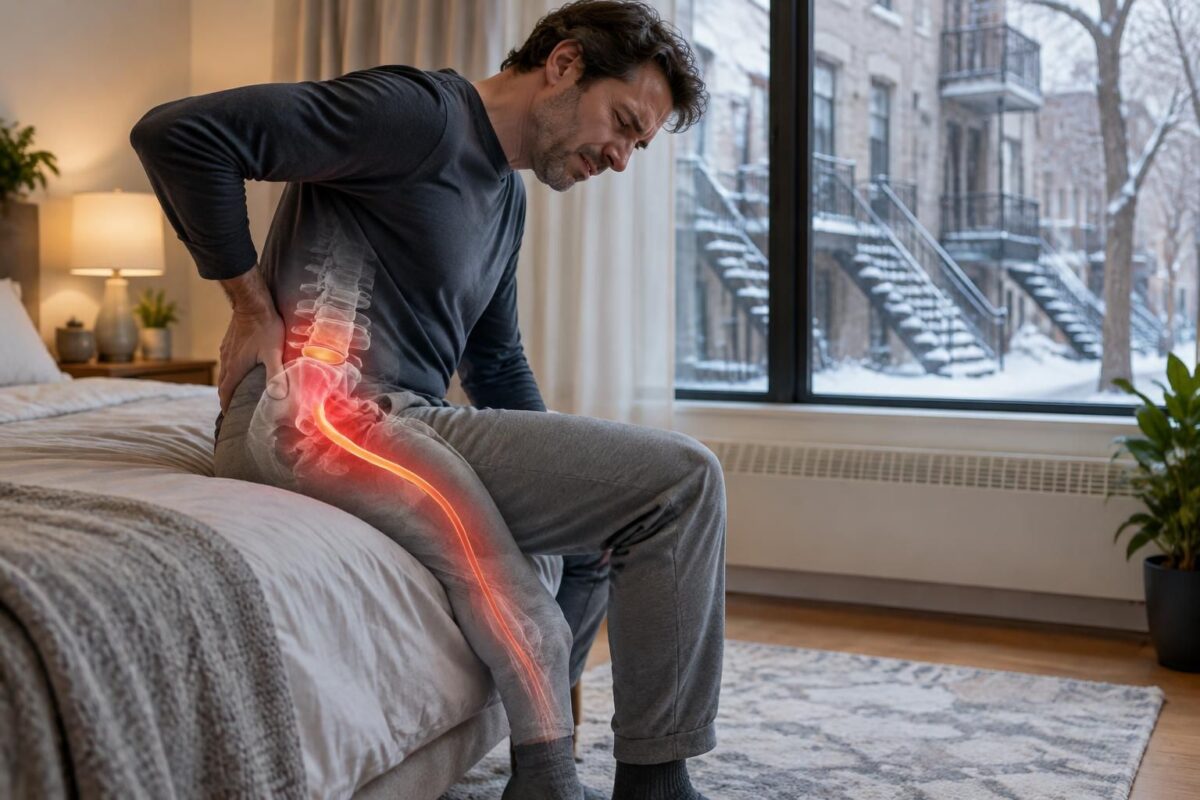
Sciatica in Montreal: disc desiccation and radiating pain
IN BRIEF Disc dehydration refers to a decrease in hydration of a lumbar disc; it does not necessarily mean that it causes sciatica. In Montreal, pain radiating from the lower back or buttocks down to the leg should be assessed…
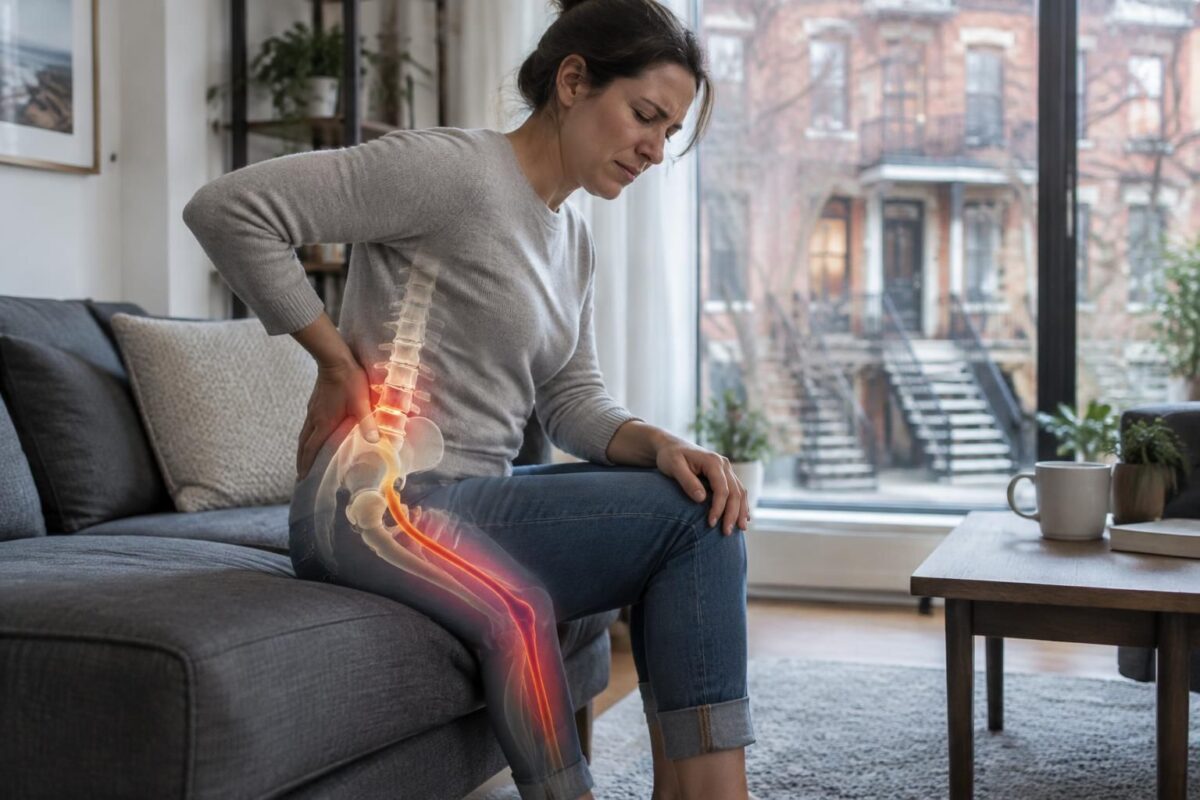
Sciatica in Montreal: possible annular tear and nerve irritation
IN BRIEF A disc tear is a small lesion of the disc that can sometimes contribute to irritation of a nerve root and symptoms of sciatica, such as pain radiating down the leg. It does not always mean that a…
Why Pain May Radiate Down the Leg
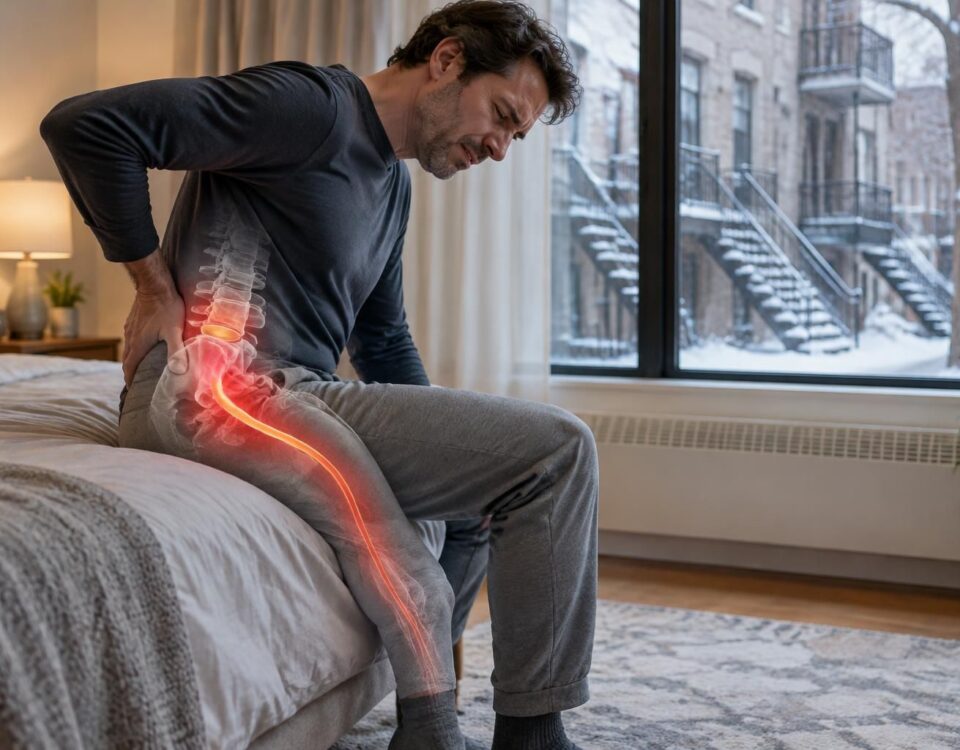
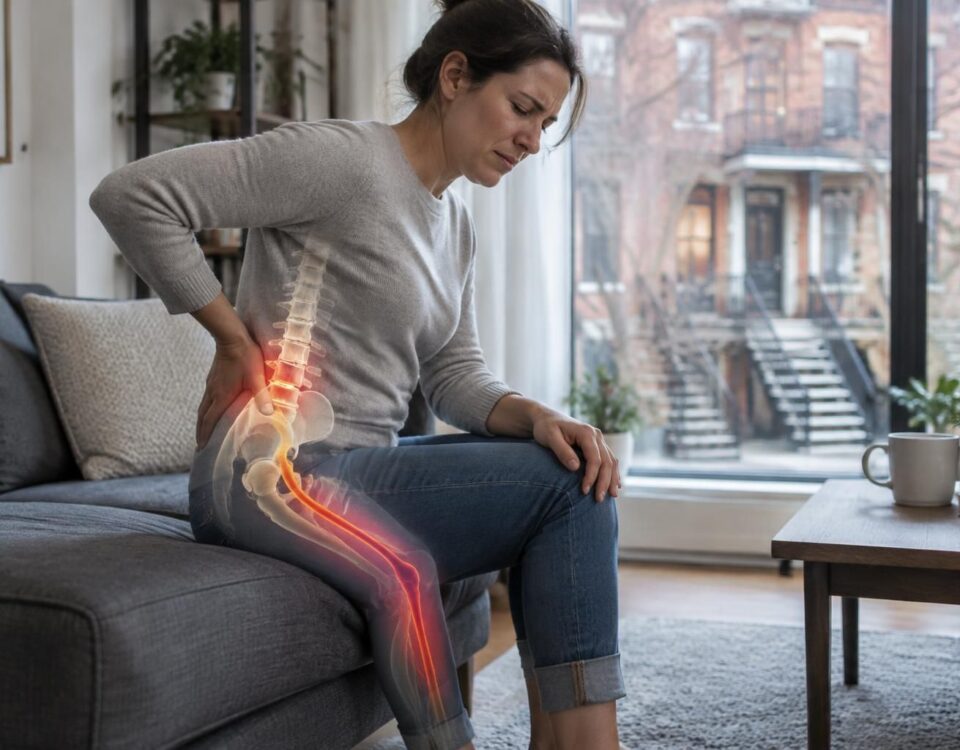
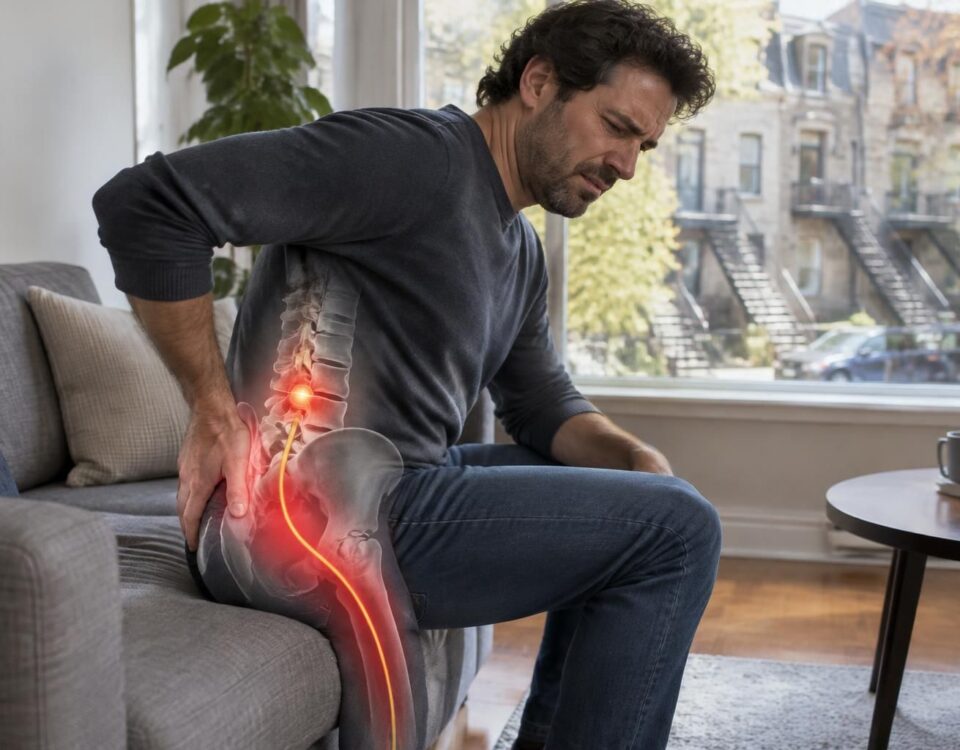
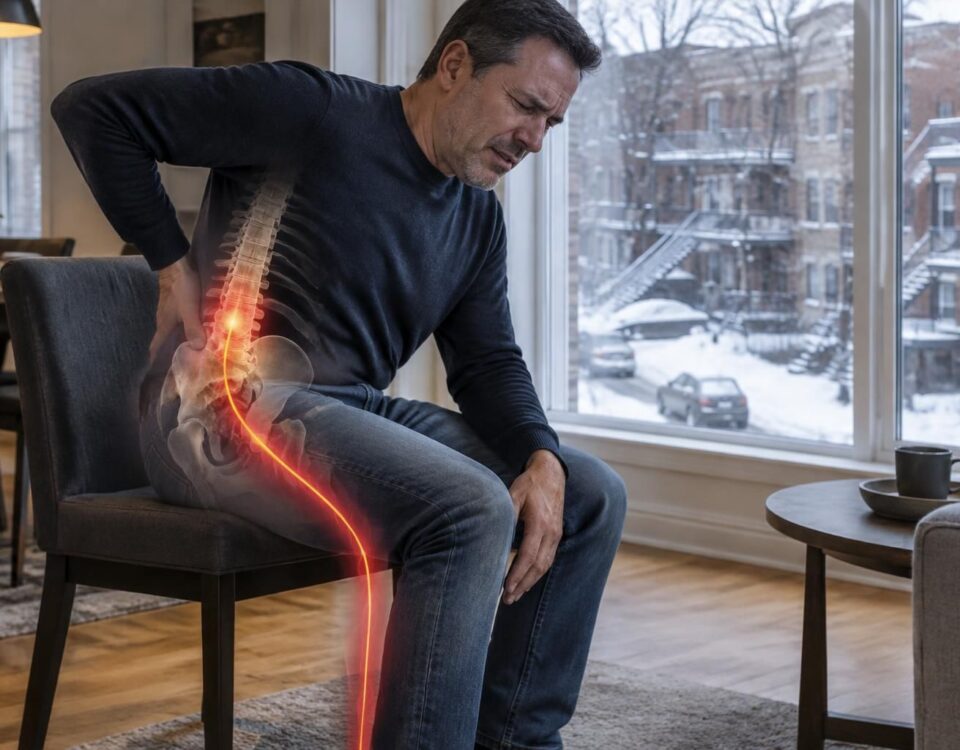
A lumbar nerve root may become irritated or compressed near the disc or within a passage of the spine. Pain can then radiate from the lumbar area to the buttock, thigh, calf, foot, or toes. This pathway varies from person to person and particularly depends on the affected nerve root.
Pain radiating down the leg may be accompanied by tingling, numbness, or a burning sensation. Some individuals also describe weakness. These symptoms alone do not prove that disc degeneration is the cause. An evaluation allows for a comparison of observed signs with imaging results and other possible causes.
The Course of Symptoms May Vary
The location of nerve irritation can influence the painful area. An issue near L5 or S1 can cause symptoms that extend to different parts of the leg or foot. However, the pathway is not the same for everyone.
The article on the influence of the nerve root on the pain pathway explains why symptoms may differ depending on the affected area. An L5-S1 herniation with pain radiating to the foot is an example of a possible situation, but only a professional can assess whether this explanation applies to your case.
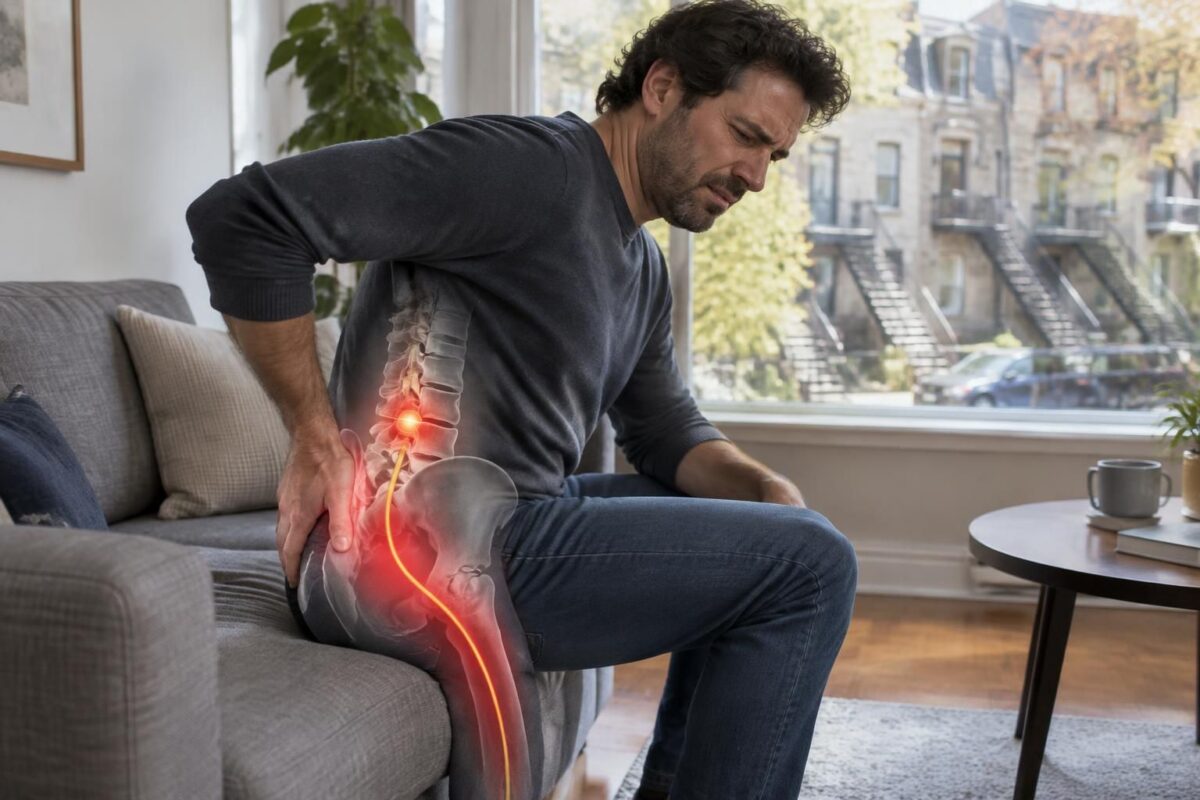
Sciatica in Montreal: disc bulge and buttock pain
IN BRIEF A disc bulge can irritate a nerve root and cause buttock pain, sometimes accompanied by pain that travels down the leg: this is referred to as symptoms compatible with sciatica. In Montreal, an evaluation helps specify the cause…
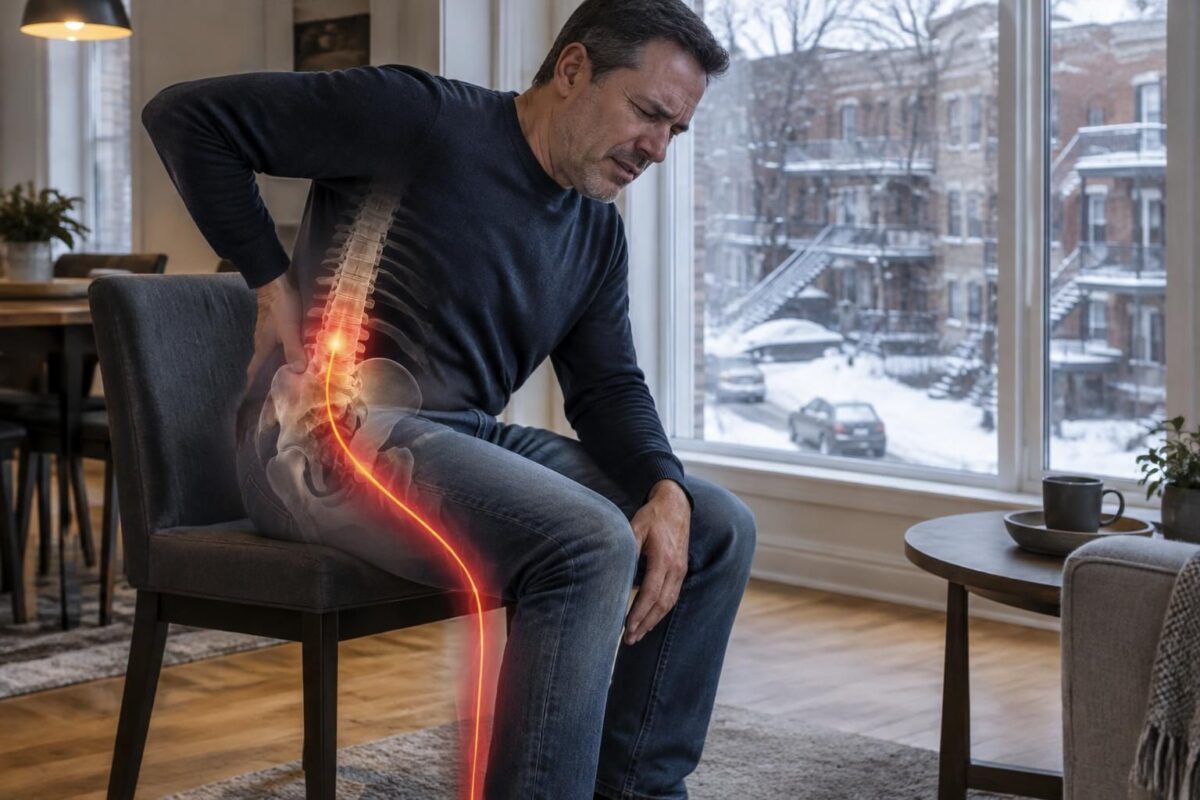
Sciatica in Montreal: disc protrusion and pain under the knee
IN BRIEF A disc protrusion can irritate a nerve root and contribute to sciatica with pain below the knee, sometimes down to the calf or foot. In Montreal, an evaluation helps clarify the cause of symptoms and consider suitable non-surgical…
Foraminal Compression and Disc Degeneration
The foramina are openings through which nerve roots exit the spine. Disc or bone changes can reduce the available space in these passages. A foraminal compression can then contribute to irritation of a nerve root, although imaging does not always predict the intensity of symptoms.
Pain is not the only element to consider. The healthcare professional also checks if you have a loss of sensitivity, weakness, or a change in your functional abilities. To learn more, see this article on L5-S1 foraminal compression.

Sciatica in Montreal: herniated disc and painful cough
IN BRIEF Sciatica is a pain that extends from the lower back to the buttock and leg; a herniated disc can irritate a nerve root. Coughing can exacerbate the pain by increasing pressure in the back. In Montreal, an evaluation…

Sciatica in Montreal: pain worsened when sitting and lumbar disc
IN BRIEF Worsening sciatica in a sitting position may be related to lower back irritation, sometimes associated with a disc, without this sign being sufficient to establish the cause. In Montreal, an evaluation that considers symptoms, strength, sensitivity, and function…
Evaluation of Symptoms in Montreal
An evaluation begins with your symptoms: their location, duration, factors that worsen or relieve them, and their evolution. The professional can then assess your mobility, sensitivity, and strength according to their field of practice. If the signs warrant it, a physician may request tests or propose medical follow-up.
Imaging is not always necessary for every episode of lumbar pain or leg pain. The physician decides whether an X-ray, MRI, or other test is relevant based on the history and clinical signs. The goal is to link the results to the symptoms, rather than treating a report in isolation.

Sciatica in Montreal: pain worsened by flexion and disc-related cause
IN BRIEF Flexion-Aggravated Sciatica is pain that starts in the lower back and may radiate into the buttock or leg; irritation related to a lumbar disc can be a possible cause. In Montreal, an assessment helps clarify the origin of…

Discogenic sciatica in Montreal: why some stretches worsen
IN BRIEF Disc-related sciatica refers to pain related to the irritation of a nerve root, often near a herniated disc. Certain stretches, especially those that emphasize bending or pull on the leg, can worsen symptoms rather than relieve them. In…
Non-Surgical Support Options
The options depend on the evaluation, presumed cause, and overall health status. A professional can discuss non-surgical approaches and their limitations with you. At TAGMED Clinic, treatments may include, depending on the case, motorized neurovertebral decompression, specific osteopathy, or a precision impactor. These approaches are not suitable for everyone and do not replace a medical diagnosis or follow-up by a physician.
To learn about the services offered, visit the Clinique TAGMED, which sees patients in Montreal and Terrebonne. An evaluation related to the sciatica treatment in Montreal / Mont-Royal or the sciatica treatment in Terrebonne can help determine if these services match your situation.
When to Seek Medical Help Quickly
Consult a doctor or emergency service if you lose control of your bladder or bowels, if you feel numbness in the saddle area, or if significant or progressive weakness appears in the leg or foot. Also seek an evaluation in case of fever, recent trauma, severe pain, or rapid deterioration.
About the Author
Sylvain Desforges, B.Sc., D.O., N.D., Doctor of Osteopathy and naturopath, is the founding president of TAGMED and the ACMA association. He dedicates his practice to chronic pain of the spine, lower back pain, and pain associated with sciatica, particularly when the pain radiates down to the buttock, leg, calf, foot, or toes.
Through SOS Sciatique, he publishes educational content on the symptoms of sciatica, possible causes such as disc herniation, disc compression, foraminal stenosis, or irritation of a lumbar nerve root, as well as on non-surgical approaches that may be considered based on the evaluation. At Clinique TAGMED, care may include, depending on the case, motorized neurovertebral decompression, specific osteopathy, or precision impact therapy.
Medical Disclaimer
The information published on SOS Sciatique is provided for educational purposes and is not a substitute for a consultation, diagnosis, advice, or treatment by a physician or other licensed healthcare professional. The author of this article is neither a physician nor a specialist in a medical specialty recognized by the College of Physicians of Quebec. The approaches of osteopathy, manual medicine, or functional support described on this site are not medical acts and are not intended to replace medical follow-up. For more details, please read our Legal Notice.
Medical disclaimer: The information and advice provided on this site do not replace the opinion, diagnosis, or treatment of a healthcare professional. Please note that Sylvain Desforges, B.Sc., D.O., N.D., doctor of osteopathy, is neither a medical doctor nor a physician, and is not a specialist in a medical specialty as defined by the College of Physicians of Quebec. Manual medicine, functional medicine, and sports medicine as described on this site exclude any medical treatment or diagnosis made by a physician or medical specialist. Always consult your doctor for any medical questions. For more details, please read our complete Legal Notice.

In Montreal, a disc degeneration can be visible on imaging without causing pain. However, when nerve irritation accompanies disc changes, symptoms may radiate into the buttock and leg. The goal is to have the situation assessed, identify signs that require prompt attention, and adapt activities without attempting to self-diagnose.
Disc Degeneration and Pain in the Leg
The discs located between the vertebrae absorb loads and contribute to the mobility of the spine. Over time, they may lose some of their hydration and flexibility. These changes, sometimes referred to as disc degeneration, are common and do not necessarily indicate that treatment is required.
Pain that radiates down the leg may occur if a nerve root is irritated or compressed. Several causes are possible, including disc herniation, narrowing of the openings through which nerves pass, or other changes in the spine. Therefore, the presence of degeneration on imaging alone is not sufficient to explain the symptoms. Clinical examination and the evolution of pain also matter.
What Symptoms to Watch For?
Pain consistent with sciatica may originate from the lower back or buttock and extend into the thigh, calf, or foot. Some people describe tingling, numbness, a burning sensation, or weakness. Symptoms may be more pronounced when sitting, during certain movements, or after exertion, but their presentation varies from person to person.
Recommendations for the First Few Days
If the symptoms are recent and no signs of emergency are present, avoid prolonged bed rest as much as possible. Instead, try to maintain light daily activities, adjusting their duration according to your tolerance. Short walks or regular position changes may be more comfortable than maintaining a prolonged posture. Temporarily reduce movements that significantly worsen the pain, without trying to push through it.
For household or work tasks, break down efforts and bring objects closer to your body before moving them. If you work sitting down in Montreal, schedule breaks to stand up and move gently. Note activities that modify your symptoms; these observations can help the healthcare professional better understand your situation.
When to seek an evaluation?
Consult a doctor or a licensed healthcare professional if the pain persists, worsens, recurs regularly, or is accompanied by numbness or weakness. An evaluation allows for checking possible causes and determining whether examinations or treatments are indicated. Non-surgical approaches, such as functional coaching or manual therapy, should be selected according to your condition and do not replace a medical diagnosis.
Signs requiring urgent attention
Seek emergency care quickly in case of loss of urinary or bowel control, numbness in the saddle area, significant or progressive weakness of the leg or foot, or rapid worsening. Pain accompanied by fever, occurring after recent trauma or becoming severe also warrants prompt medical evaluation. These recommendations are educational and do not replace a personalized consultation.
| Marker | Key Points |
|---|---|
| Disc degeneration | Age-related changes may be present without causing pain. |
| Pain in the leg | Pain radiating down to the buttock or leg may be consistent with sciatica. |
| Tingling or numbness | These symptoms may accompany irritation of a nerve root. |
| Weakness | New or progressive weakness warrants prompt medical evaluation. |
| Evaluation in Montreal | A professional can evaluate the symptoms and guide the next steps. |
| Non-surgical options | Depending on the evaluation, suitable approaches may be considered. |
Illustrative testimonials on sciatica in Montreal: disc degeneration and symptoms in the leg
Note: The testimonials below are fictional examples, written for informational purposes. They do not represent real patients and do not guarantee any outcome. Disc degeneration observed on imaging alone is not sufficient to determine the cause of leg pain.
“My pain started from the lower back and radiated into the buttock, then sometimes down to the calf. The imaging report mentioned disc degeneration. I sought an evaluation in Montreal to better understand my symptoms and to know which non-surgical options might be considered for my case.”
“I felt sharp pains in one leg, with periods of tingling in the foot. I was explained that irritation of a nerve root can sometimes cause this type of symptoms, but that imaging results needed to be contextualized with the examination and my history. This approach helped me ask more precise questions about what to do next.”
“After several weeks of discomfort, sitting for long periods and bending down became difficult. The mention of a degenerative disc worried me. During my evaluation, I was able to discuss my limitations, the factors that seemed to exacerbate the pain, and the tailored approaches to consider, without presuming that one treatment suited everyone.”
“My pain sometimes radiated from the buttock to the thigh, but its intensity varied from day to day. I learned that symptoms of sciatica can have different causes and that disc changes are common, even in people without pain. An individualized evaluation was therefore important before choosing an approach.”
At TAGMED Clinic, the options offered depend on the evaluation and individual situation of each person. They may include, when deemed appropriate, specific osteopathy, motorized nerve decompression, or other supportive measures. These approaches do not replace a medical diagnosis or care recommended by a licensed professional.
Quickly consult a doctor or an emergency service if you experience loss of urinary or bowel control, numbness in the saddle area, significant or progressive weakness in the leg or foot, fever, recent trauma, or rapid worsening of symptoms.
Sylvain Desforges dedicates part of his work to informing and supporting individuals living with persistent back pain or symptoms compatible with sciatica. In Montreal, these pains can be worrying when they are not limited to the lower back and extend into the buttock, thigh, calf, or down to the foot. Understanding possible causes, including disc degeneration, helps better prepare for an evaluation and choose the next steps with a healthcare professional.
Osteopath and naturopath, Sylvain Desforges is the founding president of TAGMED clinics and the ACMA association. His career is focused on innovation in health and the management of chronic pain, particularly those affecting the spine. He is interested in manual approaches and technologies that may be proposed depending on the situation, such as nerve decompression, laser, and shockwave therapy. These modalities may not be suitable for everyone: their relevance should be assessed based on the symptoms, history, and goals of the individual.
Disc degeneration refers to changes affecting one or more intervertebral discs. Over time, a disc may lose some of its flexibility or ability to distribute loads. These changes are sometimes visible on imaging, but their presence does not automatically mean they cause pain. Pain radiating into the leg can also be associated with irritation or compression of a lumbar nerve root, particularly in the presence of a herniated disc or narrowing of nerve passageways.
The possible manifestations vary from person to person. Some describe sharp pain, burning, or electric shocks in the buttock and leg; others notice tingling, numbness, or a sense of weakness. Coughing, certain movements, or a prolonged position may sometimes alter the symptoms. However, the affected area and the intensity of the pain are not enough to determine the cause. A clinical evaluation, and sometimes examinations prescribed by a doctor, can help clarify the situation.
In his approach, Sylvain Desforges emphasizes individualized assessment and care tailored to observed needs. The goal is to examine functioning, tolerance to movement, and the factors maintaining the symptoms, then discuss possible non-surgical options. The information presented aims to support informed decision-making and does not replace a medical diagnosis. Manual therapies or technologies used in the clinic do not guarantee a result and must be part of a cautious plan adjusted to each individual case.
A quick medical consultation is necessary in case of loss of bladder or bowel control, numbness in the saddle area, significant or progressive weakness of the leg or foot, fever, recent trauma, or rapid deterioration. These signs require immediate evaluation. People living in Montreal with pain radiating down the leg can also discuss their symptoms with their doctor to determine if further evaluation is indicated.
In Montreal, disc degeneration can sometimes contribute to nerve irritation and pain that radiates into the buttock or leg. However, imaging alone is not sufficient to determine the source of symptoms: their trajectory, progression, and clinical examination also count. An assessment allows for a better understanding of the situation and examination of non-surgical management options that may be suitable.
Guidelines for Understanding Symptoms in the Leg
Pain that radiates below the knee, tingling, or numbness in the foot may accompany irritation of a nerve root, but these signs do not confirm compression on their own. To better differentiate possible manifestations, consult the information on disc protrusion and pain below the knee, as well as on disc herniation with foot numbness and sensation of burning in the foot and possible nerve compression.
Coughing or exertion can sometimes alter pain, while muscular weakness may vary depending on the affected nerve root. These observations are useful to communicate to the professional evaluating you, without allowing for a diagnosis from a distance. You can learn more about disc herniation and painful cough and about muscle weakness depending on the irritated root.
If symptoms persist or limit your activities, an individualized assessment at the Clinique TAGMED can help discuss possible approaches based on your situation. Quickly consult a doctor or emergency service in case of significant or progressive weakness, loss of urinary or bowel control, numbness in the saddle area, fever, recent trauma, or rapid deterioration.

Sylvain Desforges, B.Sc., D.O., N.D., docteur en ostéopathie
Dr Sylvain Desforges, B.Sc., D.O., N.D., osteopath, is the founding president of TAGMED and of the ACMA association. He dedicates his practice to chronic spinal pain, low back pain and symptoms compatible with sciatica, particularly when pain radiates toward the buttock, leg, calf, foot or toes.
Through SOS Sciatique, he publishes educational content on sciatica symptoms, possible causes such as disc herniation, disc narrowing, foraminal stenosis or irritation of a lumbar nerve root, as well as non-surgical approaches that may be considered according to the evaluation. At Clinique TAGMED, care may include, depending on the case, motorized neurovertebral decompression, specific osteopathic care or precision percussion.
For an evaluation related to sciatica treatment in Montreal / Mount Royal or sciatica treatment in Terrebonne, please consult the services available at Clinique TAGMED.
Medical disclaimer
The information published on SOS Sciatique is provided for educational purposes only and does not replace a consultation, diagnosis, opinion or treatment provided by a physician or another authorized healthcare professional. The author of this article is neither a medical doctor nor a specialist in a medical specialty recognized by the Collège des médecins du Québec. The osteopathic, manual medicine or functional support approaches described on this site do not constitute medical acts and are not intended to replace medical follow-up.
Consult a physician or emergency service in cases of loss of bladder or bowel control, anesthesia in the saddle area, significant or progressive weakness in the leg or foot, fever, recent trauma, severe pain or rapid worsening of symptoms. For more details, please read our Legal Notice.