Disc bulge and pain towards the heel
27/11/2026
Sciatica in Montreal: disc degeneration and symptoms in the leg
28/11/2026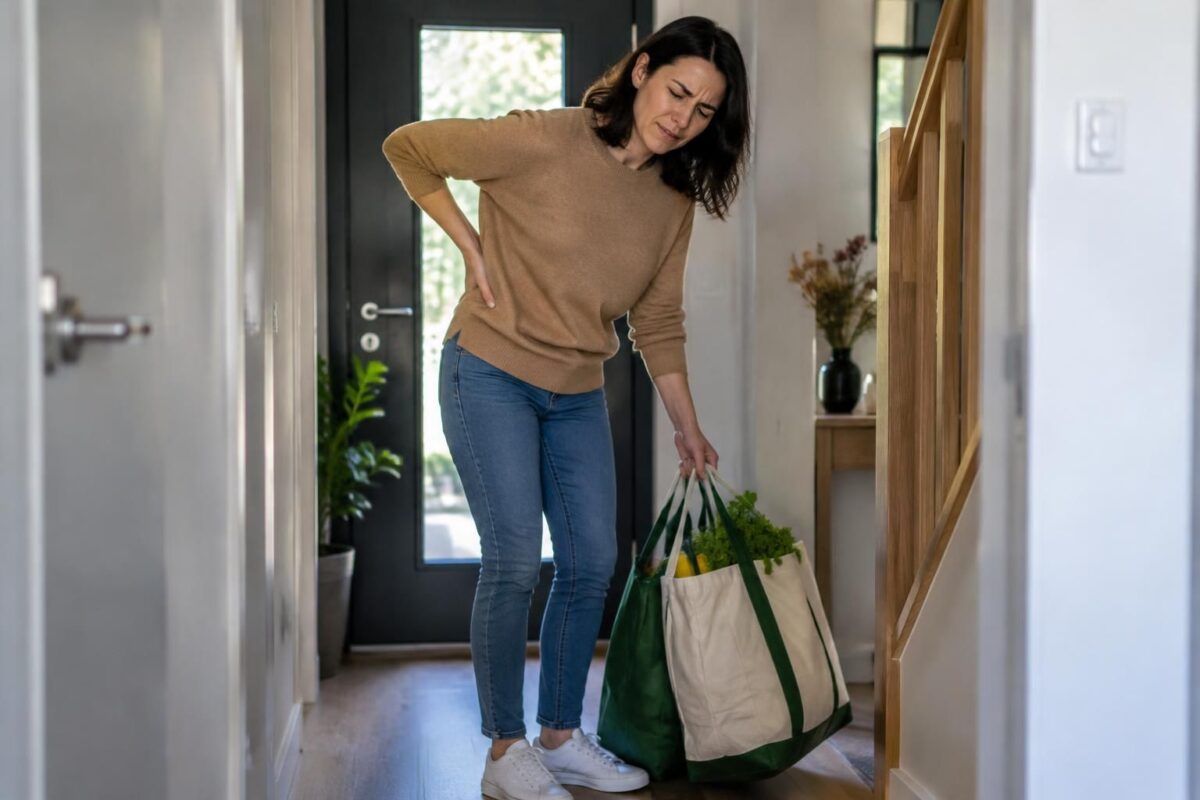
IN BRIEF Sciatica is pain related to the irritation of a nerve, which can extend from the lower back or buttock down into the leg. Carrying heavy grocery bags may exacerbate symptoms: distribute the loads, keep them close to your body, and avoid twisting. Stay active as your tolerance allows and consult a professional if the pain worsens, persists, or is accompanied by significant weakness or numbness. |
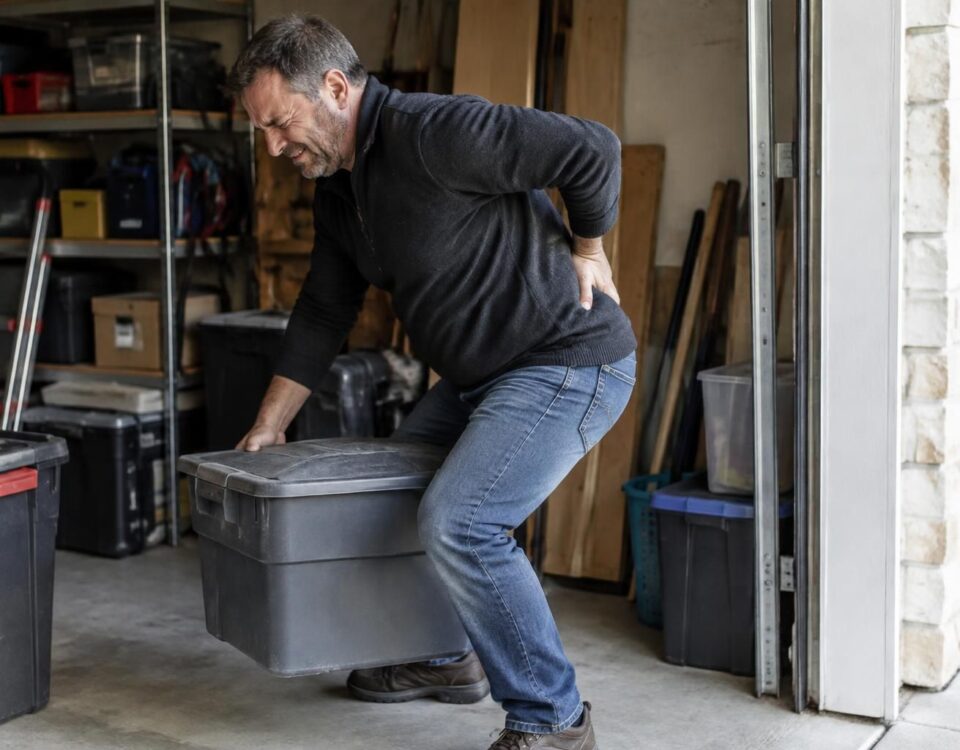
With sciatica, carrying grocery bags can aggravate pain that descends from the lower back or buttock into the leg. Reduce the loads, distribute them among several bags, and keep them close to your body. If the pain worsens, stop and seek advice from a healthcare professional.
Carrying grocery bags can trigger or worsen sciatica pain, especially if the load is heavy, carried on one side, or lifted while twisting the trunk. The pain may originate from the lower back or buttock and extend into the leg. Temporarily reducing the load, avoiding sudden movements, and remaining active according to your tolerance can help. Weakness in the leg, significant numbness, or urinary issues require prompt medical assessment.
Sciatica refers to pain associated with irritation of a nerve root or the sciatic nerve. It often manifests in the buttock and down the back of the thigh. It may also extend down to the calf and into the foot. The cause often lies in the lower back, even when the back itself hurts little.
Carrying bags can strain the lower back, hips, and trunk muscles. The risk of irritation increases if you lift a heavy load, bend repeatedly, or twist with your feet fixed. To better understand the connection between load, twisting, and pain, check out these tips on sciatica and grocery bags.
Why can bags bring pain down into the leg?
The discs and joints in the lower back are close to the nerve roots that form the sciatic nerve. Certain movements or efforts can increase pain in someone whose nerve is already irritated. The pain may then be felt in the leg, sometimes as a burning sensation, electric shock, tingling, or numbness.
A herniated disc is a common cause of sciatica, but it is not the only one. An examination is necessary to determine the origin of the symptoms. To learn more about the radiating pain associated with disc changes, you can read this article on disc dehydration and pain in the leg.
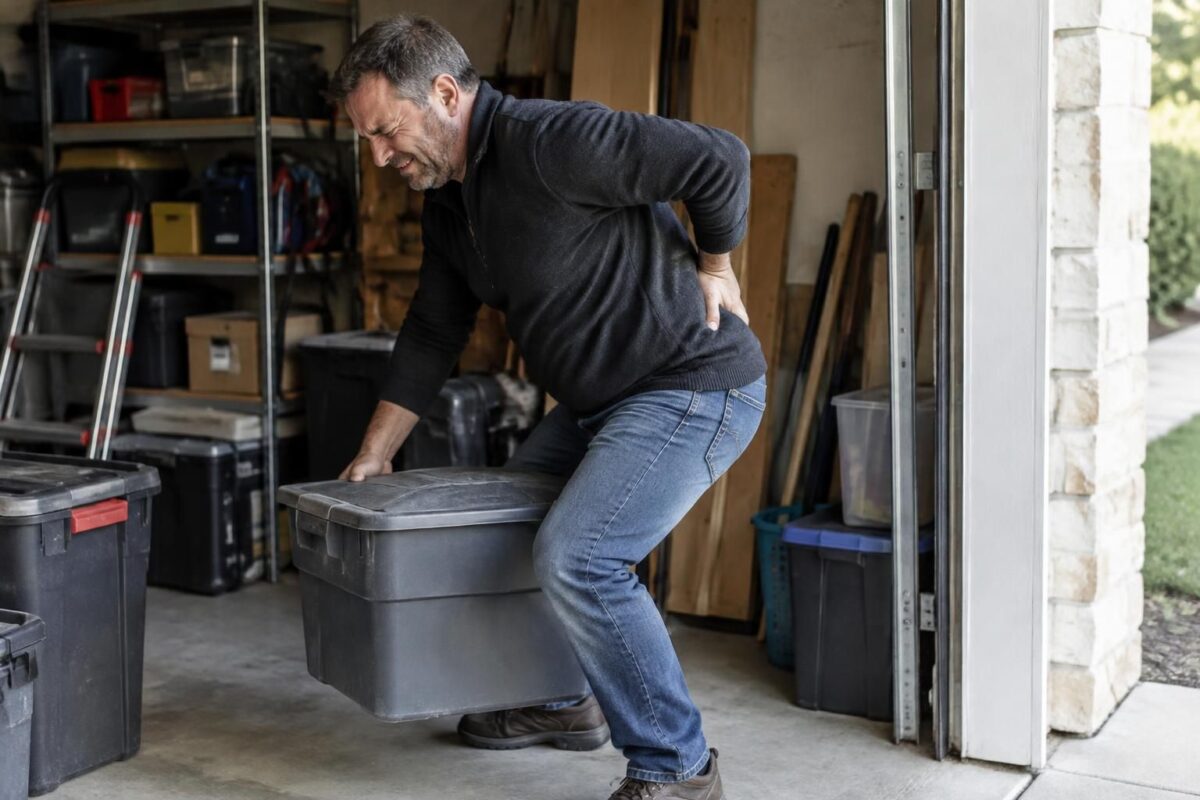
Sciatica and lifting a load: why technique isn’t always enough
IN BRIEF Sciatica can make the nerve more sensitive: a good lifting technique is therefore not always enough to avoid pain. The risk also depends on the weight carried, the repetition, the duration of the effort, and your momentary tolerance.…
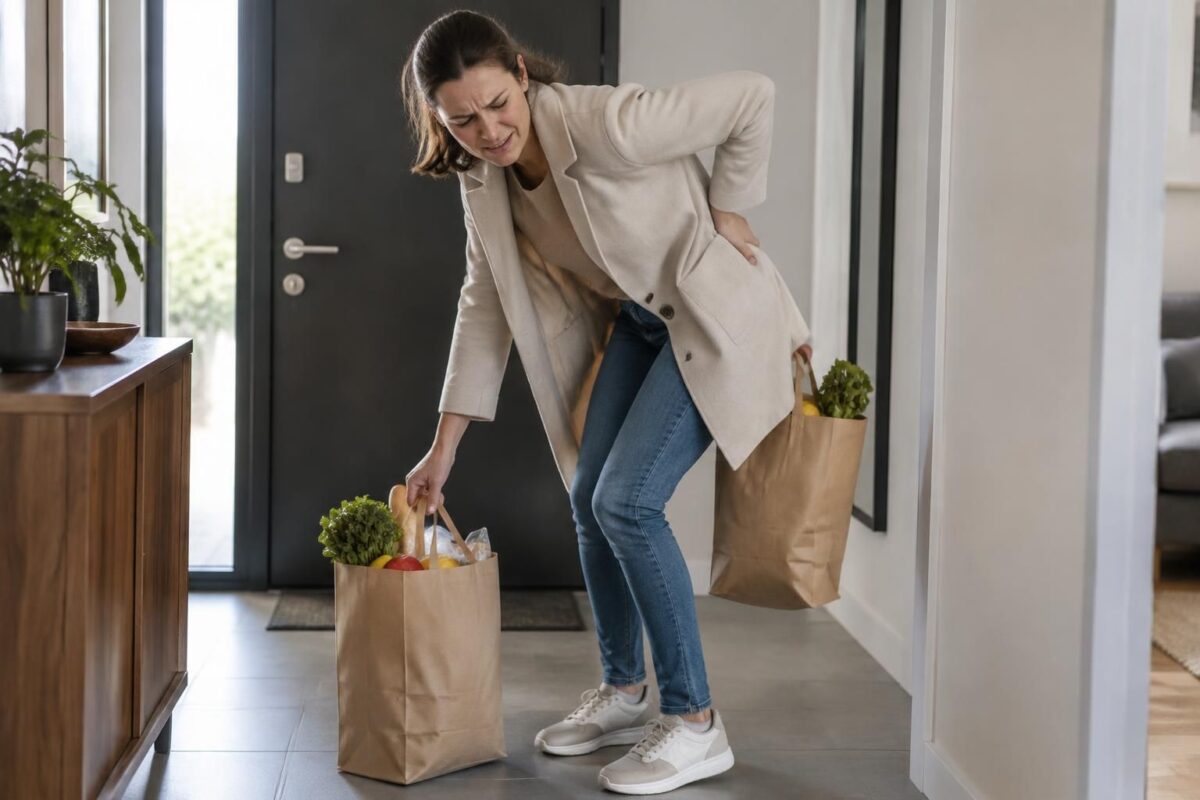
Sciatica and carrying grocery bags: load and twist
IN BRIEF Sciatica is pain related to irritation of the sciatic nerve; carrying heavy grocery bags while twisting the torso can exacerbate it. To limit strain, distribute the load among several bags, keep them close to your body, and turn…
How to carry groceries when sciatica is painful?
Reduce the load carried
Shop smaller and more frequently if possible. Distribute items into several lightweight bags rather than one heavy bag. You can also use a wheeled cart or ask for help carrying the heaviest items.
Avoid carrying all the weight on one side
A very heavy bag carried in one hand can tilt the trunk and increase effort on one side of the body. If you need to carry two bags, choose lightweight and balanced loads. Stop if the pain intensifies or radiates further down the leg.
Lift without sudden movements
Approach the bag before picking it up. Bend your hips and knees as much as your pain allows, keep the object close to your body, and avoid twisting the trunk while lifting. To change direction, move your feet instead. Repetitive motions, such as bending often to make the bed, can also irritate the lower back in some people: discover precautions related to repeated bending and lumbar irritation.
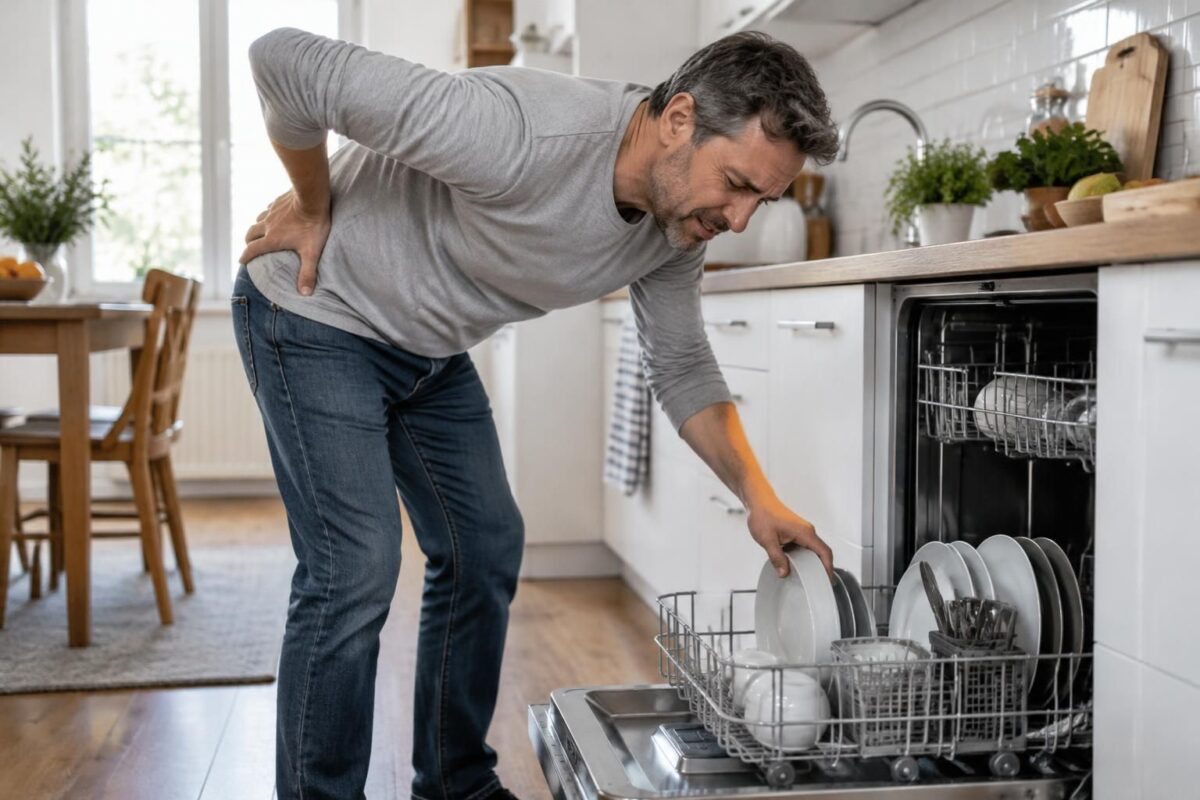
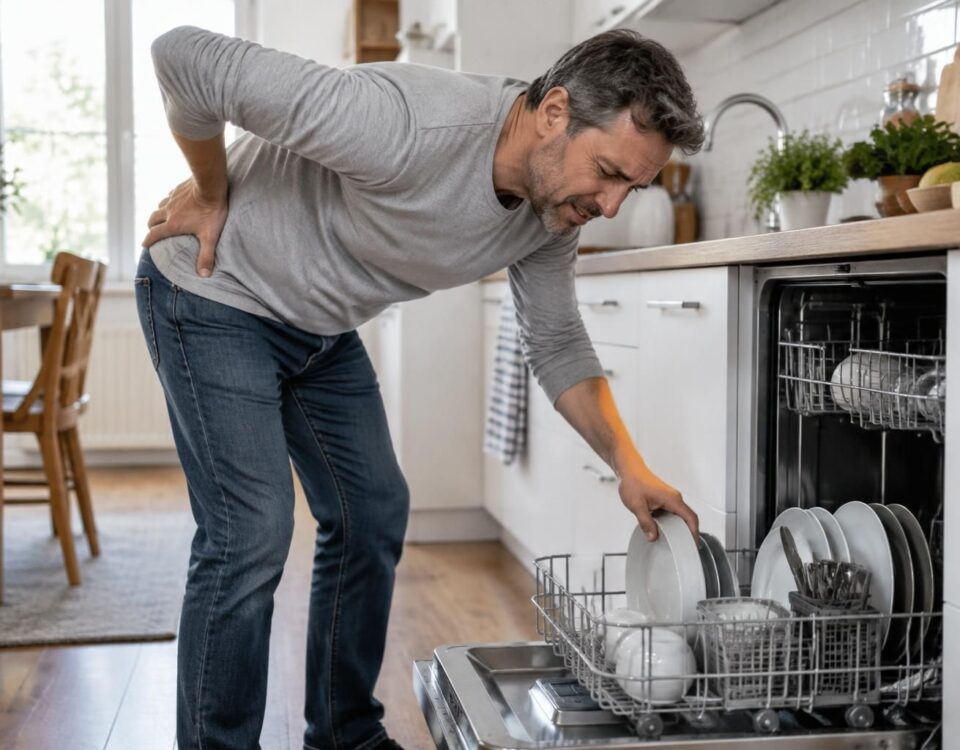
Sciatica and emptying the dishwasher: bending can worsen
IN BRIEF Sciatica is pain that radiates along the sciatic nerve. Bending to empty the dishwasher can worsen symptoms, especially when turning or lifting a load. To limit discomfort, keep your back straight, bring items closer, and bend your knees.…
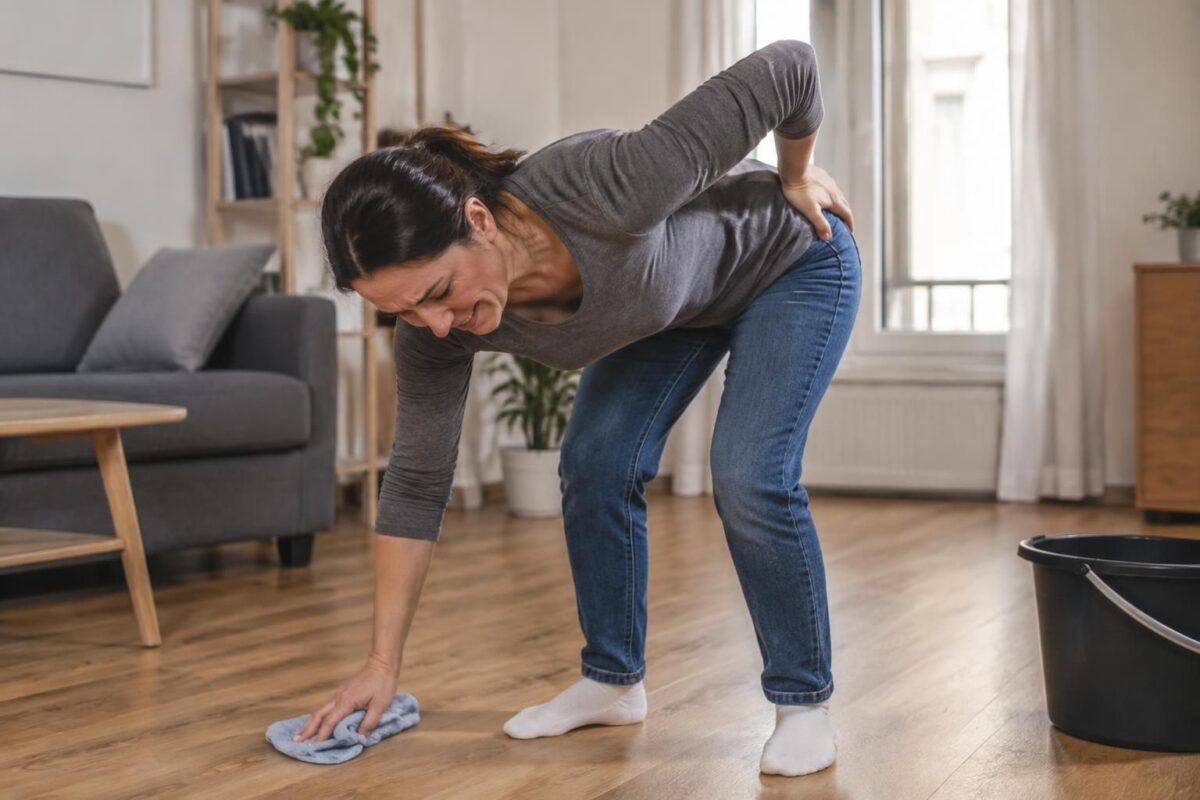
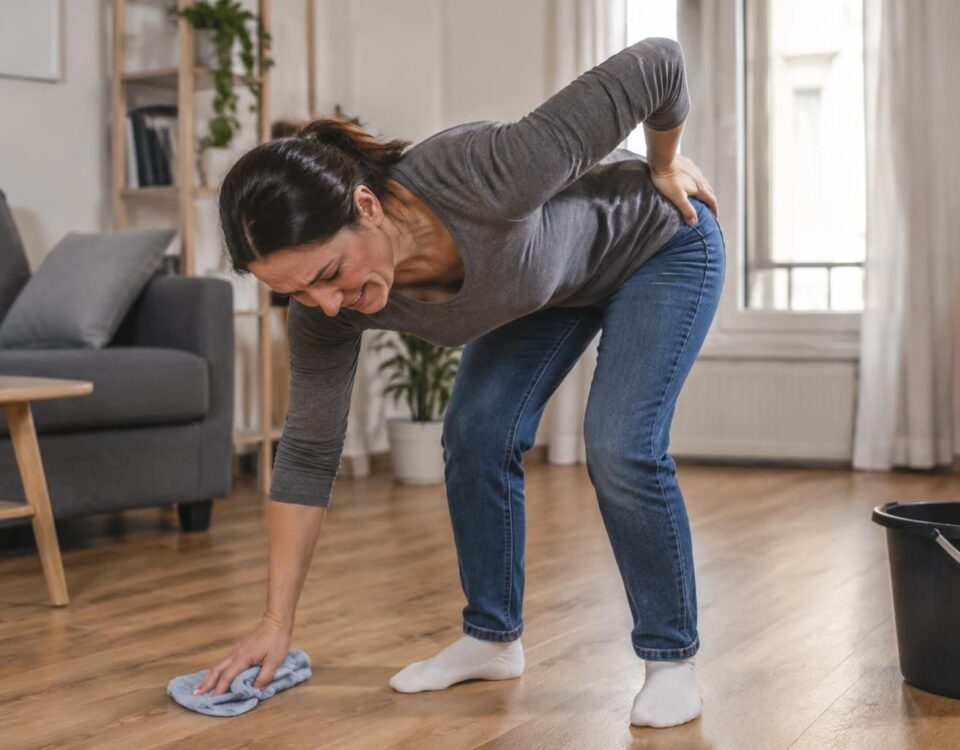
Sciatica and floor washing: prolonged bending and pain
IN BRIEF Sciatica is a pain related to irritation of the sciatic nerve; mopping the floor while remaining bent for a long time can worsen it. To limit discomfort, use a long handle, keep your back as neutral as possible,…
Should I rest after pain triggered by the bags?
Complete bed rest is generally not recommended. Try to continue your regular activities while reducing the actions that significantly increase pain. Walking and light movements are often possible depending on your tolerance. However, avoid forcing yourself to carry loads or repeating a movement that worsens the symptoms.
If the pain is very severe, find a comfortable position and seek advice from a healthcare professional. Pain relief treatment may sometimes be considered, but the choice depends on your health status, other medications, and your history. Do not use anti-inflammatories without checking that they are suitable for you. For general information on ways to relieve sciatica, consult tips on sciatica radiating to the leg and this article on recommended or to-avoid actions.
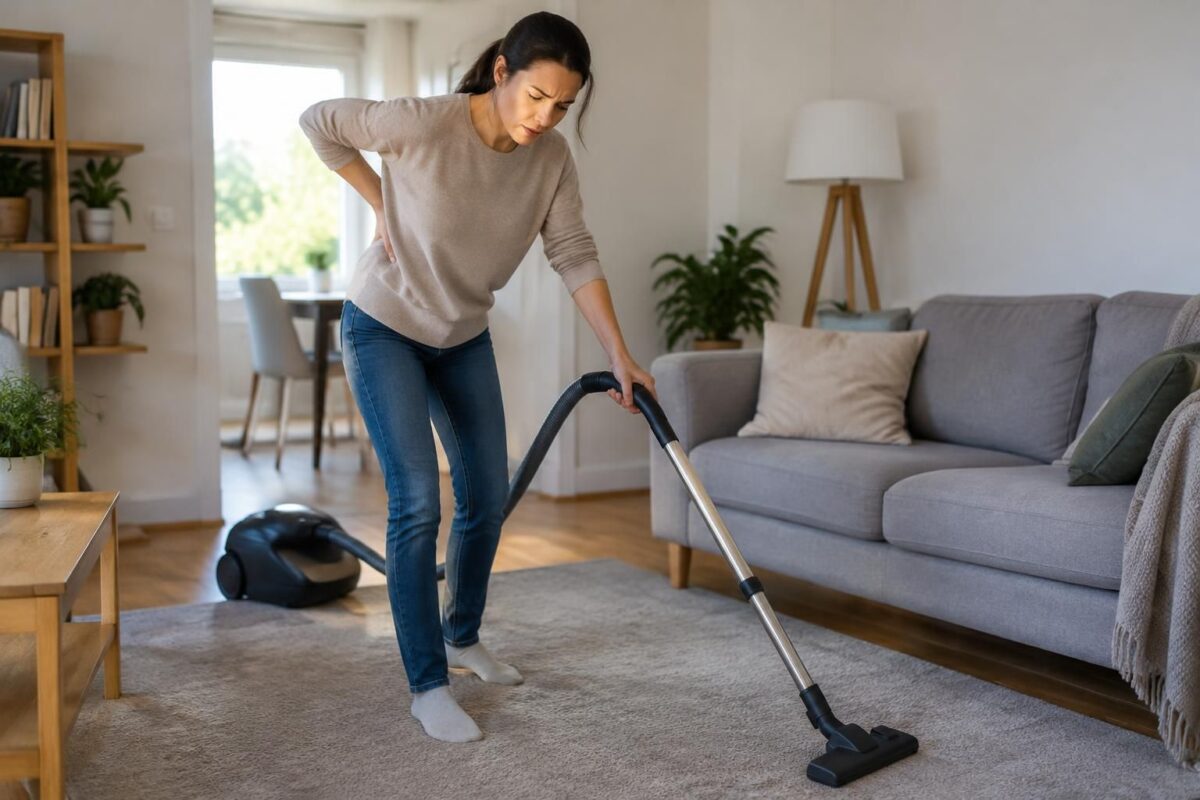
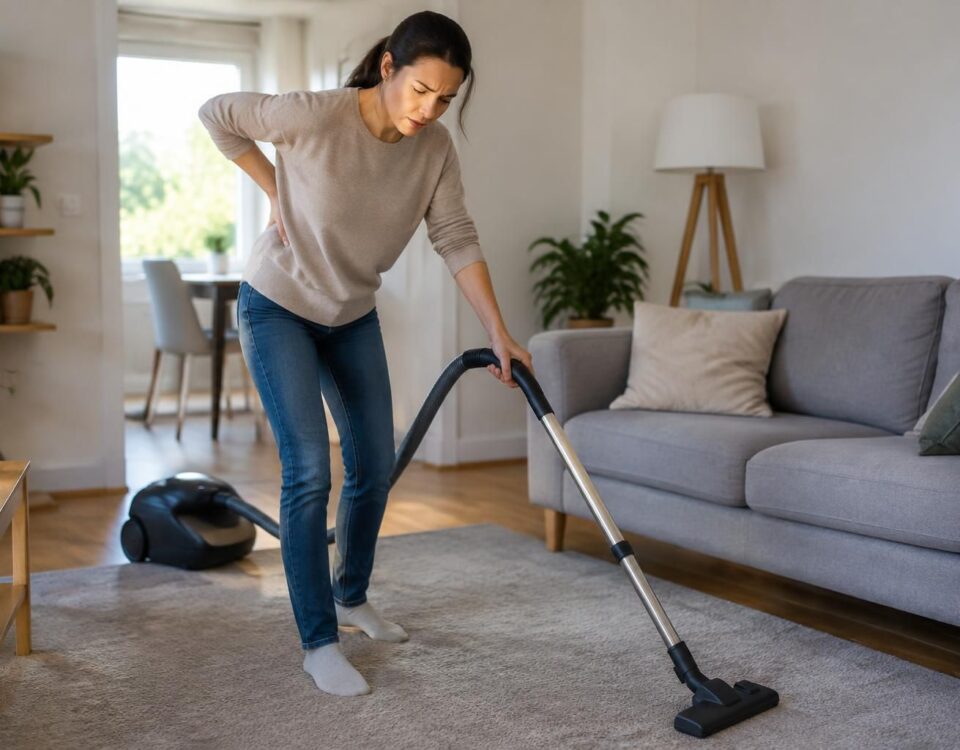
Sciatica and vacuuming: repetitive movement to watch out for
IN BRIEF Vacuuming with a sciatica can trigger pain because repeated bending and twisting strain the back. Break up the cleaning, keep the device close to you, and turn with your feet rather than twisting. Take a break if the…
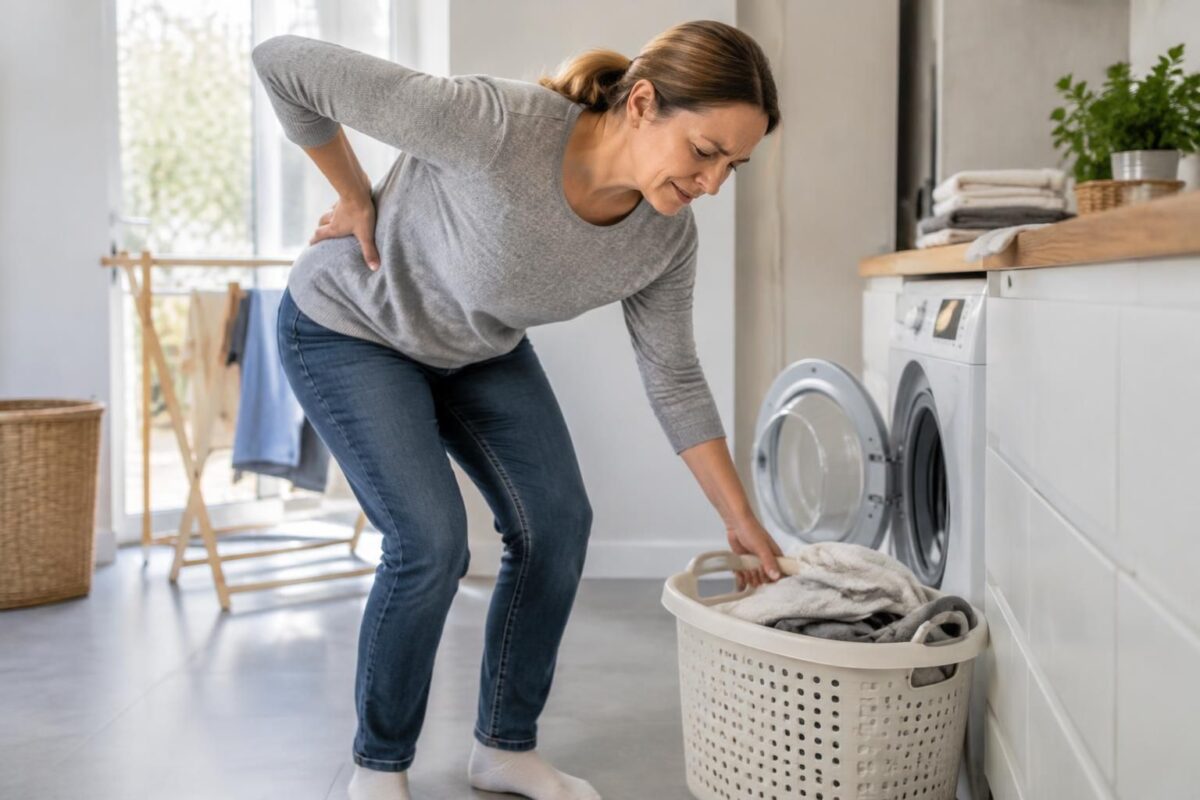
Sciatica and household chores: twists, bends, and loads
IN BRIEF Sciatica can be aggravated by bending, twisting, and carrying loads while doing housework. Breaking tasks into smaller parts, taking breaks, and adjusting movements help manage effort without necessarily stopping everything. In Montreal, an assessment can help tailor activity…
When should I consult for sciatic pain?
Consult a healthcare professional if the pain persists, worsens, or disrupts your sleep and activities. An assessment is also important if you have tingling or numbness that does not improve. The professional will examine your strength, sensitivity, and reflexes, then determine if additional tests are necessary.
After a fall or trauma, have the pain evaluated, especially if it is intense or accompanied by difficulty walking. To learn more, read this information on sciatica occurring after a fall.
Consult without delay if you lose control of your bladder or bowels, if you feel numbness in the groin area, if your leg or foot becomes weak, or if symptoms affect both legs. A fever associated with significant pain also requires prompt medical advice.
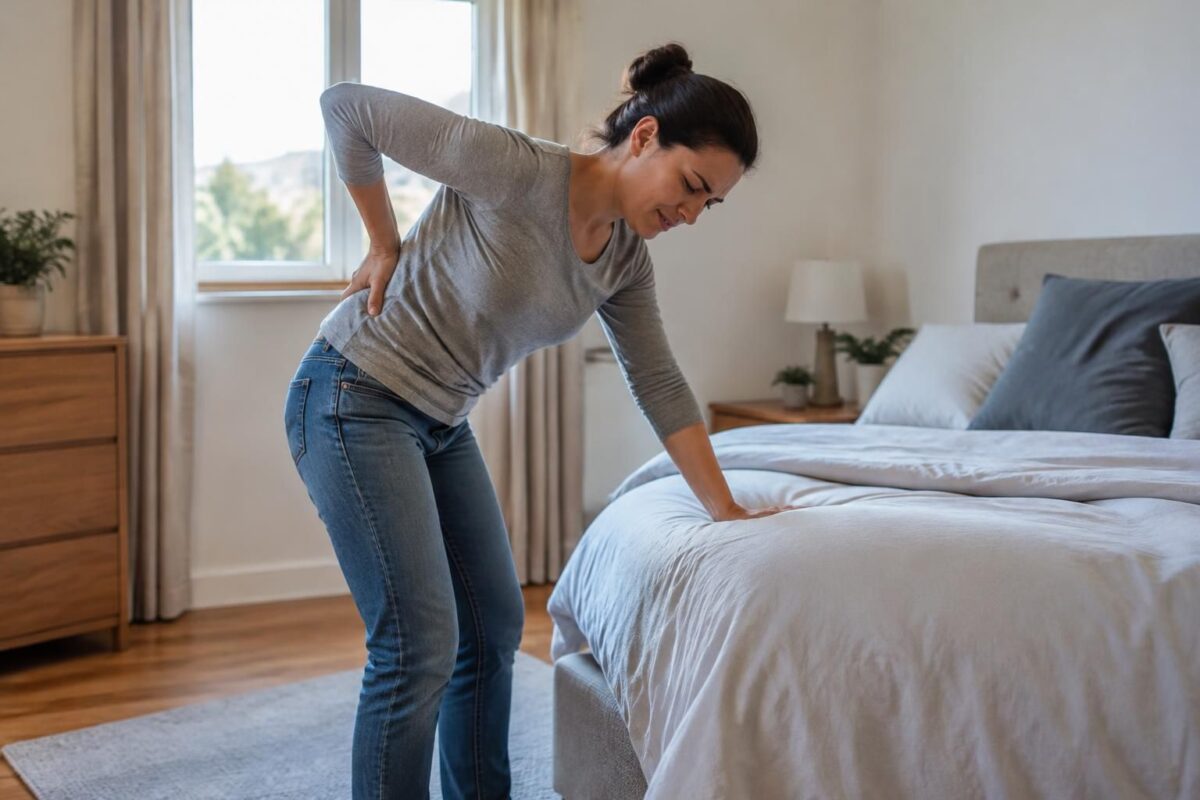
Sciatica and Making the Bed: Repeated Flexion and Lumbar Irritation
IN SHORT Sciatica is pain related to irritation or compression of the sciatic nerve. Making your bed can strain the lower back if bending is repeated, especially when rounding the back or twisting the torso. To limit lumbar irritation, bend…
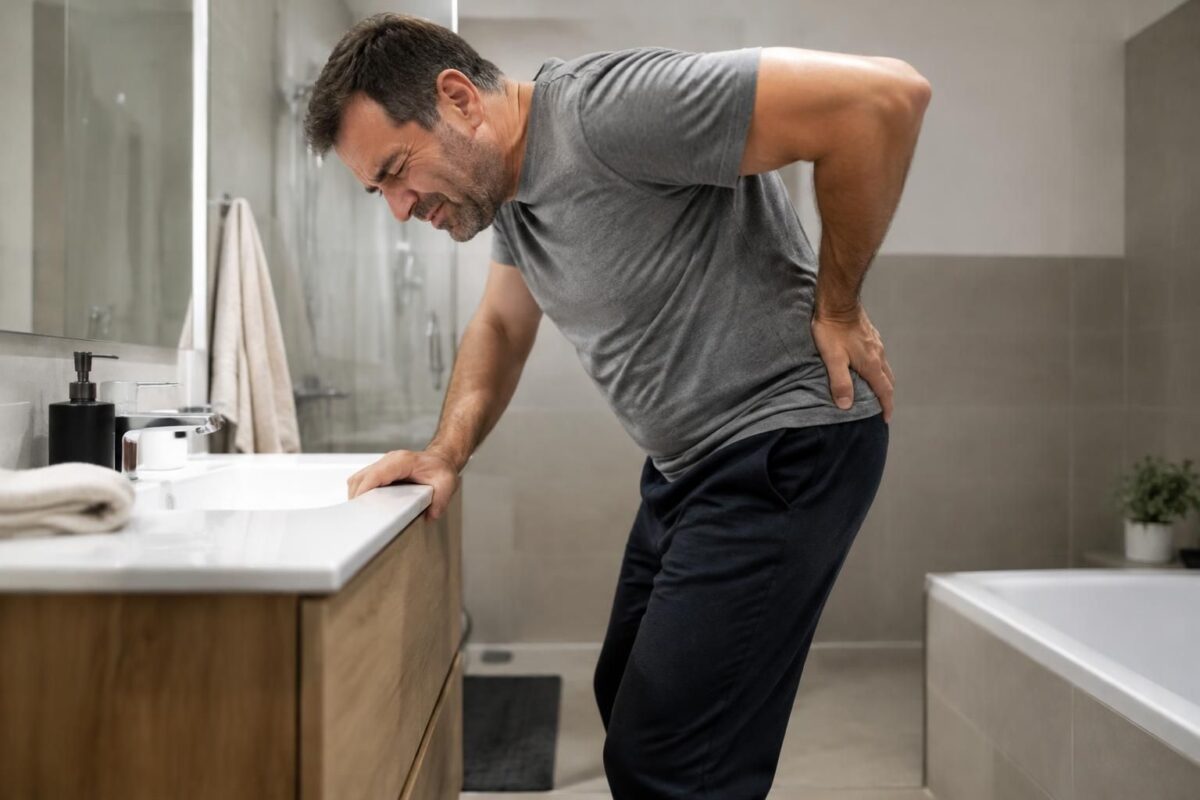
Sciatica and bending over the sink: pain in the leg
IN BRIEF Sciatica is pain related to irritation or compression of the sciatic nerve, which can extend from the lower back down to the leg. Bending over the sink can exacerbate the pain, especially if this position increases pressure on…
How long can the pain last?
The duration varies depending on the cause and intensity of the irritation. Some pains gradually decrease, while others persist for several weeks. A diagnosis cannot be established solely based on the fact that the pain began while carrying bags. You will find an overview of symptoms and treatments in this article from Top Santé on sciatica and in this guide on causes, symptoms, and treatments.
If your pain is recurrent or if you need an examination, a consultation can help clarify the course of action. The TAGMED clinic sees patients in Montreal and Terrebonne. The relevance of any care approach depends on an individual assessment. You can also read the information dedicated to pain aggravated by flexion and sciatica and leg pain.
The act of carrying groceries does not always solely explain sciatica. Posture, repetitive bending, twisting, a wrong move, or another cause can contribute to the symptoms. An examination helps distinguish between lumbar pain and other issues that may also affect the buttock or leg.
Medical disclaimer: The information and advice provided on this site do not replace the opinion, diagnosis, or treatment of a healthcare professional. Please note that Sylvain Desforges, B.Sc., D.O., N.D., doctor of osteopathy, is not a medical doctor and is not specialized in a medical specialty as defined by the Quebec College of Physicians. Manual medicine, functional medicine, and sports medicine as described on this site exclude any medical treatment or diagnosis performed by a physician or a specialist. Always consult your doctor for any medical questions. For more details, please read our full Legal Notice.
Carrying groceries with sciatica
- Choose a cart or distribute bags in smaller loads.
- Keep the bags close to your body and bend your knees to lift them.
- Avoid turning abruptly while carrying a load.
- Take a break if the pain increases; resume slowly according to your tolerance.
To watch for
- Don’t force if the pain travels further down the leg.
- Consult if the pain persists, worsens, or is accompanied by numbness.
- Consult without delay in case of leg weakness, loss of bladder or bowel control, or numbness between the legs.

When sciatica causes pain in the leg, carrying groceries can intensify discomfort, especially if the bags are heavy or carried on one side only. To limit strain, adapt your shopping, favor a cart, and resume efforts gradually, without pushing through the pain. If your symptoms worsen or are accompanied by unusual signs, seek medical advice.
Why can groceries trigger pain?
Sciatica refers to irritation of a nerve root or the sciatic nerve. Pain can start from the lower back or buttock and descend behind the thigh, sometimes reaching the calf or foot. Carrying bags can strain the back and muscles, especially when the load is heavy, poorly distributed, or lifted while bending and twisting at the same time. This may temporarily increase symptoms, without necessarily indicating that the situation has worsened.
Tolerance varies from person to person. A manageable task one day can become painful during a flare-up. Observe the effect of the effort during and after the activity, rather than imposing a fixed amount to carry.
Adapting how you carry your groceries
Reduce weight and distribute load
If possible, shop smaller and more frequently, or ask for help with heavy items. Distribute products between two light bags rather than carrying one very heavy one. Keep the bags close to your body and avoid holding them out for long. If one side becomes painful, do not compensate by carrying all the weight on the other side.
Choose a more comfortable means of transport
A wheeled cart or rolling basket can limit the carrying of loads. At the supermarket, use a cart instead of a hand-held basket. When loading the car, place the bags close to you and avoid twisting: turn with your feet and body together. At home, make several light trips instead of carrying everything at once.
Lift with care
Approach the item, bend your knees as much as comfortable, and keep your back in a natural position. Stand up without sudden movements and avoid twisting while carrying the load. If a movement triggers sharp pain or makes pain travel further down the leg, stop and choose another way to move the item.
Should you stay at rest?
Complete bed rest is generally not recommended. Continue light activities that you can tolerate and take breaks as needed. Gentle walking may be suitable for some people, but do not impose it if it noticeably intensifies the pain. During a flare-up, temporarily lighten the grocery load and gradually resume usual heavy loads when symptoms allow.
Avoid stretches or exercises that cause marked pain. A doctor or physical therapist can help you choose suitable movements and determine when to resume carrying loads. For pain medications, consult a professional, especially if you have other health issues or are already on treatment.
When to seek help?
Consult a professional if the pain persists, intensifies, recurs frequently, or is accompanied by numbness. New weakness in the leg or foot, loss of bladder or bowel control, or numbness around the groin requires urgent medical evaluation. Pain after a fall or accompanied by fever also merits medical advice without delay.
| Situation | Key Takeaways |
|---|---|
| Carrying bags | A heavy load can exacerbate pain in the leg. |
| Distributing groceries | Favor multiple small bags rather than one heavy bag. |
| Picking up a bag | Bend your knees and keep the bag close to your body. |
| Transporting bags | Distribute the weight evenly on both sides, without sudden twisting. |
| Increasing pain | Stop carrying and adjust your movements to your tolerance. |
| Resting | Avoid prolonged complete rest; gradually resume your activities. |
| Consulting quickly | Weakness in the leg, numbness of the groin, or loss of bladder or bowel control. |
Testimonials: Sciatica and Grocery Shopping, When Pain Travels Down the Leg
These testimonials are fictitious and are intended to illustrate possible situations. Symptoms and their progression vary from person to person.
“Carrying my grocery bags home, I felt pain starting from my buttock and down the back of my thigh. The more I walked, the more my leg throbbed. I put down the bags and then resumed slowly when the pain calmed down.” — Sophie, 42 years old
“I thought I only had back pain, but after carrying a heavy bag, I felt tingling down to my foot. Sitting for a long time worsened the discomfort. I sought advice from a professional to know which movements were suitable for my situation.” — Marc, 56 years old
“Carrying groceries up the stairs had become difficult: an electric shock sensation appeared in my leg. I learned to distribute the groceries into several small bags and to avoid straining when the pain increased.” — Nadia, 38 years old
“My pain radiated from the buttock to the calf after lifting a bag that was too heavy. I set the groceries aside and rested for a while, without staying in bed all day. When the symptoms persisted, I consulted to have the sciatica evaluated.” — Étienne, 49 years old
“Since my episode, I ask for help with heavy bags and I transport groceries in multiple trips. The pain in my leg didn’t go away immediately, but I’m careful not to push it if a movement triggers severe pain.” — Claire, 61 years old
Pain that travels down the leg, tingling, or numbness after carrying loads may warrant medical evaluation, especially if symptoms persist or worsen. In case of leg weakness, loss of bladder or bowel control, or numbness in the groin, consult without delay.
Sciatica and Grocery Transport: Understanding Leg Pain
Carrying grocery bags can become painful when each step pulls or burns in the buttock, thigh, or calf. This pain may indicate a sciatica, especially if it travels down one leg and is accompanied by tingling or numbness. The term refers to a set of symptoms related to irritation of a nerve root or the sciatic nerve. It does not alone identify the cause: a professional examination can help clarify the source of the pain and the appropriate care.
The sciatic nerve originates in the lower back, travels through the buttock, and continues down the back of the leg to the foot. When a nerve root is irritated, such as by a herniated disc, pain may be felt far from its origin. Thus, the lower back may be minimally painful while the leg becomes the main focus of discomfort. Pain that travels more down the front of the thigh may have a different origin and also deserves evaluation.
Carrying heavy bags does not necessarily mean an injury has occurred, but lifting a load while bending or twisting the trunk can exacerbate already present symptoms. When grocery shopping, distribute the weight across several light bags rather than carrying everything on one side. Keep the bags close to your body, bend your knees when picking them up from the ground, and avoid twisting sharply with a load. A cart or home delivery can also reduce effort during a painful period.
If pain arises while carrying groceries, rest briefly in a comfortable position and avoid, at first, movements that significantly worsen symptoms. However, remaining in bed for long periods is generally not recommended. When the pain allows, gradually resuming light activities, such as short walks, may be preferable to prolonged immobility. Each situation is different, so avoid forcing or continuing an exercise that increases leg pain.
Sylvain Desforges is an expert in osteopathy, naturopathy, and manual medicine. Founder and president of TAGMED clinics and the ACMA association, he has dedicated his career to health innovation and managing chronic pain. His approach, according to his professional presentation, aims to rely on evidence to contribute to the health and well-being of patients.
In his practice, Dr. Desforges is particularly interested in integrating technologies such as spinal decompression, laser, and shock wave therapy. These methods do not automatically suit everyone suffering from sciatica: the choice of an intervention depends on evaluation, symptoms, and medical history. A consultation serves to better understand pain, examine mobility and nerve function, and then discuss relevant options. The techniques used do not replace a medical diagnosis when necessary.
Consult a professional if the pain persists, intensifies, or is accompanied by numbness. A new weakness in the leg or foot, loss of bladder or bowel control, numbness in the groin area, symptoms in both legs, fever, or pain that appeared after a fall warrant quick medical evaluation. These signs require special attention rather than a simple adaptation of how to carry bags.
Carrying grocery bags can exacerbate sciatica when the weight, bending of the back, or twisting movements irritate a nerve root. If pain travels down the buttock and leg, lighten the loads, keep them close to your body, and adapt your movements without completely immobilizing yourself. Intense, persistent pain or pain accompanied by unusual signs requires medical evaluation.
Sciatica and Grocery Transport: Why the Leg May Hurt
Sciatica refers to pain related to irritation of a nerve root in the lower back or, more rarely, along the path of the nerve itself. It may manifest as pain starting from the buttock and radiating down the back of the thigh, sometimes all the way to the calf or foot, as well as tingling, numbness, or a sensation of electric shock. To better understand the symptoms and possible causes of sciatica, it is useful to note where the pain begins and how far it descends.
Carrying heavy bags is not necessarily the cause of sciatica, but it can trigger or worsen symptoms, especially if you lean forward, lift abruptly, or twist your torso with a load. Repetitive movements and constrained positions can also strain the back: these precautions are also relevant for other household tasks, like vacuuming when suffering from sciatica.
How to Carry Groceries while Limiting Strain
If you must go grocery shopping despite the pain, reduce the weight of each bag and distribute the items into several smaller loads. Keep the bags close to your body rather than with outstretched arms, and avoid carrying all the weight on one side. When possible, opt for a wheeled cart, delivery, or help from a friend. These adaptations do not address the root cause of sciatica but can limit the efforts that trigger pain in the leg.
To pick up a bag, get close to it and bend your knees as much as your comfort allows, rather than bending solely at the waist. Stand up without making sudden movements and avoid twisting your torso while carrying the load: instead, move your feet to change direction. Bending the back can be particularly uncomfortable for some people experiencing disc-related pain; this article describes the possible link between bending and sciatic pain.
Pain can also occur during everyday movements that require bending, like putting on shoes. If this movement triggers radiating pain in the leg, take the time to sit down and adjust your position rather than forcing it; you can learn more about bending and pain while putting on socks.
Rest or Activity: Finding the Right Balance
When the pain is sharp, stop carrying loads and give yourself a break in a comfortable position. However, complete bed rest for an extended period is generally not recommended. Gradually resume tolerated activities, without trying to push through intensifying pain. Official advice on what actions to take and when to seek consultation is detailed by l’Assurance Maladie. Additional benchmarks on treatment options are provided in this guide to treating sciatica.
The duration and progression vary depending on the cause and intensity of the irritation. If carrying groceries becomes difficult, if the pain increases, or if symptoms do not improve, a healthcare professional can examine your condition and advise on resuming activities. General information about this condition is also presented by France Santé Pro and in this article dedicated to pain that travels down the leg and returning to movement.
When to Seek Medical Advice Quickly
Consult promptly in cases of new weakness in the leg or foot, symptoms affecting both legs, numbness in the groin area, or difficulty controlling the bladder or bowels. These signs require urgent evaluation. To learn more about loss of bowel control associated with sciatica, see the information from SOS Sciatique. Pain that arises after a fall or is accompanied by fever also warrants quick medical advice.
Pain that extends below the knee may correspond to the path of a nerve root, but it alone is not sufficient to establish a diagnosis. The location and intensity of symptoms must be interpreted alongside clinical examination. To better understand the relationship between a disc protrusion and pain below the knee, you can refer to this article on disc protrusion and sciatic pain.

Sylvain Desforges, B.Sc., D.O., N.D., docteur en ostéopathie
Dr Sylvain Desforges, B.Sc., D.O., N.D., osteopath, is the founding president of TAGMED and of the ACMA association. He dedicates his practice to chronic spinal pain, low back pain and symptoms compatible with sciatica, particularly when pain radiates toward the buttock, leg, calf, foot or toes.
Through SOS Sciatique, he publishes educational content on sciatica symptoms, possible causes such as disc herniation, disc narrowing, foraminal stenosis or irritation of a lumbar nerve root, as well as non-surgical approaches that may be considered according to the evaluation. At Clinique TAGMED, care may include, depending on the case, motorized neurovertebral decompression, specific osteopathic care or precision percussion.
For an evaluation related to sciatica treatment in Montreal / Mount Royal or sciatica treatment in Terrebonne, please consult the services available at Clinique TAGMED.
Medical disclaimer
The information published on SOS Sciatique is provided for educational purposes only and does not replace a consultation, diagnosis, opinion or treatment provided by a physician or another authorized healthcare professional. The author of this article is neither a medical doctor nor a specialist in a medical specialty recognized by the Collège des médecins du Québec. The osteopathic, manual medicine or functional support approaches described on this site do not constitute medical acts and are not intended to replace medical follow-up.
Consult a physician or emergency service in cases of loss of bladder or bowel control, anesthesia in the saddle area, significant or progressive weakness in the leg or foot, fever, recent trauma, severe pain or rapid worsening of symptoms. For more details, please read our Legal Notice.