Disc herniation and sciatica: understanding the loss of disc height
24/11/2026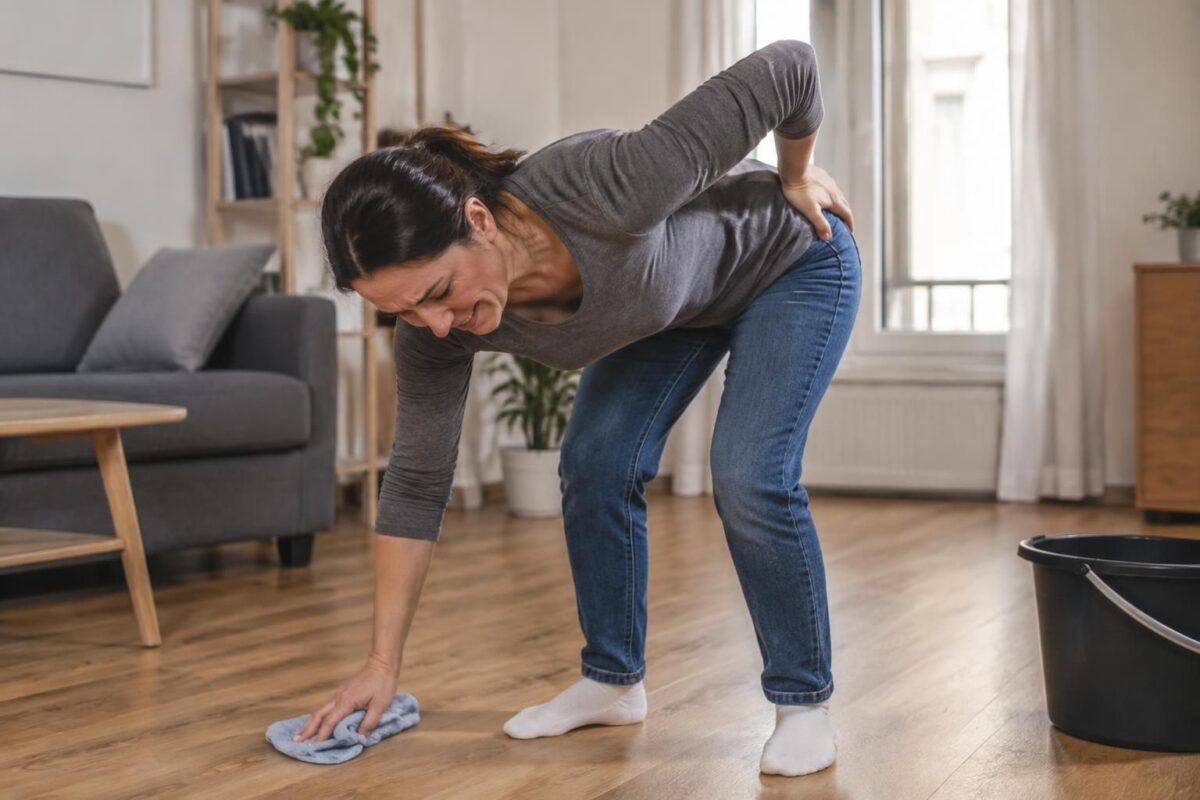
IN BRIEF Sciatica is a pain related to irritation of the sciatic nerve; mopping the floor while remaining bent for a long time can worsen it. To limit discomfort, use a long handle, keep your back as neutral as possible, and take regular breaks. These adjustments reduce prolonged bending and make household tasks easier without guaranteeing the disappearance of pain. |
With sciatica, mopping the floor while staying bent for a long time can exacerbate pain. Use a sufficiently long handle, keep your back as straight as possible, and take regular breaks to limit prolonged bending and strain.
Mopping the floor can worsen sciatica-like pain, especially if you stay bent forward for extended periods or repeat the same movements. Simple adjustments, like using an appropriate handle and regularly changing positions, can reduce strain during this task. Persistent pain, numbness, or weakness in the leg warrants assessment by a healthcare professional.
Sciatica refers to pain that sometimes follows the path of the sciatic nerve, in the buttock and leg. It may be accompanied by tingling, numbness, or a feeling of weakness. Several issues can cause these symptoms. Bending your back while mopping does not alone identify their origin.
When mopping the floor, a maintained bent position can increase discomfort for some people. Repeated arm and trunk movements, as well as twisting, can also make the task more painful. The reaction varies according to the person and the cause of their symptoms.
Why can a bent position cause pain?
Prolonged bending places the lower back in a sustained position. If this position triggers or intensifies your pain, mopping can become difficult. Symptoms may increase during the task, after it, or when you straighten up.
Pain that increases when sitting or bending can have several causes. The document on sciatica aggravated in sitting position and the lumbar disc presents an example of this association, without replacing an individual assessment.
Reducing strain while mopping
You can modify how you mop the floor to limit the time spent bent. Choose a mop with a sufficiently long handle to keep your back in a comfortable position. Bring the tool closer to you instead of reaching your arm far in front. Avoid twisting your trunk while your feet remain fixed; rather, move your feet to change direction.
Divide the task into short periods and change positions before pain significantly increases. You can also use a bucket with a wringer or a mop that requires less manual pressure. If a method triggers intense symptoms, stop that task and seek advice from a healthcare professional.
When might symptoms require an assessment?
Pain that radiates down the leg, numbness in the foot, or weakness may require evaluation. These signs do not automatically confirm a herniated disc. The content on sciatica associated with a herniated disc and foot numbness describes some possible symptoms and the importance of having them examined.
A disc bulge or herniation may also be mentioned during an assessment, but only a qualified professional can interpret symptoms and exams in their context. To learn more about these concepts, check the pages dedicated to disc bulge and disc protrusion and possible nerve irritation.
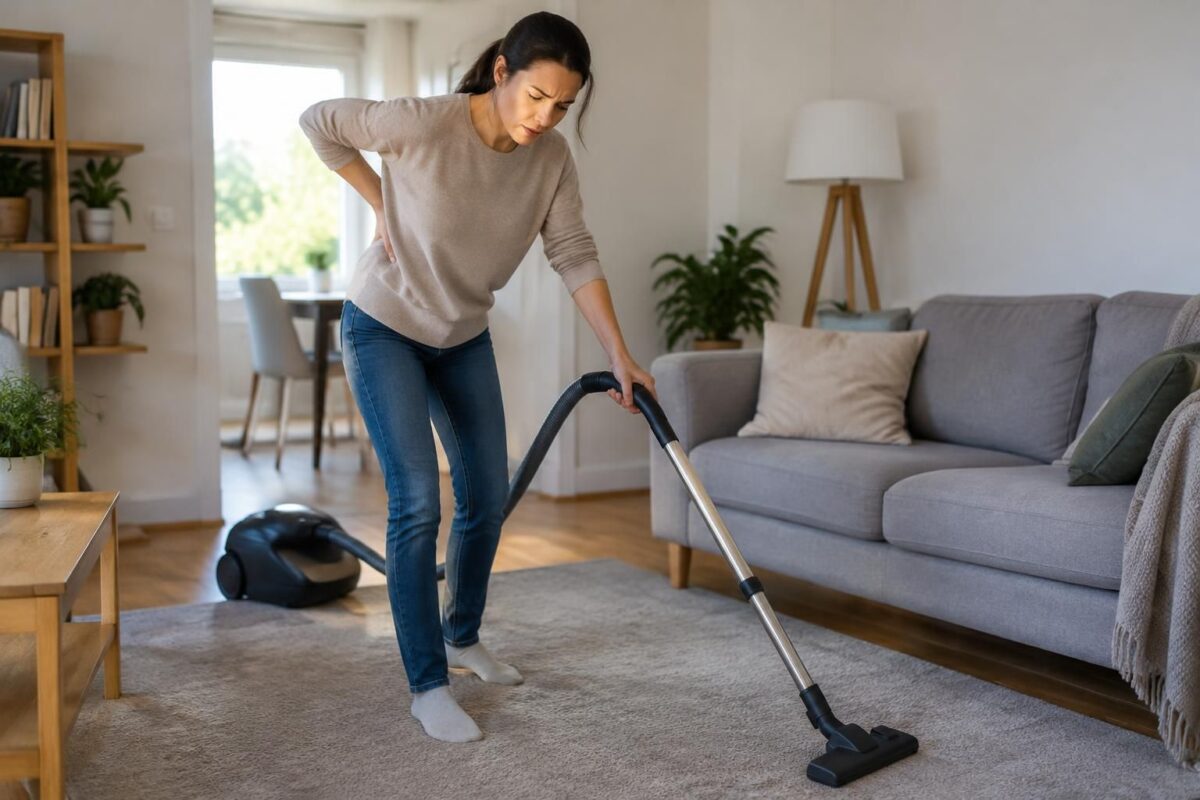
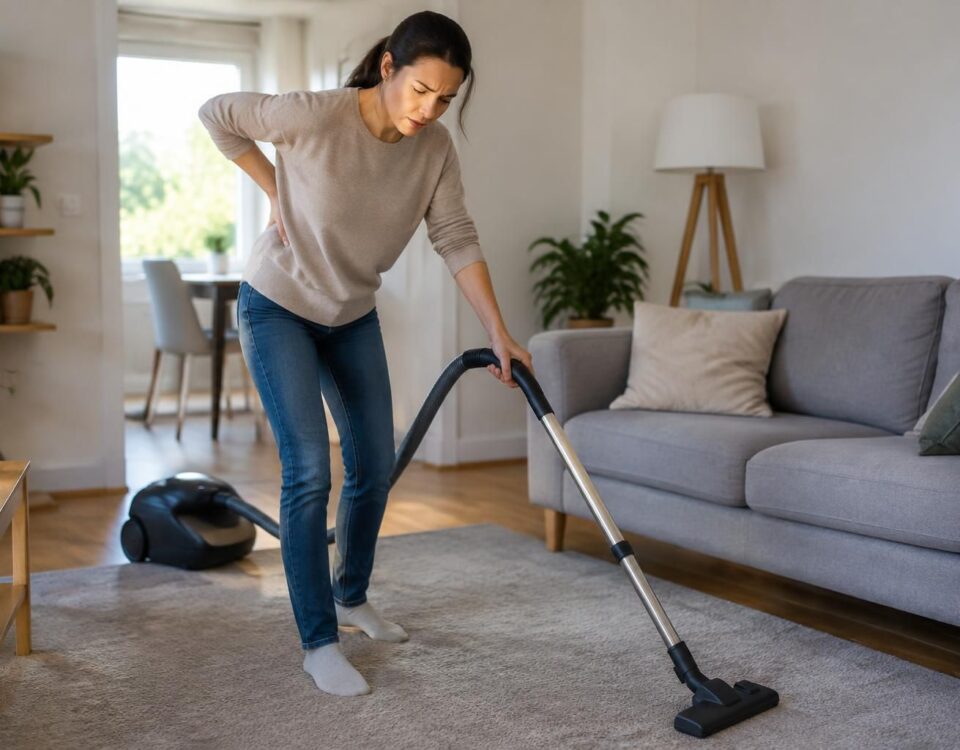
Sciatica and vacuuming: repetitive movement to watch out for
IN BRIEF Vacuuming with a sciatica can trigger pain because repeated bending and twisting strain the back. Break up the cleaning, keep the device close to you, and turn with your feet rather than twisting. Take a break if the…
Adapting other daily actions
Mopping the floor is not the only action that can require prolonged bending. Getting dressed, picking up an object, or cleaning can also cause discomfort. For advice on adapting these movements, check our article on sciatica and dressing actions to adapt.
Observe the positions and tasks that increase your symptoms. Note their duration and the effect on your pain. This information can help the healthcare professional understand your situation and guide you towards appropriate care.

Sciatica and household chores: twists, bends, and loads
IN BRIEF Sciatica can be aggravated by bending, twisting, and carrying loads while doing housework. Breaking tasks into smaller parts, taking breaks, and adjusting movements help manage effort without necessarily stopping everything. In Montreal, an assessment can help tailor activity…
When to seek help
Consult a healthcare professional if the pain persists, recurs frequently, or limits your activities. An assessment allows for examining your symptoms and determining if additional care is necessary. TAGMED clinics in Montreal and Terrebonne offer services related to lumbar and sciatic pain; inquire with the clinic to see if their approach suits your situation.
Seek medical help promptly if you lose control of your bladder or bowels, if you experience significant or progressive weakness, or if you feel numbness in the area between your legs.
Medical disclaimer: The information and advice provided on this site do not replace the opinion, diagnosis, or treatment of a healthcare professional. Please note that Sylvain Desforges, B.Sc., D.O., N.D., doctor of osteopathy, is neither a medical doctor nor a physician, and is not specialized in a medical specialty as defined by the Collège des médecins du Québec. Manual medicine, functional medicine, and sports medicine as described on this site exclude any medical treatment or diagnosis performed by a doctor or medical specialist. Always consult your doctor for any medical questions. For more details, please read our complete Legal Notice.
To Limit
- Bending forward for long periods.
- Keeping the back rounded while mopping.
- Continuing despite increasing pain.
To Prefer
- Using a sufficiently long handle.
- Keeping the back as straight as possible.
- Alternating positions and taking breaks.

In case of sciatica, mopping the floor while leaning can increase pain, as this prolonged bending stresses the lower back. To limit discomfort, opt for a sufficiently long handle, work in short periods, and regularly change positions. If the pain increases or is accompanied by unusual symptoms, consult a healthcare professional.
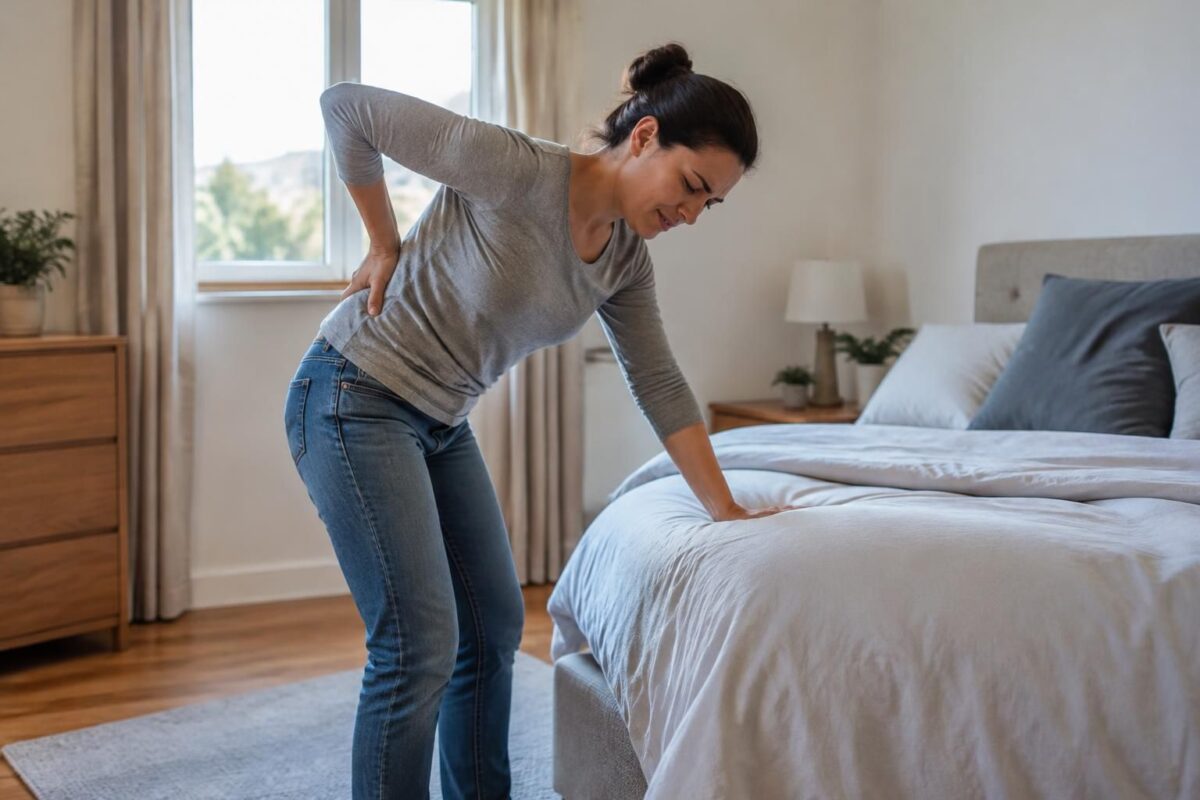
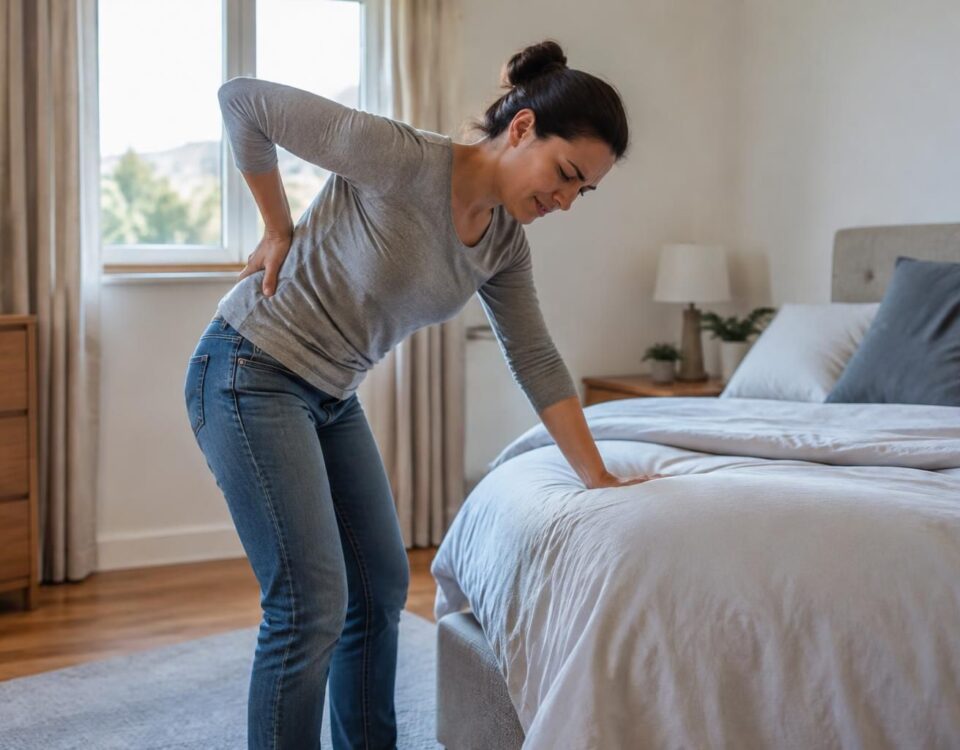
Sciatica and Making the Bed: Repeated Flexion and Lumbar Irritation
IN SHORT Sciatica is pain related to irritation or compression of the sciatic nerve. Making your bed can strain the lower back if bending is repeated, especially when rounding the back or twisting the torso. To limit lumbar irritation, bend…
Why leaning for long periods can hurt
Sciatica refers to pain that follows the path of the sciatic nerve, often from the lower back to the buttock and leg. Leaning over the ground can tire the back and make certain pains more sensitive. Repeated movements, twisting of the torso, and pushing a broom far ahead can also increase discomfort.
Tolerance varies from person to person. Therefore, there is no need to avoid all movement, but rather to adapt the task to your current abilities. If mopping the floor triggers sharp pain or causes pain to travel further down the leg, stop the activity and change position.
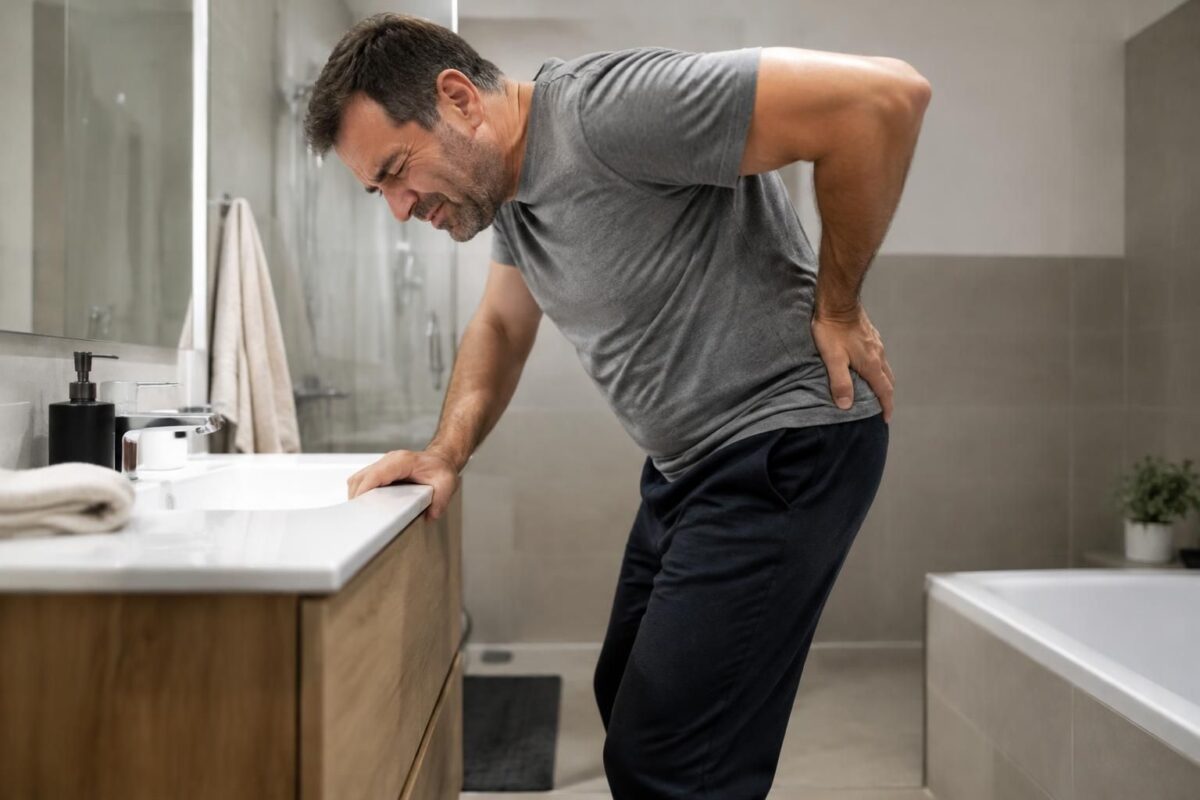
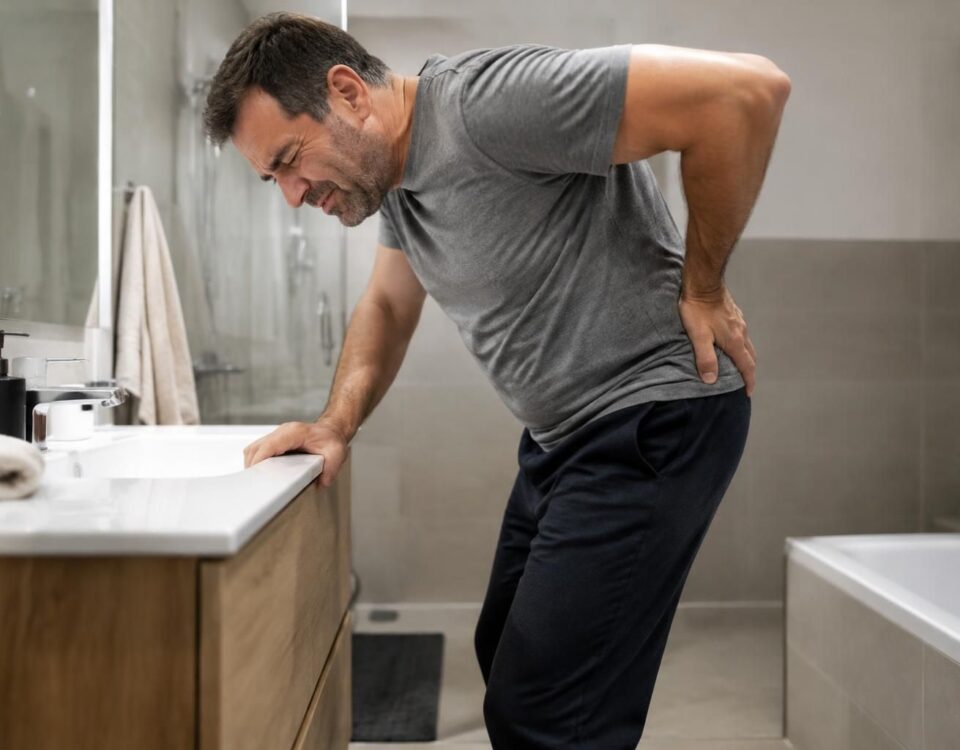
Sciatica and bending over the sink: pain in the leg
IN BRIEF Sciatica is pain related to irritation or compression of the sciatic nerve, which can extend from the lower back down to the leg. Bending over the sink can exacerbate the pain, especially if this position increases pressure on…
Adapting the equipment and cleaning method
Choosing a suitable handle
A broom or mop with a long handle allows for cleaning without excessively bending the back. Adjust the length to keep your torso as upright as possible, with relaxed shoulders and arms close to the body. A lightweight and easy-to-handle tool can also reduce the effort needed.
Avoid bending to wring out a mop on the floor. If possible, choose an elevated wringing system or ask for help with this step. Keep the bucket nearby, without having to lift or drag it over a long distance.
Favor short movements
Work in small areas and move your feet with the tool, rather than making large twists of the torso. Keep the movement smooth, without straining your arms. To reach a corner, get close to the area rather than stretching or leaning far forward.
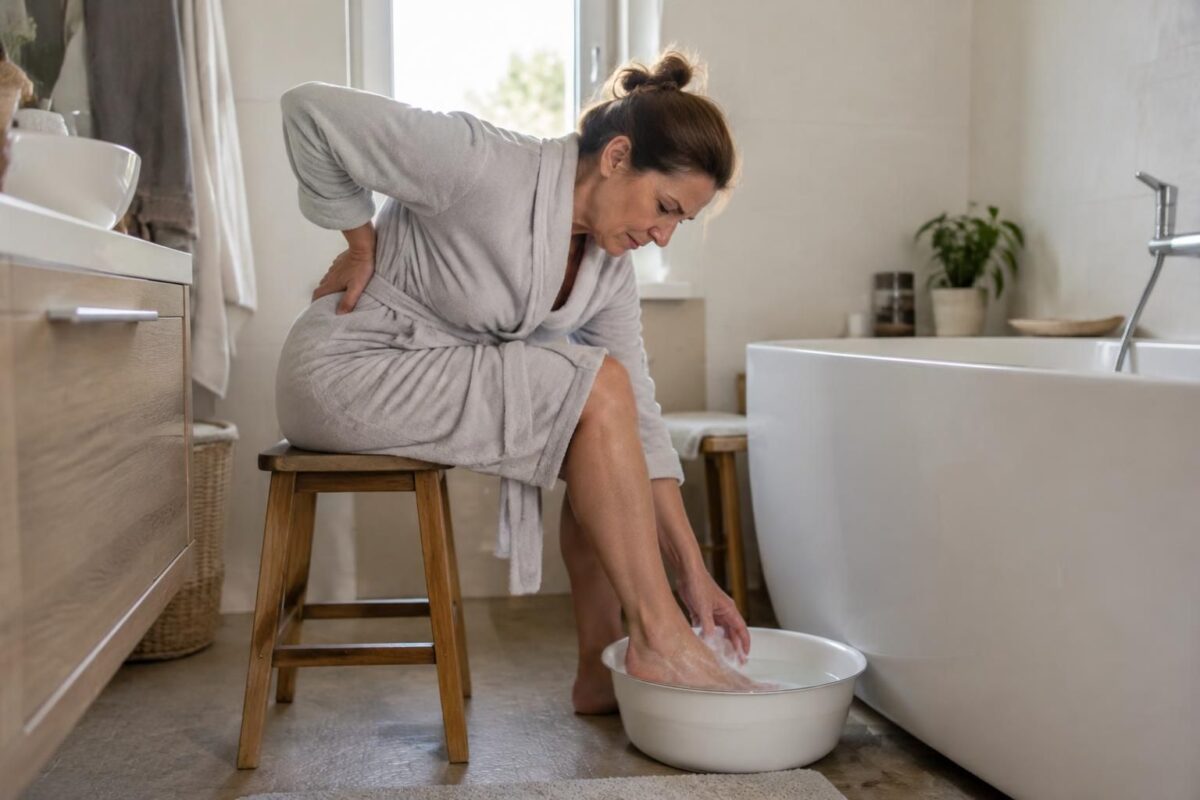
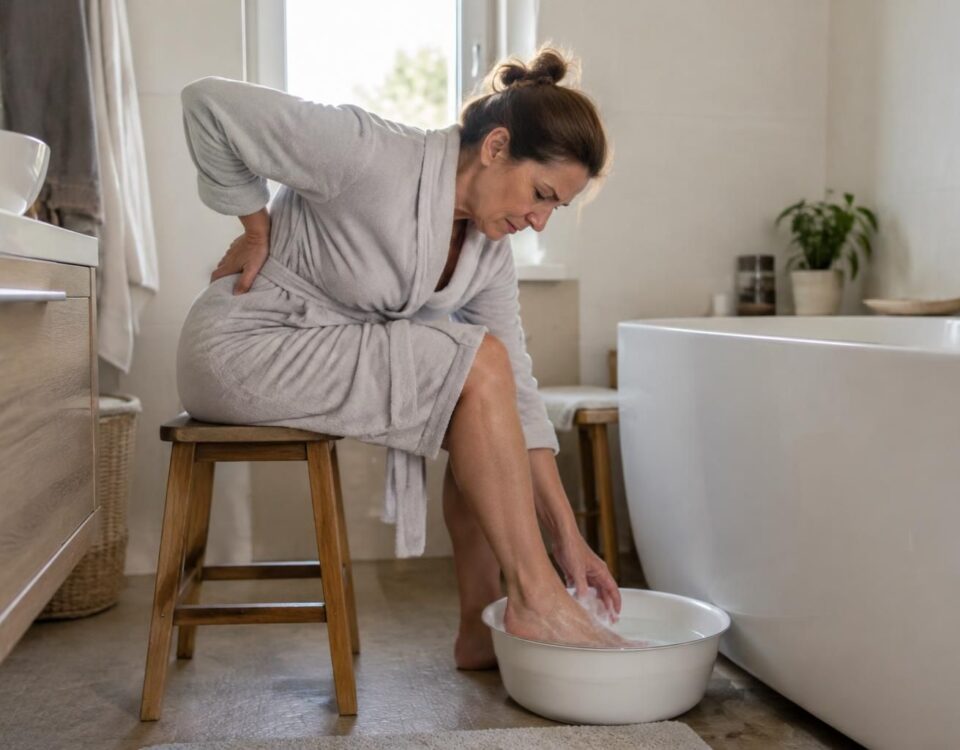
Sciatica and washing feet: lumbar flexion to monitor
IN BRIEF Sciatica can make washing your feet uncomfortable, as bending forward accentuates lumbar flexion and may trigger pain. To limit strain, sit down, bring your foot closer to you, or use a long-handled aid. These adjustments make personal hygiene…
Taking breaks and adjusting effort
Rather than cleaning the entire floor at once, break the task into several sessions. Take a break before the pain becomes significant, then walk gently or change position. Alternating tasks and cleaning one room at a time can make the effort easier to manage.
A slight passing discomfort does not necessarily indicate an injury, but pain that intensifies, persists after the activity, or travels lower down the leg warrants caution. Reduce the effort and avoid resuming the same movement immediately under the same conditions.

Sciatica and dressing: daily gestures to adapt
IN BRIEF Sciatica can make dressing uncomfortable, but a few simple gestures help limit tension. Sit down to put on pants, socks, and shoes, choose easy-to-wear clothing, and avoid bending or twisting suddenly. These adjustments make daily dressing easier without…
When to seek medical advice
Consult a healthcare professional if the pain is significant, recurs frequently, or limits your activities despite adjustments. Seek medical help quickly in case of new weakness in a leg, numbness around the groin area, or difficulties controlling the bladder or intestines. These symptoms require urgent evaluation.
| Situation | Practical advice |
|---|---|
| Leaning for long periods | Alternate tasks and straighten up regularly. |
| Pain in bending | Reduce the range of motion and avoid straining. |
| Mopping the floor | Keep the handle close to the body and the back as neutral as possible. |
| Cleaning under furniture | Bend your knees or use a long-handled tool. |
| Standing without breaks | Take short breaks to change position. |
| Pain that increases | Stop the movement and resume only if the pain subsides. |
| Numbness or weakness | Seek medical advice quickly. |
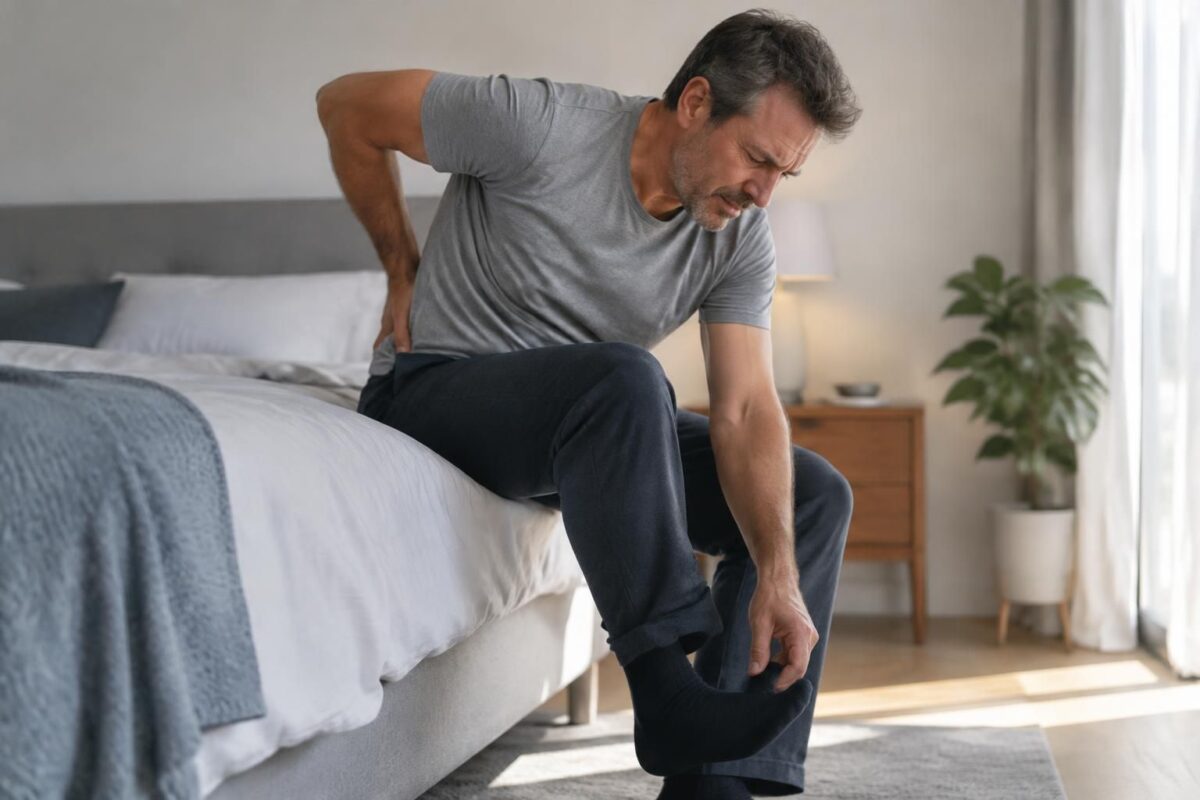
Sciatica and putting on socks: bending and pain in the leg
IN BRIEF Sciatica can make it difficult to put on your socks: bending over can increase the pain that radiates down the leg. Sitting down, using a sock aid, or avoiding painful bends can make this daily task easier. If…
Sciatica and floor washing: when prolonged bending triggers pain
Fictional testimony — Claire: “While mopping the floor, I would remain bent forward for long periods. The pain in my lower back would eventually travel down my leg. I learned to take breaks and to avoid maintaining this prolonged bending. The task became more manageable.”
Fictional testimony — Marc: “With my sciatica, mopping the floor could quickly become uncomfortable, especially when I leaned to reach the corners. Alternating movements and keeping my back in a more comfortable position helps limit the sharp pains.”
Fictional testimony — Élodie: “I thought that pain after mopping the floor was inevitable. By breaking up the cleaning and taking the time to straighten up regularly, I feel less discomfort associated with the bent position.”
These testimonials are fictional examples and do not replace medical advice. Pain that persists, worsens, or is accompanied by significant weakness or numbness deserves evaluation by a healthcare professional.

Sciatica and tying your shoes: why the pain can radiate down
IN BRIEF Sciatica is pain related to the irritation of a nerve in the lower back, which can radiate into the buttock and leg. Leaning down to tie your shoes may accentuate the pain or cause it to descend further.…
Sylvain Desforges: understanding sciatica when washing the floor
Sylvain Desforges is an expert in osteopathy, naturopathy, and manual medicine. Founder and president of TAGMED clinics and the ACMA association, he dedicates his career to health innovation and supporting people suffering from persistent pain. His approach focuses on daily actions that can trigger or exacerbate pain, such as mopping the floor while keeping the back bent for long periods.
Sciatica refers to pain that follows the path of the sciatic nerve, often from the lower back or buttock into the leg. It can be accompanied by tingling, numbness, or a feeling of weakness. Mopping the floor does not necessarily provoke sciatica, but a position maintained in prolonged bending, combined with repetitive movements, can strain the lower back and make certain symptoms more sensitive.
When a person bends forward to clean a large area, they may remain in an uncomfortable position for a long time, sometimes extending their arms or twisting the torso. Fatigue gradually sets in and the body compensates: one may further round the back, shift weight to one side, or make abrupt rotations. For someone already affected by lower back pain or nerve irritation, these constraints can increase discomfort during or after the task.
As part of his work in chronic pain, Dr Desforges favors an assessment tailored to each patient’s situation. The goal is to better understand the nature of the symptoms, the movements that influence them, and the functional needs of the person. Pain that radiates down the leg deserves particular attention, especially if it persists, worsens, or limits daily activities. The assessment helps guide care and determine if further tests or medical consultation are necessary.
To make floor cleaning more comfortable, it may be helpful to break the task down, take breaks, and avoid staying bent over without interruption. A long enough handle helps keep the back in a more neutral position. It is also preferable to move the feet to change direction rather than pivoting solely with the trunk. These adjustments do not replace a professional assessment, but they may reduce postural and repetitive strain.
Dr Desforges’ approach emphasizes evidence-based care and the integration of advanced technologies when appropriate. His areas of expertise include spinal decompression, laser therapy, and shockwave therapy. These options are considered based on the patient’s profile and may not be suitable for all types of pain. The approach aims to support health and well-being while taking into account the individual’s concrete goals, whether it’s returning to activities or completing household tasks with less discomfort.
In cases of significant or unusual pain, progressive weakness, or difficulties controlling the bladder or bowels, urgent medical assessment is necessary. For persistent symptoms, a healthcare professional can help clarify their origin and propose a personalized management plan.
Cleaning the floor can trigger or worsen a sciatica, especially if you stay bent over for long periods, repeat twisting movements, or already feel pain in the lower back. Understanding what stresses your back and adapting your cleaning method can help you limit discomfort and make better choices about how to address your symptoms.
Bending forward for several minutes can keep your back in a position that may increase strain on the lumbar region. Repeated movements to push the mop, reach corners, or wring out the mop head can also irritate an already sensitive area. If the pain radiates into the buttock or leg, or is accompanied by tingling, it is beneficial to pay attention to its progression rather than forcing through discomfort.
To reduce strain on the back, prefer an adjustable handle, keep the tool close to you, and move your feet instead of twisting the trunk while staying bent. Alternate tasks and take short breaks before the pain intensifies. These adjustments do not replace an evaluation, but they can make the activity less demanding while you seek to understand the cause of your symptoms.
New pain following an incident deserves particular attention. If your symptoms began after a fall, you can refer to this information on sciatica and pain that appeared after a fall. A fall can lead to lower back pain that requires appropriate assessment, especially if it is accompanied by symptoms in the leg.
Prolonged bending is not the only possible explanation. A lumbar disc or irritation of a nerve root can also contribute to radiating pain. To learn more about these possibilities, refer to the information regarding lumbar disc and inflammation of the nerve root, as well as the page on possible nerve irritation associated with disc bulge.
Also watch for signs that accompany the pain. A numbness of the foot, persistent tingling, or weakness in the leg are elements to mention during a consultation. You can read information on herniated disc with foot numbness. If sitting also worsens your pain, this resource on pain exacerbated when sitting and the lumbar disc can help you better identify factors to discuss with a professional.
If cleaning the floor regularly causes pain that radiates down the leg, limits your activities, or does not improve, seek an evaluation to determine what contributes to your symptoms. A professional can examine your situation and provide tailored recommendations based on your abilities, household tasks, and activity resumption goals.

Sylvain Desforges, B.Sc., D.O., N.D., docteur en ostéopathie
Dr Sylvain Desforges, B.Sc., D.O., N.D., osteopath, is the founding president of TAGMED and of the ACMA association. He dedicates his practice to chronic spinal pain, low back pain and symptoms compatible with sciatica, particularly when pain radiates toward the buttock, leg, calf, foot or toes.
Through SOS Sciatique, he publishes educational content on sciatica symptoms, possible causes such as disc herniation, disc narrowing, foraminal stenosis or irritation of a lumbar nerve root, as well as non-surgical approaches that may be considered according to the evaluation. At Clinique TAGMED, care may include, depending on the case, motorized neurovertebral decompression, specific osteopathic care or precision percussion.
For an evaluation related to sciatica treatment in Montreal / Mount Royal or sciatica treatment in Terrebonne, please consult the services available at Clinique TAGMED.
Medical disclaimer
The information published on SOS Sciatique is provided for educational purposes only and does not replace a consultation, diagnosis, opinion or treatment provided by a physician or another authorized healthcare professional. The author of this article is neither a medical doctor nor a specialist in a medical specialty recognized by the Collège des médecins du Québec. The osteopathic, manual medicine or functional support approaches described on this site do not constitute medical acts and are not intended to replace medical follow-up.
Consult a physician or emergency service in cases of loss of bladder or bowel control, anesthesia in the saddle area, significant or progressive weakness in the leg or foot, fever, recent trauma, severe pain or rapid worsening of symptoms. For more details, please read our Legal Notice.