

Sciatica and disc bulge in Montreal: possible cause of nerve irritation
14/11/2026
Sciatica and pain that appeared suddenly
14/11/2026
IN BRIEF A disc bulge is a protrusion of a disc that can irritate a nerve root and cause sciatica, with pain in the buttock or leg. In Terrebonne, an evaluation allows for the search for the cause of the symptoms and consideration of suitable non-surgical approaches. However, the disc bulge is not always responsible for the pain. |
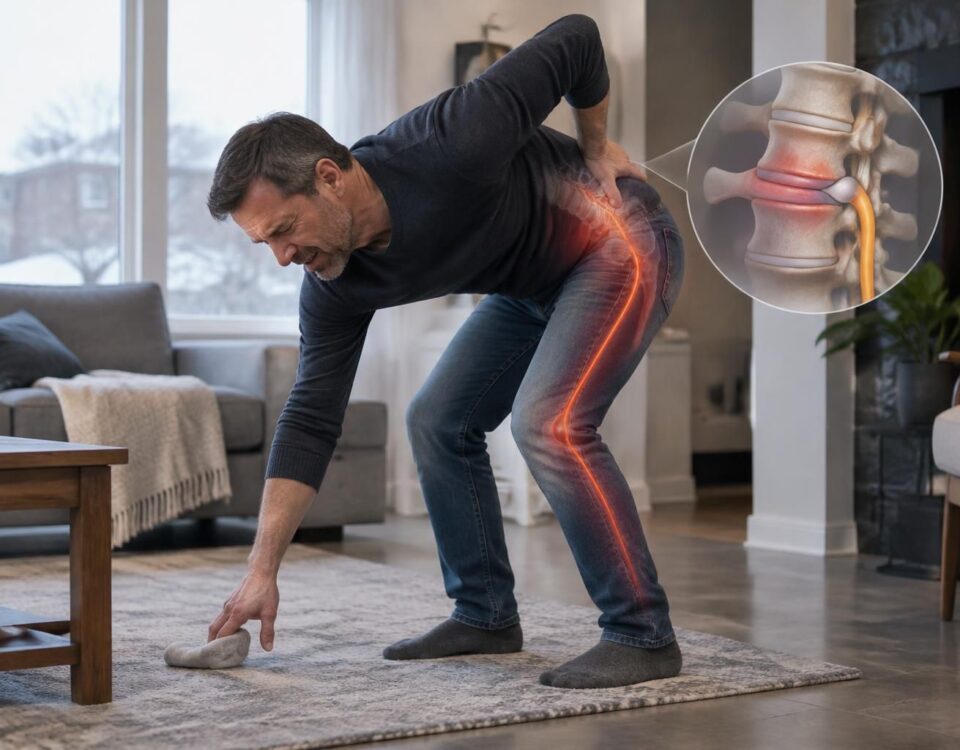
In Terrebonne, sciatica can sometimes be related to a disc bulge that irritates a nerve root in the lower back. The pain may radiate into the buttock and leg, sometimes down to the foot, with tingling or numbness.
A disc bulge does not always lead to symptoms. A professional evaluation helps to pinpoint the cause of the pain and the options for non-surgical management that are appropriate for the situation.
A disc bulge can sometimes contribute to the irritation of a nerve root and cause sciatic-type pain. However, an MRI scan alone is not sufficient to establish the cause of the symptoms. In Terrebonne, a professional evaluation can help link the symptoms, clinical examination, and imaging results, and then discuss appropriate management options.
What is a disc bulge?
Discs are located between the vertebrae. They help distribute loads and allow movements of the spine. A disc bulge describes a part of the disc that extends beyond its usual contour. This finding may appear on imaging, with or without pain.
A disc bulge is not necessarily a herniated disc. Its presence does not prove that it compresses a nerve. The healthcare professional must compare the imaging with the painful area, the reported sensations, and the signs observed during the examination.

Sciatica in Terrebonne: pain worsened in sitting position and lumbar disc
IN SHORT Aggravated sciatica in a sitting position may be related to the irritation of a lumbar nerve root, sometimes associated with a lumbar disc. In Terrebonne, varying positions, taking short active breaks, and getting an evaluation can help better…
How can a disc bulge irritate a nerve?
A nerve root can become sensitive if adjacent structures exert pressure or create irritation. The disc can contribute to this situation, but other factors may also be involved. The disc-root conflict refers to a possible relationship between a disc and a nerve root. This term should be interpreted cautiously: it does not confirm, on its own, that the disc is the cause of the pain.
The region L5-S1, located in the lower back, is often evaluated when pain radiates into the buttock or leg. Discover why L5-S1 is often involved in sciatica and how the canal or foramen may play a role in possible nerve compression.

Sciatica in Terrebonne: pain worsened by flexion and disc-related cause
IN BRIEF Aggravated sciatica by flexion is pain that starts in the lower back and radiates into the buttock or leg; a lumbar disc herniation can irritate a nerve root, although it may not be the only possible cause. In…
What symptoms can accompany sciatica?
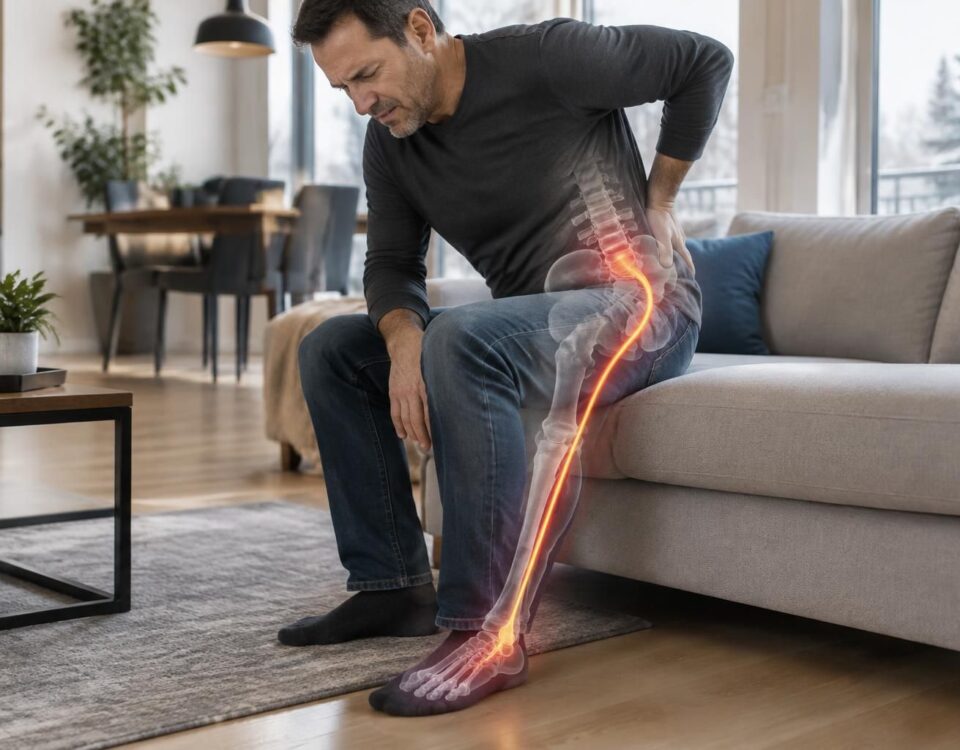
Pain may begin in the lower back or buttock and then follow part of the nerve pathway into the thigh and leg. Some people describe a pain that feels like a burning sensation, a shock, tingling, or numbness. Pain behind the thigh can have various causes; it does not alone confirm sciatica.
Symptoms vary depending on the affected nerve root. Some people also experience pain in the calf or foot. The article on calf symptoms associated with L5-S1 presents this possibility. A burning type of pain behind the thigh also deserves evaluation if it persists or worsens.

Disc herniation in Terrebonne: why some stretches worsen
IN BRIEF Discogenic sciatica is pain related to the irritation of a nerve, sometimes worsened by certain stretches that intensify the symptoms. In Terrebonne, avoiding movements that cause pain to radiate down the leg and focusing on an appropriate approach…
What does a disc bulge mean on imaging?
An MRI or X-ray report describes observations. The term “bulge” does not always specify whether a nerve root is irritated. The professional must consider several elements: the location of the bulge, the symptoms, their evolution, and the results of the clinical examination.
The spinal canal and foramens are passages where nerve structures are located or circulate. Narrowing or contact at these locations can have clinical significance in certain cases. To learn more, consult the article on the canal, foramen, and nerve compression at L5-S1.

Sciatica disc in Terrebonne: movements to avoid at the beginning
IN BRIEF Disc-related sciatica corresponds to a nerve irritation that can cause pain from the lower back to the buttock or leg. Initially, avoid movements that worsen the pain, such as deep bends, sudden twists, and carrying heavy loads. In…
When to seek an evaluation in Terrebonne?
An evaluation may be useful if the pain radiates down the leg, if tingling persists, or if the symptoms limit daily activities. It helps clarify the signs present and determine whether a medical consultation or further examinations are necessary. Bring your imaging results, if you have them, and describe the onset date, pain trajectory, and observed changes.
At the TAGMED Clinic, management is decided based on the evaluation and situation of each individual. Options may include specific osteopathy or, when indicated after evaluation, motorized neurovertebral decompression. These approaches do not replace a medical diagnosis. They may not be suitable for everyone; a professional must verify their relevance and explain their limitations.
You can review services related to sciatica treatment in Terrebonne. The choice of care depends on the symptoms, examination, and needs of the individual.

Sciatica in Terrebonne: disc herniation with leg weakness
IN SHORT Sciatica related to a disc herniation can cause pain that radiates down the leg, sometimes accompanied by weakness. In Terrebonne, an assessment helps guide management based on symptoms and their progression. A new, significant, or progressive weakness requires…
Signs that require immediate medical attention
Seek prompt medical attention or go to the emergency room if you experience loss of control over the bladder or bowels, numbness in the saddle area, significant or progressive weakness of the leg or foot, fever, recent trauma, severe pain, or rapid worsening.

Sciatica in Terrebonne: herniated disc with foot numbness
IN BRIEF Sciatica related to a herniated disc can irritate a nerve root and cause pain that radiates down the leg, sometimes with a numbness in the foot. In Terrebonne, an evaluation helps to better understand the symptoms and consider…
About the author
Sylvain Desforges, B.Sc., D.O., N.D., Doctor of Osteopathy and naturopath, is the founding president of TAGMED and the ACMA association. He dedicates his practice to chronic pain of the spine, lower back pain, and pain associated with sciatica, particularly when the pain radiates down to the buttock, leg, calf, foot, or toes.
Through SOS Sciatique, he publishes educational content on the symptoms of sciatica, possible causes such as disc herniation, disc pinching, foraminal stenosis, or irritation of a lumbar nerve root, as well as non-surgical approaches that can be considered based on the assessment. At Clinique TAGMED, treatment options may include, depending on the case, motorized neurovertebral decompression, specific osteopathy, or precision percussion.
For an evaluation related to sciatica treatment in Montreal or Mont-Royal, or sciatica treatment in Terrebonne, consult the services available at Clinique TAGMED.

Sciatica in Terrebonne: lumbar disc and nerve root inflammation
IN BRIEF Lumbar disc-related sciatica occurs when irritation or inflammation of a nerve root causes pain that may radiate from the buttock down to the leg. In Terrebonne, an evaluation can help better understand the cause of symptoms and identify…
Medical Disclaimer
Medical disclaimer: The information and advice provided on this site do not replace the advice, diagnosis, or treatment of a healthcare professional. Please note that Sylvain Desforges, B.Sc., D.O., N.D., doctor of osteopathy, is neither a medical doctor nor a physician, and is not a specialist in a medical field as defined by the Collège des médecins du Québec. Manual medicine, functional medicine, and sports medicine as described on this site exclude any treatment or medical diagnosis made by a physician or medical specialist. Always consult your doctor for any medical questions. For more details, please read our complete legal notice.

Sciatica and disc pinching in Terrebonne: when space decreases
IN BRIEF The disc bulge corresponds to a reduction in the space between two vertebrae; it can sometimes contribute to nerve irritation and sciatica, with pain that radiates down the buttock or leg. In Terrebonne, an assessment allows for a…
Sciatica and Disc Bulge in Terrebonne
A Possible Link
- A disc bulge can irritate a lumbar nerve root.
- Pain may radiate from the buttock down the leg or foot.
- Imaging alone does not always identify the cause of the symptoms.
When to Get Evaluated
- Consult a professional if the pain persists or limits your activities.
- An evaluation helps to guide appropriate options for your situation in Terrebonne.
- Progressive weakness, loss of bladder or bowel control: seek immediate attention.

A disc bulge may sometimes contribute to nerve irritation and cause pain consistent with a sciatica, but its presence on imaging alone does not account for the symptoms. In Terrebonne, the evaluation aims to correlate the pain, neurological signs, and examination results to choose careful and appropriate measures for your situation.
Understanding the Link Between Disc Bulge and Sciatica
Intervertebral discs act as shock absorbers between vertebrae. A bulge corresponds to a protrusion of the disc beyond its usual contours. Depending on its position and the space available around the nerves, it may contribute to irritating a lumbar nerve root. The pain may then radiate from the lower back down to the buttock, thigh, calf, or foot. Tingling or numbness may also occur.
However, a disc bulge does not invariably cause symptoms. Some individuals show a bulge on imaging without pain, while others experience significant pain for reasons that cannot be attributed to a single anomaly. Therefore, it is advisable not to interpret an imaging result in isolation: clinical evaluation and the progression of symptoms also count.
What Daily Measures to Consider?
Stay Active Without Overdoing It
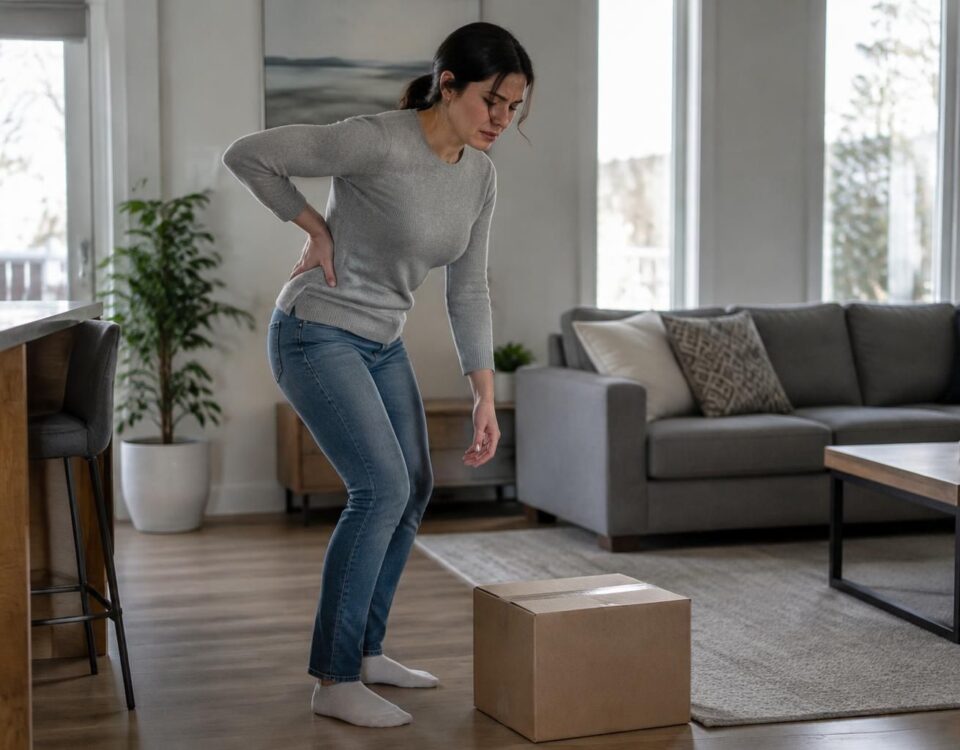
As much as the pain allows, favor gentle movements and short walking periods rather than prolonged bed rest. Adjust your activity according to your tolerance: a marked or persistent aggravation is a signal to reduce effort and seek advice. Temporarily avoid actions that strongly trigger the pain, particularly heavy lifting, repeated twists, or prolonged bending.
Adapt Positions and Tasks
Change positions regularly if you need to stay seated or standing for long periods. When lifting an object, bring it close to your body and avoid twisting your trunk at the same time. At work, arrange a variation between tasks and movement breaks. These adaptations do not necessarily correct the bulge but can make daily activities more tolerable during recovery.
When to Seek Assessment in Terrebonne?
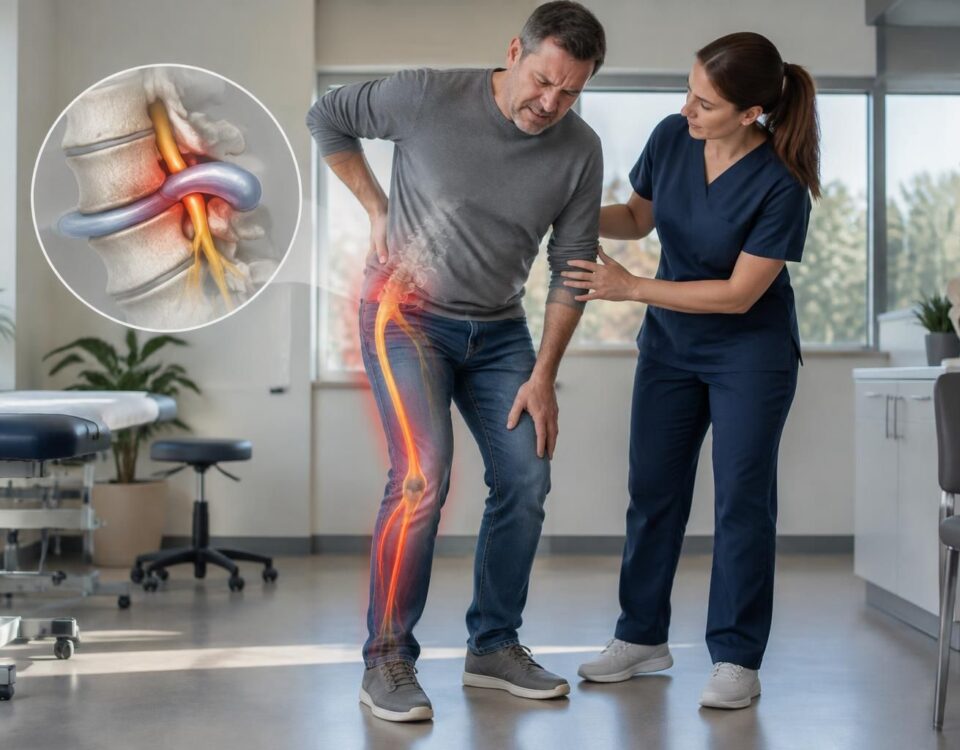
Consult a healthcare professional if the pain radiates down the leg, if numbness persists, if symptoms limit your activities, or if they do not improve. A consultation allows for clarifying the pathway of pain, assessing strength and sensitivity, and determining if further examinations or complementary care are needed. Depending on the evaluation, non-surgical approaches may be considered. Any care must be tailored to your condition and should not cause a significant worsening of symptoms.
Treatment at Clinique TAGMED in Terrebonne can be discussed after an individualized assessment. The proposed options, like specific osteopathy or motorized neurovertebral decompression, may not be suitable for all situations and do not replace a medical diagnosis. Ask about the limits, expected benefits, and alternative solutions before starting any treatment.
Recognizing Urgent Signs
Consult a doctor or emergency service promptly in case of loss of bladder or bowel control, numbness in the saddle area, significant or progressive weakness of the leg or foot, fever, recent trauma, or rapid deterioration. These signs require urgent evaluation.
This information is educational and does not replace a consultation, diagnosis, or treatment by a licensed health professional.
| Item to compare | What it may indicate |
|---|---|
| Disc bulge | May contribute to irritating a nerve root, without always causing symptoms. |
| Radiating pain | May travel from the buttock down to the leg or foot. |
| Numbness or tingling | May accompany nerve irritation. |
| Weakness | New or progressive weakness requires prompt medical evaluation. |
| Confirmation of the cause | Depends on clinical assessment; imaging is interpreted according to symptoms. |
| Care in Terrebonne | An assessment allows for examining options suited to your situation. |
Illustrative testimonials: sciatica and disc bulging in Terrebonne
The testimonials below are fictional and illustrative examples, written to explain possible experiences. They do not come from identifiable patients and do not guarantee that a disc bulge is the cause of pain. Only an evaluation by a health professional can help understand the symptoms.
“My pain started in the lower back and ran down to the buttock and leg. I was told about a disc bulge, but I didn’t know if it was related to my sciatica. The assessment helped me better understand the different possible causes and the options to discuss with a professional.”
A disc bulge can sometimes contribute to irritating a nerve root, but it can also be observed without causing symptoms. Pain that travels down the leg may also be associated with other factors. The location of the pain, sensations of numbness or tingling, and any potential weakness must be considered in the evaluation.
“I had tingling all the way down to my foot after sitting for a long time. I was looking for a non-surgical approach in Terrebonne. I was explained that the result of imaging alone is not enough to determine the origin of the pain and that my overall condition and the evolution of symptoms must be considered.”
A consultation can allow for discussing measures appropriate to the situation, such as temporary adjustments to certain activities or approaches for functional support. Care should be chosen based on the evaluation and does not replace medical advice. A professional can also refer for examinations or medical follow-up when indicated.
“What worried me was persistent pain in the leg. I understood that a disc bulge does not automatically mean significant compression and that the evolution of symptoms is as important as imaging.”
For an evaluation related to sciatica in Terrebonne, care options can be discussed with a qualified professional. If the pain worsens rapidly, if significant or progressive weakness appears, or in case of loss of bowel or bladder control or numbness in the saddle area, consult a physician or emergency service without delay.
Sciatica and disc bulging in Terrebonne: a possible cause of nerve irritation
Sylvain Desforges, B.Sc., D.O., N.D., Doctor of Osteopathy and naturopath, is the founding president of TAGMED clinics and the ACMA association. His career is dedicated to health innovation, chronic pain management, and integrating approaches tailored to the needs of each individual. He is particularly interested in lower back pain and symptoms associated with sciatica, when pain starts from the lower back and may extend down to the buttock, leg, calf, foot, or toes.
A disc bulge refers to a protrusion of the intervertebral disc beyond its usual contour. It can be observed in imaging, but its presence does not automatically mean it is the cause of pain. Some individuals have a disc bulge without symptoms, while others experience lower back pain or signs suggesting nerve irritation. Therefore, it is essential to correlate imaging results with symptoms and clinical examination.
When the disc bulges near a nerve root, it can contribute to its irritation, sometimes in conjunction with other changes, such as local inflammation, a decrease in the available space, or increased sensitivity of the tissues. Pain may then follow the course of the sciatic nerve. Burning, electric shock sensations, tingling, or numbness are sometimes reported. Weakness may also occur, but any loss of strength must be carefully evaluated by a health professional.
In Terrebonne, a person consulting for sciatica-like pain may benefit from an evaluation aimed at clarifying the location of symptoms, their progression, and the factors that aggravate or relieve them. Elements like prolonged sitting, certain movements of the back, or physical exertion can influence pain, but are not sufficient to establish a diagnosis. The evaluation also determines whether a referral to a physician or another professional is necessary.
At TAGMED Clinic, support options are chosen based on the situation and assessment. They may include specific osteopathy, manual approaches, or, when deemed appropriate, motorized neurovertebral decompression. Modalities like laser or shockwave therapy may also be considered based on needs and indications. These approaches are not suitable for everyone and do not guarantee a result. Their relevance must be discussed considering the symptoms, medical history, and the individual’s goals.
The information presented here is educational and does not replace a consultation, diagnosis, opinion, or treatment by a physician or another licensed health professional. Sylvain Desforges is neither a doctor nor a specialist in a medical specialty recognized by the Collége des médecins du Québec. The approaches of osteopathy, manual medicine, or functional support are not considered medical acts and do not replace medical follow-up.
In case of loss of bowel or bladder control, numbness in the saddle area, significant or progressive weakness of the leg or foot, fever, recent trauma, severe pain, or rapid worsening, consult a physician or emergency service without delay.
In Terrebonne, a disc bulge can sometimes contribute to irritation of a nerve root and be accompanied by pain that radiates down to the buttock or leg. However, its presence in imaging alone is insufficient to determine the cause of symptoms: their location, progression, and clinical examination must also be taken into account.
Understanding the Possible Link Between Disc Bulge and Sciatica
A lumbar disc bulge can reduce the space around a nerve root or promote its irritation. This can be associated with lower back pain radiating to the leg, tingling, or numbness. For example, an L4-L5 protrusion with pain in the leg illustrates a possible situation, but only a licensed professional can assess the significance of the symptoms and imaging results.
The manifestations vary from person to person: some notice symptoms that worsen at the end of the day, while others have pain that makes sitting difficult. A numbness of the big toe accompanied by lower back pain also deserves evaluation, though it does not alone identify the cause.
Evaluating Symptoms and Management Options
Pain can be intermittent or constant, and its intensity does not necessarily reflect the severity of a disc bulge. An evaluation allows for consideration of the overall picture and guides the individual towards appropriate care. Depending on the situation, non-surgical approaches may be discussed after assessment, without guaranteeing results and not replacing medical follow-up.
For information on evaluation and services available in Terrebonne, visit the page dedicated to the treatment of sciatica in Terrebonne or contact the TAGMED Clinic. The information in this article is educational and does not replace a consultation or a diagnosis. Seek prompt medical attention or emergency services in case of significant or progressive weakness, loss of bladder or bowel control, anesthesia in the saddle area, fever, recent trauma, or rapid worsening. For more details, see the Legal Notice.

Sylvain Desforges, B.Sc., D.O., N.D., docteur en ostéopathie
Dr Sylvain Desforges, B.Sc., D.O., N.D., osteopath, is the founding president of TAGMED and of the ACMA association. He dedicates his practice to chronic spinal pain, low back pain and symptoms compatible with sciatica, particularly when pain radiates toward the buttock, leg, calf, foot or toes.
Through SOS Sciatique, he publishes educational content on sciatica symptoms, possible causes such as disc herniation, disc narrowing, foraminal stenosis or irritation of a lumbar nerve root, as well as non-surgical approaches that may be considered according to the evaluation. At Clinique TAGMED, care may include, depending on the case, motorized neurovertebral decompression, specific osteopathic care or precision percussion.
For an evaluation related to sciatica treatment in Montreal / Mount Royal or sciatica treatment in Terrebonne, please consult the services available at Clinique TAGMED.
Medical disclaimer
The information published on SOS Sciatique is provided for educational purposes only and does not replace a consultation, diagnosis, opinion or treatment provided by a physician or another authorized healthcare professional. The author of this article is neither a medical doctor nor a specialist in a medical specialty recognized by the Collège des médecins du Québec. The osteopathic, manual medicine or functional support approaches described on this site do not constitute medical acts and are not intended to replace medical follow-up.
Consult a physician or emergency service in cases of loss of bladder or bowel control, anesthesia in the saddle area, significant or progressive weakness in the leg or foot, fever, recent trauma, severe pain or rapid worsening of symptoms. For more details, please read our Legal Notice.