Sciatica in Montreal: numbness of the big toe and lower back pain
18/09/2026
Sciatica and difficulty sitting
18/09/2026
IN BRIEF
| In brief, sciatica associated with numbness in the big toe and lower back pain is pain that radiates along the sciatic nerve, starting from the lower back and spreading to the buttock, the back of the thigh, and the big toe. This approach can offer benefits such as rapid relief, muscle strengthening, and improved mobility, through targeted exercises and care tailored to Terrebonne. The function relies on accurate assessment followed by adapted non-surgical management focused on strengthening exercises, stretching, and osteopathic techniques, aiming to reduce nerve compression and prevent recurrences. Accessible in Terrebonne, this approach aims to decrease pain and restore the ability to walk and resume daily activities while avoiding surgical intervention whenever possible. |
In Terrebonne, sciatica may present as numbness in the big toe and lower back pain that can radiate down to the foot. The path of the sciatic nerve explains that symptoms rise from the lower back and spread down the leg, with signals such as tingling, electrical shocks, and occasional weakness. Common causes include herniated discs, foraminal stenosis, or nerve irritation. Active non-surgical approaches, such as targeted exercises, manual therapy, and posture advice, allow for lasting relief with a personalized plan and regular follow-up. To obtain an accurate assessment and start a program tailored to your situation in Terrebonne, make an appointment and benefit from dedicated support.
This guide written by a health professional in Terrebonne aims to inform patients about sciatica associated with numbness in the big toe and lower back pain. It specifies the affected areas, signs to watch for, possible causes, and treatment options available at TAGMED Clinic, as well as useful resources for management.
Affected Areas and Manifestations
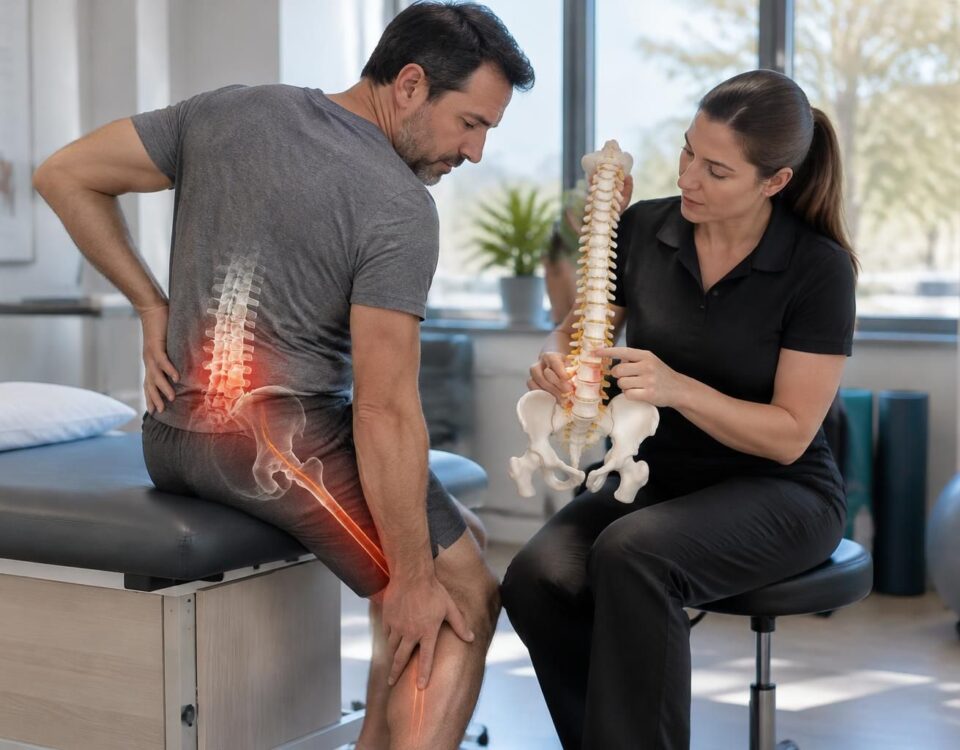
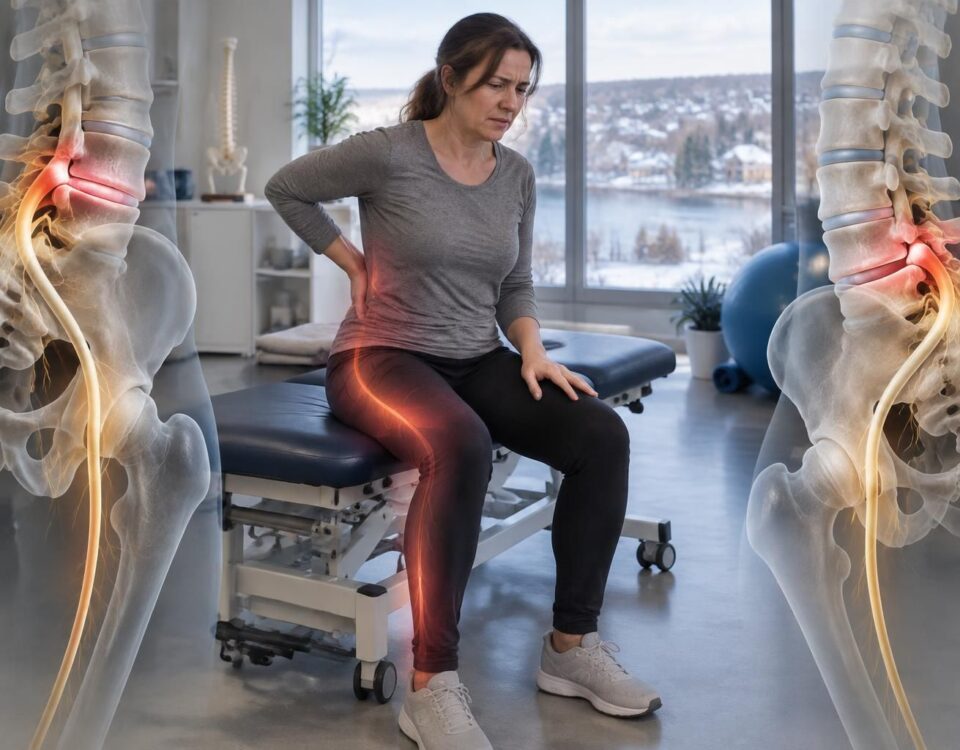
Pain follows the path of the sciatic nerve. It may start in the lower back and move up to the buttock, the back of the thigh, and then reach the big toe when the L5 territory is involved. Numbness may be accompanied by electrical sensations or paresthesias. The severity and extent of symptoms depend on the degree of nerve compression and vary with movements and activities.
For a precise and personalized assessment, you can consult the resources at TAGMED Clinic in Terrebonne and Montreal: Numbness in the leg Sciatica.
Clinical Signs and Diagnosis
The diagnosis relies on the medical history and clinical examination. The Lasègue sign is used to evaluate nerve compression when pain occurs between 30° and 70° of lumbar spine flexion. Numbness, paresthesias, and loss of sensation help estimate the affected territory. The aim is to distinguish sciatica from other nerve pains such as femoral neuralgia.
To delve deeper into the mechanisms and symptoms, consult specialized resources available through platforms dedicated to sciatica.
Common Causes and Reasons
Origins vary and include particularly herniated discs, foraminal stenosis, and piriformis syndrome. Inflammation and nerve irritation increase pain and enhance discomfort when the nerve is compressed. A precise clinical picture allows for guiding the diagnosis and care plan.
Treatment Options and Practical Approach
In Terrebonne and the region, options can be discussed and implemented within TAGMED Clinic. Approaches prioritize non-surgical management when neurology is stable, focusing on specific osteopathic care and targeted techniques tailored to each patient. Among the options frequently considered are motorized neurovertebral decompression and the use of precision tools based on individual assessment.
For additional information on non-surgical treatments and associated resources, consult the dedicated pages: neurovertebral decompression, sciatica and weakness in the calf, and difficulty climbing stairs. The SOS Sciatica resources provide useful additional information.
Elements to Watch For and Warning Signs
Watch for the emergence of new motor deficits, progressing numbness, rapidly spreading pain, or urinary/mental disturbances. These signals require quick medical evaluation or specialized referral. In case of doubt, promptly contact a health professional or go to the emergency room if alarming symptoms appear.
For detailed descriptions and clear indicators, you can consult dedicated resources on SOS Sciatica or TAGMED depending on the context.
Tips for Daily Management and Resources
A comprehensive and coordinated approach can help limit the impact of sciatica on walking and daily activities. Clinical options, tailored to each patient, are available in Terrebonne and Montreal through TAGMED Clinic. To learn more about practical aspects and available resources, consult the following pages: Numbness in the leg Sciatica, frequent pauses during walking, and pain and numbness after walking.
For complementary resources related to similar manifestations, consult specialized pages on weakness in the thigh and the general information available on SOS Sciatica.
Ergonomic considerations and posture elements can help limit symptoms. For resources focused on numbness and pain related to sciatica, refer to the pages listed above and the official resources from TAGMED and SOS Sciatique.
Medical disclaimer: The information and advice provided on this site do not replace the opinion, diagnosis, or treatment of a healthcare professional. Please note that Dr. Sylvain Desforges, osteopath, is neither a medical doctor nor a physician, and is not a specialist in a medical specialty as defined by the Collège des médecins du Québec. Manual medicine, functional medicine, and sports medicine as described on this site exclude any treatment or medical diagnosis made by a doctor or specialist. Always consult your doctor for any medical questions. For more details, please read our full Legal Notice.
- Numbness of the big toe and paresthesias along the sciatic pathway
- Lower back pain, worsened by flexion or twisting
- Positive Lasègue sign, indicating nerve compression
- Variability of symptoms depending on the level of compression
- Potential causes: herniated disc, foraminal stenosis, piriformis syndrome
- Non-surgical approaches: osteopathy and physiotherapy, targeted exercises
- Recommended exercises: stretching, core strengthening, hip strengthening
- Follow-up plan: regular evaluations and re-assessments
- Signs of emergency: progressing weakness, urinary/intestinal issues, saddle anesthesia

This article offers practical recommendations for Sciatica in Terrebonne associated with numbness of the big toe and lower back pain, prioritizing clear diagnostic steps, non-invasive approaches, and targeted exercises for lasting relief without surgery.
Understanding the signs and affected areas
Sciatica often manifests as pain that originates in the lower back and then radiates down to the buttock, the back of the thigh, and may reach the big toe. The numbness of the big toe is frequently linked to irritation or compression of the L5 nerve root. Variations in the location and intensity of the pain allow for estimating the degree of compression and the involved areas.
Signs to watch for and alert indicators
In addition to pain, watch for signs such as tingling, weakness, or difficulty lifting the foot. A decrease in muscle strength or loss of sensitivity in the nerve territory indicates the need for rapid evaluation. Progressive neurological symptoms or the onset of urinary or intestinal issues require immediate medical consultation.
Possible causes in Terrebonne
The most common origins include a lumbar herniated disc, foraminal stenosis, and irritations related to the piriformis muscle. Lifestyle factors, such as prolonged inactivity or overload during activities, can trigger or worsen these symptoms. A coordinated approach between osteopathy and physiotherapy, focused on movement and strengthening, generally yields the best results.
Therapeutic approaches and practical recommendations
To achieve lasting relief without surgery, prioritizing an active strategy tailored to your situation is essential. A combination of symptom control, postural correction, and targeted exercises helps decrease pressure on the nerve and strengthen the back and hips.
Exercises and posture
Incorporate gentle stretches for the lower back and hamstrings, as well as core stability and hip mobility exercises. A regular practice of 10 to 20 minutes per day, suited to your level, can reduce pressure on the nerve and improve spinal stability. Adopt a sitting and standing posture that minimizes prolonged flexion and lumbar twisting.
Pain management and complementary approaches
Additionally, utilize manual therapy techniques and ergonomic advice to reduce inflammation and promote better circulation. Targeted anti-inflammatory measures may be considered based on evaluation, and natural options can support the recovery process without replacing medical oversight.
Local action plan
Establish a personalized plan with measurable goals and regular re-evaluations. Monitoring muscle strength, sensitivity, and walking allows for treatment adjustments and helps avoid common mistakes related to a premature return to activity.
When to seek immediate consultation
If you notice a new weakness, a rapid progression of numbness, a dropped foot, or urinary issues, quickly contact a healthcare professional.
| Aspect | Key Elements |
|---|---|
| Origin | L5-S1 disc herniation or foraminal stenosis causing radiculopathy at L5 |
| Location | Numbness in the big toe and lower back pain radiating to the buttock and thigh |
| Clinical Signs | Potential Lasègue’s sign and paresthesias; possible weakness in foot dorsiflexion |
| Aggravating Factors | Lumbar flexion and prolonged activity worsen the condition; prolonged sitting may amplify the pain |
| Recommended Exams | Anamnesis + clinical examination; neurological tests; imaging if red flags or deficits are present |
| Therapeutic Approaches | Conservative first: osteopathy and physiotherapy, targeted exercises; anti-inflammatory medication if necessary |
| Exercises and Posture | Lumbar and hamstring stretches; core strengthening; 10-15 min/day |
| Signs of Emergency | Progressive weakness, urinary or bowel issues, febrile pain, or saddle anesthesia require rapid evaluation |
| Practical Tips | Gradual activity, avoid prolonged rest; check posture and ergonomics at work |
Testimonials on Sciatica in Terrebonne: numbness in the big toe and lower back pain
“For several months, I had numbness in my big toe and lower back pain that went up my leg. In Terrebonne, I found an approach that really changed things and allowed me to resume my daily activities without the pain that kept me awake at night.”
“The doctor diagnosed me with Sciatica after a thorough evaluation and simple tests. Knowing where the compression was located and understanding what aggravated my symptoms gave me hope and a newfound confidence to resume daily activities right here in Terrebonne.”
“The osteopathy sessions combined with targeted exercises reduced the pressure on the nerve and improved my mobility. Today, numbness in my big toe is much less present and lower back pain is under control, allowing me to sleep and move without fear.”
“I continue the exercises and follow ergonomic advice to prevent a recurrence. In Terrebonne, I have regained my active life, and I recommend that anyone suffering from similar symptoms seek an evaluation quickly.”
Dr. Sylvain Desforges is a reference figure in the field of osteopathy, naturopathy, and manual medicine. As the founding president of TAGMED clinics and the ACMA association, he has been working for years to innovate in care and improve the management of patients suffering from chronic pain. His practice is particularly focused on managing lower back pain and associated sciatic manifestations, including numbness in the big toe, in order to restore mobility and quality of life for patients in Terrebonne and its surroundings. His approach combines scientific rigor and attentive listening to the patient.
His approach is based on a precise understanding of the mechanism of sciatica and the most affected areas, particularly the lower back, buttocks, back of the thigh, and the path to the big toe. His clinical perspective takes into account the signs of numbness, burning sensations, and episodes of pain that can vary with movements and activities. In Terrebonne, he favors a systematic evaluation to distinguish radicular causes from other lower back pains and propose a personalized plan focused on rapid and lasting recovery.
The diagnosis is based on a detailed anamnesis and a rigorous clinical examination, supplemented if necessary by specific tests such as the Lasègue’s sign. When the suspicion of nerve compression is confirmed, the doctor can specify the type of lesion and guide treatment. This approach allows not only the identification of sciatica, but also its differentiation from other neuropathic pain conditions such as femoral neuralgia, in order to avoid delays in care.
In his practice, Dr. Desforges offers a range of non-surgical and evidence-based treatments tailored to each patient. He combines specific osteopathy, motorized neurovertebral decompression, and other manual therapies, incorporating advanced technologies such as laser and shockwave therapy when indicated. The goal is to reduce inflammation, improve mobility, and prevent recurrences, while relying on evidence and a evidence-based approach.
Beyond technical gestures, he emphasizes patient education and the implementation of targeted exercises to activate the muscles that support the back and hips. Customized programs of stretching, strengthening, and light cardiovascular exercises are part of a global strategy to relieve the nerve and limit future episodes. His support also includes ergonomic advice and lifestyle adjustments for a safe and sustainable return to activity in Terrebonne.
For the residents of Terrebonne facing numbness in the big toe associated with lower back pain, Dr. Desforges offers an evidence-based, patient-centered approach tailored to each stage of the therapeutic journey. At the TAGMED Clinic, he provides coordinated care, continuous evaluation, and regular check-ups to measure progress and adjust the plan as needed. Discover his approach and the services available at the TAGMED Clinic.
This conclusion summarizes the essential points of the sciatic phenomenon in Terrebonne when numbness in the big toe and lower back pain occur, outlining the affected areas, signs to watch for, possible causes, and options for treatment and exercises for lasting relief.
The typical journey involves pain starting from the lower back that may radiate to the buttock, the back of the thigh, and reach the big toe. This irradiation, accompanied by numbness and sometimes paresthesia, reflects nerve compression and guides the treatment orientation towards targeted and progressive approaches suitable for Terrebonne.
The diagnosis is based on the history and clinical examination, supplemented by simple tests like the Lasègue sign. Accurate identification of the pathway and affected areas allows differentiation of sciatica from other nerve pain and establishes a personalized rehabilitation plan; alarming signs justify prompt care.
Common causes include a herniated disc, foraminal stenosis, or piriformis syndrome. Treatment is typically multimodal, combining anti-inflammatories or muscle relaxants when indicated, physical therapy focused on core stability, stretching, and muscle strengthening, and natural approaches when relevant. The goal is to reduce pain and compression while restoring mobility and function.
Key exercises and ergonomic advice play a central role. Daily and regular stretching, core stability work (core strengthening), and gentle cardio activity help reduce pressure on the nerve and promote functional recovery. Customized programs can be proposed to secure the return to activity and prevent relapses.
For further information, consult local and relevant resources on sciatica trajectories and symptoms in Terrebonne and Montreal, such as the following links: Sciatica in Terrebonne: pain and numbness after walking, persistent pain in the heel, pain in the hip or nerve irradiation, and other useful resources like Numbness of the big toe and lower back pain in Montreal.
Signs such as new or progressive weakness, a foot that no longer holds on tiptoes, or saddle anesthesia justify urgent medical evaluation. Regular follow-up and objective measures (strength, sensitivity, walking) allow for plan adjustments and help avoid stagnations or relapses.

Sciatica L5-S1 in Terrebonne: why the pain can radiate down to the foot
IN BRIEF L5-S1 sciatica refers to pain related to irritation of a lumbar nerve root, which may start from the lower back and radiate into the buttock, leg, and down to the foot. The pathway varies: the top of the…

Sciatica in Terrebonne: painful journey according to roots L4, L5, and S1
IN BRIEF Sciatica in Terrebonne can cause pain, tingling, or weakness in the leg. The roots L4, L5, and S1 can guide the evaluation based on symptoms and changes in strength, sensitivity, or reflexes; their territories do overlap, however. Comparing…

Sciatica in Terrebonne: what does irritation of the S1 root mean?
IN BRIEF An irritation of the S1 root can cause pain of a sciatica type in the buttock, the back of the leg, and the outer edge of the foot. Tingling, numbness, or difficulty walking on tiptoes may also occur.…

Sciatica in Terrebonne: what does irritation of the L5 root mean?
IN BRIEF L5 sciatica corresponds to irritation of the L5 nerve root, often felt from the lower back and buttock down the side of the leg, to above the foot and the big toe. It can cause pain, tingling, or…

Sciatica in Terrebonne: difference between L4-L5 and L5-S1
IN BRIEF The difference between L4-L5 and L5-S1 concerns the level of the lumbar discs and the sometimes irritated nerve roots: an L4-L5 injury often affects L5, while an L5-S1 injury often affects S1. The sensory pathways overlap; thus, an…

Sciatica S1 in Terrebonne: pain towards the calf and the outer edge of the foot
IN BRIEF S1 sciatica is pain related to irritation of a lumbar nerve root, which may radiate down to the buttock, back of the calf, and the outer edge of the foot. Tingling or weakness may also occur. In Terrebonne,…

Sciatica L5 in Terrebonne: pain towards the big toe
IN SHORT L5 sciatica can cause pain or numbness that radiates to the big toe, sometimes with difficulty lifting the foot. This pathway is a clue, not a diagnosis: the examination compares strength, sensitivity, and gait, as the nerve territories…

Sciatica L5-S1 in Terrebonne: pain radiating to the heel or foot
IN BRIEF A L5-S1 sciatica often corresponds to irritation of the S1 root, which can cause pain that radiates from the buttock down to the calf, heel, or outer edge of the foot. Identifying the pathway of symptoms and changes…

Dr Sylvain Desforges, B.Sc., D.O., N.D., osteopath, is the founding president of TAGMED and of the ACMA association. He dedicates his practice to chronic spinal pain, low back pain and symptoms compatible with sciatica, particularly when pain radiates toward the buttock, leg, calf, foot or toes.
Through SOS Sciatique, he publishes educational content on sciatica symptoms, possible causes such as disc herniation, disc narrowing, foraminal stenosis or irritation of a lumbar nerve root, as well as non-surgical approaches that may be considered according to the evaluation. At Clinique TAGMED, care may include, depending on the case, motorized neurovertebral decompression, specific osteopathic care or precision percussion.
For an evaluation related to sciatica treatment in Montreal / Mount Royal or sciatica treatment in Terrebonne, please consult the services available at Clinique TAGMED.
Medical disclaimer
The information published on SOS Sciatique is provided for educational purposes only and does not replace a consultation, diagnosis, opinion or treatment provided by a physician or another authorized healthcare professional. The author of this article is neither a medical doctor nor a specialist in a medical specialty recognized by the Collège des médecins du Québec. The osteopathic, manual medicine or functional support approaches described on this site do not constitute medical acts and are not intended to replace medical follow-up.
Consult a physician or emergency service in cases of loss of bladder or bowel control, anesthesia in the saddle area, significant or progressive weakness in the leg or foot, fever, recent trauma, severe pain or rapid worsening of symptoms. For more details, please read our Legal Notice.