
Sciatica in Montreal: Persistent Pain in the Heel
13/09/2026
Sciatica and difficulty climbing stairs
13/09/2026
IN BRIEF
| Sciatica in Terrebonne manifests as persistent pain in the heel, which may reflect irritation of the sciatic nerve or associated causes. In Terrebonne, this service offers a specialized assessment and a comprehensive management focused on non-invasive and progressive approaches to improve mobility, sleep, and quality of life. The operation relies on a quick identification of triggering factors, followed by a personalized plan combining active rehabilitation, ergonomic advice, and tailored options (guided exercises, manual therapies, and potential targeted injections if necessary). Accessible in the Terrebonne area, this approach aims to sustainably reduce pain, prevent relapses, and return everyone to a compromise-free active life. |
In Terrebonne, persistent heel pain may be linked to sciatica or other local origins. To clarify the diagnosis and act quickly, a specialized assessment is recommended.
Our approach combines clinical examinations, imaging if necessary, and a personalized therapeutic plan including osteopathy, mobility and strengthening exercises, postural adjustments, and, if applicable, foot orthotics and targeted therapies. The goal: to reduce pain, improve walking, and allow for a gradual return to your activities while preventing relapses.
Make an appointment now for tailored care that suits your reality in Terrebonne.
Quick summary: this article, written by a healthcare professional, explains why sciatica can manifest as persistent pain in the heel in Terrebonne, how to assess this pain, what treatment options are available near you, and how to act daily to improve quality of life. It emphasizes the solutions offered at the TAGMED Clinic and the specialized resources available locally.
Understanding the relationship between sciatica and heel pain
Sciatica is pain that follows the path of a lumbar nerve. When it persists beyond acute episodes, it may manifest as pain radiating to the heel or the bottom of the foot. This pain may coexist with other causes of heel pain, such as plantar fasciitis or calcaneal spurs, but it requires a precise approach to avoid inappropriate treatments. In some cases, heel pain may reflect nerve irritation near the spine or a biomechanical influence that warrants specific evaluation in Terrebonne. To learn more about the mechanisms and causes, explore the relevant resources on sossciatique.com.
Assessment and imaging
If the pain persists for more than a few weeks, a thorough assessment is indicated. A doctor or specialist may propose imaging, such as an MRI or CT scan, to determine if a herniated disc, foraminal stenosis, or other factors contribute to the pain. A comprehensive approach is preferred to avoid limiting oneself to symptomatic measures. For additional information on signs and assessment options, see the dedicated pages on sossciatique.com and cliniquetagmed.com.
Treatment options available in Terrebonne and Montreal
Several options may be considered based on the assessment. Targeted treatments, conducted in specialized clinics, may be preferred when symptoms persist. At TAGMED Clinic, care may include motorized neurovertebral decompression and specific osteopathy when appropriate to the overall assessment of the patient. Epidural or foraminal injections may provide partial relief when other treatments are insufficient. Options for foot orthotics and therapeutic shoes may also help distribute loads and improve walking comfort. To learn about available modalities near you, consult the following pages: cliniquetagmed.com and sossciatique.com.
Important: physiotherapy or kinesitherapy is generally not presented as a first-line treatment in this context, except in a comparative situation where other therapies show superior efficacy. For a simple and enlightening comparison, consult TAGMED resources and the reviews available on sosherniediscale.com and sosherniateddisc.com.
Some concrete options in Terrebonne include:
- Therapeutic injections performed under ultrasound guidance when symptoms persist.
- Orthopedic equipment, including foot orthotics and adapted shoes.
- Neurovertebral decompression when indicated by the overall assessment.
- Development of an activity resumption plan in collaboration with local professionals.
Preventing and managing daily in Terrebonne
Effective management requires a comprehensive approach. Adopting reasonable movement habits, optimizing workplace ergonomics, and wearing appropriate shoes can reduce stress on the nerve and associated structures. Maintaining suitable activity, fostering regular walking, and avoiding prolonged positions is recommended. Resources like sossciatique.com and TAGMED guides can help you find advice tailored to your situation.
When to consult and what warning signs to watch for
Consult quickly if you notice loss of strength in the foot, urinary or bowel issues, significant numbness, or rapidly worsening pain. In the case of persistent pain after 3 months despite initial measures, a reevaluation is indicated to consider advanced options.
References and related resources
To gain deeper insights, you can consult:
- Sciatica and pain that appears after a few minutes of walking
- Sciatic pain in Terrebonne – incomplete journey
- Sciatica – when to consult in Terrebonne
- Sciatica in Terrebonne – heel pain and possible S1 root involvement
- Treatment for sciatica in Terrebonne (TAGMED Clinic)
- Sciatica and walking – useful or aggravating
Source: professional reference and local clinical practice, with a focus on non-surgical approaches and practical solutions in Terrebonne and Montreal. For additional information and specific cases, refer to the resources above and TAGMED’s pages.
Medical disclaimer: The information and advice provided on this site do not replace the opinion, diagnosis, or treatment of a healthcare professional. Please note that Dr. Sylvain Desforges, osteopath, is neither a medical doctor nor a physician, and is not a specialist in a medical specialty as defined by the Collège des médecins du Québec. Manual therapy, functional medicine, and sports medicine as described on this site exclude any medical treatment or diagnosis made by a physician or specialist. Always consult your doctor for any medical concerns. For more details, please read our full Legal Notice.
- Diagnosis: sciatica that may present with heel pain.
- Context: Terrebonne – local evaluation recommended.
- Duration: persistence > 3 months despite treatment.
- Red flags: foot weakness, numbness, urinary issues.
- Useful examinations: clinical examination; MRI or CT scan if persistence or progression.
- Possible causes: persistent disc herniation, lumbar stenosis, root conflict.
- Conservative treatments: active rehabilitation, appropriate medications, targeted injections based on evaluation.
- Targeted injections: guided infiltrations to relieve and promote activity.
- When to consult: pain > 3 months or onset of neurological signs.
- Surgical options: microdiscectomy or foraminal decompression if conservative treatment fails.
- Prevention and lifestyle: suitable physical activity, posture and ergonomics, adequate sleep.
- Follow-up plan: referral to orthopedics or rheumatology based on progress.

This quick guide on Sciatica in Terrebonne discusses why persistent heel pain may be related to sciatica or associated causes, how to assess it locally, which treatment options to prioritize, and how to resume daily activities without letting pain take over. The goal is to help you make the right decisions quickly and effectively, considering the local context.
Understanding persistent heel pain and sciatica
Heel pain is often of local origin (plantar fasciitis, calcaneal spur, tendinopathies) but may also indicate a radiculopathy if the pain radiates from the back to the heel. In some cases, persistence may result from a biomechanical imbalance, overexertion, or poor posture that increases pressure on the nerve or talo-pedal structures. In Terrebonne, as elsewhere, the assessment must distinguish purely local pain from pain related to sciatica to target treatment and avoid ineffective treatments.

Sciatica in Terrebonne: intermittent pain or constant pain?
IN BRIEF Sciatica is pain that follows the path of the sciatic nerve, starting from the lower back to the buttock and leg. In this context, we distinguish between intermittent pain and constant pain, depending on the episodes and causes…

Sciatica in Terrebonne: burning pain behind the thigh
IN BRIEF In brief, sciatica in Terrebonne, pain described as a burning sensation behind the thigh, is a nerve irradiation due to irritation or compression of a lumbar root that follows the pathway of the sciatic nerve. Benefits: precise local…
When to worry and when to consult in Terrebonne
Consult promptly if you display signs such as significant swelling, night pain that wakes you, loss of strength or numbness in the foot, or if the pain extends above the heel and persists beyond three weeks despite rest. If recent episodes of lower back pain or sciatica are accompanied by heel pain, it is recommended to undergo a comprehensive evaluation to rule out a broader nerve cause and adjust treatment.

Sciatica in Terrebonne: numbness of the big toe and lower back pain
IN BRIEF In brief, sciatica associated with numbness in the big toe and lower back pain is pain that radiates along the sciatic nerve, starting from the lower back and spreading to the buttock, the back of the thigh, and…

Sciatica in Terrebonne: loss of sensation in the toes
IN BRIEF In brief, Sciatica with loss of sensation in the toes describes a compression of the sciatic nerve that runs from the lower back to the feet, causing numbness and tingling. In Terrebonne, non-surgical approaches aim to identify the…
Evaluation and useful examinations
An initial consultation allows for a review of history, a physical examination focused on the foot, ankle, and spine, and a gait analysis. In case of persistence, a targeted imaging may be considered (MRI or CT scan of lumbar segments and the foot) to clarify possible causes and guide treatments. Functional tests and biomechanical assessments complement the analysis to identify overloads and areas to strengthen.
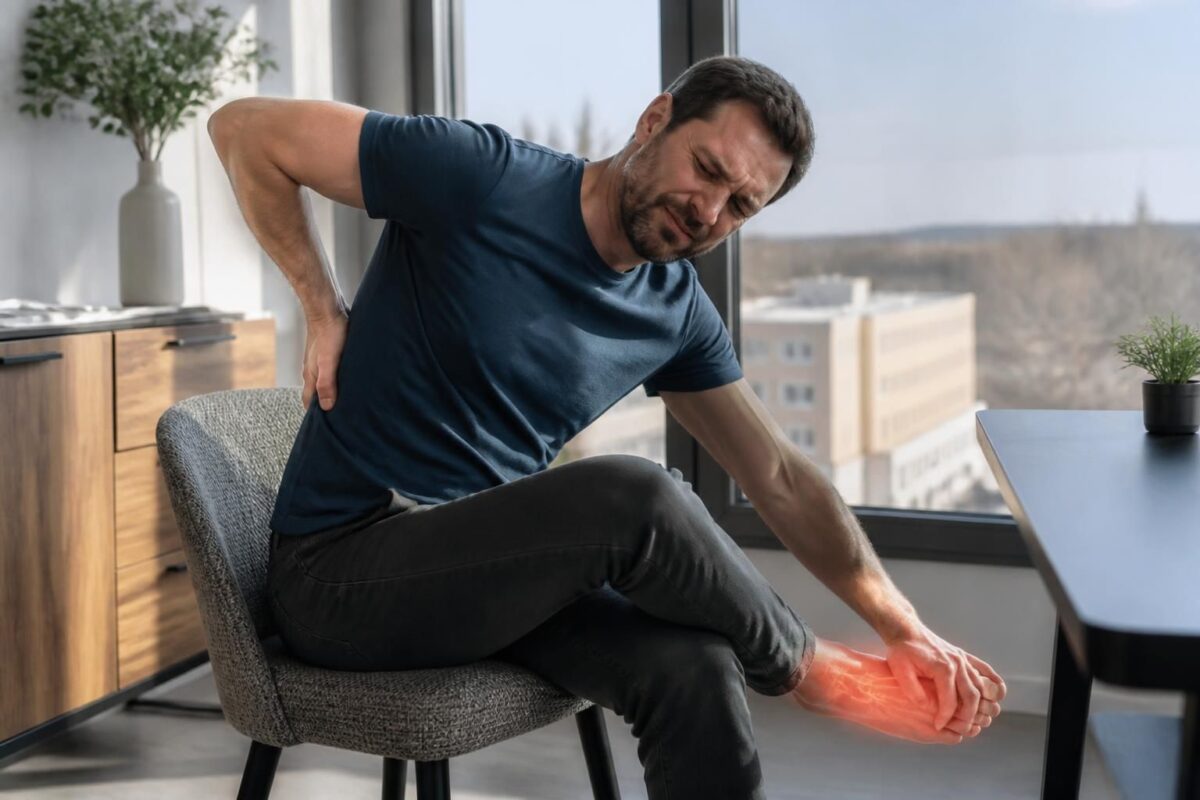
Sciatica in Terrebonne: pain while sitting with tingling in the foot
IN BRIEF In brief, sciatica in Terrebonne is characterized by a pain radiating from the buttock to the leg and foot, triggered or worsened by the sitting position and sometimes accompanied by tingling. This approach suggests sitting adjustments and regular…

Sciatica in Terrebonne: leg pain after prolonged standing
IN BRIEF In brief, Sciatica in Terrebonne is pain that starts in the lower back and radiates to the leg after a prolonged standing due to irritation or compression of the sciatic nerve. The key benefits of appropriate support include…
Treatment options and local approaches
Conservative approaches first form the foundation of treatment. Simple self-care measures (ice, relative rest, elevation) and adapted stretching and strengthening exercises can quickly reduce pain. Advanced options include targeted injections and physical therapies (physiotherapy, manual therapies) combined with a progressive activity program. The use of appropriate orthotic devices and the choice of footwear with good arch support complete the biomechanical aspect to reduce strains.

Sciatica in Terrebonne: pain and numbness after walking
IN BRIEF In brief, sciatica in Terrebonne is pain and numbness that follow the path of the sciatic nerve after walking, which may affect the buttock, the back of the thigh, the calf, and the foot. This condition is mainly…

Sciatica in Terrebonne: pain that goes down but then rises back up to the buttock
IN BRIEF The sciatica in Terrebonne is a pain that follows the path of the sciatic nerve: it starts from the lower back or buttock, descends into the thigh, calf, or foot, and can ascend back towards the buttock. This…
Adapting daily life and preventing recurrences
Incorporate regular and suitable physical activity (walking, swimming, gentle exercises), prioritize ergonomic practices at work, and avoid prolonged positions without movement. Work on strengthening the muscles of the feet and calves to improve shock absorption and stability. Quality sleep and proper body posture also help reduce pain sensitivity and prevent recurrences in Terrebonne and surroundings. If the pain persists, do not hesitate to seek specialized advice to quickly adjust your treatment plan.
| Aspect | Concise Element |
|---|---|
| Definition | Sciatica = pain radiating from the lower back to the leg and sometimes to the heel, localized in Terrebonne. |
| Common Causes | Herniated disc, lumbar stenosis, or nerve conflict explaining heel issues. |
| Key Signs | Pain along the sciatic pathway, paresthesia, and sometimes weakness of the foot. |
| Useful Exams | MRI or CT scan to confirm compression and guide treatment. |
| Non-Surgical Approaches | Active rehabilitation, adapted osteopathy, and gentle exercises. |
| Injections | Targeted support that can provide transitory relief. |
| Emergency Signs | Progressive weakness, loss of urinary control, or febrile low back pain require rapid evaluation. |
| When is Surgery Needed? | After several months of failure of conservative treatments, surgical evaluation. |
| Daily Advice | Progressive activity, regular breaks, and improved ergonomics at the workstation. |
Testimonials on Sciatica in Terrebonne: Persistent Pain in the Heel
Marie L., 43 years old – Terrebonne: “My heel pain appeared after months of pain related to sciatica. Every step was a challenge and my sleep suffered. After suitable care in Terrebonne from osteopathy professionals, I’ve regained a smooth walk and improved quality of life.”
Jean-Marc P., 52 years old – Terrebonne: “The persistent sciatica and heel pain prevented me from standing all day at work. The sessions were gradual, targeted, and focused on moving without pain. Today, I can walk for long periods again and resume my daily activities normally.”
Sophie R., 38 years old – Terrebonne: “After months of pain, I tried a holistic approach in Terrebonne. The techniques used to relieve the heel pain were gentle but effective. I’m gradually regaining my runs and outings with friends without sharp pain.”
Ahmed K., 45 years old – Terrebonne: “The heel pain was so severe that I sought solutions elsewhere. The intervention and personalized program in Terrebonne changed everything: notable decrease in pain, better stability, and gradual resumption of professional and family activities.”
Claire T., 50 years old – Terrebonne: “My painful heel was a sign of an imbalance linked to my sciatica. Thanks to an adapted osteopathic approach, I regained a more balanced posture and a pain-free walk. I’m even starting to go on short hikes on weekends.”
Lucie D., 39 years old – Terrebonne: “The persistence of heel pain related to my sciatica disrupted my daily life. After a few weeks of targeted care in Terrebonne, the symptoms significantly improved and my ability to participate in my usual activities returned.”
In the region of Terrebonne, many patients suffer from sciatica associated with persistent heel pain, severely limiting their daily gestures and quality of life. It is in this context that Dr. Sylvain Desforges, a renowned osteopath, brings his expertise. A specialist in osteopathy, naturopathy, and manual medicine, he is the founding president of TAGMED clinics and the ACMA association. His background focuses on managing chronic pain and integrating innovative practices for patient care.
His approach is based on a multidisciplinary evaluation and a deep understanding of the nerve and musculoskeletal mechanisms. He seeks to distinguish radicular manifestations related to sciatica from potential other causes of heel pain, such as local processes. The approach may include, based on evaluation, an analysis of causes such as a herniated disc, foraminal stenosis, or a conflict between a nerve root and an anatomical structure. This vigilance allows directing towards the most suitable treatments and avoiding inappropriate therapies.
In Terrebonne, Dr. Desforges prioritizes non-surgical and evidence-based options. His arsenal includes specific osteopathic techniques and motorized neurovertebral decompression interventions when relevant, as well as the use of technologies such as laser and, when necessary, the precision sensor. The goal is to address underlying causes, reduce pain, and promote an active and gradual return to activities, without systematically resorting to surgery.
The patient journey in Terrebonne begins with a detailed consultation, followed by a personalized plan that may include rehabilitation exercises, postural advice, and targeted therapies to promote muscle strengthening and range of motion. Dr. Desforges offers a comprehensive approach, where pain is considered within its bodily and daily context. The goal is to help the patient reintegrate their normal activities, improve the ergonomics of their workplace, and adopt lifestyle habits that support healing and prevent recurrences.
The results obtained are based on a progressive and individualized approach. In addition to relieving pain, the aim is to improve the function of the affected limb and restore confidence in daily movements. Thanks to his experience and network of professionals, Dr. Desforges guides his patients towards solutions tailored to their profile, prioritizing measurable and sustainable progress. His commitment is to make every movement possible and pain-free, ultimately enabling everyone to regain control of their mobility and well-being.
Quick summary: This article summarizes the challenges surrounding sciatica associated with persistent heel pain in Terrebonne, discussing possible causes, useful examinations, treatment options, and daily actions that can enhance your comfort while remaining within a context of professional and personalized care.
The presence of sciatica with heel pain in the Terrebonne area may reflect lumbar nerve irritation manifesting down to the foot, or result from local mechanisms around the heel. When pain persists beyond a few months, it is essential to approach the situation comprehensively rather than limiting oneself to the immediate effects of pain. A thorough evaluation allows for refining the diagnosis and directing towards the most suitable treatments.
For an effective approach, prioritize a multimodal evaluation that combines precise medical history, targeted physical examination, and, if necessary, appropriate imaging (MRI or CT scan) when neurological signs or therapeutic failures demand it. Useful local resources provide quick access to supplementary information on manifestations and available options, particularly on pages dedicated to heel pain and pain associated with sciatica: heel pain, Sciatica in Terrebonne: persistent pain, and acute or persistent pain.
On the therapeutic level, a chain of interventions typically progresses from the simplest to the most specialized: maintaining appropriate activity and active rehabilitation, working with an osteopath or physiotherapist to correct biomechanical imbalances and strengthen stabilizer muscles, and, if necessary, targeted treatments such as radiologically guided injections. Practical resources such as the approaches described for heel pain and associated manifestations can be consulted via the dedicated pages (e.g. articleTerrebonne). To understand the interactions between heel pain and sciatica, you can also consult additional information on pain returning after walking.
From a prevention and long-term management perspective, it is advisable to combine ergonomic measures and appropriate physical activity into your daily routine: weight control if necessary, targeted strengthening and stretching, and adopting suitable footwear with good arch support and sufficient cushioning. Local resources and practical guides, such as those explaining the effects of prolonged sitting and strategies to relieve pain when the heel is stressed, can be consulted to support your action plan in Terrebonne (awareness and practical advice, nerve irradiation).
If you seek to understand in more detail the dynamics underlying your pain and to receive personalized support in Terrebonne, do not hesitate to request a specialized consultation to precisely assess the biomechanical factors, any potential root involvement, and the best therapeutic avenues for your specific situation, including possibilities for non-surgical approaches and long-term follow-up options available in your area. For more information on treatment possibilities and indications for targeted interventions, you can consult the resources available on the websites referenced above and on the pages dedicated to Sciatica in Terrebonne.

Dr Sylvain Desforges, B.Sc., D.O., N.D., osteopath, is the founding president of TAGMED and of the ACMA association. He dedicates his practice to chronic spinal pain, low back pain and symptoms compatible with sciatica, particularly when pain radiates toward the buttock, leg, calf, foot or toes.
Through SOS Sciatique, he publishes educational content on sciatica symptoms, possible causes such as disc herniation, disc narrowing, foraminal stenosis or irritation of a lumbar nerve root, as well as non-surgical approaches that may be considered according to the evaluation. At Clinique TAGMED, care may include, depending on the case, motorized neurovertebral decompression, specific osteopathic care or precision percussion.
For an evaluation related to sciatica treatment in Montreal / Mount Royal or sciatica treatment in Terrebonne, please consult the services available at Clinique TAGMED.
Medical disclaimer
The information published on SOS Sciatique is provided for educational purposes only and does not replace a consultation, diagnosis, opinion or treatment provided by a physician or another authorized healthcare professional. The author of this article is neither a medical doctor nor a specialist in a medical specialty recognized by the Collège des médecins du Québec. The osteopathic, manual medicine or functional support approaches described on this site do not constitute medical acts and are not intended to replace medical follow-up.
Consult a physician or emergency service in cases of loss of bladder or bowel control, anesthesia in the saddle area, significant or progressive weakness in the leg or foot, fever, recent trauma, severe pain or rapid worsening of symptoms. For more details, please read our Legal Notice.