


Sciatica in Terrebonne: persistent pain in the heel
13/09/2026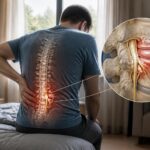
Herniated disc and foraminal stenosis: possible association
13/09/2026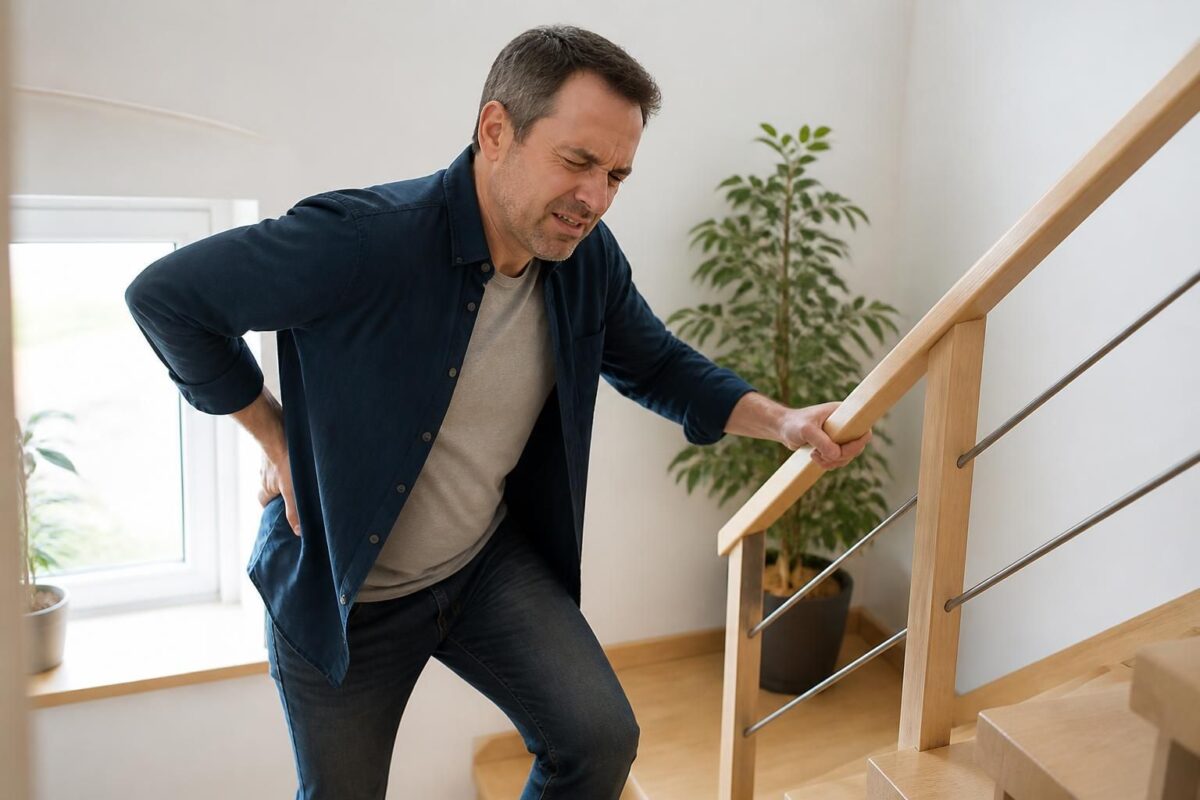
IN BRIEF
| In brief, sciatica and difficulties in climbing stairs refer to pain that follows the course of the sciatic nerve: lower back, buttock, back of the thigh, down to the calf and sometimes to the foot. The main mechanism is compression or irritation of the sciatic nerve, most often due to a herniated disc or lumbar stenosis. The benefits of appropriate treatment include rapid relief, better mobility, and a reduced risk of falls, thanks to non-surgical approaches and home modifications that limit painful lumbar flexion. Assessment helps guide the choice between physiotherapy, medications, and, if necessary, injections or surgery after consultation. Accessible in local clinics, this plan aims to allow you to climb stairs without pain and regain your daily activities. |
Sciatica is a pain that follows the course of the sciatic nerve: lower back, buttock, back of the thigh, then the calf and sometimes the foot. It often results from nerve compression, most often linked to a herniated disc.
Stairs worsen the pain: each step requires repeated lumbar flexion that increases pressure on the disc and can intensify compression. Going down, micro-shocks accentuate pain and difficulty increases quickly.
Warning signs and quick tips: radiating pain in the leg, tingling or numbness; consult urgently if you lose control of urination or bowel movements, or if significant weakness appears in the leg.
To cope better, solutions exist: adapted activity, lumbar strengthening and stretching, and if needed, medications, injections, or mobility aids to reduce lumbar strain and facilitate climbing and descending.
Sciatica can make climbing stairs difficult and painful. This article, authored by a health professional expert, outlines the causes, assessment, and treatment options. It also shows how stairlifts can preserve your mobility and safety at home without worsening the pain.
Common Causes of Difficulty in Climbing Stairs
The pain follows the course of the sciatic nerve, from the lower back to the foot. The most frequent cause is a lumbar herniated disc, which compresses the nerve root. lumbar stenosis can also cause nerve compression and can occur with age, especially after 60. The Piriformis Syndrome can also compress the sciatic nerve. Other possible factors include facet joint osteoarthritis and, rarely, a tumor or spinal infection. Pregnancy or trauma can also influence sciatic pain. For context, you can consult specialized resources on herniated discs and related conditions.
Pain may be more intense when the leg is engaged in climbing stairs, and it can radiate down to the foot in more severe cases. The further the pain radiates down the leg, the greater the nerve compression.
Assessment and Diagnosis
An accurate diagnosis relies on a clinical examination and imaging. Lumbar MRI is the reference examination to visualize a herniated disc and nerve compression. A CT scan may be used if MRI is not possible. Electromyography (EMG) assesses nerve suffering and its intensity. X-rays can rule out a fracture and evaluate spinal osteoarthritis.
In addition, specialized resources allow for a deeper understanding of symptoms and manifestations in different contexts. For targeted information, refer to resources like Sciatica in Terrebonne or numb leg sensation.
As part of the therapeutic orientation, additional information on herniated discs and associated options can be consulted on sosherniediscale.com and sosherniateddisc.com.
Management Options and Treatments
The therapeutic plan depends on the precise diagnosis. In the acute phase, the goal is to control pain and inflammation through appropriate treatments. Medical options may include anti-inflammatories and pain relievers. Corticosteroid injections may relieve pain when the nerve is in contact with the nerve root, with a high relief rate in many cases.
After the acute phase, non-surgical approaches may be considered based on the assessment. At the TAGMED Clinic, options such as motorized neurovertebral decompression or specific osteopathy are offered when relevant for the patient. A comprehensive evaluation is necessary to determine what is best in each situation. For more general information on approaches and alternatives, you can consult related resources.
Comparison of Approaches (Quick Table)
| Therapy | Relative Effectiveness (Depending on Diagnosis) |
|---|---|
| Physiotherapy | Moderate to variable; may be less effective in some cases of nerve compression |
| Motorized neurovertebral decompression | Often effective in reducing compression and improving mobility |
| Specific Osteopathy | Can be beneficial based on assessment and clinical indications |
The Stairlift: A Pain Relief Solution
For people suffering from sciatica and difficulty in climbing stairs, the stairlift can eliminate flexion-extension movements that compress the sciatic nerve. It allows for pain-free movement at home and reduces the risk of falls related to pain.
The decision to adopt this solution is made after a clinical assessment. Personalized advice and installation options can be discussed at the TAGMED Clinic.
Useful Resources and Support
To deepen your understanding of sciatica and pain in the lower body, you can consult:
- TAGMED Clinic – Sciatica and climbing stairs
- Sciatica and leg sensations – numb leg
- Sciatica in Montreal – incomplete path in Montreal
- Sciatica in Terrebonne – heel pain
- General information on decompression and non-surgical options – neurovertebral decompression
- Herniated disc – lumbar herniated disc
- Herniated disc – herniated disc
Additional resources on non-surgical options and pain mechanisms can be accessed through the resources above and through partner clinical structures.
When to seek emergency care
Seek emergency care if you experience severe signs such as loss of strength in the foot, anesthesia in the perineal area (saddle region), loss of urinary or fecal control, unbearable pain despite analgesics, or bilateral pain affecting both lower limbs. Request quick medical evaluation to rule out any serious neurological complications.
To support your care, you can contact the resources and services at TAGMED Clinic and access additional information on non-surgical approaches and stairlift installation options through the resources cited above.
Medical disclaimer: The information and advice provided on this site do not replace the opinion, diagnosis, or treatment of a healthcare professional. Please note that Dr. Sylvain Desforges, osteopath, is neither a medical doctor nor a physician and is not a specialist in a medical specialty as defined by the Collège des médecins du Québec. Manual medicine, functional medicine, and sports medicine as described on this site exclude any treatment or medical diagnosis made by a physician or specialist. Always consult your doctor for any medical questions. For more details, please read our full Legal Notice.
Symptoms and impacts when climbing stairs
- Sciatica that worsens with climbing due to repeated lumbar flexion
- Pain following the course of the sciatic nerve to the calf and foot
- Weakness or numbness in the foot that can hinder walking
- Risk of falling and need for breaks between steps
Management and practical solutions
- Moderate activity and light walking to promote recovery
- Technique and posture when climbing to limit lumbar pressure
- Home aids (stairlift) to reduce repeated flexion
- Care and treatments: physiotherapy, anti-inflammatories, or injections as needed
- Emergency care: consult quickly in case of loss of control, anesthesia of the saddle, or unbearable pain

This quick guide explains what sciatica is, why it complicates climbing stairs, how to recognize signs that require care, and what strategies to implement to relieve pain and ensure safety at home, including technical aids and non-invasive treatment options.
Understanding the link between sciatica and stairs
Sciatica refers to pain that follows the path of the sciatic nerve: it starts from the lower back, may reach the buttock, and descend along the back of the leg to the calf and sometimes the foot. It is most often caused by nerve compression or irritation, often related to a herniated disc or spinal issues. Climbing or descending stairs places significant demand on the lumbar spine: each step involves repeated lumbar flexion, increasing pressure on the disc and pain. Going down, the micro-movements and repeated shocks exacerbate the painful phenomenon.
Specific mechanical factors
The lower the pain moves towards the calf or foot, the greater the nerve compression. Stair movements promote painful thrusts and may limit daily activities if the journey remains painful.

Sciatica and pain in lying position
IN SHORT sciatica in lying position refers to pain that follows the path of the sciatic nerve and can disrupt sleep. Sleeping on your back with a cushion under your knees or on your side with a cushion between your…

Sciatica and pain during sleep
IN BRIEF Sciatica during sleep is pain that follows the path of the nerve, from the lower back to the buttock and leg, and can intensify at rest. Sleeping on the side with a pillow between the knees or on…
Warning signs and diagnosis
Certain signs necessitate urgent medical attention: loss of strength in the foot, inability to walk on heels or toes, anesthesia around the saddle, urinary or fecal disorders, unbearable pain despite analgesics. If these elements are present, consult quickly; an accurate diagnosis allows determining whether to continue non-invasive treatments or consider specialized intervention.

Sciatica and pain after a long journey
IN BRIEF Sciatica after a long trip refers to pain that can radiate from the lower back to the buttock and leg, sometimes worsened by sitting and vibrations. To limit discomfort, adjust your seat, support your back, and take regular…

Sciatica and pain after driving
IN BRIEF Sciatica after driving is pain that can radiate from the lower back down into the leg and can worsen after a journey. Prolonged sitting, vibrations, and an improperly adjusted seat can contribute to discomfort. Adjusting your seat, maintaining…
Practical adaptation and advice during acute phase
Comfort and posture during ascents
Adopt a pain-relieving position and favor gradual ascents: use the handrail, advance each foot onto a step, and avoid prolonged periods of standing. Light and regular walking (15 to 20 minutes) can promote recovery without exacerbating pain. Avoid prolonged bed rest and alternate activities with breaks.
Other useful tips
Apply local heat to relax the lumbar muscles and prefer gentle exercises after the acute phase. Depending on progress, medical treatments (anti-inflammatories, analgesics, injections if necessary) and physiotherapy to strengthen the back and improve range of motion may be proposed by your doctor.

Sciatica and pain after a day of sitting at work
IN BRIEF Sciatica after a day of sitting refers to pain that starts in the lower back or buttock and may radiate down the leg. Prolonged posture can accentuate discomfort. Regular breaks, a few minutes of walking, and an adequately…
Sciatica and pain after prolonged standing
IN BRIEF Sciatica is pain related to irritation of a nerve root, which can radiate from the lower back to the buttock and leg. Prolonged and immobile standing can promote or worsen symptoms, although it is not always the cause.…
Solutions and aids to facilitate stairs
Stairlifts and technical aids
In case of recurrent pain or relapses, the stairlift represents an effective solution: it eliminates the flexion-extension movements that compress the sciatic nerve and allows for pain-free ascent and descent at home. This aid minimizes the risks of falls related to pain and directly improves comfort during transfers between levels.
Funding and Accessibility
Financial aids can finance a significant part of this equipment, facilitating access to an appropriate and sustainable solution. Request a personalized evaluation to learn about available aids and obtain a quick quote.

Sciatica and pain after long walk
IN BRIEF sciatica after a long walk manifests as pain in the lower back or buttock that radiates down the leg, sometimes accompanied by tingling or numbness. Temporarily reduce the distance, take breaks, and resume walking gradually, without staying in…

Sciatica and pain after weight training
IN BRIEF Sciatica after weight training refers to pain that starts from the lower back or buttock and radiates down the leg, sometimes after a workout. Weight training is not always the cause or necessarily prohibited: a gradual return, a…
Sciatica and Difficulty Climbing Stairs: Comparative Table by Axis
| Analysis Axis | Impact and Concise Solutions |
|---|---|
| Definition and Path | Sciatica is pain that follows the path of the sciatic nerve; on stairs, it can limit ascent and descent. |
| Impact on Stairs | Repeated lumbar flexion and micro-shocks during descent increase pain and the risk of falling. |
| Aggressive Factors | Increases in disc pressure and nerve irritation during ascent and crossing a landing. |
| Signs of Emergency | Loss of foot strength, perineal numbness, urinary or fecal disturbances – consult emergency services. |
| Non-surgical Approaches | Physical therapy, strengthening the core, and targeted stretching to reduce pain and improve stability. |
| Aids and Adjustments | Stairlifts and grab bars reduce lumbar flexion and protect the sciatic nerve at home. |
| Diagnosis and Imaging | Lumbar MRI and EMG to confirm the cause and guide treatment. |
| Activity and Practical Advice | Stay active with moderate walking and breaks; avoid prolonged rest and adapt household tasks. |
| Financial Aids | Public aids can finance up to 70% of suitable equipment according to the available program. |
Testimonials: Sciatica and Difficulty Climbing Stairs
“Before, every flight of stairs was a nightmare due to sciatica that pulled down my back and leg. The pain blocked me on every step, and I was afraid of falling.”
“I suffered from lower back pain that radiated to my buttock and calf, making stairs insurmountable. After a precise diagnosis and an adapted program, I regained mobility that has lasted, and I can climb again without stopping.”
“Stairs had become a daily ordeal. Thanks to a targeted non-surgical approach, the sciatica has decreased, and the pain is much less present when I go up or down my steps.”
“At 70, I felt that climbing three steps meant a stabbing pain in my leg. After a few weeks, I felt lighter and more stable when climbing, which gave me back my confidence and independence.”
“I thought I would have to give up stairs. The exercises and accompanying techniques have eliminated the pain and I have regained true mobility without fearing every step.”
Biography: Sciatica and Difficulty Climbing Stairs
Dr. Sylvain Desforges, expert in osteopathy, naturopathy, and manual medicine, is the founding president of TAGMED clinics and the ACMA association. With a career dedicated to health innovation, he specializes in managing chronic pain and integrating advanced technologies such as spinal decompression, laser, and shockwave therapy. His approach is evidence-based and aims to optimize the health and well-being of his patients, especially when Sciatica complicates daily mobility and makes climbing stairs difficult.
At the core of his approach is a precise understanding of the path of the sciatic nerve and the mechanisms that cause pain, from the most common origins (such as lumbar disc herniation) to factors that worsen mobility, such as repeated spinal flexion during ascent and micro-shocks during the descent of stairs. Dr. Desforges emphasizes a comprehensive and personalized management plan that can support patients on their recovery journey while preserving their autonomy in daily activities.
The care pathway proposed by this clinician includes a rigorous assessment, with adapted imaging and neurophysiological exams to evaluate nerve suffering and determine the exact origin of the radiating pain. Lumbar MRI and, when necessary, CT scan or EMG complete the assessment to guide treatment. This diagnostic approach allows distinguishing essential causes, such as facet joint osteoarthritis or piriformis syndrome, and avoiding unnecessary treatments, while preparing tailored solutions for walking and climbing stairs.
The therapeutic options he favors combine mild pharmacology and specialized therapies. In active phases, patients may benefit from symptomatic treatment including anti-inflammatory medications and analgesics, with corticosteroid injections when the nerve root is irritated. Once the pain is controlled, physical therapy focuses on lumbar strengthening and stretching aimed at preserving spinal stability. When symptoms persist despite conservative care, discussions about surgical options are approached clearly and transparently to preserve function and mobility.
For patients whose ability to climb stairs is significantly impaired, Dr. Desforges offers pragmatic and tailored solutions. In addition to exercises and medical follow-up, technical aids or adjustments may be considered to reduce lumbar strain and prevent relapses. The goal is to eliminate mechanical pressure on the sciatic nerve and restore pain-free walking and climbing, so that everyone retains their autonomy and dignity in daily tasks.
His mission remains to provide care based on evidence and clinical experience to optimize mobility and quality of life for patients suffering from Sciatica, especially when stairs become a source of recurrent pain and functional limitation. Dr. Desforges’ work combines scientific rigor and a human approach to support each patient towards better stability and confidence in their movements.
This brief summary shows that sciatica can make it difficult to go up and down stairs, as each step imposes repeated lumbar flexion and increases pressure on the intervertebral disc, which can amplify nerve compression and pain, especially during descent where microtraumas accumulate.
Sciatica is pain that follows the path of the sciatic nerve, starting from the lower back and descending to the foot. In stairs, this pain is often exacerbated by repeated lumbar flexion and by microtraumas during descent, a phenomenon that can amplify pain and significantly limit mobility.
The main causes include a lumbar disc herniation and lumbar canal stenosis, but other factors like piriformis syndrome or joint wear can also play a role. Alarm signs to watch for: loss of strength in the foot, saddle anesthesia, or urinary/fecal disorders; these symptoms require urgent medical attention and may involve surgery in some cases.
The diagnosis relies on examinations such as lumbar MRI or CT scan to visualize a herniation or nerve compression and guide treatment. For more in-depth information, consult reliable resources on Sciatica – MSD Manual.
In acute phases, a few simple gestures can temporarily relieve discomfort: adopting a pain-relieving position (straight back, painful leg bent or in fetal position), favoring moderate walking (about 15–20 minutes), and applying local heat to relax the muscles. Appropriate medical treatments may include anti-inflammatories, analgesics, injections, and after the acute phase, physical therapy to strengthen the spine and stretch the muscles.
For individuals suffering from chronic or recurring sciatica, the stairlift appears to be an effective pain-relief solution: it eliminates lumbar bending and extending movements that cause nerve compression, improves comfort during home travel, and can prevent recurrences. Financial aid can cover up to 70% of the cost, with options like MaPrimeAdapt’, tax credit, and other assistance. To learn more about aids and options, consult dedicated resources and practical guides on challenges related to stairs and available solutions.
To go further and obtain a tailored evaluation, you can explore resources that detail the causes and options related to sciatica and stairs, as well as practical advice for managing pain and maintaining mobility: possible causes of difficulties descending stairs, risks and solutions to regain mobility, and SOS Sciatica resources covering cases of pain towards the little toe, inability to lift the foot, or pain after long journeys: pain towards the little toe and root S1, emergency or quick consultation, pain that decreases when walking. Other helpful resources address the technical aspects and treatments of sciatica and pain related to stairs: sciatica and stairs, pain after a long journey, and pain that appears after a few minutes of walking.
Get an accurate quote within 24 hours for your stairlift and regain your comfort. These assistance solutions, when tailored to your case, allow you to live pain-free and reduce the risk of falls related to pain, while facilitating your daily movements.

Dr Sylvain Desforges, B.Sc., D.O., N.D., osteopath, is the founding president of TAGMED and of the ACMA association. He dedicates his practice to chronic spinal pain, low back pain and symptoms compatible with sciatica, particularly when pain radiates toward the buttock, leg, calf, foot or toes.
Through SOS Sciatique, he publishes educational content on sciatica symptoms, possible causes such as disc herniation, disc narrowing, foraminal stenosis or irritation of a lumbar nerve root, as well as non-surgical approaches that may be considered according to the evaluation. At Clinique TAGMED, care may include, depending on the case, motorized neurovertebral decompression, specific osteopathic care or precision percussion.
For an evaluation related to sciatica treatment in Montreal / Mount Royal or sciatica treatment in Terrebonne, please consult the services available at Clinique TAGMED.
Medical disclaimer
The information published on SOS Sciatique is provided for educational purposes only and does not replace a consultation, diagnosis, opinion or treatment provided by a physician or another authorized healthcare professional. The author of this article is neither a medical doctor nor a specialist in a medical specialty recognized by the Collège des médecins du Québec. The osteopathic, manual medicine or functional support approaches described on this site do not constitute medical acts and are not intended to replace medical follow-up.
Consult a physician or emergency service in cases of loss of bladder or bowel control, anesthesia in the saddle area, significant or progressive weakness in the leg or foot, fever, recent trauma, severe pain or rapid worsening of symptoms. For more details, please read our Legal Notice.


