Sciatica in Terrebonne: muscle weakness according to the irritated nerve root
03/11/2026
IN BRIEF Recurrent sciatica refers to pain that recurs from the lower back or buttock and may extend down the leg. It can be maintained by nerve irritation, a lumbar cause, or a too-rapid return to activities. An evaluation helps clarify the likely origin, adjust efforts, and plan a gradual return to better preserve walking, sleep, and daily activities. In Montreal, a consultation can help determine the next steps based on symptoms and function. |
A recurrent sciatica can return when the cause remains active, such as nerve irritation from a disc issue, or when daily activities and positions stress the lumbar region again. A too-rapid return after a lull, long periods of sitting, and insufficient recovery can also promote relapses.
To better understand why the pain returns, it is useful to reassess its pathway, progression, and effects on walking, sleep, and strength. Significant or progressive weakness, urinary or intestinal issues, or numbness in the saddle area require urgent evaluation.
A pain that diminishes and then returns in the buttock or leg may signal that the cause has not been clarified or that the area remains sensitive to exertion. A recurrent sciatica may be related to a lumbar disc, nerve irritation, or another source of pain. The pathway of symptoms, strength, sensitivity, and limited activities help guide the evaluation. Sciatica generally describes pain that follows the path of the nerve or one of its roots. It can start from the lower back or buttock and extend down the thigh, calf, or foot. Tingling, numbness, or weakness may also occur. Symptoms can fluctuate depending on positions, exertion, and recovery. A period without pain does not always confirm that the cause is resolved. Conversely, returning pain does not automatically mean that an injury is worsening. The whole picture must be examined rather than drawing conclusions from a single symptom. A herniated disc, disc bulge, or age-related changes can sometimes irritate a nerve root. Symptoms may then appear in episodes. Pain that radiates below the knee or is accompanied by tingling may point towards a nerve component, though this alone does not suffice to confirm a diagnosis. Pain located behind the thigh may also have other causes. The hip, muscles, pelvis, or certain joints may produce symptoms that resemble sciatica. To learn more about this possibility, consult our article on pain behind the thigh and its possible connection with the sciatic nerve. Long periods of sitting, driving, handling tasks, or certain exertions can revive symptoms in some individuals. A too-rapid return to activities after an episode may also exceed the current tolerance of the back. The type of activity matters, but its duration, intensity, and recovery time are important as well. The goal is not to maintain perfect posture or avoid all movement. It is more useful to identify situations that trigger symptoms and adjust loads according to tolerance. A healthcare professional can help establish benchmarks adapted to the individual’s context. Pain in the buttock or leg is not always caused by irritation of the sciatic nerve. The examination must consider the pathway of the pain, its progression, strength, sensitivity, and the effect of activities. This approach helps avoid conclusions based solely on a medical image or an isolated movement. Some treatments or medications may reduce pain for a period without addressing all the factors that promote it. Relief is useful, but it does not alone determine if the area has regained stable tolerance to activities. Recurrences can also occur when recovery remains incomplete, exertion increases abruptly, or the management plan does not align with the likely cause. An evaluation allows you to check if symptoms, neurological signs, and functional limitations are evolving in the right direction. To understand the difference between persistent pain and repeated episodes, consult the pages dedicated to chronic sciatica and herniated disc with persistent pain. Note where the pain begins and how far it descends. Also observe its duration, the circumstances that accentuate it, and the time needed to recover after an activity. This information helps the professional to relate symptoms to daily function. A persistent or spreading loss of sensation warrants particular attention. To better understand this sign, consult our page on hernia disc and loss of sensation. The first step is to clarify the probable cause. An evaluation may include the history of symptoms, limited activities, and examinations of strength and sensitivity. Imaging is not always necessary; a physician may recommend it if it can change management or if neurological signs warrant it. Next, an appropriate plan can aim to maintain tolerated activities, temporarily adjust loads, and progressively resume important tasks. In case of suspected disc problems, avoid choosing exercises or stretches without professional advice: their relevance depends on the situation and the signs present. Osteopathy may be considered after evaluation, depending on symptoms and the professional’s skills. It does not replace a medical diagnosis and is not suitable for all situations. To better understand certain manual approaches, consult our article on osteopathic techniques and pain related to sprains. The neurovertebral decompression may be discussed in certain disc or radicular profiles. It is not suitable for everyone and does not guarantee a result. An evaluation must determine if this option is appropriate or if some other medical direction is preferable. Request an assessment if episodes become more frequent, if pain persists, or if it limits walking, sleeping, driving, or working. Consult quickly if you notice new or progressive weakness, persistent loss of sensitivity, or reduced ability to walk. A loss of control of the bladder or bowels, numbness in the saddle area, significant or rapidly progressive weakness, or a dropped foot require urgent evaluation. Fever, recent trauma, or general deterioration also warrant quick medical attention. At the TAGMED Clinic, an evaluation can help clarify the factors associated with symptoms, measure functional limitations, and determine if a conservative approach is relevant. Available care depends on the evaluation, the professionals present, and their scope of practice; a medical referral may be recommended when necessary. To learn more about evaluation and treatment options for sciatica in Montreal / Mont-Royal or sciatica treatment in Terrebonne, consult the services of the TAGMED Clinic. A consultation can help outline the next steps; it does not replace medical follow-up. Sylvain Desforges, B.Sc., D.O., N.D., Doctor of Osteopathy and Naturopath, is the founding president of TAGMED and the ACMA association. His practice focuses on chronic pain of the spine, lower back pain, and pain associated with sciatica, particularly when radiating to the buttock, leg, calf, foot, or toes. Through SOS Sciatique, he publishes educational content on the symptoms of sciatica, its possible causes, and non-surgical approaches that may be considered based on the evaluation. At the TAGMED Clinic, care may include, depending on the case and available professionals, motorized neurovertebral decompression, specific osteopathy, or precision percussion therapy. Medical disclaimer: The information and advice provided on this site do not replace the advice, diagnosis, or treatment of a healthcare professional. Please note that Sylvain Desforges, B.Sc., D.O., N.D., Doctor of osteopathy, is neither a medical doctor nor a physician, and is not a specialist in a medical specialty as defined by the Collège des médecins du Québec. Manual medicine, functional medicine, and sports medicine as described on this site exclude any medical treatment or diagnosis made by a physician or medical specialist. Always consult your doctor for any medical questions. For more details, please read our full legal notice. Consult a doctor or emergency service in case of loss of bladder or bowel control, anesthesia in the saddle area, significant or progressive weakness of the leg or foot, fever, recent trauma, severe pain, or rapid worsening. The information published on SOS Sciatique is educational and does not replace a consultation, diagnosis, opinion, or treatment performed by a physician or another authorized healthcare professional. The osteopathy, manual medicine, or functional support approaches described on this site do not constitute medical acts and are not intended to replace medical follow-up.Possible causes of recurrences
Nerve irritation related to the lumbar region
Repeated loads or too-rapid resumption
A different cause of sciatica
Why can relief be temporary?
What factors should be observed?
How to reduce the risk of a new episode?
When to request an evaluation?
Evaluation of Sciatica in Montreal or Terrebonne
About the Author
Medical Disclaimer
Sciatica and Recurring Pain: Why Does It Come Back?
Factors That Favor Relapses
- Persistent Cause: irritation of a nerve or sensitive lumbar issue.
- Repeated Loads: long periods sitting, driving, bending, or lifting.
- Too Rapid Return: sudden return to activities after a lull.
- Limited Recovery: insufficient sleep, stress, or poorly balanced activities.
Guidelines for Action
- The disappearance of pain does not always confirm complete recovery.
- Monitor its course, duration, and impact on walking, sleeping, and sitting.
- An evaluation can help specify the cause and adapt the resumption of activities.
- Consult urgently in case of significant or progressive weakness, loss of bladder or bowel control, or numbness in the saddle area.

Sciatica may ease for a few days or weeks, then reappear in the buttock and leg. These relapses do not necessarily indicate that an injury has worsened, but they deserve understanding: nerve irritation, a persistent lumbar cause, or too rapid a return to activities can maintain symptoms. To reduce recurrences, it is useful to assess the evolution of pain, strength, and function rather than just focusing on periods of respite.
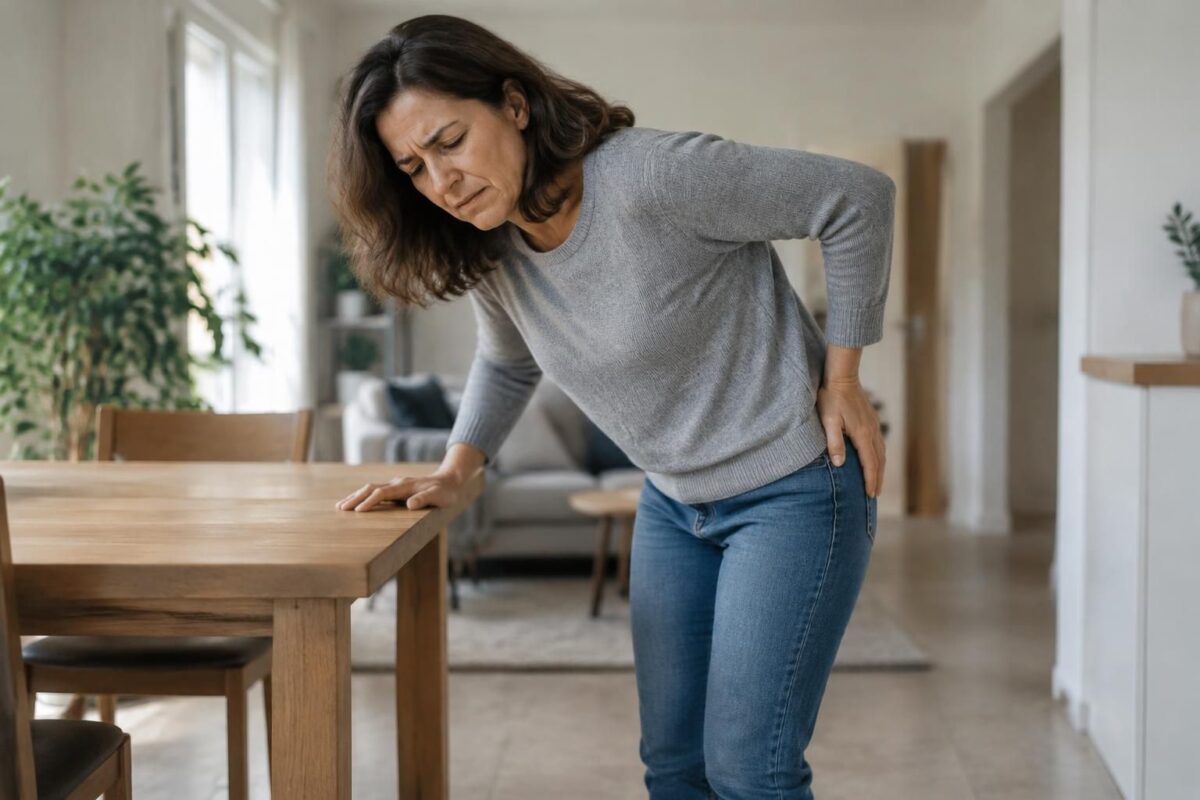
Sciatica and recurring pain episodes
IN BRIEF Recurrent sciatica is pain that follows the path of the sciatic nerve and comes in episodes. It may be linked to nerve irritation and factors such as posture or lack of movement. An evaluation helps guide management; moving…

Sciatica and pain that varies from day to day
IN BRIEF Sciatica can vary from day to day depending on fatigue, activities, and the sensitivity of the nervous system. These fluctuations are common and do not necessarily mean that the situation is worsening. A gradual return to movement and…
Why Can Pain Reappear?
A decrease in pain does not always mean that the back has regained its usual tolerance for effort. A lumbar disc, a joint, or the tissues around a nerve root may remain sensitive after an episode. Prolonged sitting, a long trip, repeated bending, or moving a load can then revive symptoms.
The origin may be disc-related, such as a herniation or bulge, but other lumbar structures, the hip, or certain muscles can also cause pain that resembles sciatica. The pathway of the pain alone is not sufficient to confirm its cause. Tingling, numbness, or weakness, especially if the pain extends below the knee, are important elements to report to a healthcare professional.

Sciatica and pain that varies with activity
IN BRIEF Sciatica is pain related to irritation of a lumbar nerve root; it can vary with movements and activities. Gentle mobility, such as walking, and adapted exercises can help maintain flexibility and strength, while prolonged rest can increase stiffness.…

Sciatica and pain that varies with posture
IN BRIEF Sciatica can vary depending on posture, as certain positions or their duration increase sensitivity of the nerve. Alternating positions, moving regularly, and adjusting sitting or standing periods can help distribute strains better and gradually improve tolerance to movement.…
Factors That Sustain Recurrences
Too Rapid a Resumption
After improvement, it is tempting to immediately return to sports, gardening, cleaning, or long days of work at the usual pace. However, a sudden increase in load can exceed the recovery capacity of the irritated area. A gradual return, adjusted according to tolerance, is generally more prudent than a sudden return to all activities.
Repeated Strains in Daily Life
Sitting for long periods, driving without breaks, bending frequently, or carrying loads always on the same side can contribute to triggering symptoms. It’s not about seeking a perfect posture, but rather varying positions, breaking up demanding tasks, and taking into account the body’s reaction during activity and the following day.
A Too General Plan
Recurrent episodes do not all have the same origin or needs. An approach that temporarily relieves without reassessing the possible cause and functional abilities may allow triggering factors to persist. Sleep, stress, prolonged inactivity, and fear of movement can also influence recovery and tolerance to effort.
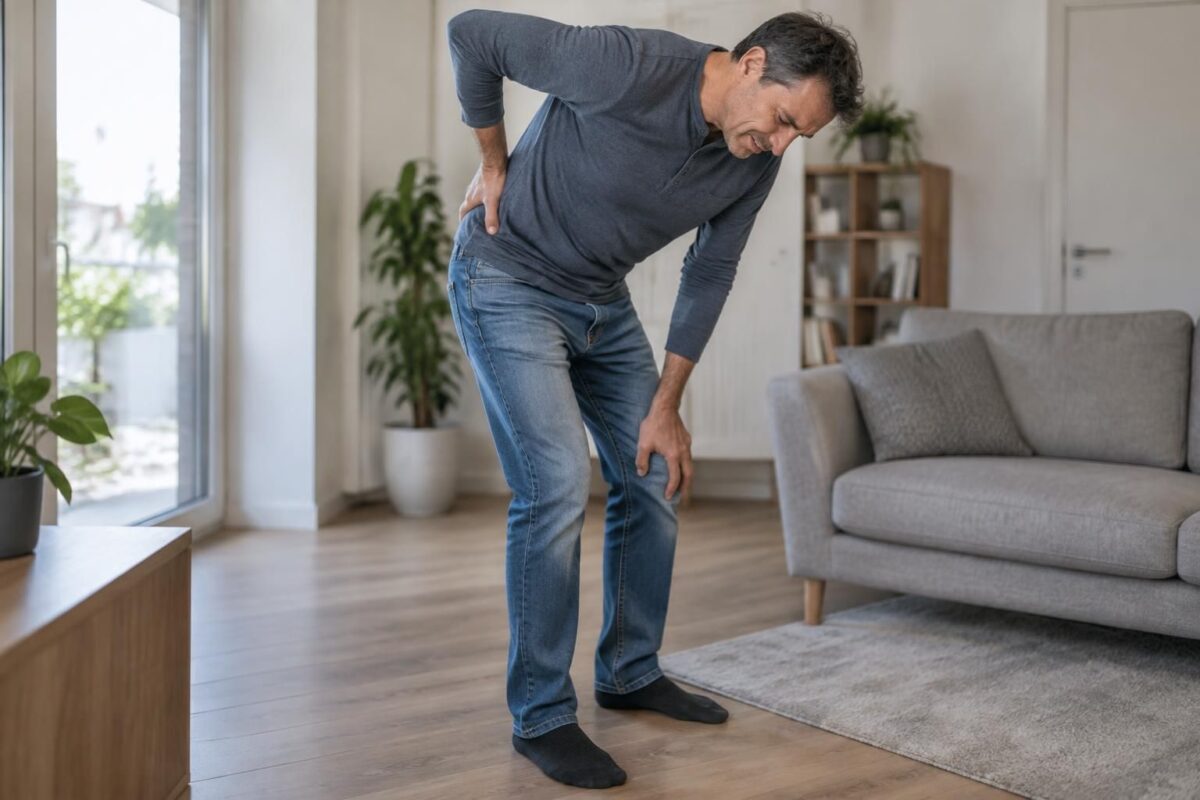
Sciatica and pain worsened in lumbar flexion
IN BRIEF Aggravated lumbar flexion sciatica refers to pain that increases when bending the lower back forward and can radiate from the buttock to the leg. This movement may exacerbate the irritation of a nerve root, for example, in the…
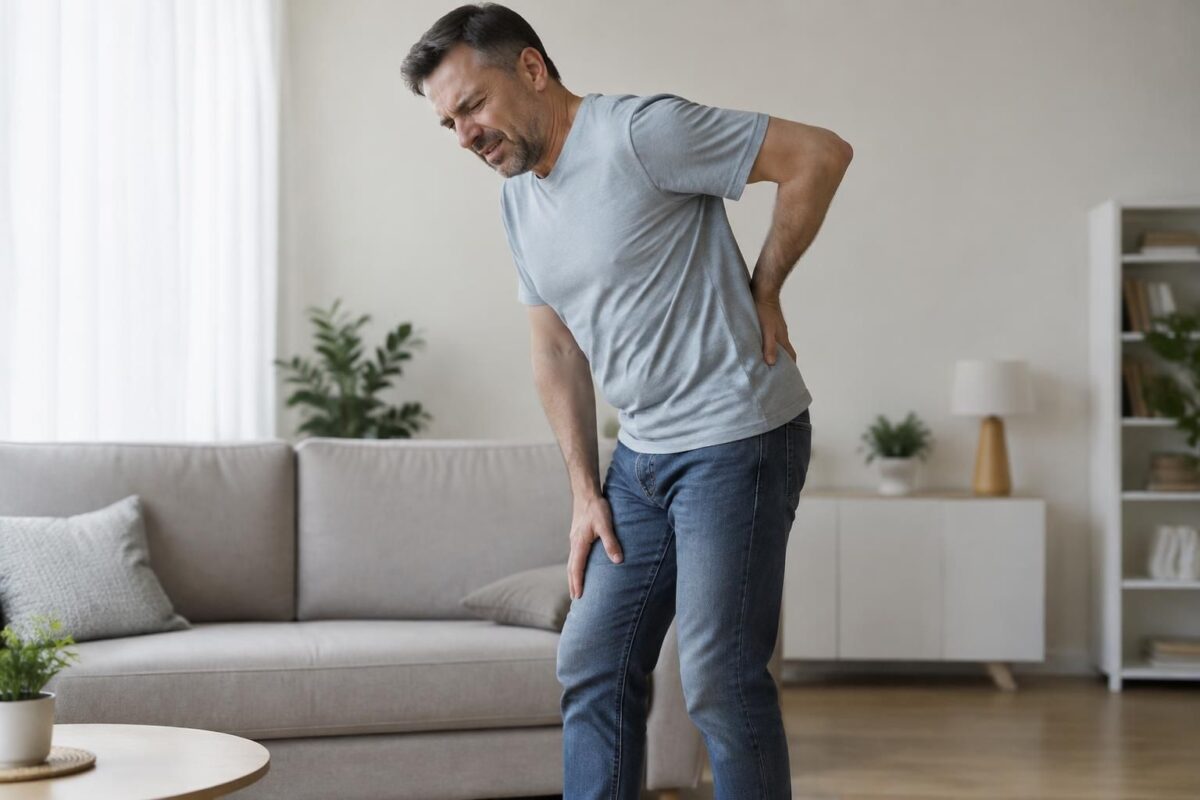
Sciatica and pain worsened in lumbar extension
IN BRIEF Lumbosacral sciatica aggravated in extension is a pain that radiates down the buttock or leg and increases when the lower back arches. This position can exacerbate irritation of a nerve root, particularly in cases of stenosis; however, it…
Recommendations for Better Managing Relapses
Note the trajectory of the pain, its duration, the activities that trigger it, and the time needed for recovery. Also monitor walking, sitting posture, sleep, strength, and sensitivity. These markers will help a professional evaluate progress and determine if the plan needs to be adjusted.
Avoid prolonged immobility unless advised otherwise by a professional. Prioritize tolerated activity and gradually increase efforts. If episodes become closer together, further limit your activities, or are accompanied by persistent numbness or loss of strength, request a reevaluation. A consultation can help clarify the probable cause and discuss appropriate options, which may include conservative management or medical referral. Motorized neurovertebral decompression may be considered in certain profiles after evaluation; it is not suitable for everyone and does not guarantee a result.

Sciatica and pain relieved by bending: possible stenosis
IN BRIEF A sciatica-type pain relieved by leaning forward may be compatible with lumbar stenosis, a narrowing that can irritate or compress nerves. Flexion may temporarily decrease pressure, but does not confirm the diagnosis or treat the cause. A professional…

Sciatica and pain worsened while sitting: consider the disc?
IN BRIEF Sciatica aggravated in a seated position may be related to irritation of a nerve root, sometimes caused by a herniated disc. Remaining seated can exacerbate pain that radiates from the buttock down the leg, but this symptom alone…
When to Consult Quickly or in an Emergency?
Consult quickly if weakness appears or progresses, if lifting the foot becomes difficult, or if walking deteriorates. New urinary or intestinal issues, loss of sensation in the saddle area, fever, recent trauma, or rapid worsening require urgent evaluation. These signs should not wait for a routine appointment.
About the Author
Sylvain Desforges, B.Sc., D.O., N.D., Doctor of Osteopathy and Naturopath, is the founding president of TAGMED and the ACMA association. His practice particularly focuses on chronic spinal pain and symptoms compatible with sciatica.
Medical Disclaimer
This content is provided for educational purposes and does not replace consultation, diagnosis, or treatment by a licensed healthcare professional. The author is neither a doctor nor a specialist in a medical specialty recognized by the Collège des médecins du Québec. Osteopathy and manual medicine approaches do not replace medical follow-up.
| Factor to Consider | Why Pain May Return |
|---|---|
| Persistent Lumbar Cause | A disc or joint that is still sensitive may irritate the nerve again. |
| Too Much Load | Strain, repeated bending, or long sitting periods can revive symptoms. |
| Too Quick a Resumption | Returning abruptly to usual activities may exceed the back’s tolerance. |
| Incomplete Recovery | A decrease in pain does not always mean function has returned. |
| General Management | Without targeted evaluation, the factor maintaining symptoms may remain unknown. |
| Insufficient or Excessive Activity | Lack of movement or overly intense efforts can reduce load tolerance. |
| Other Possible Causes | The hip, pelvis, or muscles can sometimes mimic sciatic pain. |
Sciatica and Recurring Pain: Why Do Crises Return?
The testimonials below are composite and fictional examples, created for educational purposes. They do not represent real patients or guaranteed outcomes. Pain that returns in the buttock or leg deserves to be understood in context: its trajectory, evolution, associated sensations, and its effect on daily activities.
Élise, 46 Years — “The pain returns after long days sitting.”
After a few better days, Élise notices that the stabbing pain reappears in her buttock and sometimes under her knee, especially after several hours at the office or in the car. This pattern may be compatible with nerve irritation sensitive to certain positions or prolonged load. However, this alone does not identify the cause. An evaluation must also consider the back, hip, and other factors that may produce similar pain.
Marc, 52 Years — “I feel better, so I jump back in all at once.”
When his symptoms decrease, Marc quickly resumes gardening and sports activities. A flare-up then occurs. The issue is not necessarily the activity itself: the volume, intensity, and pace of resumption may temporarily exceed tissue tolerance. A gradual progression, adjusted according to response during effort and the following day, may provide better markers.
Nadia, 61 Years — “The pain changes from one episode to another.”
Sometimes, Nadia feels primarily tension in her buttock; at other times, tingling descends toward her calf. Symptoms may vary from episode to episode, but this variation neither confirms nor excludes sciatica. A herniated disc, lumbar joint changes, or other causes may be considered based on examination. The pain trajectory, sensitivity, and strength are important elements to check.
Luc, 39 Years — “Treatments relieved me, but the symptoms returned.”
A temporary relief may be helpful without meaning that tolerance to all activities is restored. If the postures, efforts, or lack of recovery that trigger the symptoms have not been identified, a new flare-up remains possible. It is then relevant to reevaluate the situation rather than automatically repeating the same approach.
Why Can Sciatica Recur?
Pain that descends into the leg may fluctuate when the nerve or the structures around it remain irritable. A disc origin, sensitivity of the lumbar joints, repeated exposure to certain loads, or insufficient recovery may contribute to episodes. However, not all buttock or leg pain is necessarily sciatica: the hip, muscles, or other issues may sometimes produce similar symptoms.
The return of symptoms can also coincide with long periods of sitting, repeated bending, unusual exertion, or a too-quick return to daily tasks. Sleep, stress, sedentariness, and fear of movement can influence recovery and tolerance to effort. These factors do not automatically indicate the cause; rather, they help understand the context of the relapse.
To track the progression, note where the pain spreads, how long it lasts, what worsens or alleviates it, and whether walking, sleeping, working, or sitting becomes more difficult. A decrease in pain does not necessarily mean that all abilities have returned: the resumption of activities often benefits from being gradual.
What to reassess when symptoms return?
A consultation can allow for a review of the onset of symptoms, their trajectory, triggers, and their functional impact. The examination may particularly focus on strength, sensitivity, walking, and tolerated movements. Imaging is not systematic: it is considered when it can change the management or if certain signs justify it.
Depending on the assessment and needs, the plan may include a temporary adaptation of loads, maintenance of tolerated activities, and a gradual resumption. A conservative approach, specific osteopathy, or motorized neurovertebral decompression may be discussed for certain profiles, without a guarantee of outcome and at the discretion of the competent professional. A medical referral may also be indicated if symptoms are significant, persistent, or progressive.
For an evaluation of sciatica in Montreal / Mont-Royal or in Terrebonne, TAGMED Clinic can discuss available options based on your situation. An evaluation helps clarify the next steps; it does not replace a medical diagnosis when necessary.
When to seek help quickly?
Consult without delay for a routine appointment in case of loss of urinary or bowel control, numbness in the saddle or perineum area, or significant or rapidly progressive weakness in a leg or foot. Fever, recent trauma, severe pain, or rapid deterioration also warrant prompt medical evaluation.
About the author
Sylvain Desforges, B.Sc., D.O., N.D., Doctor of Osteopathy and Naturopath, is the founding president of TAGMED and the ACMA association. His practice is dedicated to chronic spinal pain, low back pain, and pain compatible with sciatica.
Through SOS Sciatique, he publishes educational content on symptoms, possible causes, and non-surgical approaches that may be considered based on evaluation. At TAGMED Clinic, available care may include, depending on the case, motorized neurovertebral decompression, specific osteopathy, or precision impactor.
Medical disclaimer
This content is provided for educational purposes. It does not replace a consultation, diagnosis, advice, or treatment by a doctor or another authorized healthcare professional. The author is neither a physician nor a specialist in a medical specialty recognized by the Collège des médecins du Québec. Osteopathy, manual medicine, and functional support approaches do not replace medical follow-up.
Recurring sciatica often follows a frustrating scenario: the pain eases, then reappears in the buttock and sometimes along the leg. It can then complicate walking, driving, sleeping, or working. A pain-free period is encouraging, but it does not always mean that the tissues have regained their usual tolerance to effort.
The term “sciatica” generally describes pain that may follow the path of the sciatic nerve, often related to the irritation of a lumbar nerve root. A herniated or bulging disc, degenerative changes, or narrowing around the nerve may contribute to symptoms. However, pain in the buttock or leg is not automatically sciatica: the hip, muscles, and other structures can produce similar signs. An evaluation is therefore preferable to a conclusion based on a single symptom or an image.
A respite does not always mean a full recovery
Pain may decrease when irritation eases or when the person modifies activities. However, the lumbar region may still be sensitive to repeated loads. A long period of sitting, a car journey, frequent bending, lifting weight, or unusual exertion can then rekindle the symptoms. This return does not prove, by itself, that an injury has worsened: it rather indicates that the context and progression must be observed.
A too-quick return also plays a role. After an improvement, it is tempting to return immediately to usual tasks, sports, or gardening. However, the ability to tolerate activity may recover more slowly than the pain. A gradual progression, adjusted according to reactions during exertion and the next day, helps avoid alternations between prolonged rest and overload.
Daily factors and targeted evaluation
Lack of sleep, stress, sedentariness, and excessive exertion can influence sensitivity and recovery. Fear of movement can also lead to a reduction in all activity; in the long run, this inactivity risks diminishing functional capacity. The goal is not to seek a perfect posture or avoid all movement, but to identify tolerated activities and resume them gradually.
To understand recurrences, it is useful to track the trajectory of pain, its duration, any numbness, and the strength of the leg or foot. Walking, seating position, sleep, and important tasks also provide concrete benchmarks. A reevaluation can help clarify if the picture indicates nerve irritation, a joint cause, or another origin, and then determine if a conservative approach, medical investigation, or specialized advice is appropriate. Motorized neurovertebral decompression may be discussed for certain profiles after evaluation; it is not suitable for everyone and does not guarantee a result.
Quickly consult a healthcare professional if episodes become more frequent, if numbness persists, or if walking and daily activities deteriorate. Significant or progressive weakness, a dropped foot, loss of urinary or bowel control, or numbness in the saddle area require urgent evaluation.
About the author
Sylvain Desforges, B.Sc., D.O., N.D., Doctor of Osteopathy and naturopath, is the founding president of TAGMED and the ACMA association. His practice focuses on chronic spinal pain and pain compatible with sciatica. He is interested in innovation in care and the integration of functional approaches and technologies such as neurovertebral decompression, laser, and shockwave therapy, depending on the situation and the qualifications of the professional involved.
Through SOS Sciatique, he publishes educational content on symptoms, possible causes, and non-surgical options to consider based on the evaluation. To learn about the services offered in Montreal / Mont-Royal or Terrebonne, check the pages dedicated to sciatica treatment in Montreal / Mont-Royal, sciatica treatment in Terrebonne, and TAGMED Clinic.
Medical warning: this information is educational and does not replace a consultation, diagnosis, or advice from an authorized health professional. The author is neither a doctor nor a specialist in a medical field recognized by the Collège des médecins du Québec. Osteopathy, manual therapy, and functional support approaches do not replace medical follow-up. In case of an emergency, consult an emergency service. For more details, read the Legal Notice.
A recurring sciatica may be related to persistent nerve irritation, an active lumbar cause, a too rapid resumption of activities, or repetitive daily stresses. The return of pain alone does not allow for identifying its cause: one must also consider its trajectory, evolution, strength and sensitivity of the leg, as well as activities that have become difficult.
Understanding why the pain returns
A relief of symptoms does not always mean that the lumbar region has regained its usual tolerance for effort. A herniated or protruded disc, for example, can be associated with calmer periods and more painful episodes. To better understand this profile, consult the information on disc protrusion and recurrent sciatica, as well as on episodes of recurrent sciatica.
Daily load also matters. Long periods of sitting, driving, repeated efforts, or a sudden return to sports can temporarily exceed the tissues’ recovery capacity. After training, it is helpful to observe the behavior of symptoms and their evolution the next day; the page focused on sciatica and pain after weight training addresses this context. Sleep and prolonged positions can also influence comfort, as explained in this guide on positions to sleep or sit with sciatica.
Evaluate changes rather than relying on a single symptom
To track evolution, note the frequency of episodes, their duration, the trajectory of the pain, and the time needed to recover after an activity. Also observe concrete benchmarks: walking distance, sitting tolerance, quality of sleep, ability to work, and presence of tingling or numbness. Buttock or leg pain is not always sciatica of lumbar origin; the hip, muscles, or other structures can sometimes produce comparable symptoms. An individualized assessment helps guide the next steps; you can consult options for guidance and management of sciatica.
If attacks are getting closer together, intensifying, or increasingly limiting activities, request a reevaluation from an authorized health professional. Depending on the findings, a conservative approach, investigation, or specialized medical advice may be considered. In Montreal or Mont-Royal, the services of TAGMED Clinic can be consulted to discuss an evaluation and available options, without presuming that a particular treatment is suitable for everyone. Additional resources on possible causes of persistent pain are provided by K. Benhamouda and on recurrent sciatica and factors to consider.
Recognizing situations that require rapid attention
A new or progressive weakness, a foot that starts to drop, loss of control of the bladder or bowel, or numbness in the saddle area warrant a urgent evaluation. Do not delay in the presence of fever, after significant trauma, or if overall condition deteriorates. To check key warning signs, consult the emergency checklist for sciatica and information from the Clinique Solutions Discales on recurrent sciatica pain.
Medical warning: this information is educational and does not replace consultation, diagnosis, or treatment by a physician or other authorized health professional. The author is neither a doctor nor a specialist in a medical field recognized by the Collège des médecins du Québec. Osteopathy, manual therapy, or functional support approaches are not medical acts and do not replace medical follow-up. For more details, see the Legal Notice of SOS Sciatique.

Sylvain Desforges, B.Sc., D.O., N.D., docteur en ostéopathie
Dr Sylvain Desforges, B.Sc., D.O., N.D., osteopath, is the founding president of TAGMED and of the ACMA association. He dedicates his practice to chronic spinal pain, low back pain and symptoms compatible with sciatica, particularly when pain radiates toward the buttock, leg, calf, foot or toes.
Through SOS Sciatique, he publishes educational content on sciatica symptoms, possible causes such as disc herniation, disc narrowing, foraminal stenosis or irritation of a lumbar nerve root, as well as non-surgical approaches that may be considered according to the evaluation. At Clinique TAGMED, care may include, depending on the case, motorized neurovertebral decompression, specific osteopathic care or precision percussion.
For an evaluation related to sciatica treatment in Montreal / Mount Royal or sciatica treatment in Terrebonne, please consult the services available at Clinique TAGMED.
Medical disclaimer
The information published on SOS Sciatique is provided for educational purposes only and does not replace a consultation, diagnosis, opinion or treatment provided by a physician or another authorized healthcare professional. The author of this article is neither a medical doctor nor a specialist in a medical specialty recognized by the Collège des médecins du Québec. The osteopathic, manual medicine or functional support approaches described on this site do not constitute medical acts and are not intended to replace medical follow-up.
Consult a physician or emergency service in cases of loss of bladder or bowel control, anesthesia in the saddle area, significant or progressive weakness in the leg or foot, fever, recent trauma, severe pain or rapid worsening of symptoms. For more details, please read our Legal Notice.