Osteopathy and chronic shoulder pain: a natural approach
27/06/2026
Why osteopathy is essential for a good quality of life
27/06/2026
In short
| In short, the Osteopathic techniques To treat the Sprain pain offer a Global approach which reduces pain, restores mobility and prevents recurrences. Definition: Mobilizations sweet, fascial work and improvement of the proprioception to rebalance the ankle and the body. Advantages: pain reduction and inflammation, rapid recovery of amplitude, reduction of postural compensation. Operation: Approach personalized which acts on tissues, nerves and posture, promotes circulation and coordination, and is part of an approach multidisciplinary. |
Summary – the Osteopathic techniques To treat sprain pain is based on a Global approach who aims pain, mobility and stability. The osteopath evaluates the Postural compensation and use Sweet mobilizations, fascial techniques and lymphatic drainage To reduce edema and promote healing. of Myotensive techniques and exercises proprioception restore the movement and prevent recurrences, associating if necessary with the Physiotherapy rehabilitation To strengthen articulatory stability and relearn secure motor patterns.
Quick summary: This article presents the osteopathic techniques used to treat sprain pain. It describes how osteopathy acts on mobility, adhesions and proprioception. It highlights a holistic approach that aims to reduce pain and recurrences, while taking into account bodily compensation and long-term follow-up.
Global approach and objectives
Osteopathy considers the extent of the body. The objective is to restore joint mobility and neuromuscular coordination. The practitioner evaluates postural chains, tensions and compensations that follow a sprain. This approach aims to prevent recurrences and improve the overall function.
Soft mobilizations and joint manipulations
Soft and progressive mobilizations free the blockages without forcing. Low amplitude and high velocity manipulations are used in the subacute or chronic phase when the joint has persistent restrictions. These actions help restore amplitude and reduce pain. The techniques are adapted to each patient and the severity of the sprain.
Fascial and tissue techniques
Fascial tensions can extend beyond the injured joint. Fascial and tissue approaches release tension, facilitate movement and improve local circulation. This helps to reduce adhesions and optimize ligament tissue recovery.
Lymphatic drainage and vascularization
Manual drainage promotes the evacuation of liquids and stimulates the vascularization of tissues. Better circulation helps to reduce edema and bring the necessary nutrients for ligament repair. These techniques support more homogeneous and less adherent healing.
Proprioception and stability
Proprioception is essential to prevent recurrences. The osteopath evaluates and restores coordination between the perception of the position of the joint and the movements. The restoration of proprioception limits risk taking during daily and sporting activities.
Overall assessment and monitoring
Evaluation is not limited to the ankle. The practitioner examines body chains that can influence support and posture. Accurate follow-up allows you to adjust the gestures and coordinate care with other health professionals when necessary.
To deepen osteopathic techniques, you can consult dedicated resources on techniques and their practical application: Osteopathic techniques, Osteopathy and osteoarthritis, Injury prevention in athletes, Well-being and pain reduction, Arthritis and quality of life.
In addition, general resources on osteopathic techniques are available on Why osteopathy is an ally of patients with osteoarthritis and on Osteopathy and active life without pain.
In addition, additional resources describe the techniques and their ethos, in particular the portal Osteopathic techniques and other reference articles on global osteopathic practice.
Devices and practical advice remain to be discussed with your practitioner during the consultation, in particular when existing medical history or specific conditions come into play.
To learn more about the events and general approaches to sprains, see the resources associated with ACMA and the College of Canadian Osteopaths as part of professional and ethical practice.
NOTE: Osteopathy is a complementary practice and can be integrated with other care, as appropriate, and in coordination with the attending physician and the physiotherapist when necessary.
institutional reference for training in osteopathy Used for the formal framework: NUMSS, NAO, National University of Medical Sciences, National Academy of Osteopathy.
Medical disclaimer: The information and advice provided on this site does not replace the advice, diagnosis or treatment of a healthcare professional. Please note that Dr. Sylvain Desforges osteopath is neither a doctor of medicine nor a doctor, and is not a specialist in a medical specialty as defined by the Collège des Médecins du Québec. Manual medicine, functional medicine and sports medicine as described on this site exclude any medical treatment or diagnosis made by a doctor or specialist doctor. Always consult your doctor for any medical questions. For more details, please read our full legal notice.
- Reduction of pain and inflammation : gentle mobilizations and lymphatic drainage
- Improving mobility : progressive joint mobilization
- Release of adhesions : Fascial and tissue techniques
- Restoration of proprioception : Neuromuscular and Proprioceptive Exercises
- Biomechanical rebalancing : Basin work and alignment
- compensation prevention : Postural correction and gesture guidance
- Drainage and vascularization : Improved tissue perfusion
- Target reinforcement : Peroneus and calves
- Progressive protocol : mild acute phase, then subacute and chronic
- Functional rehabilitation : Proprioception on unstable surfaces
- Multidisciplinary collaboration : Complementarity with physiotherapy
- Sports preparation : Technical and material adaptation to prevent recurrences

This article presents the main recommendations osteopathic To treat the Sprain pain, focusing on a holistic and progressive approach. He details the Osteopathic techniques Used, their implementation according to the healing phases, and advice to prevent recurrences through proprioception and muscle strengthening. The goal is to ease pain, restore mobility and correct postural compensation that leads to imbalances sustainably.
Mobilizations and joint techniques
The engagement Soft are the first approach to recover the amplitude and reduce tensions around the sprain. The osteopath adapts the intensity and duration of the movements according to the pain and the stage of healing, avoiding any overpressure during the acute phase. These techniques facilitate blood and lymphatic circulation, favoring a faster disappearance of edema and decreasing residual stiffness.
In practice, the Joint techniques Target mechanical blocks and restrictions that limit movement. When the pain allows, progressive and targeted mobilizations gradually restore the alignment and coordination of lumbar structures, low blades and ankles. The objective is to bring the joint to a normal function while respecting the patient’s comfort thresholds.

How osteopathy improves the quality of life of active people
In short In short, theosteopathy is a global approach that Optimizes mobility and the function of the body of ACTIVE PEOPLE, for a better quality of life. It helps prevent injury and reduce Musculoskeletal pain While promoting the Sports recovery.…

Osteopathy and sports recovery: prepare the body for lasting performance
In short In short, Osteopathy and Sports recovery is one Global manual approach that sustainably prepares the body for the effort by restoring mobility and circulation After the effort. It is a discipline that acts on the sinews, the joints,…
Myotensive techniques and tissue approaches
Myotensive Techniques (Muscle Energy Techniques)
The Myotensive techniques Request deliberately controlled muscle contractions followed by a release guided by the osteopath. This alternation promotes the decluttering of muscle tension, restores the balance of postural chains and improves neuromuscular synchronization around the injured joint. They are particularly useful when the protective muscles still oppose movement.
Fascial and tissue approaches
THE METHODS fasciales and tissue endeavor to free the distal and local tensions that contribute to the dysfunction. Gently, they release adhesions and promote better mobility of the surrounding tissues. Fascial work contributes to the evacuation of post-traumatic tensions and supports the restoration of a fluid movement during daily and sporting activities.
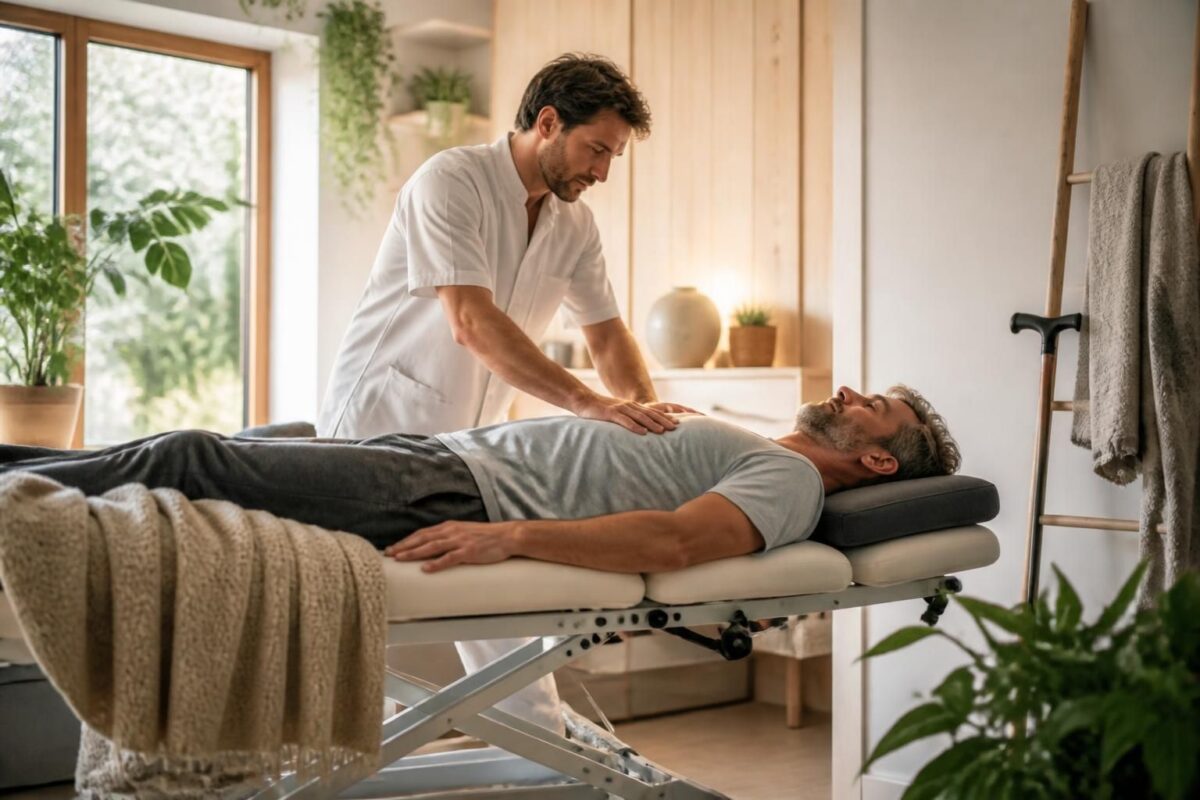
Why Osteopathy Is Essential For Recovery People
In short In short, Osteopathy in convalescence is an approach manual and holistic which helps to accelerate the recovery by restoring The balance, the mobility and a good circulation fabrics. it contributes to Reduce the pain, support the Back to…

Osteopathic manipulations to strengthen post-traumatic muscles
In short In short, Osteopathic manipulations for Strengthen post-traumatic muscles constitute a gentle manual approach aimed at restoring the mobility, reduce the pain and facilitate the Functional rehabilitation After a injury. What is Is it? A series of precise gestures…
Drainage, vascularization and healing
The lymphatic drainage And the associated techniques stimulate vascularization and dissociate edematous areas. This circulatory support accelerates the resorption of inflammatory fluids and helps reduce pain. In addition, the work on the fascias and the vascular network helps to prevent adhesions that could sustainably limit the extension and strength of the ligaments.
The healing Ligaments benefits from a balancing between mobility and adapted rest. The osteopath guides the body towards a progressive reconstruction of the fibers, while minimizing the risk of excessive fibrosis. This careful monitoring supports the return to normal activity and reduces the risk of recurrence, especially in athletes.

Osteopathy and prevention of work-related musculoskeletal disorders
In short theosteopathy is one Manual approach that restores body balance and prevents MSD related to work. Its advantages: reduction of tension, improvement of mobility and prevention of chronic pain. She is preventive and healing, suitable for office and trades…

The benefits of osteopathy to treat muscle imbalances
In short theosteopathy is a manual approach to restore themuscle harmony and postural considering the body as a whole. Its main benefits include the reduction of aches and tensions, the improvement of the mobility and from the posture, and prevention…
Proprioception and functional rehabilitation
The proprioception And balance are at the heart of relapse prevention. After the initial phases, appropriate progressive exercises help restore neuromuscular coordination and improve joint stability. The osteopath can offer guided exercises and coordinate their integration with physiotherapy to optimize functional recovery.
The strengthening Targeted stabilizers and work on unstable surfaces complete the process, so that the patient finds a fluid and safe gait. An appropriate conduct of sports and daily activities makes it possible to avoid movements that could promote recurrence and to quickly reintegrate the usual gestures.
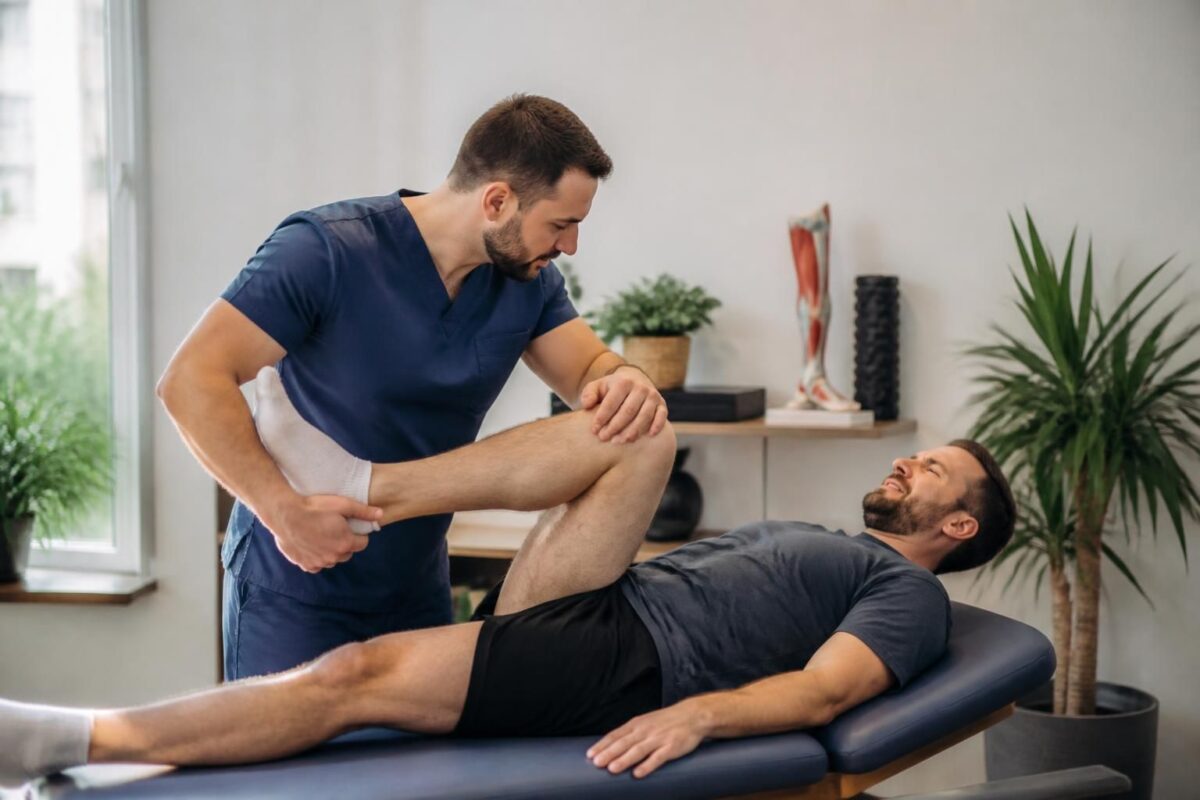
Osteopathy and chronic leg pain: regaining an optimal quality of life
In short In short, Osteopathy is one Global manual approach aimed at reducing Chronic leg pain and improve the quality of life. What is it? Non-drug therapy using the hands to identify restrictions and treat lesional chains. How does it…
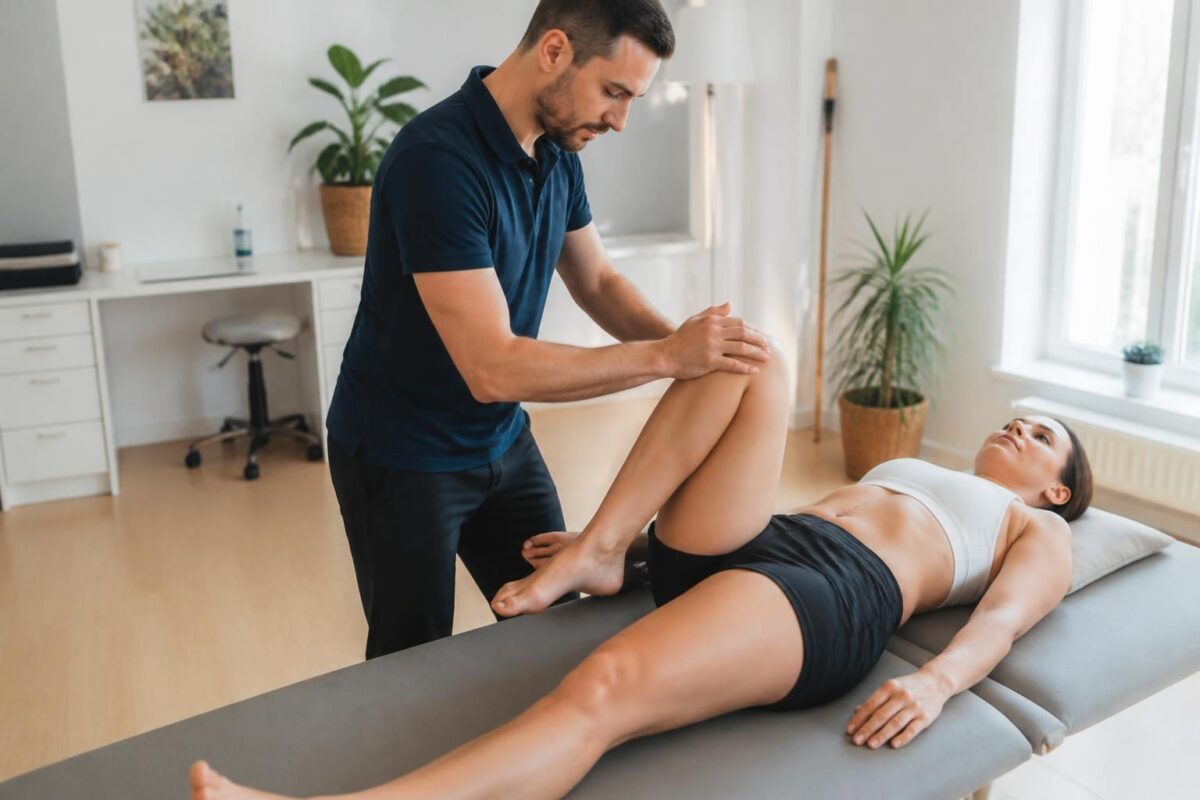
How osteopathy supports recovery after complex surgery
In short In short, Post-operative osteopathy is an approach fresh which supports the recovery After a Complex surgery. It helps to reduce the pain and the fatigue, improves the mobility and accelerates the healing thanks to a better vascularization and…
Osteopathic techniques to treat sprain pain
| Osteopathic technique | Concise effect or profit |
|---|---|
| Sweet mobilizations | gradually restore Amplitude, improves the circulation and decreases pain. |
| Myotensive techniques | release tension muscular and realign the segments articular. |
| Fascial and tissue techniques | relax the fascias and release grips to win mobility. |
| Manual lymphatic drainage | Eliminate theedema and accelerates waste resorption inflammatory. |
| Targeted joint mobilization | restore the slips joints and improve the Functional mobility. |
| Proprioception and neuromuscular rehabilitation | Restore it coordination and reduces the Risk of recurrence. |
| Global Postural Rebalancing | corrects imbalances basin and from the column to prevent compensation. |
| Education and exercises at home | integrate Simple exercises To support the stability and the recovery. |
Testimonials: osteopathic techniques and pain related to sprains
Marie, 34, suffered from a sprained ankle that constantly came back and greatly limited her sports sessions. thanks to Sweet mobilizations targeted and a lymphatic drainage, she found a Smooth mobility and decreased pain in a few weeks. She says that osteopathy has also helped prevent recurrences by working on Postural compensation and proprioception.
Thomas, 28, suffered a sprain during a football match and saw his pains return after each recovery. Osteopathic intervention favored a Functional rehabilitation including Proprioceptions And some Biomechanical rebalancing. After a few sessions, he regained lasting stability and was able to resume his training without apprehension, avoiding the gestures that triggered the pain.
Claire, 49, injured her wrist during a fall and suffered for a long time from diffuse pain and stiffness in the morning. osteopathic treatment mixed Tissue techniques And some Progressive mobilizations to restore amplitude and coordination. She underlines the importance of working on deep fabrics and the personalized support that helped her find a Normal functionality.
Jeanne, 62, suffered from an old sprain that had left grips and a ligament fibrosis. By working on the entire postural chain and releasing fasciae tensions, the osteopath has made it possible to revitalize its ligaments and improve its stability. She now feels less pain and can resume her daily activities without limitation.
Lucas, 21, an athlete, is faced with recurrent sprains that compromised his performance. Osteopathic follow-up focused on a Sports prevention and an Progressive proprioception in connection with the physiotherapist. He found a marked reduction in recurrences, an improvement in his balance and a better stride during competitions.
Sophie, 37, experienced an ankle sprain during a hike and was impressed by the effectiveness of a Overall treatment which combines joint mobility, respiratory work and postural readjustment. After 3 sessions, she describes a rapid pain reduction, better stability and the willingness to maintain a program of proprioception exercises to avoid relapses in the future.
Biography and approach of osteopathic techniques for sprain pain
Dr Sylvain Desforges is a reference in the field of osteopathy, naturopathy and manual medicine. Founding president of TagMed and the ACMA association, he leads a practice focused on innovation in health care and chronic pain management, in particular those related to sprains. His journey is based on a combination of manual know-how, scientific rigor and personalized support that places the patient at the heart of each therapeutic decision.
When he tackles a sprain, his approach is global and progressive. It starts with a Postural assessment and a detailed assessment of the injured joint as well as muscle and joint chains that can be put in tension in response to the injury. The objective is to prevent the sequelae and to avoid compensation mechanisms which, in the long term, can lead to chronic instability or referral pain. The practitioner favors Sweet mobilizations and techniques myotensive To release sensitive areas without aggravating the nascent inflammation.
The osteopathic techniques used under its supervision aim to restore mobility while preventing fibrous adhesions. of Fascial techniques and delicate tissue release the tensions that form around the ligaments and protective muscles. This approach enables to restore a functional range of motion and to improve the Blood and lymphatic circulation Around the injured joint, promoting faster resorption of edema and more harmonious healing.
At the heart of his practice, the proprioception and the engine balance occupy a central place. Dr. Desforges guides his patients in proprioceptive rehabilitation exercises and targeted reinforcement of the stabilizing muscles (peroneus, triceps sural, etc.), in order to prevent recurrences and to promote a safe resumption of daily and sporting activities. He favors an intervention adapted to each stage of the injury, by closely coordinating osteopathic care with physiotherapy protocols when relevant.
In its practice, technological advances complement manual gestures. the integration of technologies such as spinal decompression, treatments with laser And shock waves are part of a evidence-based approach to optimize tissue recovery, reduce inflammation and accelerate re-motion. These tools make it possible to accentuate the effects of osteopathic manipulations and to provide additional options when the pain persists or when mobility is compromised.
The therapeutic journey proposed by Dr Desforges is based on multidisciplinary collaboration and active listening to the patient’s needs. Each care plan is based on clinical data and a holistic vision of the body, where the ankle is not treated in isolation but in its dynamics with the foot, leg, pelvis and spine. This global approach aims to restore not only joint function, but also the stability, confidence and quality of life of people suffering from sprains, whether recent or chronic.
This text shows how the Osteopathic techniques treat sprain pain by improving the mobility, the circulation and the proprioception, while correcting postural compensation to prevent recurrences and restore lasting joint stability.
The Sweet mobilizations and the Fascial techniques make it possible to lift the adhesions and to restore a amplitude of normal movement, while promoting a lymphatic drainage Effective that accelerates edema resorption and tissue healing.
The targeted work on Stabilizing muscles and the proprioception Relearns to the nervous system the position and control of the joint, thus reducing the risk of recurrence and functional instability.
An approach overall Is essential: the osteopath assesses tensions and compensations throughout the postural chain (ankle, knee, hip, spine) and offers biomechanical adjustments, lifestyle advice and appropriate exercises. To deepen, discover CE#ATFP_CLOSE_TRANSLATE_SPAN# Resource.
The Therapeutic window And appropriate rehabilitation, often in collaboration with the physiotherapist, makes it possible to avoid fibrosis and to restore stability durably. Depending on the severity, 1 to 3 sessions may be enough, with progression of exercises and postural measures to consolidate the gains.
To enrich your understanding, consult the following resources that present the Benefits#ATFP_CLOSE_TRANSLATE_SPAN# and Techniques, the Techniques#ATFP_CLOSE_TRANSLATE_SPAN# used, and the Benefits#ATFP_CLOSE_TRANSLATE_SPAN# for optimal recovery.

Dr Sylvain Desforges, B.Sc., D.O., N.D., osteopath, is the founding president of TAGMED and of the ACMA association. He dedicates his practice to chronic spinal pain, low back pain and symptoms compatible with sciatica, particularly when pain radiates toward the buttock, leg, calf, foot or toes.
Through SOS Sciatique, he publishes educational content on sciatica symptoms, possible causes such as disc herniation, disc narrowing, foraminal stenosis or irritation of a lumbar nerve root, as well as non-surgical approaches that may be considered according to the evaluation. At Clinique TAGMED, care may include, depending on the case, motorized neurovertebral decompression, specific osteopathic care or precision percussion.
For an evaluation related to sciatica treatment in Montreal / Mount Royal or sciatica treatment in Terrebonne, please consult the services available at Clinique TAGMED.
Medical disclaimer
The information published on SOS Sciatique is provided for educational purposes only and does not replace a consultation, diagnosis, opinion or treatment provided by a physician or another authorized healthcare professional. The author of this article is neither a medical doctor nor a specialist in a medical specialty recognized by the Collège des médecins du Québec. The osteopathic, manual medicine or functional support approaches described on this site do not constitute medical acts and are not intended to replace medical follow-up.
Consult a physician or emergency service in cases of loss of bladder or bowel control, anesthesia in the saddle area, significant or progressive weakness in the leg or foot, fever, recent trauma, severe pain or rapid worsening of symptoms. For more details, please read our Legal Notice.