Osteopathic techniques to reduce elbow pain
27/06/2026
How Osteopathy Helps Enhance Mobility After Surgery
27/06/2026
In short
| In short, theosteopathy and the Prevention of sports injuries constitute a global approach that aims to Optimize mobility, correct the Postural imbalances and release the Muscle tensions To prevent injuries and improve the performance. In Montreal, this service is particularly recommended for athletes wishing to reduce sprains and tendinopathies and accelerate recovery after exercise. Operation is based on a Postural evaluation fast, mobilization techniques and appropriate relaxation, and a Regular follow-up, in order to maintain the body ready for effort and optimize recovery. |
In short, theosteopathy is one preventive approach Effective for athletes. thanks to a Overall assessment of the body, it identifies the Postural imbalances, tensions and mobility restrictions. By working on the Joint mobility and the muscle relaxation, it reduces the risk of Sports injuries and improves the performance. regular consultations and preparation Pre-competition support a recovery Faster and a more sustainable sports career.
This article presents how Osteopathy contributes to the prevention injuries in athletes. By evaluating the posture, the mobility And muscle tension, the practitioner identifies and corrects imbalances. This approach aims to improve performance, reduce the risk of injury and facilitate recovery after exercise, through care non-invasive and centered on the body as a whole.
Assessment and prevention of imbalances
The first step is a Postural evaluation deep. The goal is to identify areas of tension and compensations that predict injuries. This analysis covers the muscle chains and joints to target the necessary corrections and avoid compensatory patterns that lead to pain.
Mobility, flexibility and relaxation
The Joint mobility and the muscle relaxation are key axes. By improving the range of motion and reducing tension, the body can support the repetitive gestures of sport and reduce the risk of tension and microtrauma.
Osteopathic techniques and holistic approach
Osteopaths use Manual techniques adapted, such as joint manipulations and myofascial mobilizations. These interventions act on the overall function of the body, improve circulation and promote better coordination of movement, without resorting to invasive treatments.
Pre-competition preparation and follow-up
Before a competition, a session can help eliminate tension, optimize posture and prepare the locomotor system for effort. The Regular follow-up Allows you to adjust care according to the evolution of training and individual needs, while strengthening the prevention of injuries.
Integration and resources
To deepen, you can consult relevant resources in the following areas: The advantages of osteopathy to prevent recurrent sports pain, The importance of regular osteopathy consultations, and Tagmed Clinic. Other useful resources include neurovertebral decompression and Osteopathy for chronic muscle pain.
Practitioners can also refer to recognized training such as NUMSS, NAO, National University of Medical Sciences and National Academy of osteopathy For the bases and the evolution of the field, without citing other institutions.
“Medical disclaimer: The information and advice provided on this site does not replace the health professional’s benefit, diagnosis or treatment. Please note that Dr. Sylvain Desforges osteopath is neither a doctor of medicine nor a doctor, and is not a specialist in a medical specialty as defined by the Collège des Médecins du Québec. Manual medicine, functional medicine and sports medicine as described on this site exclude any medical treatment or diagnosis made by a doctor or specialist doctor. Always consult your doctor for any medical questions. For more details, please read our full legal notice. »
- Postural evaluation : Identification of imbalances and constraints.
- Correction and alignment : Rebalancing of voltages and compensations.
- Joint mobility : Increased amplitude and fluidity of gestures.
- muscle relaxation : Voltage reduction and better recovery.
- Pre-competition preparation : Quick adjustment of the body before exercise.
- Targeted prevention : Personalized plan for each athlete.
- Optimized recovery : circulation stimulation and waste disposal.
- Regular follow-up : Early detection of emerging imbalances.
- Improved performance : Better posture and effectiveness of movements.
- Complementary approach : integrates with other non-invasive methods.

This article presents how theosteopathy can play a key role in the Injury prevention in athletes, by combining a Overall assessment, the correction of Postural imbalances, improving the mobility and preventive strategies adapted to each discipline. The objective is to optimize the balance of the body, to improve performance and to promote effective recovery after exercise.
Role of osteopathy in injury prevention
Osteopathic practice aims to prevent musculoskeletal trauma by acting on the musculo-articular chain as a whole. By identifying and correcting the malfunctions of the body, it makes it possible to limit excessive stress on certain areas and to strengthen functional harmony. This approach holistic Promotes better coordination of technical gestures, reduced tension and smoother recovery between workouts.

How osteopathy improves the quality of life of active people
In short In short, theosteopathy is a global approach that Optimizes mobility and the function of the body of ACTIVE PEOPLE, for a better quality of life. It helps prevent injury and reduce Musculoskeletal pain While promoting the Sports recovery.…
Evaluation and personalized plan
Postural and biomechanical evaluation
The study begins with an observation and in-depth examination of posture, movements and areas of tension. early detection of Postural imbalances Allows you to anticipate risk areas and adjust the care plan accordingly, to prevent the development of repetitive pain or injury.
Preventive treatment plan
Based on the results of the evaluation, a program preventive is developed. It combines manual techniques and targeted exercises to restore mobility, ease tensions and correct harmful movement patterns. The goal is to obtain an optimal and lasting body function, adapted to the athlete’s level and objectives.

Osteopathy and sports recovery: prepare the body for lasting performance
In short In short, Osteopathy and Sports recovery is one Global manual approach that sustainably prepares the body for the effort by restoring mobility and circulation After the effort. It is a discipline that acts on the sinews, the joints,…
Mobility and relaxation: keys to prevention
A Joint mobility sufficient and a muscle relaxation Effective are essential to limit microtraumas due to repeated movements. Osteopathic techniques aim to increase the range of motion and release accumulated tension, which improves technical performance and resistance to injury.
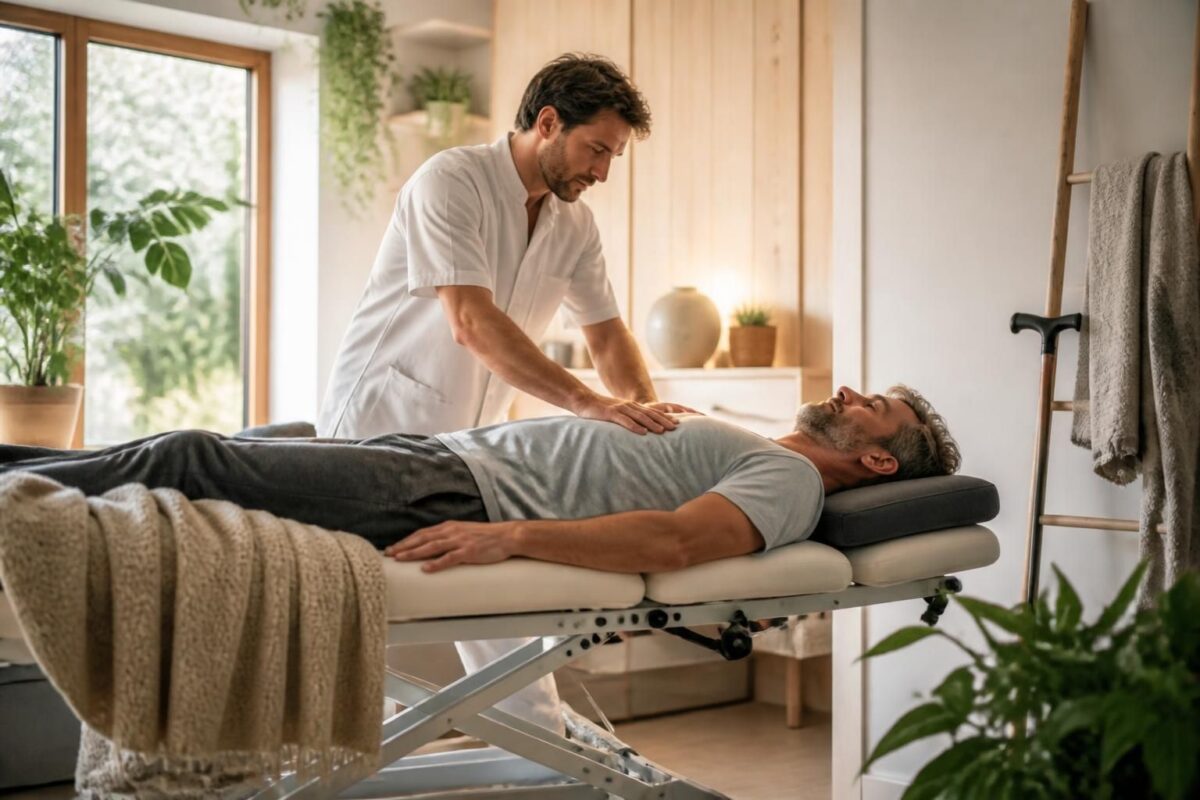
Why Osteopathy Is Essential For Recovery People
In short In short, Osteopathy in convalescence is an approach manual and holistic which helps to accelerate the recovery by restoring The balance, the mobility and a good circulation fabrics. it contributes to Reduce the pain, support the Back to…
Integration in training and recovery
Regular consultations make it possible to monitor the condition of the body and to intervene quickly on emerging tensions. In addition, the pre-competition preparation can include a specific session to optimize posture and eliminate tension before exercise, while preserving concentration and performance. Osteo-gymnastics exercises are often recommended to strengthen fragile muscles and maintain body balance between sessions.

Osteopathic manipulations to strengthen post-traumatic muscles
In short In short, Osteopathic manipulations for Strengthen post-traumatic muscles constitute a gentle manual approach aimed at restoring the mobility, reduce the pain and facilitate the Functional rehabilitation After a injury. What is Is it? A series of precise gestures…
Techniques used and safety
the approaches used combine Joint mobilizations, targeted stretching and techniques of Myofascial release to improve circulation and reduce tensions. This practice non-invasive aims to support the body without drugs, in harmony with other sports disciplines. It is important to remember that osteopathy completes the training and does not replace the advice of a doctor in the event of an acute injury or unusual symptoms.

Osteopathy and prevention of work-related musculoskeletal disorders
In short theosteopathy is one Manual approach that restores body balance and prevents MSD related to work. Its advantages: reduction of tension, improvement of mobility and prevention of chronic pain. She is preventive and healing, suitable for office and trades…
Limitations and practical advice
To make the most of preventive osteopathy, it is advisable to include regular sessions in the training program, and to plan a consultation before periods of increased intensity or competition. At the same time, adopting a healthy lifestyle, appropriate hydration and a balanced diet support recovery efforts and overall performance.
| Aspect | Concise impact |
|---|---|
| Screening for postural imbalances | Rapid identification and injury prevention. |
| Joint mobility | Increased amplitude and stress reduction. |
| muscle relaxation | Decreased tensions and better mobility. |
| adapted osteopathic techniques | Functional improvement and risk reduction. |
| Pre-competition preparation | Prepares and optimizes performance. |
| Regular preventive follow-up | Regular maintenance and early detection. |
| Post-effort recovery | Accelerated recovery and pain reduction. |
| Compatibility and synergy | Completes training and optimizes results. |

The benefits of osteopathy to treat muscle imbalances
In short theosteopathy is a manual approach to restore themuscle harmony and postural considering the body as a whole. Its main benefits include the reduction of aches and tensions, the improvement of the mobility and from the posture, and prevention…
Testimonials on osteopathy and injury prevention in athletes
“. »
“As a tennis player, preventing pain is as important as winning points. theosteopathy helped me prevent shoulder tendonitis and optimize my recovery. My technical gestures gain in precision and my performance is better when they enroll in a regular care routine. »
“Before each element of competition, the overall balance sheet and the targeted manipulations offer me a Pre-competition preparation more serene. I saw a decrease in tensions, a better mobility And a reduction in the risk of injury, which allows me to approach racing with confidence. »
“In swimming, tensions in the upper body decreased thanks to theosteopathy. I won in flexibility and in recovery, which allows me to chain the lengths with a more fluid range of motion and better endurance.
“In cycling, prevention goes through a Joint mobility reinforced and a muscle relaxation effective. Osteopathic sessions correct imbalances and prevent sprains Or the pains related to the repetition of gestures, which gives me a feeling of lasting stability on long outings. »
“My coach had warned me of the risks of overwork after each match. thanks to a Regular follow-up And to targeted techniques, I was able to limit micro-traumas and improve my recovery. I feel stronger and ready to push my limits without fear of injuries. »
“For me who practices sport in intensity, theosteopathy is a true ally of prevention. Postural assessments and myofascial mobilization help release tension and maintain mobility optimal, essential for a performance sustained throughout the season. »
Dr. Sylvain Desforges is a professional recognized for his expertise in osteopathy, in naturopathy and in manual medicine. At the head of the TagMed clinic, he occupies the role of founding president and also leads the action of the ACMA association. His career is guided by a process ofHealthcare innovation, with a specialization in the management of Chronic pain and the integration of advanced technologies such as spinal decompression, laser and shockwave therapy. Its objective is to offer care evidence-based In order to optimize the health and well-being of its patients and athletes.
In his practice, theosteopathy is a preventive tool for athletes. thanks to a Overall assessment of the body, it identifies the Postural imbalances, tensions and motion limitations that expose to injury. This holistic approach makes it possible to anticipate sensitive points and to act upstream to restore the biomechanical balance. By correcting these factors, the athlete benefits from better stability during repeated gestures and a lower risk of injury, while laying the foundations for a recovery Effective after exercise.
work with athletes is based on targeted correction of musculoskeletal chains and improving Joint mobility. By fluidizing movements and releasing tensions, osteopathy reduces stress during repeated efforts and helps prevent sprains and the tendinopathies. The practitioner combines manipulations, stretching and practical advice on recovery, nutrition and sleep to support performance without compromising health. This approach aims to performance sustained and sustainable.
Regular consultations are part of a preventive strategy: they make it possible to monitor the state of the body and to intervene quickly as soon as an imbalance begins. Before a competition, a specific session can prepare the body for the effort, eliminating tensions, adjusting the posture and improving overall endurance. The objective is to promote a smoother technique, better proprioception and increased concentration, while reducing the risk of injury in the field.
To strengthen the impact, sports osteopathy can be associated with complementary techniques that support the recovery and the performance. Myofascial mobilizations, muscle relaxation and ergonomic advice help to optimize blood and lymph circulation, accelerating the elimination of toxins and facilitating the return to competition. By adopting a proactive approach, athletes gain in fluidity of movement and in resilience in the face of training loads.
Dr. Desforges’ journey illustrates an integrative vision where osteopathy becomes a key lever prevention injury to athletes. Its commitment to evidence-informed practices and its professional network support athletes from the upstream of the season to post-event recovery. By placing the individual at the center, it not only aims to performance, but also the sustainability and general health of athletes in the long term.
This summary highlights how Osteopathy Can prevent injuries in athletes by acting on the posture, the mobility and the muscle relaxation, in order to strengthen the performance and accelerate recovery, while reducing the risk of sprains, tendinopathies and chronic fatigue.
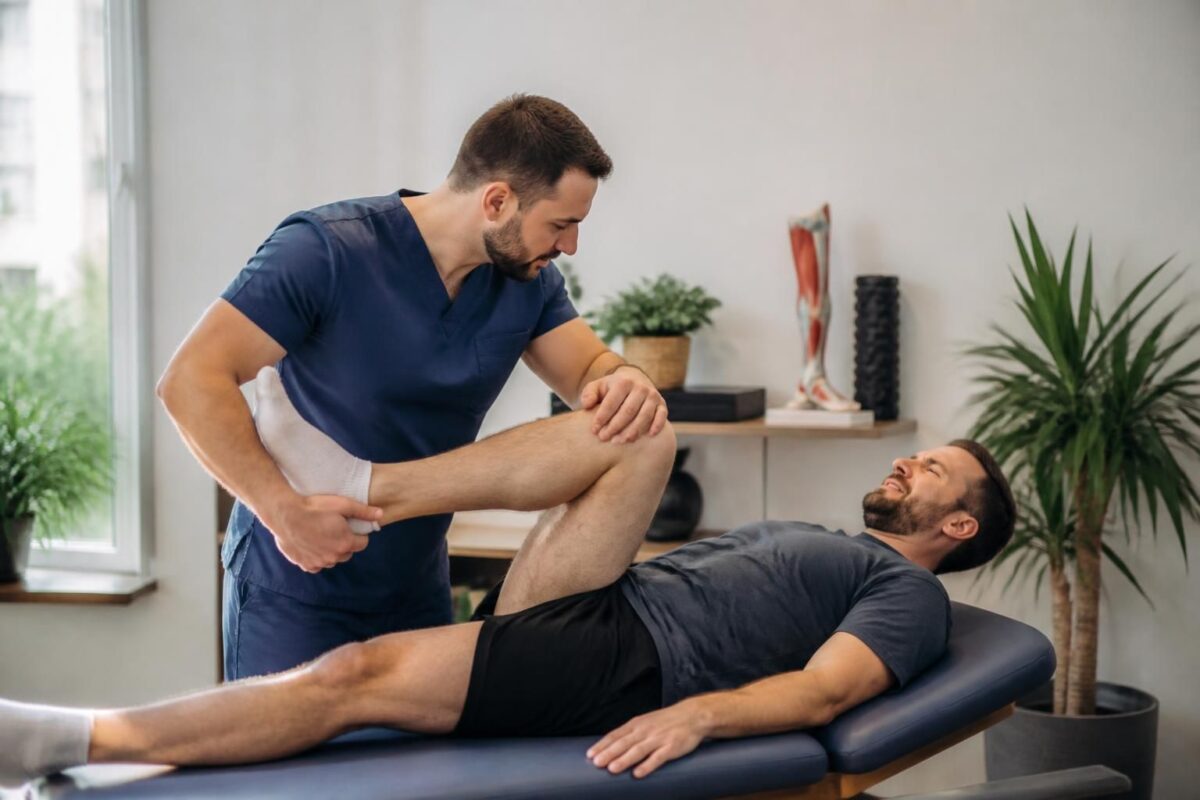
Osteopathy and chronic leg pain: regaining an optimal quality of life
In short In short, Osteopathy is one Global manual approach aimed at reducing Chronic leg pain and improve the quality of life. What is it? Non-drug therapy using the hands to identify restrictions and treat lesional chains. How does it…
Key points and recommendations
One Overall postural assessment Identifies the Postural imbalances and the tension zones likely to become injuries with exertion. By correcting these patterns, a better distribution of forces and a reduction in the risk of recurrence are obtained.
The Joint mobility and the muscle relaxation Play a major role: freer joints and less tense muscles better support repetitive gestures and loads, reducing sprains and tendinopathies and improving technical efficiency.
Before the competitions, a Targeted preparation Can ward off tension and optimize posture, while post-exercise recovery is facilitated by osteopathic techniques that promote circulation and evacuation of tension, decreasing fatigue and residual pain.
To get the most out, choose a Regular follow-up and integrating osteopathic advice into your training program, combining sessions and exercises at home; This helps to keep the body in performance and prevent future injuries. To deepen, consult the following resources that shed light on the mechanisms and benefits of osteopathy in the sporting field:
Prevention of sports injuries among Olympic athletes,
Role of osteopathy in the prevention of sports injuries,
Benefits for relieving shoulder tension,
Wellness and functional capacity building,
Reduced stress-related muscle tension,
Prevent and treat sports pain,
Prevention of injuries in osteopathy,
Improved quality of life,
Complete guide to sports osteopathy,
Osteopathy and injury prevention in athletes.
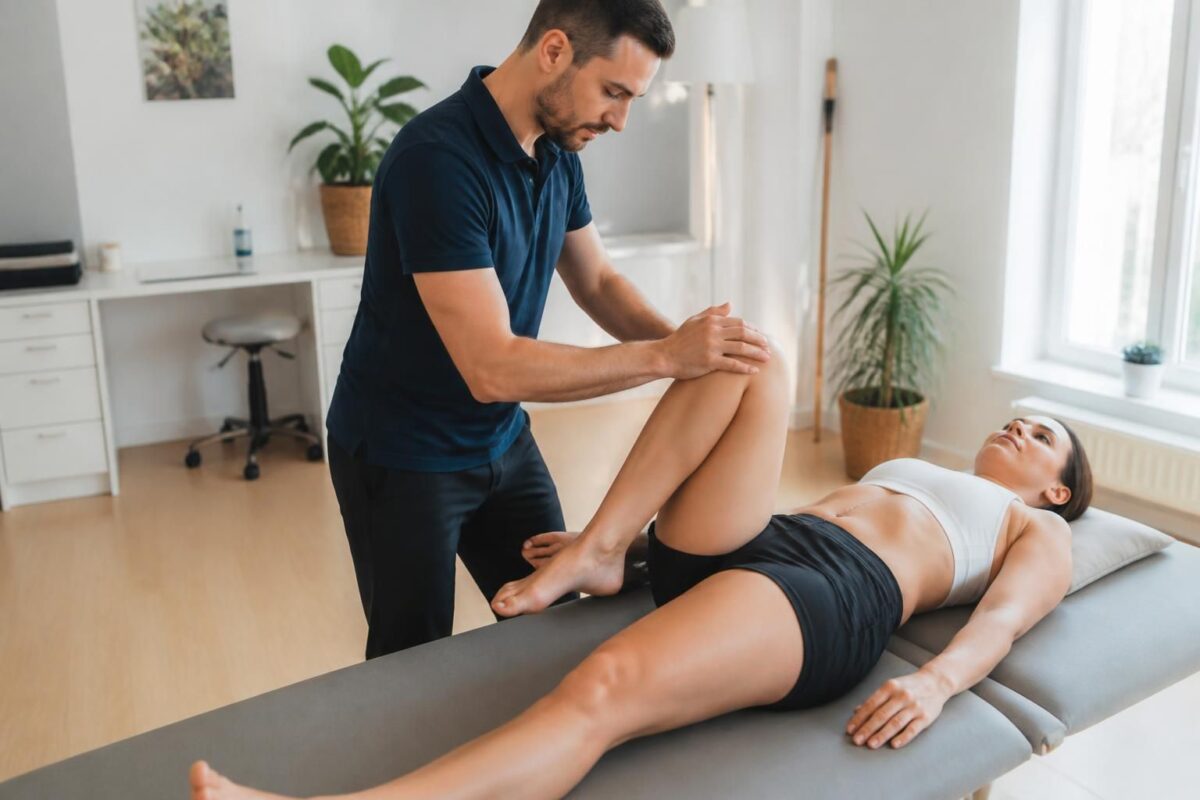
How osteopathy supports recovery after complex surgery
In short In short, Post-operative osteopathy is an approach fresh which supports the recovery After a Complex surgery. It helps to reduce the pain and the fatigue, improves the mobility and accelerates the healing thanks to a better vascularization and…

Dr Sylvain Desforges, B.Sc., D.O., N.D., osteopath, is the founding president of TAGMED and of the ACMA association. He dedicates his practice to chronic spinal pain, low back pain and symptoms compatible with sciatica, particularly when pain radiates toward the buttock, leg, calf, foot or toes.
Through SOS Sciatique, he publishes educational content on sciatica symptoms, possible causes such as disc herniation, disc narrowing, foraminal stenosis or irritation of a lumbar nerve root, as well as non-surgical approaches that may be considered according to the evaluation. At Clinique TAGMED, care may include, depending on the case, motorized neurovertebral decompression, specific osteopathic care or precision percussion.
For an evaluation related to sciatica treatment in Montreal / Mount Royal or sciatica treatment in Terrebonne, please consult the services available at Clinique TAGMED.
Medical disclaimer
The information published on SOS Sciatique is provided for educational purposes only and does not replace a consultation, diagnosis, opinion or treatment provided by a physician or another authorized healthcare professional. The author of this article is neither a medical doctor nor a specialist in a medical specialty recognized by the Collège des médecins du Québec. The osteopathic, manual medicine or functional support approaches described on this site do not constitute medical acts and are not intended to replace medical follow-up.
Consult a physician or emergency service in cases of loss of bladder or bowel control, anesthesia in the saddle area, significant or progressive weakness in the leg or foot, fever, recent trauma, severe pain or rapid worsening of symptoms. For more details, please read our Legal Notice.