Clinical results proving the efficacy of osteopathy
27/06/2026
Why osteopathy is a lasting solution for chronic pain
27/06/2026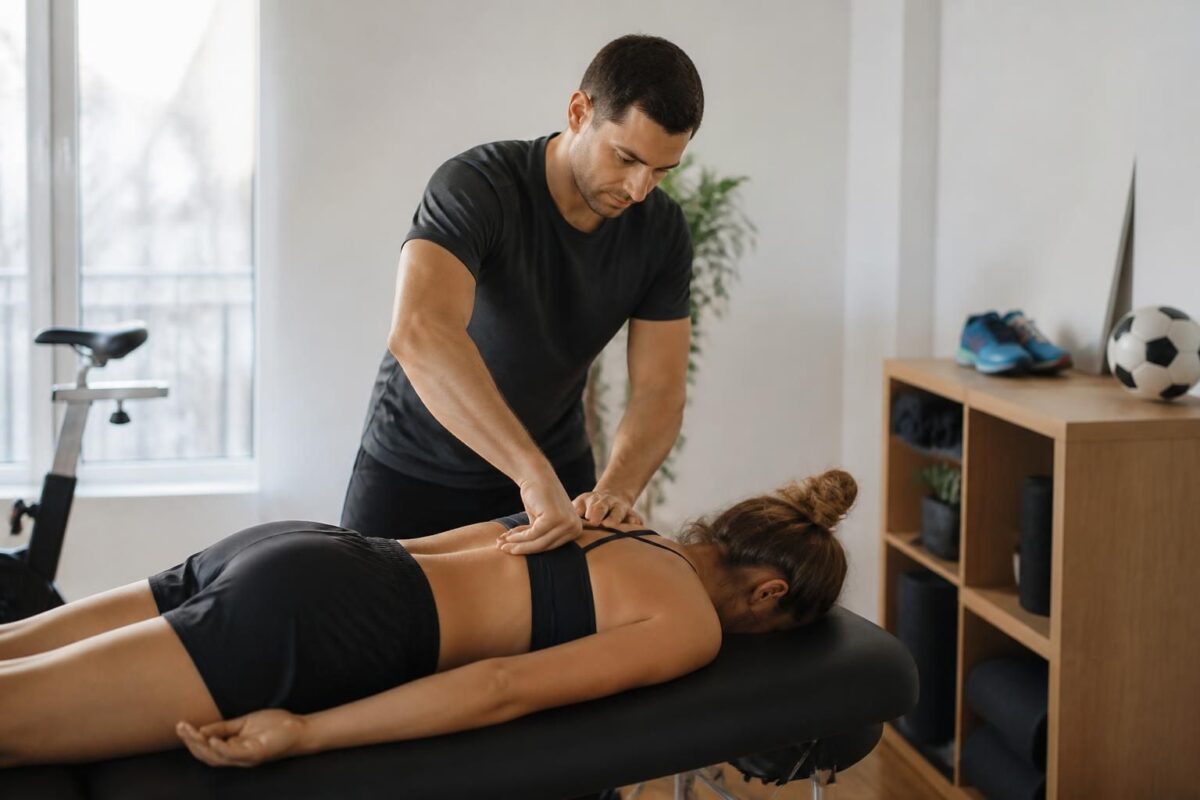
In short In short, Osteopathy for the recurring sports pain is one Manual approach and holistic which aims to restore thebalance and the mobility of the body to prevent and treat stress-related pain. Its benefits include the Injury prevention, the pain relief, a recovery fast and a Better sports performance, thanks to techniques sweet and Custom, without systematic recourse to pharmaceuticals. accessible to Montreal And in the region, this service is particularly suitable for amateur and professional athletes looking for an approach non-drug and sustainable to optimize their mobility and their recovery. |
Advantages of osteopathy for recurrent sports pain
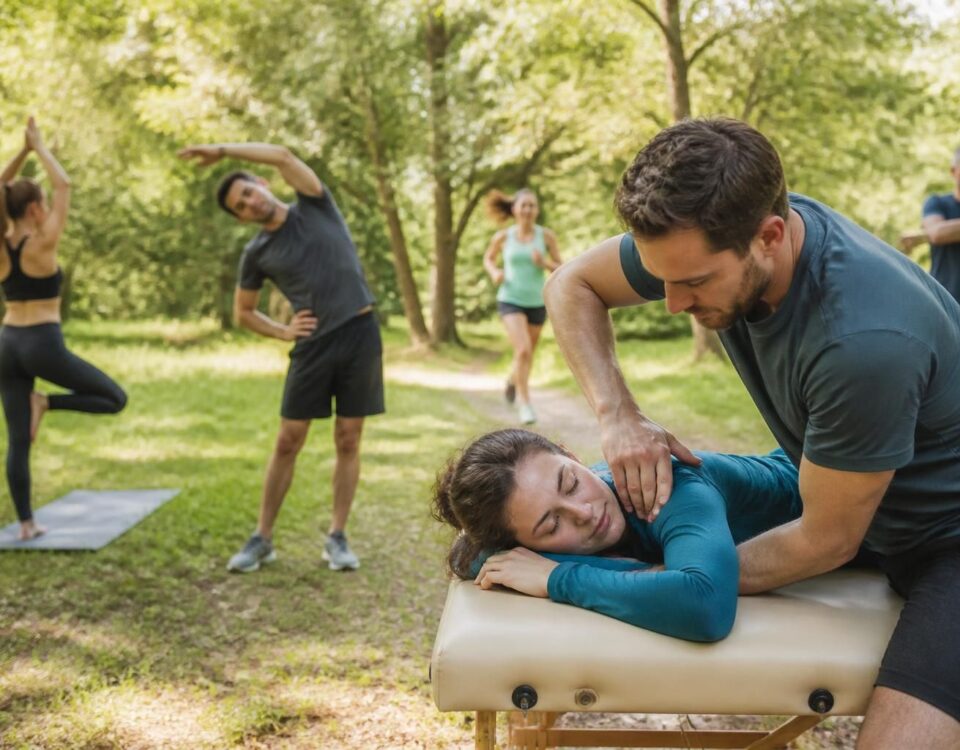
theosteopathy is an approach manual and holistic which targets the Muscle and postural imbalances causing recurring pain. thanks to targeted techniques, it allows release tension, fromImprove mobility and of promote better circulation, thus favoring a quick recovery After the effort.
It also contributes to the Injury prevention repetitive by optimizing thealignment and the biomechanical, which results in a performance improvement, a pain reduction and an Optimized recovery between sessions.
This summary presents the Advantages of osteopathy To treat the recurring sports pain. It describes how the manual approach can restore equilibrium musculoskeletal, improve the mobility and promote the recovery, while strengthening the relapse prevention and athletic performance.
Assessment and global approach
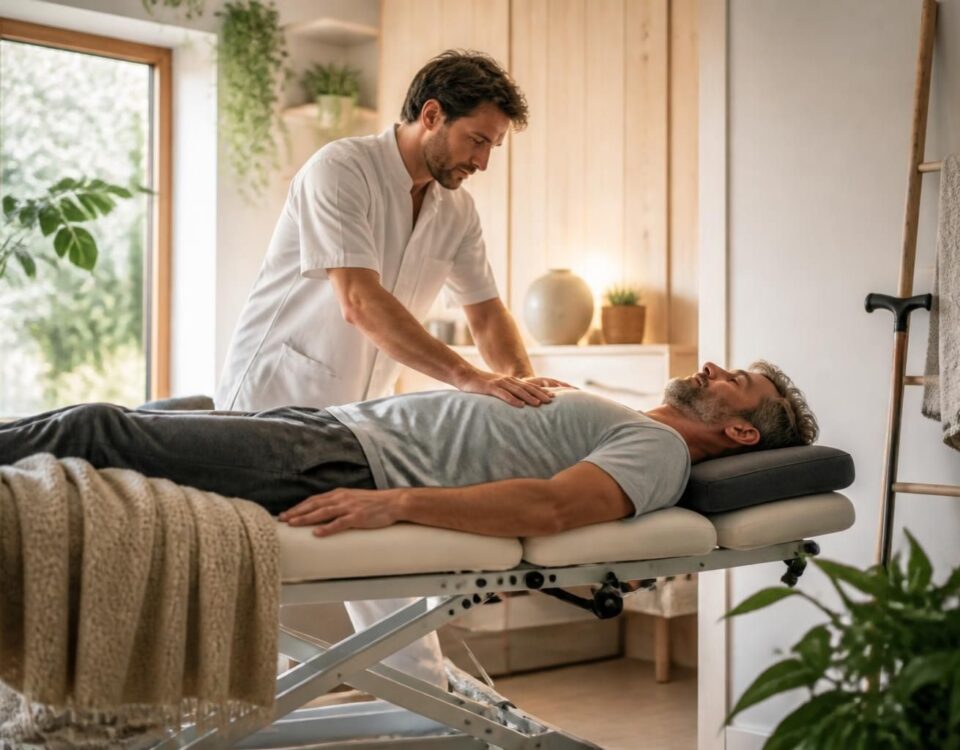
The practitioner begins with an overall assessment and attentive listening to the athlete. theosteopathy Takes into account the whole body to identify areas of tension and pain imbalances. This approach makes it possible to plan a treatment non-invasive Focused on the functioning of the musculoskeletal system. To deepen the mechanisms, specialized resources are available on sossciatica.com.
Pain relief and return to activity
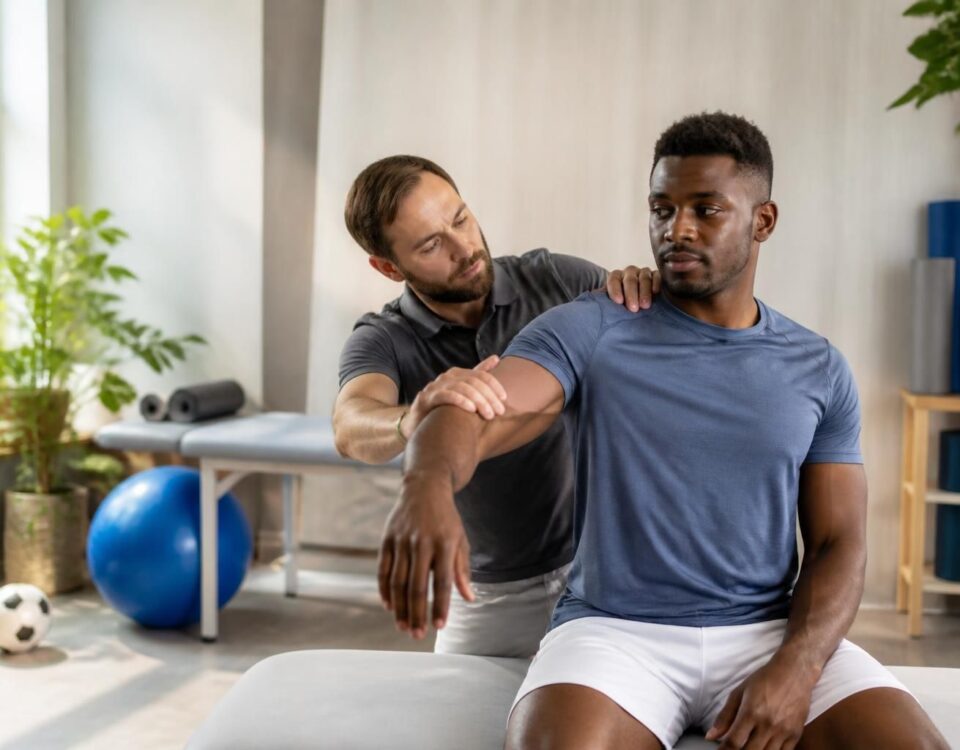
Osteopathic techniques act on joint tensions and restrictions. Relief is often felt after a few sessions, and the Joint mobility improves. This facilitates the return to sports practice without systematically resorting to painkillers. The objective is a lasting reduction in pain and an improvement in comfort during sports movements.
Recovery and performance
a better one circulation and an Optimized mobility promote the recovery after the effort and increase the range of motion. Effective recovery helps limit aches and supports repeated workouts. By working on postural alignment and muscle chains, osteopathy can also improve the effectiveness of sporting gestures and prevent excessive tension.
Injury Prevention and Postural Balance
Regular practice can prevent recurrent pain by correcting imbalances and strengthening muscle chains. A preventive approach makes it possible to anticipate body signals and maintain a level of comfort during training. Preventive resources and advice are available via recognized professional and institutional content.
Integration into sports practice
Osteopathic follow-up is part of a global approach to performance and well-being. A collaboration between the osteopath and the athlete makes it possible to adjust the technical gestures and optimize the recovery periods. Recognized training in osteopathy, such as NUMSS and NAO, are benchmarks for trained practitioners, particularly in Canada and internationally through reference courses such as National University of Medical Sciences and National Academy of osteopathy. To learn more about feedback and practices, consult the resources offered by specialized clinics such as Tagmed Clinic.
Athletes can also find useful information about the benefits of osteopathy for chronic muscle pain and posture on sossciatica.com, as well as on the overall impact of manual therapy on recovery and prevention.
To deepen the practical and scientific aspects, relevant online resources cover injury prevention, improvement of recovery and performance optimization through sports osteopathy. See in particular the publications and guidelines associating osteopathy and sports performance on the sites mentioned above.
Key Benefits Osteopathy for athletes:
Injury prevention – Identification and correction of tensions before they cause pain;
Accelerated recovery – Improved circulation and tissue drainage;
Improving mobility – gain in flexibility and range of motion;
pain reduction – Targeted manipulations to release blocked areas;
Postural alignment – better biomechanics of sporting gestures;
Personalized follow-up – Care plan adapted to each athlete and his sport.
In order to complete this information, you can consult specialized resources on sports osteopathy and muscle recovery available on the recommended sites.
Medical Disclaimer: The information and advice provided on this site does not replace the health professional’s diagnosis or treatment. Please note that Dr. Sylvain Desforges osteopath is neither a doctor of medicine nor a doctor, and is not a specialist in a medical specialty as defined by the Collège des Médecins du Québec. Manual medicine, functional medicine and sports medicine as described on this site exclude any medical treatment or diagnosis made by a doctor or specialist doctor. Always consult your doctor for any medical questions. For more details, please read our full legal notice.
Medical warning: The information and advice provided on this site does not replace the advice, diagnosis or treatment of a healthcare professional. Please note that Dr. Sylvain Desforges osteopath is neither a doctor of medicine nor a doctor, and is not a specialist in a medical specialty as defined by the Collège des Médecins du Québec. Manual medicine, functional medicine and sports medicine as described on this site exclude any medical treatment or diagnosis made by a doctor or specialist doctor. Always consult your doctor for any medical questions. For more details, please read our full legal notice.
Useful links and references complete the information provided. For more information on training and professional associations, choose Numss, NAO, National University of Medical Sciences, National Academy of Osteopathy, ACMA, College of Canadian Osteopaths and College of Canadian Osteopaths.
Axis: from preventive to performance
- Relief targeted muscle and joint tension
- Mobility increased and better amplitude
- Prevention Injuries by correcting imbalances
- Circulation Improved and easy recovery
- Alignment Postural more stable
- aches reduced recurring
- Preparation Effective on effort
- Recovery Accelerated after exercise
- Confidence and performance improvement
- Monitoring Customized for sport

This recommendation highlights the benefits ofosteopathy To treat the recurring sports pain. By working on the body as a whole, osteopathy seeks to relieve pain, prevent relapses and accelerate recovery while improving performance. Its techniques, gentle and adapted, aim to restore musculoskeletal balance, to release tensions and to promote better circulation of bodily fluids, without systematically relying on drugs.
Why osteopathy is effective for recurrent athletic pain
This approach is based on a global vision of the body: by identifying areas of tension and mobility limitations, it allows to treat the root causes rather than just calming the symptoms. The objective is to reduce repetitive stresses on the joints and muscles, which reduces the probability of recurrence and improves stability during exercise. Osteopathic support is thus part of a preventive and corrective approach that adapts to each athlete.
Techniques adapted to each discipline
The methods used vary according to the sport and the level of effort. They can combine precise joint manipulations, myofascial techniques and targeted stretching. This customization aims to treat the muscle chains involved in your practice, in order to restore a harmonious and lasting operation.

How osteopathy improves the quality of life of active people
In short In short, theosteopathy is a global approach that Optimizes mobility and the function of the body of ACTIVE PEOPLE, for a better quality of life. It helps prevent injury and reduce Musculoskeletal pain While promoting the Sports recovery.…

Osteopathy and sports recovery: prepare the body for lasting performance
In short In short, Osteopathy and Sports recovery is one Global manual approach that sustainably prepares the body for the effort by restoring mobility and circulation After the effort. It is a discipline that acts on the sinews, the joints,…
Prevention and correction of imbalances
Prevention is a central component of osteopathy for athletes. The osteopath assesses the posture, muscle chains and joints solicited by your practice and identifies areas of tension or dysfunctions that could trigger pain. By working on these areas, it restores a more harmonious alignment and reduces repetitive stresses, which reduces the risk of injury. Simple adjustments and guided exercises can be recommended to complete the sessions and promote long-term stability.
Techniques adapted to each discipline
The approaches used vary according to the sport: precise joint manipulations, myofascial techniques, and targeted stretching to restore mobility without causing overload. This customization makes it possible to approach the muscle chains involved in your activity and to deal with the imbalances which, if they persist, can cause recurrent pain.
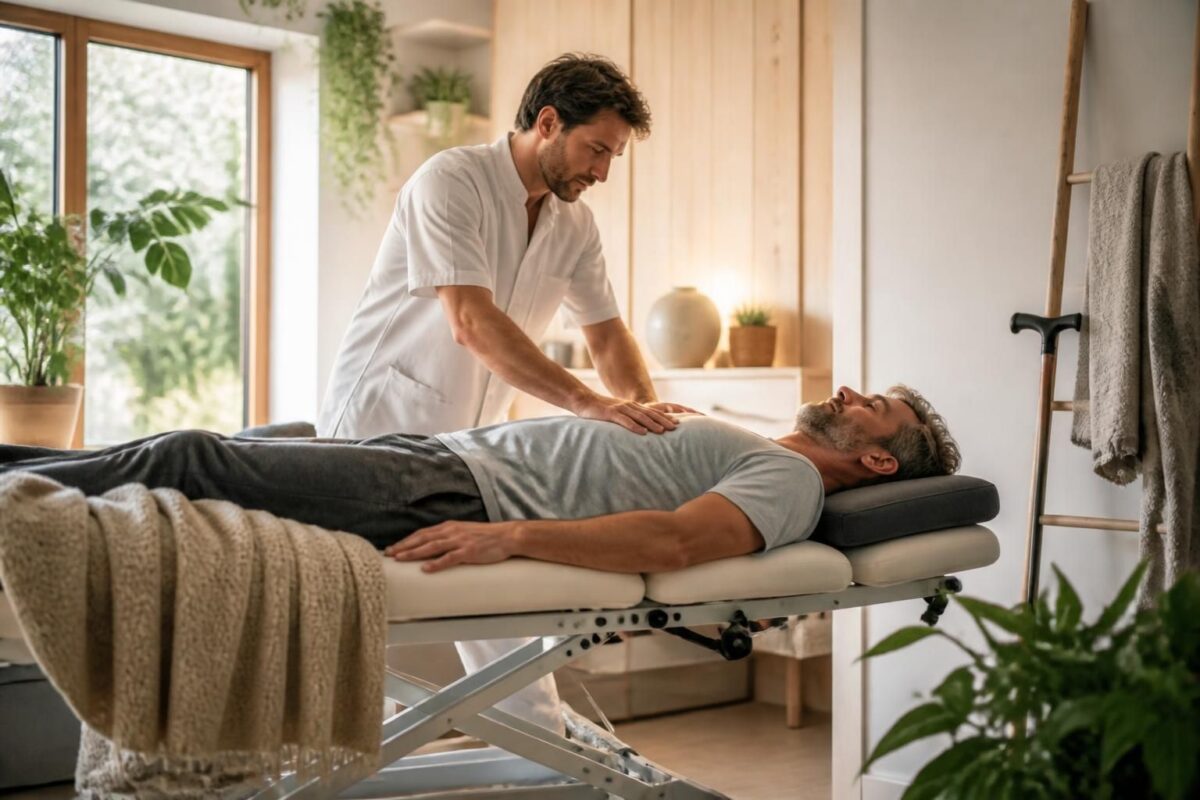
Why Osteopathy Is Essential For Recovery People
In short In short, Osteopathy in convalescence is an approach manual and holistic which helps to accelerate the recovery by restoring The balance, the mobility and a good circulation fabrics. it contributes to Reduce the pain, support the Back to…

Osteopathic manipulations to strengthen post-traumatic muscles
In short In short, Osteopathic manipulations for Strengthen post-traumatic muscles constitute a gentle manual approach aimed at restoring the mobility, reduce the pain and facilitate the Functional rehabilitation After a injury. What is Is it? A series of precise gestures…
Pain relief and quick recovery
In case of pain, osteopathy gently acts on the muscles and joints to release tension and relaunch blood and lymph circulation. This improvement in vascularization accelerates the intake of nutrients and oxygen essential for tissue repair. Consequence: gradual reduction in pain intensity and duration, more comfort during training and more effective recovery between sessions.
Stimulation of circulation and reduction of inflammation
Osteopathic techniques can also promote lymphatic dynamics and limit local inflammation, which helps reduce aches and stiffness after exercise.

Osteopathy and prevention of work-related musculoskeletal disorders
In short theosteopathy is one Manual approach that restores body balance and prevents MSD related to work. Its advantages: reduction of tension, improvement of mobility and prevention of chronic pain. She is preventive and healing, suitable for office and trades…

The benefits of osteopathy to treat muscle imbalances
In short theosteopathy is a manual approach to restore themuscle harmony and postural considering the body as a whole. Its main benefits include the reduction of aches and tensions, the improvement of the mobility and from the posture, and prevention…
Improved mobility and performance
By releasing mobility restrictions and improving postural alignment, osteopathy increases the range of motion and optimizes the biomechanics of sport. Athletes often note a better fluidity of gestures, an increase in muscle efficiency and a reduction in tension which can slow down performance. In the long term, this can result in better endurance and recovery ability.
Performance gain and injury prevention
By proactively working on muscle chains and critical joints, osteopathy helps prevent injuries and support regular progression, even during intense workout loads.
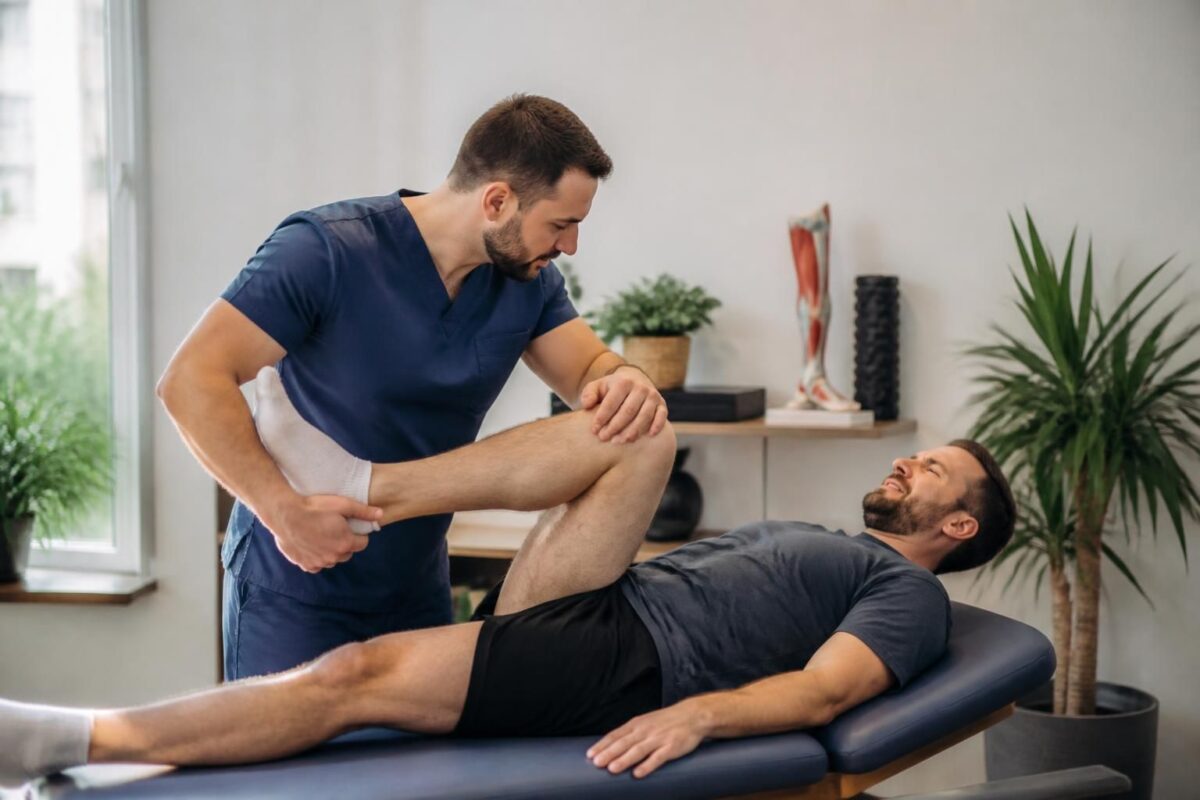
Osteopathy and chronic leg pain: regaining an optimal quality of life
In short In short, Osteopathy is one Global manual approach aimed at reducing Chronic leg pain and improve the quality of life. What is it? Non-drug therapy using the hands to identify restrictions and treat lesional chains. How does it…
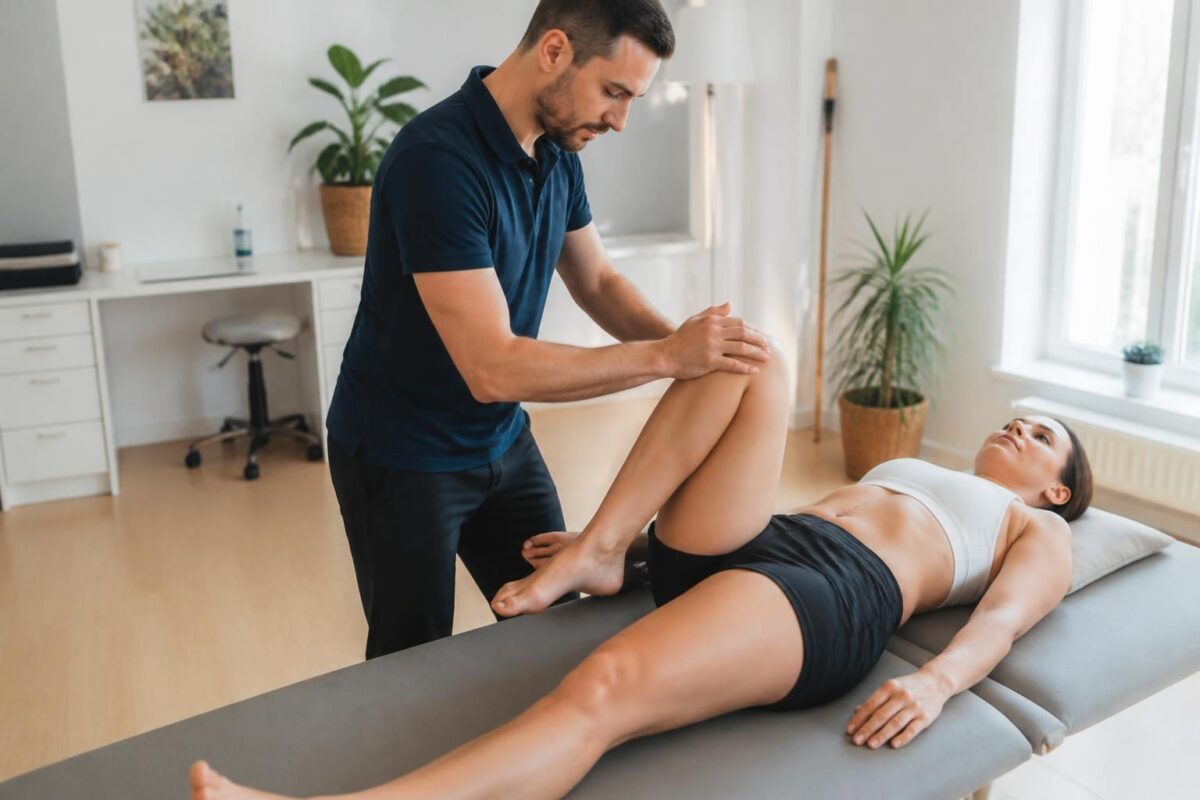
How osteopathy supports recovery after complex surgery
In short In short, Post-operative osteopathy is an approach fresh which supports the recovery After a Complex surgery. It helps to reduce the pain and the fatigue, improves the mobility and accelerates the healing thanks to a better vascularization and…
Practical integration into the sports routine
To get the most out of osteopathy, plan regular sessions in addition to a structured training program. The osteopath can offer postural adjustments, stretching and recovery advice that fits easily into your schedule. This proactive approach is aimed at all levels, from amateur athletes to competitors looking to optimize their comfort and performance.
The advantages of osteopathy for recurrent athletic pain
| Aspect | Advantage |
|---|---|
| Injury prevention | Reduces the risks By correcting imbalances And some postures unsuitable. |
| Relief of pain and tension | Relieve them aches and strain, improves the mobility. |
| Amplitude and biomechanics | Increase therange of motion and improves biomechanics. |
| Recovery after exercise | Recovery accelerated and reduction of theinflammation After the effort, favoring the return to training. |
| Muscle imbalances | Restoration of imbalances and thePostural alignment, improving performance. |
| local traffic | Stimulation of the circulation local, support recovery and aches reduction. |
| Alignment and performance | Alignment and biomechanics optimized, better performance. |
| stress management | reduction of strain and of stress related to practice. |
| Non-medicated option | Approach non-drug, complementary to other care. |
| Sports adaptability | adaptation to different sports and levels, personalization of care. |
Testimonials on the Benefits of Osteopathy to Treat Recurring Sports Pain
“Before I encountered osteopathy, my cycling outings ended in lower back pain and tension in the hips. After a few sessions, osteopathy released my muscles and improved my mobility without pain. I recover faster and I finish my long walks more serenely. — Antoine, amateur cyclist
“Osteopathy helped me correct postural imbalances that came back after each race. Thanks to targeted manipulations, I benefited from a prevention injuries and recovery faster between workouts. — Sophie, trail runner
“During the championship, my lower back pain often came back after the matches. Osteopathy made it possible toSoften the pain and improve my Postural alignment, which gave me more stability during sprints and duels. My performance has improved and my condition is more durable. — Mamoudou, footballer
“In swimming, the shoulders and the torso must follow the rhythm. Osteopathy released shoulder tension and improved my mobility and my breathing. Result: less than aches and better range of motion during lengths. — Marine, swimmer
“After each event, my recovery is better orchestrated thanks to osteopathy. The sessions promote a circulation improved, decrease the aches And allow me to move quickly from one sport to another. It became a pillar of my preparation. — Jules, triathlete
the DR Sylvain Desforges, expert in osteopathy, in naturopathy And in manual medicine, has established itself as a key player in health innovation. Founding president of the TagMed clinics and the ACMA association, he puts his experience at the service of chronic pain related to sports practice and favors evidence-based care. Its specialized technical approach combining and global vision of the body provides a solid basis for understanding and treating recurring sports pain.
As part of his work, theosteopathy appears as a solution non-drug Effective in preventing and relieving pain that regularly occurs in athletes. By working on muscle chains, fascias and joint alignment, the osteopath restores the functional balance of the body and reduces the tensions that fuel the painful episodes. This approach allows not only to quickly relieve, but also to reduce the risk of recurrence by restoring a more harmonious mobility.
One of the strengths of this discipline is its ability to improve the Joint mobility and the muscle function without resorting to invasive treatments. The Manual techniques Used, adapted to each athlete, aim to correct the postural imbalances that often settle during the training. By correcting these imbalances, osteopathy contributes to better biomechanics, a more fluid range of motion and a more effective and lasting sports practice.
Beyond the simple reduction of pain, osteopathy promotes a recovery Faster after exercise and better circulation blood and lymphatic. This improvement in tissue repair processes supports recovery after workouts and competitions, while decreasing aches and recovery times. For athletes, this means fewer days off and more steady performance.
Dr. Desforges also incorporates advanced technologies into his treatments where appropriate, including approaches that complement manual manipulations and enhance results. This combination makes it possible to approach recurring sporting pain from a holistic and customizable angle, taking into account the history of the athlete, his training and his objectives. The objective is clear: to restore thebalance and the resilience of the body to support a gradual and secure resumption of physical activity.
Finally, theosteopathy for athletes is a tool for prevention and performance. By accompanying athletes from the first signals of fatigue or pain, it helps to avoid switching to more serious injuries and to maintain an appropriate posture throughout the training cycles. For those looking for a global and individualized approach, osteopathy offers an effective way to preserve mobility, optimize recovery and support sport excellence.
This article clearly summarizes how Osteopathy can act on recurring sports pain, by tackling the Musculoskeletal imbalances, by restoring thePostural alignment, by improving the mobility and optimizing the recovery and the Injury prevention.
by appropriate manual techniques, Osteopathy aims to correct the imbalances structural and functional that support pain, in order to restore a harmonious biomechanical. By working on muscle chains, joints and fascias, it helps to release tension and promote a Postural alignment optimal, which contributes to a Improving mobility and to a pain reduction in the long term.
This approach is also proactive: it improves the Injury prevention By strengthening the body’s resilience to the constraints due to training and competition. At the same time, she supports a recovery Faster after exercise by stimulating better blood and lymph circulation, facilitating tissue repair and reducing inflammation. The athletes thus find a more fluid amplitude of movement and better biomechanics during technical gestures.
Beyond immediate relief, theosteopathy acts as a tool Preparation for effort and of relapse prevention, accompanying each step of the training-recovery cycle. This approach holistic Considers the body as a whole, which makes it possible to adjust the sessions according to the sport practiced, specific pain and the evolution of the athlete, while avoiding drug solutions when possible.
For athletes looking to optimize their performance while preserving their health, the regular integration of osteopathic sessions can promote better Joint mobility, a Adapted posture and an Sustainable performance. Targeted interventions on areas of tension and key joints are part of a long-term approach, focused on maintaining function and reducing the risk of relapse.
To learn more about specific topics related to osteopathic management of pain and sports injuries, see the following resources:
How Osteopathy Helps Treat Tendinitis
Osteopathy and sports recovery Optimize performance
The importance of osteopathy for athletes to improve performance and prevent injuries
How Osteopathy Improves Joint Mobility

Dr Sylvain Desforges, B.Sc., D.O., N.D., osteopath, is the founding president of TAGMED and of the ACMA association. He dedicates his practice to chronic spinal pain, low back pain and symptoms compatible with sciatica, particularly when pain radiates toward the buttock, leg, calf, foot or toes.
Through SOS Sciatique, he publishes educational content on sciatica symptoms, possible causes such as disc herniation, disc narrowing, foraminal stenosis or irritation of a lumbar nerve root, as well as non-surgical approaches that may be considered according to the evaluation. At Clinique TAGMED, care may include, depending on the case, motorized neurovertebral decompression, specific osteopathic care or precision percussion.
For an evaluation related to sciatica treatment in Montreal / Mount Royal or sciatica treatment in Terrebonne, please consult the services available at Clinique TAGMED.
Medical disclaimer
The information published on SOS Sciatique is provided for educational purposes only and does not replace a consultation, diagnosis, opinion or treatment provided by a physician or another authorized healthcare professional. The author of this article is neither a medical doctor nor a specialist in a medical specialty recognized by the Collège des médecins du Québec. The osteopathic, manual medicine or functional support approaches described on this site do not constitute medical acts and are not intended to replace medical follow-up.
Consult a physician or emergency service in cases of loss of bladder or bowel control, anesthesia in the saddle area, significant or progressive weakness in the leg or foot, fever, recent trauma, severe pain or rapid worsening of symptoms. For more details, please read our Legal Notice.