The advantages of osteopathy to treat recurrent athletic pain
27/06/2026
How Osteopathy Reduces Chronic Inflammation
27/06/2026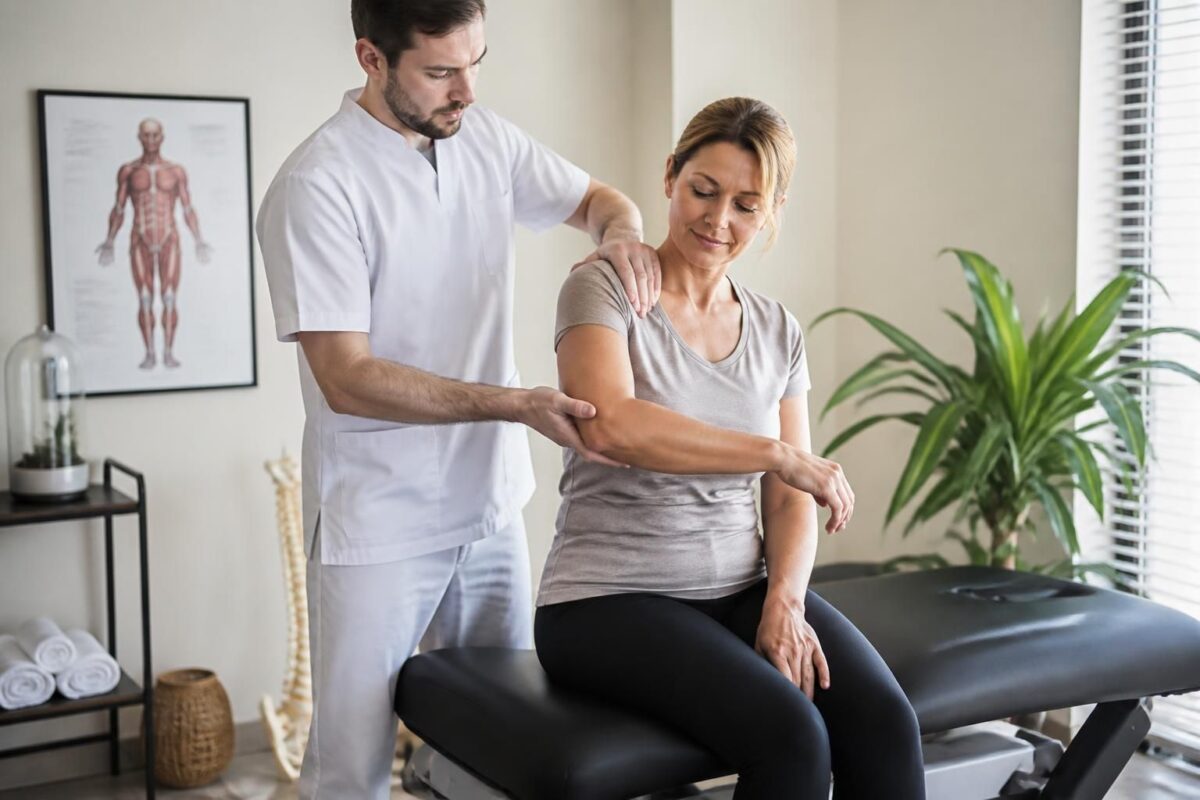
In short
theosteopathy is one Manual approach global aimed at improving the mobility and reduce the chronic pain without systematic use of the drug. Key Benefits: pain reduction and better feature, appropriate management of symptoms, and Global support patient-centric, supplemented by exercises to be performed at home. At Paris and in Ile-de-France, this service is particularly relevant for Lower back pain and the Chronic cervicalgia, as well as non-specific musculoskeletal disorders. |
For the chronic pain, theosteopathy offers a Durable solution thanks to solid evidence. A meta-analysis Including 10 randomized clinical trials (1160 participants) evaluated four osteopathic approaches: OMT (osteopathic manipulation treatment), MFR (myofascial release), cst (craniosacral therapy) and LMO (visceral manipulation). Result: osteopathy > control treatments on the pain (effect size -0.59; average/moderate) and on the operation (Effect size -0.42; low to moderate).
In low back pain and chronic neck pain, the evidence is moderate to high, with significant pain reduction and improvement in quality of life, and negligible side effects. Adding a programdrill (stretching, reinforcement) further potentiates the results, showing the importance of patient involvement.
In practice, osteopathy is an approach non-drug which can promote return to work and reduce the use of analgesics, part of a logic biopsychosocial and multidisciplinary for lasting relief.
quick summary: This article explains why osteopathy can be a lasting solution for chronic pain. It presents the current evidence, describes the overall approach and shows how appropriate care can sustainably improve the quality of life, without systematically using drug treatments.
Scientific evidence and clinical results
Osteopathy has been the subject of reviews and meta-analyses that bring together randomized clinical trials. In a summary including 10 trials and 1160 participants, the authors examined four types of osteopathic interventions: OMT (global osteopathic manipulation treatment), MFR (myofascial release), cst (Cranio-sacral therapy) and LMO (visceral manipulation). Compared to control treatments (placebo, exercises, physiotherapy, massage), osteopathy shows a significant reduction in pain and an improvement in functioning. The effect on pain ratio is -0.59 (moderate) and functional status -0.42 (small to moderate).
the interventions included cover 6 UNWTO studies, 2 on the MFR, 1 on the CST and 1 on LMO. These results support the idea that osteopathy can act on several components of chronic pain, in addition to the usual treatments.
To deepen the practical and scientific aspects around osteopathy and pain, you can consult dedicated resources on specialized sites in the field, in particular articles describing the mechanisms and benefits observed in various pathologies.
Impact on quality of life and professional aspects
Data from professional contexts and synthetic journals suggest that osteopathy can improve daily life and reduce returns to work for people with musculoskeletal pain. This approach is associated with a decrease in symptoms and better functional endurance, which contributes to a gradual resumption of daily and professional activities.
In addition, the integration of educational elements and a non-pharmacological intervention framework can strengthen long-term results. In this context, some online resources highlight how osteopathy can support rehabilitation and overall pain management.
Global approach and educational component
Osteopathy offers an approach overall which takes into account posture, sleep, diet and emotional state. Patient education is a key component. Adapted activity programs and lifestyle advice accompany osteopathic care, in order to promote better long-term pain management.
This approach is supported by data indicating that the patient’s involvement in healing improves results. For reference resources, see pages dedicated to osteopathy and pain on searchable sites.
Recommendations and integration in the care pathway
As part of chronic pain, health authorities recommend proper and regular physical exercise as a foundation for treatment. A biopsychosocial approach can include educational aspects and strategies to better accompany pain on a daily basis. A coordinated and multidisciplinary management can optimize the results, by combining different competent professionals for pain.
For a practical perspective, osteopathy can be part of a care offer that promotes symptom reduction and function improvement, while avoiding drug treatments where possible and appropriate.
Why consult an osteopath for chronic pain?
Expertise and solid training: Osteopaths rely on recognized training programs and protocols validated by the latest studies. Personalized approach: Overall care that takes into account posture, sleep, stress and diet. Measurable results: pain scales and functional assessments allow objective monitoring. Multidisciplinary collaboration: networking with doctors, physiotherapists and other specialists. Accessibility: sessions adapted to different profiles (active people, seniors, pregnant women, remote workers).
To learn more about benefits and mechanisms, check out resources at the following sites: Osteopathy and shoulder pain – a natural solution, Osteopathy and fibromyalgia – Effective management, Osteopathy and osteoarthritis – reduce pain naturally, The Benefits of Osteopathy to Prevent Injuries, How osteopathy supports rehabilitation after surgery and Additional resources.
In addition, for technical information on mechanisms and approaches, some patients are moving towards specialized resources related to the neurovertebral decompression and the management of chronic pain accessible via areas dedicated to pain and spine.
Training and professional executive
Osteopathy practitioners are trained in recognized institutions, including NUMSS, NAO, National University of Medical Sciences and National Academy of osteopathy. These trainings provide a science-based approach while remaining patient-centric.
Practical integration into the clinical setting
As part of a course of care, osteopathy can collaborate with additional treatments and services, including structures dedicated to pain and mobility. Professional resources detail how osteopathy can accompany rehabilitation, pain management and a return to life without limitation.
To explore specific options and additional modalities, see the resources associated with chronic pain and osteopathy on the partner sites mentioned below.
Professional references and training institutions in osteopathy remain centralized around recognized courses. The clinical offer favors a non-pharmacological approach when appropriate, with attention to the safety and well-being of the patient.
osteopathy and chronic pain: a sustainable evidence-based approach and multidisciplinary collaboration.
“Medical disclaimer: The information and advice provided on this site does not replace the health professional’s benefit, diagnosis or treatment. Please note that Dr. Sylvain Desforges osteopath is neither a doctor of medicine nor a doctor, and is not a specialist in a medical specialty as defined by the Collège des Médecins du Québec. Manual medicine, functional medicine and sports medicine as described on this site exclude any medical treatment or diagnosis made by a doctor or specialist doctor. Always consult your doctor for any medical questions. For more details, please read our full legal notice. »
- Global approach : posture, mobility, sleep and emotions.
- Lasting pain reduction : targeted and progressive action.
- Patient autonomy : Exercises and education to act yourself.
- Less drug use : Potential decrease in analgesics.
- Functional results : Improved mobility and quality of life.
- relapse prevention : Sustainable routines and habits.
- Coordinated care pathway : collaboration between professionals.
- Personalized approach : protocols adapted to everyone (sportsmen, seniors, pregnant women).

For those who suffer from chronic pain, theosteopathy Offers a solution lasting By acting on the mechanisms of the body, with personalized support and a set of exercises and advice. Clinical evidence shows a significant reduction in pain and improved functioning over the medium and long term, while favoring an approach non-pharmacological.
A global and personalized approach
As part of osteopathy, the assessment is overall and takes into account posture, mobility, muscle tension, as well as the functioning of the nervous and visceral systems. This approach makes it possible to identify the causes and factors that fuel chronic pain and to design a care plan adapted to each patient.
the techniques used cover global manipulative approaches (WTO), relaxation myofascial (MFR), as well as other targeted methods as needed. At the same time, the patient benefits from educational support: posture advice, daily exercises, sleep habits and stress management. This combination facilitates progressive and lasting rehabilitation.
four osteopathic interventions and their effects
The most studied interventions include theOMT (osteopathic manipulative treatment), MFR (myofascial release), the cst (cranio-sacral treatment) and theLMO (visceral manipulation). Used appropriately depending on the patient, they help reduce pain and improve functioning, without necessarily using invasive treatments.

How osteopathy improves the quality of life of active people
In short In short, theosteopathy is a global approach that Optimizes mobility and the function of the body of ACTIVE PEOPLE, for a better quality of life. It helps prevent injury and reduce Musculoskeletal pain While promoting the Sports recovery.…

Osteopathy and sports recovery: prepare the body for lasting performance
In short In short, Osteopathy and Sports recovery is one Global manual approach that sustainably prepares the body for the effort by restoring mobility and circulation After the effort. It is a discipline that acts on the sinews, the joints,…
Strong and robust evidence
A Systematic review and Meta-analysis brings together 10 randomized clinical trials and 1160 participants to assess the efficacy of osteopathic interventions. Compared to control treatments (placebo, exercises, physiotherapy or massage), osteopathic interventions demonstrate a significant reduction in pain and an improvement in functional status.
The results indicate a pain reduction with an effect size of about -0.59 (considered moderate) and a Improved functional status about -0.42 (small to moderate). These figures reflect osteopathy’s ability to act on multiple levels—structural, functional and nervous—for lasting benefits.
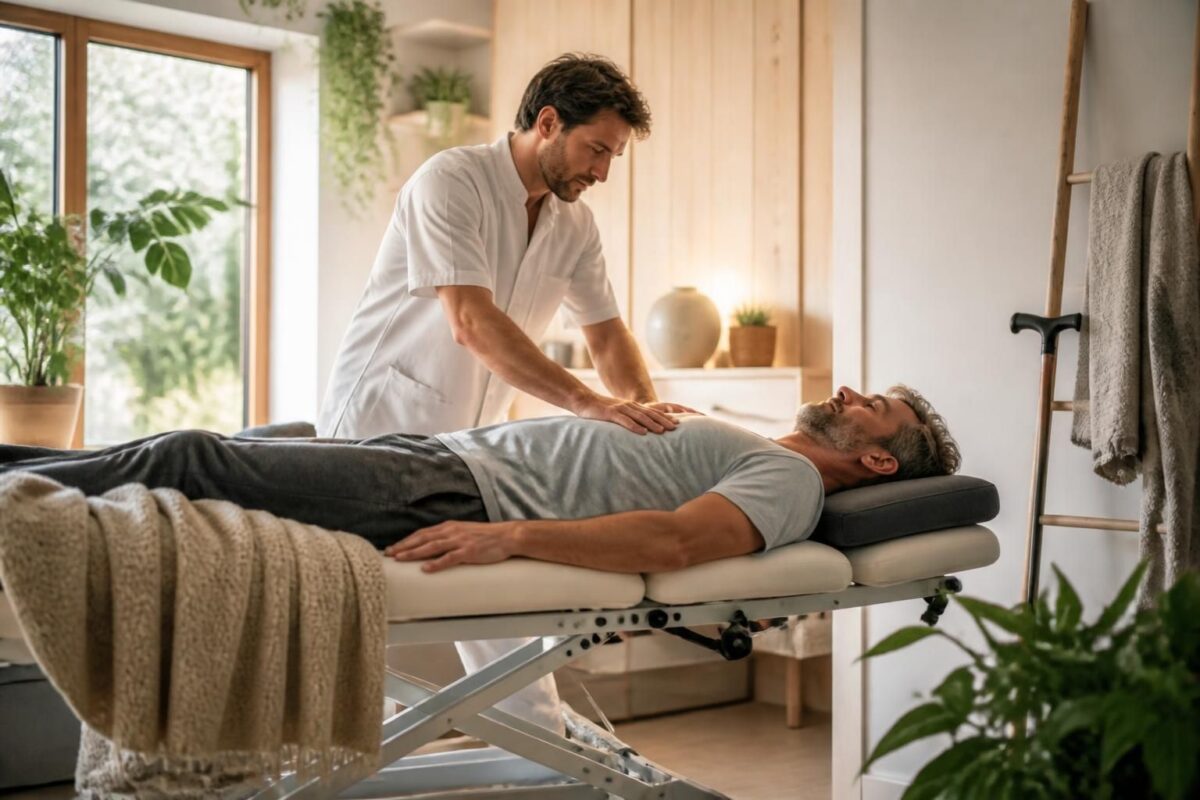
Why Osteopathy Is Essential For Recovery People
In short In short, Osteopathy in convalescence is an approach manual and holistic which helps to accelerate the recovery by restoring The balance, the mobility and a good circulation fabrics. it contributes to Reduce the pain, support the Back to…

Osteopathic manipulations to strengthen post-traumatic muscles
In short In short, Osteopathic manipulations for Strengthen post-traumatic muscles constitute a gentle manual approach aimed at restoring the mobility, reduce the pain and facilitate the Functional rehabilitation After a injury. What is Is it? A series of precise gestures…
Impact on daily life and work
In the workplace, recent data show that osteopathic intervention can significantly reduce work stoppages related to musculoskeletal pain and alleviate associated depressive symptoms, thus improving quality of life and productivity at work.
In practice, these results result in a decrease in days off and an overall feeling of improvement, while promoting better management of pain and stress related to professional activity.

Osteopathy and prevention of work-related musculoskeletal disorders
In short theosteopathy is one Manual approach that restores body balance and prevents MSD related to work. Its advantages: reduction of tension, improvement of mobility and prevention of chronic pain. She is preventive and healing, suitable for office and trades…

The benefits of osteopathy to treat muscle imbalances
In short theosteopathy is a manual approach to restore themuscle harmony and postural considering the body as a whole. Its main benefits include the reduction of aches and tensions, the improvement of the mobility and from the posture, and prevention…
Integration into the care pathway
To optimize the results, osteopathy is part of a global strategy based on Adapted physical activity, the approaches Biopsychosocial and thetherapeutic education. Official recommendations encourage support multidisciplinary Including doctors, physiotherapists, osteopaths and psychologists, in order to treat both the physical and psychological aspects of pain and improve the patient’s autonomy.
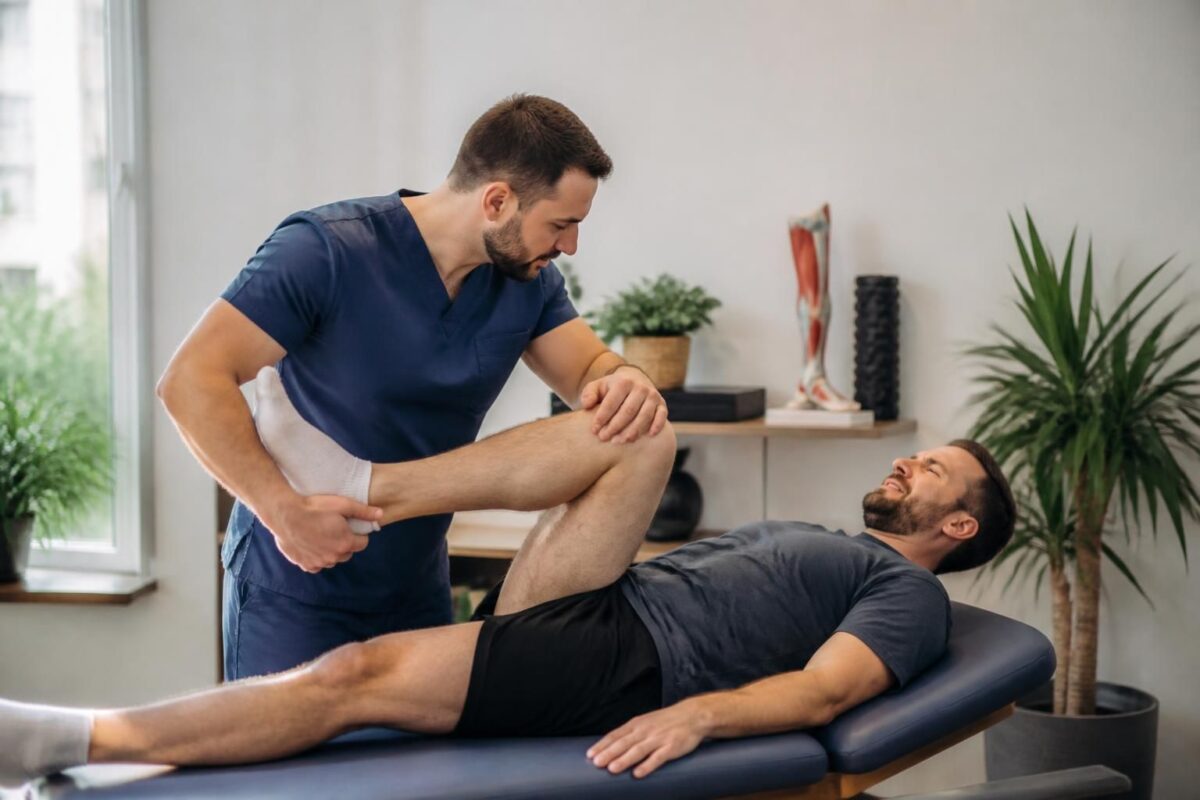
Osteopathy and chronic leg pain: regaining an optimal quality of life
In short In short, Osteopathy is one Global manual approach aimed at reducing Chronic leg pain and improve the quality of life. What is it? Non-drug therapy using the hands to identify restrictions and treat lesional chains. How does it…
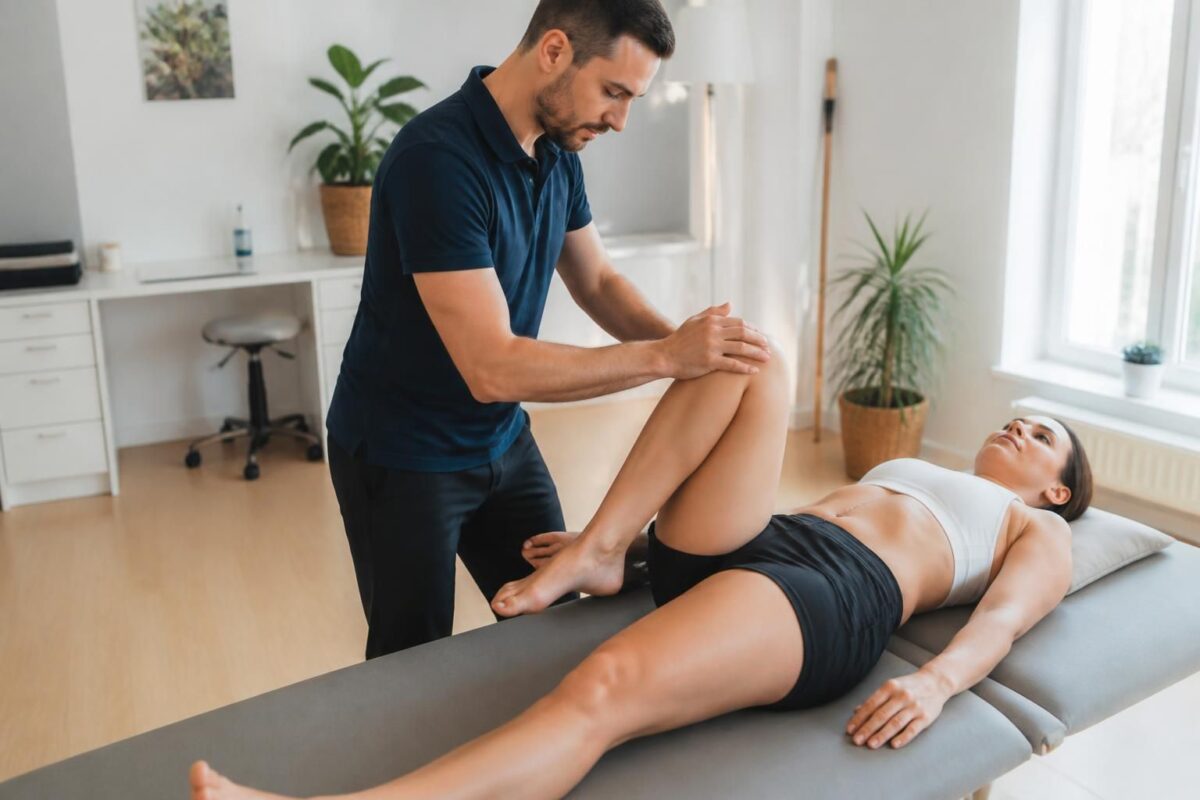
How osteopathy supports recovery after complex surgery
In short In short, Post-operative osteopathy is an approach fresh which supports the recovery After a Complex surgery. It helps to reduce the pain and the fatigue, improves the mobility and accelerates the healing thanks to a better vascularization and…
Why osteopathy is lastingly effective
With an approach personalized, osteopathy is based on protocols validated by the latest research and adapts to each patient (functioning, sleep, emotions and lifestyle). The results are measured using pain scales and functional assessments, and the support aims for real autonomy in the management of pain.
By favoring a Non-pharmacological approach, osteopathy offers a sustainable way for those who wish to limit drug treatments and promote sustainable rehabilitation. To begin, contact your osteopath to assess your situation and build a plan adapted to your objectives.
| Criterion | Concise impact |
|---|---|
| Clinical evidence and efficacy | Demonstrated efficacy : pain reduction (-0.59, moderate) and functional improvement (-0.42, small to moderate). |
| Lasting pain reduction | Sustainable reduction after a few sessions when education and drill complete the treatment. |
| Global approach and education | Patient education and program of exercises strengthen results and autonomy. |
| Safety and side effects | Favorable safety profile ; Rare and generally mild side effects. |
| Impact on work stoppages and quality of life | Reduction of work stoppages and improvement of quality of life. |
| Support Customization | Custom Plan Focused on posture, sleep, emotions and daily activity. |
| Integration into the care pathway | Course multidisciplinary and coordinated with health professionals. |
| Accessibility and adaptation | Adapted sessions For teleworkers, athletes, seniors and pregnant women. |
| Specific low back pain and neck pain | Solid evidence For chronic low back pain and cervicalgia. |
Here are testimonials that show why Osteopathy Maybe a Durable solution for the chronic pain and how it acts on pain, mobility and quality of life.
“Before you start osteopathy, my lumbar pain came back after every effort. Since follow-up with an approach overall, the pain has been reduced for a long time and I find my daily activities. The Simple exercises And postural advice changed my life at work and at home. »
“My problem cervical was blocking and I was afraid of surgery. theGlobal approach allowed me to reduce the cervical pain and improve my sleep and concentration. thetherapeutic education And the appropriate stretches gave me the tools to take my pain in hand. »
“As an active mom, the sessions gave me the tools to prevent pain and better manage stress. With lifestyle and exercise tips, MA quality of life progressed and I have more energy on a daily basis. »
“a Custom program helped me to remain independent in the face of my chronic pain. The combination of osteopathic techniques and exercises to do at home allowed me to move more easily and durably. »
“I was worried about resuming sport with persistent pain. Osteopathy allowed me to find my sporting activities without pain and without recourse to pharmaceuticals. The profit is lasting. »
“Working in a professional environment, I have seen a decrease in recurrences and better mobility thanks to an approach multidisciplinary. It’s a solution lasting which acts on the body as a whole and on the mind. »
The Role of osteopathy in chronic pain management is based on an approach overall and personalized which aims not only to relieve, but also to restore the body’s self-regulation mechanisms. Through an in-depth assessment, the practitioner identifies the physical, functional and life-style factors that nourish pain and propose concrete actions to improve posture, movement and sleep. This non-drug approach meets the expectations of patients looking for lasting relief and better quality of life.
Dr. Sylvain Desforges, expert in osteopathy, naturopathy and manual medicine, is at the initiative of tagmed and theacma, and puts its experience at the service of a care focused on the proof and therapeutic innovation. His practice incorporates advanced techniques and validated tools to target the mechanisms that fuel chronic pain and optimize the overall health of his patients. His approach is guided by the latest scientific advances and a desire to propose truly sustainable solutions.
Robust clinical data support the efficacy of osteopathy in chronic pain. In a summary of 10 randomized trials and 1160 participants, four types of osteopathic interventions were evaluated, demonstrating significant pain reduction and functional improvement over control treatments. The diameter of the effects indicates a moderate decrease in pain and a noticeable functional improvement, with gains that can persist over the course of the sessions and patient education.
The results extend beyond mere symptomatic relief. Recent evidence indicates a moderate to high level of evidence for chronic low back pain and neck pain, with reduced pain intensity and improved quality of life. Some studies have reported a 30-40% reduction in pain after a few sessions, which reinforces the position of osteopathy as Durable solution and Non-pharmacological alternative For chronic non-cancer pain. This dynamic is a potential lever to reduce the use of analgesics and promote sustainable functional recovery.
Within the workplace and daily life, osteopathy can help reduce work stoppages and reduce pain-related psychophysiological repercussions, especially when the intervention is accompanied by an appropriate exercise program and educational component. The integration of a biopsychosocial approach and therapeutic education reinforces the patient’s commitment to his healing process and increases the chances of lasting results.
For a Global support, Dr. Sylvain Desforges favors multidisciplinary collaboration and access to protocols validated by studies. His practice offers a combination of therapeutic axes (posture, movement, education and stress management) accompanied by complementary tools when necessary, such as technologies suitable for decompression or targeted stimulation. If you are looking for a personalized approach that combines science and manual know-how, you can consider a consultation to discover how its approach can help you regain mobility, autonomy and serenity.
To find out more about its approach and the services offered, visit the TagMed Clinic website. The sessions are designed to adapt to your needs, whether it is low back pain, neck pain or other chronic pain, with particular attention paid to education and prevention to promote a sustainable path to well-being.
This conclusion summarizes why Osteopathy constitutes a Durable solution Facing the chronic pain, relying on robust evidence, on the effects observed on pain and functioning, and on an approach overall and personalized of the patient.
The Scientific evidence Indicates a demonstrated efficacy of osteopathy for chronic pain. In a review grouping 10 randomized clinical trials and 1160 participants, osteopathic interventions are associated with a noticeable reduction in pain and an improvement in functional status compared to control treatments such as placebo, exercises or physiotherapy. The results show a Average effect size on pain of -0.59 (moderate) and a Functional improvement of -0.42 (small to moderate), with an identified contribution from four types of osteopathic interventions: OMT, MFR, cst and LMO.
Faced with the growing prevalence of chronic pain, which affects near 20% Of the French, osteopathy stands out as a non-drug approach that is widely acclaimed by patients and supported by science. Clinical results and recent syntheses indicate a reduction in pain intensity and an improvement in quality of life after a few sessions, reinforcing the role of osteopathy in Management strategies chronic pain.
Beyond the impact on pain, osteopathy is a significant contributor toImproved operation and at the quality of life. The integration of specific protocols and the use of targeted manual approaches enables significant progress on mobility and function, affecting work performance and day-to-day activities. These benefits are part of a dynamic of potential reduction in the use of analgesics and opioids, especially when osteopathy is associated with stretching and strengthening exercises and patient education.
adherence to a Global approach is essential. The combination of exercises (stretching, reinforcement) and education on pain and posture reinforces the results and promotes the patient’s autonomy. Data indicate that therapeutic education and interventions Biopsychosocial further improve efficiency, in addition to osteopathic care. For optimal support, it is recommended to integrate these elements in a coordinated and multidisciplinary course.
Official recommendations and the care framework support this approach. Adapted and regular physical exercise is the basis of treatment, and therapeutic models that integrate physical, emotional and social dimensions (especially via education and psychological support) gain recognition. In this context, osteopathy is part of multidisciplinary care pathways, with the collaboration of doctors, physiotherapists, rheumatologists and psychologists for complete and lasting care.
To deepen the concepts and evidence around osteopathy and chronic pain, several resources are available to you. They explore the mechanisms, benefits and operational modalities of this approach, as well as its role in a comprehensive health and physical activity injury prevention strategy. For example, you can consult resources explaining how osteopathy can prevent injuries related to repetitive activities, or how it fits into a holistic approach to health and well-being. Additional information is available through the pages dedicated to efficacy and evaluation of results, as well as eligibility and integration into the care pathway.
In short, osteopathy offers a lasting strategy for chronic pain, relying on solid evidence, a comprehensive patient-centric approach and coordination with other care actors to aim for a return to a painless life and continuous improvement in the quality of life. To learn more about concrete mechanisms and benefits, you can explore resources that address the benefits of osteopathy on musculoskeletal pain at work, educational aspects, and overall health approaches.

Dr Sylvain Desforges, B.Sc., D.O., N.D., osteopath, is the founding president of TAGMED and of the ACMA association. He dedicates his practice to chronic spinal pain, low back pain and symptoms compatible with sciatica, particularly when pain radiates toward the buttock, leg, calf, foot or toes.
Through SOS Sciatique, he publishes educational content on sciatica symptoms, possible causes such as disc herniation, disc narrowing, foraminal stenosis or irritation of a lumbar nerve root, as well as non-surgical approaches that may be considered according to the evaluation. At Clinique TAGMED, care may include, depending on the case, motorized neurovertebral decompression, specific osteopathic care or precision percussion.
For an evaluation related to sciatica treatment in Montreal / Mount Royal or sciatica treatment in Terrebonne, please consult the services available at Clinique TAGMED.
Medical disclaimer
The information published on SOS Sciatique is provided for educational purposes only and does not replace a consultation, diagnosis, opinion or treatment provided by a physician or another authorized healthcare professional. The author of this article is neither a medical doctor nor a specialist in a medical specialty recognized by the Collège des médecins du Québec. The osteopathic, manual medicine or functional support approaches described on this site do not constitute medical acts and are not intended to replace medical follow-up.
Consult a physician or emergency service in cases of loss of bladder or bowel control, anesthesia in the saddle area, significant or progressive weakness in the leg or foot, fever, recent trauma, severe pain or rapid worsening of symptoms. For more details, please read our Legal Notice.