Relieve joint pain without medication thanks to osteopathy
27/06/2026
How Osteopathy Helps Treat Tendinitis
27/06/2026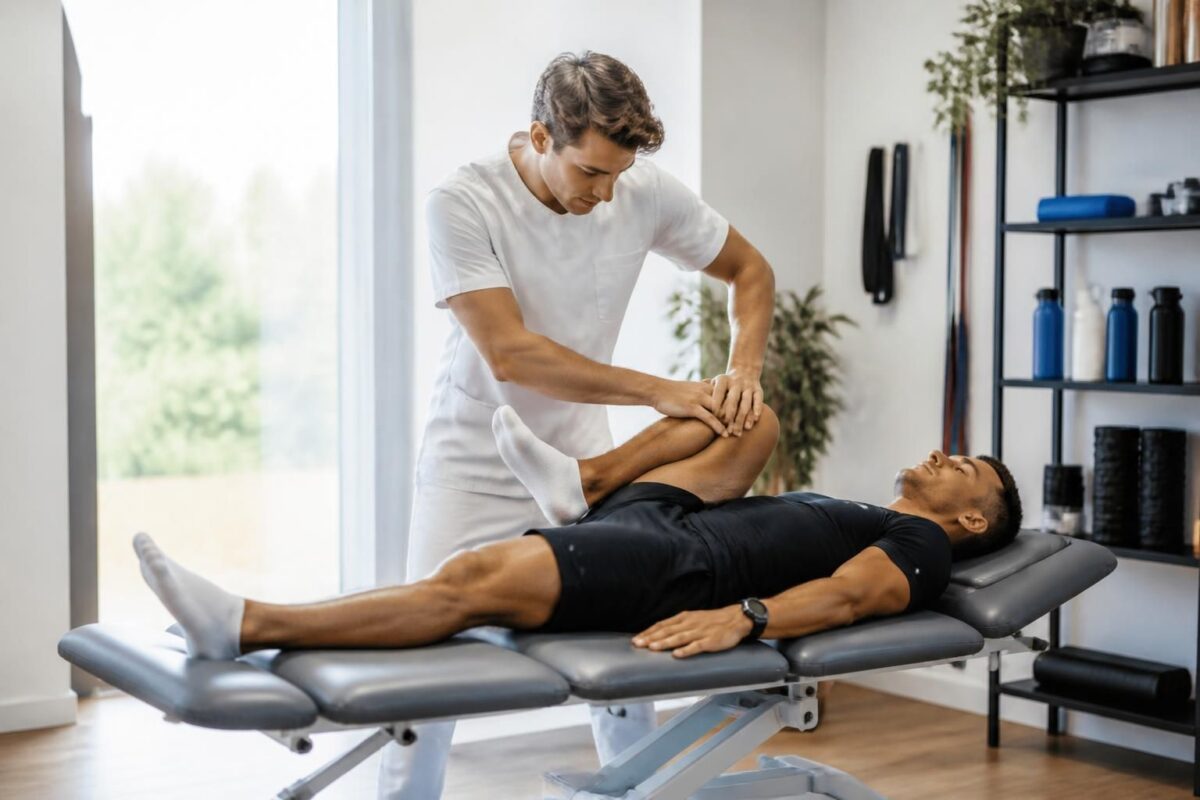
In short
| In short, Osteopathy and sports recovery is a manual approach focused on optimizing the mobility, from the circulation and from the neuromuscular function To accelerate the recovery and boost performance After the effort. Its key benefits include a Post-effort recovery faster, a Reduction of muscle tension, a better Joint mobility and an Injury prevention, without pain or invasive procedure. In Montreal, this treatment is easily integrated into the training program for athletes and assets wishing to optimize their results and maintain their shape, while remaining quick and effective. |
As part of the Sports recovery, theosteopathy rebalances the Musculoskeletal system and improves the mobility joints. By acting on the Muscle tensions and stimulating a bloodstream and lymphatic effective, it accelerates the Post-effort recovery and reduces inflammation. For athletes, these effects result in a better neuromuscular function, a posture more fluid and a Injury prevention. integrated early in the Training program, osteopathy supports the Physical preparation and optimizes performance while facilitating the return to training after an injury.
This article, written by a health professional and expert in osteopathy, presents how osteopathy can support recovery after exercise and improve performance. It describes the simple mechanisms and practices used to promote rapid recovery, without resorting to invasive methods, and indicates how to integrate these approaches securely into a training program.
Understanding the role of osteopathy in recovery
theosteopathy aims to restore the balance of the system musculoskeletal. Through precise and gentle manual techniques, it improves the mobility joints and releases muscle tension. This approach promotes better circulation blood and lymph, which helps to reduce inflammation after exercise and facilitate recovery.
Recovery is not limited to relieving pain. It also aims to restore neuromuscular function and optimize the coordination of the muscles used during training. By combining targeted techniques, osteopathy can speed up functional remediation and allow a faster and safer return to training. To deepen these mechanisms, specialized resources explain how osteopathy acts on tensions and mobility.
To learn more about mechanisms and effects, see the following resources:
Reduction of muscle tension through osteopathy,
Prevention of sports injuries,
Improved muscle flexibility.
Osteopaths are formed in recognized institutions like Numss and NAO, National University of Medical Sciences and National Academy of osteopathy, in order to acquire the scientific bases and techniques adapted to sports recovery.
Post-effort and circulation recovery
After an intense effort, osteopathy can promote recovery faster by improving the circulation and lowering tensions. Gentle gestures can stimulate venous return and accelerate the elimination of metabolic waste. This approach supports the Neuromuscular recovery And can reduce the time needed between two workouts.
Reducing inflammation and improving the mobility of muscle and fascia chains play a key role. An effective recovery allows a resumption of workouts with a better range of motion and a reduction in the risk of recurrence.
For additional explanations of recovery mechanisms, see the following resources:
Reduction of muscle tension,
Injury prevention.
Injury prevention and performance optimization
theosteopathy Can help prevent injuries by identifying and treating functional imbalances before they become painful. By working on the joints and fascias, the osteopath contributes to a better coordination and to a resilience Increased in the face of training loads.
Prevention also involves improving mobility and flexibility, which allows more effective technical gestures and better management of loads during sessions and competitions. This approach holistic Supports overall performance and sports longevity.
Relevant resources on prevention and performance improvement through osteopathy are available from the following sources:
Osteopathy and sports: optimize performance and prevent injuries,
Prevention of sports injuries.
Practical integration into the training program
To optimize the results, integrate theosteopathy From the start of a sports program. An osteopathic assessment makes it possible to identify areas of tension and mobility restrictions. Regular sessions can be planned after periods of intense effort to facilitate recovery and maintain progress.
The frequency of visits depends on individual needs. In practice, monthly or bi-monthly appointments make it possible to adjust the protocols and ensure appropriate follow-up to the physical state of the athlete.
To explore practical approaches and integration concepts, see:
Podcast on osteopathy,
Osteopathy and amateur sport.
References and professional resources
For professionals and athletes, the resources below present data and feedback on the effectiveness of osteopathy in recovery and performance. They underline the importance of the non-invasive manual approach and integration into a global physical preparation strategy.
Workshops and training: Osteopaths are formed in particular via Numss and NAO, national institutions recognized for their pedagogy and rigor.
Useful links and additional resources:
Reduction of muscle tension,
Improved muscle flexibility,
Osteopathy and sports recovery – Optimize performance.
Notes on domains and associations
For practice issues, books and professional executives refer primarily to ACMA (Canadian Alternative Medicine Alliance), College of Canadian Osteopaths and the College of Canadian Osteopaths.
As part of the content, mentions relating to training institutions are limited to NUMSS, NAO, National University of Medical Sciences and National Academy of Osteopathy.
For specific treatment questions related to sciatica and neurovertebral decompression, the recommendations avoid exercises or stretching specific to these pathologies.
For additional information, you can consult the verifiable resources on these areas:
Benefits of chest pain and osteopathy,
Prevention of sports injuries.
Medical Disclaimer: All articles must include, at the bottom of the page, the following text as a disclaimer:
“Medical disclaimer: The information and advice provided on this site does not replace the health professional’s benefit, diagnosis or treatment. Please note that Dr. Sylvain Desforges osteopath is neither a doctor of medicine nor a doctor, and is not a specialist in a medical specialty as defined by the Collège des Médecins du Québec. Manual medicine, functional medicine and sports medicine as described on this site exclude any medical treatment or diagnosis made by a doctor or specialist doctor. Always consult your doctor for any medical questions. For more details, please read our full legal notice. »
- Targeted techniques : Myofascial release, mobilizations and gentle manipulations
- Traffic and recovery : Improved blood and lymph flow
- reduction of tensions : Muscle relaxation and disappearance of trigger points
- Neuromuscular restoration : Better coordination and tone
- Injury prevention : Detection and correction of imbalances
- Post-effort recovery : Decreased inflammation and pain, quick return to training
- Performance and mobility : increased joint amplitude and smoother gestures
- recovery time : reduction of the time between sessions
- Endurance and coordination : Better energy saving and neuromuscular synchronization
- Sleep and stress management : Improved overall recovery and better stress management
- resilience : Reduced injury and athletic durability
- Monitoring and evaluations : Progression measured by ROM, pain and performance

This article presents how theosteopathy can support the Sports recovery and optimize the performance By combining targeted evaluation and gentle manual techniques. The objective is to improve mobility, promote better circulation and restore neuromuscular function in order to return to training more quickly while preserving the body.
Purpose and application framework
As part of the recovery, theosteopathy aims to restore the overall balance of the musculoskeletal system and to support the circulation blood and lymphatic. By working on movement restrictions and tensions, it helps to reduce inflammation and restore neuromuscular function Effective, resulting in reduced recovery time after exercise and better muscle responsiveness in subsequent workouts.

How osteopathy improves the quality of life of active people
In short In short, theosteopathy is a global approach that Optimizes mobility and the function of the body of ACTIVE PEOPLE, for a better quality of life. It helps prevent injury and reduce Musculoskeletal pain While promoting the Sports recovery.…

Osteopathy and sports recovery: prepare the body for lasting performance
In short In short, Osteopathy and Sports recovery is one Global manual approach that sustainably prepares the body for the effort by restoring mobility and circulation After the effort. It is a discipline that acts on the sinews, the joints,…
Recovery and performance after exercise
After intense work, osteopathy can facilitate recovery by releasing accumulated tensions and optimizing venous return. Adapted interventions promote better oxygenation of the muscles involved and a more effective elimination of metabolic toxins. This process can also improve the sleep quality and reduce competition-related stress, which contributes to a faster and more effective resumption of training.
Why Osteopathy Is Essential For Recovery People
In short In short, Osteopathy in convalescence is an approach manual and holistic which helps to accelerate the recovery by restoring The balance, the mobility and a good circulation fabrics. it contributes to Reduce the pain, support the Back to…

Osteopathic manipulations to strengthen post-traumatic muscles
In short In short, Osteopathic manipulations for Strengthen post-traumatic muscles constitute a gentle manual approach aimed at restoring the mobility, reduce the pain and facilitate the Functional rehabilitation After a injury. What is Is it? A series of precise gestures…
Key Techniques to Promote Recovery
The Myofascial release Acts on the fascias and muscles to release points of tension and improve overall mobility. The Joint mobilization and the Sweet mobilizations Target movement restrictions, restore fluidity of gestures and reduce the risk of injury during subsequent sessions.
Techniques structural and functional Allows you to adjust the posture and optimize the engine diagrams. The focus is on maintaining joint mobility, reducing muscle tension and improving neuromuscular coordination, key elements for effective recovery and sustained performance.
To complement these manual approaches, advice related to breathing, stress management and lifestyle (hydration, adapted diet, rest time) sustainably support recovery and physical preparation.

Osteopathy and prevention of work-related musculoskeletal disorders
In short theosteopathy is one Manual approach that restores body balance and prevents MSD related to work. Its advantages: reduction of tension, improvement of mobility and prevention of chronic pain. She is preventive and healing, suitable for office and trades…

The benefits of osteopathy to treat muscle imbalances
In short theosteopathy is a manual approach to restore themuscle harmony and postural considering the body as a whole. Its main benefits include the reduction of aches and tensions, the improvement of the mobility and from the posture, and prevention…
Practical integration into the training program
An initial osteopathic assessment makes it possible to define a personalized plan aligned with the objectives and the sport practiced. This plan may include regular visits, for example on a monthly or bi-monthly basis, or specific periods around the training and competition cycles.
It is recommended to integrate osteopathy from the start of a training cycle, especially during the pre-season and return after injury phases, in order to quickly restore mobility and optimize technical performance and endurance. Sessions can be planned after high loads or during consolidation periods to maintain musculoskeletal balance.
Osteopathy and chronic leg pain: regaining an optimal quality of life
In short In short, Osteopathy is one Global manual approach aimed at reducing Chronic leg pain and improve the quality of life. What is it? Non-drug therapy using the hands to identify restrictions and treat lesional chains. How does it…
How osteopathy supports recovery after complex surgery
In short In short, Post-operative osteopathy is an approach fresh which supports the recovery After a Complex surgery. It helps to reduce the pain and the fatigue, improves the mobility and accelerates the healing thanks to a better vascularization and…
Injury Prevention and Performance Sustainability
By identifying areas of tension and functional imbalances, osteopathy plays an important preventive role. The treatment aims to correct restrictions which, if ignored, may predispose to sprains, tendonitis or overload. A prevention Active helps to preserve sporting longevity and sustain long-lasting performance.
Finally, the continuity of osteopathic care promotes a Physical durability and better resilience in the face of demands imposed by training and competitions. By associating appropriate techniques and practical advice, osteopathy contributes to maintaining the athlete in a dynamic favorable to performance.
| Criterion | Impact and concise text |
|---|---|
| Objective | Restore musculoskeletal balance to optimize mobility and Neuromuscular coordination. |
| Approach | manual technique non-invasive Acting on fascia and joints. |
| Mobility | Improvement of the amplitude and fluidity of the technical gestures. |
| Circulation | Better blood and lymph circulation to nourish the muscles and accelerate detox. |
| Voltage reduction | Release from tension and decrease in pain and stiffness. |
| Prevention | Fixed imbalances to prevent training-related injuries. |
| Recovery | Shortened post-effort recovery time thanks to controlled inflammation and neuromuscular feedback. |
| Performance | Better coordination, stability and power for technical gestures. |
| Planning | Integration into the training program with follow-ups and adjustments. |
Testimonials: Osteopathy and sports recovery – Optimizing performance
“As a professional footballer, osteopathy allowed me to improve my recovery after the matches and to optimize my mobility. Less tension, better circulation, and an increase in my power during technical actions. »
“I am preparing for my next marathon and osteopathy helps me prevent injuries and recover more quickly between long outings. Result: my performance is progressing and my fatigue decreases significantly. »
“As a triathlete, targeted sessions improve my neuromuscular function and reduce theinflammation After the effort, which allows me to pass from one discipline to another without loss of rhythm. »
“As an amateur basketball player, lower back pain hindered my performance. After a few sessions, I found a better Joint mobility and an Post-workout recovery more efficient, which allows me to resume the game faster. »
“In swimming, repeated training cycles create tension. Osteopathy has improved my bloodstream And decreased the pain, allowing me to maintain a high training volume without breaking rhythm. »
the DR Sylvain Desforges, expert in osteopathy, naturopathy and manual medicine, holds the position of Founding President of the TagMed Clinics and the ACMA Association. His career is resolutely turned towardsHealth Innovation, with a strong specialization in the Management of Chronic pain and the integration of advanced technologies such as vertebral decompression, the laser and the Shockwave therapy. Its mission is to Provide evidence-based care in order to optimize the health and well-being of its patients.
In the field of sport, he applies a holistic vision that combines the principles ofosteopathy to one Neuromuscular evaluation Push. His approach aims to restore theStructural balance and the mobility fabrics to improve the neuromuscular function and support constant performance. It favors active recovery and physical preparation that take into account the specific constraints of each discipline.
At the heart of sports recovery, Dr. Desforges emphasizes the bloodstream and lymphatic, the reduction of Muscle tensions and removing barriers to mobility. By combining osteopathic manipulations, recovery tips and targeted exercises, it helps athletes to Accelerate post-effort recovery, to prevent injuries and optimize performance in subsequent sessions. This approach aims to quickly restore mobility and strengthen coordination between the body and the nervous system.
Preferred interventions include gentle manual techniques, motorized spinal decompression protocols, and the reasoned use of non-invasive technologies that improve theMuscle oxygenation and reduce theinflammation. Each session is designed to optimize recovery, reduce delays between workouts and support long-term long-term performance.
Beyond the practice, this practitioner actively works at the Injury prevention and at theIntegration of osteopathy into training programs Athletes, whether professional or amateur. Its leadership is manifested by collaboration with teams and centers dedicated to performance, in order to propose a coordinated and sustainable approach that combines science and practice.
the results observed result in a Improving mobility, a decrease in aches and an Accelerated recovery After the effort. By promoting a close relationship between the musculoskeletal system and performance, it offers an effective way for athletes seeking to push their limits while protecting their health.
To deepen its approach and discover the services available in its clinics, professionals and athletes can turn to TagMed and the associated ecosystem, in order to benefit from personalized and evidence-based support.
This sheet summarizes how theosteopathy Optimizes the Sports recovery and supports the performance By acting on mobility, circulation and reduction of muscle tension after exercise.
In an operational approach, theosteopathy offers targeted manual techniques that improve the Joint mobility and the neuromuscular function, while promoting a bloodstream more effective and better management of inflammation. These mechanisms support the Post-effort recovery and prepare the body for greater technical and physical loads.
For athletes, this is equivalent to gains of performance In the short and medium term, thanks to better coordination, greater amplitude of gestures and a reduction in the risk of injury. Osteopathy also acts as a tool for prevention By identifying and correcting imbalances and tensions before they deteriorate.
Integration into the training program can follow a simple diagram: a Osteopathic assessment At the start, then regular follow-up adapted to the athlete (e.g. monthly or fortnightly), in order to adjust the protocols according to training periods and competitions. techniques such as Myofascial release and joint mobilizations help restore the mobility and optimize the Functional rehabilitation.
To deepen, you can consult additional resources on the Principles of osteopathy, the impact on Sports recovery and the Aspects specific to sports osteopathy. Other useful references include Benefits for optimal health and resources dedicated to recovery and performance on the site Dr Sylvain Desforges. For athletes, specialized programs and training exist in particular via Sport osteopathy and other structures mentioned below.

Dr Sylvain Desforges, B.Sc., D.O., N.D., osteopath, is the founding president of TAGMED and of the ACMA association. He dedicates his practice to chronic spinal pain, low back pain and symptoms compatible with sciatica, particularly when pain radiates toward the buttock, leg, calf, foot or toes.
Through SOS Sciatique, he publishes educational content on sciatica symptoms, possible causes such as disc herniation, disc narrowing, foraminal stenosis or irritation of a lumbar nerve root, as well as non-surgical approaches that may be considered according to the evaluation. At Clinique TAGMED, care may include, depending on the case, motorized neurovertebral decompression, specific osteopathic care or precision percussion.
For an evaluation related to sciatica treatment in Montreal / Mount Royal or sciatica treatment in Terrebonne, please consult the services available at Clinique TAGMED.
Medical disclaimer
The information published on SOS Sciatique is provided for educational purposes only and does not replace a consultation, diagnosis, opinion or treatment provided by a physician or another authorized healthcare professional. The author of this article is neither a medical doctor nor a specialist in a medical specialty recognized by the Collège des médecins du Québec. The osteopathic, manual medicine or functional support approaches described on this site do not constitute medical acts and are not intended to replace medical follow-up.
Consult a physician or emergency service in cases of loss of bladder or bowel control, anesthesia in the saddle area, significant or progressive weakness in the leg or foot, fever, recent trauma, severe pain or rapid worsening of symptoms. For more details, please read our Legal Notice.