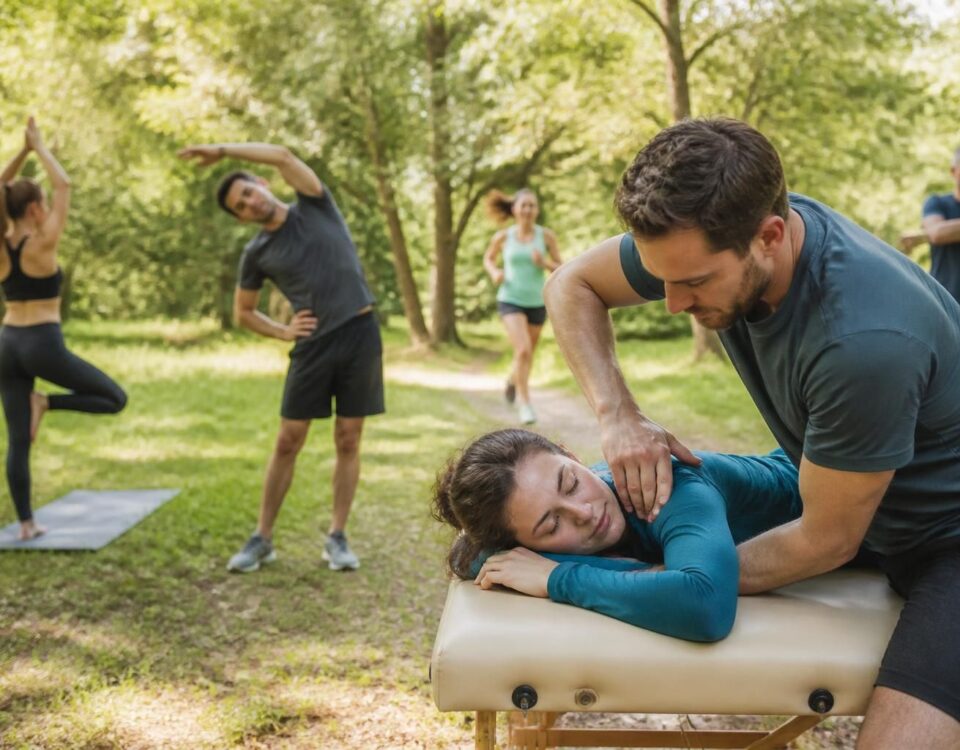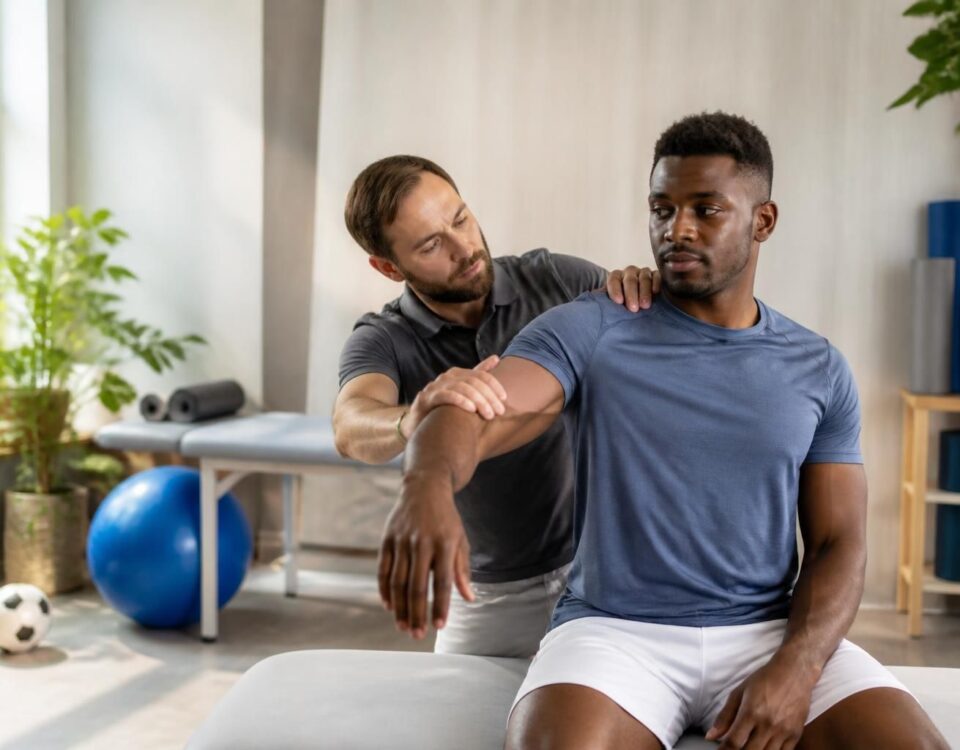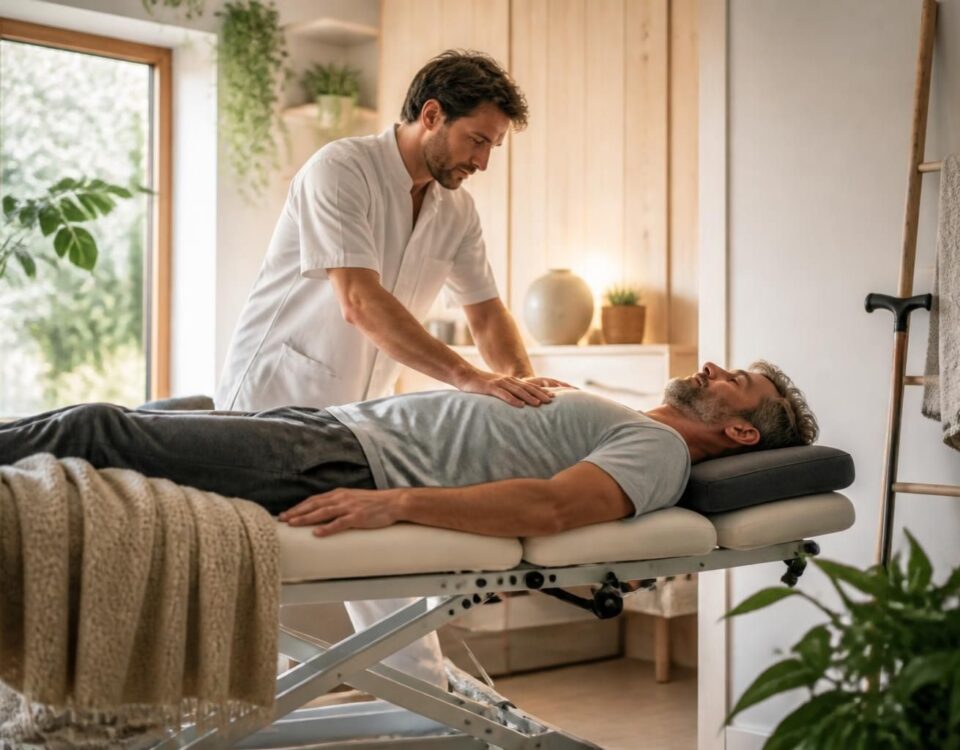
Misconceptions about demystified osteopathy
27/06/2026
Osteopathy and sports recovery: optimize performance
27/06/2026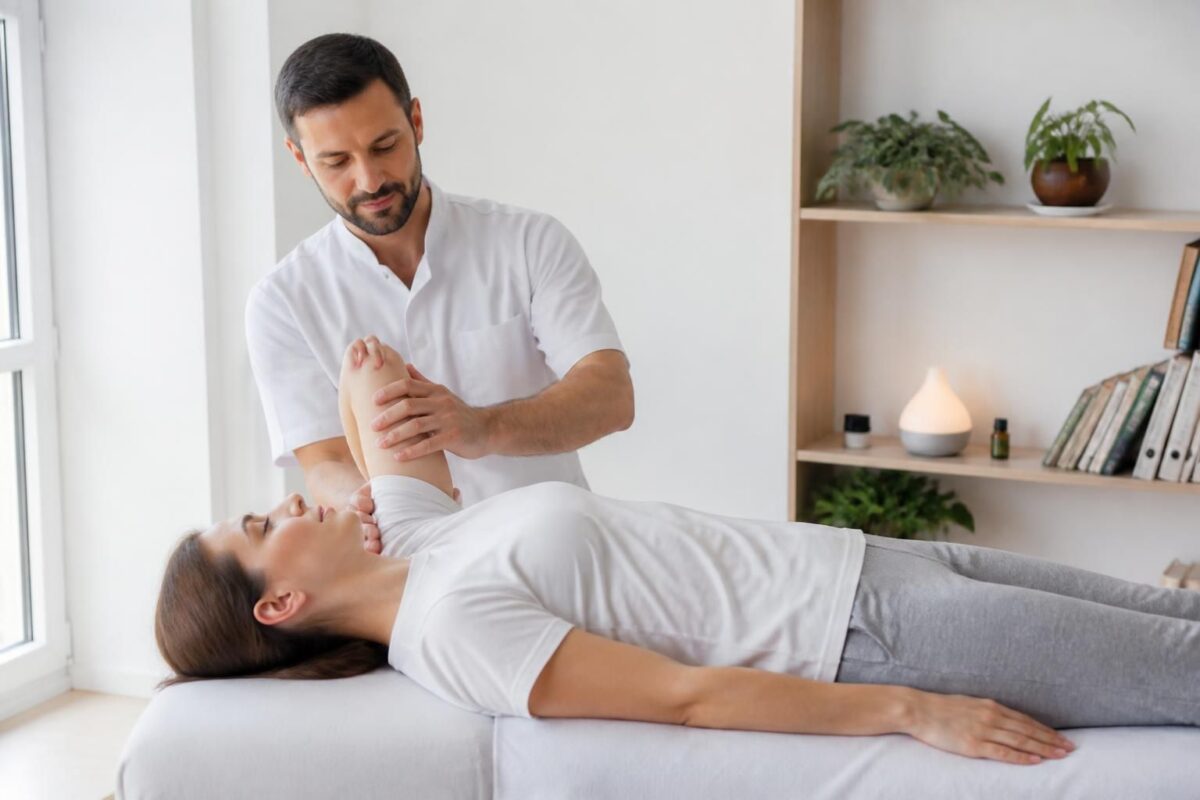
In short |
Definition : theosteopathy for Relieve joint pain without medication relies on manual techniques and lifestyle tips to restore the mobility and reduce pain. Benefits : pain reduction, Improving mobility, and Non-surgical approach, adapted to each patient and focused on the long term. How it works : Overall assessment, Targeted joint and tissue manipulations, ProgramAdapted physical activity under supervision and lifestyle advice; a medical consultation is essential to identify the cause and to propose an evidence-based strategy. Local : In Montreal and Mont-Royal, this service is particularly recommended for joint pain related to osteoarthritis, injury or sedentary lifestyle. |
With theosteopathy, relieve them Joint pain without pharmaceuticals. This approach is based on a Personalized evaluation And some Manual techniques non-invasive which aim to restore the mobility and reduce the pain, thus improving the Joint function.
The treatment combines Adapted exercises, advice on the way of life and postural adjustments to prevent recurrences, without systematic use of drugs.
This guide explains how Osteopathy may Relieve joint pain without the use of drugs. It describes the principles, gestures and limits, for a safe and effective approach.
The Joint pain They come from various causes: osteoarthritis, injuries, overweight, deficiencies or sedentary lifestyle. Osteopathy offers simple and respectful manual gestures that aim to restore the movement and stability of the joints. It accompanies lifestyle changes and seeks to reduce pain while improving function, without medication.
Simple and effective gestures in osteopathic practice
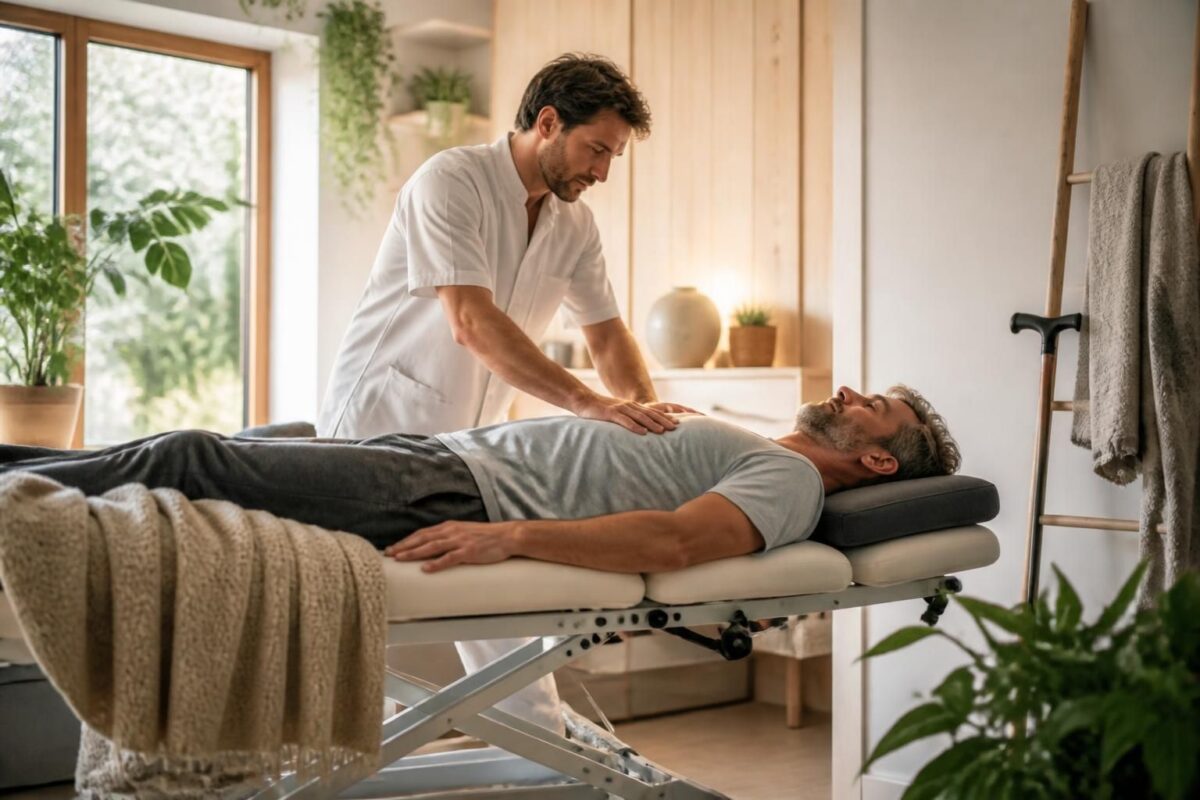
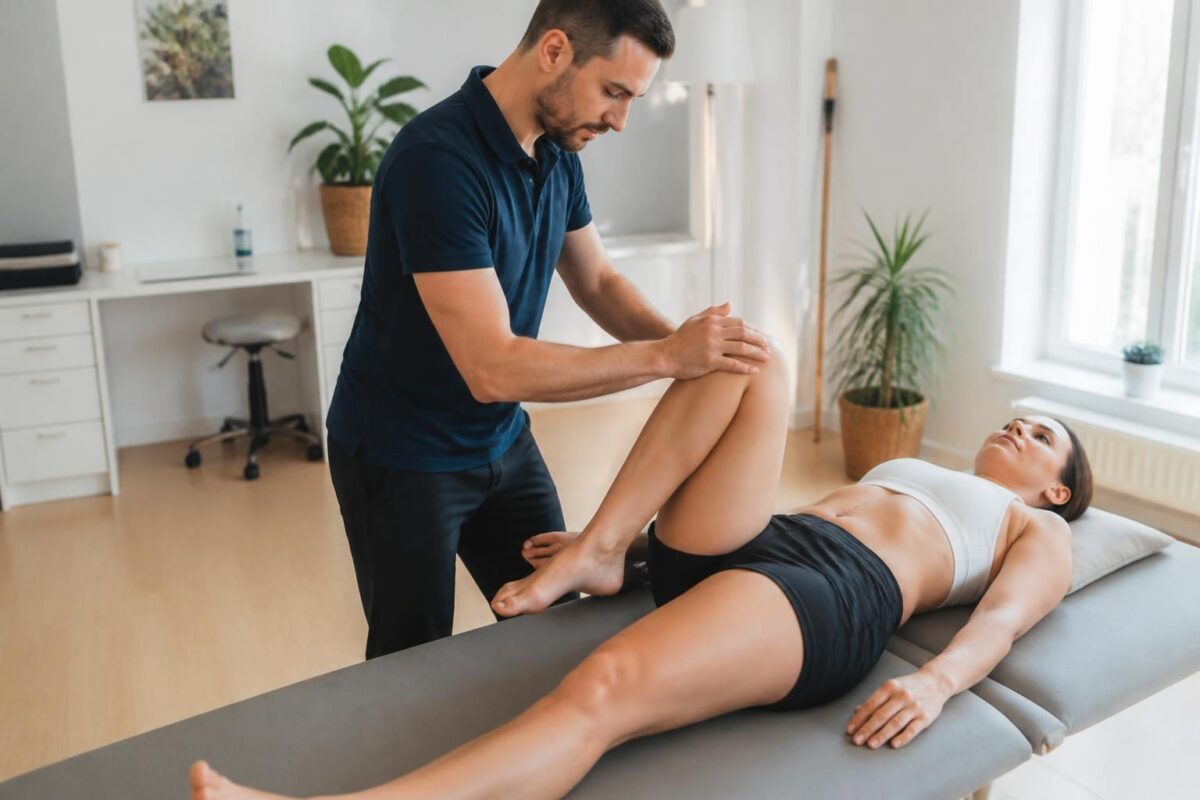
Osteopathic techniques use gentle manipulations and soft tissue work. The practitioner seeks to release restrictions that limit movement and rebalance the joint areas. The work is done on posture, breathing and coordination of body segments. Each act is adapted to the patient’s condition and prioritizes his safety.
When to consult and what to expect
During the first consultation, the professional describes the symptoms and evaluates the gestures that make it possible to assess mobility. A treatment plan is proposed, based on functional evidence and objectives. The follow-up targets a gradual improvement in mobility and a lasting reduction in pain. The results vary according to the people and the conditions.
Roles and limits of osteopathy
Osteopathy is an approach non-drug. It does not replace a medical diagnosis or treatment prescribed when warning signals appear. If the pain persists, consult a doctor to rule out a serious cause.
Evidence and dedicated resources
To deepen, consult specialized resources on the following sites.
Why is specific osteopathy a preferred method for joint pain,
Benefits of osteopathy for chest pain,
How Osteopathy Prevents Sport Injuries.
For information about the services, see Tagmed Clinic.
Additional resources can be consulted on The benefits of functional medicine for joint disorders and on topics related to prevention and health education.
Note that certain content and approaches can be discussed with your osteopath, in order to adapt the gestures to your situation and to avoid any inappropriate recommendation.
For more details on the approach and associated sources, you can consult resources dedicated to osteopathy and manual medicine on the sites mentioned above.
Medical Disclaimer: The information and advice provided on this site does not replace the health professional’s diagnosis or treatment. Please note that Dr. Sylvain Desforges osteopath is neither a doctor of medicine nor a doctor, and is not a specialist in a medical specialty as defined by the Collège des Médecins du Québec. Manual medicine, functional medicine and sports medicine as described on this site exclude any medical treatment or diagnosis made by a doctor or specialist doctor. Always consult your doctor for any medical questions. For more details, please read our full legal notice.
- Targeted evaluation To identify the origin without drug
- release of tensions and improved joint mobility
- gentle mobilization To restore the movement without pain
- Muscle stabilization Around the joint to prevent relapses
- Posture and daily gestures To limit joint stress
- Guided exercises and personalized program to be carried out at home
- adapted lifestyle (sleep, physical activity) to support results
- Personalized follow-up To adjust the plan without using drugs

This article shows you how Relieve joint pain without using drugs thanks to theosteopathy. You will discover an approach centered on personalized evaluation, Gentle techniques adapted and a program ofAdapted exercises, all supplemented by advice from way of life that support recovery and preserve mobility.
Understanding joint pain without medication
Joint pain results from a set of factors: wear, mechanical imbalances, occasional inflammations, or traumas. Osteopathy is not confined to “salking pain” but aims to deal with the constraints that limit movement. This approach favors non-pharmacological interventions that restore function and prevent recurrences, under professional supervision.

How osteopathy improves the quality of life of active people
In short In short, theosteopathy is a global approach that Optimizes mobility and the function of the body of ACTIVE PEOPLE, for a better quality of life. It helps prevent injury and reduce Musculoskeletal pain While promoting the Sports recovery.…

Osteopathy and sports recovery: prepare the body for lasting performance
In short In short, Osteopathy and Sports recovery is one Global manual approach that sustainably prepares the body for the effort by restoring mobility and circulation After the effort. It is a discipline that acts on the sinews, the joints,…
adapted osteopathic techniques
Personalized evaluation and functional diagnosis
Before any technique, the osteopath performs a evaluation complete to identify restrictions, compensations and imbalances. This in-depth opinion leads to a Functional diagnosis and a tailor-made action plan for your articulation and posture.
Manual techniques and mobilization
of Gentle techniques Target soft tissue and joint surfaces to release tension and improve mobility. Controlled mobilizations, muscle relaxation and progressive amplitudes can reduce pain and promote smoother movement, while remaining appropriate to your tolerance and safety.
Integrated support and advice
The osteopath also advises on theergonomy, placement during work and sleep, as well as on everyday gestures. This accompaniment aims to establish habits that support healing and avoid repeated overload, without dependence on unnecessary medical treatments.
Why Osteopathy Is Essential For Recovery People
In short In short, Osteopathy in convalescence is an approach manual and holistic which helps to accelerate the recovery by restoring The balance, the mobility and a good circulation fabrics. it contributes to Reduce the pain, support the Back to…

Osteopathic manipulations to strengthen post-traumatic muscles
In short In short, Osteopathic manipulations for Strengthen post-traumatic muscles constitute a gentle manual approach aimed at restoring the mobility, reduce the pain and facilitate the Functional rehabilitation After a injury. What is Is it? A series of precise gestures…
Adapted exercises and supervision
A key pillar of drug-free relief is in Adapted exercises and progressives carried out under supervision. Structured programs strengthen the muscles around the joint, improve mobility and reduce pain, without the need for surgery or medication. The osteopath can offer simple gestures to practice at home and direct to other professionals if necessary.

Osteopathy and prevention of work-related musculoskeletal disorders
In short theosteopathy is one Manual approach that restores body balance and prevents MSD related to work. Its advantages: reduction of tension, improvement of mobility and prevention of chronic pain. She is preventive and healing, suitable for office and trades…

The benefits of osteopathy to treat muscle imbalances
In short theosteopathy is a manual approach to restore themuscle harmony and postural considering the body as a whole. Its main benefits include the reduction of aches and tensions, the improvement of the mobility and from the posture, and prevention…
Lifestyle and prevention
Combining regular physical activity, balanced diet and hydration supports recovery and prevention of relapses. The goal is to avoid immobilization and preserve the integrity of the joints by adapting the effort to your abilities, while listening to your body’s signals.
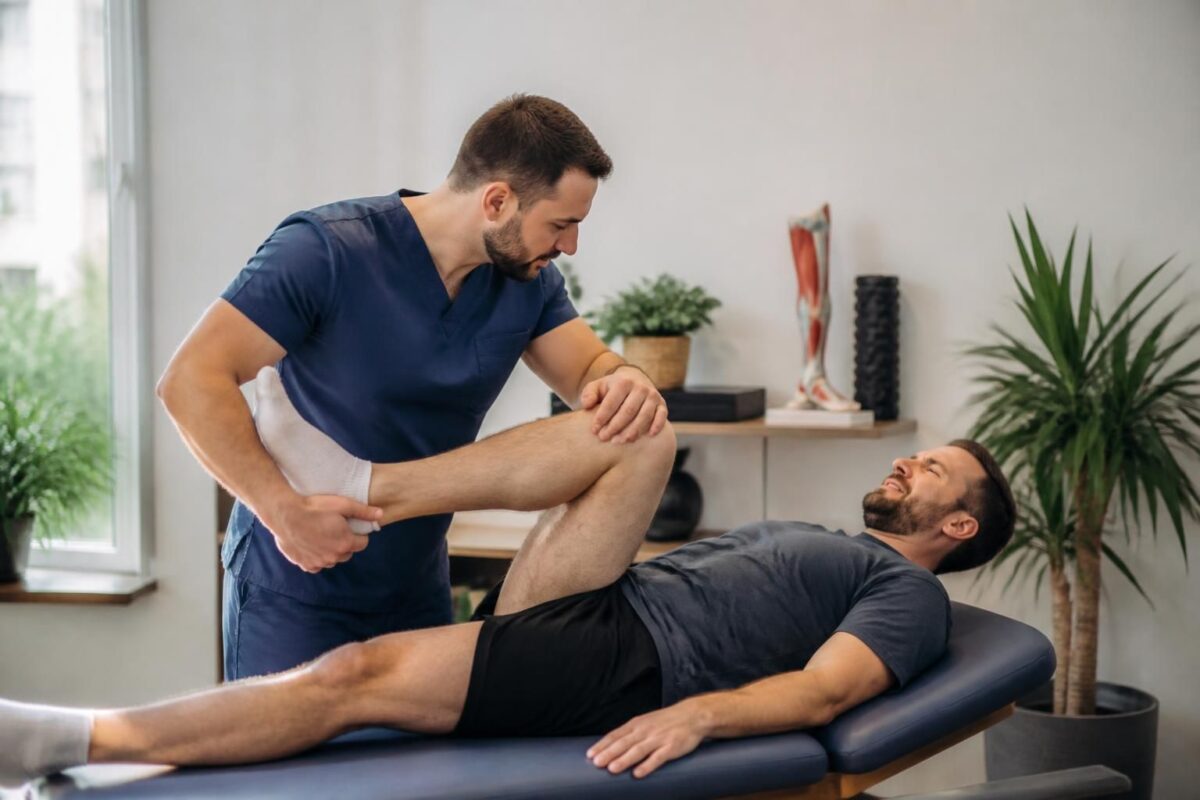
Osteopathy and chronic leg pain: regaining an optimal quality of life
In short In short, Osteopathy is one Global manual approach aimed at reducing Chronic leg pain and improve the quality of life. What is it? Non-drug therapy using the hands to identify restrictions and treat lesional chains. How does it…
How osteopathy supports recovery after complex surgery
In short In short, Post-operative osteopathy is an approach fresh which supports the recovery After a Complex surgery. It helps to reduce the pain and the fatigue, improves the mobility and accelerates the healing thanks to a better vascularization and…
When to consult and warning signs
Quickly seek advice if the pain persists despite the sessions, if there appears to be significant swelling, deformity, fever or loss of strength. If severe trauma occurs, consult without delay. Osteopathy can be part of a global approach, but does not replace a medical evaluation when it is necessary.
| Analysis axis | Concise impact |
|---|---|
| Objective | Relieves pain and restores mobility through manual techniques and appropriate exercises. |
| Methods used | Targeted evaluation, manipulations and postural advice. |
| Target audience | Adults with non-surgical joint pain. |
| Security | High safety, adaptation according to tolerance and evolution. |
| Side effects | minimal risk; possible temporary inconvenience. |
| Duration and frequency | Regular sessions and personalized progress. |
| Expected results | Improved mobility and reduced pain. |
| Limitations | Does not replace medical diagnosis; may require other approaches. |
| Progress indicators | Less pain, better amplitude and increased autonomy. |
Testimonials: Relieve joint pain without medication thanks to osteopathy
“Before, my Joint pain forced me to take anti-inflammatories every day. thanks to theosteopathy, I have seen a marked improvement and I no longer need medication to live normally. »
“In a few sessions, my mobility found herself. I can resume my daily activities without pain, and all this without resorting to medication. The personalized support and gentle manipulations were decisive. »
“I avoided surgery by combining sessions ofosteopathy and practical advice on posture and the Physical activities adapted. A natural solution that made a real difference. »
“The doctor had mentioned several options to me, but osteopathy offered me an effective and non-medication approach. More than a treatment, an accompaniment that targets the origin of the problem. »
“Each session focuses on the origin of the disorder and not on temporary relief. I found a quality of life Without depending on pharmaceuticals, thanks to a suitable and progressive method. »
This portrait presents a Expert in osteopathy, naturopathy and manual medicine whose purpose is to improve the quality of life Patients with joint pain without systematically using medication. His work is part of an innovative approach to Non-pharmacological care which favors overall body evaluation, prevention and functional rehabilitation. This approach is guided by a simple conviction: to sustainably relieve pain, you have to understand the origin and act on the mechanisms that perpetuate it, and not just occasionally relieve the symptoms.
A key figure in the care ecosystem, this expert is the Founding President Organizations dedicated to improving clinical practices and the emergence of high standards in manual therapies. His commitment extends toMultidisciplinary support and promoting a Evidence-based support, in order to optimize the health and well-being of patients. With this in mind, it strives to integrate technological advances when it proves to be compatible with a patient-centric approach focused on real efficacy.
Joint pain is multifactorial: wear, injury, sedentary lifestyle, posture and biological factors can converge to limit mobility. Rather than aiming only for a temporary pain reduction, the proposed approach focuses on Progressive rehabilitation and Movement improvement Through targeted osteopathic techniques, myofascial work and manual gestures that restore alignment and joint function. At the same time, appropriate tools make it possible to support this work without resorting to molecules, when possible and effective.
Complementary technologies — such as motorized neurovertebral decompression, reliance on laser and shockwave therapy — are offered as complementary options when they are part of a global strategy. Their goal is to amplify the results of manual manipulations, to improve circulation and to promote faster recovery, while remaining strictly integrated into a non-pharmacological and patient-centric approach.
The key lies in a personalized plan, developed after an in-depth evaluation and continuously monitored. Adapted physical activity, nutritional advice, stress management and lifestyle changes are an integral part of the program, with professional supervision to avoid execs and automatisms that could aggravate pain. The goal is to Optimize mobility and restore confidence in the body, in order to allow a more active and less dependent life on drug substances.
This course is implemented within a dedicated clinical framework where patients benefit from individualized support. For those looking for an approach tried and Human centered, the offer includes an accurate evaluation, personalized protocols and regular monitoring, without systematic prescription of drugs. The approach aims to sustainably establish mobility and released pain, thanks to an alliance between osteopathy, naturopathy and advanced manual practices for health on a daily basis.
Quick Summary: Osteopathy offers a drug-free approach to Relieve joint pain By acting on mobility and joint function via targeted manual techniques, functional rehabilitation and lifestyle adjustments.
Essential points and recommendations
Osteopathy Acts on tissues, joints and nerves to restore coordination and limit pain, without medication. To better understand the mechanisms, discover How osteopathy improves mobility and flexibility.
Evidence indicates that Supervised exercise programs and an Functional rehabilitation can reduce pain and restore the mobility without resorting to surgery. For concrete examples, see this article.
One of the key messages is to avoid immobilization and self-medication; The exercise must be carried out under professional supervision and adapted to your profile. resources like Guide-osteopathy explain how to design a safe and effective program.
pay attention to Home remedies and to complements: If they can provide temporary relief, they do not replace a serious medical assessment and do not treat the cause. resources like FAQ Osteopathy recall the importance of an accurate diagnosis.
To deepen the natural and appropriate approach, consider a consultation with an osteopath, which can combine specific gestures and life advice to reduce joint pain without medication; resources like concrete examples guide you step by step.
Feedback also shows that osteopathy can support the mobility and the performance Without drug use, especially when the techniques aim to reduce inflammation and restore movement. For more information, see These techniques and Decompression and cervical prevention.

Dr Sylvain Desforges, B.Sc., D.O., N.D., osteopath, is the founding president of TAGMED and of the ACMA association. He dedicates his practice to chronic spinal pain, low back pain and symptoms compatible with sciatica, particularly when pain radiates toward the buttock, leg, calf, foot or toes.
Through SOS Sciatique, he publishes educational content on sciatica symptoms, possible causes such as disc herniation, disc narrowing, foraminal stenosis or irritation of a lumbar nerve root, as well as non-surgical approaches that may be considered according to the evaluation. At Clinique TAGMED, care may include, depending on the case, motorized neurovertebral decompression, specific osteopathic care or precision percussion.
For an evaluation related to sciatica treatment in Montreal / Mount Royal or sciatica treatment in Terrebonne, please consult the services available at Clinique TAGMED.
Medical disclaimer
The information published on SOS Sciatique is provided for educational purposes only and does not replace a consultation, diagnosis, opinion or treatment provided by a physician or another authorized healthcare professional. The author of this article is neither a medical doctor nor a specialist in a medical specialty recognized by the Collège des médecins du Québec. The osteopathic, manual medicine or functional support approaches described on this site do not constitute medical acts and are not intended to replace medical follow-up.
Consult a physician or emergency service in cases of loss of bladder or bowel control, anesthesia in the saddle area, significant or progressive weakness in the leg or foot, fever, recent trauma, severe pain or rapid worsening of symptoms. For more details, please read our Legal Notice.