Osteopathy and osteoarthritis: reducing pain naturally
27/06/2026
Scientific evidence of the efficacy of osteopathy
27/06/2026
In short
| In short, theosteopathy Prevents sports injuries By evaluating and correcting the Postural imbalances, by improving the mobility and the posture, and by releasing muscle tension to optimize the recovery and performance. Its approach is based on a evaluation global, mobilization techniques and one preventive plan regular. At Montreal, this service helps athletes prevent sprains and tendonitis, while extending the athletic career. |
theosteopathy offers an approach preventive Complete for athletes, by acting on posture, mobility and muscle tension to avoid injuries before they occur.
- Postural and biomechanical evaluation To identify imbalances and areas at risk and adapt the intervention plan.
- Correction of imbalances and Improved joint mobility in order to limit the constraints linked to repetitive gestures.
- muscle relaxation To reduce tension, increase the range of motion and promote effective recovery.
- Targeted techniques and personalized care plan, focused on performance and microtrauma prevention.
- Regular consultations and pre-competition preparation to prepare the body for the effort and optimize performance.
By combining evaluation, correction, mobility and follow-up, osteopathy helps athletes to Reduce the risk of injury and to Maintain or improve their performance in the long term.
Written by Dr Sylvain Desforges, osteopath, expert in manual medicine and sports pain management. This article explains how osteopathy can prevent injuries in athletes through targeted assessment, optimizing mobility, and a regular preventive approach.
Postural assessment and identification of imbalances
A simple and essential first step is to analyze the posture and the movements of the athlete. This Postural evaluation Allows you to identify Postural imbalances likely to increase the risk of injury. By identifying these sensitive points, the osteopath offers care that aims to restore alignment and prevent muscle compensation.
Mobility and range of motion
The Joint mobility is a key factor in limiting injuries from repeated actions and intense efforts. Appropriate techniques increase the range of motion and reduce tensions that accumulate during training. Better mobility allows the body to better absorb loads and avoid sprains and overloads.
Muscle relaxation and tension reduction
The Muscle tensions Can limit the effectiveness of the sporting gesture and promote injuries. Manual work aims to relax the muscles involved, improve tissue elasticity and promote smoother recovery between sessions. A properly relaxed muscle supports repetitive loads and movements better.
Osteopathic techniques used in athletes
Osteopaths use Manual techniques specific to optimize the overall function of the body. We act on the mobility of the joints, myofascial tensions and the balance of the musculoskeletal chains. This holistic approach helps prevent pain and optimize performance without excessive pressure on a single area.
Regular consultations and prevention
A trace preventive Regular allows you to detect emerging tensions before they become injuries. Periodic appointments help maintain the body in a functional condition conducive to training and competition. This proactive planning supports the Preservation of functional health and sports longevity.
Preparation for competition
Before a test, an osteopathic consultation can prepare the body for exercise. It is a question of eliminating residual tensions, optimizing alignment and evaluating the whole body. This preparation aims to improve performance while reducing the risk of injury during the event. To deepen sports benefits, see the following resources:
Benefits of osteopathy for athletes •
Prevent sports injuries through osteopathy •
Managing stress through osteopathy
Integration and security
The professionals rely on recognized training and relevant professional associations to ensure the quality of care. For training in osteopathy, we can cite institutions like Numss and Nao. Chiroprats and osteopaths can also collaborate with other professionals, depending on the needs of the athlete. Complementary resources, available on specialized sites, make it possible to deepen advances in injury prevention.
For more information, consult the following specific resources that address the benefits and mechanisms of osteopathy in the sports setting:
Tagmed Clinic •
Podcast on manual medicine and osteopathy •
Role of osteopathy in the prevention of sports injuries •
Benefits for sport-related pain
To learn more about approaches and related technologies, see also:
Benefits of osteopathy for athletes •
Osteopathy and stress management •
Sports related pain
Relevant institutional and professional references: NUMSS, NAO, National University of Medical Sciences, National Academy of osteopathy; ACMA, College of Canadian Osteopaths, College of Canadian Osteopaths.
For more information, you can also consult the following resources:
Benefits of osteopathy for athletes,
stress management,
Prevent sports injuries through osteopathy.
- Postural evaluation and biomechanics to identify imbalances and areas at risk
- Correction of imbalances by targeted manipulation
- Joint mobility increased to limit stress during repeated movements
- muscle relaxation To reduce tensions and release amplitude
- microtrauma prevention By improving recovery and circulation
- Preventive planning Tailor-made and regular follow-up
- Preparation for competition via Postural adjustments and targeted mobilization
- Post-effort recovery Optimized thanks to the circulation and evacuation of toxins
- Asymmetries management and rebalancing muscle chains
- Monitoring and adjustments To adapt the program to progress

This article presents how theosteopathy Helps prevent sports injuries. By detecting imbalances early, improving mobility and releasing muscle tension, it prepares the body for effort and accelerates recovery. You will discover simple and effective levers to maintain performance while protecting your musculoskeletal system.
Preventive assessment and risk identification
The first step is a Overall assessment of the body, in order to identify the Postural imbalances, tensions and mobility restrictions who predispose to injury. This approach makes it possible to adjust the training program and establish clear priorities for prevention.
Posture and biomechanics
By correcting postural imbalances and associated muscle chains, the osteopath restores a harmonious alignment. This revision of biomechanics limits compensation and excessive loads on the joints, thus reducing the risk of pain and injury during technical procedures.
Movement and load diagram analysis
We observe repeated gestures and joint trajectories specific to sport to anticipate areas of excessive stress. This approach makes it possible to propose technical adjustments, relaxation exercises and targeted reinforcement sessions to redistribute the loads in a more balanced way.

How osteopathy improves the quality of life of active people
In short In short, theosteopathy is a global approach that Optimizes mobility and the function of the body of ACTIVE PEOPLE, for a better quality of life. It helps prevent injury and reduce Musculoskeletal pain While promoting the Sports recovery.…

Osteopathy and sports recovery: prepare the body for lasting performance
In short In short, Osteopathy and Sports recovery is one Global manual approach that sustainably prepares the body for the effort by restoring mobility and circulation After the effort. It is a discipline that acts on the sinews, the joints,…
Mobility and relaxation to prevent injury
The mobility and the muscle relaxation are essential pillars. By improving the amplitude and flexibility, we reduce the stresses during technical gestures and we prevent sprains, tendinopathies and low back pain linked to the repetition of efforts.
mobilizations and liberation techniques
Targeted joint mobilizations and myofascial techniques promote blood and lymph circulation. This helps to maintain a fluid joint function and prepare the muscles for training, while facilitating recovery after exercise.
Preservation of function and prevention of microtraumas
By working on key segments and muscle chains stressed, osteopathy reduces repeated microtraumas and prolongs painless workout ability. Recovered mobility results in more precise gestures and better technical efficiency.
Why Osteopathy Is Essential For Recovery People
In short In short, Osteopathy in convalescence is an approach manual and holistic which helps to accelerate the recovery by restoring The balance, the mobility and a good circulation fabrics. it contributes to Reduce the pain, support the Back to…

Osteopathic manipulations to strengthen post-traumatic muscles
In short In short, Osteopathic manipulations for Strengthen post-traumatic muscles constitute a gentle manual approach aimed at restoring the mobility, reduce the pain and facilitate the Functional rehabilitation After a injury. What is Is it? A series of precise gestures…
Integrative approach and long-term prevention
Regular consultations are part of a preventive strategy which adjusts the training plan and daily habits. This proactive approach makes it possible to anticipate emerging problems and optimize performance on a sustainable basis.
Preventive planning and preparation for competition
Before a sports deadline, a targeted session can release tension, optimize posture and prepare the nervous and muscular system for effort. This results in better stability, increased accuracy of movements and reduced risk of injury during the event.
Education and autonomy of the athlete
The practitioner gives advice on the positions to be preferred during training and daily postural habits. By developing your autonomy, you become an actor in your health and performance, even between sessions.

Osteopathy and prevention of work-related musculoskeletal disorders
In short theosteopathy is one Manual approach that restores body balance and prevents MSD related to work. Its advantages: reduction of tension, improvement of mobility and prevention of chronic pain. She is preventive and healing, suitable for office and trades…

The benefits of osteopathy to treat muscle imbalances
In short theosteopathy is a manual approach to restore themuscle harmony and postural considering the body as a whole. Its main benefits include the reduction of aches and tensions, the improvement of the mobility and from the posture, and prevention…
Recovery and reduction of microtraumas
After exercise, osteopathy facilitates recovery by stimulating circulation and promoting the elimination of accumulated tensions. This approach accelerates the return to maximum performance and reduces the probability of recurrence of pain related to microtraumas.
Osteopathy and chronic leg pain: regaining an optimal quality of life
In short In short, Osteopathy is one Global manual approach aimed at reducing Chronic leg pain and improve the quality of life. What is it? Non-drug therapy using the hands to identify restrictions and treat lesional chains. How does it…
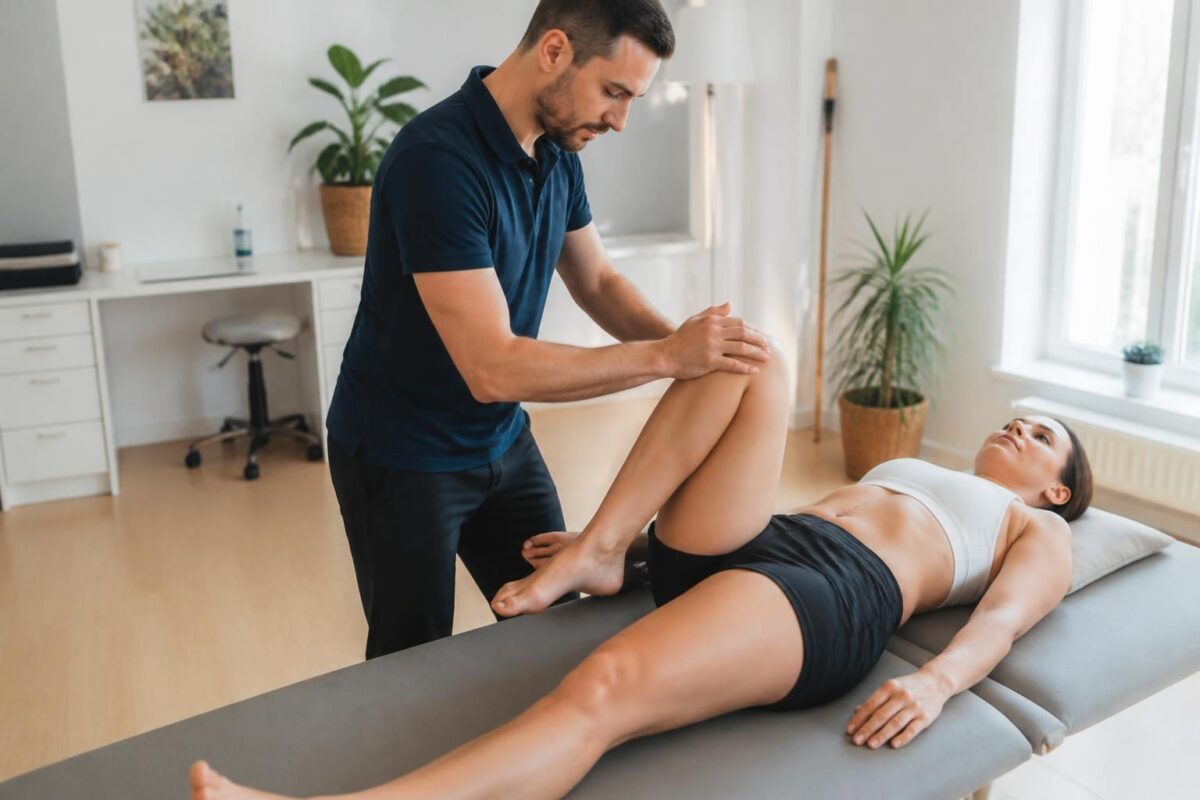
How osteopathy supports recovery after complex surgery
In short In short, Post-operative osteopathy is an approach fresh which supports the recovery After a Complex surgery. It helps to reduce the pain and the fatigue, improves the mobility and accelerates the healing thanks to a better vascularization and…
When to consult and practical advice
For athletes, a adapted frequency of visits can be defined depending on the training level and volume. Consult in case of unusual pain, decreased mobility or persistent muscle fatigue that hinders performance. In prevention, schedule regular appointments and incorporate recommended exercises into your routine to maintain long-term function and performance.
| Axis | snide profit |
|---|---|
| preventive evaluation of Postural imbalances | IDENTIFICATION OF Postural imbalances and targeted correction to reduce the risk of injury. |
| Mobility and amplitude | Improvement of the Joint mobility and theamplitude to limit constraints. |
| Relaxation muscular | muscle relaxation To optimize the execution of the movements and accelerate the recovery. |
| Correction of asymmetries | Overall alignment to prevent uneven loads and sprains. |
| Specific techniques | manipulations and engagement targeted to improve function and circulation. |
| Preventive planning | ProgrammingBody maintenance and Regular follow-up to prevent future injuries. |
| Pre-competition preparation | elimination of tensions and Posture optimization for better performance. |
| Post-effort recovery | improvement of Venous return and post-workout pain reduction. |
| Integration with other approaches | Coordination with other therapies to maximize outcomes and strengthen prevention. |
Testimonials: How Osteopathy Prevents Sport Injuries
Testimony of Julie, handball player: “Since my first sessions focused on prevention, my posture and my mobility have improved significantly. Less tension in the back and shoulders, and above all less risk of small sprains during contact in the field. »
Testimony of Marc, trail runner: “Regular reviews allowed me to identify a slight imbalance in my stride. By correcting this and working on the flexibility Joints, I avoided a sprain and I gained in endurance without persistent pain. »
Testimony of Sophie, swimmer: “Osteopathy has strengthened the shoulder mobility and chest while reducing muscle tension that caused pain at the end of the series. I feel better prepared and less exposed to tendinopathies related to intensive training. »
Testimony of Léo, amateur cyclist: “Before each season, osteopathic treatment helps me to optimize my posture and my recovery. This significantly reduces microtraumas and improves my overall performance over long distances. »
Testimony of Camille, basketball player: “The preventive evaluation allowed me to target the areas of tension and to restore themuscle balance. Result: less pain after the matches and smoother movements on the floor. »
Testimony of Alex, triathlete: “By combining osteopathy and routines of preparation Targeted, I was able to preserve my physical condition and avoid frequent injuries related to over-assuming. My performance is continuously uninterrupted. »
Dr. Sylvain Desforges is recognized as an expert in osteopathy, naturopathy and manual medicine, and he holds the position of Founding President at the head of tagmed and association acma. His career is oriented towards health innovation, with a marked specialization in the management of chronic pain and the integration of advanced technologies. His approach is intended to provide evidence-based care to optimize the health and well-being of patients, including athletes wishing to prevent injuries and improve their performance.
In a practice focused on prevention, osteopathy is based on a Overall body assessment To identify risk factors before they turn into injury. The order of gestures is thought of as a continuous process: detecting Postural imbalances, identify muscle tension and anticipate mobility restrictions which, over time, can promote sprains, tendinopathies or lower back pain related to physical exertion. This proactive approach makes it possible to establish a personalized plan based on the Sustainable prevention.
Correction of imbalances involves targeted techniques that improve Joint mobility and reduce the constraints associated with repetitive movements. By working on the muscle chains and joints, the osteopath promotes more fluid and less explosive sporting gestures on the mechanical level. The muscle relaxation And the appropriate manipulations help to reduce accumulated tension, which reduces the risk of microtraumas and prolongs the ability of athletes to train without interruption.
Specific protocols take place in sports preparation: sessions focused on the Pre-competition preparation Aim to optimize posture, eliminate residual tensions and adjust the body’s biomechanics before intense exertion. Regular monitoring makes it possible to anticipate nascent discomfort and to adjust prevention strategies according to the seasons and training loads. This reactive and preventive approach is essential to maintain a constant performance while reducing the risk of injury.
To strengthen these preventive mechanisms, osteopathic intervention can be based on complementary technologies. Among these, some non-invasive techniques support the prevention objective by stimulating circulation, improving recovery and facilitating the return to optimal mobility. Thus, modern osteopathy combines precise manual gestures with technological tools in order to act on musculoskeletal structures while respecting the integrity of the body.
In short, preventive osteopathy brings a complete and pragmatic approach for athletes: it early identifies areas at risk, improves mobility and releases tensions that hinder performance. By integrating regular assessments, postural corrections and targeted preparation, it offers an effective way to prevent injury and sustain progress in sports practice.
This article clearly shows you how theosteopathy Prevents sports injuries by acting on posture, mobility and recovery, in order to reduce risks while improving overall performance.
The Prevention of sports injuries through osteopathy is based on a proactive strategy that begins with a Postural evaluation and in-depth biomechanics. By identifying the malfunctions and areas at risk, the osteopath can establish a personalized plan to correct the Postural imbalances and optimize muscle and joint chains.
The Joint mobility and the muscle relaxation constitute the heart of osteopathic interventions. By restoring joint flexibility and reducing muscle tension, the athlete can perform technical gestures with greater fluidity and less risk of injury, which also contributes to better movement efficiency and decreases excessive loads on the body.
Effective prevention also involves Pre-competition preparation and one Regular follow-up. These appointments allow you to maintain alignment and body balance throughout the training program, adjust the loads and anticipate the specific needs of the athlete, which optimizes performance and minimizes interruptions due to injury.
The Post-effort recovery is another pillar. By stimulating blood and lymph circulation and facilitating tissue rebalancing, osteopathy accelerates the return to performance and prepares the body to withstand future intense workouts, thus reducing the risk of repeated micro-traumas.
To enrich your understanding and explore the frameworks and objectives of osteopathy, you can consult a variety of resources: Differences Osteopathy/Chiropractic, Professional recognition, Postpartum benefits, How Osteopathy Improves Performance, Osteopathy, asset for athletes, Benefits for joint pain.

Dr Sylvain Desforges, B.Sc., D.O., N.D., osteopath, is the founding president of TAGMED and of the ACMA association. He dedicates his practice to chronic spinal pain, low back pain and symptoms compatible with sciatica, particularly when pain radiates toward the buttock, leg, calf, foot or toes.
Through SOS Sciatique, he publishes educational content on sciatica symptoms, possible causes such as disc herniation, disc narrowing, foraminal stenosis or irritation of a lumbar nerve root, as well as non-surgical approaches that may be considered according to the evaluation. At Clinique TAGMED, care may include, depending on the case, motorized neurovertebral decompression, specific osteopathic care or precision percussion.
For an evaluation related to sciatica treatment in Montreal / Mount Royal or sciatica treatment in Terrebonne, please consult the services available at Clinique TAGMED.
Medical disclaimer
The information published on SOS Sciatique is provided for educational purposes only and does not replace a consultation, diagnosis, opinion or treatment provided by a physician or another authorized healthcare professional. The author of this article is neither a medical doctor nor a specialist in a medical specialty recognized by the Collège des médecins du Québec. The osteopathic, manual medicine or functional support approaches described on this site do not constitute medical acts and are not intended to replace medical follow-up.
Consult a physician or emergency service in cases of loss of bladder or bowel control, anesthesia in the saddle area, significant or progressive weakness in the leg or foot, fever, recent trauma, severe pain or rapid worsening of symptoms. For more details, please read our Legal Notice.