Osteopathy to relieve chronic back pain
27/06/2026
Osteopathy to treat work-related muscle pain
27/06/2026
In short
| In short, theosteopathy is one Manual approach that releases muscle and fascia-tissue tension and restrictions to improve Muscle flexibility and mobility; It acts on the whole body through gentle and personalized manipulations, promoting better circulation and faster recovery after exercise, with key advantages such asIncreased muscle elasticity, the Injury prevention and theImproved recovery. In Montreal, this service is particularly useful for athletes looking to optimize their technique and prevent pain related to training, without invasive recourse. |
Osteopathy improves Muscle flexibility and mobility Thanks to a gentle manual approach that releases tension, unwinds restrictions and restores the balance of muscle and joint chains. This personalized method aims to increase the elasticity of fabrics and to facilitate everyday gestures and sports performance.
- Targeted evaluation : Identification of restrictions and tight areas to adapt the treatment.
- Release of tensions and fascias : Soft techniques that improve elasticity and widen range of motion.
- traffic improvement and drainage: better supply of oxygen and nutrients for the muscles and faster recovery.
- Recovery and performance : Better coordination and reduction of stiffness after exercise.
- Prevention : Personalized program to maintain flexibility and prevent injuries.
This article explains how theosteopathy acts to improve the muscle flexibility. It describes the mechanisms, techniques used and the interest of personalized support, in order to obtain a Fluid articulatory mobility, lasting muscle relaxation and optimized recovery after exercise.
theosteopathy considers the body as a bound set. It aims to restore the balance of the structures that support the movement. Muscle flexibility depends on three essential elements: muscle elasticity, joint mobility and Effective circulation body fluids. By clarifying movement restrictions and tensions, the osteopath restores the fluidity of gestures and improves the proprioception, i.e. the perception of the body in space.
Evaluation and action plan
A postural and functional analysis makes it possible to identify areas of tension, imbalances and joint limitations. The treatment focuses on Gentle joint movements and targeted muscle relaxation. The objective is to improve the range of movements and to reduce the compressions that hinder the effectiveness of sports gestures on a daily basis.
Osteopathic techniques and targeted actions
the techniques used promote a Tissue mobility and an Muscle relaxation sustainable. Myofascial release and gentle mobilization work on the fascias that surround the muscles and joints. The improvement of the bloodstream And lymphatic helps to bring the necessary nutrients and eliminate metabolic waste, promoting faster recovery after exercise.
Simple and effective levers
the practitioner can combine techniques of Tissue release, of Myofascial therapy and of Joint mobilizations To release tension and restore flexibility. This approach acts on the whole body, which contributes to better posture and better performance in sports activities and daily gestures.

How osteopathy improves the quality of life of active people
In short In short, theosteopathy is a global approach that Optimizes mobility and the function of the body of ACTIVE PEOPLE, for a better quality of life. It helps prevent injury and reduce Musculoskeletal pain While promoting the Sports recovery.…

Osteopathy and sports recovery: prepare the body for lasting performance
In short In short, Osteopathy and Sports recovery is one Global manual approach that sustainably prepares the body for the effort by restoring mobility and circulation After the effort. It is a discipline that acts on the sinews, the joints,…
Practical integration into everyday life and sport
For athletes, the goal is toExtend the range of amplitude and improve the movement fluidity. A personalized follow-up makes it possible to adjust the axes of improvement: relax certain under-solicited muscle groups, correct certain postural patterns and prevent recurrent pain by appropriate interventions.
Resources explain how osteopathy can support flexibility and general well-being. For further information, you can consult information about theOsteopathy and flexibility and on the beneficial effects on physical stress and quality of life. You can also read professional and clinical perspectives on Tagmed Clinic, which illustrates the integrated approach in osteopathy and manual medicine.
Training and practices in osteopathy are based on recognized courses in establishments such as NUMSS, NAO, National University of Medical Sciences and National Academy of osteopathy. The professional framework is structured around organizations such as ACMA, College of Canadian Osteopaths and the College of Canadian Osteopaths, who ensure the quality and ethics of care.
For sedentary people or in rehabilitation, osteopathy can support rehabilitation and promote better mobility without resorting to invasive treatments. Specialized resources detail the benefits of osteopathy for quality of life and body flexibility and explain how to build a suitable routine. See in particular the information available on SOS sciatica and the associated resources.
In order to complete your understanding, you can also consult resources that address the relationship between osteopathy and flexibility, and the testimonies of professionals and patients on the positive impacts of soft and regular manual work.
Medical Disclaimer: The information and advice provided on this site does not replace the health professional’s diagnosis or treatment. Please note that Dr. Sylvain Desforges osteopath is neither a doctor of medicine nor a doctor, and is not a specialist in a medical specialty as defined by the Collège des Médecins du Québec. Manual medicine, functional medicine and sports medicine as described on this site exclude any medical treatment or diagnosis made by a doctor or specialist doctor. Always consult your doctor for any medical questions. For more details, please read our full legal notice.
Axis of action: relaxation then elasticity and recovery for a Sustainable flexibility.
- muscle relaxation and release from fascial tensions
- Increased elasticity and better stretching ability
- Joint amplitude expanded and smoother movement
- bloodstream Improved lymphatic drainage
- proprioception reinforced and better control of gestures
- Custom Plan and progression suitable for training
- Prevention Injuries and post-effort stress reduction
- Recovery Accelerated after exercise and better regeneration

This article explains how Osteopathy can promote the flexibility and the muscle mobility among athletes. By combining precise evaluation, soft manual techniques and personalized follow-up, it allows you to release tension, improve circulation and optimize the fluidity of technical gestures. The concrete results concern the increase in range of motion, more effective recovery after exercise and better prevention of repetitive discomfort.
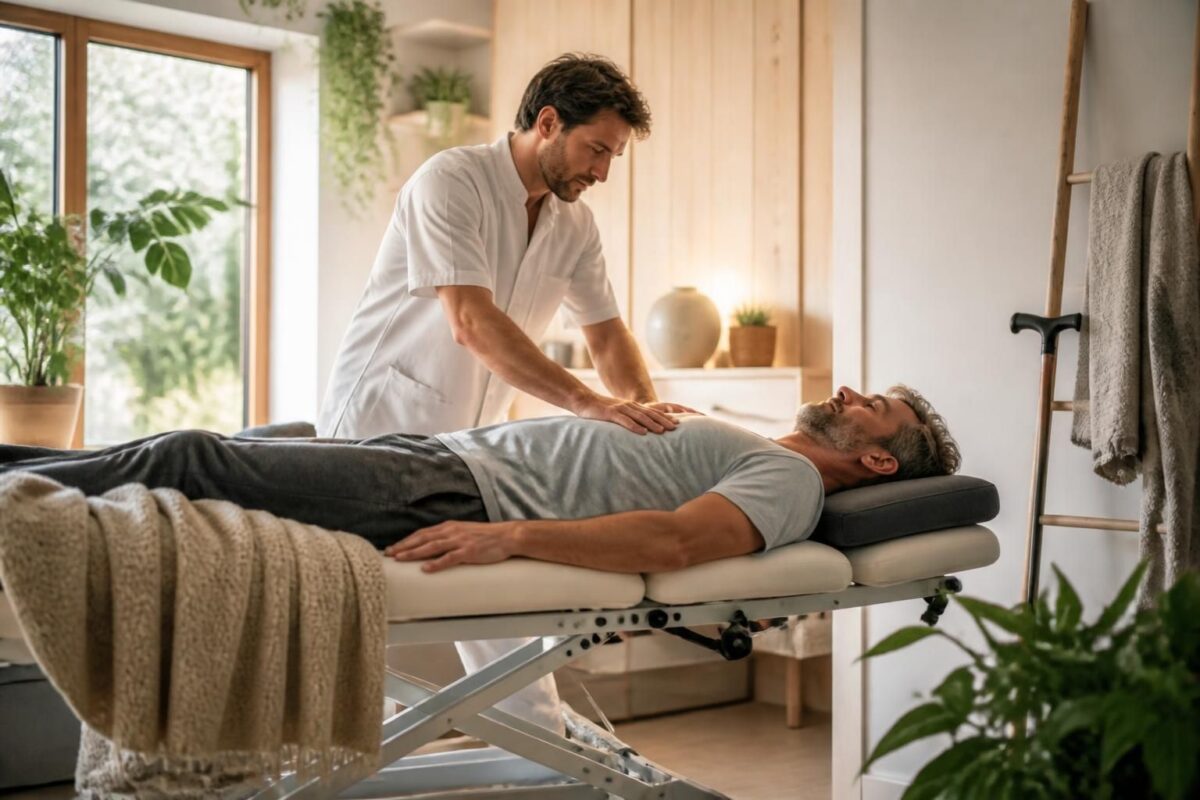
Why Osteopathy Is Essential For Recovery People
In short In short, Osteopathy in convalescence is an approach manual and holistic which helps to accelerate the recovery by restoring The balance, the mobility and a good circulation fabrics. it contributes to Reduce the pain, support the Back to…

Osteopathic manipulations to strengthen post-traumatic muscles
In short In short, Osteopathic manipulations for Strengthen post-traumatic muscles constitute a gentle manual approach aimed at restoring the mobility, reduce the pain and facilitate the Functional rehabilitation After a injury. What is Is it? A series of precise gestures…
Personalized approach for flexibility
Each athlete has specific restrictions related to his activity. In a first step, the osteopath performs a Postural analysis and an assessment of movements to identify areas of tension, imbalances and joint limitations. This approach makes it possible to establish a Individualized protocol Focused on the axes to be released and the muscle groups to work. Thanks to this monitoring, interventions target areas that hinder mobility and that can, in the long term, limit performance.

Osteopathy and prevention of work-related musculoskeletal disorders
In short theosteopathy is one Manual approach that restores body balance and prevents MSD related to work. Its advantages: reduction of tension, improvement of mobility and prevention of chronic pain. She is preventive and healing, suitable for office and trades…

The benefits of osteopathy to treat muscle imbalances
In short theosteopathy is a manual approach to restore themuscle harmony and postural considering the body as a whole. Its main benefits include the reduction of aches and tensions, the improvement of the mobility and from the posture, and prevention…
Operational techniques
Myofascial release and fascial work
techniques of Myofascial release and fascia release aim to dissolve adhesions and restore the elasticity of tissues. By acting on the muscular and fascial planes, these gestures facilitate natural stretching and reduce tensions that limit movement.
Soft joint mobilizations
The Soft joint mobilizations Gradually mobilize the junctions between the bones and the musculoskeletal segments. This approach improves the fluidity joints and supports a more harmonious amplitude during sporting gestures, without imposing sudden constraints on the body.
Targeted stretching and postural advice
In addition to handling, Targeted stretches and advice on posture allow you to extend the effects outside the sessions. The objective is to gradually integrate habits that increase flexibility, while protecting sensitive areas and avoiding over-solicitations.
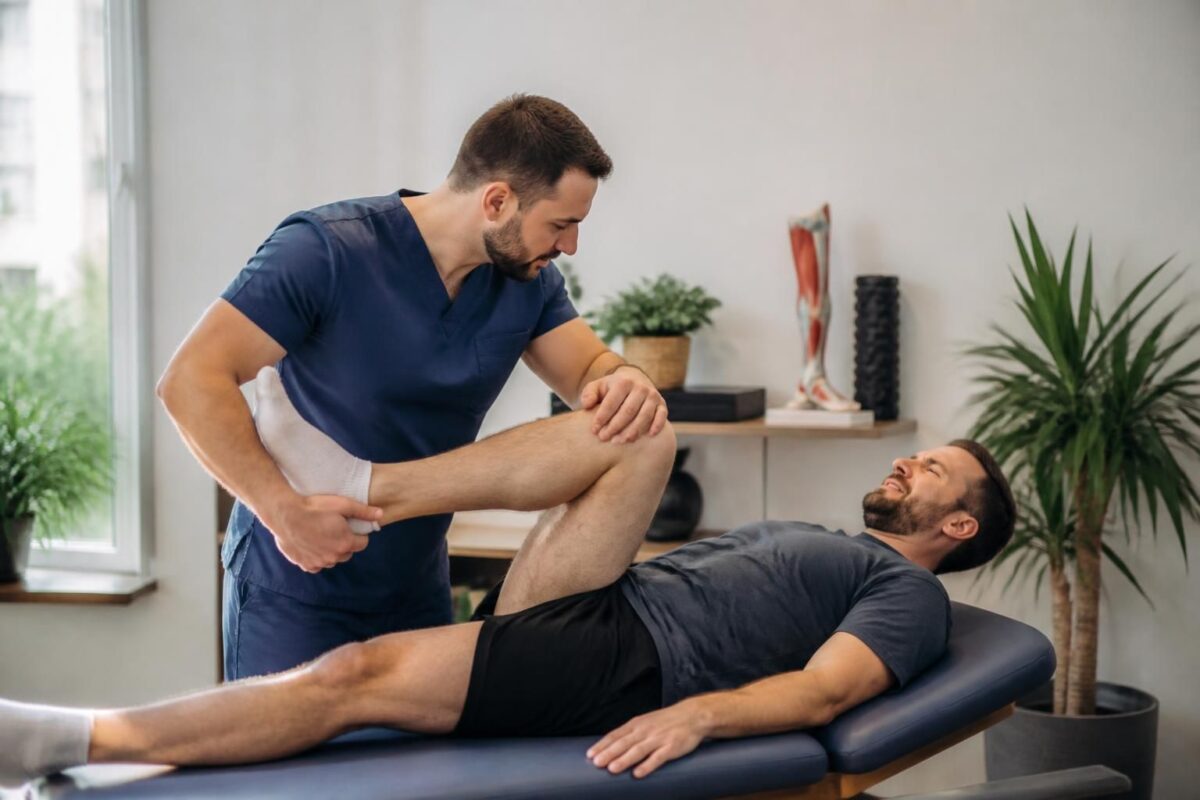
Osteopathy and chronic leg pain: regaining an optimal quality of life
In short In short, Osteopathy is one Global manual approach aimed at reducing Chronic leg pain and improve the quality of life. What is it? Non-drug therapy using the hands to identify restrictions and treat lesional chains. How does it…
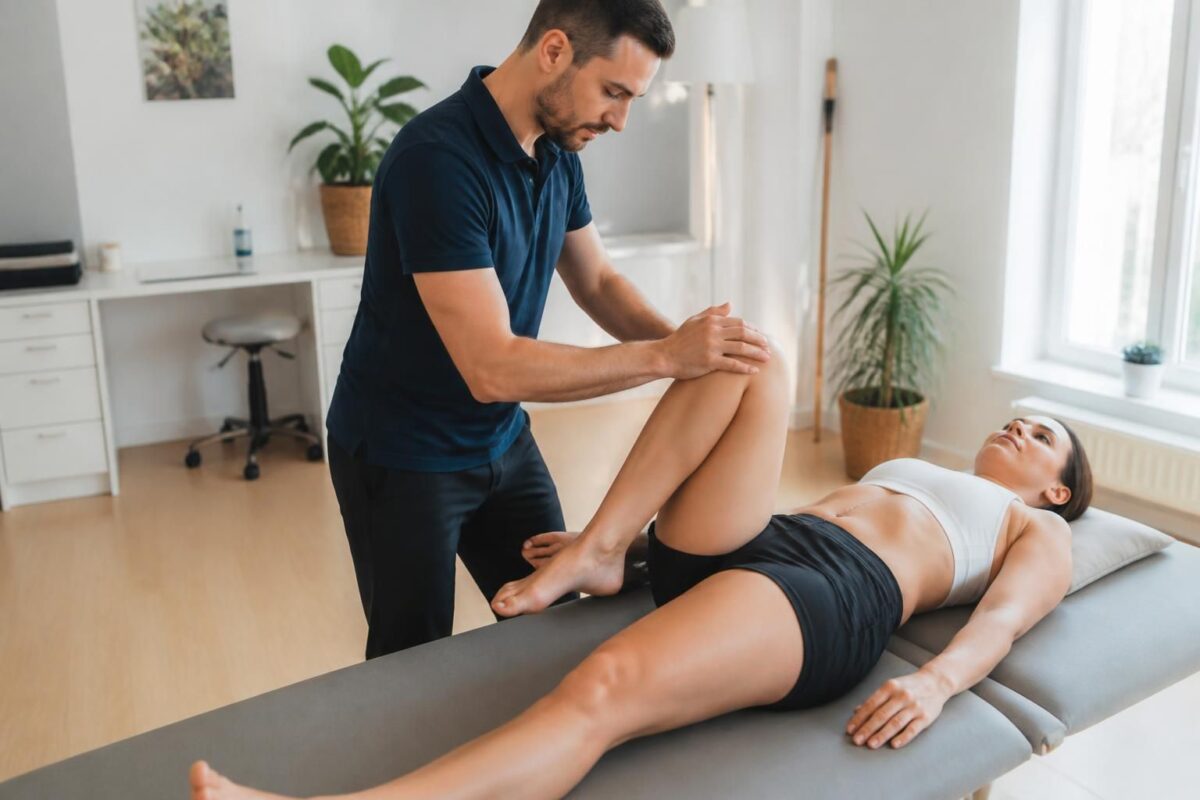
How osteopathy supports recovery after complex surgery
In short In short, Post-operative osteopathy is an approach fresh which supports the recovery After a Complex surgery. It helps to reduce the pain and the fatigue, improves the mobility and accelerates the healing thanks to a better vascularization and…
Concrete benefits for the athlete
work the flexibility and the mobility brings a better Joint amplitude and an fluidity in movement, two essential elements to optimize technique and performance. One more musculature elastic Reduces tensions after exercise and may reduce the risk of cramps or pain related to repeated solicitation. In addition, personalized osteopathic follow-up contributes to sustainably maintaining these gains, preventing the appearance of chronic imbalances and supporting recovery after each training.
Beyond physical efficacy, osteopathy promotes better proprioception and increased body awareness, which helps the athlete to adapt his gestures and reduce clumsy learning. By working on the entire musculoskeletal system, she participates in a Postural improvement and to a more homogeneous distribution of tensions, a favorable condition for sporting longevity.
Practical tips for integrating osteopathy into your routine
To fully benefit from these benefits, favoring sessions adapted to your practice and your objectives is crucial. Plan appointments in collaboration with your osteopath to target your areas for improvement and follow the evolution. Combine the sessions with stretching exercises and postural adjustments to be done on a daily basis, in order to anchor the achievements and optimize the recovery.
Finally, adopt a progressive approach: gains in flexibility are built over time, with progress adapted to your discipline, your level and your biomechanical history. The use of osteopathic expertise makes it possible to adjust the protocol over the seasons and training cycles, for sustainable mobility and better performance.
| Aspect | Concise impact |
|---|---|
| muscle relaxation | Relaxes muscles and improves elasticity, facilitating stretching and mobility. |
| Joint mobility | Fluidifies the joints and optimizes the plane of movement. |
| Fascia and connective tissues | Release the fascias to release the connected muscle chains. |
| Circulation and drainage | Improves blood and lymph circulation, accelerating recovery. |
| Posture and alignment | Corrects imbalances and reduces postural tension. |
| Proprioception and coordination | Strengthens body awareness and control of gestures, for increased fluidity. |
| Customization and tracking | Individualized protocol and regular follow-up for lasting gains. |
| Prevention of pain and injury | Reduces the risk of stiffness and microtrauma through a targeted approach. |
Testimonials on improving muscle flexibility through osteopathy
“Before starting the sessions, my flexibility was limited and my gestures lacked fluidity after the effort. The osteopathic approach, gentle and targeted, allowed a relaxation fast and lasting muscle. I found a mobility More fluid and an range of motion that allow me to execute my movements with less tension. »
“As a dancer, the flexibility is essential. After a few sessions, I felt my fascias relax and my joints gain in amplitude. My return to the stage was made with better control and a feeling of lightness in each extension. »
“After a period of pain and stiffness in the lower back, osteopathy helped me to release areas of tension and rebalance my posture. The relaxation muscular and mobility found allowed me to anticipate and execute my gestures with better coordination, without recurring pain. »
“In my administrative work, posture and shoulders accumulate in tension. Thanks to gentle and personalized handling, I noticed a marked improvement in my flexibility and my mobility torso and shoulders, which makes my days less tiring and my gestures more effective. »
“In rehabilitation after a sprain, the objective was to find a amplitude complete without relapse. Osteopathy helped me release over-stressed muscle groups and rehabilitate my muscle chains. Result: a flexibility found, faster recovery and better ability to resume my workouts smoothly. »
“In regular practice, I observe a continuous progression of my mobility articular and a flexibility increased in my technical gestures. Osteopathy gave me tools to better manage daily tensions and optimize my workouts without increasing the risk of injury. »
Dr Sylvain Desforges is recognized as an expert who associates osteopathy, naturopathy and manual medicine to optimize the muscle flexibility and the mobility of the body. His approach is based on a deep understanding of anatomy and physiology, but also on a practical approach, focused on concrete results for athletes and active people. By combining scientific rigor and targeted manual gestures, it offers personalized support that goes well beyond a simple temporary relief.
The muscle flexibility Not just stretching alone. In osteopathic practice, it results from work on the musculo-fascial chains, joints and the nervous system that regulates tone and pain perception. The soft manual techniques used aim to release mechanical restrictions, reduce tension and promote Tissue elasticity harmonious. This approach improves not only the amplitude of movement but also the quality of the snubbery of the stimulus, which results in better efficiency of technical gestures and faster recovery after exercise. The objective is to restore fluid blood and lymphatic circulation to nourish the muscles and evacuate metabolic waste, thus promoting a recovery more efficient.
During a session, the postural evaluation and screening of movements make it possible to identify areas of tension, imbalances and joint limitations that hinder the proprioception and the fluidity of the movement. The treatment is then personalized: mobilizations sweet, work on fascias and soft tissues, and sometimes assisted stretching, all intended to restore a Joint fluidity and relax the muscle groups that undergo excessive stress. Postural hygiene advice and targeted exercises are often offered to extend the benefits between sessions and maintain a Sustainable mobility.
For athletes, the concrete benefits of osteopathy are measured in terms ofImproved range of motion, of a Fluidity of the gesture More natural and less onset of post-workout pain. a better one proprioception Contributes to better coordination and more precise execution of technical gestures, which can result in better performance. The Injury prevention is also reinforced: by releasing tension and rebalancing the muscle chains, the risk of tearing or repetitive overwork is reduced. Finally, osteopathy promotes bloodstream optimized and better lymphatic circulation Around the muscles, accelerating the recovery phase and improving overall comfort during movement.
This dynamic discipline is based on close collaboration with the patient. Each treatment plan is designed to target specific improvement axes: release over-stressed muscle groups, correct poor posture and prevent Chronic pain through appropriate interventions. The objective is clear: to allow the body to regain its natural ability to stretch, contract and relax with an ease that supports not only sports performance but also daily well-being. Through this approach, osteopathy is positioned as a major lever for those who wish to gain in flexibility and in freedom of movement without resorting to invasive solutions.
This article summarizes how theosteopathy can improve the muscle flexibility By acting on tensions, fluidity of movement and recovery, while remaining compatible with a sports program. By combining personalized evaluation and gentle manual techniques, the osteopath optimizes the elasticity of muscles and fascias to allow for more ample and more effective gestures.
First, theosteopathy acts directly on the Muscle tensions and joint restrictions that limit the mobility. Through targeted manipulations, it helps to release areas of the body where the muscles contract excessively, which promotes Improved muscle elasticity and an Improved range of motion.
Then, the osteopathic intervention improves the bloodstream and tissue drainage, bringing more oxygen and nutrients to the muscles while allowing the evacuation of metabolic waste. This better vascularization supports a Faster recovery after exertion and reduces the sensations of stiffness that slows the flexibility.
In addition, a personalized therapeutic approach makes it possible to adjust the sessions according to individual needs, in particular by correcting postural imbalances and by planning stretching and appropriate exercises. This approach not only promotes Joint mobility increased, but also a Injury prevention related to over-solicitation during training.
The proprioception and the body consciousness are also reinforced, which helps athletes to better control their gestures and to integrate mobility gains into the specific technique of their discipline. As a result, the sports performance May progress thanks to better fluidity of movement and a reduction of pain linked to chronic muscle tension.
To deepen the practical aspects and frequent questions about osteopathy and flexibility, you can consult dedicated resources like these: What is osteopathy?, Why flexibility and mobility are essential for athletes, and articles that describe the links between mobility, flexibility and pain related to age or sport, such as The benefits of osteopathy for age-related pain or Benefits to improve muscle flexibility.
Ultimately, osteopathy offers an effective and gentle approach to increasing the muscle flexibility, support the mobility joints and optimize the recovery, while integrating into a global and personalized sports program. To learn more about the mechanisms and associated guarantees, you can refer to specialized guides on the mobility and flexibility.

Dr Sylvain Desforges, B.Sc., D.O., N.D., osteopath, is the founding president of TAGMED and of the ACMA association. He dedicates his practice to chronic spinal pain, low back pain and symptoms compatible with sciatica, particularly when pain radiates toward the buttock, leg, calf, foot or toes.
Through SOS Sciatique, he publishes educational content on sciatica symptoms, possible causes such as disc herniation, disc narrowing, foraminal stenosis or irritation of a lumbar nerve root, as well as non-surgical approaches that may be considered according to the evaluation. At Clinique TAGMED, care may include, depending on the case, motorized neurovertebral decompression, specific osteopathic care or precision percussion.
For an evaluation related to sciatica treatment in Montreal / Mount Royal or sciatica treatment in Terrebonne, please consult the services available at Clinique TAGMED.
Medical disclaimer
The information published on SOS Sciatique is provided for educational purposes only and does not replace a consultation, diagnosis, opinion or treatment provided by a physician or another authorized healthcare professional. The author of this article is neither a medical doctor nor a specialist in a medical specialty recognized by the Collège des médecins du Québec. The osteopathic, manual medicine or functional support approaches described on this site do not constitute medical acts and are not intended to replace medical follow-up.
Consult a physician or emergency service in cases of loss of bladder or bowel control, anesthesia in the saddle area, significant or progressive weakness in the leg or foot, fever, recent trauma, severe pain or rapid worsening of symptoms. For more details, please read our Legal Notice.