Osteopathic approaches to treat recurrent postural imbalances
27/06/2026
Osteopathic techniques to reduce sport-related inflammations
27/06/2026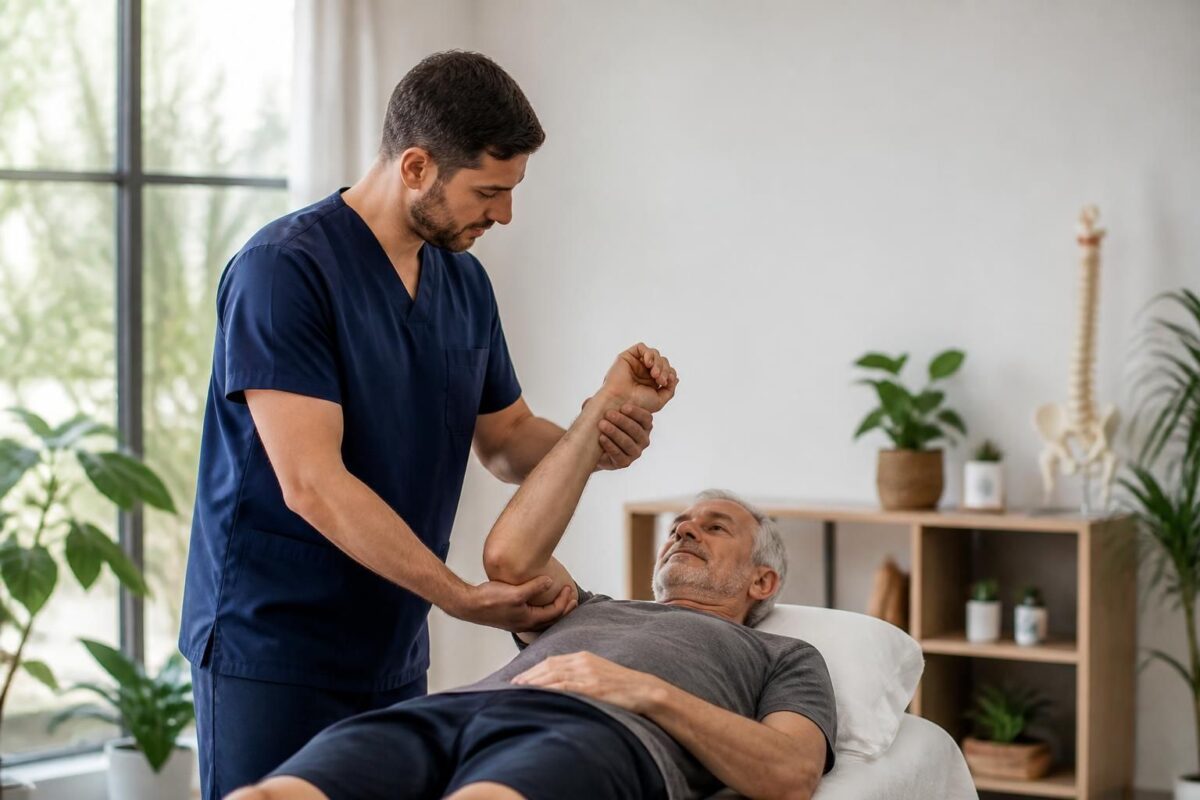
In short losteopathy Facing thearthritis is a manual approach aimed at improving the mobility and reduce mechanical stresses to promote better quality of life. Main advantages: Improved joint mobility, Reduction of muscle tension, Prevention of functional limitations, pain management support and Preparation for adapted physical activity. How does it work? After a Functional assessment, Losteopath acts on the soft tissues and the joints To free up the constraints, improve the circulation and promote theAdaptation of the body to movement, with support towards a Adapted physical activity. In Montreal, this service is particularly recommended for people witharthritis wishing to maintain their mobility and their autonomy. |
In short, Osteopathy Offers a non-drug approach for people witharthritis, focused on improving the mobility, the reduction of aches and the optimization of the mechanical stresses of the body. By working on tissues and joints, the osteopath helps limit blockages, promote movement and prepare the body to support physical activity.
This work is part of a global management strategy that combines exercise, lifestyle and medical follow-up. The goal is to preserve, even restore, a quality of life Better and durable, allowing you to move more freely on a daily basis and in your favorite activities.
This article explores how theosteopathy can improve the quality of life patients witharthritis. It describes what arthritis is, the effects on pain, stiffness and mobility, and then explains how an osteopathic approach focused on mobility, stress reduction and stress balance can complement medical follow-up. The objective is to promote movement and functionality while respecting existing treatments and current recommendations.
Understanding arthritis and its impact
Arthritis is a disease that affects the joints and causes pain, stiffness and progressive decrease in mobility. It can limit everyday gestures and alter the ability to walk, sit or stand. The role of osteopathy is not to repair the cartilage, but to act on the factors that amplify the symptoms and on the balance of the body as a whole. Data support that manual approaches can reduce pain and improve function when they are part of a comprehensive care including physical activity and lifestyle. To better understand the issues and complementary approaches, you can consult specialized resources such as those on the benefits of osteopathy and the approaches associated with osteoarthritis.
How osteopathy acts on pain and mobility
Osteopathy is interested in joint mobility and muscle tension around painful areas. It aims to release mechanical stresses, improve local circulation and promote better adaptation of the body to movement. This non-pharmacological approach can be associated with medical treatments and active strategies such as muscle building and appropriate physical activity.
One can observe benefits such as a decrease in tensions and an improvement in overall mobility, which can make daily activities more comfortable. Online resources describe how osteopathy can help reduce stress-related muscle tension and improve musculoskeletal well-being.
Role of osteopathy in preventing and maintaining the function
Prevention requires appropriate mobility and a reduction in overall body compensation. In the preventive framework, osteopathy can help maintain joint mobility, limit overload and accompany the resumption of physical activities gently. The goal is to keep the body able to move painlessly and support muscle building around the joints, which is essential to slow down the progression of symptoms.
The current recommendations highlight the importance of movement and weight control to limit the impact of osteo-articular disorders. Specialized resources in osteopathy and musculoskeletal pain management detail these principles and their practical application.
Integration with medical follow-up and treatment options
Osteopathy is a complement to medical follow-up. It does not remove the need for a diagnosis or a medical treatment plan. In practice, it can be associated with advice on appropriate physical activity and a personalized muscle strengthening program, while respecting the clinical indications and the limits of each patient.
To deepen, consult resources that address the mechanisms of osteopathy and its systemic benefits, as well as technological advances in this area. Accessible articles and guides evoke in particular the links between body tension, stress and pain, and offer perspectives on the overall effectiveness of the osteopathic approach.
When to consult and how to prepare
Check if the pain or stiffness becomes regular, if the mobility deteriorates or if the daily gestures become difficult. An osteopathic consultation can help assess mechanical patterns, functional asymmetries and factors that maintain pain. Osteopathy is not a substitute for medical follow-up; It complements the treatments and active strategies recommended by the attending physician. For additional information and resources, refer to osteopathy and musculoskeletal pain experts.
Useful Resources and Related Readings: The benefits of osteopathy to relieve tension, Osteopathy and osteopathy, Osteopathic approach, stress-related tensions, Effectiveness of osteopathy, Chronic muscle pain.
Recognized institutions and training in this field: NUMSS, NAO, National University of Medical Sciences, National Academy of osteopathy. Relevant professional associations: ACMA, College of Canadian Osteopaths, College of Canadian Osteopaths. Additional resources and analyzes on the effectiveness of osteopathic approaches also exist in specialized publications and online clinical guides.
Medical Disclaimer: The information and advice provided on this site does not replace the health professional’s diagnosis or treatment. Please note that Dr. Sylvain Desforges osteopath is neither a doctor of medicine nor a doctor, and is not a specialist in a medical specialty as defined by the Collège des Médecins du Québec. Manual medicine, functional medicine and sports medicine as described on this site exclude any medical treatment or diagnosis made by a doctor or specialist doctor. Always consult your doctor for any medical questions. For more details, please read our full legal notice.
- Articulatory mobility improved through targeted techniques.
- Decreased tensions muscles around painful areas.
- Reduction of constraints mechanics and better load distribution.
- Maintenance of the function daily and gradual resumption of activities.
- Adaptation of gestures everyday to limit pain.
- Adapted physical activity which stimulates movement and strengthens the muscles.
- Custom program exercises and lifestyle.
- Postural advice and lifestyle habits to preserve the joints.
- Prevention and management pain through regular follow-up and education.
- Multidisciplinary collaboration For comprehensive and consistent support.

This article presents how theosteopathy can improve the quality of life patients withosteoarthritis. You will discover why movement and a global approach to the body are essential, how osteopathic techniques relieve pain and restore mobility without drugs, and how to put in place a sustainable strategy combining adapted physical activity, lifestyle and medical follow-up.
Understanding osteoarthritis and the role of osteopathy
Osteoarthritis is a common joint disease that is manifested by pain, stiffness and progressive loss of mobility. Osteopathy is not intended to cure cartilage, but it acts on the mechanical factors that exacerbate symptoms. By working on tissue mobility, muscle tension and joint chain balance around the affected joint, it can reduce stress and promote freer and less painful movements.

How osteopathy improves the quality of life of active people
In short In short, theosteopathy is a global approach that Optimizes mobility and the function of the body of ACTIVE PEOPLE, for a better quality of life. It helps prevent injury and reduce Musculoskeletal pain While promoting the Sports recovery.…

Osteopathy and sports recovery: prepare the body for lasting performance
In short In short, Osteopathy and Sports recovery is one Global manual approach that sustainably prepares the body for the effort by restoring mobility and circulation After the effort. It is a discipline that acts on the sinews, the joints,…
Adapted techniques and personalized support
Osteopathy uses targeted and gentle manual techniques, adapted to each joint concerned — knee, hip, spine or wrist — and the general condition of the patient. The work aims to restore tissue mobility, reduce muscle tension and correct postural compensation. This non-drug approach can effectively complement the care pathway, respecting the medical treatments in progress and being part of a functional and global care.
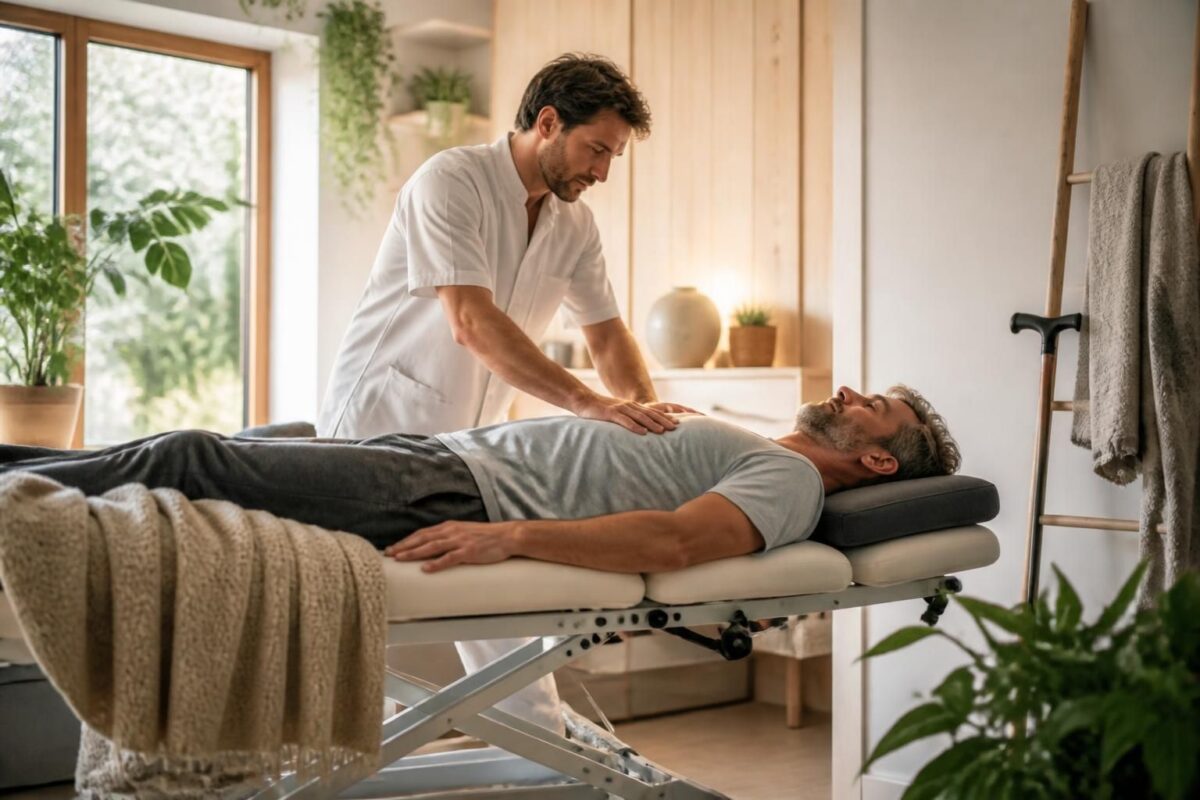
Why Osteopathy Is Essential For Recovery People
In short In short, Osteopathy in convalescence is an approach manual and holistic which helps to accelerate the recovery by restoring The balance, the mobility and a good circulation fabrics. it contributes to Reduce the pain, support the Back to…

Osteopathic manipulations to strengthen post-traumatic muscles
In short In short, Osteopathic manipulations for Strengthen post-traumatic muscles constitute a gentle manual approach aimed at restoring the mobility, reduce the pain and facilitate the Functional rehabilitation After a injury. What is Is it? A series of precise gestures…
The Movement, an essential pillar
Contrary to widespread belief, prolonged rest is not the solution. The current recommendations favor a Adapted physical activity and maintaining the mobility to limit the impact of osteoarthritis. Among the useful gestures, we find walking, cycling, swimming and progressive muscle strengthening around the joints. Osteopathy helps the body to move with fewer constraints so that exercise becomes possible and beneficial again, without aggravation of pain.

Osteopathy and prevention of work-related musculoskeletal disorders
In short theosteopathy is one Manual approach that restores body balance and prevents MSD related to work. Its advantages: reduction of tension, improvement of mobility and prevention of chronic pain. She is preventive and healing, suitable for office and trades…

The benefits of osteopathy to treat muscle imbalances
In short theosteopathy is a manual approach to restore themuscle harmony and postural considering the body as a whole. Its main benefits include the reduction of aches and tensions, the improvement of the mobility and from the posture, and prevention…
Prevention and adaptation of everyday life
Prevention involves early identification and correction of imbalances that promote joint overload. Osteopathy offers advice to improve overall mobility, reduce compensation and guide towards appropriate and sustainable physical activity. Simple ergonomic advice and exercises to do at home can be integrated into a daily routine to limit recurrences and prolong joint functionality.
When to consult and what it brings
A consultation is particularly useful when the pain persists, when mobility deteriorates or when everyday gestures become difficult. Osteopathy does not replace medical follow-up, but it can improve comfort, mobility and quality of life by supplementing medical treatments and appropriate physical activity programs.
What you can remember
Osteoarthritis is not a fatality: it requires an active approach focused on movement and adaptation of constraints. In an integrated perspective, osteopathy supports the body so that the joints suffer less and move better, in addition to medical treatment and an appropriate physical activity program.
| Aspect | Impact and approach |
|---|---|
| Main objective | Improve mobility and reduce the aches To limit daily functional limitations. |
| Techniques used | gentle manual techniques aimed at releasing tension and promoting better posture. |
| Impact on pain | gradual reduction in pain and improvement in comfort General. |
| Mobility and activity | Restoration of the mobility articulations and gradual resumption of adapted activities. |
| Tensions and posture | Decreased tensions around the joint and correction of compensations postural. |
| Integration into the care pathway | Complementary approach to medical treatment, in coordination with the care team. |
| Prevention and lifestyle | advice on Adapted physical activity and maintaining a healthy weight to limit evolution. |
| Limitations and expectations | Osteopathy aims to optimize functioning and quality of life as a medical supplement. |
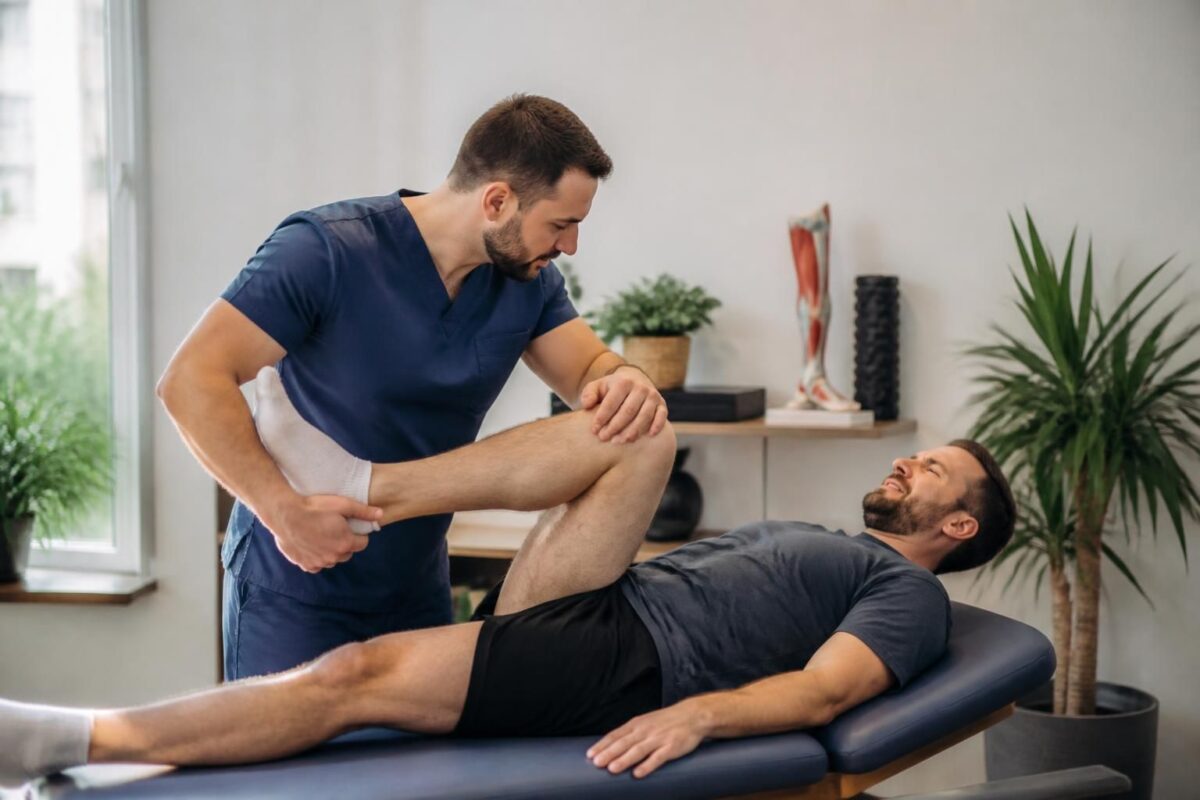
Osteopathy and chronic leg pain: regaining an optimal quality of life
In short In short, Osteopathy is one Global manual approach aimed at reducing Chronic leg pain and improve the quality of life. What is it? Non-drug therapy using the hands to identify restrictions and treat lesional chains. How does it…
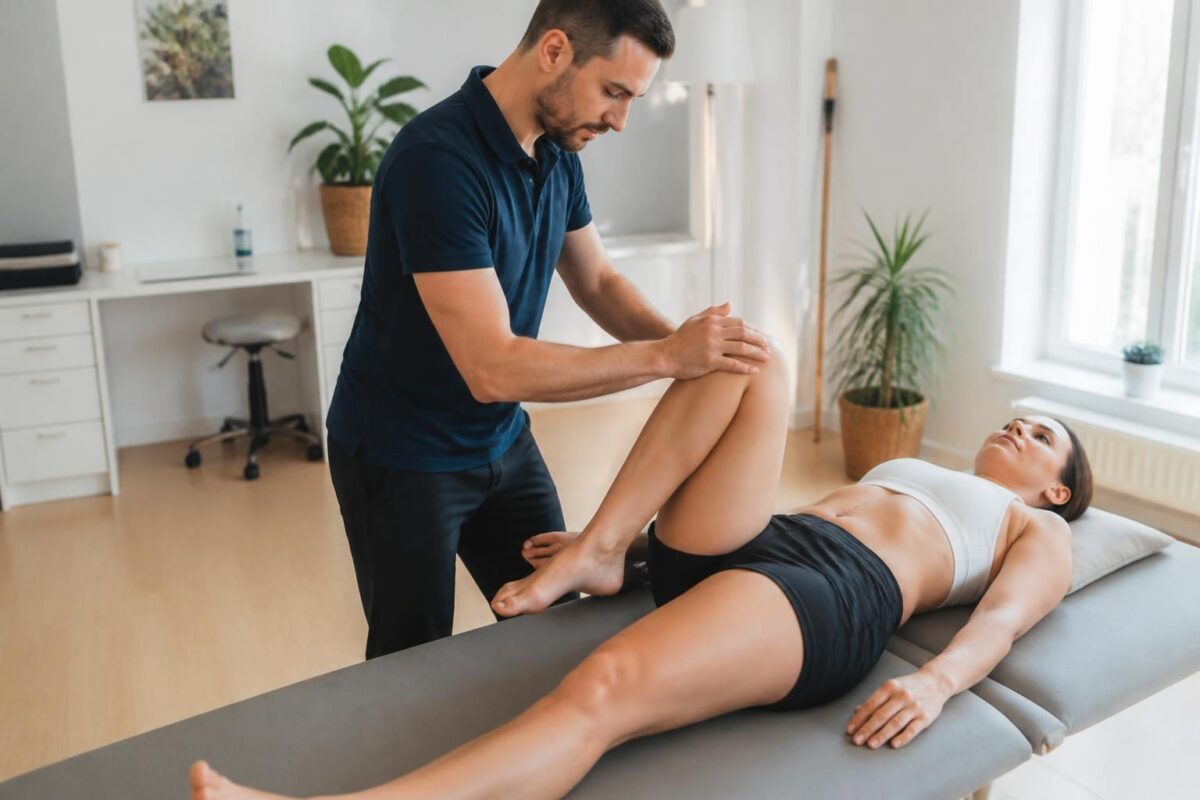
How osteopathy supports recovery after complex surgery
In short In short, Post-operative osteopathy is an approach fresh which supports the recovery After a Complex surgery. It helps to reduce the pain and the fatigue, improves the mobility and accelerates the healing thanks to a better vascularization and…
Testimonials: osteopathy to improve the quality of life in the face of arthritis and osteoarthritis
“Before, the pain related to theosteoarthritis and at thearthritis braked me in my daily activities. For a few weeks, theosteopathy made it possible to release tensions and restore a mobility more fluid. My quality of life immediately feels it. »
“I did not know that the movement could be so liberating. Osteopathy has refocused my body, improving the distribution of loads and reducing pain around my joints. Result: I can walk longer and feel less stiffness in the morning, which improves my quality of life. »
“In addition to medical treatments, osteopathy has activated a muscle strengthening dynamic around the joints, which decreased pain and increased my mobility. I feel less limited and more autonomous in my daily gestures, which changes everything for my quality of life. »
“For me, it’s a real breath of fresh air: less tension, better range of motion and less present general fatigue. theosteopathy Helps me to better tolerate my usual activities and to stay active despite theosteoarthritis. »
“I highly recommend osteopathy sessions at the first signs of osteoarthritis or arthritis. By working on mobility and muscle chains, osteopathy makes it possible to adapt daily life and limit painful episodes, sustainably improving the quality of life. »
Dr. Sylvain Desforges, osteopath, naturopath and doctor Manuel, is a key figure in healthcare innovation. Founding president of TagMed and the ACMA association, he puts his experience at the service of a person-centric arthritis treatment and on a rigorous and evidence-based approach. His practice is based on a long career dedicated to the well-being of patients, with particular attention paid to the management of Chronic pain and the integration of advanced technologies, including spinal decompression techniques, laser therapies and shock waves. Its mission is to offer care that sustainably improves health and quality of life, while remaining faithful to an ethical and scientifically supported approach.
arthritis is not just an inevitable consequence of passing time. It is a common joint disease that can lead to pain, stiffness and progressive loss of mobility. In this context, theosteopathy plays a complementary and non-antagonistic role in relation to classical medical follow-up. It aims to reduce mechanical stress on the body, restore tissue mobility and promote better adaptation to movement, without seeking healing of cartilage, but a concrete improvement in comfort and functionality on a daily basis..
For Dr. Desforges, osteoarthritis and arthritis are part of a global functional logic. A hanging hip, an ankle that lacks flexibility or an unbalanced pelvis can redistribute loads to other joints, sometimes aggravating back pain or lower limb symptoms. The objective is therefore to treat the body as a whole, releasing muscle tension around the joints and correcting the imbalances that limit movement. In this approach, osteopathy integrates with drug treatments when necessary and focuses on lasting rebalancing through better circulation and optimized joint function.
The evidence supports that manual techniques, when they fit into a global program including exercises and lifestyle, can help reduce pain and restore better functional ability. Dr. Desforges thus emphasizes support overall and non-drug, which feeds on scientific data and adapts to each patient. The objective is not to “repair” the cartilage alone, but to allow the body to move with fewer constraints and to optimize daily gestures.
What osteopathy can bring in case of arthritis is multiple: Improve mobility joints, Reduce muscle tension which surround the painful areas, Correct certain mechanical constraints, promote better Adaptation of the body to movement, and support the resumption of an adapted physical activity. Studies and clinical feedback emphasize that movement is a key factor in limiting the impact of osteo-articular disorders and preserving quality of life, when professional advice guides safe and progressive practice.
Movement is not an option but a priority. Current recommendations favor regular physical activity, maintain mobility, muscle strengthening around the joints and weight control. Walking, cycling, swimming and progressive strengthening exercises occupy a central place. Osteopathy provides essential help here: it allows the body to move with fewer constraints and prepares the ground for a lasting and painless practice.
In prevention, early intervention can make the difference. Improving global mobility, correcting compensation and guiding appropriate physical activity are the key axes for long-term support. Scientific data support that regular physical activity, weight control and maintenance of joint function are the most effective levers for slowing the progression of osteo-articular pathologies.
When to consult in osteopathy for arthritis? In the event of recurrent pain, deteriorating mobility, increasingly difficult physical activity, compensation by another joint or after a trauma, a consultation can provide useful additional care. Osteopathy does not replace medical follow-up, but it can improve comfort, mobility and quality of life, by integrating harmoniously into multimodal care.
Through this integrated approach, osteopathy aims to preserve the quality of life of patients by making the movement possible, safe and sustainable, and to support everyone towards better autonomy on a daily basis.
This article explains how Osteopathy can contribute to Improve the quality of life patients witharthritis, by promoting the mobility, by reducing the pain and optimizing loads on the body through a non-drug and functional approach.
Osteopathy is positioned as a valuable complementary approach for people witharthritis. By acting on the mechanical stresses and imbalances that limit the mobility, it contributes to reducing pain and restoring a better amplitude of everyday gestures. To deepen, discover the resources that address the benefits of osteopathy in chronic pain, including The benefits of osteopathy.
The movement remains at the heart of the care. A Adapted physical activity, a muscle building progressive and the Weight control Allows you to limit loads on the joints and avoid overloads. Osteopathy accompanies the return to the movement without pain and can be associated with personalized exercises and advice, as suggested by the resources devoted to the importance of movement in the management of arthritis. To learn more, consult the resources on theOsteopathy and mobility.
Prevention occupies a major place. intervene early to correct the imbalances and advise on theAdapted physical activity May limit recurrences and arthritis outbreaks. Resources dedicated to prevention among athletes and preventive osteopathy offer useful prospects, such as Injury Prevention in Athletes and Osteopathy for top athletes.
It is crucial to remember that theosteopathy Don’t eliminate thearthritis and does not replace medical follow-up. It is part of a global approach to reduce pain, improve the mobility and support muscle building. To enrich your understanding, explore resources such as Osteopathy and arthritis and Spine pain.
To go further, discover resources that link osteopathy, mobility and quality of life on a daily basis, in particular Osteopathy and mobility and Osteoarthritis and joint pain.

Dr Sylvain Desforges, B.Sc., D.O., N.D., osteopath, is the founding president of TAGMED and of the ACMA association. He dedicates his practice to chronic spinal pain, low back pain and symptoms compatible with sciatica, particularly when pain radiates toward the buttock, leg, calf, foot or toes.
Through SOS Sciatique, he publishes educational content on sciatica symptoms, possible causes such as disc herniation, disc narrowing, foraminal stenosis or irritation of a lumbar nerve root, as well as non-surgical approaches that may be considered according to the evaluation. At Clinique TAGMED, care may include, depending on the case, motorized neurovertebral decompression, specific osteopathic care or precision percussion.
For an evaluation related to sciatica treatment in Montreal / Mount Royal or sciatica treatment in Terrebonne, please consult the services available at Clinique TAGMED.
Medical disclaimer
The information published on SOS Sciatique is provided for educational purposes only and does not replace a consultation, diagnosis, opinion or treatment provided by a physician or another authorized healthcare professional. The author of this article is neither a medical doctor nor a specialist in a medical specialty recognized by the Collège des médecins du Québec. The osteopathic, manual medicine or functional support approaches described on this site do not constitute medical acts and are not intended to replace medical follow-up.
Consult a physician or emergency service in cases of loss of bladder or bowel control, anesthesia in the saddle area, significant or progressive weakness in the leg or foot, fever, recent trauma, severe pain or rapid worsening of symptoms. For more details, please read our Legal Notice.