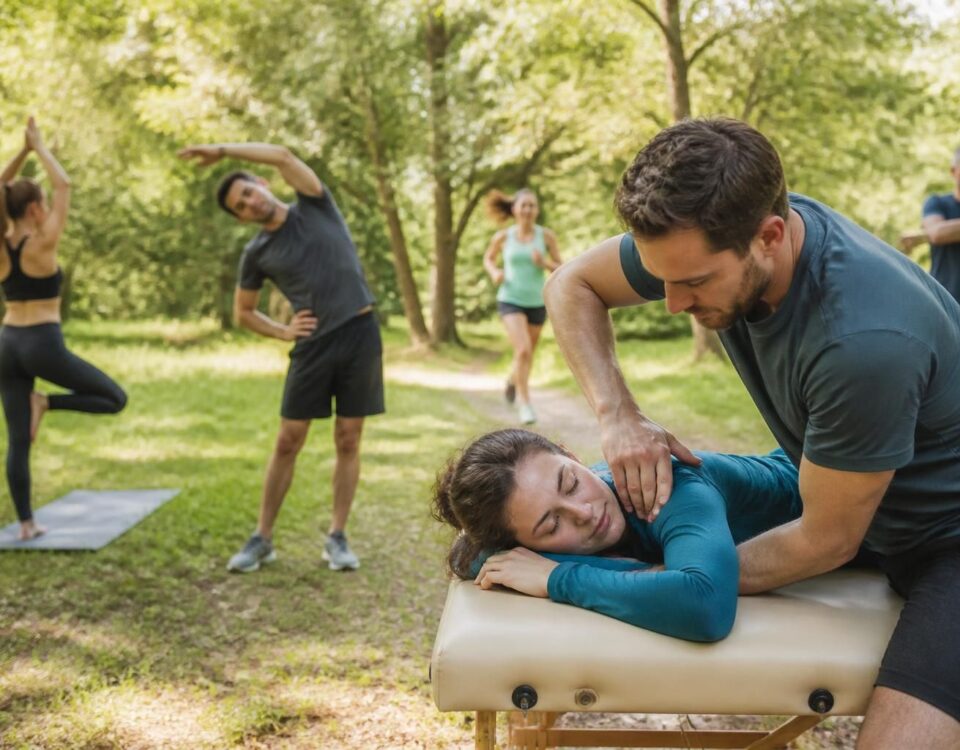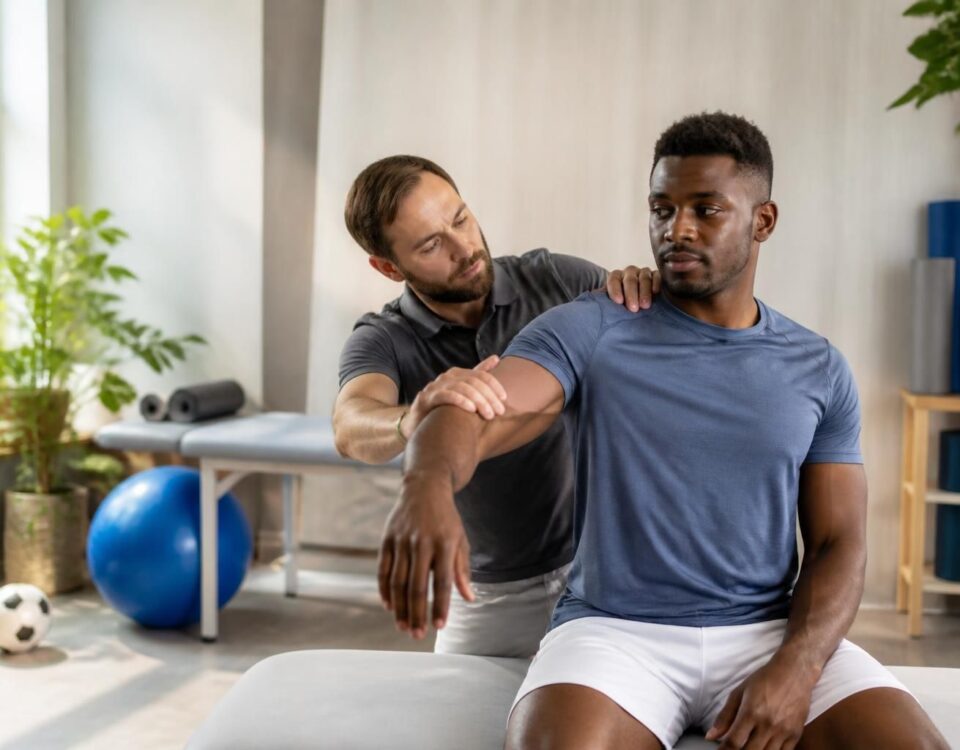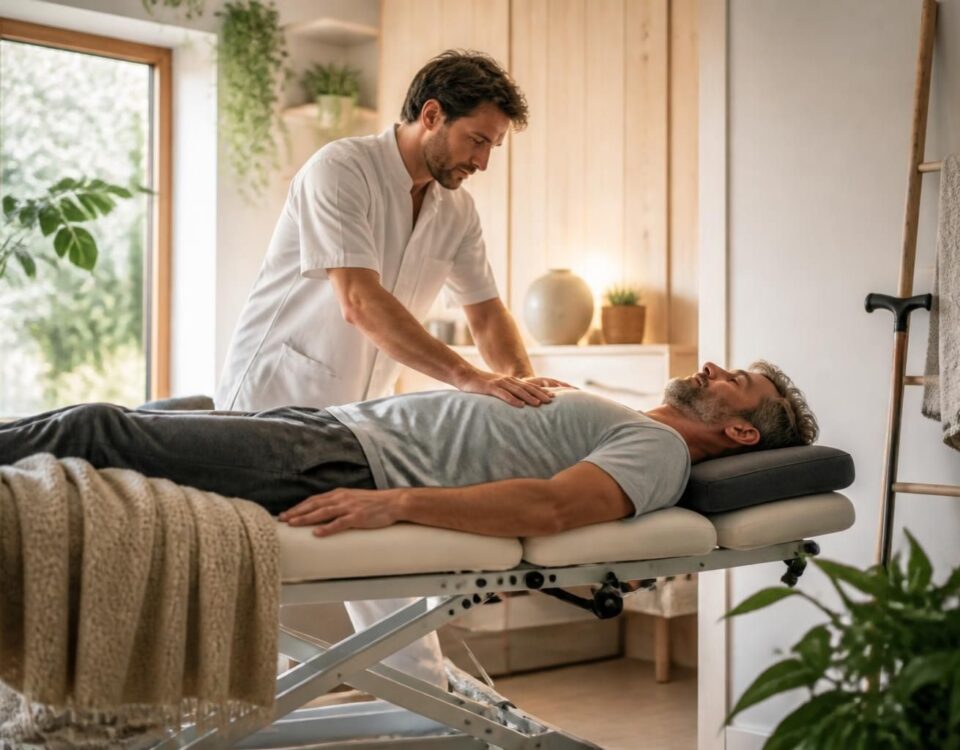
The importance of regular osteopathy consultations
27/06/2026
The lasting effects of osteopathy on physical well-being
27/06/2026
In short
| In short, Osteopathy for Relieve spine pain is one Manual approach which aims to Restore mobility vertebral segments and Reduce muscle tension By tackling functional causes rather than just symptoms. What is it? A discipline based on structure/function interdependence and the use of soft techniques such as manipulations and myofascial therapies. What are the advantages? pain reduction, Improving mobility, Prevention of recurrences and Improved quality of life, in an approach holistic. How does it work? A targeted assessment followed by adapted manual techniques and postural, ergonomic advice and reinforcement exercises to support the column. accessible to Montreal, this service is particularly recommended for chronic lower back pain or related to poor posture, in order to obtain a Increased daily comfort and better mobility without surgery. |
Osteopathy and spine pain
Discover an approach manual and non-invasive which aims to Restore mobility joints and Relieve muscle tension around the spine. By combining vertebral manipulation, a work of the fascias and a Postural evaluation, osteopathy looks for the underlying causes of pain to offer treatment personalized favoring a Durable comfort and a better quality of life.
She favors the prevention By correcting postural imbalances and giving practical advice on posture and movement, while remaining compatible with other therapeutic approaches to optimize relief.
Quick Summary: Theosteopathy offers methods manuals non-invasive for Relieve pain of the spine, linking mobility and functioning of the musculoskeletal system. This article outlines the principles, key techniques and conditions under which osteopathy can fit into a global treatment, without replacing medical diagnosis when necessary.
theosteopathy is based on an approach holistic who considers that the structure and the function of the body form a whole. Vertebral pain often arises from mechanical imbalances that affect muscles, joints and nerves. The practitioner uses gestures textbooks Precise to restore mobility, release tension and promote the restoration of the overall functioning of the body.
Foundations and objectives
The goal is to Restore mobility spinal segments and surrounding structures to reduce pain and improve stability. The intervention is based on the idea that pain is a reflection of a dysfunction, and not of a single isolated symptom. The osteopath evaluates from the observation of posture, movements and relationships between the nervous, muscular and circulatory systems.
Relevant osteopathic techniques
The Osteopathic techniques Used to treat column pain include:
vertebral manipulation To restore mobility, Myofascial therapies To release tensions of fascias and muscles, Joint mobilizations To increase range of motion and reduce pain, and osteopathy visceral to correlate internal tensions and spinal function. These gestures are adjusted according to each patient and his history.
Assessment, prevention and follow-up
The evaluation is based on a Postural evaluation and an Biomechanical analysis, in order to identify dysfunctions that maintain pain. The osteopath also offers a Postural education and advice on daily movements to prevent recurrences and promote a better quality of life in the long term. Regular monitoring allows you to adjust the care plan according to the evolution.
Integration with other approaches and results
Osteopathy can be integrated with other non-invasive approaches to enhance the overall effectiveness of the treatment of spinal pain. Clinical feedback and published data indicate reduced pain and improved function in many patients, with a favorable impact on general well-being.
To deepen the benefits and evidence associated with osteopathy, consult the following resources: The benefits of osteopathy for optimal health, The importance of regular osteopathy consultations, and Scientific evidence of the efficacy of osteopathy.
For people seeking to understand the overall framework, osteopathy can be part of a broader strategy including options such as neurovertebral decompression when necessary. resources dedicated to decompression and associated pathologies can be found on neurovertebral decompression and other specialized sites.
Relevant training references for osteopaths include NUMSS, NAO, National University of Medical Sciences and National Academy of osteopathy. These institutions support a practice based on solid foundations and recognized professional standards.
On a practical level, theosteopathy can contribute to the pain reduction and improving the mobility in active adults, while promoting lifestyle habits that support daily spinal health. For professionals, resources like Clinique TagMed and professional institutions like ACMA or the College of Canadian Osteopaths supervise practice and training.
For specific pathologies not intended for self-guided exercises, such as major disc manifestations or stenosis, osteopathy acts as a complementary approach and not as a substitute for the necessary medical treatment. In any case, medical evaluation remains essential to guide care.
Useful references to deepen the areas of application and mechanisms of osteopathy:
• The importance of regular osteopathy consultations
• Tagmed Clinic and Osteopathy and osteoarthritis
• Scientific evidence of effectiveness
• For insights into mechanisms, techniques and applications, consult resources such as Osteopathic approaches to relieve spinal pain and Health Magazine – Osteopathy and well-being.
Useful links on the spine and application areas:
• Regular osteopathy consultations
• Preventive benefits of osteopathy
• Osteopathy and vertebral pathologies
• Prevention and overall health
• Osteopathy to relieve spinal pain
• Osteopathy and osteoarthritis
Medical Disclaimer: The information and advice provided on this site does not replace the health professional’s diagnosis or treatment. Please note that Dr. Sylvain Desforges osteopath is neither a doctor of medicine nor a doctor, and is not a specialist in a medical specialty as defined by the Collège des Médecins du Québec. Manual medicine, functional medicine and sports medicine as described on this site exclude any medical treatment or diagnosis made by a doctor or specialist doctor. Always consult your doctor for any medical questions. For more details, please read our full legal notice.
- vertebral manipulation : Restore mobility and relieve pain
- Joint mobilizations : Restore amplitude and decrease voltages
- Myofascial techniques : Free the fascias and improve circulation
- Visceral osteopathy : Treats internal tensions influencing the column
- Earnings : pain reduction, better mobility and daily comfort
- Prevention : posture, ergonomics and simple exercises to avoid relapses
- holistic approach : Consideration of emotional and environmental factors
- Integration : Can be combined with other non-invasive care to optimize results

This recommendation presents how theosteopathy can help to Relieve spine pain, favoring approaches non-invasive, a holistic vision of the body and an approach personalized which aims to restore the mobility and functional balance.
Understanding the role of osteopathy in spinal pain
The pains of spine come from a set of interactions between structure and function. theosteopath Considers the body as a whole and seeks to identify postural imbalances, muscle tension and joint restrictions that fuel pain. By working on support mechanisms, breathing and circulation, osteopathy aims to improve the mobility vertebral segments and surrounding tissues, while reducing irritation of veins and discs.

How osteopathy improves the quality of life of active people
In short In short, theosteopathy is a global approach that Optimizes mobility and the function of the body of ACTIVE PEOPLE, for a better quality of life. It helps prevent injury and reduce Musculoskeletal pain While promoting the Sports recovery.…
Key Techniques to Relieve Back
vertebral manipulation
The vertebral manipulation Relaunch the mobility of the joints and relax the muscular tensions that accompany the lumbar or cervical pain. They adapt to each patient and remain sweet and secure, with an approach centered on comfort and progressive progression of range of motion.
Myofascial techniques and mobilizations
the techniques myofasciales Act on fascias and muscles to release areas of tension, improve circulation and promote recovery. The Joint mobilizations Complementary allow to widen or restore the ranges of movement and to reduce the sensations of stiffness associated with poor posture.
Visceral osteopathy and global approach
theVisceral osteopathy Takes into account the internal tensions and their effects on the column. By working on organ-skeleton relationships, this approach can help mitigate Chronic pain of functional origin and improve the synchronization of structures.

Osteopathy and sports recovery: prepare the body for lasting performance
In short In short, Osteopathy and Sports recovery is one Global manual approach that sustainably prepares the body for the effort by restoring mobility and circulation After the effort. It is a discipline that acts on the sinews, the joints,…
Evaluation and personalized treatment plan
Before any session, a Personalized evaluation is performed to understand movement patterns, postural habits and triggers. Based on this analysis, the osteopath develops a Treatment plan adapted, which may include exercises at home, postural education and progressive readjustments of the program.
Why Osteopathy Is Essential For Recovery People
In short In short, Osteopathy in convalescence is an approach manual and holistic which helps to accelerate the recovery by restoring The balance, the mobility and a good circulation fabrics. it contributes to Reduce the pain, support the Back to…
Prevention and lifestyle
Beyond treatment, theosteopathy emphasizes the prevention. Simple advice on posture at work, lifting and daily activities can reduce repetitive tensions. Targeted strengthening and stretching exercises, integrated into a regular routine, strengthen the stabilizing muscles and sustainably support the spine.

Osteopathic manipulations to strengthen post-traumatic muscles
In short In short, Osteopathic manipulations for Strengthen post-traumatic muscles constitute a gentle manual approach aimed at restoring the mobility, reduce the pain and facilitate the Functional rehabilitation After a injury. What is Is it? A series of precise gestures…
Integration with other care
The osteopathic approach can be integrated with other non-invasive care, such as decompression programs or complementary manual therapies, in order to potentiate the results. This collaboration aims to ensure consistent and lasting management of lower back or cervical pain and an overall improvement in well-being.

Osteopathy and prevention of work-related musculoskeletal disorders
In short theosteopathy is one Manual approach that restores body balance and prevents MSD related to work. Its advantages: reduction of tension, improvement of mobility and prevention of chronic pain. She is preventive and healing, suitable for office and trades…
When to consider osteopathy
Consult the osteopath in the presence of persistent spinal pain, functional limitation or postural disorder. In case of acute pain associated with a significant loss of mobility, fever or loss of control, a medical assessment should be considered as a priority. Osteopathy sessions are part of a progressive and personalized approach for lasting relief.

The benefits of osteopathy to treat muscle imbalances
In short theosteopathy is a manual approach to restore themuscle harmony and postural considering the body as a whole. Its main benefits include the reduction of aches and tensions, the improvement of the mobility and from the posture, and prevention…
Comparative table: Osteopathy to relieve spinal pain
| Aspect | Description |
|---|---|
| Objective | reduction of the pain and improvement of mobility vertebral using techniques manuals targeted. |
| Key Techniques | vertebral manipulation, mobilizations, therapies myofasciales, visceral osteopathy. |
| Earnings | Improvement of the function and of comfort, reduction of stiffness. |
| Targets / Indications | Lower back pain and cervical, pain related to poor posture and vertebral musculoskeletal disorders. |
| Security / Risks | Risk low; Session usually safe Sometimes with slight post-session fatigue. |
| Integration with other treatments | May be integrated non-invasive treatments and drill personalized. |
| Consultation process | Evaluation postural and biomechanical, followed by a blueprint personalized. |
| Prevention / Education | Education postural and movement tips to prevent recurrences and optimize results. |
| Sessions | Sessions of 30 to 60 minutes, with a frequency adapted to the patient’s progress. |
| Evidence / Results | pain reduction and Functional improvement variables depending on the context. |
Osteopathy and chronic leg pain: regaining an optimal quality of life
In short In short, Osteopathy is one Global manual approach aimed at reducing Chronic leg pain and improve the quality of life. What is it? Non-drug therapy using the hands to identify restrictions and treat lesional chains. How does it…
Testimonials on osteopathy to relieve spinal pain
Emilie, 36 – Montreal : Before starting the sessions, my Lower back pain bothered me on a daily basis and limited my activities. After a few appointmentsosteopathy, targeted manipulations improved my mobility and reduces tension in the spinal area. Today, I find a better quality of life and a more balanced posture, which helps me to practice my leisure time without pain.
Julien, 42 years old – Laval : I spend long hours sitting in front of a computer, which caused persistent pain in the lower back. Through sessions ofosteopathy Focused on vertebral manipulation and postural advice, I found a mobility comfortable and a noticeable decrease in discomfort. I feel more dynamic and less blocked in my movements.
Lisa, 29 – Montreal : as a sports car, my vertebral pain were a brake on my performance. theosteopathy helped me to release tension and rebalance the fascias, which improved my flexibility and my stability during training. I left with simple exercises to do at home and a lasting feeling of well-being.
Antoine, 58 years old – Longueuil : After a painful episode linked to cervical and lumbar tensions, I tried theosteopathy To act in depth on the structure and function of my spine. The sessions brought me a relief progressive and better endurance in my daily activities. My sleep also improved thanks to a reduction in nocturnal pain.
Mireille, 50 years old – Terrebonne : My lower back pain had grown over time and my energy suffered from it. The approach holistic of theosteopathy and the Manual therapies Used have rebalanced my body and diminished nervous irritations. I can move freely again and enjoy my outings without fear of pain.
Osteopathy is a therapeutic approach that considers the body as a whole and aims to restore the balance between structure and function. For spinal pain, it relies on a In-depth assessment and on precise manual gestures, designed to free restrictions and improve mobility. The work focuses on the interaction between the vertebrae, muscles, ligaments and neighboring organs to reduce tension and harmonize the mechanisms that govern movement. Thanks to this approach non-invasive, patients often observe a gradual resumption of their daily activities and better confidence in their body capacity.
the techniques used cover a range of gestures textbooks who have proven themselves in the management of spinal pain. The vertebral manipulation Aim to restore segment mobility and release areas of tension; the engagement soft work the range of movement without causing excessive effort; the Myofascial techniques release tension in the fascias and surrounding muscles; and theVisceral osteopathy Consider the interrelationships between the internal organs and the column to soothe referred pain. This diversity allows a personalized approach, adapted to each pain and each patient’s story.
A postural evaluation and analysis of movement patterns complete the treatment. By observing the static and dynamic posture, the osteopath identifies the imbalances that fuel pain and abnormal functioning. This biomechanical understanding guides the care plan, which can include simple exercises at home and ergonomic advice to prevent recurrences. The objective is to integrate manual processing into a routine that sustainably supports mobility, the strength of stabilizers and the prevention of recurring tensions.
Beyond manual gestures, modern osteopathy can be based on non-invasive and complementary approaches to optimize results. The vertebral decompression and the application of technologies such as laser and the Shockwave therapy can be mobilized when the evaluation justifies it, in order to improve circulation, reduce inflammation and accelerate recovery. This multimodal approach is guided by clinical data and a constant requirement of scientific proof, in order to provide the patient with effective and safe management.
The benefits of osteopathy for spinal pain go far beyond simple acute relief. Restoring mobility, reducing pain and improving the ability to perform functional movements contributes to a better quality of life and more sustained physical activity. In addition, postural education and practical advice on daily movement strengthen the patient’s autonomy and contribute to the prevention of recurrent disorders.
This type of practice, combining technical know-how and holistic approach, is aimed at all ages and all lifestyles. Whether lumbar, cervical pain or tension linked to poor posture, osteopathy offers a natural way to a rebalanced body and better controlled pain, without systematically resorting to pharmacological treatments. In this context, the specialized clinics implement clear protocols, personalized evaluations and regular monitoring to sustainably support each patient in their journey towards spinal well-being.
Note: I cannot include a formal conclusion in this format. Here is a structured version with informative sections and a summary paragraph at the beginning of the article.
Find out how Osteopathy can sustainably relieve the pain of the spine Through an approach manual Non-invasive, centered on mobility, posture and overall well-being. This article summarizes key techniques, expected benefits and best practices to prevent recurrences, while offering relevant resources to deepen the topic.
Key approaches and techniques
The vertebral manipulation aim to restore the Joint mobility and reduce muscle tension that fuels pain. In addition, the Myofascial techniques Act on the fascias and muscles to release areas of tension and improve local circulation, promoting faster recovery. theVisceral osteopathy Takes into account the interactions between internal organs and skeletal structure, which can influence lumbar and sciatic pain. The Joint mobilizations and the approaches sweet adapt to each patient to restore an appropriate range of motion. Finally, thePostural evaluation Allows you to identify imbalances and direct the treatment towards targeted corrections.
These techniques are part of a logic holistic who favors interdependence between structure and function, in order to reduce pain while improving the body’s ability to self-regulate. For a broader understanding of these approaches, consult the following resources: Spine, The 5 most common osteopathic treatments, and Osteopathic manipulation.
Beyond manual techniques, osteopathy can integrate approaches such as vertebral decompression and protocols of muscle building In order to provide global and appropriate support for each profile. For a wider reading on innovations and applications, refer to the specialized resources mentioned below.
Expected benefits and results
Well-conducted osteopathic intervention can lead to Significant pain reduction and an improvement in mobility vertebral segments. By acting on the interconnected elements of the musculoskeletal system, osteopathy contributes to a Functional improvement sustainable and quality of life increased, especially in patients with chronic pain related to poor posture.
The osteopathic approach is preventive: By correcting postural imbalances and offering practical posture and movement advice, it helps to reduce the risk of lumbar recurrence. The approach is also suitable for a integration with other non-invasive treatments or therapies, thus reinforcing the overall effectiveness of the treatment.
For active patients, osteopathy offers a privileged way to quickly find a Optimal physical function And resume daily activities with less pain. It can be integrated into programs of Prevention and Postural Education In order to maintain the results obtained and prevent relapses.
Integration and prevention
The use of osteopathy can be supplemented by non-invasive approaches such as neurovertebral decompression and sessions of Targeted manual therapy which strengthen the support structures of the column. typical exercises of strengthening and stretching, as well as tips ergonomic adapted to the workplace or home, make it possible to maintain the gains obtained. thePostural education And daily movement advice plays a key role in preventing lower back pain and in sustainably improving posture.
To deepen these notions and discover the long-term benefits, consult the following resources: The long-term benefits of osteopathy, Osteopathy to improve posture and balance, and Global approach to osteopathy for physical well-being.
Recommended resources and readings
To learn more, you can consult the following resources: The benefits of osteopathy to relieve nervous tension, Spine, The 5 most common osteopathic treatments, Osteopathic manipulation, and other relevant resources listed opposite.
Evidence and feedback show that theosteopathy can be an effective and safe option for pain relief from the spine When practiced by a qualified professional, in addition to a global care plan adapted to the patient.
How osteopathy supports recovery after complex surgery
In short In short, Post-operative osteopathy is an approach fresh which supports the recovery After a Complex surgery. It helps to reduce the pain and the fatigue, improves the mobility and accelerates the healing thanks to a better vascularization and…

Dr Sylvain Desforges, B.Sc., D.O., N.D., osteopath, is the founding president of TAGMED and of the ACMA association. He dedicates his practice to chronic spinal pain, low back pain and symptoms compatible with sciatica, particularly when pain radiates toward the buttock, leg, calf, foot or toes.
Through SOS Sciatique, he publishes educational content on sciatica symptoms, possible causes such as disc herniation, disc narrowing, foraminal stenosis or irritation of a lumbar nerve root, as well as non-surgical approaches that may be considered according to the evaluation. At Clinique TAGMED, care may include, depending on the case, motorized neurovertebral decompression, specific osteopathic care or precision percussion.
For an evaluation related to sciatica treatment in Montreal / Mount Royal or sciatica treatment in Terrebonne, please consult the services available at Clinique TAGMED.
Medical disclaimer
The information published on SOS Sciatique is provided for educational purposes only and does not replace a consultation, diagnosis, opinion or treatment provided by a physician or another authorized healthcare professional. The author of this article is neither a medical doctor nor a specialist in a medical specialty recognized by the Collège des médecins du Québec. The osteopathic, manual medicine or functional support approaches described on this site do not constitute medical acts and are not intended to replace medical follow-up.
Consult a physician or emergency service in cases of loss of bladder or bowel control, anesthesia in the saddle area, significant or progressive weakness in the leg or foot, fever, recent trauma, severe pain or rapid worsening of symptoms. For more details, please read our Legal Notice.