How Osteopathy Helps Treat Tendinitis
27/06/2026
The application of osteopathy in functional rehabilitation
27/06/2026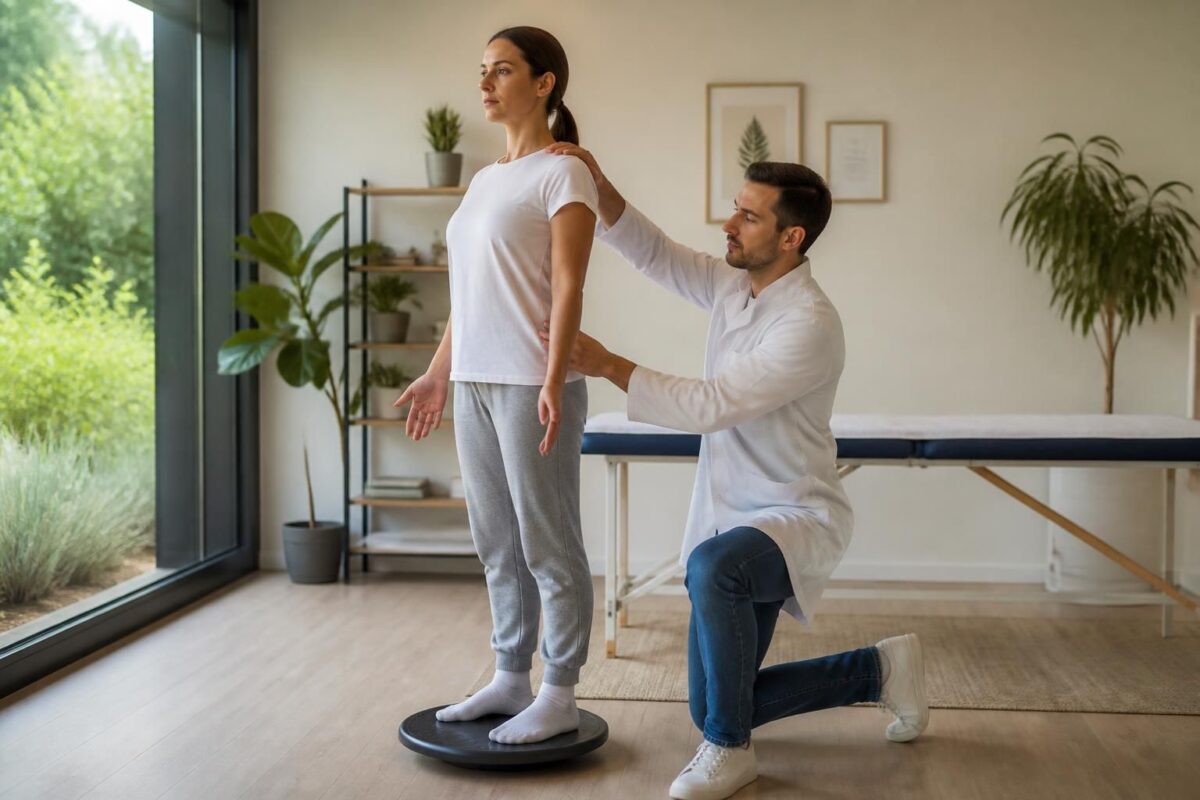
In short
| In short, theosteopathy for Improve posture and balance is a manual approach that aims toalignment of the body and the optimization of the proprioception. She corrects the Muscle imbalances and tissue, improves the posture and stability, and strengthens coordination. Its results result in a Increased mobility, a reduction in tension and pain, a Injury prevention and a better ability to perform on a daily basis. Accessible in Montreal, this treatment is useful for people with a sedentary lifestyle and those looking for lasting comfort without medication, thanks to simple evaluations and additional exercises. |
Osteopathy offers an approach manual to improve posture and thebalance correcting imbalances musculoskeletal and restoring thealignment Biomechanics. thanks to techniques sweet and personalized, it soothes tensions, improves the mobility and strengthens the mechanisms of stability of the body.
- Improvement of the proprioception and of Engine control For a better coordination.
- Reduction of pain linked to poor posture and prevention of injuries.
- Simple exercises to practice on a daily basis to maintain results.
This article aims to explain how Osteopathy can improve posture and The balance on a daily basis. It exposes clear concepts, without unnecessary jargon, and offers pragmatic methods that respect the limits of patients. The approach focuses on biomechanical assessment, joint mobility and tension relaxation, in order to promote better alignment of the body and lasting stability in daily activities.
How osteopathy works
In osteopathy, the objective is to optimize the relationships between the structures of the body. The practitioner evaluates movements, muscle tension and joint restrictions to restore functional harmony. This approach promotes a vertebral alignment more stable and better proprioception, which results in a more balanced posture and a reduction in kinesthetic tensions felt on a daily basis.
Osteopathic techniques and posture
The techniques used aim to restore mobility and free the areas of tension without forcing the body. One can use gentle joint manipulations, myofascial relaxations and interventions on the neurovegetative system to promote excessive tone reduction. These methods, when adapted to each patient, contribute to better postural stability and improved circulation throughout the body.
To learn more about the general benefits of osteopathy and joint mobility, see the following resources: How Osteopathy Improves Joint Mobility and Benefits for neck pain.
Postural evaluation and treatment plan
Basic postural assessment focuses on sitting and standing posture observation, shoulder alignment, pelvic placement and breathing. The practitioner identifies imbalances and proposes a care plan focused on restoring the overall balance of the body. The plan can include simple exercises to do on a daily basis and ergonomic adjustments to support work and physical activities, without imposing invasive or painful gestures.
Impact on working life and injury prevention
Better posture and improved balance facilitate daily gestures, such as walking, driving or professional activities. Osteopathy helps prevent pain from repeated postural habits and develop proprioception finer, which reduces the risk of long-term injury for active people. For global care, the use of recognized training and professional associations can support a sustainable and responsible approach, particularly in vocational training such as NUMSS or NAO and in institutions focused on osteopathy such as National University of Medical Sciences and National Academy of osteopathy.
As part of a care pathway, specialized resources allow you to explore the improvement of posture and balance. For example, content published by specialized centers and clinics offers additional perspectives on posture and alignment. For relevant resources, you can consult information about osteopathic work and posture on sites dedicated to health and osteopathy publicized by professionals in the field.
To deepen the notions of postural support and balance, you can also explore information about Optimize your posture with osteopathy and on the global approaches that connect posture, breathing and overall body energy. Specific resources on posture and balance mechanisms can be found through the sources mentioned in this paragraph.
OCH resources have been published to shed light on the role of osteopathy in prevention and performance improvement. These contents are part of a practice approach based on the evidence and feedback of patients. For a practical and accessible vision, here are some general and reliable information links: Pathologies and management by osteopathy, Body Harmony and Postural Correction.
Training and professional associations are essential to ensure responsible practice. Recognized trainings include NUMSS and NAO, and licensed professional organizations cover ACMA, College of Canadian Osteopaths and College of Canadian Osteopaths.
To better understand the mechanisms and possible results, publications and testimonies highlight the positive effects of osteopathy on posture, balance and general well-being. Some resources also mention the integration of osteopathic techniques in preventive and sports care programs.
For additional information on posture and osteopathy, you can consult specialized resources in the public domain. For example, pages dedicated to osteopathy and posture, and press releases on improving joint mobility, offer useful prospects for patients and professionals.
Useful resources and relevant areas: Joint mobility, neurovertebral decompression, Tagmed Clinic.
Medical Disclaimer: The information and advice provided on this site does not replace the health professional’s diagnosis or treatment. Please note that Dr. Sylvain Desforges osteopath is neither a doctor of medicine nor a doctor, and is not a specialist in a medical specialty as defined by the Collège des Médecins du Québec. Manual medicine, functional medicine and sports medicine as described on this site exclude any medical treatment or diagnosis made by a doctor or specialist doctor. Always consult your doctor for any medical questions. For more details, please read our full legal notice.
Medical Disclaimer: The information and advice provided on this site does not replace the health professional’s diagnosis or treatment. Please note that Dr. Sylvain Desforges osteopath is neither a doctor of medicine nor a doctor, and is not a specialist in a medical specialty as defined by the Collège des Médecins du Québec. Manual medicine, functional medicine and sports medicine as described on this site exclude any medical treatment or diagnosis made by a doctor or specialist doctor. Always consult your doctor for any medical questions. For more details, please read our full legal notice.
In articles dealing with neurovertebral decompression, disc herniation, disc bulge, foraminal stenosis, spinal stenosis, disc pinching or disc degeneration, avoid suggesting exercises or stretching.
The trainings and professional associations mentioned here remain limited as follows: Numss, NAO, National University of Medical Sciences, National Academy of Osteopathy; ACMA (Canadian Alternative Medicine Alliance), College of Canadian Osteopaths, College of Canadian Osteopaths.
For additional information and resources, go to the following pages: Sports osteopathy, Benefits for neck pain, and Osteopathy and fibromyalgia.
The following resources offer a practical and pedagogical perspective on osteopathy and posture: Optimize your posture with osteopathy, Posture and chronic pain, and Osteopathy and balance.
Medical Disclaimer: The information and advice provided on this site does not replace the health professional’s diagnosis or treatment. Please note that Dr. Sylvain Desforges osteopath is neither a doctor of medicine nor a doctor, and is not a specialist in a medical specialty as defined by the Collège des Médecins du Québec. Manual medicine, functional medicine and sports medicine as described on this site exclude any medical treatment or diagnosis made by a doctor or specialist doctor. Always consult your doctor for any medical questions. For more details, please read our full legal notice.
- Postural evaluation targeted
- Muscle imbalances identified and corrected
- vertebral alignment optimized
- proprioception reinforced
- Diaphragmatic breathing and muscle relaxation
- Simple exercises home
- Ergonomy from the improved workstation
- Active breaks and mobility
- Prevention pain and wear
- Personalized follow-up and adjustments

This recommendation summarizes how theosteopathy can improve the posture and thebalance By combining biomechanical evaluation, gentle manipulations and practical advice. It emphasizes the correction of imbalances, strengthening the stabilizing muscles and integrating simple gestures on a daily basis to obtain lasting results.
Evaluate the biomechanical base
A first essential step is the careful examination of the alignment of the column, muscle tension and movement patterns. theosteopath Identifies areas where the body compensates and morphological restrictions that limit stability. This assessment makes it possible to target treatments and establish a personalized program, adapted to activity and lifestyle.
Use of osteopathic techniques
The Joint techniques restore the mobility of the segments, while the works Myofascials Release tension to rebalance soft tissue. As needed, approaches cranial or visceral Can be used to harmonize the nervous system and organs with the postural frame. The goal is to restore a Body harmony and improve the proprioception, this sense of the position of the body in space.

How osteopathy improves the quality of life of active people
In short In short, theosteopathy is a global approach that Optimizes mobility and the function of the body of ACTIVE PEOPLE, for a better quality of life. It helps prevent injury and reduce Musculoskeletal pain While promoting the Sports recovery.…

Osteopathy and sports recovery: prepare the body for lasting performance
In short In short, Osteopathy and Sports recovery is one Global manual approach that sustainably prepares the body for the effort by restoring mobility and circulation After the effort. It is a discipline that acts on the sinews, the joints,…
Reinforcement and postural habits
In addition to the sessions, simple exercises reinforce the Postural musculature and consolidate the spinal stability. Routines including extension exercises, trunk reinforcements and targeted stretches contribute to better circulation and more fluid coordination of movements. A personalized and progressive program is recommended to support the evolution of tensions and adaptation on a daily basis.
Daily context and posture
The way we sit, stand and move strongly influences balance. Simple gestures in the office, at home and on the move, such as adopting a neutral position, adjusting the height of the screen or planning active breaks, support the benefits of osteopathic care and prevent recurrences of tension.
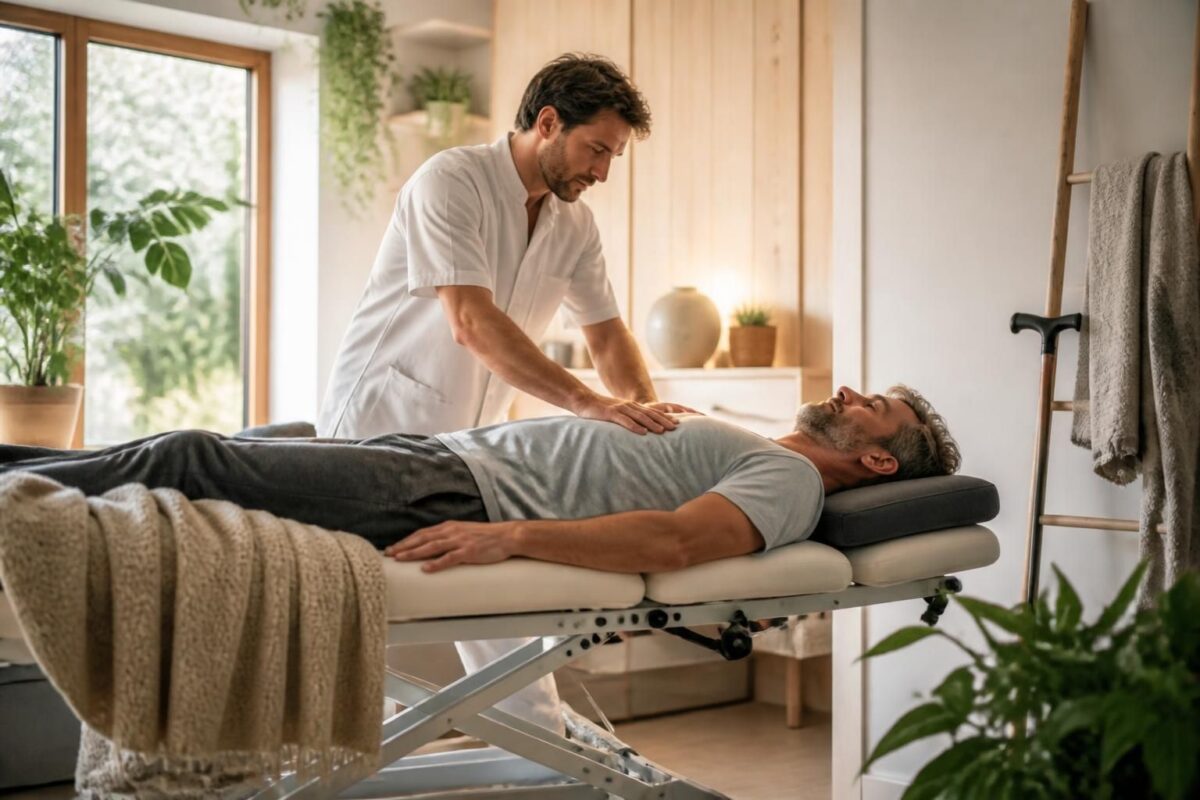
Why Osteopathy Is Essential For Recovery People
In short In short, Osteopathy in convalescence is an approach manual and holistic which helps to accelerate the recovery by restoring The balance, the mobility and a good circulation fabrics. it contributes to Reduce the pain, support the Back to…

Osteopathic manipulations to strengthen post-traumatic muscles
In short In short, Osteopathic manipulations for Strengthen post-traumatic muscles constitute a gentle manual approach aimed at restoring the mobility, reduce the pain and facilitate the Functional rehabilitation After a injury. What is Is it? A series of precise gestures…
Ergonomics and environment
Adapting your workspace to promote an aligned column and fluid breathing is central. Osteopathy is part of a global approach combining manual techniques and practical advice onergonomy, the breath and the rhythm of the activities. A coherent approach takes into account the professional and personal context to sustainably prevent postural imbalances.

Osteopathy and prevention of work-related musculoskeletal disorders
In short theosteopathy is one Manual approach that restores body balance and prevents MSD related to work. Its advantages: reduction of tension, improvement of mobility and prevention of chronic pain. She is preventive and healing, suitable for office and trades…

The benefits of osteopathy to treat muscle imbalances
In short theosteopathy is a manual approach to restore themuscle harmony and postural considering the body as a whole. Its main benefits include the reduction of aches and tensions, the improvement of the mobility and from the posture, and prevention…
Prevention and follow-up
To maintain the results, regular follow-ups make it possible to adjust the program according to the evolution of tensions and activities. Work on mobility and proprioception promotes better coordination and stability, even when faced with varying workloads or periods of stress.
| Axis | Concise description |
|---|---|
| Definition and purpose | Alignment vertebral and global stabilization by techniques sweet and adapted. |
| Action mechanisms | joint manipulations, work fascia and sinews, improvement of the proprioception. |
| Targeted posture | Correction of Muscle imbalances and the postural chain for more maintenance stable. |
| Balance and prevention | strengthening of stabilizers and improvement of Engine control For a better coordination. |
| Mobility and flexibility | Increase in theamplitude movements and reduction of strain limiting mobility. |
| Overall health | Improvement of the circulation, comfort respiratory and functioning of the organs via a skeleton aligned. |
| Exercises and advice | Drill medicinal herbs and advice ergonomic To support the posture between sessions. |
| Accessibility and security | Approach non-invasive and personalized, adapted to the intensity and comfort of the patient. |
| Expected results | decrease in aches, better mobility and sustainable well-being. |
| Target audience | active adults, workers office and athletes seeking to optimize posture and balance. |
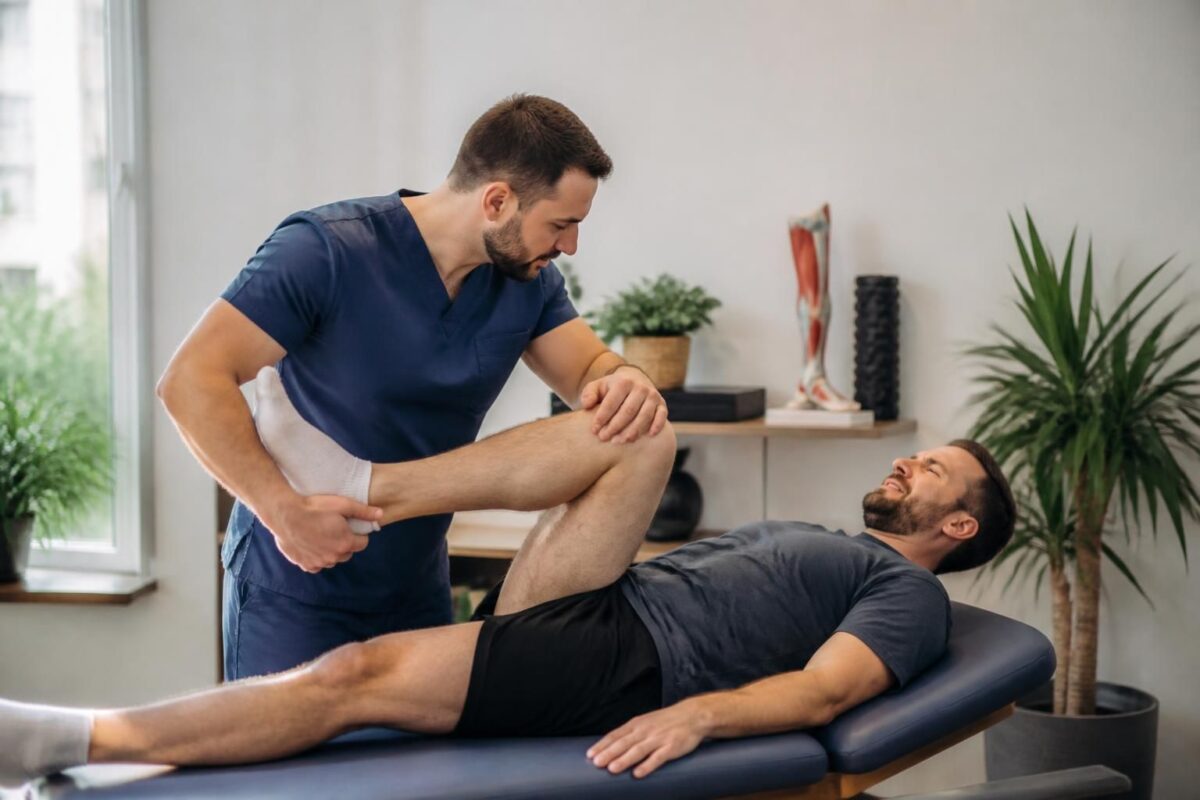
Osteopathy and chronic leg pain: regaining an optimal quality of life
In short In short, Osteopathy is one Global manual approach aimed at reducing Chronic leg pain and improve the quality of life. What is it? Non-drug therapy using the hands to identify restrictions and treat lesional chains. How does it…
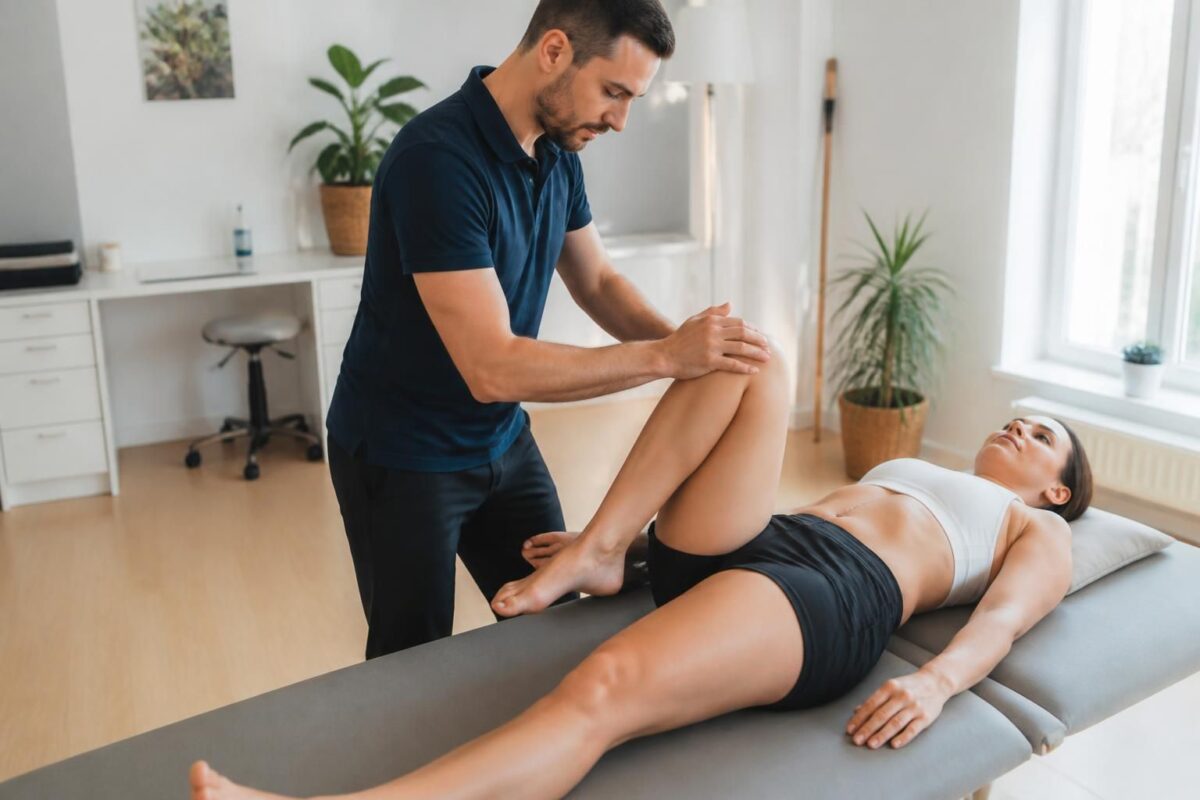
How osteopathy supports recovery after complex surgery
In short In short, Post-operative osteopathy is an approach fresh which supports the recovery After a Complex surgery. It helps to reduce the pain and the fatigue, improves the mobility and accelerates the healing thanks to a better vascularization and…
Testimonials on osteopathy to improve posture and balance
Mary, 35 years old recounts his experience with Osteopathy. Before, his posture was slow to refocus and his shoulders tended to sag after long days in front of the computer. After a few sessions, she feels a real difference: she stands straighter effortlessly, her tensions decrease and her balance improves from one week to the next. She also notices better breathing and less fatigue at the end of the day.
Thomas, 42 years old practice dancing and sought to harmonize his alignment. His testimony highlights that theosteopathy Released from accumulated muscle tension and reactivated a fluid postural chain. It describes a significant improvement in the posture in motion and increased sound stability balance during rotations and presses on stage.
Sophie, 28 shares his journey after several sessions ofosteopathy. She feels a resumption of mobility in the back and neck, which allows her to better correct her position during her sports and daily activities. Its balance gradually strengthens and she notes a decrease in pain linked to prolonged posture.
Julien, 50 years old Describes the impact on his active life. As a very mobile professional, he needed a balance sustainable and posture Stable to prevent lower back pain. After the osteopathic treatment, he notices a better weight distribution, more fluid movements and a general feeling of stability regained in his daily gestures.
Lucie, 38 years old testifies to the practical application at work. The evaluation of its posture and the corrections made by theosteopathy help him adopt healthier habits in the office. she feels a preserved improvement in her balance during his movements and a reduction in tension in the upper back and shoulders.
Antoine, 29 years old is an amateur runner who has noticed a valuable improvement in his proprioception and sound balance through targeted techniques. He describes a better perception of his moving body and a decrease in the risk of injury during sessions and competitions, with a more aligned posture throughout the stride.
Osteopathy and improvement of posture and balance
Dr. Sylvain Desforges, Expert in osteopathy, naturopathy and manual medicine, embodies an integrated approach that places the posture and thebalance at the heart of each support. Aged 59, he is the founding president of TagMed Clinics and the ACMA Association, showing a deep commitment to health innovation and evidence-based practice. His journey illustrates the alliance between technical know-how and global vision of the body, in order to offer lasting solutions for those who wish to move with more comfort and stability.
In his approach, Osteopathy is designed as a biomechanical rebalancing tool. It favors a complete evaluation of the spine and muscle chains in order to identify the imbalances that alter the posture. Through specific manual techniques and gentle manipulations, it aims to restore skeleton alignment, release tension and improve joint mobility. The goal is not to force a position, but to help the body regain its natural functioning, a source of stability and of Daily performance.
This approach is accompanied by work on the proprioception and engine control, key elements of balance. By strengthening the stabilizing muscles and restoring a balanced circulation, osteopathy allows better coordination of daily gestures, whether in the office, in the field or during sports activities. Postural education and simple exercises at home are an integral part of the protocol, in order to anchor the achievements and avoid recurrences.
To optimize the results, Dr. Desforges integrates Advanced technologies as part of a personalized care plan. The vertebral decompression can be considered when the evaluation reveals mechanical constraints, while additional interventions laser and shock waves Can help reduce tensions, promote circulation and accelerate recovery. This technological approach is part of a logic obvious and revised through clinical data, in order to propose safe and effective solutions.
The philosophy of the intervention is based on individualization and follow-up. Each patient benefits from a postural assessment and an appropriate therapeutic plan, which can include joint techniques, targeted stretching and practical advice to correct daily habits. The process is reinforced by transparent communication, measurable objectives and support that extends beyond each session, in order to establish a sustainable approach towards a Improved quality of life.
Its action is driven by a collaborative vision, involving care actors and professional structures in order to improve access to care centered on the Healthy posture and theBiomechanical balance. The objective is clear: to allow everyone to regain fluid mobility, to reduce pain linked to poor postural habits and to prevent future injuries thanks to a holistic and results-oriented approach.
To discover his approach and the services available, Dr. Sylvain Desforges invites us to favor a consultation in osteopathy focused on posture and balance, in order to benefit from personalized and effective support within the Tagmed and ACMA structures. A proactive and accessible approach, designed to sustainably improve your comfort and performance in everyday life.
This conclusion summarizes how theosteopathy can improve the posture and thebalance By acting on muscle imbalances, tensions and the body’s biomechanics. It highlights the mechanisms, clinical tools and benefits felt on a daily basis, especially for people who are active and those who spend long hours in a seated position.
in an approach focused on posture and thebalance, theosteopathy Take action to restorealignment of the skeleton and restoring the mobility joints and soft tissues. By working on the biomechanical And by optimizing communication between the nervous and musculoskeletal systems, it promotes better stability, reduction of tension and better coordination of the body. This approach can also improve the bloodstream and tissue oxygenation, contributing to improved energy and recovery. To find out more about this link between osteopathy and circulation, see the dedicated article.
The resulting postural evaluation and treatment make it possible to identify the areas of tension and the imbalances that maintain the pain. By integrating articular, cranial or visceral techniques as needed, the osteopath offers a global rebalancing that promotes a more appropriate posture and a reduction of genes on a daily basis. To deepen the notion of correction of chronic imbalances and its practical implications, refer to the resources dedicated to this subject.
The benefits are manifested in the short term by a reduction in pain and regained mobility, but also in the long term by better prevention of relapses and an improvement in performance in daily and sports activities. Syntheses and clinical trials show that osteopathy can sustainably reduce pain and improve joint function, which contributes to a better quality of life and may reduce the use of certain drugs. Recent results from clinical and retrospective studies support these findings and encourage a thoughtful integration of osteopathy in care pathways.
To optimize the effects, osteopathy naturally combines with simple and effective habits: regular active breaks, improvement of the ergonomics of the workstation and targeted exercises to strengthen the stability of the spine and the flexibility of the tissues. Specialized resources feature ergonomic advice and methods for managing postural tensions on a daily basis. In addition, approaches such as diaphragmatic breathing, practiced gently, can support the relaxation and maintenance of a functional posture throughout the day. You will find practical guides and demonstrations on these aspects in the articles dedicated to posture and ergonomics.
Finally, theosteopathy is recognized as an effective tool for Lower back pain and postural disorders when integrated into a global care strategy adapted to each individual. It can sustainably accompany everyday gestures, improve the mobility of the torso and neck, and promote a general feeling of well-being. To broaden your understanding of the benefits of osteopathy in this area, you can consult resources with complementary approaches and clinical feedback, including those that treat Chronic pain and postural disorders.
To deepen these notions and discover additional resources on the benefits of osteopathy for posture and balance, consult these specialized articles and guides:
- Relieve cervical pain with osteopathy
- Osteopathy and posture: correcting chronic imbalances
- Osteopathy and blood circulation
- Help in case of postural disorders
- Osteopathy and posture: avoid pain related to poor posture
- Osteopathy and stress
- Manage physical stress through osteopathy
- Osteopathy and posture: a winning duo
- Osteopathy and postural disorders
- Osteopathy to relieve chronic back pain

Dr Sylvain Desforges, B.Sc., D.O., N.D., osteopath, is the founding president of TAGMED and of the ACMA association. He dedicates his practice to chronic spinal pain, low back pain and symptoms compatible with sciatica, particularly when pain radiates toward the buttock, leg, calf, foot or toes.
Through SOS Sciatique, he publishes educational content on sciatica symptoms, possible causes such as disc herniation, disc narrowing, foraminal stenosis or irritation of a lumbar nerve root, as well as non-surgical approaches that may be considered according to the evaluation. At Clinique TAGMED, care may include, depending on the case, motorized neurovertebral decompression, specific osteopathic care or precision percussion.
For an evaluation related to sciatica treatment in Montreal / Mount Royal or sciatica treatment in Terrebonne, please consult the services available at Clinique TAGMED.
Medical disclaimer
The information published on SOS Sciatique is provided for educational purposes only and does not replace a consultation, diagnosis, opinion or treatment provided by a physician or another authorized healthcare professional. The author of this article is neither a medical doctor nor a specialist in a medical specialty recognized by the Collège des médecins du Québec. The osteopathic, manual medicine or functional support approaches described on this site do not constitute medical acts and are not intended to replace medical follow-up.
Consult a physician or emergency service in cases of loss of bladder or bowel control, anesthesia in the saddle area, significant or progressive weakness in the leg or foot, fever, recent trauma, severe pain or rapid worsening of symptoms. For more details, please read our Legal Notice.