Osteopathy for optimal post-operative recovery
27/06/2026
Osteopathy and chronic pain: a lasting solution
27/06/2026
In short In short, theosteopathy is an approach overall which can help prevent and relieve Common pathologies by acting on the body as a whole. it can make improvements on migraines, the constipation, the stress, the back pain, the Sleep disorders, the ENT pathologies, the Gynecological disorders and the hemorrhoids, by bringing together the nervous, digestive and respiratory systems and rebalancing mobility and circulation. Its operation is based on targeted manual techniques that aim to restore body balance, without systematic use of drugs. Accessible in Montreal and surroundings, this treatment can be used alone or in addition to medical treatment. |
Here is a concise overview of Common pathologies For which osteopathy can provide significant support, often in addition to medical follow-up.
- migraines : Palpation techniques and targeted cranial and cervical adjustments to promote better vascularization and reduce symptoms, especially when the origin is organic or digestive.
- Constipation : revival of motor skills and balance of the colon through gentle maneuvers, reduction of adherences and harmonization with neighboring organs.
- Stress : rebalancing of the nervous system and musculoskeletal, digestive and respiratory axes to improve stress management and general well-being.
- back pain : Low back pain, back pain and neck pain relieved by a combination of vertebral, visceral and cranial manipulations.
- ENT pathologies : Drainage and aeration of the sinuses and improvement of lymphatic drainage by targeted manipulations of the face and neck.
- Sleep disorders : Actions on the vegetative nervous system via cranial manipulations, favoring a better rhythm and a more restful night.
- Gynecological pathologies and pregnancy : Mechanical support for urinary tract infections, menstrual pain, and preparation for childbirth in order to limit discomfort.
- Hemorrhoids : Postural work and global mobility to reduce crises and prevent recurrences, in addition to appropriate follow-up.
Quick Summary: This article presents the Common pathologies to which osteopathy can help. Each section describes the mechanisms of action and expected results, with additional resources to deepen.
Migraines and cranial disorders
The migraines can be taken care of by osteopathy. Palpation techniques are used on the skull, cervical and shoulders. The work can also be applied to the digestive system if the origin is digestive. The objective is to improve the vascularization and mobility of tissues around the areas involved. To complete your research, consult the dedicated resources on osteopathic techniques and postural approaches.
To learn more about global approaches, see Osteopathic techniques to improve posture.
Constipation
Osteopathy can revive motor skills and motility in the colon. The practitioner can decongest and lift adhesions around the sigmoid and balance relationships with neighboring organs. The work is done through gentle and targeted maneuvers, aiming to promote better intestinal mobility and more regular transit.
Additional information and illustrations of Osteo action areas are available through specialized resources.
The stress
Stress manifests differently from patient to patient. The osteopath aims to rebalance the nervous system and the muscular, joint and digestive systems. The approach may include cranosacral techniques and physical adjustments to support relaxation, breathing and overall function of the body.
back pain
The back pain is a priority in osteopathy. The approach combines vertebral manipulation, visceral and cranial techniques to restore the balance of structural chains. The goal is to reduce pain and restore mobility, while respecting the specific limitations of each patient.
For an overview of the pathologies treated and areas of action, see the resources dedicated to osteopathy and neurovertebral decompression.
ENT pathologies and drainage
In case of chronic ENT disorders, osteopathy can act on the facial bones and adjacent tissues to promote sinus drainage and aeration. Targeted neck and shoulder manipulations can also help improve lymphatic drainage and respiratory function.
Sleep disorders
Sleep disorders may be linked to disturbances of the vegetative nervous system. Cranial and cranial-sacral manipulations can help restore autonomous balance and improve sleep quality in some people.
Gynecological disorders
Some urinary tract infections, incontinence, irregularities or pain related to the cycle can be of mechanical origin and be addressed by osteopathy. During pregnancy, osteopathy can promote a good pelvic balance and contribute to preparing a more harmonious childbirth.
Hemorrhoids
For hemorrhoidal seizures, osteopathic work can go through postural adjustment and action on body mobility to support drainage and reduce recurrences. A complementary approach with a urology specialist can be considered.
To deepen the areas of action, consult the specialized resources on the techniques and effects of neurovertebral decompression.
Useful links and reference domains:
Osteopathic techniques and posture,
Tagmed Clinic,
neurovertebral decompression,
Reduce muscle tension,
Benefits of decompression.
Educational reference: Numss and NAO are among the recognized courses in osteopathy, and professionals can rely on teaching from National University of Medical Sciences and National Academy of osteopathy to guide their practice.
For any additional questions, you can consult the official resources and specialized publications from the domains sossciatica.com and clinicagmed.com.
Medical Disclaimer: The information and advice provided on this site does not replace the health professional’s diagnosis or treatment. Please note that Dr. Sylvain Desforges osteopath is neither a doctor of medicine nor a doctor, and is not a specialist in a medical specialty as defined by the Collège des Médecins du Québec. Manual medicine, functional medicine and sports medicine as described on this site exclude any medical treatment or diagnosis made by a doctor or specialist doctor. Always consult your doctor for any medical questions. For more details, please read our full legal notice.
Common pathologies supported by osteopathy
- Migraine
- Constipation
- Stress
- back pain
- ENT
- Sleep disorders
- Gynecological disorders
- Hemorrhoids

Osteopathy addresses common pathologies through a global approach that aims to restore the balance of body structures and functions. By stimulating regulation mechanisms and mobility, it can reduce pain and improve well-being, in various areas such as migraines, digestive disorders, stress, spinal pain, or ENT and gynecological. This article presents the common pathologies covered and the principles of action of osteopathy for each of them.
migraines and cranial pain
Diagnosis and objectives
The migraines and cranial pain can be reduced by targeted palpation techniques on the skull, cervical and shoulders, and sometimes on the digestive system when the origin is digestive. The objective is to promote good cranial vascularization and to rebalance the tensions that fuel the crises. The osteopath adapts the gestures according to each patient to reduce triggering factors and improve daily comfort.

How osteopathy improves the quality of life of active people
In short In short, theosteopathy is a global approach that Optimizes mobility and the function of the body of ACTIVE PEOPLE, for a better quality of life. It helps prevent injury and reduce Musculoskeletal pain While promoting the Sports recovery.…
Constipation and gastrointestinal disorders
Interventions and results
For the constipation, the osteopath acts on motor skills and colonic motility, through maneuvers that facilitate transit and decongest sigmoid adhesions. Work can also aim to harmonize the colon with neighboring organs (small intestine, etc.) and to improve the perception of needs, in order to reduce discomfort and bloating.

Osteopathy and sports recovery: prepare the body for lasting performance
In short In short, Osteopathy and Sports recovery is one Global manual approach that sustainably prepares the body for the effort by restoring mobility and circulation After the effort. It is a discipline that acts on the sinews, the joints,…
Stress and neurovegetative disharmonies
Role and mechanisms
The stress manifests differently depending on the person. The osteopathic objective is a global rebalancing of tensions: parasympathetic nervous system, articular, muscular, digestive and respiratory system (diaphragm and thoracic cage). By restoring circulation and muscle tone, we seek to find a more serene sleep and better adaptability in the face of daily demands.
Why Osteopathy Is Essential For Recovery People
In short In short, Osteopathy in convalescence is an approach manual and holistic which helps to accelerate the recovery by restoring The balance, the mobility and a good circulation fabrics. it contributes to Reduce the pain, support the Back to…
Back pain and spinal pain
Approach and benefits
The back pain is at the heart of osteopathic action. A range of techniques—vertebral manipulations, visceral and cranial techniques—is used to rebalance the back and reduce pain, whether lumbar, dorsal or cervical. The objective is to restore mobility and prevent recurrences through better coordination of structures.

Osteopathic manipulations to strengthen post-traumatic muscles
In short In short, Osteopathic manipulations for Strengthen post-traumatic muscles constitute a gentle manual approach aimed at restoring the mobility, reduce the pain and facilitate the Functional rehabilitation After a injury. What is Is it? A series of precise gestures…
ENT conditions and drainage
Restoration and drainage
During pathologies ENT Chronicles, the osteopath can intervene on the bones of the face (frontal, maxillary, zygomatic) to drain and aerate the sinuses. Neck and shoulder manipulations can also promote lymphatic drainage and improve breathing and comfort.

Osteopathy and prevention of work-related musculoskeletal disorders
In short theosteopathy is one Manual approach that restores body balance and prevents MSD related to work. Its advantages: reduction of tension, improvement of mobility and prevention of chronic pain. She is preventive and healing, suitable for office and trades…
Sleep disorders
Interaction with the nervous system
The Sleep disorders are often linked to disturbances of the vegetative nervous system. Targeted cranial manipulations can act on this autonomous system and help restore a more regular and restorative sleep cycle.

The benefits of osteopathy to treat muscle imbalances
In short theosteopathy is a manual approach to restore themuscle harmony and postural considering the body as a whole. Its main benefits include the reduction of aches and tensions, the improvement of the mobility and from the posture, and prevention…
Gynecological and obstetrical aspects
Scope and indications
In gynecology And obstetrics, osteopathy can intervene on the organs and pelvic mobility when the origin is mechanical, especially for urinary tract infections, incontinence or menstrual pain. In the event of pregnancy, work can help prepare the pelvis and promote a more harmonious and less painful childbirth.
Osteopathy and chronic leg pain: regaining an optimal quality of life
In short In short, Osteopathy is one Global manual approach aimed at reducing Chronic leg pain and improve the quality of life. What is it? Non-drug therapy using the hands to identify restrictions and treat lesional chains. How does it…
Hemorrhoids and posture
Prevention and support
For the hemorrhoids, the work focuses on posture and body mobility, in order to appease crises and limit recurrences. This work is in addition to possible treatments and is mainly aimed at prevention. In addition, it can be useful to coordinate with a physiotherapist specializing in urology as appropriate.
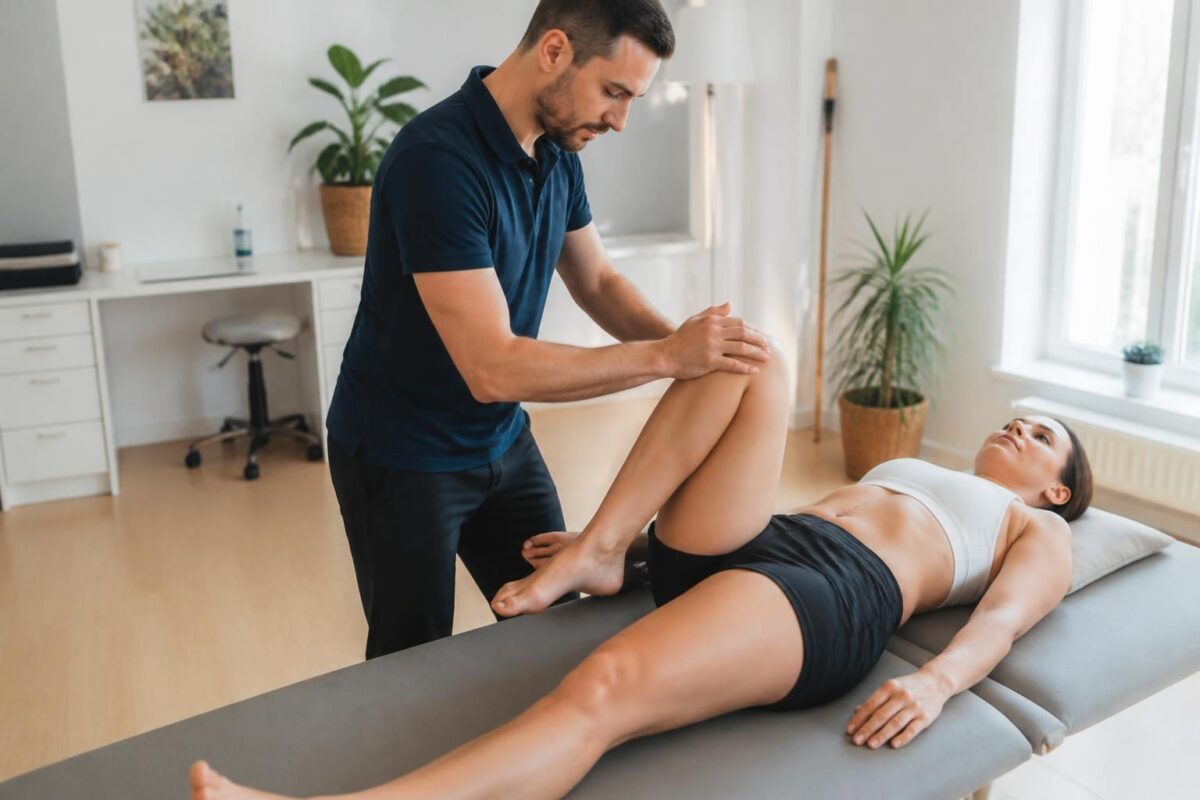
How osteopathy supports recovery after complex surgery
In short In short, Post-operative osteopathy is an approach fresh which supports the recovery After a Complex surgery. It helps to reduce the pain and the fatigue, improves the mobility and accelerates the healing thanks to a better vascularization and…
Common pathologies supported by osteopathy
| Pathology | Osteopathic intake |
|---|---|
| Migraine | Cranio-cervical and visceral techniques to promote vascularization and reduce seizures. |
| Lower back pain | Vertebral manipulations and visceral techniques to relieve pain and stabilize the back. |
| neck pain | Mobilizations and cervical balancing to reduce pain and stiffness. |
| dorso-thoracic pain | Rebalancing and mobility of back segments to relieve pain. |
| Constipation | Relaunch of colonic motor skills and unblocking of adhesions. |
| Stress | Rebalancing of the nervous system and diaphragm to improve stress management. |
| Chronic ENT pathologies | Sinus and neck drainage to improve aeration and reduce symptoms. |
| Sleep disorders | Cranial manipulations to regulate the vegetative nervous system and promote sleep. |
| Gynecological disorders | Mechanical approach to support pelvic function and comfort during cycles. |
| Hemorrhoids | Improved posture and mobility to reduce symptoms and recurrences. |
Testimonials on common pathologies supported by osteopathy
“After years of migraines, I started an osteopathic follow-up that targets the skull and cervical. By working on the crossing points and promoting better cranial vascularization, my seizures have spaced out and their intensity decreased. — Emma, 34
“My constipation had been suffering for years and hindered my daily life. Thanks to gentle maneuvers to relaunch motor skills and lift grip, I found more effective motility and lasting digestive comfort. — Helen, 46 years old
“The stress is expressed differently in everyone. My osteopath worked on the parasympathetic nervous system and on the muscular system, which helped me to rebalance my energy and breathe better, with a positive effect on my sleep and digestion. — Mathieu, 29 years old
“The back pain Was daily: lumbar, back pain and cervicalgia mingled. With an approach that combines vertebral manipulation, visceral and cranial techniques, I found better mobility and a significant reduction in my pain. — Julien, 42 years old
“My pathologies ENT became chronic and imperative my life. Targeted manipulations on the face and neck areas helped drain and aerate the sinuses, improving my episodes and runny nose. — Lea, 37 years old
“The disorders of sleep were linked to disturbances of the autonomic nervous system. Osteopathy, through targeted techniques, helped restore a balance and regain more restorative nights. — Clara, 41 years old
“of Gynecological disorders And painful discomforts were part of my daily life. In connection with my follow-up, osteopathic approaches have contributed to regularizing certain functions and preparing for a more harmonious delivery when this was the case. — Manon, 33
“The hemorrhoids worsened with posture and mobility. Targeted work on posture and body mobility, in addition to medical follow-up, helped to reduce crises and recurrences. — Dominique, 58 years old
Dr Sylvain Desforges, expert in osteopathy, Naturopathy and manual medicine, is the founding president of TagMed and the ACMA association. With a career dedicated to health innovation, he specializes in Chronic pain management and the integration of advanced technologies such as spinal decompression motorized, the laser and the Shockwave therapy. Its mission is to offer evidence-based care to optimize the health and well-being of its patients. This biography sheds light on how osteopathy addresses common pathologies and how a global approach can transform quality of life.
Among the most frequently treated pathologies, migraines occupy a central place. The osteopath invites a detailed review of the tensions in the skull, cervical and shoulders, also taking into account any digestive origins. By working on crossing points and tissues, it aims to improve cranial vascularization and decrease the painful load, which can lead to calmer periods and to better tolerance on a daily basis..
In the gastrointestinal field, osteopathy can act on the motor skills and colonic motility. Thanks to precise maneuvers, it helps to decongest and lift adhesions at the level of the sigmoid, while rebalancing the colon compared to neighboring organs. This approach can promote more regular and less painful stools, with beneficial effects on the overall comfort and energy of the body..
The stress is often multifactorial and affects several systems. The osteopath proposes a rebalancing of the parasympathetic nervous system via cranio-sacral approaches, while harmonizing the articular, muscular, digestive and respiratory axes. Working on diaphragmatic breathing and rib cage tensions, it helps restore better nerve regulation and more restorative sleep, which results in a reduction in feelings of anxiety and fatigue..
The back pain – Low back pain, back pain, neck pain – remains one of the most frequent reasons for consultation. The osteopath uses a range of techniques, ranging from spinal manipulation to visceral and cranial methods, to rebalance musculoskeletal chains and soothe pain. This approach aims not only to relieve the painful episode, but also to strengthen stability and mobility in the long term.
pathologies ENT Chronicles also benefit from osteopathic support. When the disorders persist, targeted manipulation of the face bones and cervical areas can help drain and aerate the sinuses. Work can also include lymphatic drainage of the neck and shoulders to improve immune response and respiratory tract ventilation.
For the Sleep disorders, osteopathy can act on the vegetative nervous system which regulates many automatic functions. Appropriate cranial manipulations can promote a deeper and more regular sleep cycle, improving nighttime recovery and daytime energy.
Regarding the Gynecological disorders, certain urinary tract infections, incontinence or pain related to ovulation and cycle can find a mechanical origin. Osteopathy can also intervene during pregnancy to prepare the pelvis and promote a posture favorable to the baby, contributing to a more harmonious childbirth and with less tension.
Finally, the hemorrhoids Can be relieved by work on posture and mobility, in order to reduce crises and prevent recurrences. This approach is generally considered in addition to medical treatment and is accompanied by personalized advice..
Quick summary: Osteopathy Offers a global approach for many common pathologies, targeting neuro-muscular mechanisms to improve pain, mobility and quality of life. By working on body-mind relationships and on the interactions between the organs and skeletal structures, it can accompany tensions, functional disorders and various pains without systematically resorting to surgery.
Migraines can benefit from treatment by Osteopathy Thanks to techniques for palpation and treatment of the skull, cervical and shoulders, and even the digestive system when the origin is digestive. By working on the crossing points, the goal is to improve cranial vascularization and reduce painful episodes. Learn more.
For constipation, the osteopath can revive motility and colic motor skills by using maneuvers that decongest and lift the adhesions at the level of the sigmoid, while balancing the colon opposite surrounding organs. This approach aims to restore harmonious circulation and intestinal function. Technical reference.
The postman stress can manifest differently depending on the individual. The osteopath acts on the parasympathetic nervous system and other systems (joint, muscle, digestive and respiratory) in order to restore a global balance and reduce stress-related manifestations, such as pain and tension. To understand the mechanisms, consult the resources dedicated to neurovertebral decompression and its effects on the nervous system. neurovertebral decompression.
The back pain (Lumbago, back pain, cervicalgia) is at the heart of osteopathic action. A range of techniques, ranging from spinal manipulation to visceral and cranial approaches, aims to rebalance the spine and alleviate pain. This approach aims not only to relieve, but also to prevent recurrences through better postural and functional stability. For additional details, see Resources on degenerative pathologies and osteopathic treatments. neurovertebral decompression.
In terms of ENT conditions, when the pathologies become chronic, osteopathy can act on the bones of the face and the neck to drain and improve the drainage of the sinuses. Targeted manipulations can also promote lymph drainage and improve breathing. For an overview, See areas of intervention of osteopathy.
Sleep disorders can be improved by cranial manipulation and vegetative nervous system regulation, which can promote more restorative and regular sleep. This approach aims to restore a balance of the sleep-wake cycle and reduce disturbances related to stress and anxiety. For additional resources, consult the documents dedicated to osteopathy and sleep. Sleep and osteopathy.
Gynecological disorders, urinary tract infections and certain sexual disorders can also be affected when mechanical origins are involved. Osteopathy can intervene on the pelvis, hips and associated structures to improve mobility, alignment and comfort, particularly in preparation for pregnancy or during functional gestures. Specialized resources detail these fields of action. Decompression and muscle tension.
In addition to the treatment prescribed by health professionals, osteopathy can be considered as a non-drug option for various functional conditions. This can be part of a preventive and deductive approach aimed at limiting recurrences and promoting a better quality of life. For an overview of commonly supported pathologies and associated evidence, explore specialized resources and government guides on osteopathy. Osteopathy and longevity.

Dr Sylvain Desforges, B.Sc., D.O., N.D., osteopath, is the founding president of TAGMED and of the ACMA association. He dedicates his practice to chronic spinal pain, low back pain and symptoms compatible with sciatica, particularly when pain radiates toward the buttock, leg, calf, foot or toes.
Through SOS Sciatique, he publishes educational content on sciatica symptoms, possible causes such as disc herniation, disc narrowing, foraminal stenosis or irritation of a lumbar nerve root, as well as non-surgical approaches that may be considered according to the evaluation. At Clinique TAGMED, care may include, depending on the case, motorized neurovertebral decompression, specific osteopathic care or precision percussion.
For an evaluation related to sciatica treatment in Montreal / Mount Royal or sciatica treatment in Terrebonne, please consult the services available at Clinique TAGMED.
Medical disclaimer
The information published on SOS Sciatique is provided for educational purposes only and does not replace a consultation, diagnosis, opinion or treatment provided by a physician or another authorized healthcare professional. The author of this article is neither a medical doctor nor a specialist in a medical specialty recognized by the Collège des médecins du Québec. The osteopathic, manual medicine or functional support approaches described on this site do not constitute medical acts and are not intended to replace medical follow-up.
Consult a physician or emergency service in cases of loss of bladder or bowel control, anesthesia in the saddle area, significant or progressive weakness in the leg or foot, fever, recent trauma, severe pain or rapid worsening of symptoms. For more details, please read our Legal Notice.